{{HeadCode}} Should You Turn Your Thesis Into a Research Paper? A Clear Decision Guide

通过

贾斯汀·王

Should You Turn Your Thesis Into a Research Paper? A Clear Decision Guide

贾斯汀·王

增长负责人

获得全球商业与数字艺术学士学位,辅修创业

Turning your thesis into a research paper is a solid idea, but only when your core finding is genuinely new and can be sharpened for a specific journal's audience. Many theses aren't published simply because the conversion process is handled poorly.

Here's how to decide if you should publish, and a straightforward method for reshaping your thesis into a paper that actually gets accepted. The steps are below.

<CTA title="Turn Your Thesis Into a Publishable Paper" description="Structure your research into a clear journal ready article without confusion or wasted effort." buttonLabel="Try Jenni Free" link="https://app.jenni.ai/register" />

Key Takeaways

  • A thesis is proof of learning, but a paper must deliver one clear contribution

  • Not every thesis is worth publishing, especially without strong data or novelty

  • Successful thesis to manuscript process requires rewriting, not copy pasting

Thesis vs Research Paper: Why Conversion Is Not Automatic

You should know the fundamental difference in purpose. A thesis and a research paper aim for entirely different things.

A thesis proves you can do research. It's a training document, often 80 to 300 pages long. It demonstrates your broad knowledge, research capability, and understanding of theory and methods. Think of it as a complete blueprint for a building.

A research paper delivers one core idea. A journal article is short, typically 5,000 to 8,000 words. It focuses on a single, publishable insight. Its job is to answer a specific research question, present concise results, and make a clear contribution to the field. For a section-by-section reference as you restructure, see our analytical research paper guide.

Understanding the foundation behind your methodology is also important during this transition. If you need a refresher, exploring different research paradigms can help you clarify how your approach shapes your findings and arguments.

For example, a 120-page thesis might yield one strong empirical paper and a smaller article on its methodology.

<ProTip title="💡 Pro Tip:" description="Treat your thesis like a library and your paper like a single focused story extracted from it." />

When You Should Turn Your Thesis Into a Research Paper

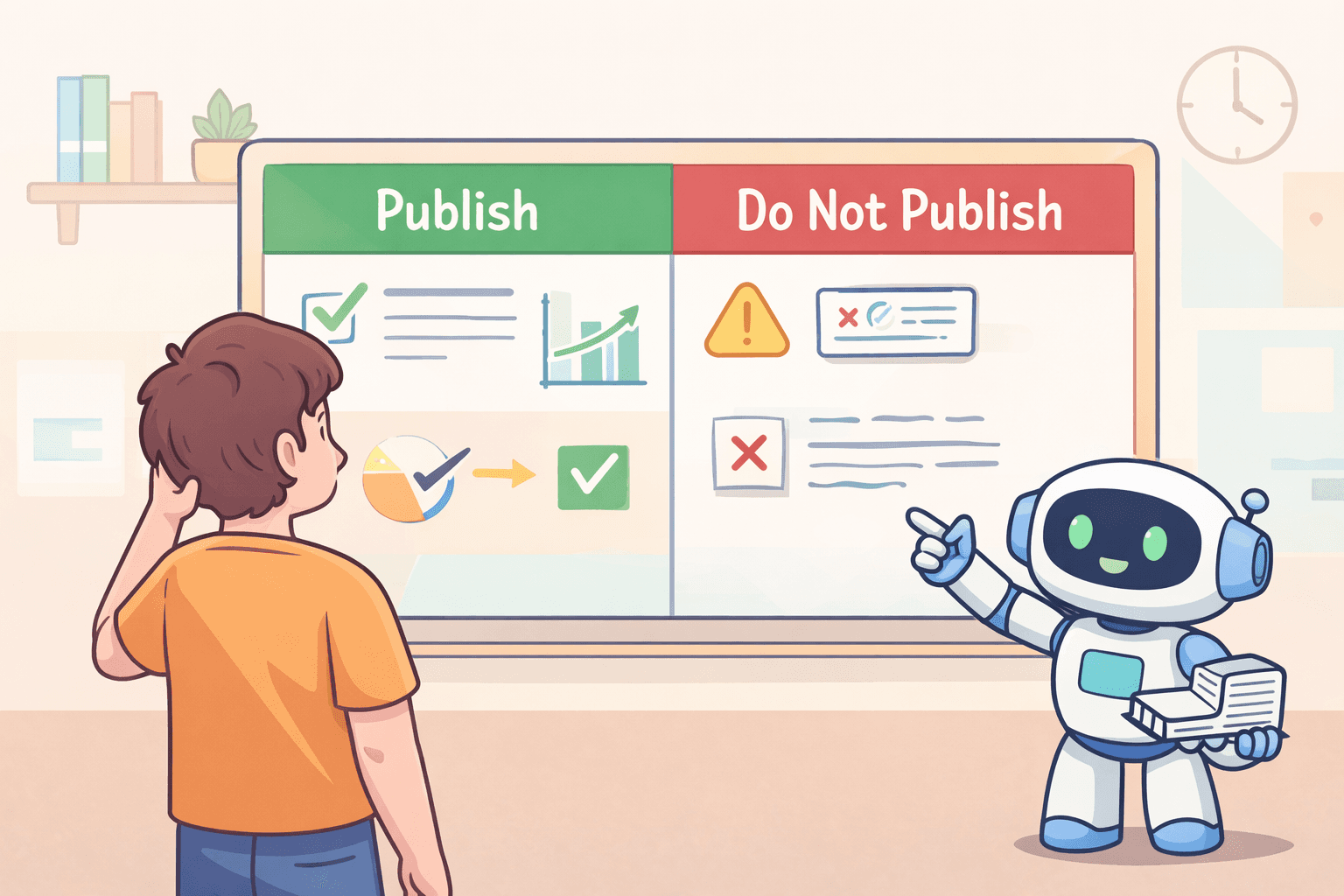
Not every thesis should become a paper. Your decision hinges on three things: quality, novelty, and relevance.

You have original and valuable findings.

Your thesis must contain something new. This could be new data, a unique method, or a fresh theoretical angle. As top tips for faster manuscript publication from Springer Nature emphasizes, novelty is a top factor for journal acceptance. If your work genuinely adds value, publication is worth pursuing.

Your research question still matters.

Timing is critical. Some topics fade fast. For instance, a study on obsolete software tools likely won't interest a journal now, no matter how well it was done. Your topic needs to be relevant to current debates, useful to other researchers, and aligned with active areas of study.

Your methods and results are strong enough.

Solid methodology is essential. Common problems that kill publication chances include small sample sizes, weak statistical analysis, and poor documentation. Research on common reasons for journal rejection confirms that methodological flaws are a leading reason for journal rejection.

When You Should Not Publish Your Thesis

Sometimes, it's smarter to leave your thesis as it is. Trying to force a publication can waste your time and lead to multiple rejections.

The work is mostly descriptive.

If your thesis mainly summarizes existing literature without offering new analysis, it probably won't qualify as a standard research article. Instead, you might repurpose it as a review article, a commentary, or a conceptual paper.

The data is too weak or incomplete.

Attempting to publish weak findings usually results in a desk rejection. For example, a thesis with inconsistent or poorly collected data will likely fail a journal's standards, even after heavy editing. Publishing low-quality work can actually damage your academic reputation.

You are not ready to rewrite it fully.

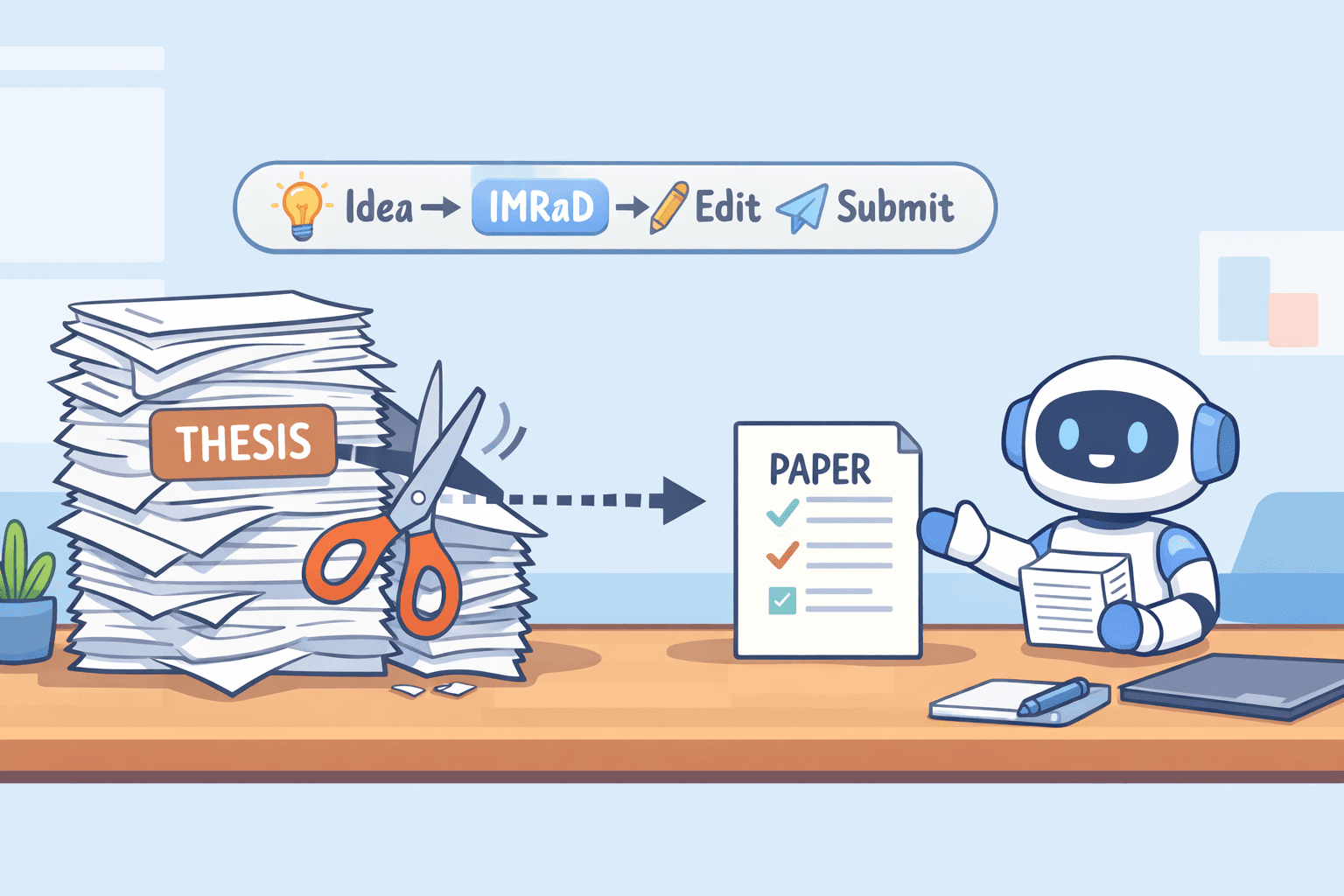
This is a common stumbling block. Converting a thesis into a paper isn't a light edit; it's a major rewrite. It often means cutting 70-80% of your original content, restructuring everything into the standard IMRaD format, and updating your references and arguments from the ground up.

<ProTip title="⚠️ Reminder:" description="Thesis to paper conversion is rewriting not formatting so plan time accordingly." />

The Real Challenges Researchers Face (From Real Experiences)

Online forums show a clear, frustrating pattern: this process is much harder than people expect.

Reddit: The emotional cost of publishing. Many researchers talk about hitting a wall after finishing their thesis. They feel pressure to publish for their next job, struggle to condense hundreds of pages, and sometimes clash with supervisors over what to publish. A common feeling is that you have to rewrite your entire thesis from the beginning.

Quora: Structured advice that actually works. The most helpful advice provides a clear framework. A popular model is to identify one publishable idea from each thesis chapter, focus everything on answering a single research question, and then rebuild the paper using the standard IMRaD structure. This matches proven academic publishing strategies.

X (Twitter): Strategy versus burnout. Quick threads preach speed, but reality is different. Researchers often underestimate how long revisions take, face several journal rejections before acceptance, and feel pressured to publish weaker papers just to have something on their CV.

YouTube: The gap between tutorials and reality. How-to videos make the process look simple. But the comment sections tell another story. People have a hard time cutting down their long theses, get confused about what specific journals want, and feel defeated by critical reviewer feedback. This shows why you need a real, structured plan.

A big part of this confusion comes from not understanding journal expectations early on. Learning how to choose journal for research can make the process clearer by helping you align your paper with the right audience from the start.

Step-by-Step: How to Convert Your Thesis Into a Research Paper

Here’s where you move from idea to action. A clear plan makes success more likely.

Step 1: Identify the publishable unit. Don't try to publish everything. Start by isolating one strong contribution from your thesis. This could be a single experiment, a key dataset, or your central argument.

A good starting point is refining your focus into one clear problem. If you're unsure how to do this, this guide on how to write research question can help you sharpen your main idea into something publishable.

Step 2: Restructure into IMRaD format. Most journals require the IMRaD structure: Introduction, Methods, Results, and Discussion. You’ll need to reorganize your entire argument to fit this mold.

Step 3: Cut and condense aggressively. Your thesis is too long. Focus on removing redundant literature, keeping only the most relevant references, and simplifying explanations. A 20-page literature review might need to become two pages.

Step 4: Rewrite key sections. You can't just copy and paste. The introduction, results, and discussion sections all need to be rewritten from the ground up for clarity and impact. For a deeper revision workflow, use this how to revise a research paper guide.

Step 5: Choose the right journal. This choice is critical. Consider the journal’s scope, its audience, and whether your topic fits. Picking a journal based only on its impact factor is a common mistake that leads to quick rejection. You can follow structured guidance like this choosing the right journal resource to improve your chances.

Step 6: Prepare for peer review. The review process often takes 3 to 9 months. You'll need to address reviewer comments carefully, revise multiple times, and be prepared to submit your paper to a different journal if necessary. Publishing is a long process, not a single submission. For examples of what journal-ready writing looks like in practice, see Jenni published papers.

<ProTip title="✂️ Pro Tip:" description="Cut background content that does not directly support your research question." />

How Many Papers Can You Get From One Thesis?

It depends entirely on your work's structure and depth.

Typical output range A master's thesis often yields one to three publishable papers. A PhD thesis can produce three to six. However, the quality of each paper is far more important than the total number.

Avoid "salami publishing" This is the practice of slicing one coherent study into many thin, minimal papers. It’s a bad strategy. The risks include journal rejection, ethical questions from reviewers, and ultimately reducing the impact of your research. Focus on publishing solid, meaningful contributions instead.

Quick Decision Table: Should You Publish Your Thesis?

If you're still unsure whether your thesis is ready to be turned into a research paper, this quick table can help you make a more confident decision. Think of it as a simple reality check, where you are now, and what your next move should be.

Your situation

What to do

You have strong, original findings

Publish it. Your work already has clear value, so focus on shaping it into a solid paper.

Your data is weak or feels incomplete

Hold off. Don’t publish yet, strengthen your analysis or gather more support first.

Your topic is now considered outdated

Take a step back and reconsider. You may need to reframe or update your angle.

Your work makes one clear, solid contribution

Go ahead and publish. Even one meaningful insight is enough for a good paper.

You have no time for necessary rewrites

Delay. It’s better to publish later than submit something rushed and get rejected.

This table won’t replace careful judgment, but it gives you a quick way to assess your position. If you find yourself leaning toward “publish,” your next step is refining and adapting your thesis into a journal-ready format. If not, that’s completely fine, taking more time now often leads to a much stronger publication later.

Should You Turn Your Thesis Into a Research Paper

You’re looking at your thesis, wondering if it’s strong enough or just too long and unfocused to publish. It feels overwhelming to cut it down and reshape everything into something clear and sharp. It’s not an easy switch.

<CTA title="Structure Your Thesis Into a Strong Paper" description="Turn your research into a clear focused journal article without guesswork or wasted effort." buttonLabel="Try Jenni Free" link="https://app.jenni.ai/register" />

That’s where Jenni AI writing assistant for researchers makes the process feel more doable and less messy. It helps you turn dense sections into a focused paper while keeping your main ideas clear. It’s a simple way to move from a long draft to something ready to share.

目录

今天就开启你的非凡写作之旅

从今天起,用 Jenni 写下你的 第一篇论文,开启全新篇章

免费开始

无需信用卡

随时取消

500万+

遍布全球的学者

5.2小时

每篇论文平均节省

超过1500万篇

在鉴研上完成的论文

今天就开启你的非凡写作之旅

从今天起,用 Jenni 写下你的 第一篇论文,开启全新篇章

免费开始

无需信用卡

随时取消

500万+

遍布全球的学者

5.2小时

每篇论文平均节省

超过1500万篇

在鉴研上完成的论文

今天就开启你的非凡写作之旅

从今天起,用 Jenni 写下你的 第一篇论文,开启全新篇章

免费开始

无需信用卡

随时取消

500万+

遍布全球的学者

5.2小时

每篇论文平均节省

超过1500万篇

在鉴研上完成的论文