
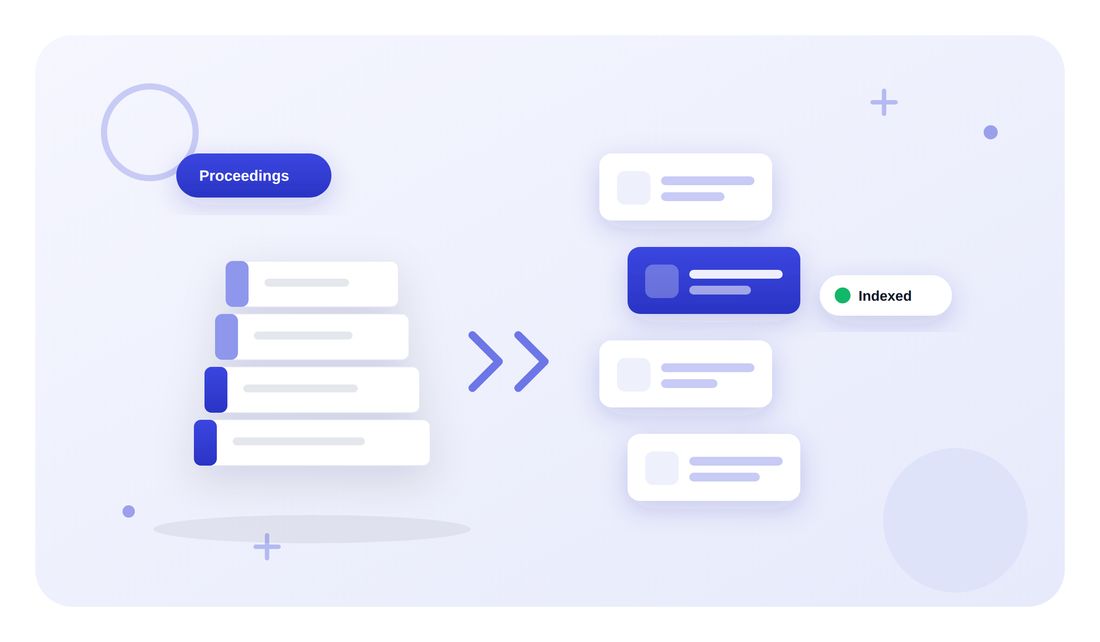
完璧な情報源を見つけたものの、文献引用に「in Proceedings of (〜のプロシーディングスにおいて)」と書かれています。これは本物の出版物なのでしょうか?査読はあるのでしょうか?実績としてカウントされるのでしょうか?
本稿はエッセイではなく、早引きガイドです。まずは短い回答を提示し、その後に皆さんが本当に必要としている一覧表を掲載します。
<CTA title="すべての情報源を追跡可能に" description="JenniはDOIによって文献をインポートし、引用文献をそれが支持する主張と紐付けて管理するため、プロシーディングスの論文も参考文献リストに正しく登録されます。" buttonLabel="Jenniを無料で試す" link="https://app.jenni.ai/register" />
結論から言うと
カンファレンス・プロシーディングス(会議録)とは、学会や国際会議で発表された論文をまとめた出版物であり、ISBNまたはISSN、そして主要な出版社においてはすべての論文にDOIが付与されて発行されます。 実績のある学会では査読が行われます。コンピュータサイエンス(計算機科学)の分野では完全な業績論文としてカウントされますが、その他の多くの分野ではジャーナル(学術雑誌)論文よりも一段低く位置づけられます。
収録されている内容
フルペーパー(長編論文)、ショートペーパー(短編論文)、そして多くの場合ポスターやワークショップのアブストラクト(要旨)が含まれ、時には基調講演のサマリーが掲載されることもあります。口頭発表はその場限りですが、プロシーディングスは形として残り、他者から引用される対象となります。
査読(ピアレビュー)の有無
定評のある学会では査読があります。その競争率は、同じ分野のジャーナルよりも厳しいことが多々あります。論文は、設定された締切に向けて、通常3名の査読者によって採否が審査されます。
ただし、その厳格さは極めて多様です。採択率が25%を下回るトップクラスのコンピュータ系国際会議から、ほぼすべての投稿を受け入れる集まりまで存在し、プロシーディングスの冊子自体からはその難易度は判別できません。確認方法については、査読付き論文の見分け方および匿名査読(査読モデル)の種類に関するガイドをご覧ください。
どこにインデックス(収録)されるか
img id="16">
データベース | 収録内容 |
IEEE Xplore | 400万本以上の会議論文を収録。毎月約2万5千件の新規アイテムが追加されます。 |
ACM Digital Library | ACMのプロシーディングスを収録。ポリシーにより、すべての論文に唯一無二のDOIが1つずつ付与されます。 |
Web of Science | 2つの会議録引用インデックス(Conference Proceedings Citation Indexes)があり、データには「Proceedings Paper」とラベル付けされます。 |
Scopus | ジャーナルや書籍と並んで、会議資料も収録されています。 |
DBLP | コンピュータサイエンス分野における55,000以上の会議・ワークショップのプロシーディングスを網羅。 |
SpringerLink | Lecture Notes in Computer Science(LNCS)シリーズや、その他の会議録シリーズを収録。 |
注意すべき一点
すべてのプロシーディングス論文にDOIが付与されるわけではありません。大手出版社はポリシーとして付与しますが、規模の小さい地方学会や自己出版のプロシーディングスでは付与されないことがよくあり、まさにそのような場合に論文の再検索が困難になります。
<ProTip title="🔎 インデックスの確認:" description="投稿する前に、自分が重視するデータベースで、その学会の昨年のプロシーディングスを検索してみてください。前年のボリュームが収録されていなければ、あなたの論文も収録されない可能性が高いです。" />
引用方法
引用するのはプロシーディングスの冊子全体ではなく、個々の論文です。どの引用スタイルでも基本的なパターンは同じで、「著者、発行年、論文タイトル、そしてコンテナとしてのプロシーディングス名」の順になります。
APA 7th
IEEE
[1] A. A. Author, "Weekly quizzing and course completion in large lectures," in Proc. Conf. Learning at Scale, Boston, MA, USA, 2026, pp. 114–123.
MLA 9th
間違いやすい2つのポイント:プロシーディングスにページ範囲がある場合は、必ず含めてください。それが、単なる「口頭発表」と「出版されたプロシーディングス論文」を区別する要素だからです。また、出版物として発行されなかったイベントで発表した場合は、それは「プロシーディングス論文」ではなく「プレゼンテーション(口頭発表)」となります。APAではそれぞれのケースに応じた実例を公開しています。
<ProTip title="🔗 正しく引用する:" description="プロシーディングス論文は、手入力するのではなく、DOIを使ってインポートしましょう。学会名は長く、スタイルによって略称が異なるため、参考文献のリンク切れや記述ミスの最も一般的な原因になります。" />
研究業績としてカウントされるか

コンピュータ分野では「はい」、むしろ最優先の発表の場とされることが多いです。しかし他のほとんどの分野では、ジャーナル論文の下に位置づけられ、記録に残された口頭発表に近い扱いになります。履歴書(CV)に記載する際は、ジャーナル論文と混同させず、明確に区別した見出しの下にリストアップし、採用側がその学会の重要度に応じて評価できるようにしましょう。
<ProTip title="📌 履歴書(CV)での記載:" description="プロシーディングス論文は独立したセクションを設け、学会が公表している場合は採択率も併記しましょう。「採択率23%」という数字は、学会名だけよりも採用委員会にその価値を強くアピールできます。" />
プロシーディングス論文をジャーナル論文へ展開する
大幅な新規内容の追加と適切な開示を行えば、通常は可能です。例えば『IEEE Transactions on Learning Technologies』では、少なくとも30%以上の新規コンテンツを必要とするIEEEの一般的なルールを説明しており、実際には50%程度追加されることが多いと言及しています。ジャーナル側で重複チェックが行われるため、最初のページの脚注に会議版のDOIを明記して開示してください。
引用時によくある質問
「Proceedings of」とあれば、すべて学会発表ですか?
必ずしもそうではありません。例えば『Proceedings of the National Academy of Sciences(米国科学アカデミー紀要:PNAS)』のように、歴史的な経緯から名前に「Proceedings of」を含んでいるものの、実態は通常の学術雑誌(ジャーナル)であるケースもあります。情報源に「開催地、開催日程、学会名」が記載されているか確認してください。
プロシーディングスとカンファレンス・ペーパー(会議論文)は同じものですか?
プロシーディングスは「論文集(書籍・ボリューム)」全体を指し、会議論文(カンファレンス・ペーパー)はその中に収録されている「あなた自身の論文」を指します。引用する際は、論文を引用し、その掲載先(コンテナ)としてプロシーディングスのタイトルを記載します。
出版(公開)されるまでにどのくらいかかりますか?
状況により異なります。例えばIEEEでは、学会終了後およそ6週間でIEEE Xploreに論文が掲載されると著者に案内していますが、一度公開されると科学的記録の一部となり、一切変更できなくなるという警告もなされています。
<ProTip title="⏳ 学会終了後:" description="学会終了の8週間後に、自分の論文が実際に公開されているか確認するためのリマインダーを設定しておきましょう。プロシーディングスが出版社側で滞ってしまうことが稀にありますが、誰も教えてはくれません。" />
「発表」から「永続的に検索可能」な業績へ
プロシーディングスは、20分間の口頭発表を、10年後にも引用可能な形へと変換してくれます。しかしそれが機能するのは、その論文集が信頼できるデータベースにインデックスされ、論文にDOIが付与され、読者がたどれるだけの正確な引用情報が記載されている場合に限られます。
<CTA title="永続化する前に論文をセルフチェック" description="まだ修正が間に合ううちに、プログラム委員会がどのような点を指摘するか、原稿を5回見直してみましょう。" buttonLabel="投稿前にチェックする" link="https://jenni.ai/cfp-review" />
プロシーディングスへの採録は、公募(CFP)とアブストラクトの執筆から始まります。論文募集(CFP)の読み方、学会アブストラクトの書き方、そして会議論文のフォーマットに関するガイドでそのステップを解説しています。まずは自身の文献ライブラリをベースに草稿を書き始めることからスタートしましょう。