Par
Nathan Auyeung
—
Pourquoi des articles sont-ils rejetés même lorsque l'écriture est bonne ?

Nathan Auyeung
Expert-comptable senior chez EY
Diplômé avec une Licence en Comptabilité, suivi d'un Diplôme de Postgraduate en Comptabilité
C’est une sensation frustrante. Vous passez des heures à peaufiner vos phrases, à resserrer la structure et à donner à l’article un ton académique, pour recevoir malgré tout des demandes de révision ou un rejet.
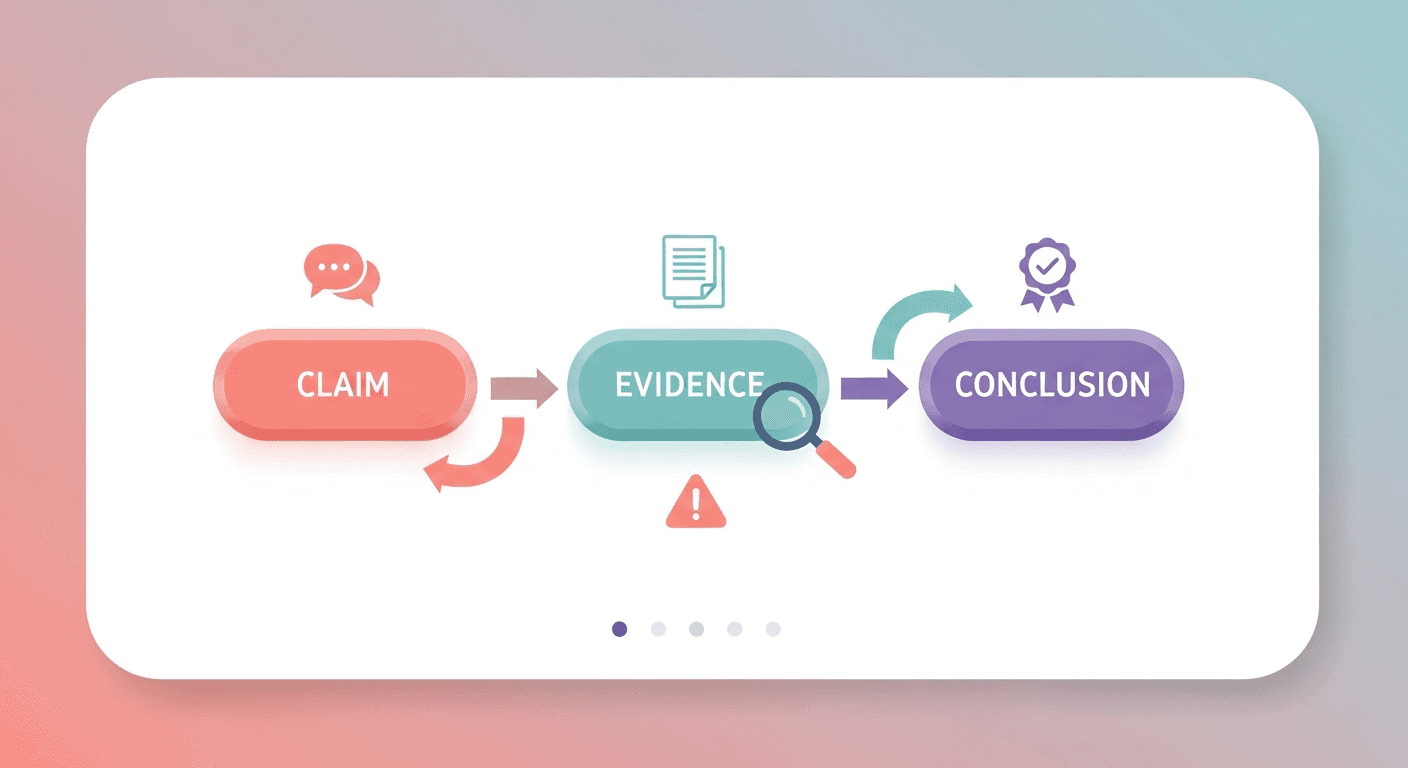
La raison n’est généralement pas votre rédaction. Les évaluateurs sont formés pour voir au-delà d’un style fluide et poser une question plus difficile : “l’argument tient-il vraiment la route ?”
Un article peut se lire facilement et quand même être rejeté si les affirmations sont trop fortes par rapport aux preuves, si les citations ne soutiennent pas précisément le point avancé, ou si la conclusion va au-delà de ce que les données peuvent raisonnablement défendre.
<CTA title="Faites rapidement le point sur les affirmations et les citations" description="Avant de soumettre, il est utile de vérifier que vos affirmations les plus fortes et les sources placées à côté d’elles correspondent réellement." buttonLabel="Lancer une vérification rapide" link="https://app.jenni.ai/register" />
La vérité inconfortable : un bon texte peut quand même être facile à rejeter

Les évaluateurs ne rejettent pas les articles parce que les phrases sont fluides. Ils rejettent les articles parce que la logique sous-jacente à l’écriture est pas défendable.
C’est pourquoi « sonne bien” et « tient la route » ne sont pas la même chose. Un paragraphe bien rédigé peut tout de même susciter le scepticisme s’il avance une affirmation forte et que les preuves ne la soutiennent pas clairement.
En pratique, les signaux d’alerte ressemblent généralement à ceci :
l’affirmation est assurée, mais la source est prudente
la citation est réelle, mais elle ne correspond pas au point avancé
la conclusion va plus loin que ce que les données permettent
Si vous avez déjà soumis un texte qui vous semblait solide, puis que l’on vous a demandé des révisions majeures, c’est souvent parce que l’un de ces écarts de crédibilité est apparu pendant l’évaluation.
Ce à quoi ressemble réellement un rejet (rejet au tri éditorial vs révisions majeures)
Le rejet n’est pas un résultat unique. Parfois, il s’agit d’une décision rapide avant même que votre article n’atteigne les évaluateurs. D’autres fois, le processus est plus lent : l’article est pris au sérieux, mais l’argument doit être resserré avant de pouvoir avancer.
Savoir lequel des deux cas vous concerne rend les retours moins personnels et beaucoup plus faciles à corriger.
Rejet au tri éditorial (non rapide)
C’est la décision rapide de type « ce n’est pas adapté ». Elle survient souvent lorsque l’article ne correspond pas au périmètre de la revue, que la contribution n’est pas claire ou que les affirmations centrales paraissent trop ambitieuses au regard des preuves fournies. Même une rédaction soignée ne sauvera pas une soumission si le rédacteur en chef ne voit pas de raison évidente de l’envoyer en évaluation par les pairs.
Révisions par les pairs (douloureuses, mais corrigibles)
C’est là que les choses deviennent plus précises. Les évaluateurs conviennent généralement que votre sujet mérite d’être examiné, puis commencent à mettre l’argument à l’épreuve. Beaucoup de commentaires des évaluateurs se résument à savoir si les affirmations et les citations correspondent.
Signaux d’alerte courants en évaluation par les pairs :
affirmations non étayées
détails méthodologiques peu clairs
décalage entre la citation et le propos, ou citation déformée
Exemple rapide : un évaluateur pourrait dire que les preuves sont intéressantes, mais qu’il ne peut pas savoir si vos citations soutiennent exactement l’affirmation, ou si votre formulation est plus forte que ce que la source affirme réellement.
Les quatre déclencheurs de crédibilité qui font échouer une bonne rédaction
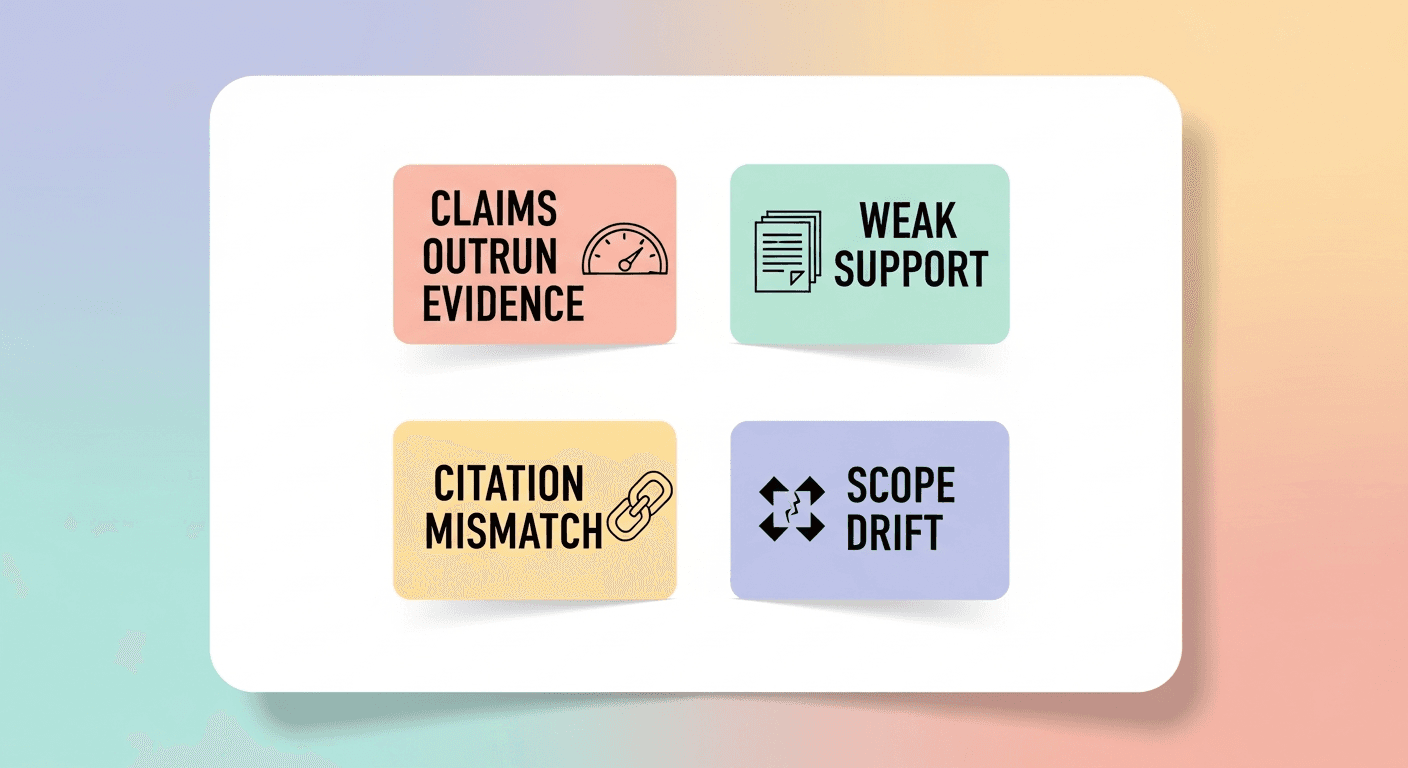
La plupart des articles rejetés ne sont pas « mauvais ». Ils sont simplement plus faciles à mettre en doute. Les évaluateurs peuvent suivre la rédaction, mais ils ne peuvent pas faire entièrement confiance à la chaîne entre l’affirmation, la preuve et la conclusion.
Ces quatre déclencheurs sont les raisons les plus fréquentes, même dans des brouillons bien rédigés.
Déclencheur 1 : des affirmations qui dépassent les preuves
C’est lorsque votre formulation paraît plus certaine ou plus générale que ce que la source soutient réellement. Cela se produit souvent lorsque vous essayez d’avoir l’air sûr de vous, alors que les preuves sont limitées, contradictoires ou propres à un seul contexte.
Exemple en 2 lignes
Trop fort : « Cette intervention améliore les résultats des étudiants dans tous les contextes. »
Plus défendable : « Cette intervention a amélioré les résultats dans cet échantillon, même si les résultats peuvent varier selon les contextes. »
Une correction simple consiste à faire correspondre vos verbes et votre portée à l’étude. Si votre article dit « suggère », votre phrase ne devrait pas dire « prouve ».
Déclencheur 2 : des preuves présentes, mais pas assez solides
Parfois, le problème n’est pas l’absence de citations ; c’est la qualité du soutien et le niveau de certitude des preuves qui les appuie.
Vous le voyez généralement lorsque :
une petite étude est utilisée pour justifier une affirmation large
des résultats anciens sont utilisés pour étayer un contexte moderne sans explication
des sources de contexte ou d’opinion sont traitées comme des preuves
Un moyen rapide de vérifier la solidité consiste à se demander : si un évaluateur voulait contester cette affirmation, les preuves rendraient-elles cela difficile ou facile ?
<ProTip title="🧱 Appui solide :" description="Si l’affirmation est grande, les preuves doivent l’être aussi. Réduisez la portée de l’affirmation ou renforcez l’appui." />
Déclencheur 3 : les citations existent, mais ne soutiennent pas le point
Celle-ci est sournoise. Tout semble correctement cité, mais la citation ne correspond pas au sens de la phrase. C’est l’endroit où un décalage entre l’affirmation et la source se glisse le plus souvent.
Cela peut se produire lorsque :
la source soutient une idée connexe, mais pas votre affirmation exacte
la source est prudente, mais votre phrase est absolue
la citation est placée trop loin de l’affirmation, donc on ne voit pas clairement ce qu’elle soutient
C’est là que le décalage entre l’affirmation et la source apparaît le plus souvent.
Déclencheur 4 : dérive du périmètre (votre conclusion est plus vaste que vos données)
La dérive du périmètre apparaît généralement dans les sections de discussion, lorsque vous passez de « ce que nous avons trouvé » à « ce que cela signifie pour tout le monde ». Ce saut est tentant, surtout lorsque vos résultats sont intéressants, mais les évaluateurs réagiront si la conclusion va au-delà de ce que les données peuvent justifier.
Une bonne façon d’éviter cette dérive est d’énoncer votre conclusion, puis d’en préciser immédiatement la limite. Échantillon, contexte, période et limites.
Exemple de formulation
« Ces résultats peuvent être utiles pour le groupe X dans le contexte Y, mais des recherches supplémentaires sont nécessaires pour confirmer s’ils se généralisent au-delà de ce cadre. »
Des corrections rapides qui évitent 80 % des rejets évitables
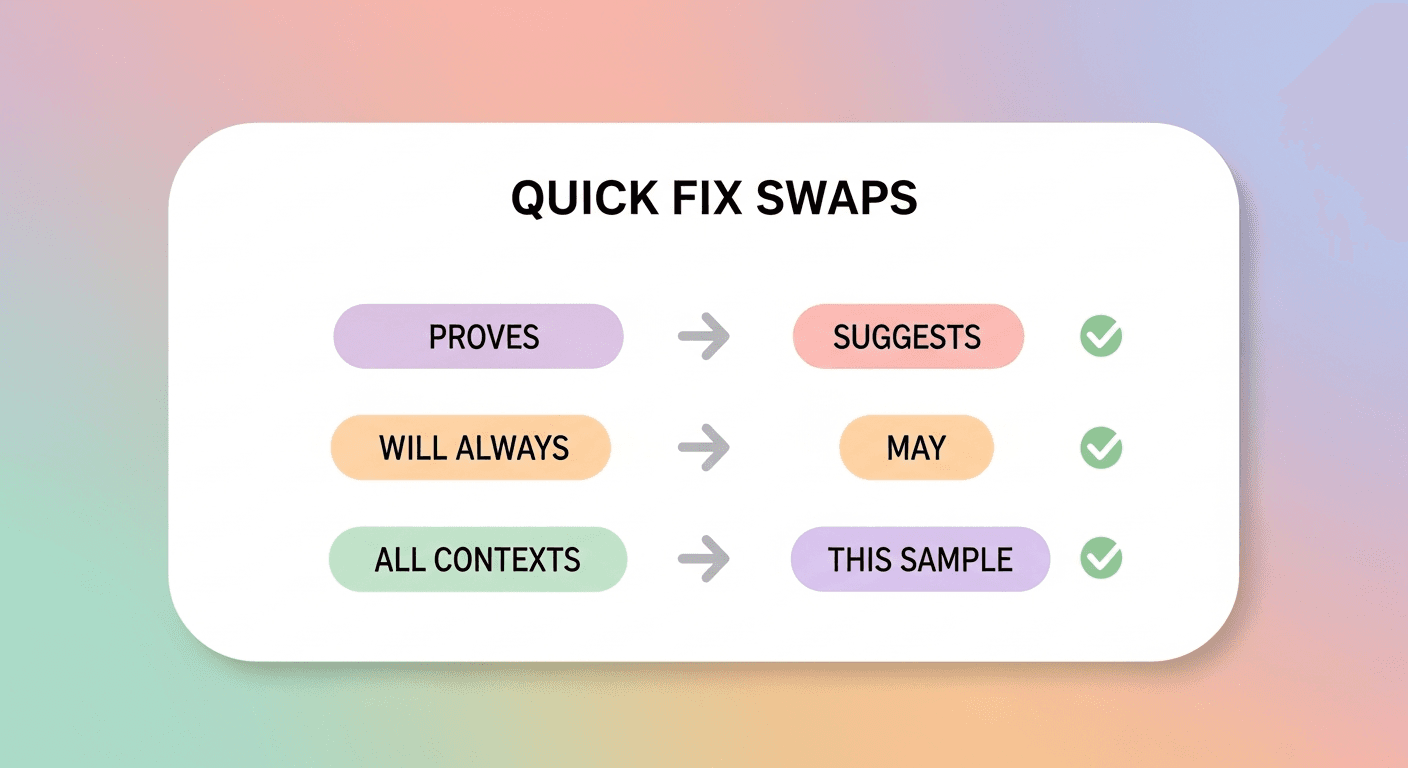
Vous n’avez pas besoin de réécrire tout votre article pour réduire le risque de rejet. La plupart du temps, quelques ajustements suffisent pour rendre votre brouillon beaucoup plus défendable rapidement. Une liste de contrôle avant soumission rapide rend ces ajustements reproductibles.
Remplacez le langage absolu par un langage exact
Prouve → suggère
Provoque → est associé à
Va toujours → peut
Réduisez la portée de l’affirmation au lieu de défendre une version trop large
Tous les contextes → cet échantillon
Tout le monde → les participants de cette étude
Impact à long terme → résultats à court terme
Placez les citations exactement sur la phrase qui énonce l’affirmation
Citation en fin de paragraphe → citation placée juste après l’affirmation
Une citation pour plusieurs affirmations → une citation par phrase d’affirmation
Paragraphe déversé en bloc → citations au niveau de l’affirmation
Ajoutez les limites avant que les évaluateurs ne le fassent à votre place
Affirmation universelle → dans ce contexte
Conclusion trop confiante → dans ces limites
Message fort → message borné
<ProTip title="⚡ Gain rapide :" description="Commencez par votre phrase la plus audacieuse. Une seule reformulation précise peut éviter un long retour critique des évaluateurs." />
Passage rapide avant soumission grâce à Claim Confidence dans Jenni
Lorsque vous êtes proche de la soumission, les problèmes les plus difficiles à repérer sont généralement ceux liés à la crédibilité. Claim Confidence vous offre un moyen rapide d’analyser votre brouillon et de repérer les types de problèmes que les évaluateurs signalent en premier, sans devoir relire tout le texte manuellement.
Comment l’utiliser
Cliquez sur Révision
Cliquez sur Lancer la revue sous Claim Confidence
Attendez un instant que les résultats
Cliquez sur un élément signalé pour voir l’explication
Choisissez Accepter ou Rejeter pour appliquer la suggestion
Soumettez avec confiance, pas en espérant
Au fond, la plupart des rejets ne concernent pas le style d’écriture. Ils surviennent lorsqu’un évaluateur ne peut pas pleinement faire confiance au lien entre vos affirmations, vos preuves et vos conclusions.
Avant de soumettre, prenez quelques minutes pour resserrer les phrases qui portent le plus de poids. Assurez-vous que vos affirmations les plus fortes correspondent à ce que disent réellement vos sources, et ajoutez des limites lorsque vos preuves sont restreintes. C’est ainsi qu’un article bien rédigé devient un article défendable.
<CTA title="Soumettre avec confiance" description="Lancez Confiance des affirmations pour repérer rapidement les affirmations non étayées, exagérées ou décalées avant l’évaluation." buttonLabel="Analyser mon brouillon" link="https://app.jenni.ai/register" />