By
Nathan Auyeung
—
Works Cited vs References Explained

Nathan Auyeung
Senior Accountant at EY
Graduated with a Bachelor's in Accounting, completed a Postgraduate Diploma of Accounting
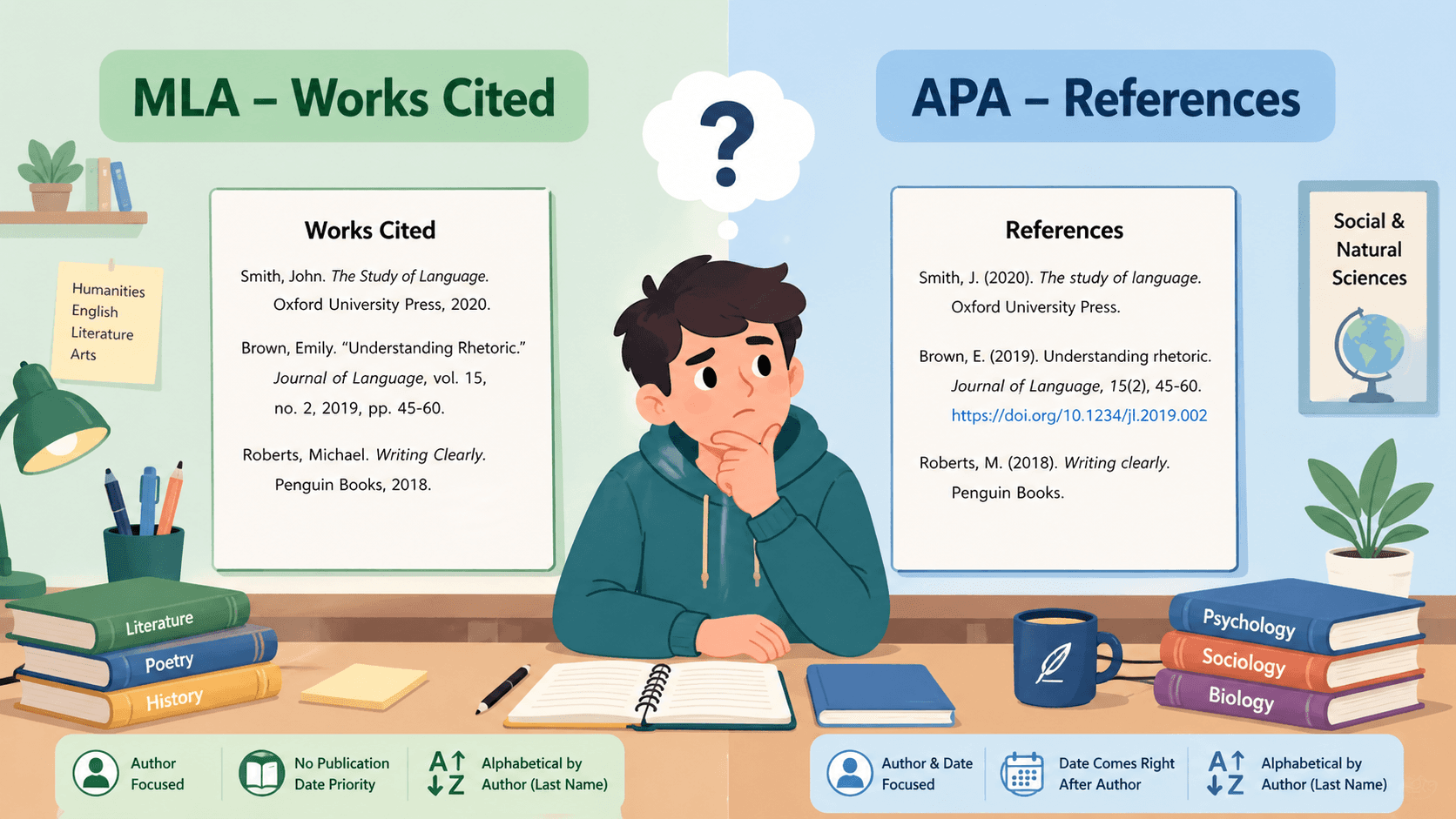
Students mix up "Works Cited" and "References" all the time. They do the same job, listing your sources, but their formatting is different. The MLA style calls it a "Works Cited" page, while APA style uses "References."
That's the whole distinction. It's about following the rules of the style guide your professor requires.
<CTA title="Format Citations Without Confusion" description="Create accurate works cited and reference lists with guided structure and formatting support" buttonLabel="Try Jenni Free" link="https://app.jenni.ai/register" />
What “Works Cited” and “References” Really Mean
A "Works Cited" or "References" page is just a complete list of every source you actually quoted or paraphrased in your paper. The title you use depends on your citation style: MLA says "Works Cited," and APA says "References."
The key rule is that every source on that final page must have a corresponding in-text citation in your paper. According to reference list basic rules, consistency is the hallmark of a professional paper. No exceptions.
If you mention a book in your essay, it must be on the list. If a source is on the list, you must have cited it in your writing. Forget one, and your bibliography is incomplete.
Both lists share three non-negotiable traits: they include only cited sources, they go at the very end of the document, and they follow incredibly precise formatting rules for things like italics and punctuation. This is standard for any formal essay or research report.
<ProTip title="💡 Pro Tip:" description="Every in text citation must match a full entry in your citation list" />
The Core Difference: MLA vs APA Naming
The only real difference between a "Works Cited" page and a "References" page is the style guide you're following. It's a formatting rule, not a conceptual one.
MLA calls it "Works Cited."
This is the standard for the humanities, English, philosophy, and art history. The format centers on the author and the literary work itself.
To keep these sources organized throughout your research phase, using a citation manager can save you hours of manual entry later. A typical MLA entry looks like this:
Smith, John. The Study of Language. Oxford University Press, 2020. The list is always in alphabetical order by the author's last name.
APA calls it "References."
This is for the social and natural sciences, like psychology or biology. APA cares about when the research was published, so the date comes right after the author's name. An example:
Smith, J. (2020). The study of language. Oxford University Press. This list is also alphabetical.
Feature | Works Cited (MLA) | References (APA) |
Used In | Humanities | Social & Natural Sciences |
Primary Focus | Author & Source | Author & Date |
Standard Title | Works Cited | References |
Example Format | Smith, John. The Study of Language. Oxford UP, 2020. | Smith, J. (2020). The study of language. Oxford University Press. |
The choice isn't yours; it's dictated by your professor's assignment or your field's publishing standards.
Works Cited vs Bibliography vs References
Works Cited (MLA) and References (APA) are your "used" list. They contain only the sources you directly quoted, paraphrased, or cited within the text of your paper. If you didn't mention it in your writing, it doesn't belong here. For a paper citing five studies on statistical sampling, only those five go on the list.
A Bibliography is your "explored" list. It's broader. This page includes every source you consulted during your research, whether you ended up citing it or not. You might read twenty articles on clinical trial sampling methods but only directly reference ten of them. All twenty would belong in the bibliography.
List Type | What It Includes | When You Use It |
Works Cited / References | Only the sources you cited in your paper. | Almost always for standard essays and research papers. |
Bibliography | All sources you consulted for background, even if not cited. | Common in extensive, research-heavy projects or when required by a professor. |
The rule is simple: if your assignment says "Works Cited" or "References," only list what you cited. If it says "Bibliography," you can list everything you read.
When using modern assistants to help draft these sections, it is a best practice to disclose AI use in academic writing to stay transparent with your institution's policies.
<ProTip title="📌 Note:" description="Always follow your assignment instructions since terminology depends on required style" />
Why Citation Accuracy Matters in Academic Writing
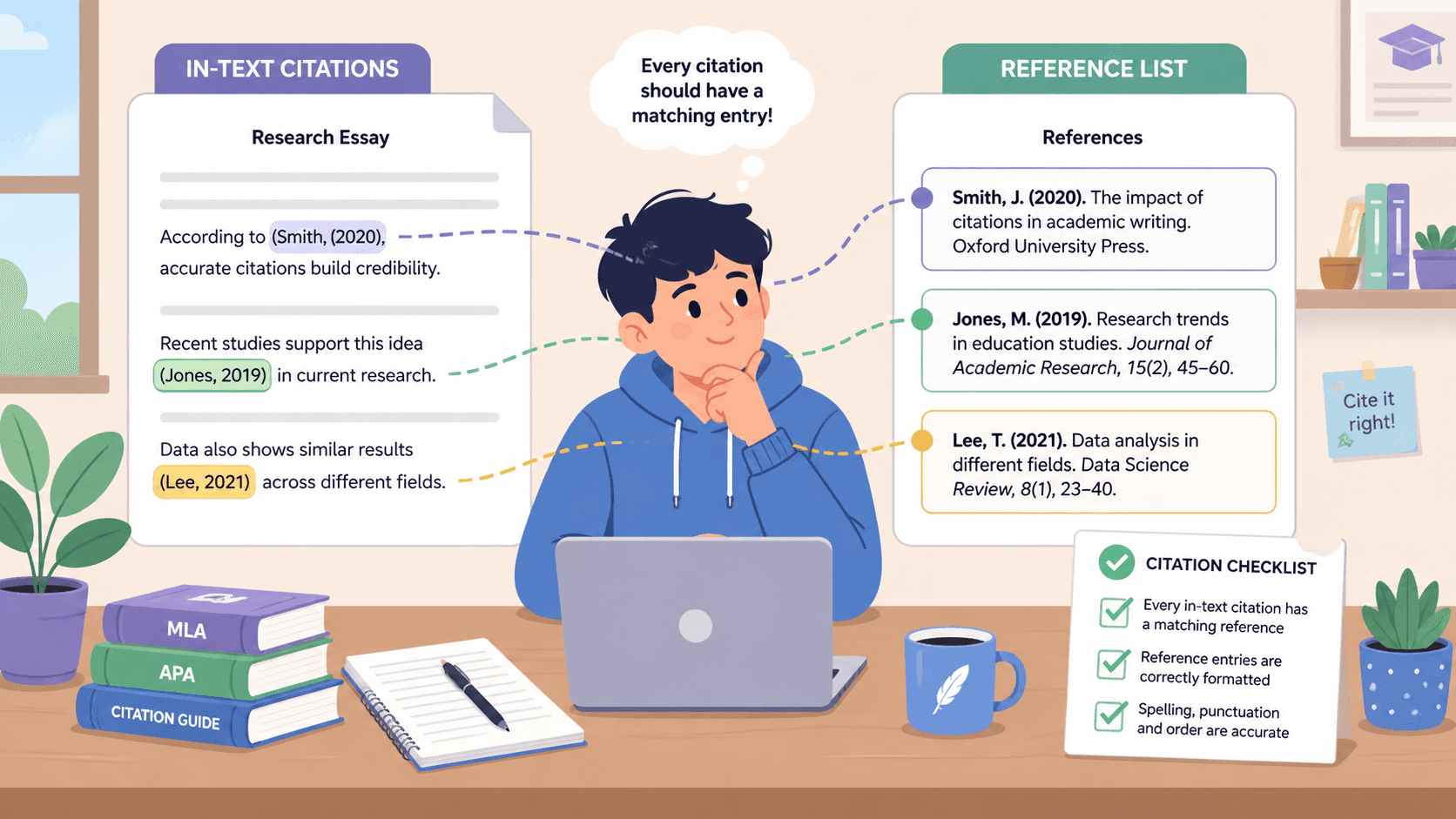
Getting your citations right is about more than just following fussy rules. It's the foundation of your credibility as a researcher.
Sloppy citations weaken your paper, no matter how good your ideas are. The U.S. Office of Research Integrity flags improper academic attribution as a top violation.
Accurate citations show the origin of your ideas, demonstrate how your work fits into the larger conversation, and acknowledge other scholars' intellectual property.
This is non-negotiable in research-heavy fields like data collection or study design, where tracing the lineage of a method is everything.
Why It Really Matters
Builds credibility: Clear, accurate citations make your work more trustworthy and professional.
Prevents plagiarism: Proper attribution protects you from serious academic violations.
Shows research depth: It demonstrates that you’ve engaged with relevant and reliable sources.
Supports your arguments: Strong referencing strengthens your claims with evidence.
Connects your work to the field: It shows how your ideas fit into ongoing scholarly discussions.
Common errors, like mixing up MLA and APA styles, aren't minor typos. At many schools, such mistakes can dock a full letter grade.
While you might be tempted to automate the entire process, you should learn how to choose AI writing tool setups that allow for manual oversight to ensure every comma is in its place.
These aren't minor typos. At many schools, including Harvard, such mistakes can dock a full letter grade, sometimes 10-20% off your score. That's a significant penalty for something entirely within your control.
<ProTip title="⚠️ Reminder:" description="Check consistency between in text citations and final list before submitting" />
How to Format Works Cited and References Correctly
MLA and APA have their own rules for how to list your sources. The formats are different, but they're both structured. Knowing the rules makes your paper look clean and professional.
MLA formatting essentials
MLA 9 asks for a few specific things. The whole page should be double-spaced with a hanging indent.
You can find the mla works cited page basic format on official style guides to ensure your margins and alphabetical order are correct. Use the author's full name whenever possible.
Each entry needs a hanging indent, which means the first line starts at the margin, but the rest of the lines are indented. You list everything in alphabetical order by the author's last name.
Use the author's full name if you can find it. When you're citing a book or a website in MLA, being consistent across all your entries is more important than getting every single detail perfect.
APA formatting essentials
APA 7 has different requirements for a References page. Instead of full names, use the author's last name and initials. The publication year comes right after the author's name.
Titles of books or journals should be italicized. Include a DOI or a URL if the source has one. This structure is standard for citing journal articles or research papers in APA.
Here's a quick side-by-side look at how the same source is formatted differently.
Source Type | MLA Format | APA Format |
Book | Smith, John. Book Title. Publisher, 2020. | Smith, J. (2020). Book title. Publisher. |
Journal Article | Smith, John. "Article Title." Journal Name, vol. 10, no. 2, 2020, pp. 45-50. | Smith, J. (2020). Article title. Journal Name, 10(2), 45-50. |
This table shows the main differences between MLA and APA style.
Practical Tips to Avoid Citation Mistakes
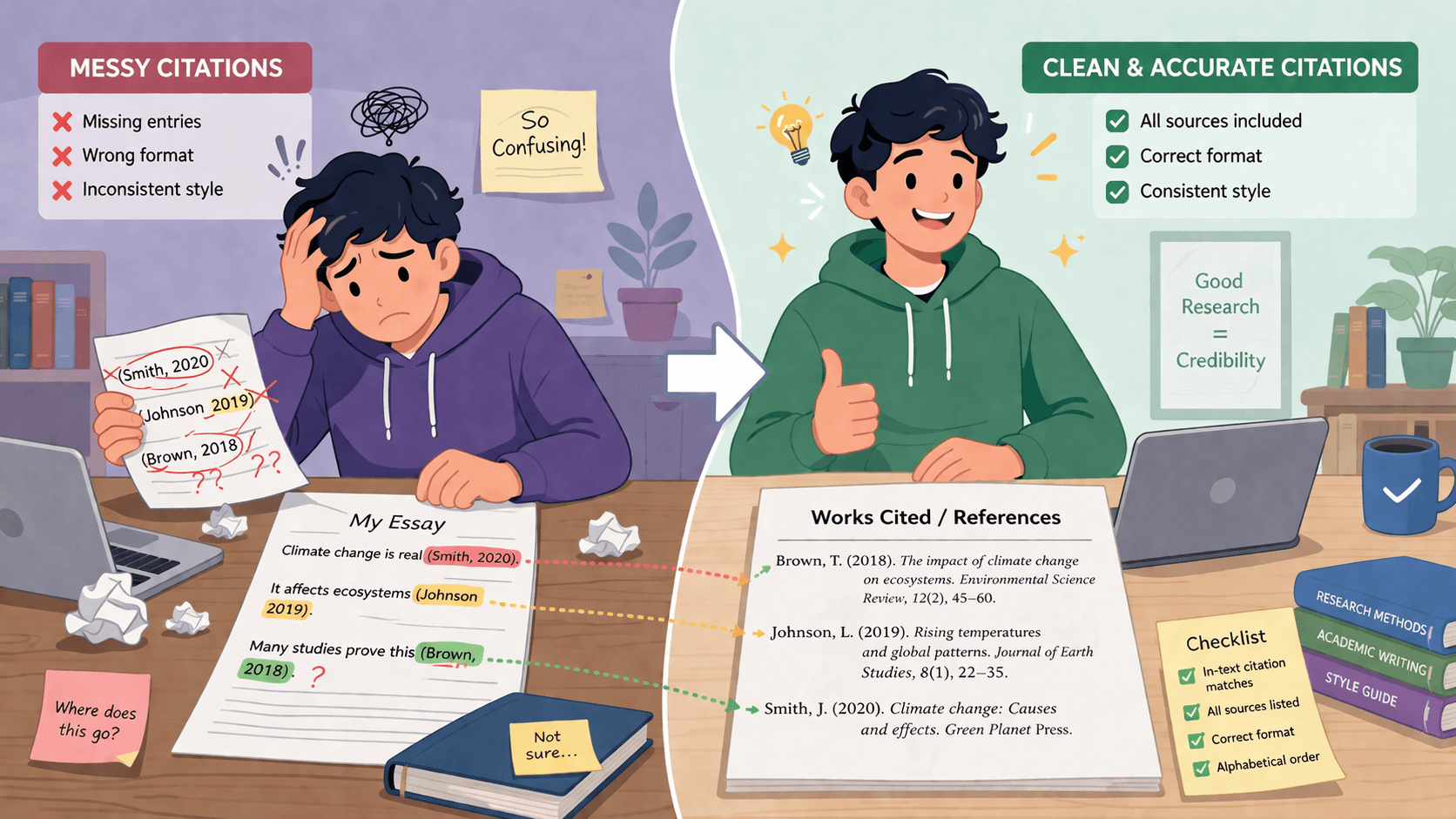
Even professors sometimes mess up citations. A basic checklist before you turn in a paper can save you from common mistakes.
Before you submit anything, run through these points:
Does every name or date you mentioned in the text actually appear in your Works Cited or References list?
Is the formatting, like italics, spacing, and punctuation, correct for the style you’re using (MLA or APA)?
Are your sources listed in the correct alphabetical order by the author's last name?
Have you followed the specific punctuation rules for the style? MLA uses periods in certain places, APA uses parentheses, etc.
Checking these things covers the main rules for formatting your reference page and is a solid academic writing habit.
Using tools versus checking yourself
Citation generators are popular. They’re handy for tricky situations, like listing multiple authors, figuring out how to cite a weird online source, or finding the right format for an APA DOI. But these tools aren’t flawless.
They often get details wrong or use outdated templates. You should always look over what the generator gives you.
Compare it to a style guide example from your library or the official MLA/APA website. A quick manual review fixes most of the errors an automated tool might introduce.
<ProTip title="🧠 Pro Tip:" description="Use citation tools for speed but always verify formatting manually" />
What This Means in Practice
Knowing whether you need a Works Cited or a References page is really about knowing what your professor expects. The choice isn't random.
If you're writing a paper for a literature, history, or arts class, you'll almost always use MLA. Your list of sources should be titled "Works Cited." If you're in psychology, sociology, or a similar social science, APA is the standard. That page is called "References."
This choice changes everything about your bibliography: the structure of each entry, the order information is presented, and even the overall look of the page. It's part of a larger set of research habits.
How you cite your sources is connected to how you choose your evidence and how you ensure your data is reliable. A messy bibliography can suggest messy research. A clean, correctly formatted one signals clear, organized thinking.
Getting Your Citations Right
You’re checking your paper and second guessing if your citations match the right format, and it slows everything down. Small mistakes can cost marks even when your argument is solid. It’s frustrating.
<CTA title="Create Accurate Citations Faster" description="Build properly formatted citation lists with structured guidance and editing support" buttonLabel="Try Jenni Free" link="https://app.jenni.ai/register" />
Jenni can help you keep your citation sections clear and consistent without overthinking each detail. It guides how you organize and format your sources, so you can focus on your argument and submit your work with fewer errors.