By
Justin Wong
—
Reduce AI-Sounding Text: Practical Writing Fixes That Work

Justin Wong
Head of Growth
Graduated with a Bachelor's in Global Business & Digital Arts, Minor in Entrepreneurship
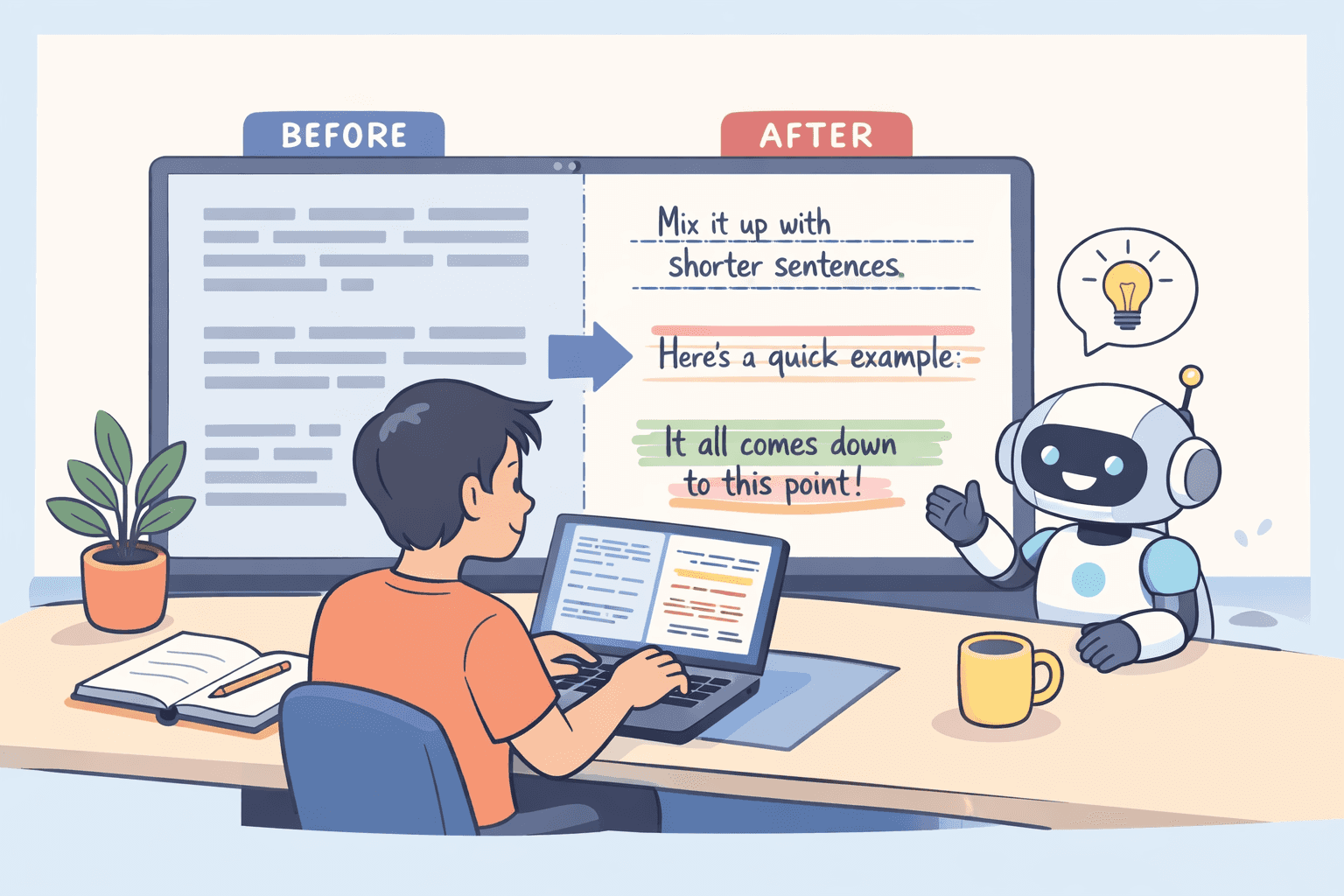
AI-written text tends to feel repetitive and impersonal, making readers trust it less. Researchers at Stanford HAI pointed this out in 2023, noting people spot it by its predictable patterns and vague details.
This guide will walk you through fixing it. We'll cover hands-on editing, changing up the structure, and adjusting the voice to make your content sound like a person wrote it.
<CTA title="Write More Naturally with AI Support" description="Turn rough drafts into human sounding writing with structured guidance and editing control" buttonLabel="Try Jenni Free" link="https://app.jenni.ai/register" />
Why AI Text Sounds Artificial
AI writing sounds fake because it works from data patterns, not real understanding. Its sentences often run at the same length, use overly safe words, and fall into a predictable rhythm.
Researchers have even explored the ethical and social implications of generative AI in academic spaces, noting how this lack of depth affects credibility.
As the MIT Technology Review put it, these systems choose the most probable word, not the most original one. That's why the text can seem polished yet completely hollow.
It misses subtlety. To avoid mistakes, it strips out any hint of personality. You're left with something that's technically correct but utterly generic.
You'll usually spot three big problems:
Paragraphs that all follow the same blueprint.
A reliance on stiff, formal phrasing.
A complete absence of concrete, real-world examples.
These flaws pop up everywhere, from explaining research methods to detailing how to pick a survey sample. True clarity needs precision and variety, not the same recycled phrases.
<ProTip title="💡 Pro Tip:" description="Read your text out loud to quickly spot robotic rhythm and unnatural phrasing" />
Structural Fixes That Immediately Improve Flow
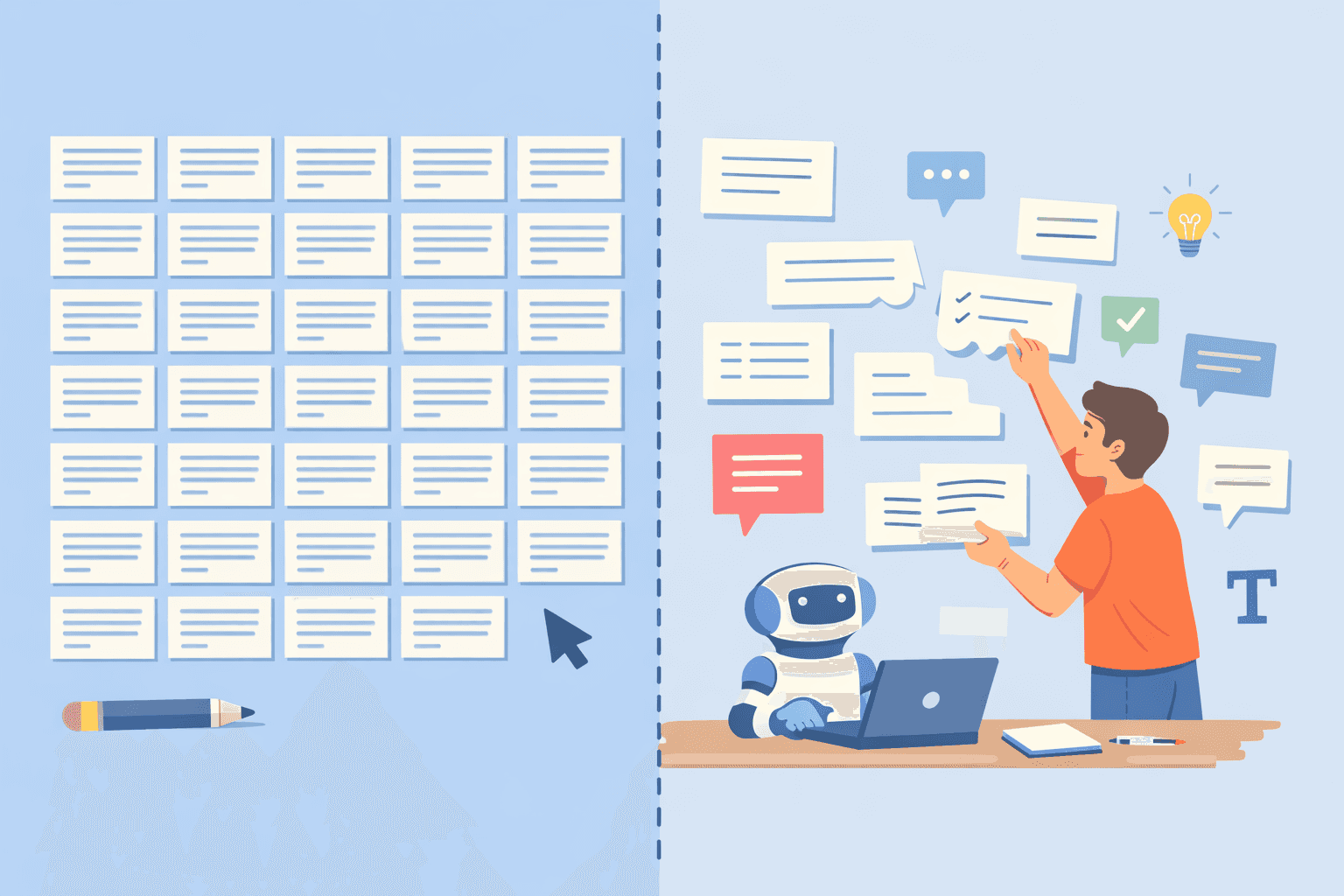
The quickest way to make text feel less robotic is to break its predictable layout. AI loves uniform paragraphs and a strict, logical order. People don't write that way.
Break the "perfect paragraph" mold
Don't let every paragraph be the same size. Mix it up.
Drop in a one-sentence line for emphasis.
Follow a long idea with a short, sharp list.
Chop out those generic opening and closing lines AI always adds.
Compare these two lines about sampling:
AI: This section will discuss the importance of sampling techniques in research.
Human: Sampling techniques shape your entire study. Get them wrong, and your results collapse.
The second version has a voice. It gets to the point. While many turn to technology to fix these issues, it is important to know how to choose AI writing tool options that prioritize natural flow over rigid templates.
Explain things out of order
Think about how you'd tell someone a concept in person. You'd probably bounce between an example and the definition, not march through a textbook outline.
Take explaining a population versus a sample. A human might start with a real-world example of a flawed poll, then define the terms, then circle back to why the example failed. That back-and-forth is more natural and easier to follow than a rigid, step-by-step sequence.
Cut the repetition
AI has a habit of saying the same thing in slightly different ways across sections. You might see "sampling bias" explained three times in one article. Be ruthless.
Read your draft and delete any paragraph that doesn't introduce a genuinely new point or a fresh angle. If a section feels familiar, it probably is.
<ProTip title="📌 Note:" description="Rewrite the first and last sentence of each paragraph to break AI patterns" />
Language Adjustments That Make Writing Sound Human
The words you choose instantly signal whether a human or a machine wrote the text. A few small edits make a huge difference.
Swap out the stiff vocabulary
AI leans on overly formal words. Use simpler ones instead.
Utilize becomes use.
Demonstrates becomes shows.
In order to becomes to.
This is crucial even for technical topics like designing a sampling framework or explaining statistical significance.
To stay organized during this editing phase, using a citation manager can help you keep track of your sources without cluttering your prose with academic jargon.
Let your writing breathe with contractions
Contractions create a natural rhythm. They stop your writing from sounding like a manual.
Do not → don't
Cannot → can't
It is → it's
Using them can soften the tone of a dry subject, whether you're writing about academic research methods or the protocols for a clinical trial.
Delete the empty filler phrases
AI often uses fluff to connect ideas. These phrases add no real meaning. Watch for things like:
"It is important to note that..."
"In conclusion,..."
"Furthermore,..."
Scan your draft and cut every one that isn't absolutely necessary. If a sentence works without the opener, delete it.
<ProTip title="✍️ Reminder:" description="Shorter words and sentences often feel more human and easier to read" />
Personalization: The Real Difference Maker
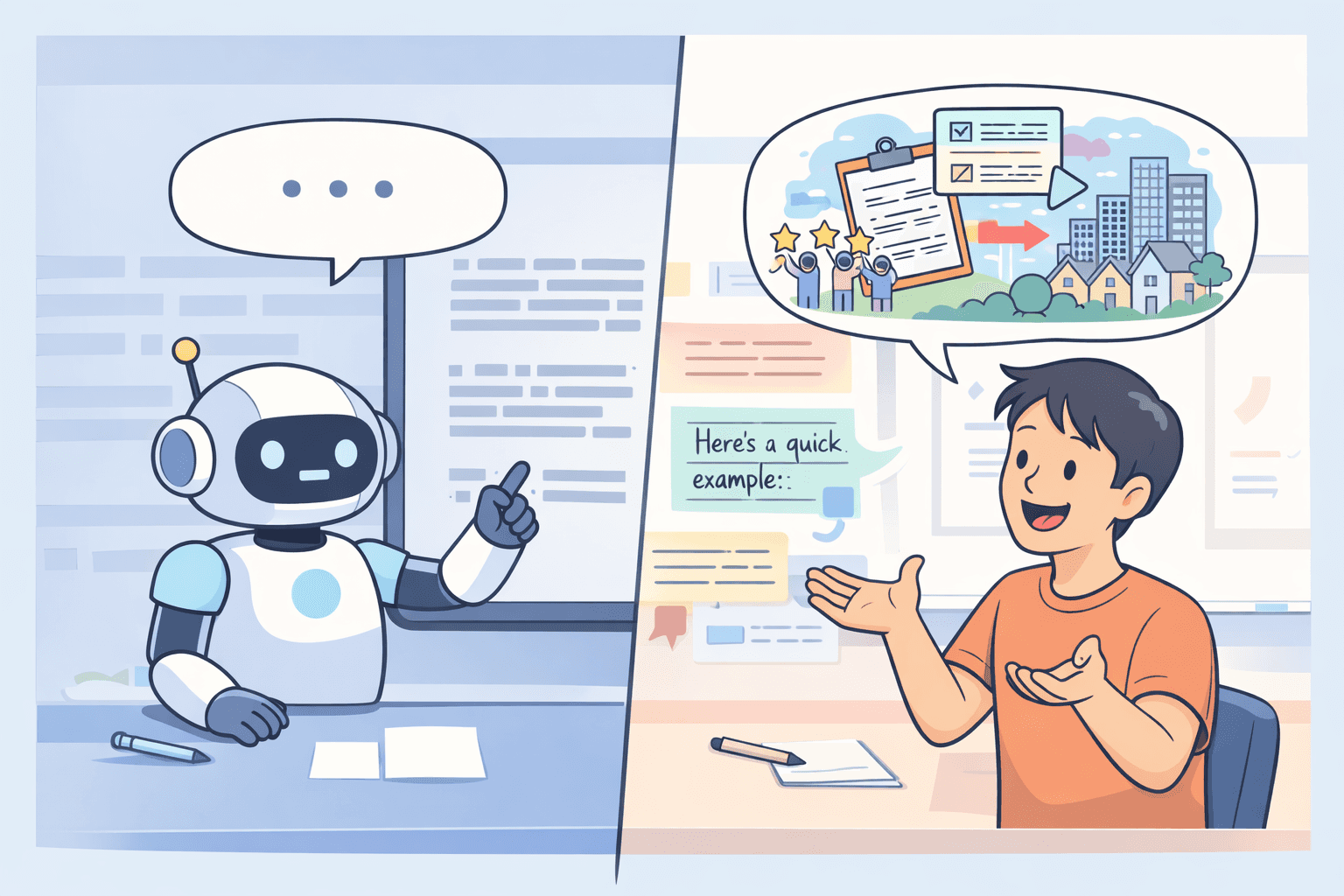
The real split between AI and human writing comes from experience. A machine can't pull from real life or develop a genuine voice.
A Pew Research Center report found people trust writing more when it includes concrete examples or a personal point of view.
However, as AI becomes more prevalent, the question of whether AI detectors work remains a hot topic for editors and educators alike.
Get specific, not abstract
Vague statements feel automated. Swap them for details you can see or feel.
Don't write: Data collection methods vary depending on the study. Try this instead: For one urban mobility survey, the team collected responses outside subway stations every weekday from 7 to 9 AM.
That single, concrete image makes the idea stick.
Use tiny, true stories
A quick, relevant anecdote grounds your point better than any general rule.
For example, when talking about sampling bias, don't just define it. Tell a quick story: A food delivery app surveyed only its five-star reviewers. They were shocked when a broader launch received terrible ratings.
That fifty-word story explains the concept perfectly.
Let your tone move around
People don't speak in one steady, formal drone. Our tone shifts with the subject.
You might explain a complex research method with precise, academic language. Then, to clarify the core idea, you could drop into a more casual, direct sentence. That natural mix of registers kills monotony and sounds authentically human.
<ProTip title="🔥 Pro Tip:" description="Add one real example or story per section to make writing feel grounded" />
What Community Insights Reveal About AI Writing
Every platform has its own take, but they all point to the same core problems with machine-generated text.
Many users are now asking if it was written human or AI when they encounter content online, searching for that elusive human "spark."
Platform | The main takeaway | The typical AI flaw it exposes |
You can't skip the manual edit. | A stiff, robotic structure. | |
Quora | Clear frameworks are everything. | Vague, over-generalized explanations. |
X (Twitter) | Personality gets you noticed. | A bland, bot-like tone. |
YouTube | Storytelling builds a real link. | A complete lack of authentic voice. |
These lessons hold true even in technical fields, think data science, experimental design, or public polling. In those areas, your credibility lives or dies on clear communication and reader trust.
Reddit's reality check: you still have to do the work
The consensus here is clear: tools alone aren't enough. A human has to step in and polish the draft. Common tactics writers use:
Putting a first draft through a rephrasing tool, then...
Reading the result out loud to catch awkward rhythms.
Manually rewriting the clunky parts until it flows.
That final editing pass makes all the difference.
Quora's fix: fight the urge to be vague
Subject-matter experts on Quora notice AI defaults to broad, abstract language. This is a real problem when explaining precise concepts, like the basics of sampling distribution or statistical inference.
The fix is to force in concrete examples. A specific, real-world scenario cuts through the fog and actually helps people understand.
X's rule: have a point of view
On a fast-moving platform like X, a generic tone just gets lost. Posts about survey strategy or data reliability don't gain traction unless they have some character. What works? A strong opinion. A bit of humor. Phrasing that shows you understand the current conversation.
YouTube's edge: it's all about the story
For video creators, writing is a craft, not an automation task. They know that in topics like a sampling case study or field research methods, a narrative does what raw data can't, it adds context, meaning, and makes the information memorable. The voice is the advantage machines can't copy.
Step-by-Step Process to Reduce AI-Sounding Text
Here's a straightforward process you can use every time you need to clean up AI-generated writing.
1. Tear down the template Start by deleting entire sections that feel unnecessary or repetitive. AI loves to over-explain. Ask yourself: does this paragraph about sampling procedure steps actually say something new, or is it just rephrasing the last one? Be ruthless. Keep only the parts that clearly add value for the reader.
2. Rewrite the bookends The first and last sentence of every paragraph are usually the most generic. They often use predictable openings like "This section will discuss..." or weak summaries. Rewrite these from scratch. Make your opening line direct. Let your closing line land with a point, not just fade out.
3. Inject real-world grit This is the most important step. Wherever you see a general statement, plug in a real example or a concrete number.
If you are writing for university or publication, you may also need to disclose AI use in academic writing to maintain transparency. If you're explaining the margin of error formula, don't just state it.
Show what it means: "A 5% margin of error on a political poll means a candidate's reported 52% support could realistically be as low as 47% or as high as 57%." That detail transforms theory into understanding.
4. Break the rhythm Read your draft and look at the sentence lengths. Do they all look the same? Intentionally mix them up. Follow a long, detailed sentence with a short, punchy one.
This is critical in naturally dense explanations, like defining sampling variability or methods for reducing sampling error. Variation in structure prevents reader fatigue.
5. Listen to it Finally, read the entire piece out loud. Your ear will catch what your eye misses. You'll hear the awkward phrasing, the accidental repetitions, and the flat, monotonous tone that makes text feel machine-made.
Fix every spot where you stumble or where the words just sound off. This final polish is what makes it feel finished.
<ProTip title="🎯 Pro Tip:" description="If a sentence sounds too polished it probably needs simplification" />
Make Your Writing Sound Real Again
You read through your draft and it feels flat, like every sentence blends together with no real voice. It’s hard to trust writing that sounds generic, even if the ideas are good. That’s the problem.
<CTA title="Edit AI Writing with Confidence" description="Shape AI drafts into natural human writing using structured prompts and control" buttonLabel="Try Jenni Free" link="https://app.jenni.ai/register" />
Jenni can help you shape your draft into something clearer and more natural without losing control. It supports your editing process so you can adjust tone and flow, making your writing feel more like you and less like something generated.