Dwara
Nathan Auyeung
—
Snowball Sampling: Definition, Process, aur Key Examples

Nathan Auyeung
Senior Accountant EY mein
Bachelor ka Accounting mein Graduation kiya, aur ek Postgraduate Diploma of Accounting bhi poora kiya

Snowball sampling referrals ke zariye research participants ko dhundhta hai, bilkul ek chain reaction ki tarah. Yeh hidden groups (jaise undocumented migrants ya kisi rare disease ke patients, jahan logon ki koi official list nahi hoti) ki study karne ke liye ek practical aur aksar zaroori method hai.
Hum samjhayenge ki yeh kaise kaam karta hai, iske alag-alag types kya hain, aur ise use karne ke clear steps kya hain. Yeh guide iske asli strengths, iske bade limitations, aur un critical ethical issues ko bhi cover karti hai jinhe researchers ko apne findings ko credible banane ke liye address karna chahiye.
<CTA title="Plan Your Sampling Strategy" description="Structured prompts aur academic clarity ke sath ek clear research method design karein" buttonLabel="Try Jenni Free" link="https://app.jenni.ai/register" />
Snowball Sampling Kya Hai aur Ise Kyun Use Kiya Jata Hai
Snowball sampling aapke current participants se unke apne contacts me se agle participants ko dhundhne ke liye kahkar kaam karta hai. Yeh ek chain reaction hai. Yeh method zaroori hai kyunki logon ke kuch groups standard research approaches ke liye lagbhag invisible hote hain.
Aksar, sample lene ke liye koi master list hoti hi nahi hai. Undocumented workers, closed communities ke members, ya kisi bohot hi narrow field ke specialists jaise logon ki study karne ke liye yahi reality hai.
Jaise snowball sampling definition and methodology me samjhaya gaya hai, jab conventional methods kisi population tak nahi pahunch paate, tab yeh ek practical alternative ban jata hai.
Aap kuch initial contacts se shuru karte hain, jinhe "seeds" kaha jata hai. Ve doosron ko recommend karte hain, jo fir aur logon ko recommend karte hain. Har referral wave ke sath aapka sample size badhta jata hai, bilkul waise hi jaise ek snowball pahad se neeche girte hue bada hota jata hai.
Aap ise in naamo se bhi sun sakte hain:
Network sampling
Referral sampling
Chain-referral sampling
Aap is technique ka use sociology, psychology, aur public health jaise fields me aksar dekhenge, khaskar kisi project ke shuruati, exploratory stages ke dauran.
<ProTip title="💡 Pro Tip:" description="Referral chains me bias ko kam karne aur diversity ko behtar banane ke liye multiple starting participants ka use karein" />
Snowball Sampling Process Kaise Kaam Karta Hai
Halaanki yeh personal networks par rely karta hai, snowball sampling koi free-for-all nahi hai. Isme follow karne ke liye ek clear, step-by-step procedure hota hai, aur in stages ko skip karna ek common error hai.
Yeh aam taur par is tarah se unfold hota hai:
Step 1: Apne "seeds" dhundhein. Aap ek small number of initial participants (aam taur par 3 se 5 log) ko identify aur recruit karke shuru karte hain, jo aapki target population ke profile me fit hote hain.
Step 2: Data ki pehli wave gather karein. Aap apne broader data collection ke part ke roop me in seeds se interviews ya surveys ke zariye information collect karte hain. Crucially, fir aap unme se har ek se poochhte hain ki ve doosre aise logon ko refer karein jinhe ve jaante hain aur jo is study ke liye qualify karte hain.
Step 3: Referrals ke zariye sample ko badhaayein. Seeds dwara refer kiye gaye log aapki second wave ban jaate hain. Fir aap unse referrals maangte hain, jisse ek third wave banti hai, aur isi tarah aage chalta rehta hai.
Step 4: Decide karein ki kab rukna hai. Aap is cycle ko tab tak continue rakhte hain jab tak aapko naya, useful information milna band nahi ho jata (jise saturation point kehte hain) ya aap ek predetermined sample size tak nahi pahunch jaate. Kai studies, jaise Researcher.Life ne note kiya hai, 3 ya 4 waves ke baad khatam ho jaati hain taaki sample socially bohot zyada similar na ho jaaye.
Step 5: Right perspective ke sath analyze karein. Jo data aapko milta hai use exploratory aur context-rich ke roop me interpret kiya jata hai. Yeh shuru se hi clear hota hai ki results statistically broader population ko represent nahi karte.
In steps aur unke implications ke structured breakdown ke liye, step-by-step snowball sampling process dekhein, jo batata hai ki researchers real studies me is method ko kaise apply karte hain.
Ek Real-World Example: Kisi niche type ke software developer par study par vichar karein. Researchers ko koi directory nahi mil saki.
Unhone LinkedIn par kuch contacts ke sath shuru kiya, unka interview liya, aur fir poocha, "Aap aise kisi aur ko jaante hain jo is tarah ka kaam karta hai?" Har naye connection ne ek aur connection tak pahunchaya.
Yeh is method ke core truth ko highlight karta hai: kuch groups ke liye, aapko access trust aur personal networks ke zariye milti hai, databases ya random selection ke zariye nahi.
<ProTip title="📌 Note:" description="Consistency banaye rakhne ke liye recruitment shuru karne se pehle clear inclusion aur exclusion criteria define karein" />
Types of Snowball Sampling Jo Aapko Pata Hone Chahiye
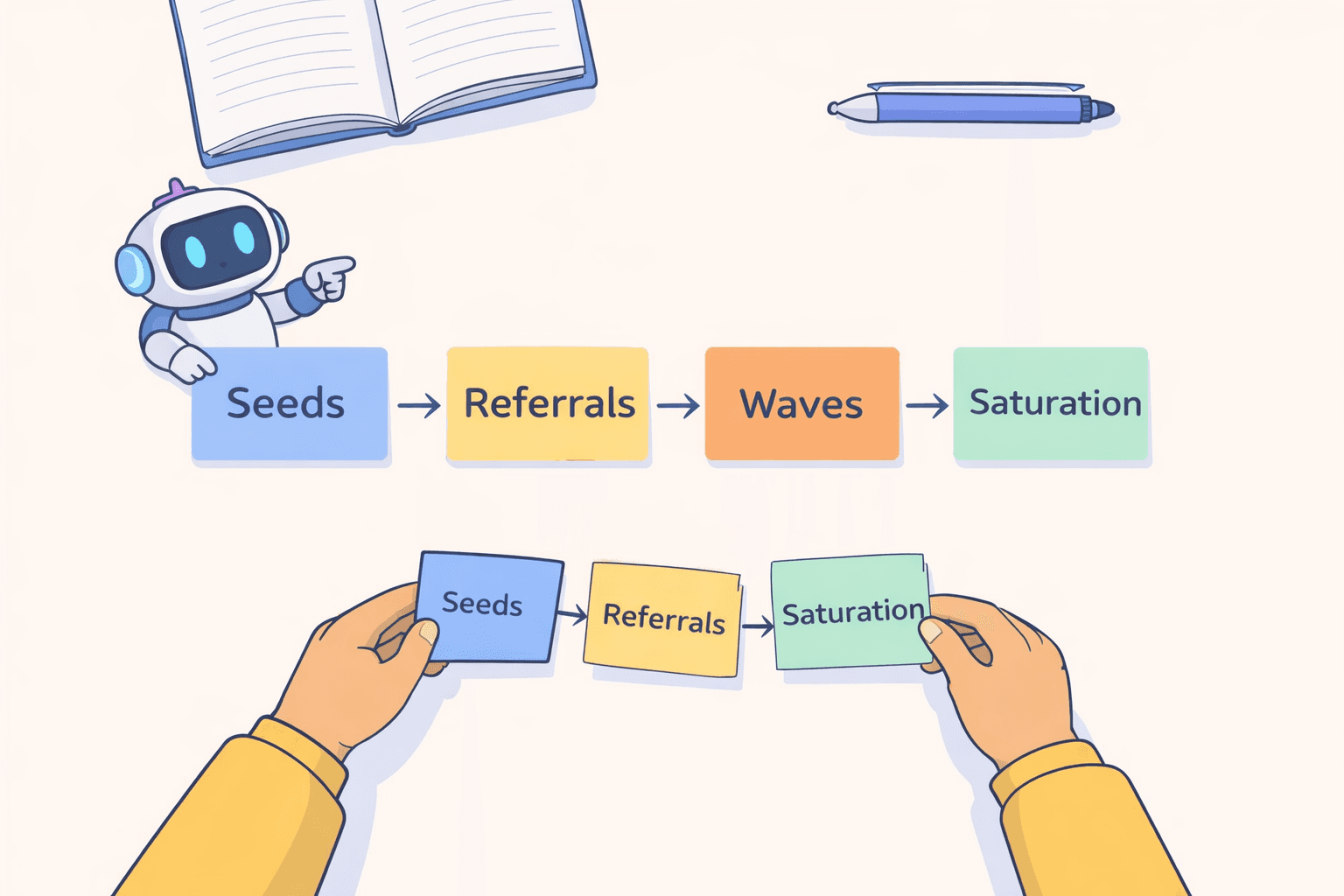
Snowball sampling sirf ek method nahi hai. Jo type aap chunte hain usse sab kuch badal jata hai—aap kitni tezi se logon ko dhundhte hain, kise dhundhte hain, aur kis tarah ka bias isme enter karta hai.
Linear sampling: ek seedhi line
Yahan, aap ek single chain banate hain. Person A, Person B ko jaanta hai, jo Person C ko jaanta hai, aur isi tarah aage chalta rehta hai. Yeh ek narrow, controlled path hai.
Bohot specific traits wale chhote aur mushkil se milne wale groups ke liye achha hai.
Aap ek bade net ke badle deeper aur zyada focused connections chunte hain. Yeh useful hai, lekin is tarah se aapko zyada log nahi milenge.
Exponential sampling: branching tree
Yeh classic version hai jise sabse zyada log use karte hain. Ek person kai doosre logon ko recommend karta hai, jo fir har ek kai aur logon ko recommend karte hain. Aapka sample size bohot tezi se explode ho sakta hai.
Iskaa clear advantage speed aur scale hai.
Bada downside? Har koi ek doosre ko jaanta hai. Aap ek diverse group ke badle ek tight-knit cluster ke sath end up kar sakte hain. Yeh fast hai, lekin yeh kisi community ki bohot narrow picture dikha sakta hai.
Respondent-driven sampling (RDS)
Public health researchers aksar is zyada structured approach ka use karte hain. Yeh bias ke problem ko fix karne ki koshish karta hai.
Participants ko apne peers ko recruit karne ke liye ek chhota incentive milta hai.
Researchers fir results ko weight karne ke liye math use karte hain, taaki is baat ko correct kiya ja sake ki popular log over-sample ho jaate hain. Cambridge University Press ki studies ke mutabik, RDS ka aim hidden populations me better accuracy paana hai, halaanki ise run karna zyada complex hai.
Ek deeper methodological discussion respondent-driven sampling statistical analysis me mil sakta hai, jo respondent-driven sampling me advanced statistical considerations ko explore karta hai.
<ProTip title="⚠️ Reminder:" description="Exponential bias growth ko control karne ke liye per participant referrals ki limit set karein" />
Snowball Sampling Ke Advantages
Is method ke clear, practical benefits hain, khaskar tab jab aap un logon se deal kar rahe hon jo kisi official list me nahi hain.
Yeh qualitative research contexts me bohot useful hai. Agar aap sure nahi hain ki aapki study qualitative hai ya quantitative, toh qualitative vs quantitative research jaise resources clarity me madad kar sakte hain ki snowball sampling kahan sabse effective hai.
Un logon tak pahunchna jo off-the-grid hain Ise use karne ka sabse bada reason yahi hai. Standard surveys un populations ke sath fail ho jaate hain jo hidden hain, stigmatized hain, ya bas aasani se nahi miltin.
Illicit drug use par studies.
Bina papers ke migrant workers se judi research.
Kisi bohot hi rare medical condition ke liye cohort banana. Agar aapko address hi nahi milega toh formal invitation ka koi matlab nahi reh jata. Ek trusted referral hi aisi key hai jo kaam karti hai.
Yeh sasta aur fast hai Aapko expensive mailing lists, advertising budgets, ya complex screening protocols ki zaroori nahi hoti. Recruitment system khud community ke andar built hota hai. Social connections heavy lifting karte hain, jisse paise aur time dono bachte hain.
Nova Southeastern University ki research ne, example ke liye, is approach ka use un professionals ko efficiently dhundhne ke liye kiya jo kisi formal association ka part nahi the.
Deep understanding ke liye bana hai, wide ke liye nahi Snowball sampling qualitative work ke liye ek natural fit hai. Agar aapka goal rich interviews, detailed case studies, ya bas yeh pata lagana hai ki aage kya sawaal poochhne hain, toh yeh method aapko wahan tak pahunchata hai.
Yeh statistical breadth ke badle us depth ko priority deta hai coordinate jiski aapko kisi ki kahani ya community ki reality ko sahi tarike se samajhne ke liye zaroorat hoti hai.
Snowball Sampling Me Limitations aur Bias
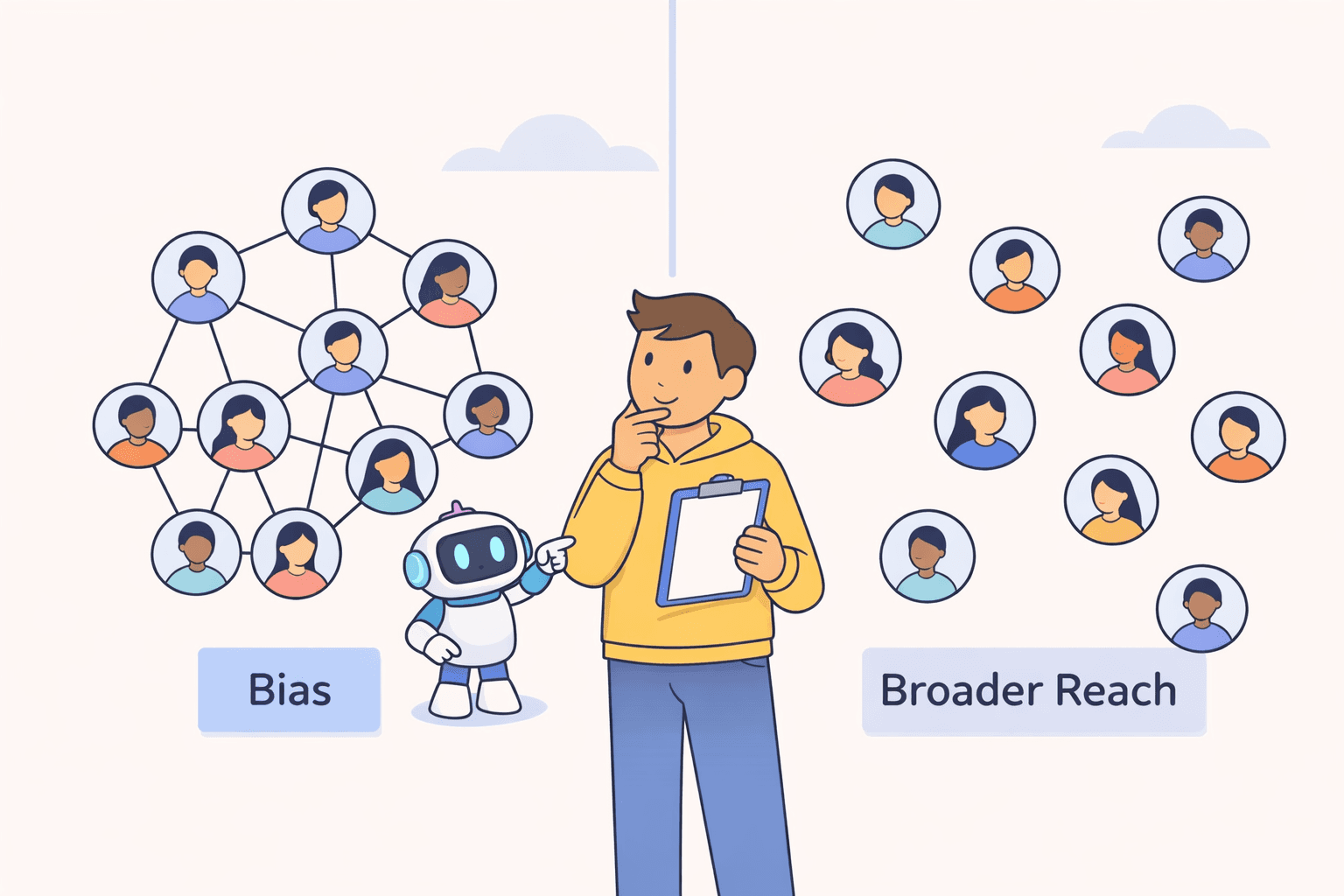
Iske saare practical use ke bawajood, is method me bade flaws hain jo aapke findings ko undermine kar sakte hain. Snowball sampling ek non-probability method hai, jiska matlab hai ki yeh generalizable statistical models ke bajaye specific research paradigms ke sath align hota hai. Jab aapke paas sampling frame ho, toh probability sampling methods representative results paane ka standard route hain.
Agar aap is broader context ko explore kar rahe hain, toh research paradigms is baat par useful background deta hai ki alag-alag methodologies research design ko kaise shape karti hain.
Har koi ek doosre ko jaanta hai Sabse bada issue network bias ka hai. Log naturally unhi logon ko refer karte hain jo unke jaise hote hain—background, opinion, ya social circle me. Aapka sample ek cross-section nahi hai; balki yeh overlapping social clusters ki ek series hai.
Ek activist ke sath shuru karein, aur aapko mostly unke saathi activists ka circle hi milega.
Ek executive ke sath shuru karein, aur aapko mostly doosre executives hi milenge. Aap pure population ke badle ek single network ki study karte reh jaate hain. Yeh built-in bias aksar is method ki sabse badi kamzori hota hai.
Aap results ko generalize nahi kar sakte Snowball sampling ek non-probability method hai. Isme koi random selection nahi hota, isliye aap claim nahi kar sakte ki aapke findings statistically broader group ko represent karte hain.
Aap themes identify kar sakte hain, compelling stories bata sakte hain, aur experiences ko detail me explore kar sakte hain, lekin aap yeh nahi keh sakte ki "is group ke X percent log Y par believe karte hain." Math ise support nahi karta.
The ethical tightrope Logon se unke friends ko refer karne ke liye kehna immediate privacy aur pressure ke problems ko create karta hai.
Participants names share karne ke liye pressure feel kar sakte hain, jisse unke relationships risk me pad sakte hain.
Ek tight-knit group ke andar anonymity break hone ka dar hamesha rehta hai. Illegal activity ya health stigma jaise sensitive topics par research karte waqt, yeh chhote issues nahi hain. Yeh central ethical challenges hain jo study ko rok sakte hain.
<ProTip title="🔒 Ethical Tip:" description="Participant privacy ko protect karne ke liye direct name sharing ke bajaye anonymous referral links use karein" />
Snowball Sampling vs Other Sampling Methods
Sampling method chunna trade-offs ke baare me hai. Yahan snowball sampling key points par kaise compare karta hai, bataya gaya hai.
Feature | Snowball Sampling | Random Sampling | Convenience Sampling | Stratified Sampling |
Type | Non-probability | Probability | Non-probability | Probability |
Sampling Frame | Zaroori nahi | Zaroori hai | Zaroori nahi | Zaroori hai |
Best Use | Hidden populations | General population | Easy access groups | Structured populations |
Bias Risk | High | Low | High | Medium |
Generalizability | Limited | Strong | Weak | Strong |
Table core compromise ko dikhata hai. Aap snowball sampling tab use karte hain jab access aapka primary problem ho, yeh accept karte hue ki aap statistical strength kho denge aur significant bias ka samna karenge. Yeh aapko tab rasta deta hai jab doosre methods address bhi nahi dhundh paate.
Agar aap is method par based findings ko publish karne ki taiyari kar rahe hain, toh sahi journal chunna bhi critical hai. choosing a journal for research jaise guide aapko apni methodology ko appropriate academic outlets se match karne me madad kar sakte hain.
Snowball Sampling Ko Effectively Use Karne Ke Best Practices
Is method ko kaam me laane ke liye, aapko ek plan ki zaroorat hai jo iski inherent weaknesses se lad sake.
Ek jagah se nahi, balki kai jagah se shuru karein Aapke pehle contacts, yaani "seeds", hi sab kuch hain. Agar aap sirf ek person ke sath shuru karenge, toh aap sirf unke social circle ko hi map kar payenge. Iske bajaye, community ke alag-alag parts se multiple starting points dhundhein.
Yeh simple step clustering problem ko combat karne aur ek varied sample paane ka sabse behtar tareeqa hai.
Jaanein ki kab rukna hai Bina kisi plan ke, recruitment ek hi tarah ke logon me ghumta reh sakta hai. Data collection end karne ke liye clear rules set karein.
Referral "waves" ki sankhya ko limit karein (e.g., 3 ya 4 rounds ke baad ruk jayein).
Saturatin point (jab naye interviews se nayi baatein pata chalna band ho jayein) par ruk jayein. Yeh aapko ek hi network me lagatar dhasne se bachata hai.
Ek detailed log rakhein Aapki study ki credibility ke liye, aapko process ko meticulously document karna hoga. Sahi se likhein ki aapne initial seeds kaise chune, kitne referral waves complete kiye, ek person par kitne referrals ki limit lagayi thi, aur rukne ka decision kyun liya.
Yeh log bias ko fix toh nahi karta, lekin isse aapka method transparent aur limitations clear ho jaati hain.
Ise kai tools me se ek ki tarah use karein Snowball sampling ko shayad hi kabhi akele chhoda jana chahiye. Ise doosre approaches ke sath pair karein.
Ek survey ke participants dhundhne ke liye iska use karein.
Purposive sampling ke sath combine karke missing perspectives ko dhyan se dhundhein.
Ise open online recruitment se behtar banayein. Ek mixed-methods approach snowball sampling ke deep access ko broader aur controlled data collection ke sath balance karne me madad karta hai.
Snowball Sampling: Agla Step Kya Hai
Sahi logon tak pahunchna aapko mushkil lag sakta hai, khaskar tab jab aapka target group aasani se identify na ho aur har step referrals par depend kare. Yeh limiting lagta hai. Snowball sampling aapko aage badhne me madad karta hai, lekin bias ka risk results par trust karna thoda mushkil bana sakta hai.
<CTA title="Write Your Methodology Section" description="Apni sampling strategy ko structured guidance ke sath ek clear academic section me badlein" buttonLabel="Try Jenni Free" link="https://app.jenni.ai/register" />
Sabsay zaroori baat yeh hai ki aap participants ko kaise recruit karte hain aur data collect karna kab band karte hain, is baare me hamesha clear rahein. Jenni jaise tools aapko apni methodology ko clean aur structured tarike se likhne me madad kar sakte hain—dekhein a clear guide to writing the methodology section of your research paper—taaki aapke decisions readers ko samajh aayein aur aapka research solid lage.