Dwara
Justin Wong
—
Ek spasht margdarshan aapke research paper ke methodology section ko likhne ke liye

Justin Wong
Vikas Prabhari
Graduated kiya Bachelor's me Global Business & Digital Arts, Minor me Entrepreneurship
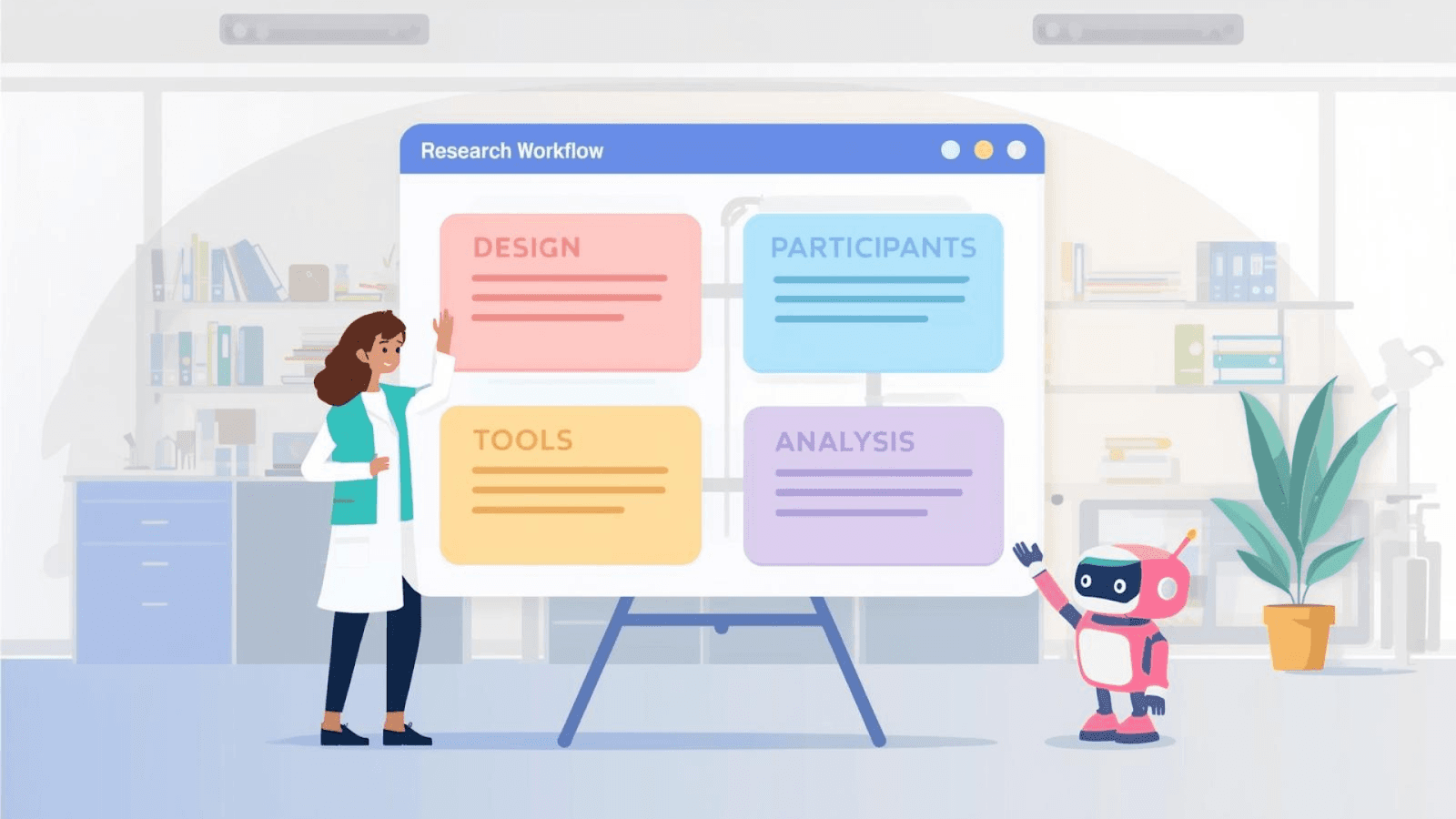
Methodology section woh jagah hai jahan aap dikhate hain ki aapki study exactly kaise ki gayi aur kyun har faisla aapke research goals ke sath fit baithta hai. Yeh aapke design, tools, participants, aur procedures ko is tarah samjhata hai jisse readers aapke kaam ki quality aur reliability ko judge kar sakein.
Yeh guide methodology ke har hisse ko break down karti hai taaki aap isse clarity aur confidence ke sath likh sakein. Aap seekhenge ki apne research design ko kaise describe karein, apne steps ko kaise outline karein, aur apne data analysis ko kaise present karein. Apne choices ko justify karein bina process ko overcomplicate kiye. Chahe aap thesis, dissertation, ya journal article par kaam kar rahe hon, yeh section dusre core components ke sath baithta hai — hamare breakdown of the essential parts of a research paper ko dekhein — yahan ka structure aapko organized rehne mein madad karega.
<CTA title="Write a Clear Research Methodology Fast" description="Use outline based prompts to build a structured, reviewer ready methods section with ease" buttonLabel="Try Jenni Free" link="https://app.jenni.ai/register" />
1. Apni Study Design Ke Ek Clear Overview Se Shuru Karein
Readers ko ek quick picture chahiye hoti hai ki woh kis tarah ki study dekh rahe hain. Isiliye aapka methods section aapke study design ke ek chhote overview ke sath shuru hona chahiye. Isse ek paragraph ke map ki tarah samjhein.
Is design overview mein, aapko briefly state karna chahiye:
Research type: Qualitative, quantitative, ya mixed methods.
Philosophical ya theoretical approach: Jaise ki: positivist, constructivist, pragmatic, interpretive.
Timeframe: Cross-sectional, longitudinal, case study, ya koi aur time-based frame.
Setting ya environment: Jaise ki koi school, clinic, online platform, lab, ya community.
Core purpose: Aap simple terms mein kya find out ya understand karne ki koshish kar rahe the.
Ek accha overview lambi detail mein nahi jata. Yeh bas itni detail deta hai jisse, jab readers agle sections mein move karein, toh woh aapke choices ke peeche ka basic logic samajh sakein.
Sahi Research Design Choose Karna
Design aapke pooche gaye question se match hona chahiye. Is relationship ko ek ya do concise sentences mein briefly explain kiya ja sakta hai.
Aap jo approach choose karte hain woh aapke research question par depend karti hai.
Quantitative designs tab sabse accha kaam karte hain jab aap chahte hain:
Variables ko measure karna
Hypotheses ko test karna
Statistics ka use karke relationships ko examine karna
Qualitative designs tab behtar hote hain jab aap chahte hain:
Experiences ya meanings ko explore karna
Samajhna ki log events ko kaise sense karte hain
Numbers ke bajay processes ko depth mein study karna
Mixed methods designs tab useful hote hain jab:
Aap numerical trends aur rich stories dono chahte hain
Aapko ek type ke data ki zaroorat hoti hai dusre ko explain karne ke liye
Aap in examples ke mutabik apne sentences model kar sakte hain:
Quantitative:
“This study used a quantitative, cross-sectional survey design to examine predictors of academic burnout among first-year university students.”
Qualitative:
“A phenomenological approach was adopted to explore how caregivers interpret and manage emotional fatigue while providing end-of-life care.”
Mixed Methods:
“The research used an explanatory sequential mixed methods design beginning with a large-scale survey followed by targeted interviews with selected respondents.”
<ProTip title="💡 Pro Tip:" description="Begin your methodology by summarizing your entire research approach in one tight paragraph before expanding into specifics" />
Yeh Kyun Matter Karta Hai
Ek concise design overview yeh ensure karta hai ki readers technical details ko encounter karne se pehle aapki study ke structure ko samajh sakein. Yeh yeh bhi signal karta hai ki aapka method logically aapke research aims se match karta hai, jo academic evaluation ka ek key part hai.
2. Apne Participants ya Data Sources ko Describe Karein
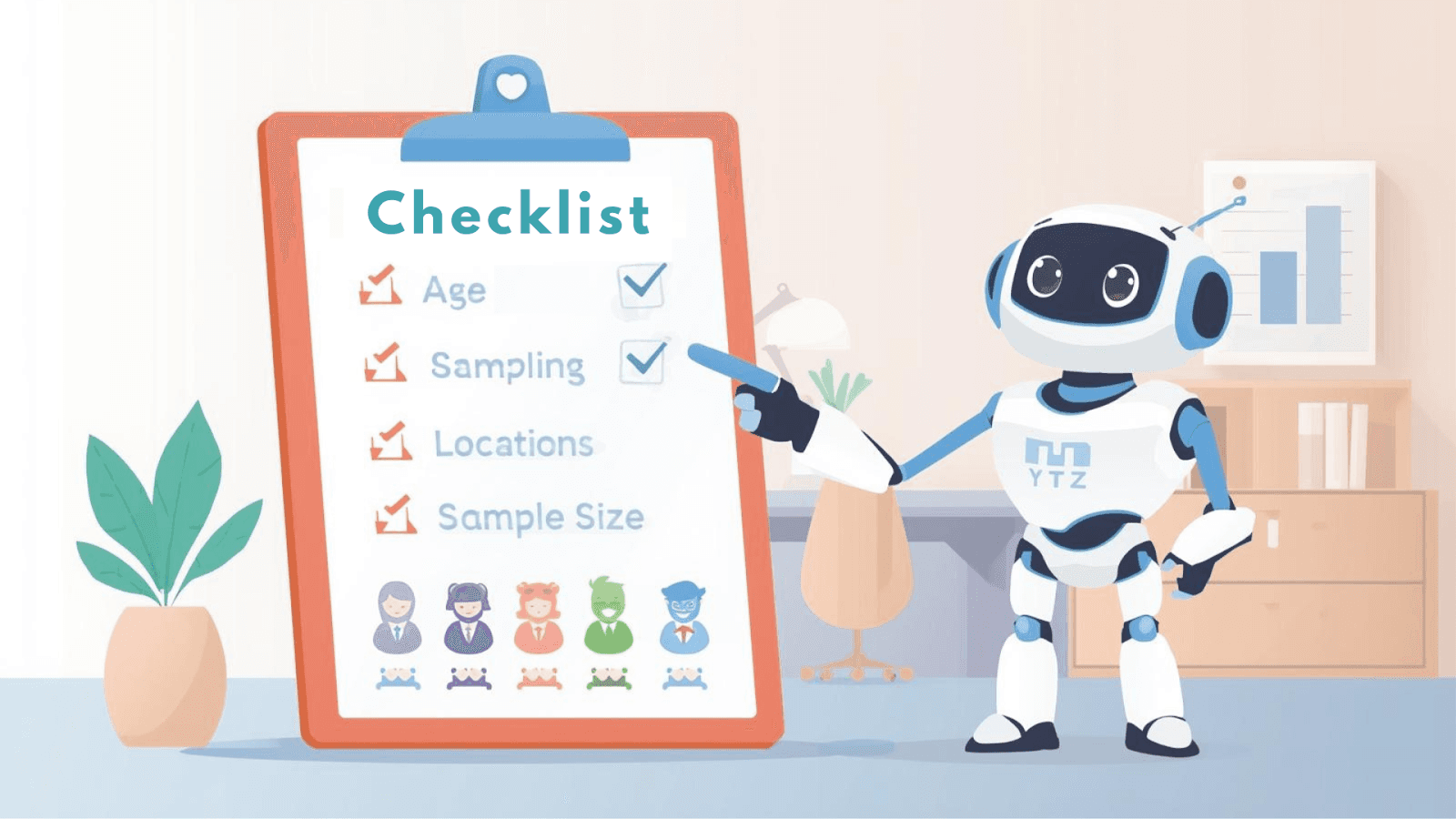
Design ke baad, readers janna chahte hain ki aapne kis par ya kis cheez par study ki. Yeh section aapke participants ya data sources aur is baat ko explain karta hai ki woh aapke research question ke liye ek accha fit kyun the.
Participant-Based Studies
Agar aapki research mein log involve hain, toh pehle batayein ki target group kaun hai aur woh aapke question ko kaise fit karte hain. Phir concrete details dein, vague labels nahi.
Aapko include karna chahiye:
Total sample size - Study mein kitne participants ne hissa liya?
Sampling method - Aapne unhe kaise choose kiya (for example: random, purposive, convenience).
Demographic information - Age range, gender, occupation, location, ya dusri relevant traits.
Inclusion aur exclusion criteria - Kise allow kiya gaya aur kise nahi, aur kyun.
Recruitment strategy - Aapne participants ko kahan aur kaise dhundha.
Hamesha explain karein ki aapne ek khas sampling method kyun choose kiya. Reviewers is point ko bohot closely dekhte hain kyunki sampling validity aur fairness ko affect karti hai.
Sampling Techniques (Mini Guide)
Sampling choices se badal jata hai ki aapke results par kitna trust kiya ja sakta hai ya unhe kitna generalize kiya ja sakta hai. Yahan common methods ek simple format mein hain:
Sampling Method | Description | Ideal Use Case |
Simple random sampling | Sabhi members ke liye equal chance | Badi quantitative studies |
Systematic sampling | Har nth person select hota hai | Complete lists wali populations |
Stratified sampling | Pehle subgroups mein divide kiya jata hai | Demographic balance chahne wali studies |
Cluster sampling | Individuals ke bajay groups select hote hain | Geographically dispersed samples |
Purposive sampling | Traits ke basis par researcher-selected | Expert-heavy qualitative kaam |
Snowball sampling | Participants dusron ko recruit karte hain | Hidden ya sensitive populations |
Convenience sampling | Sabse aasani se available participants | Student projects & pilot studies |
Inclusion aur Exclusion Criteria
Yeh clear karein ki aapki boundaries kyun exist karti hain. Ek short sentence isse anchor kar sakta hai, phir aap specifics mein ja sakte hain.
Example:
“Inclusion criteria required participants to have at least six months of remote working experience. Individuals with exclusively hybrid schedules were excluded to maintain focus on full-time remote workers.”
Recruitment Strategy
Describe karein ki aapne participants ko kaise dhundha aur invite kiya taaki dusra researcher bhi aisi hi koshish kar sake. Aap mention kar sakte hain:
Campus email lists ya notice boards
Social media groups ya online forums
Clinic ya hospital units
Community centers ya organizations
Online crowdsourcing platforms
Process clear hone ke liye kaafi detail dein, lekin kisi ki personal identity reveal na karein.
Non-Human Data Sources Ke Liye
Kuch studies mein log bilkul involve nahi hote. Agar aapke kaam ke liye yeh sach hai, toh use clearly batayein aur uski jagah apne data sources ko explain karein.
Aapne use kiya ho sakta hai:
Archival documents ya records
Organizational reports
Public datasets ya statistics
Historical texts ya media content
Chemical ya environmental samples
Technological ya biological systems
Inke liye, explain karein:
Data kahan se aaya
Aapne isse kaise access kiya
Aapne kaise choose kiya ki kaun se items include karne hain
Data include ya exclude karne ka koi bhi rule
<ProTip title="📌 Reminder:" description="Always describe your selection criteria before the number of participants to make your logic clear" />
3. Materials, Tools, aur Instruments ko Detail Karein
Agla sawaal jo readers poochte hain woh hai: Aapne apne data ko collect aur measure karne ke liye kya use kiya? Yeh section aapke materials aur instruments ko describe karta hai taaki dusre judge kar sakein ki aapke tools accurate, fair, aur suitable the ya nahi.
Aap is section ko tool type ke hisab se organize kar sakte hain.
Common Material Categories
Us orientation ke baad ek list aur har category ke liye brief context dein.
Surveys ya questionnaires
Mention karein ki kya woh researcher-made the ya validated tools, saath hi reliability statistics agar available hon.Interview guides
Ek chhota explanation dein ki questions kaise develop kiye gaye, research question ke sath kaise align kiye gaye, aur kaise pilot kiye gaye.Laboratory instruments
Models, measurement accuracy, calibration steps, software integrations, aur chemical purity standards ko include karein.Software tools
Examples:
SPSS, STATA, R
NVivo, Atlas.ti, MAXQDA
MATLAB
Python libraries (NumPy, SciPy, pandas)
Qualtrics ya SurveyMonkey
Example paragraph:
“Anxiety was measured using the Generalized Anxiety Disorder Scale (GAD-7), a validated 7-item tool widely used in clinical and population-based studies.”
Explain Karein Ki Aapne Yeh Tools Kyun Choose Kiye
Aapke readers ko kabhi yeh sochne par majboor nahi hona chahiye ki, "Wahi instrument kyun aur koi dusra kyun nahi?" Isiliye ek chhota justification add karein, aur apne choices ko prior studies se connect karein literature review section of a research paper mein.
Example:
“These tools were selected due to their established reliability in previous studies examining stress and health outcomes.”
Yeh Kyun Matter Karta Hai
Well-described tools readers ko aapke data par trust karne aur aapki study ki reliability ko evaluate karne mein madad karte hain. Yeh future researchers ko aapke methods ko zyada precisely replicate karne ki permission bhi dete hain.
<ProTip title="💡 Note:" description="When using standardized instruments, cite the original publication to confirm validity" />
4. Procedures ko Step-by-Step Explain Karein
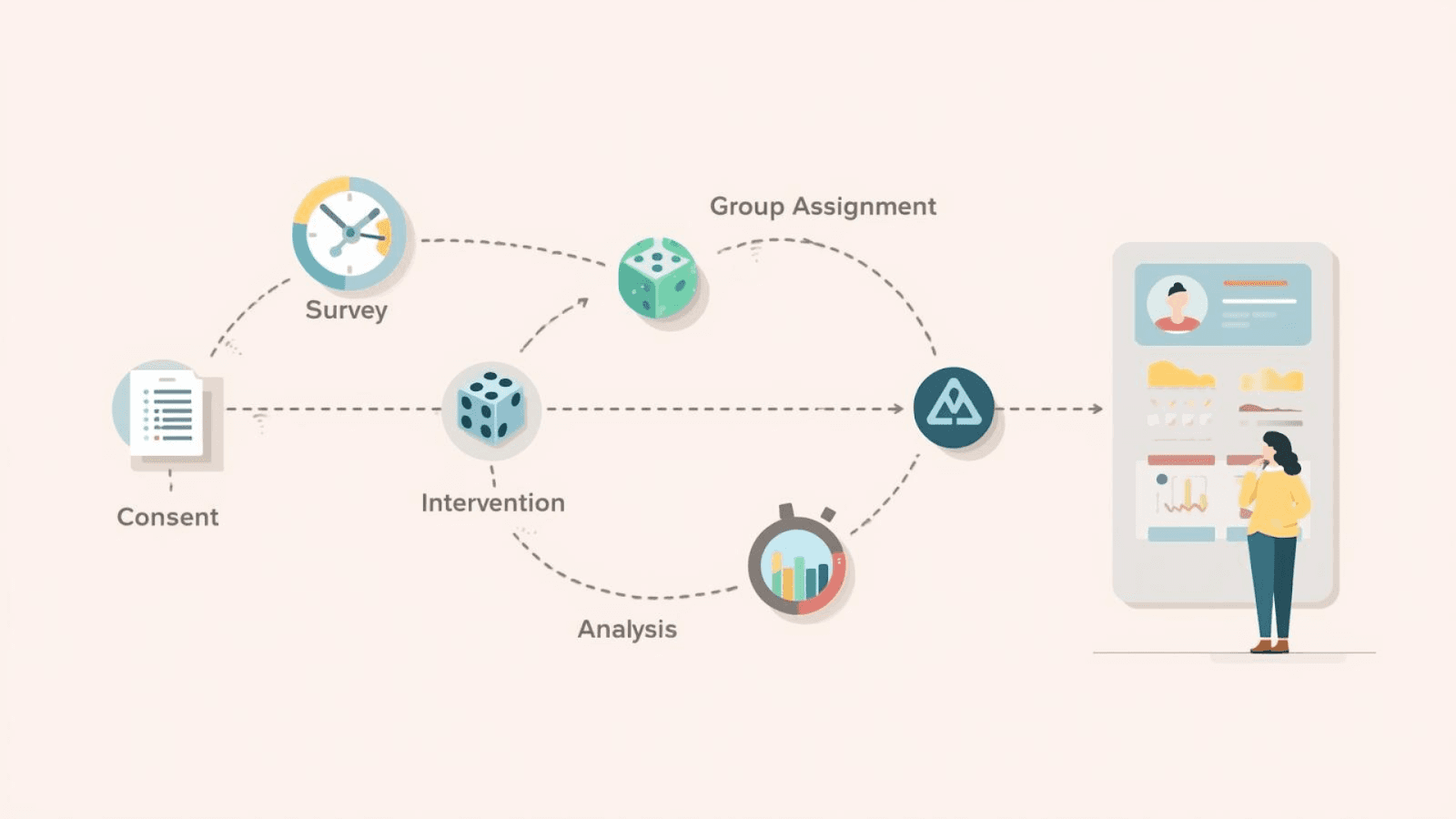
Methodology ka yeh aam taur par sabse lamba section hota hai kyunki yeh describe karta hai ki study mein exactly kya hua. Key hai chronological clarity.
Aapka Procedures Section Kya Cover Karna Chahiye
Ek clear procedures section ko outline karna chahiye:
Aapki study ke sequence of steps
Har major stage ki length
Kaise koi interventions di gayi ya apply ki gayi
Aapne informed consent kaise obtain kiya
Participants ko kya instructions mili
Aapne data ko kaise handle, store, aur clean kiya
Jab cheezein plan ke mutabik nahi gayi toh koi bhi adjustments jo ki gayi
Ek Chronological Example
Example se pehle ek line ki orientation dein, phir chronology dikhayein.
Survey link wale initial emails sabhi eligible participants ko bheje gaye.
Participants ne digital consent form ko access kiya aur electronically agree kiya.
Unhone ek baseline questionnaire complete kiya jisme demographics, mood, aur sleep habits capture kiye gaye.
Participants ko computer-generated sequence ka use karke randomly control ya experimental group mein assign kiya gaya.
Intervention group ne chaar hafton tak weekly 45-minute mindfulness sessions attend kiye.
Experimental Research
Experiments ke liye, details bohot matter karti hain kyunki yeh internal validity ko affect karti hain. Ensure karein ki aap explain karein:
Randomization method
Koi bhi blinding ya double-blinding jo use ki gayi
Control group ne kya kiya ya unhe kya mila
Interventions ki dose, duration, aur intensity
Equipment ko kaise set up aur monitor kiya gaya
Yeh details readers ko judge karne mein madad karti hain ki kya aapke results sach mein intervention se aaye hain naki bahar ke factors se.
Qualitative Research
Qualitative kaam ke liye, context aur researcher ka role bohot important hota hai. Is case mein, aapko describe karna chahiye:
Kahan interviews, focus groups, ya observations hui
Har session kitna lamba chala
Aapne kaise record (audio, video, notes) aur transcribe kiya data ko
Koi bhi reflexivity steps, jaise ki research journal rakhna ya peers ke sath apna role discuss karna
Example:
“Interviews were conducted in a private meeting room, lasted 45 to 60 minutes, and were audio-recorded with permission. Verbatim transcripts were produced using Otter.ai and manually checked for accuracy.”
<ProTip title="💬 Pro Tip:" description="Use past tense verbs consistently throughout your procedures to match academic standards" />
5. Apne Data Collection Methods ko Describe Karein
Bhale hi aap procedures describe karte hain, aapko abhi bhi data collection ke ek dedicated explanation ki zaroorat hai. Yeh clarify karta hai ki aapne exactly kya collect kiya aur kaise.
Common Data Collection Methods
List ko method fit ke baare mein ek line ke sath introduce karein, phir common methods ko list karein:
Surveys aur questionnaires - Bade samples aur statistical analysis ke liye suitable.
Interviews aur focus groups - Perspectives ya experiences ko samajhne ke liye sabse acche.
Observations aur field notes - Ethnography aur grounded theory mein use hote hain.
Secondary ya archival data - Isme policy documents, financial reports, clinical records, ya online datasets shamil hain. Yeh sabhi primary sources or secondary data ke tarah function kar sakte hain is par depend karte hue ki unhe study ke andar kaise use kiya gaya hai.
Experiments - Cause-and-effect relationships ko test karne ke liye ideal.
Example Paragraph
“Data were collected using a self-administered online survey hosted on Qualtrics. Participants had two weeks to complete the questionnaire, with reminder emails sent on Days 5 and 10. The platform automatically exported responses into SPSS for cleaning.”
<ProTip title="🧭 Insight:" description="Always justify why your chosen method fits your research question" />
6. Apne Data Analysis Techniques ko Explain Karein
Readers janna chahte hain ki aapka raw data meaningful findings mein kaise badla. Yeh section is baat par vary karta hai ki aapki study quantitative hai ya qualitative.
Quantitative Data Analysis
Quantitative analysis ke liye preprocessing, statistical tests, aur thresholds ke explanation ki zaroorat hoti hai.
Quantitative studies ke liye, aapko explain karna chahiye:
Aapne kaun sa software use kiya (SPSS, R, STATA, JASP, etc.)
Aapne data ko kaise clean kiya (missing values, outliers, errors ko handle karna)
Aapne kaun se statistical tests apply kiye
Aapne jo significance level use kiya (often p < 0.05)
Kya aapne assumptions check kiye jaise normality ya equal variance
Koi bhi confidence intervals ya effect size measures jo report kiye gaye hon
Common Statistical Tests
Data aur hypotheses se tests ko match karne ke baare mein ek sentence ke sath preface karein, phir ek compact table style list dikhayein:
Test | Purpose |
t-tests | Do means ko compare karna |
ANOVA | Multiple means ko compare karna |
Regression | Relationships ko predict karna |
Chi-square tests | Categorical variables ko compare karna |
Correlation | Relationships ki strength |
Example paragraph:
“Data were analyzed using SPSS Version 28. Descriptive statistics summarized demographic variables. Independent samples t-tests assessed differences in stress scores between groups. Statistical significance was set at p < 0.05.”
Qualitative Data Analysis
Qualitative analysis ke liye, focus data mein themes, patterns, aur meanings par hota hai. Is section mein, explain karein:
Aapne kaun sa analytic approach use kiya:
Thematic analysis
Content analysis
Grounded theory
Narrative analysis
Discourse analysis
Kya aapki coding thi:
Inductive (data se codes develop kiye gaye)
Deductive (theory ya prior framework par based codes)
Koi bhi software tools jo use kiye gaye hon (NVivo, Atlas.ti, MAXQDA, etc.)
Example:
“Transcripts were coded inductively using NVivo. Thematic analysis followed Braun and Clarke’s six-phase approach, beginning with familiarization and ending with theme refinement.”
Mixed Methods Analysis
Agar aapne mixed methods use kiye hain, toh explain karein ki aapne quantitative aur qualitative parts ko kaise link kiya.
Common designs:
Sequential: Pehle ek type ka data collect aur analyze kiya jata hai, phir dusre ko shape karne ke liye use kiya jata hai.
Convergent: Dono types ek hi samay par collect kiye jate hain, separately analyze kiye jate hain, phir compare kiye jate hain.
Embedded: Ek type ka data dusre ke andar nested hota hai (for example, ek bade trial ke andar kuch interviews).
Example:
“Quantitative survey findings shaped the interview guide, ensuring that qualitative insights expanded on initial statistical trends. Results were integrated during interpretation to compare convergence and divergence across datasets.”
<ProTip title="🗂️ Reminder:" description="State whether your analysis used deductive or inductive coding to clarify your analytic position" />
7. Ethical Considerations ko Address Karein
Har methods section mein ek chhota ethics part hona chahiye jo yeh dikhaye ki aapki study ne rules ko follow kiya aur logon aur data ko protect kiya.
Key points to cover:
Ethics committee ya IRB approval, Board ka naam, aur agar aapke paas approval number ho toh.
Consent procedures: Participants ko kaise inform kiya gaya aur unhone kaise agree kiya.
Confidentiality aur anonymity: Aapne personal identifiers ko kaise remove ya protect kiya.
Data protection, Storage, access control, aur data kitne samay tak rakha jayega.
Safeguards for vulnerable groups. Minors, patients, ya dusre at-risk groups ke liye liya gaya koi bhi extra care.
Ethics Example
“The research was approved by the Institutional Review Board (IRB) of the Faculty of Social Sciences (Approval Code: 2024-SSI-117). Participants were informed of their rights, including voluntary participation and withdrawal without consequences.
All data were stored on encrypted drives accessible only to the research team. Identifiers were removed prior to analysis, and pseudonyms were used in all transcripts.”
<ProTip title="🔒 Pro Tip:" description="Always include your protocol or ethics approval number if your institution issues one" />
8. Apni Study Ki Limitations ko Explain Karein
Ek credible methodology is baat ko acknowledge karti hai jahan aapka approach thoda peeche reh gaya ho. Yeh aapki academic integrity ko mazboot karta hai.
Methodological Limitations Ke Types
Ek strong methodology apni limits ko bhi admit karti hai. Yeh aapki study ko kamzor nahi banata; yeh dikhata hai ki aap iski boundaries ko samajhte hain.
Common methodological limits:
Chhota ya local sample
Convenience ya non-random sampling
Self-reported data
Chhota ya fixed timeframe
Kuch groups ya records tak limited access
Possible researcher bias
Tools jo har detail ko capture nahi karte
Example:
“Because the study used self-report questionnaires, responses may be influenced by social desirability bias. Additionally, the sample was drawn from a single university, which may restrict generalizability to broader student populations.”
9. Apni Methodology ko Clear Subheadings Ke Sath Organize Karein
Start karein readers ko yeh yaad dilakar ki structure ka matlab readability hota hai; subheadings evaluation aur replication ko guide karti hain.
Ek clear structure readers ko aapka logic follow karne mein madad karta hai. Ek typical layout hai:
Study Design
Participants / Data Sources
Materials and Instruments
Procedures
Data Collection
Data Analysis
Ethical Considerations
Limitations
Aage badhne se pehle, check karein:
Kya koi dusra researcher sirf is section ka use karke meri study ko repeat kar sakta hai?
Kya maine explain kiya ki maine har main method kyun use kiya, na ki sirf yeh ki maine kya kiya?
Kya maine koi reporting standards, jaise ki CONSORT, PRISMA, STROBE, ya COREQ note kiye, agar woh apply hote hain?
10. Apni Methodology ko Clear, Rigorous, aur Replicable Kaise Banayein
Yeh final section quality par focus karta hai. Bhale hi studies well-designed hon, agar methodology unclear ho toh nuksaan ho sakta hai.
Apne chapter ko finalize karne se pehle, is quality checklist ka use karein.
Clarity Checklist
Poochein:
Kya har step ko past tense mein explain kiya gaya hai?
Kya sabhi tools aur instruments ke naam properly diye gaye hain?
Kya aapne chronologically likha hai?
Justification Checklist
Confirm karein:
Kya aapne explain kiya ki har method kyun choose kiya gaya tha?
Kya aapne apni sampling strategy ko justify kiya?
Kya aapne apna analytic framework explain kiya?
Replicability Checklist
Verify karein:
Kya koi dusra researcher is section ke basis par hi aapki study repeat kar sakta hai?
Kya aapke materials sufficiently described hain?
Ethics Checklist
Double-check karein:
Kya aapne approval document kiya?
Kya aapne confidentiality aur data protection ko address kiya?
Transparency Checklist
Ensure karein:
Kya aapne reasonable limitations include kiye?
Kya aapne reporting standards (CONSORT, PRISMA, STROBE, COREQ) mention kiye agar use kiye gaye hon?
<ProTip title="🧪 Note:" description="If your methods follow a reporting guideline like PRISMA or CONSORT, state this explicitly for extra clarity" />
Writing a Strong Methodology Section of a Research Paper
Ek solid methodology section of a research paper dikhata hai ki aapki study exactly kaise ki gayi aur kyun har decision aapke research goals ko support karta hai. Clear methods aapke kaam ko credible, replicable, aur reviewers ke liye trust karne mein aasan banate hain.
<CTA title="Build a Clear Methods Section" description="Turn your design, steps, and process into a structured, publication ready methodology" buttonLabel="Try Jenni Free" link="https://app.jenni.ai/register" />
Agar aap apne design, procedures, aur analysis ko polished academic writing mein badalne ke liye support chahte hain, toh Jenni aapko kam samay mein ek cleaner, publication-ready methodology build karne mein madad kar sakti hai.