Dwara
Nathan Auyeung
—
Literature Review Section of ek Research Paper ka samajh aur likhna

Nathan Auyeung
Senior Accountant EY mein
Bachelor ka Accounting mein Graduation kiya, aur ek Postgraduate Diploma of Accounting bhi poora kiya

Literature review research paper ka woh hissa hota hai jo yeh samjhata hai ki scholars aapke topic ke baare mein pehle se kya jaante hain. Yeh key ideas, debates, theories, aur gaps ko highlight karta hai taaki readers dekh sakein ki aapki study kahan fit hoti hai. Bohot se students isse struggle karte hain kyunki yeh sirf ek summary se badhkar hai. Ismein clear synthesis aur ek logical flow ki zaroorat hoti hai jo broad ideas se ek focused research gap ki taraf move kare.
Yeh guide aapko breakdown karke batayegi ki literature review section kya hai, yeh kyun important hai, iska structure kaisa hota hai, aur ise confidence ke saath kaise likhein. Agar aap kisi bade project par kaam kar rahe hain, toh hamari thesis literature review guide isi process ko aur depth mein samjhati hai.
<CTA title="Write a Clear Literature Review" description="Create a structured, publication-ready literature review with a guided outline and smart suggestions." buttonLabel="Try Jenni Free" link="https://app.jenni.ai/register" />
Literature Review Section Kya Karta Hai Aur Yeh Kyun Important Hai
Literature review ka ek main kaam hota hai: academic world aapke topic ke baare mein pehle se kya jaanta hai, use explain karna.
Yeh context readers ke liye essential hai kyunki yeh unhe dekhne mein madad karta hai ki aapki study ek bade picture mein kaise fit hoti hai. Literature review ke bina, readers aapki research ki strength ko judge nahi kar sakte.
Is section ko aapke field ke broad ideas se lekar us exact research gap tak move karna chahiye jise aapki study address karti hai. Yeh "funnel style" reader ko purane knowledge se aapke naye contribution tak smoothly guide karne mein madad karta hai.
Ek strong literature review aapki madad karta hai:
Major studies ki awareness dikhane mein
Apne field ke trends ko samajhne mein
Past work ko repeat karne se bachne mein
Apne research question ko justify karne mein
Apni theory ya framework ke liye ek foundation banane mein
Yeh goals aapki research ko aur zyada credible aur future scholars ke liye useful banate hain.
Literature Review Mein Kya Include Hota Hai
Ek clear literature review mein research landscape, major themes, previous scholars dwara use kiye gaye methods, gaps, aur current study kaise contribute karti hai, yeh sab include hota hai. Yeh section har ek part ko simple aur approachable tareeqe se samjhata hai.
Key Components Ek Nazar Mein
Aapko samajhna hoga:
Scholars ne kya study kiya hai
Themes, patterns, ya debates
Agreements aur disagreements
Research gaps
Aapki study kaise current knowledge ko fill ya extend karti hai
Goal yeh nahi hai ki aap har us source ko dikhayein jo aapne padha hai. Goal un sources ko dikhana hai jo aapke research question ke liye sabse zyada matter karte hain.
Literature Review Ke Core Purposes
Yeh section un reasons ko explain karta hai jiske liye researchers hamesha papers, journals, aur dissertations mein literature reviews ko include karte hain. In purposes ko samajhne se aapko aur zyada clarity aur intention ke saath likhne mein madad milegi.
1. Yeh Dikhana Ki Pehle Se Kya Study Kiya Ja Chuka Hai
Pehla purpose readers ko existing scholarship ki ek clear picture dena hai. Researchers yeh jaanna chahte hain ki field pehle se kya samajhti hai, kaun si theories ise guide karti hain, aur scholars ne kis tarah ke questions ke answers dene ki koshish ki hai.
Aapko well-developed concepts, standard methods, established findings, open chhode gaye gaps, ya conflicting ideas mil sakte hain.
Yeh patterns aapko yeh samajhne mein madad karte hain ki scholars apne kaam ko kaise frame karte hain, bilkul usi tarah jaise kayi literature review writing ke discussions mein dikhaya gaya hai.
Aapko mil sakte hain:
Well-developed concepts
Standard methods
Established findings
Gaps jo open reh gaye hain
Conflicting ideas
Jab aap in areas ko highlight karte hain, toh aap readers ko apne field ke "state of knowledge" ko samajhne mein madad karte hain.
<ProTip title="💡 Pro Tip:" description="Use skim-reading to spot repeated terms and patterns across studies. Repeated ideas almost always become your themes." />
2. Patterns, Trends, Ya Inconsistencies Ko Identify Karna

Ek baar jab aap major studies ko gather kar lete hain, toh agla step unhe compare karna hota hai. Kya scholars milti-julti baatein keh rahe hain, ya woh disagree karte hain? Kya naye methods popular ho rahe hain? Kya samay ke saath ideas badle hain?
Patterns ke examples:
Education mein digital tools ka rise
Quantitative se mixed methods ki taraf shift
Ek purane model ko replace karti ek nayi theory
In movements ko dekhna aapke argument ko shape dene mein madad karta hai aur aapke review ko ek simple list se behtar banata hai.
3. Un Gaps Ko Reveal Karna Jismein Aur Research Ki Zaroorat Hai
Research gap existing literature ka woh missing piece hota hai. Yeh woh part hai jahan aapki study conversation mein enter karti hai. Gaps aksar journal articles ke "future research" section mein dikhte hain, lekin yeh tab bhi emerge hote hain jab findings inconsistent hon ya sirf narrow samples par based hon.
Common gap ke examples:
Under-studied groups
Naye variables
Outdated theories
Limited geographic areas
Untested methods
Yeh gaps aapki research ko purpose aur direction dete hain.
4. Theoretical Ya Conceptual Background Ko Clarify Karna
Kuch fields analysis ko shape dene ke liye theories ya models ka use karte hain. Aapke literature review ko in ideas ko simple terms mein explain karna chahiye. Ise yeh dikhana chahiye ki concepts ek dusre se kaise relate karte hain aur researchers aapke field mein use hone wale major terms ko kaise define karte hain.
Yeh readers ko aapka framework aur aapki study ke peeche ke logic ko samajhne mein madad karta hai.
5. Apne Research Question Aur Design Ko Support Karna
Ek accha literature review aapke method ke liye bhi foundation taiyar karta hai. Jab aap samajhte hain ki dusre scholars ne milti-julti questions ko kaise study kiya hai, toh aap apne sampling, data collection, aur analysis ke choices ko justify kar sakte hain.
Literature Review Ka Structure Kaisa Hota Hai
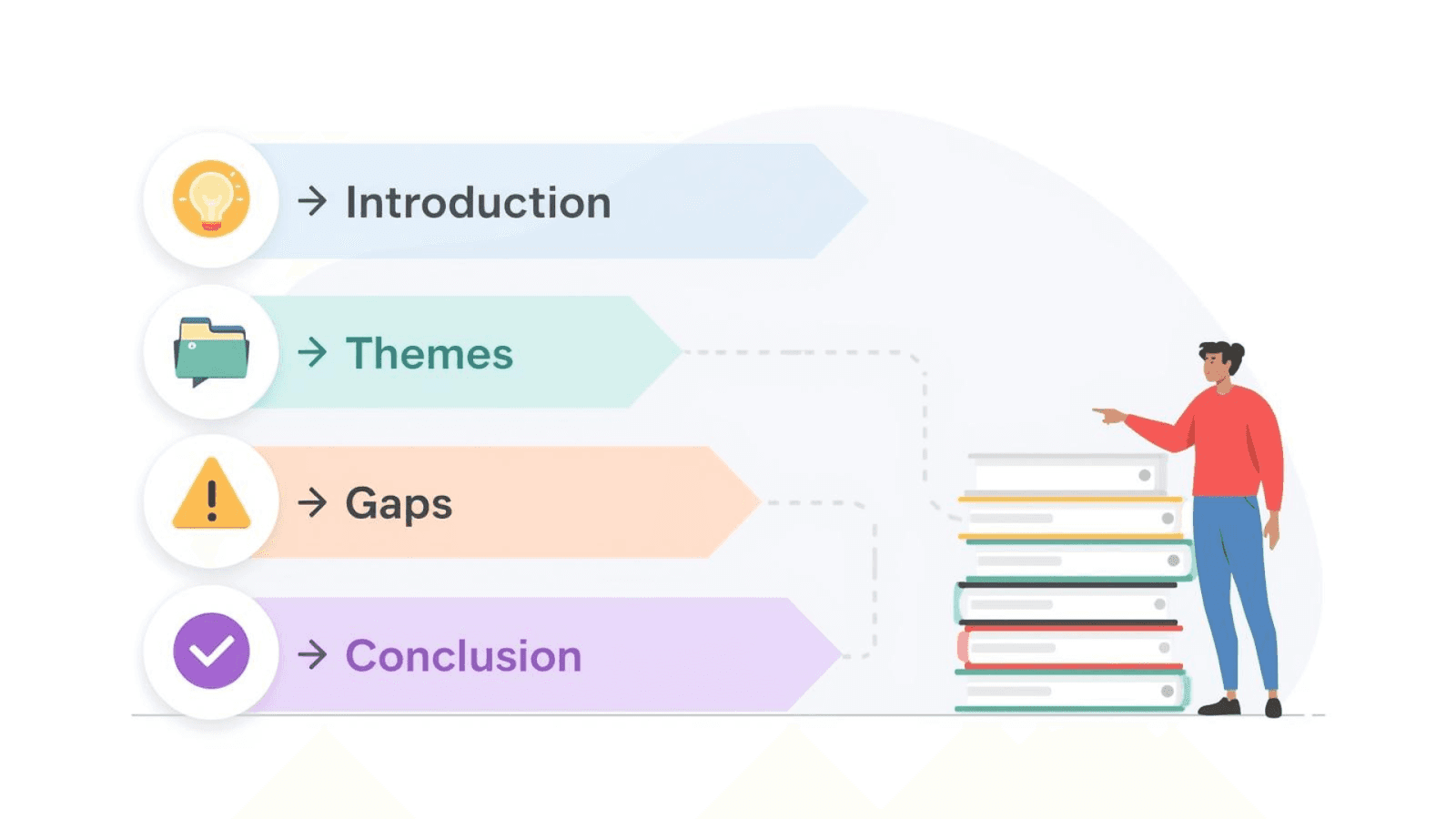
Ek strong opening mein topic ka ek chhota overview, ek clear scope statement, aur organization ke type ka ek rationale include hota hai jise aap use karenge.
Yeh reader ko dekhne mein madad karta hai ki aapka review logically kaise flow karta hai; ek practical template ke liye, hamari literature review outline guide dekhein. Khaskar jab un approaches ko follow kiya ja raha ho jo kayi to structure a review frameworks dwara use kiye jaate hain jo broad se specific themes ki taraf move karte hain.
1. Introduction Section
Introduction review ke scope aur purpose ko set up karta hai. Yeh explain karta hai ki aap kya cover karenge aur yeh sources ya themes kyun matter karte hain.
Ek strong opening mein include hota hai:
Topic ka ek chhota overview
Ek clear scope statement
Organization ke type ka ek rationale (thematic, chronological, ya methodological)
2. Literature Review Ka Main Body
Body sources ko is tarah organize karti hai jo patterns ko highlight kare aur yeh dikhaye ki ideas kaise connect hote hain. Sabse common structures hain:
Thematic Organization (Sabse Zyada Recommended)
Yeh structure studies ko shared topics ya themes ke hissab se group karta hai.
Example themes:
Digital learning tools
Teacher-student interaction
Motivation aur performance
Yeh sabse flexible aur sabse persuasive hota.
Chronological Structure
Yeh structure is timeline ko follow karta hai ki research kaise develop hui. Yeh tab kaam karta hai jab field clear historical progress dikhati hai.
Methodological Structure
Yahan aap studies ko research designs ke basis par group karte hain jaise ki:
Qualitative
Quantitative
Mixed methods
Case studies
Meta-analysis
Yeh structure tab helpful hota hai jab aapka field methodology par debate karta hai.
<ProTip title="🔎 Pro Tip:" description="Choose thematic structure when in doubt. It makes synthesis easier and improves logical flow." />
3. Literature Review Ka Conclusion
Conclusion summarize karta hai ki kya jaana jata hai, kya missing hai, aur aapki study kyun matter karti hai. Ek strong ending mein include hota hai:
Key patterns ka ek chhota recap
Gaps ka direct mention
Aapke research question ya study ka ek link
Literature Review Section Kaise Likhein Step-by-Step
Ek strong literature review likhne mein ek clear, step-by-step process involved hota hai:
1. Research Question Ko Define Karein
Aap ek clear research question ke bina effectively search ya review nahi kar sakte. Ek strong question aapke keyword choices ko guide karta hai aur aapko relevant studies par focus karne mein madad karta hai.
2. Ek Structured Strategy Ka Use Karke Sources Search Karein
Ek documented search strategy credibility ko improve karti hai aur missed literature ko prevent karti hai. Aap apne process ko refine karne ke liye database search, Boolean operators, keyword expansion, synonyms, aur thesaurus terms ka use kar sakte hain.
Kayi studies focused keyword strategies ka bhi use karti hain, bilkul unhi ki tarah jo consumer research topics mein dekhi jaati hain jahan precise terms results ki strength ko determine karte hain.
Useful tools mein include hain:
Database search
Boolean operators (AND, OR, NOT)
Keyword expansion
Synonyms
Thesaurus terms
Ek Acchi Search Strategy Ke Elements
In aspects ke notes lein:
Primary keywords
Secondary terms
Alternate spellings
Subject headings (e.g., MeSH)
Inclusion criteria
Exclusion criteria
3. Relevant Studies Ko Screen Aur Select Karein
Screening aapke review ko clean aur credible rakhti hai. Un studies ko remove kar dein jo aapke research question se relate nahi karti hain ya unreliable methods use karti hain.
Screening steps:
Titles ko review karein
Abstracts ko review karein
Full texts ko review karein
Yeh overload ko prevent karta hai aur aapke review ko focused rakhta hai.
4. Sabse Important Data Extract Karein
Data extraction aapko sources ko compare karne mein madad karta hai. Common extraction items:
Author aur year
Purpose
Method
Sample
Key findings
Limitations
<ProTip title="📝 Pro Tip:" description="Create a simple table to track findings so you can compare sources quickly." />
5. Analyze Aur Synthesize Karein
Analysis samajhna hai. Synthesis connect karna hai.
Aapko dono ki zaroorat hai.
Synthesis statements ke examples:
“Kayi studies confirm karti hain…”
“Authors ke beech ek strong disagreement hai…”
“Recent findings shifts ho rahi hain toward…”
Synthesis dikhata hai ki aap badi picture ko samajhte hain
6. Studies Ko Themes Mein Group Karein
Themes aapke structure ko shape karne mein madad karte hain. Aap repeated cheezon ko dekh kar themes ko identify kar sakte hain:
Concepts
Variables
Methods
Problems
Models
7. Clear Transitions Ke Saath Section Ko Likhein
Transitions ideas ko connect karne mein madad karte hain. Examples mein include hain:
“In contrast…”
“Similarly…”
“Building on this…”
“However…”
Strong transitions aapke review ko smooth aur logical feel karwate hain.
8. Research Gaps Ko Directly Dikhayein
Research gap woh missing piece hai jise aapki study address karegi.
Examples:
Ek population jo study nahi ki gayi
Ek variable jo test nahi kiya gaya
Mixed results jinhe clarification ki zaroorat hai
Section ke end ke paas gap ko clearly mention karein.
9. Gap Ko Apni Study Se Connect Karein
Yeh woh jagah hai jahan aap explain karte hain ki aapki research previous studies dwara chhode gaye space ko kaise fill karti hai.
Ek clear link aapke kaam ke contribution ko dikhata hai.
Different Types Ke Literature Reviews Jo Aapko Mil Sakte Hain
Sari literature reviews ek jaisi nahi dikhtin. Yahan sabse common types aur unke use ke baare mein bataya gaya hai.
1. Narrative Review
Ek narrative review ek broad, descriptive overview deta hai. Yeh humanities aur early-stage research mein common hai.
2. Systematic Review
Ek systematic review studies ko dhoodhne aur analyze karne ke liye strict methods ka use karta hai. Yeh fixed criteria ko follow karta hai aur aksar quality assessment tools ka use karta hai.
3. Scoping Review
Ek scoping review kisi field ko broadly map karta hai. Yeh emerging topics ya interdisciplinary fields ke liye acche se kaam karta hai.
4. Integrative Review
Yeh type theoretical aur empirical studies ko mix karta hai. Yeh sources ki ek wide range ko allow karta hai.
5. Historical Review
Ek historical review is baat ko trace karta hai ki samay ke saath theories ya ideas kaise develop hue.
Ek Strong Literature Review Section Ke Liye Best Practices
Ek strong literature review practical best practices ke set par banta hai jo clarity aur credibility ko improve karte hain.
1. Sources Ke Saath Selective Rahein
Har us study ko include na karein jo aapko milti hai. Un par focus karein jo directly aapke research problem se judi hain.
2. Sources Ko Critically Evaluate Karein
Ek strong review studies ko sirf face value par nahi leta. Aap evaluate kar sakte hain:
Sample size
Bias
Data collection
Analysis methods
Yeh ek researcher ke roop mein aapki credibility ko boost karta hai.
3. Academic, Peer-Reviewed Sources Ka Use Karein
Prioritize karein:
Journal articles
Academic presses se books
Dissertations
Review articles
Random blogs ya opinion pieces se bachein.
<ProTip title="📘 Pro Tip:" description="Use review articles to understand the big picture quickly before diving into primary studies." />
4. Accurately Aur Consistently Cite Karein
Citation original authors ke liye respect dikhata hai aur trust build karta hai. Apne field ke liye required style ko follow karein, jaise APA, MLA, ya Chicago. Agar aap sources ko organize karne ke liye reference manager use karte hain, toh hamara Zotero and Mendeley integration for researchers page ek simple workflow ko outline karta hai.
5. Coherence Aur Flow Ko Maintain Karein
Review ko ek smooth argument ki tarah lagna chahiye, na ki kisi list ki tarah. Transitions aur synthesis aapko flow maintain karne mein madad karte hain.
Literature Review Mein Themes Ke Examples (Short Illustrations)
Chhote examples aapko visualize karne mein madad karte hain ki real writing mein themes kaise appear hote hain.
Example 1: Mobile Learning Research
Theme: Student Motivation
Studies dikhati hain ki mobile apps interactive features aur instant feedback ki wajah se motivation badhate hain.
Theme: Learning Outcomes
Kayi researchers improved test scores report karte hain, lekin findings different age groups mein alag hoti hain.
Theme: Teacher Perceptions
Teachers classroom management challenges ki wajah se mixed feelings express karte hain.
Example 2: Workplace Safety Research
Theme: Technology Adoption
Digital reporting tools high-risk industries mein errors ko reduce karte hain.
Theme: Human Factors
Human fatigue accidents ka ek major cause bana hua hai.
Theme: Organizational Culture
Supportive leadership safety compliance ko improve karta hai.
Apna Literature Review Finalize Karne Se Pehle Checklist
Yeh ensure karne ke liye is quick list ka use karein ki aapka section complete hai:
Introduction scope define karta hai
Body mein clear themes hain
Synthesis hai, summary nahi
Strong transitions hain
Research gaps ko identify kiya gaya hai
Aapki study se connection hai
Accurate citations hain
Smooth flow aur coherence hai
<ProTip title="✔️ Pro Tip:" description="Read your review aloud. If the logic feels disconnected, reorganize your themes before re-writing." />
Research Paper Ke Literature Review Section Ko Strong Banana
Ek research paper ka strong literature review section sources ko list karne se zyada kaam karta hai. Yeh dikhata hai ki scholars kis baat par agree karte hain, debates kahan stand karti hain, aur kaun se gaps par attention ki zaroorat hai. Clear themes aur tight synthesis ka use karke, aap readers ko apne research question ke peeche ke logic ki taraf guide karte hain.
<CTA title="Write a Clear Literature Review" description="Use an outline-first approach to build a strong, focused review fast." buttonLabel="Try Jenni Free" link="https://app.jenni.ai/register" />
Jenni’s AI literature review & RRL generator ka use aapko is section ko ek clean outline, sharper structure, aur smoother flow ke saath build karne mein madad kar sakta hai. Yeh aapke review ko focused, readable, aur publication ke liye ready rakhta hai.