Par
Justin Wong
—
Citations Imprimées vs. Numériques : Principales Différences, Règles et Comment les Réaliser Correctement

Justin Wong
Responsable du développement
Diplômé d'un baccalauréat en affaires mondiales et arts numériques, avec une mineure en entrepreneuriat
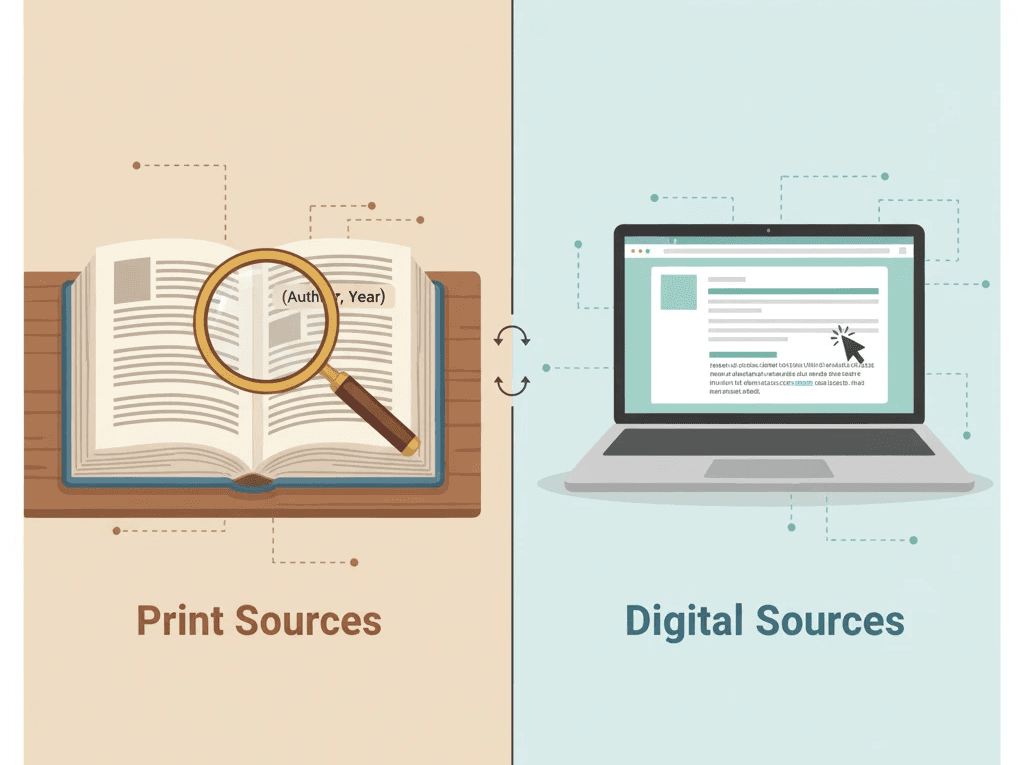
Les citations sont comme une feuille de route pour vos lecteurs. Elles montrent d’où viennent vos informations et comment les autres peuvent les vérifier. Mais avec l’essor des sources en ligne, les citations peuvent prendre des formes différentes selon que la source est imprimée ou numérique.
Dans ce guide, vous apprendrez : comment fonctionnent les citations imprimées et numériques, comment les différents styles de citation (MLA, APA, Chicago) les traitent, et comment éviter les erreurs courantes pour citer correctement à chaque fois.
<CTA title="Créez des citations exactes en quelques secondes" description="Utilisez Jenni AI pour créer des citations MLA, APA ou Chicago pour des sources imprimées et en ligne, précises, cohérentes et prêtes à être remises." buttonLabel="Essayez Jenni gratuitement" link="https://app.jenni.ai/register" />
Pourquoi les citations sont importantes aujourd’hui
Une citation remplit trois fonctions principales :
Attribuer le crédit à l’auteur original.
Aider les lecteurs à retrouver la source.
Montrer que votre travail est fiable.
Ces objectifs restent les mêmes, que la source soit un livre ou un site web. Ce qui a changé, c’est le format. Les livres imprimés existent depuis des siècles. Les articles en ligne, les livres numériques et les PDF sont plus récents.
Même si nous disposons aujourd’hui de plus de sources numériques, les citations imprimées et numériques suivent des règles différentes. Utiliser le mauvais type peut compliquer la recherche de vos sources pour les lecteurs.
<ProTip title="💡 Rappel :" description="Citez toujours la version que vous avez réellement utilisée, imprimée ou numérique. Mélanger des détails des deux crée de la confusion." />
Qu’est-ce qu’une citation imprimée ?
Une citation imprimée concerne une source qui existe sous forme physique, comme un livre imprimé, une revue ou un rapport.
Exemple (APA 7e éd.) :
Smith, J. (2015). Climate Change and Coastal Resilience. New York, NY: Greenfield Press.
Caractéristiques des citations imprimées
Numéros de page stables : les numéros de page ne changent pas.
Détails de publication permanents : l’éditeur, le volume et le numéro restent les mêmes.
Pas besoin d’URL : les lecteurs retrouvent la source dans une bibliothèque ou une collection imprimée.
Utilisez les numéros de page : indiquez les pages exactes pour les citations directes.
Les citations imprimées présentent la version originale et figée de l’œuvre.
Qu’est-ce qu’une citation numérique ?
Une citation numérique désigne la version en ligne d’une source, comme un livre numérique, un PDF, un article de revue ou une page web. Pour un guide pas à pas, consultez notre guide sur la citation des sources numériques pour la rédaction académique.
Exemple (APA 7e éd.) :
Smith, J. (2015). Climate Change and Coastal Resilience. Greenfield Press. https://doi.org/10.1234/cccr.2015.07
Caractéristiques des citations numériques
Utilisez un DOI ou une URL : cela dirige les lecteurs vers la source exacte en ligne.
Les numéros de page peuvent manquer : utilisez plutôt des sections ou des paragraphes.
Incluez la date de consultation si nécessaire : surtout pour les pages web qui changent souvent.
La version peut changer : les sources en ligne peuvent être mises à jour ou révisées.
<ProTip title="💡 Conseil pro :" description="Si un DOI est disponible, utilisez-le toujours plutôt qu’une URL. Les DOI restent stables, les URL peuvent cesser de fonctionner." />
Principales différences entre les citations imprimées et numériques
Caractéristique | Citation imprimée | Citation numérique |
Support | Version physique (livre, revue) | Version en ligne (PDF, page web, base de données) |
Informations d’accès | Éditeur, ville | DOI, URL ou nom de la base de données |
Pagination | Numéros de page stables | Peut manquer ou varier |
Mention d’édition | Édition imprimée | Édition en ligne, livre numérique, accès libre |
Date de consultation | Non nécessaire | Parfois nécessaire |
Méthode de repérage | Numéros de page | Sections ou paragraphes s’il n’y a pas de pages |
Stabilité | Pérenne | Peut être mise à jour |
Élément principal de la citation | Détails de l’éditeur | Détails d’accès numériques |
Connaître ces différences aide vos lecteurs à retrouver exactement la source que vous avez utilisée.
Pourquoi la « version consultée » compte
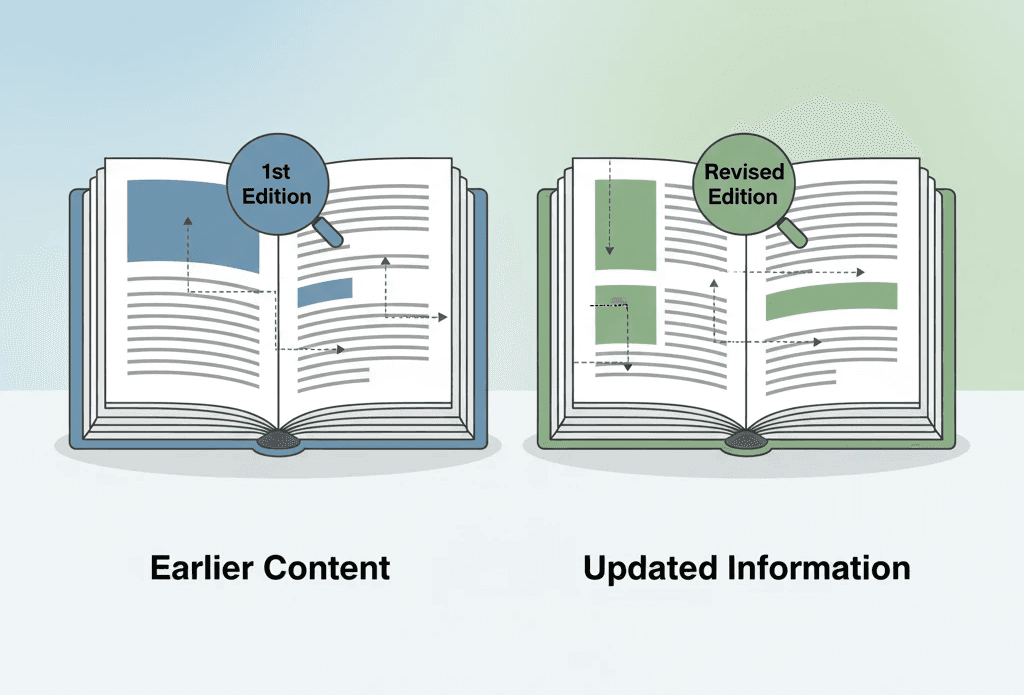
Une erreur fréquente consiste à citer des détails imprimés alors que vous avez utilisé une source numérique, ou l’inverse. Si quelqu’un essaie de suivre votre citation et que vous avez indiqué la mauvaise version, il ou elle risque de ne pas retrouver les mêmes informations.
<ProTip title="📘 Note :" description="Si vous avez téléchargé un PDF depuis une base de données, cela compte comme une édition numérique, même s’il ressemble à une page imprimée." />
Bonne pratique
Citez la version que vous avez utilisée. Ne mélangez pas les détails imprimés et numériques, sauf si vous avez consulté intégralement les deux versions.
Comment repérer l’information : pages, sections, paragraphes
Si des numéros de page existent
Pour les sources imprimées ou les PDF numériques avec des pages fixes, indiquez-les.
Exemple (MLA) :
(Smith 45)
Si les numéros de page n’existent pas
Pour les livres numériques, les sites web ou les articles HTML :
Utilisez les titres de section : (Smith, “Conclusion”)
Utilisez les numéros de paragraphe : (Smith, para. 12)
Utilisez les numéros de chapitre : (Smith, ch. 3)
<ProTip title="📄 Conseil rapide :" description="S’il n’existe pas de numéros de page, MLA et APA recommandent d’utiliser des sections ou des numéros de paragraphe à la place." />
Ces méthodes permettent aux lecteurs de retrouver votre source avec précision.
Styles de citation : MLA, APA, Chicago
Pour une introduction plus large qui couvre aussi Harvard et Vancouver, consultez notre guide sur les styles de citation expliqués pour les étudiants.
MLA
Citez la version que vous avez utilisée.
Incluez l’URL ou le DOI pour les sources en ligne.
Omettez les numéros de page s’ils n’apparaissent pas dans l’édition numérique.
Liste des œuvres citées.
Exemple imprimé :
Austen, Jane. Pride and Prejudice. Penguin Classics, 2002.
Exemple numérique :
Austen, Jane. Pride and Prejudice. Penguin Classics, 2002. Google Books, books.google.com/pp/123.
APA
Pour les sources en ligne, incluez un DOI ou une URL stable.
Pas de date de consultation, sauf si le contenu est fréquemment mis à jour.
Utilisez des numéros de section ou de paragraphe s’il n’y a pas de numéros de page.
Exemple de revue numérique :
Brown, L. (2021). The psychology of trust in digital spaces. Journal of Social Behavior, 12(3). https://doi.org/10.0000/jsb.2021.13
Chicago (notes et bibliographie)
Citez la version utilisée : imprimée ou numérique.
Incluez le DOI ou l’URL d’accès.
Les dates d’accès sont facultatives, mais utiles.
Exemple numérique :
Linda Brown, “The Psychology of Trust in Digital Spaces,” Journal of Social Behavior 12, no. 3 (2021), https://doi.org/10.0000/jsb.2021.13.
Évaluer la crédibilité

Les citations montrent aussi la fiabilité de la source.
Imprimé
Généralement éditées, relues et stables.
L’auteur et l’éditeur sont clairement identifiés.
Moins susceptibles de changer.
Numérique
Peut varier considérablement.
Vérifiez le domaine (.edu, .gov, .org) et la date de publication.
Vérifiez les qualifications de l’auteur.
<ProTip title="🔍 Conseil pro :" description="Vérifiez toujours l’auteur, le domaine et la date de mise à jour des sources numériques avant de les citer." />
Erreurs courantes en matière de citation
Utiliser des détails imprimés pour des sources numériques.
Mélanger des informations imprimées et numériques dans une même entrée.
Utiliser des numéros de page alors que les pages numériques ne sont pas stables.
Oublier le DOI ou l’URL.
Oublier les dates d’accès pour les sources qui évoluent.
Utiliser des URL issues des résultats de recherche au lieu de liens stables.
Des outils de citation comme Zotero, EndNote ou Jenni AI peuvent vous aider à rendre cela plus simple et à garder des citations cohérentes. Si vous gérez une bibliothèque de références, notre intégration Zotero et Mendeley peut vous aider à maintenir la cohérence des citations.
Scénarios pratiques
Scénario 1 : revue imprimée
Citez comme source imprimée.
APA: Smith, J. (2018). Neural learning and adaptation. Neuroscience Review, 11(2), 45–67.
Scénario 2 : version PDF
Citez comme source numérique.
Smith, J. (2018). Neural learning and adaptation. Neuroscience Review, 11(2). https://doi.org/10.5678/nr.2018.11.2
Scénario 3 : livre numérique sans numéros de page
Utilisez un repère de section ou de chapitre.
(Smith, ch. 5)
Traçabilité et intégrité académique
Les citations permettent aux autres de suivre votre parcours de recherche.
Sources imprimées → bibliothèques et archives.
Sources numériques → DOI, URL ou base de données.
La traçabilité contribue à rendre votre travail fiable et reproductible.
<ProTip title="🧭 Rappel :" description="Chaque lecteur devrait pouvoir retrouver exactement ce que vous avez trouvé grâce à vos citations." />
Versions et mises à jour
Les éditions imprimées sont stables. Les éditions numériques peuvent changer au fil du temps.
Bonne pratique
Notez les dates d’accès pour les sources qui se mettent à jour.
Utilisez des DOI ou des versions archivées (JSTOR, arXiv).
Pour les sources imprimées, indiquez l’édition ou le numéro de réimpression.
Cohérence des citations
La cohérence est essentielle :
Utilisez le même style pour toutes les sources.
Conservez une ponctuation, des italiques et une capitalisation uniformes.
Alignez le retrait et l’espacement de la liste de références.
Citations hybrides
Certaines œuvres existent à la fois en version imprimée et numérique.
Citez la version que vous avez utilisée.
N’indiquez les deux versions que si vous avez consulté les deux intégralement.
La citation hybride rend vos références claires et fiables.
Liste de contrôle rapide
Sources imprimées :
✅ Éditeur et ville.
✅ Numéros de page.
❌ Pas d’URL ni de DOI.
Sources numériques :
✅ DOI ou URL stable.
✅ Date de consultation si nécessaire.
❌ N’indiquez pas le lieu d’édition imprimée si vous ne l’avez pas utilisé.
Citez ce que vous utilisez réellement
Les citations imprimées et numériques poursuivent le même objectif : attribuer le crédit et permettre aux lecteurs de vérifier vos sources. La différence réside dans la manière dont vous pointez vers la source. Citez toujours la version que vous avez consultée, utilisez les bons repères et restez cohérent.
<CTA title="Maîtrisez vos citations avec Jenni" description="Éliminez la confusion liée aux citations. Créez sans effort des citations exactes, conformes au format, pour des sources imprimées ou en ligne avec Jenni AI." buttonLabel="Essayez Jenni gratuitement" link="https://app.jenni.ai/register" />
Avec Jenni AI, les citations exactes sont simples et rapides. Qu’elles soient imprimées ou numériques, vous pouvez créer des références fiables en quelques minutes.