Par
Nathan Auyeung
—
Le ChatGPT plagie-t-il le contenu ? Comment fonctionne l'écriture par IA et que signifie vraiment l'originalité

Nathan Auyeung
Expert-comptable senior chez EY
Diplômé avec une Licence en Comptabilité, suivi d'un Diplôme de Postgraduate en Comptabilité
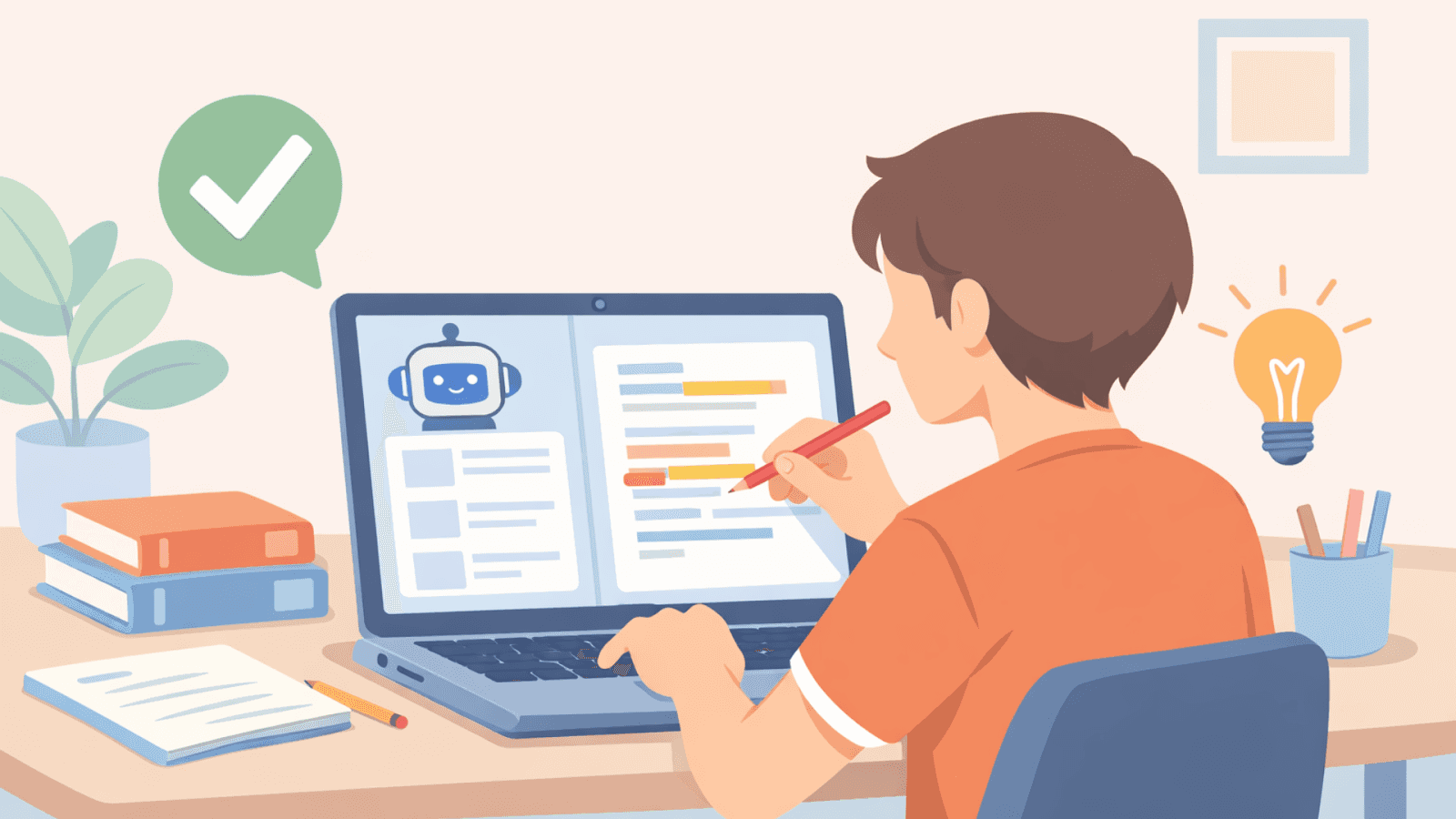
ChatGPT plagie-t-il du contenu ? Cette question revient souvent à mesure que les outils d’IA font partie de l’écriture quotidienne. Les étudiants s’inquiètent de leurs notes. Les rédacteurs s’inquiètent de l’originalité. Les professionnels s’inquiètent de la confiance et de la crédibilité.
Ces inquiétudes sont compréhensibles. ChatGPT peut produire un texte clair et assuré très rapidement. Quand une écriture sonne soignée aussi vite, il est légitime de se demander d’où elle vient. Dans cet article, vous apprendrez ce que signifie vraiment le plagiat, comment ChatGPT crée du texte, où se situent les zones grises, et comment utiliser l’IA de manière responsable sans franchir les limites éthiques.
<CTA title="Écrire avec confiance et originalité" description="Organisez vos idées gérez vos sources et peaufinez vos brouillons tout en gardant un travail clairement à vous" buttonLabel="Essayer Jenni gratuitement" link="https://app.jenni.ai/register" />
Qu’est-ce que le plagiat ?
Le plagiat consiste à utiliser les mots, les idées ou le travail de quelqu’un d’autre et à les présenter comme si c’étaient les siens, sans en donner le crédit. Cela brise la confiance et peut entraîner de graves conséquences.
À l’école, le plagiat peut entraîner des notes éliminatoires, des avertissements ou des mesures disciplinaires. Dans le monde professionnel, il peut nuire à la crédibilité, porter atteinte aux carrières et créer des risques juridiques. L’originalité compte parce qu’elle montre l’effort, la compréhension et l’honnêteté.
Traditionnellement, le plagiat implique une intention. Une personne choisit de copier ou de reformuler de très près le travail d’une autre personne. L’IA change cette idée, car les machines ne pensent pas, ne planifient pas et ne font pas de choix éthiques.
C’est cette différence qui est au cœur du débat autour de ChatGPT.
<ProTip title="💡 Conseil pro :" description="Apprenez toujours comment le plagiat est défini dans votre école ou votre lieu de travail avant d’utiliser des outils d’IA" />
Le plagiat dans le contexte de l’IA
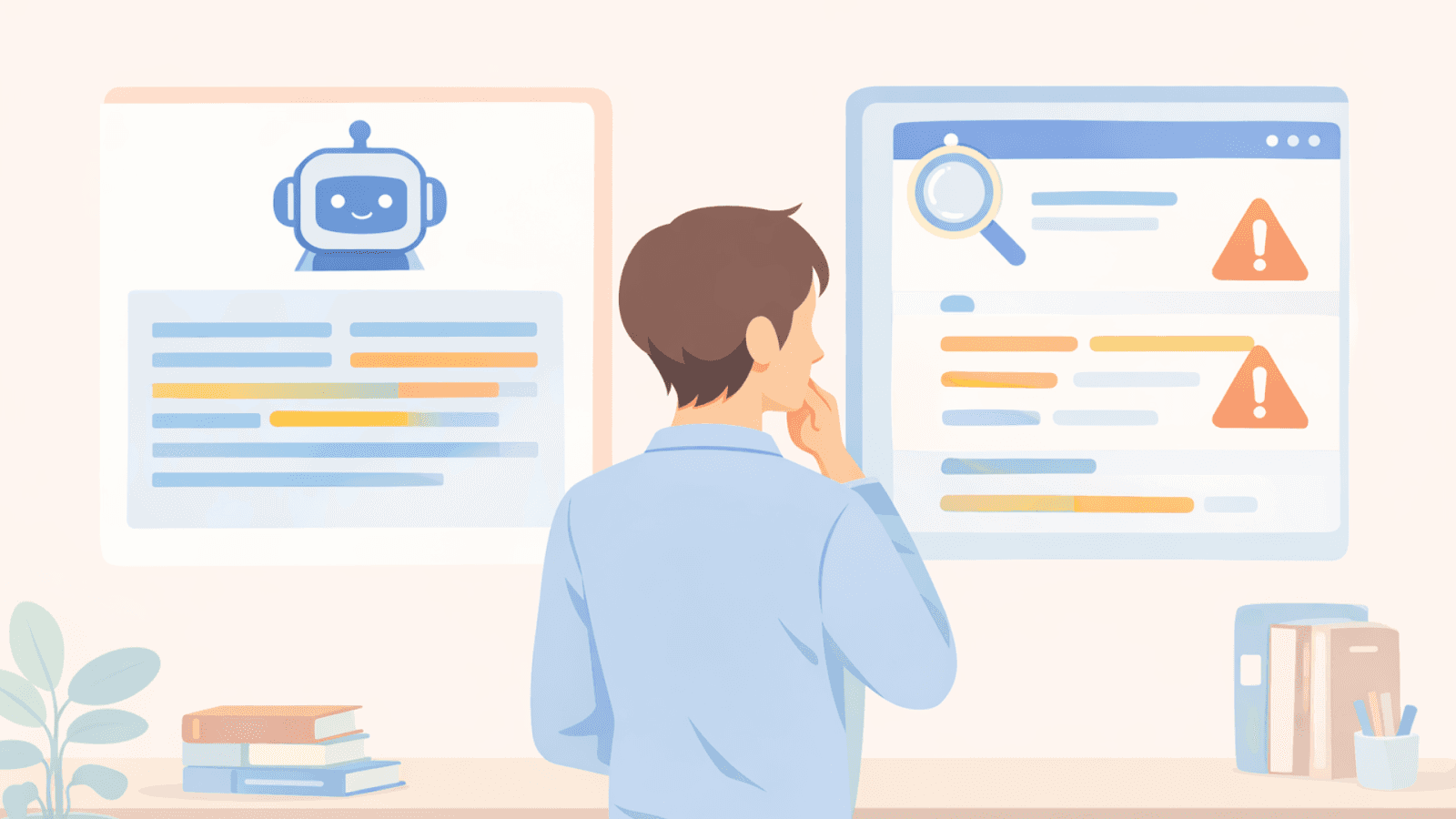
Le plagiat commis par des humains implique généralement une prise de conscience. Une personne sait qu’elle copie et choisit de le faire quand même. Les systèmes d’IA fonctionnent très différemment.
ChatGPT ne comprend ni la propriété, ni le crédit, ni l’éthique. Il génère du texte en prédisant les mots à partir des schémas appris pendant l’entraînement. Il ne sait pas qui a écrit le contenu original ni où une idée est apparue pour la première fois.
De ce fait, l’IA ne peut pas avoir l’intention de plagier. Toutefois, le texte qu’elle produit peut soulever des inquiétudes.
Pourquoi les textes générés par l’IA peuvent-ils sembler familiers ?
ChatGPT a appris comment les gens expliquent couramment les idées. Lorsque vous posez une question sur un sujet populaire, la réponse peut sembler proche d’explications que vous avez déjà lues.
Cela se produit parce que beaucoup d’auteurs décrivent les mêmes idées de manière similaire. Les tournures familières viennent souvent d’habitudes de langage partagées, et non de passages copiés. Même ainsi, ces formulations peuvent être risquées lorsque l’originalité est requise, surtout dans un contexte académique ou publié.
La zone grise entre l’IA et l’originalité
Même si l’IA ne plagie pas intentionnellement, les utilisateurs peuvent tout de même en faire un mauvais usage.
La zone grise apparaît lorsque des personnes s’appuient sur le texte généré par l’IA sans le relire ni le modifier. Soumettre un texte produit par l’IA comme travail final supprime la réflexion humaine dont dépend l’originalité.
L’IA fonctionne mieux comme outil de soutien. Elle peut vous aider à faire émerger des idées, à organiser votre réflexion ou à améliorer la clarté. Elle ne doit pas remplacer la compréhension ni la prise de décision. Utiliser l’IA de manière responsable, c’est rester impliqué à chaque étape et pratiquer l’utilisation éthique de l’IA dans de véritables situations d’écriture.
<ProTip title="🧠 Conseil pro :" description="Réécrivez toujours le texte généré par l’IA pour qu’il reflète votre propre voix et votre compréhension" />
Comprendre la conception de ChatGPT
Pour évaluer le plagiat de manière juste, il est utile de comprendre comment fonctionne ChatGPT.
Comment fonctionne ChatGPT
ChatGPT est construit sur un système appelé Transformeur génératif préentraîné. Il ne parcourt pas le web et ne puise pas de texte dans une bibliothèque d’articles stockés.
Au lieu de cela, il prédit quel mot doit venir ensuite en fonction du contexte, un élément central du traitement automatique du langage naturel qui lui permet de générer des réponses fluides. Avant d’évaluer la production de l’IA, gardez ces points à l’esprit :
ChatGPT ne stocke pas de documents complets
ChatGPT ne se souvient pas des sources exactes
ChatGPT ne vérifie pas si le contenu existe déjà
Cette conception limite les copies intentionnelles, mais n’empêche pas les recoupements avec le langage courant.
Sources de données et entraînement
OpenAI a expliqué que ChatGPT est entraîné sur un mélange de données sous licence, de données créées par des formateurs humains et de textes librement accessibles. Ce large éventail aide le modèle à apprendre comment la langue fonctionne dans de nombreux sujets et styles.
Ce qui compte le plus, c’est ce que ChatGPT ne sait pas. Il ne sait pas quels livres, articles ou sites web ont été inclus dans son entraînement. Il ne peut pas revenir à ses données d’entraînement ni pointer vers une source précise. Il ne conserve pas non plus de trace de l’origine des idées.
Pour cette raison, ChatGPT ne peut pas citer ses sources ni vérifier les faits par lui-même. Il ne fait que refléter des schémas de langage appris à partir de nombreux exemples. Ce défi devient plus visible lorsqu’on pense aux étudiants multilingues en apprentissage de l’écriture, pour qui le soutien de l’IA peut influencer la clarté, la confiance et la paternité du texte.
L’IA peut expliquer des idées clairement, mais elle ne peut pas remplacer une recherche rigoureuse.
<ProTip title="📌 Conseil pro :" description="Vérifiez toujours les faits et les définitions auprès de sources fiables lorsque vous utilisez une production de l’IA" />
Le rapport de ChatGPT au contenu original
ChatGPT ne crée pas des idées comme le font les humains. Les humains s’appuient sur l’expérience, le jugement et l’intention. ChatGPT fonctionne en combinant des schémas de langage déjà observés.
Le plus souvent, cela conduit à un nouveau choix de mots et à des combinaisons d’idées inédites. Toutefois, lorsqu’un sujet est courant, les explications peuvent sembler proches de ce qui existe déjà. Cela se produit parce que beaucoup de personnes expliquent les mêmes idées de manière similaire.
D’un point de vue technique, ce n’est pas du plagiat. Le modèle ne copie pas un texte précis. D’un point de vue pratique, en revanche, la similarité peut quand même poser problème si les utilisateurs soumettent un texte généré par l’IA sans le modifier ni le créditer.
C’est pourquoi la révision humaine est essentielle. L’édition apporte une voix, un contexte et une originalité que l’IA seule ne peut pas fournir.
ChatGPT est-il à l’abri du plagiat ?
ChatGPT lui-même ne plagie pas intentionnellement. Il ne peut pas faire de choix éthiques ni décider de cacher des sources. Il génère simplement du texte en fonction des probabilités.
Le vrai risque vient de la manière dont les gens utilisent l’outil. Lorsque les utilisateurs relisent, réécrivent et ajoutent leur propre regard, le risque de plagiat reste faible. Lorsqu’ils copient directement la production de l’IA et la soumettent comme travail final, le risque augmente rapidement.
Les débats autour de l’utilisation de ChatGPT dans l’enseignement supérieur montrent que les résultats dépendent davantage de l’usage de l’outil que de l’outil lui-même. En bref, l’originalité dépend bien plus du comportement de l’utilisateur que de l’IA elle-même. L’IA peut aider à écrire, mais la responsabilité reste toujours entre les mains de la personne qui l’utilise.
Le débat autour de l’IA et du plagiat
Les outils d’écriture par IA ont suscité de vifs débats dans les domaines de l’éducation, de l’édition et de l’entreprise. À mesure que ces outils deviennent plus courants, les avis divergent sur la manière de les utiliser et de les évaluer.
Au cœur du débat se trouve une question simple : un travail peut-il encore être considéré comme original lorsque l’IA intervient ?
Différentes perspectives sur le contenu généré par l’IA
Il existe trois perspectives courantes dans ce débat. Chacune influence la manière dont les institutions et les individus abordent l’usage de l’IA.
Perspective traditionnelle
Certains estiment que le travail original doit venir exclusivement des humains. Selon ce point de vue, un texte rédigé par l’IA manque de véritable paternité et ne devrait pas être soumis comme travail original. Les défenseurs de cette vision craignent que l’IA affaiblisse l’apprentissage et l’effort créatif.
Cette perspective conduit souvent à des limites strictes ou à des interdictions totales du contenu généré par l’IA dans les contextes académiques.
Perspective technologique
D’autres voient l’IA comme un outil neutre, comparable aux correcteurs orthographiques ou aux calculatrices. L’outil lui-même ne triche pas. C’est l’usage abusif qui pose problème. De ce point de vue, la responsabilité incombe à l’utilisateur, non au logiciel. Ses partisans estiment que l’IA peut améliorer l’efficacité et la clarté lorsqu’elle est utilisée correctement.
Perspective hybride
Beaucoup de personnes soutiennent une approche équilibrée. L’IA peut aider à faire émerger des idées, à rédiger et à clarifier, mais les humains doivent guider, réviser et approuver le résultat final.
Ce juste milieu se reflète aujourd’hui dans de nombreuses politiques institutionnelles. L’IA est autorisée comme soutien, et non comme remplacement de la pensée.
Accusations de plagiat visant ChatGPT
ChatGPT a essuyé des critiques après que des utilisateurs ont remarqué que certaines réponses ressemblaient à du contenu déjà en ligne. Ces cas concernent souvent des définitions de base, des explications courantes ou des sujets largement débattus. Quand beaucoup de personnes expliquent la même idée, le langage peut naturellement se recouper.
Par exemple, des sujets comme le plagiat, le changement climatique ou la structure d’un essai sont expliqués de manière similaire dans les manuels et les blogs. Lorsque ChatGPT répond à ces questions, il peut utiliser des formulations familières parce qu’il a appris la façon dont les gens en parlent habituellement.
Cela ne signifie pas que ChatGPT a copié un article précis. Cela signifie que le modèle a reproduit des schémas d’explication courants. Malgré tout, la similarité peut causer de réels problèmes, surtout à mesure que les questions liées à la détection du plagiat continuent d’influencer l’évaluation des textes générés par l’IA.
C’est pourquoi le texte produit par l’IA ne doit jamais être considéré comme un travail fini. La relecture et la révision sont toujours nécessaires, même lorsque la similarité n’était pas intentionnelle.
Comment les vérificateurs de plagiat interagissent avec ChatGPT
Les vérificateurs de plagiat fonctionnent en comparant un texte à de vastes bases de données de textes existants. Ils ne savent pas comment le texte a été créé. Ils ne mesurent que la similarité.
Avant de faire confiance aux résultats, il est utile de comprendre ce que ces outils recherchent réellement. La plupart des vérificateurs de plagiat se concentrent sur les schémas de surface, pas sur l’intention. Ils signalent souvent un texte en fonction de :
des formulations similaires trouvées dans d’autres sources
une structure de phrase proche
un vocabulaire courant utilisé dans de nombreux textes
Parce que ChatGPT utilise des schémas linguistiques également employés par de nombreuses personnes, sa production peut parfois déclencher de faux positifs. C’est particulièrement vrai pour les sujets généraux ou les explications standard.
Un score de similarité élevé ne signifie pas toujours qu’il y a eu copie. Cela veut souvent dire que le texte a besoin d’être davantage personnalisé et réécrit.
<ProTip title="🔍 Conseil pro :" description="Modifiez et personnalisez les brouillons générés par l’IA avant d’exécuter des vérifications de plagiat afin de réduire les faux rapprochements" />
L’intégrité académique et ChatGPT
L’intégrité académique ne consiste pas seulement à éviter les phrases copiées. Elle concerne l’apprentissage, l’effort et la pensée originale.
Les écoles valorisent le processus de réflexion sur les idées, pas seulement la réponse finale. Lorsque l’IA remplace ce processus, l’apprentissage en souffre. Cela soulève aussi la question de savoir s’il est éthique d’utiliser l’IA pour la rédaction académique dès le départ. ChatGPT peut soutenir l’intégrité lorsqu’il est utilisé correctement, en particulier dans les usages éducatifs de ChatGPT comme le remue-méninges, la clarification des concepts et la structuration des brouillons. Il ne devient problématique que lorsqu’il remplace la compréhension.
ChatGPT dans la rédaction académique
Les étudiants utilisent souvent ChatGPT pour des raisons légitimes et utiles. Lorsqu’il est employé avec prudence, il peut soutenir l’apprentissage plutôt que le remplacer.
Les usages courants autorisés comprennent :
générer des idées de sujets de dissertation
clarifier des idées difficiles
améliorer la fluidité des phrases
résumer des notes pour la révision
Ces usages aident les étudiants à penser plus clairement. Les problèmes apparaissent lorsque ChatGPT rédige des devoirs complets et que les étudiants les soumettent sans relecture ni divulgation. Dans ces cas, le travail ne reflète plus la compréhension de l’étudiant.
Lignes directrices académiques sur le contenu généré par l’IA
De nombreuses écoles et universités publient désormais des règles claires sur l’usage de l’IA. Ces règles sont là pour guider les étudiants, pas pour les embrouiller. La plupart des lignes directrices insistent sur la transparence et la responsabilité, notamment sur la manière de déclarer et citer l’assistance de l’IA, plutôt que d’interdire complètement l’IA. Les règles courantes incluent :
une distinction claire entre un travail assisté par l’IA et un travail généré par l’IA
l’autorisation d’utiliser l’IA pour la planification, le remue-méninges et l’apprentissage
des limites sur la soumission de la production de l’IA comme travail original
Enfreindre ces règles peut entraîner des sanctions similaires à celles du plagiat traditionnel. C’est pourquoi il est essentiel de lire les directives de l’établissement avant d’utiliser l’IA.
Perspectives juridiques sur l’écriture assistée par l’IA
L’écriture par IA soulève aussi des questions juridiques, en particulier autour de la propriété et des droits. Ces questions comptent davantage dans l’édition, le journalisme et le travail commercial.
Les lois évoluent encore, et les différents pays traitent le contenu généré par l’IA différemment.
Droit d’auteur et IA
Les lois sur le droit d’auteur ont été créées pour protéger les créateurs humains. L’IA remet ces règles en question, car les machines n’ont pas de statut juridique d’auteur. Les principales questions juridiques sont les suivantes :
qui possède le contenu généré par l’IA
si la production de l’IA peut être protégée par le droit d’auteur
comment les lois diffèrent selon les pays
Dans de nombreuses régions, la protection du droit d’auteur ne s’applique que lorsqu’un humain apporte une contribution significative. De simples instructions ne suffisent souvent pas. Cela rend la révision et la contribution humaines importantes sur le plan juridique.
L’utilisation de ChatGPT est-elle légale ?
L’utilisation de ChatGPT est légale. OpenAI le propose pour la rédaction, l’apprentissage et l’appui à la recherche.
Les problèmes juridiques apparaissent généralement lorsque les utilisateurs présentent du contenu généré par l’IA comme entièrement original dans des domaines réglementés, sans relecture ni divulgation. La transparence aide à éviter ces risques et protège la crédibilité.
Comparer ChatGPT avec d’autres générateurs de texte par IA
ChatGPT est l’un des nombreux outils d’écriture par IA disponibles aujourd’hui. D’autres utilisent des systèmes similaires et rencontrent les mêmes préoccupations en matière d’originalité. Avant de choisir un outil, il est utile de comprendre ce qu’ils ont en commun.
Similarités et différences entre les outils
La plupart des outils d’écriture par IA partagent quelques caractéristiques de base :
ils s’entraînent sur de vastes ensembles de données textuelles
ils génèrent du texte à partir de schémas
ils nécessitent une révision humaine
Les différences apparaissent généralement dans le ton, les fonctionnalités et le flux de travail. Le risque de plagiat dépend davantage de la manière dont l’outil est utilisé que de l’outil choisi.
Mesures de prévention du plagiat dans l’IA
Les développeurs travaillent à réduire le recoupement avec le contenu existant.
Plusieurs approches sont à l’étude.
Premièrement, les modèles peuvent être entraînés sur des ensembles de données plus propres.
Deuxièmement, les plateformes peuvent ajouter des vérifications d’originalité.
Troisièmement, les retours des utilisateurs peuvent améliorer les réponses.
Quatrièmement, des avertissements plus clairs aident les utilisateurs à comprendre les limites.
La technologie aide, mais elle ne peut pas remplacer une utilisation attentive.
Guide de l’utilisateur pour une utilisation responsable de l’IA
Une utilisation responsable de l’IA protège à la fois la qualité et l’intégrité.
Comment garantir l’originalité avec ChatGPT
Pour conserver l’originalité du travail, suivez un processus simple.
Commencez par générer plus d’un brouillon.
Réécrivez le contenu avec vos propres mots.
Ajoutez des exemples, des opinions ou une analyse.
Vérifiez les faits à l’aide de sources fiables.
Si vous devez développer davantage votre propre brouillon, un outil d’extension de phrases et de paragraphes basé sur l’IA peut vous aider à étoffer vos idées avant de réviser le ton et l’exactitude.
Ces étapes transforment la production de l’IA en un véritable travail.
Éviter les pièges courants de l’IA
De nombreux problèmes proviennent de simples erreurs.
Évitez ces habitudes :
compter uniquement sur l’IA
sauter l’édition et la relecture
ignorer les règles de divulgation
<ProTip title="✅ Conseil pro :" description="L’originalité vient de votre réflexion, pas du simple fait d’éviter les outils d’IA" />
Conséquences futures de l’écriture par IA
Les outils d’écriture par IA continueront de s’améliorer. Ils deviendront plus rapides, plus clairs et davantage intégrés au travail quotidien. À mesure que cela se produira, les attentes augmenteront. Les enseignants, les rédacteurs et les employeurs rechercheront une véritable compréhension, pas seulement des phrases soignées.
Les outils qui soutiennent la planification, les citations et la révision compteront davantage que ceux qui se contentent de générer des mots. Le jugement humain restera la partie la plus importante de l’écriture originale.
Écrire avec l’IA tout en protégeant l’originalité
ChatGPT ne plagie pas intentionnellement. Il génère du texte à partir de schémas linguistiques appris, qui peuvent parfois ressembler à du contenu existant. La responsabilité de l’originalité revient toujours à l’utilisateur.
<CTA title="Créez un travail original avec le soutien de l’IA" description="Utilisez Jenni pour planifier vos recherches gérer vos sources et peaufiner vos brouillons tout en gardant le contrôle" buttonLabel="Essayer Jenni gratuitement" link="https://app.jenni.ai/register" />
Associée au jugement humain, l’IA peut soutenir l’apprentissage et la productivité sans nuire à l’intégrité. Jenni aide les rédacteurs à organiser leurs idées, à gérer leurs sources et à rester originaux tout en utilisant l’IA de manière responsable et confiante.