By
Justin Wong
—
How to Write a Process Essay: Clear Steps and Structure

Justin Wong
Head of Growth
Graduated with a Bachelor's in Global Business & Digital Arts, Minor in Entrepreneurship
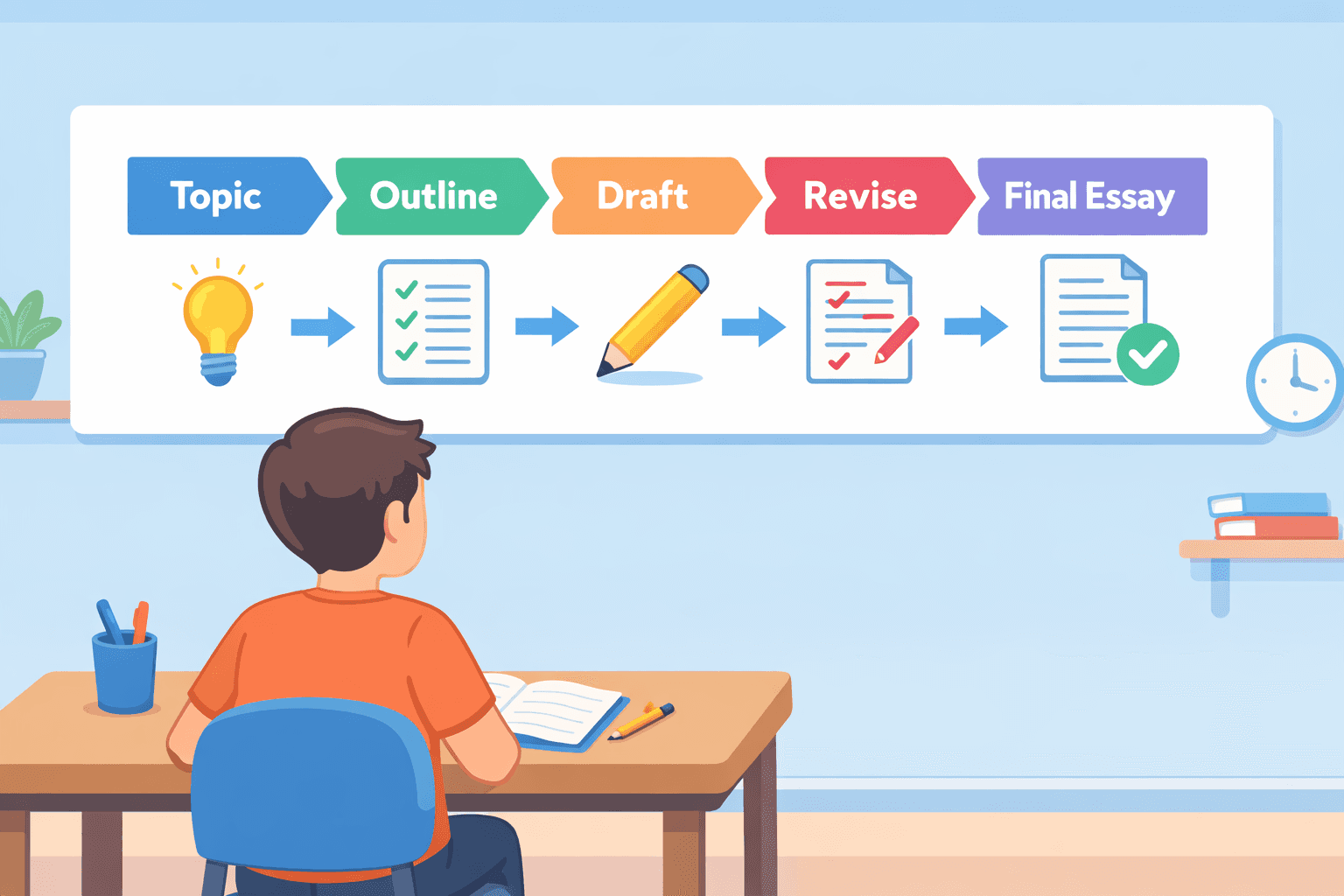
A process essay shows how to do something or how something happens, step by step. Many students understand the topic but find it hard to put the steps in a clear, logical order.
This guide gives you a straightforward method. We'll cover the basic structure — for a broader framework you can apply to your draft, see our guide to structuring an essay for higher-level research — look at examples, and share useful tips. The goal is to help you write a clear, well-organized essay that guides your reader from start to finish.
<CTA title="Write Clear Step-by-Step Essays" description="Plan and structure your process essay faster with guided AI assistance" buttonLabel="Try Jenni Free" link="https://app.jenni.ai/register" />
What Is a Process Essay and Why It Matters
A process essay explains a sequence. It shows how to complete a task, like following a recipe, or explains how a system works, similar to a technical manual.
Its value is often underestimated. However, research from Purdue University's general writing index indicates that using a clear, step-by-step structure can boost reader understanding by more than forty percent in instructional writing.
There are two common types:
Directional: This type provides instructions. For instance, it explains how to change a tire.
Informational: This type describes a process. An example would be explaining how a viral vaccine triggers an immune response.
Writing this kind of essay builds mental discipline. It requires organizing thoughts into a logical, chronological flow, moving from a jumble of ideas to a coherent path.
<ProTip title="💡 Pro Tip:" description="Choose a process you already understand well to avoid vague explanations" />
Step 1: Choose the Right Process Essay Topic
Your topic choice makes all the difference. A vague or overly broad subject will create a confusing, hard-to-follow essay right from the start.
A strong topic has a few key features. It should have a natural start and finish, involve between five and eight clear actions, and be aimed at a specific reader's knowledge level.
Here are some solid examples:
How to write a research paper outline
How tempeh fermentation works
How to set up a basic hydroponic system
Weak topics are usually too big or abstract. "How to be successful" is a classic example, it's an idea, not a process with definable steps.
A Strong Topic | A Weak Topic |
How to write a process essay | How writing works |
How to prepare for a final exam | How to learn better |
How to cook perfect fried rice | Cooking techniques |
Getting this right from the beginning saves you from major headaches later on.
<ProTip title="🧠 Reminder:" description="If you cannot list steps quickly, the topic is likely too vague" />
Step 2: Plan Before You Write

Most students skip this part, which is a mistake. Jumping straight into writing "organically" usually results in a disorganized mess.
A common piece of advice in student forums is clear: taking time to outline first actually saves time and cuts down on rewrites later, a principle also emphasized in writing step by step.
Start your outline with a basic list:
Introduction
Step 1
Step 2
Step 3
Conclusion
If you want a quick starting point, the AI essay outline generator can help you draft a clean outline before you start writing.
Then, flesh out each step with specific details. For a process essay about writing, your outline might look like this:
Choose your topic.
Research the steps involved.
Organize the steps logically.
Write a first draft.
Edit for clarity and flow.
Think of your outline as a road map. Writing without one means you'll probably get lost. Planning matters because it directly leads to a better final product.
It minimizes major rewrites, keeps your logic from jumping around, and makes everything much clearer for your reader. If you want to go deeper, you can explore how to structure essay guide for additional strategies.
<ProTip title="📌 Pro Tip:" description="Write your steps as bullet points first before turning them into paragraphs" />
Step 3: Write a Strong Process Essay Introduction
A good introduction tells your reader exactly what to expect. It defines the process without dumping too much information on them at once.
A solid introduction has three parts:
A short hook or bit of context.
A clear explanation of what the process is.
A thesis statement that lists the main steps.
For more techniques, see how to write an essay introduction hook. Here's an example:
Knowing how to write a process essay is a useful skill for clear communication. This guide will walk through five key stages: selecting a focused topic, creating an outline, writing a first draft, logically organizing the steps, and finally, revising the work.
You can see how it gives a quick preview of the entire essay's structure.
The most common errors here are being vague, forgetting to state the steps in your thesis, or cramming in extra details that belong later. The best approach is to keep it simple and get straight to the point.
Step 4: Build Clear Body Paragraphs
The body of your essay is built one step at a time. Each paragraph should cover a single, distinct action in the process.
A complete step explanation needs a few things:
What to do: The specific action.
Why it matters: Its purpose in the overall process.
Needs: Any tools, materials, or conditions required.
Pitfalls: Common errors or things to avoid.
Here's what a paragraph might look like:
Start by choosing a topic with clear, sequential steps. This focus is crucial because it keeps your essay structured and prevents confusion. For instance, "how to bake sourdough bread" works; "how to be a good baker" does not. You'll need a basic understanding of the subject. A common mistake is picking something too broad, which makes defining specific actions nearly impossible.
To connect these steps smoothly, use simple transition words: First, Next, Then, After that, and Finally. These words are non-negotiable for guiding a reader through a sequence.
A reliable paragraph structure follows this model: introduce the step, explain it, add an example or detail, then transition to the next one.
<ProTip title="✍️ Pro Tip:" description="Always explain why each step matters not just what to do" />
Step 5: Use Clear and Simple Language
For a process essay, clarity isn't just a style choice, it's the entire point. Complicated, wordy sentences will lose your reader and defeat the purpose.
Data supports this. Research on readability and jargon in plain language summaries shows that clearer, simpler language improves understanding and reduces confusion for readers.
To keep your writing clear, follow a few basic rules:
Write short sentences.
Cut out jargon.
Define any necessary technical terms.
Be specific.
Compare these two lines:
Unclear: "Utilize appropriate methodology."
Clear: "Use the correct method."
The best test is to imagine you're explaining the process to someone doing it for the first time. If they couldn't follow your directions, you need to rewrite.
Step 6: Add Practical Examples for Better Understanding
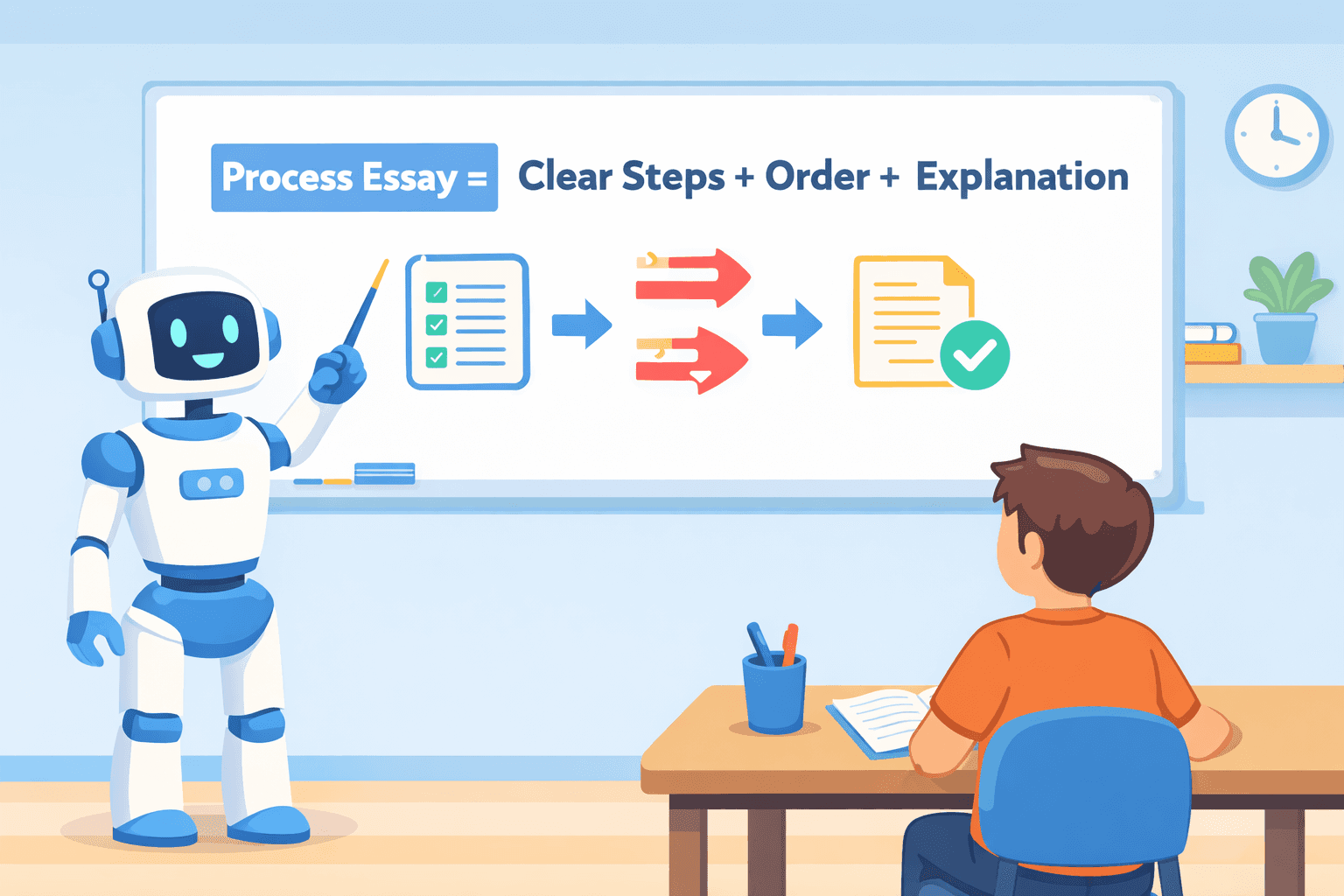
Abstract instructions are hard to follow. Concrete examples make your process real for the reader.
Don't just tell them what to do; show them.
Instead of writing a vague instruction like "Mix ingredients carefully," provide a specific, actionable example:
Mix the flour and water slowly until the texture becomes smooth, like thick pancake batter.
Good examples serve three main purposes. They turn abstract ideas into something tangible, they cut down on reader confusion, and they make the text more engaging to read. Think of each example as a small demonstration built right into your paragraphs.
Step 7: Write a Strong Conclusion
Your conclusion should bring the process to a clean close. It's not the place for new steps or ideas.
Aim for two or three sentences that do the following:
Briefly recap the main stages.
Remind the reader of the end result or its usefulness.
Optionally, suggest how they might apply the skill.
Here's an example:
By following these steps, choosing a focused topic, outlining, drafting, and revising, you can produce a clear, logical process essay. Mastering this structure not only helps with academic assignments but also strengthens your ability to explain complex tasks in any setting.
The goal is to provide a sense of completion. Don't let the essay just stop.
Common Mistakes in Process Essay Writing
A few predictable errors show up in most weak process essays. Spotting them in your own draft is half the battle.
The frequent issues are:
Skipping steps: Assuming the reader will fill in gaps.
Weak transitions: Making the sequence feel choppy or disconnected.
Shallow explanation: Stating what to do but not why it's done or how.
Disorganized structure: Presenting steps out of their logical order.
Many students hit a wall trying to balance a rigid structure with a natural voice. Writing without any plan might feel more creative, but it almost always results in a confusing mess.
On the other hand, improving your overall writing skills through resources like how to improve essay writing can make the process much easier.
<ProTip title="⚠️ Pro Tip:" description="Test your instructions by reading them aloud to check clarity" />
Process Essay Writing Checklist
Use this checklist before submitting your essay.
Clear topic with defined steps
Logical chronological order
Strong introduction with thesis
One step per paragraph
Transition words included
Simple and clear language
Conclusion summarizes process
A checklist keeps your writing consistent.
Writing a Process Essay That Actually Works
A process essay becomes effective when each step flows logically and clearly. Structure, clarity, and examples form the foundation of strong writing.
<CTA title="Turn Steps Into Clear Essays" description="Organize and write structured essays faster with AI guided outlines" buttonLabel="Try Jenni Free" link="https://app.jenni.ai/register" />
With the right approach, writing stops feeling overwhelming. Tools like Jenni help turn outlines into polished drafts while keeping your ideas structured and easy to follow.