By
Justin Wong
—
Process Essay: How to Write Clear Step-by-Step Essays

Justin Wong
Head of Growth
Graduated with a Bachelor's in Global Business & Digital Arts, Minor in Entrepreneurship

A process essay explains how to do something. It gives step-by-step instructions in order. The goal is clarity, so anyone can follow the steps and get the same result. Students often have trouble organizing the steps or using the right tone.
This guide shows you how to write one. We cover the structure, include examples, and give techniques you can use right away. Keep reading to learn the simple method for writing a clear, effective process essay.
<CTA title="Write a Clear Process Essay Faster" description="Turn ideas into structured step by step essays with clarity and flow in minutes" buttonLabel="Try Jenni Free" link="https://app.jenni.ai/register" />
What Is a Process Essay and Why It Matters
A process essay gives step-by-step instructions for completing a task or explaining how something works. The goal is perfect clarity, letting any reader follow the process and achieve the same result.
Studies in instructional design suggest that structured writing significantly enhances reader comprehension and task success rates, which is why following clear essay writing principles helps reduce confusion and improve retention.
There are two main types. A directive process essay tells you how to do something, like baking bread. An informative process essay explains how something works, such as photosynthesis.
They use the same basic structure but have different goals. Students often struggle with these essays.
Common problems include leaving out steps, assuming the reader already knows something, or adding personal opinions where only clear, objective instructions belong. Think of a process essay like a recipe. If one step is missing, the final result fails.
<ProTip title="💡 Pro Tip:" description="Break your process into small steps before writing to avoid missing critical details" />
Process Essay Structure Explained
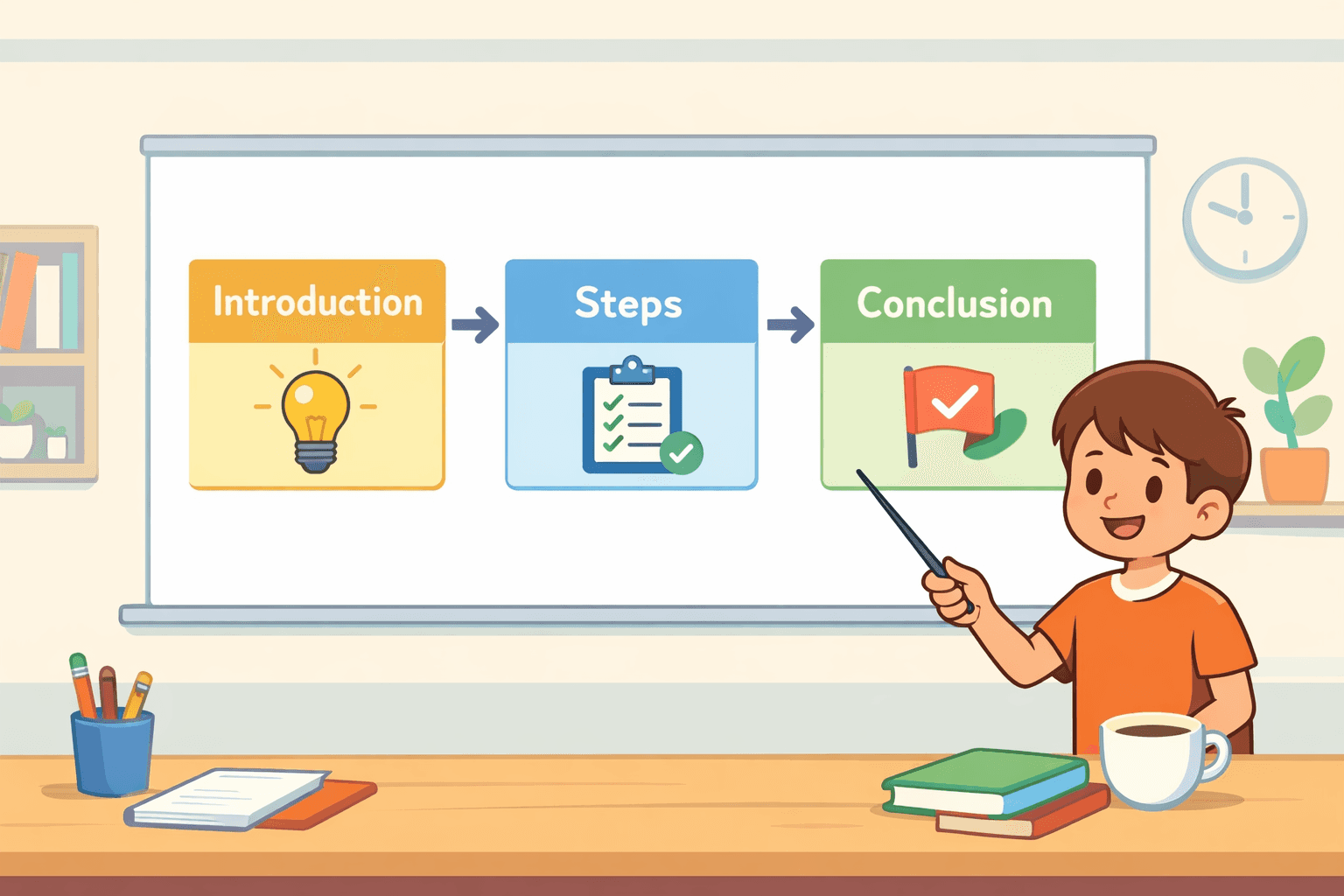
A process essay needs a solid structure: an introduction, body paragraphs for each step, and a conclusion. This makes the logic easy to follow, especially when you follow a clear process essay approach that keeps steps in logical order.
Quick Structure Overview
Section | Purpose | Key Elements |
Introduction | Define process | Purpose + thesis statement |
Body | Explain steps | One step per paragraph |
Conclusion | Reinforce outcome | Summary + results |
A process essay needs a solid structure: an introduction, body paragraphs for each step, and a conclusion. This makes the logic easy to follow.
Introduction Start by defining the process. Your introduction should state the purpose and include a clear thesis. Example: This essay outlines the five steps to brew coffee with a French press, from choosing beans to pouring a cup. Answer these questions: What is the process? Why is it useful? How many steps are there? Keep background details short. If you want to make your opening more engaging, check this guide on how to write essay introduction hook.
Body Paragraphs Each paragraph covers one major step, in strict order. A good step explains:
What to do
Why it’s important
Any tools needed
Common errors to avoid Example: First, grind the beans to a coarse texture. Fine grounds can clog the filter and make the coffee taste bitter.
<ProTip title="📌 Reminder:" description="Use sequence words like first next then finally to guide readers through each step" />
Conclusion End by summarizing the process and highlighting the result. Don’t just repeat the steps. Example: Following these steps makes a rich, balanced cup of coffee. You can adjust the grind or steep time to change the flavor.
Step-by-Step Guide: How to Write a Process Essay
Here's a step-by-step guide for writing a process essay. The goal is to create instructions anyone can follow.
Step 1: Choose a topic with a clear scope Choose something you can explain in clear, logical steps.
Good: How to plant a houseplant, manage a daily routine, or use a budgeting app.
Avoid: Topics that are too complex or need expert knowledge to understand.
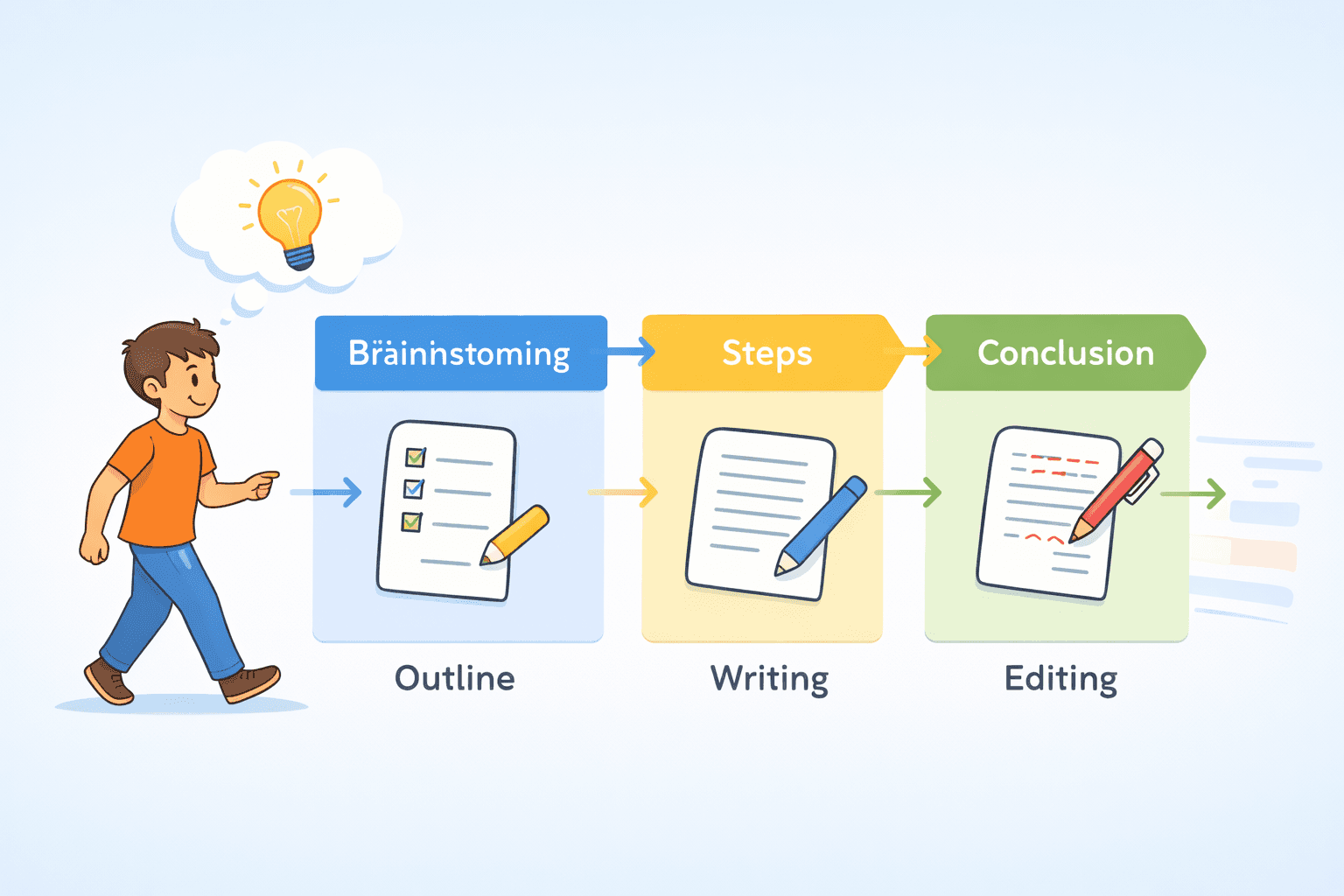
Step 2: List every step Before you write, make an outline of the entire process in order; an AI essay outline generator can help you map the steps quickly. A basic outline is: gather materials, prepare your workspace, do the main task, then review the results.
This keeps you from forgetting important details later and ensures your steps follow a complete essay writing process.
Step 3: Write your thesis Your thesis statement should preview the process.
Example: This essay explains four steps for creating a monthly budget using simple tools.
Keep it direct.
Step 4: Write one paragraph per step For each step in your outline, write a full paragraph. Start with a topic sentence that names the step. Then explain what to do and why it matters. Add an example or detail. Example: Next, separate your expenses into fixed and variable costs. This makes it easier to see your spending habits and find places to save money.
Step 5: Connect your steps Use transition words to link paragraphs and keep the flow smooth. Words like First, Then, Next, Afterward, and Finally are essential. Without them, the essay feels choppy.
<ProTip title="💡 Pro Tip:" description="Repeat your structure pattern across paragraphs to improve clarity and flow" />
Step 6: Edit carefully Read through your finished essay. Ask yourself: Did I skip a step? Are the instructions perfectly clear? Could a beginner follow this?
If you want to refine clarity even further, this guide on how to improve essay writing offers practical ways to strengthen your writing.
A study in the Journal of Educational Psychology found that structured revision can improve writing clarity by more than 30 percent.
Process Essay Examples (Quick Breakdown)
Looking at examples shows how a process essay works in practice. If you want to strengthen your overall writing skills while studying examples, this guide on how to improve essay writing can help you refine clarity and structure.
Example 1: How to cook a simple stir-fry First, gather your ingredients: rice, vegetables, and spices. Next, heat oil in a pan and sauté the vegetables until they're soft. This example uses basic steps and clear transitions.
Example 2: How to structure a productive morning Start by planning your tasks for the day. Then, work on your most important activities before you check emails. This focuses on a logical order for better productivity.
Example 3: How photosynthesis works The process starts when plants absorb sunlight through chlorophyll. That energy is then used to convert carbon dioxide and water into glucose. This type of essay explains how something happens, instead of giving instructions.
Common Mistakes in Process Essay Writing
Students often make a few common mistakes that weaken a process essay. Avoiding them will make your instructions much clearer.
Skipping steps This is the biggest problem. If you leave out a step, the reader can't complete the process. For example, if you explain how to bake a cake but forget to mention preheating the oven, the result will fail. Always list every single action, even the ones that seem obvious to you.
Adding irrelevant details Extra information distracts from the main task. If you're writing about how to change a tire, you don't need a history of the automobile. Stick only to the details and explanations that are necessary for completing the process.
Using vague language Unclear instructions are useless. Avoid phrases like "prepare the materials properly" or "do it carefully." Be specific. Instead of "prepare the materials," write: "Wash and dry all tools with soap before starting." Tell the reader exactly what to do.
<ProTip title="📌 Note:" description="Always write for someone with no prior knowledge of the process" />
Process Essay Topics and Ideas for Students
Choosing the right topic is the first step to writing a good process essay. A clear, practical subject makes the whole task easier.
Good topic categories Look for ideas in areas with straightforward steps. Useful categories include:
Daily life: Creating a morning routine, developing better study habits.
Technology: Setting up a new device, using a specific app effectively.
Education: The process of writing a research paper, preparing for an exam.
Cooking: Following a simple recipe, learning a basic cooking technique like boiling an egg.
Sample topics to consider
How to write a research paper from start to finish.
How to prepare for final exams over one week.
How to start a basic blog on a free platform.
How to organize a home workspace for productivity.
The best topics have a logical sequence of steps and are relevant to your reader's life. Avoid subjects that are too broad, abstract, or require specialized knowledge.
Process Essay Checklist for Better Writing
Before you turn in your process essay, run through this quick checklist. It covers the essentials for clear, effective instructions.
Process Essay Checklist
Thesis: Do you have a clear thesis statement that previews the process?
Order: Are all the steps in the correct, logical order?
Paragraphs: Is each major step explained in its own paragraph?
Transitions: Did you use words like first, next, and finally to connect your ideas?
Language: Is your writing simple and precise, with no vague instructions?
Completeness: Have you explained every necessary action, so a beginner could follow it?
Checking these points will make your essay clearer and is likely to improve your grade.
Why Process Essays Flop in ESL Contexts
Process essays are a common stumbling block in English classrooms. The problem usually starts before a student even writes the first word.
Cambridge English research points to a specific issue: non-native writers frequently have trouble with the logical order of steps and making them connect smoothly. The writing feels choppy or confusing.
The Main Culprit: Skipping the Plan
Too often, students are told to write, so they just start writing. They skip the planning stage entirely. Using a simple framework to organize an academic essay before drafting helps keep steps and transitions in order. What happens next is predictable. The steps are out of order. The essay jumps from point to point without linking words. The explanation becomes hard to follow.
A Hidden Hurdle: How We're Taught to Think
There's another layer to this. In some educational cultures, the focus is on the central idea or the final outcome, not the step-by-step journey to get there.
The structure isn't the priority. So when a student is asked to write chronologically, first you do this, then you do that, it goes against their training. They might describe a perfect cake before explaining how to mix the batter.
A Straightforward Fix
The solution isn't complicated. It's about building a habit.
First, don't write. Just list every single step of the process. Get them all down.
Next, put those steps in the correct, logical order. Then, add the glue: sequence words like "first," "next," "after that," and "finally."
Finally, practice with everyday topics everyone understands, like making tea or tying shoelaces. Master the structure with the simple stuff before tackling complex subjects.
<ProTip title="💡 Pro Tip:" description="Start with familiar processes like daily routines before tackling complex academic topics" />
Clear Steps, Strong Results
A process essay depends on clarity, structure, and logical sequencing. When each step builds on the previous one, readers can follow the process without confusion. Strong introductions, organized body paragraphs, and precise transitions define effective writing.
<CTA title="Turn Ideas Into Clear Step by Step Essays" description="Create structured outlines and refine your process essays with clarity and confidence" buttonLabel="Try Jenni Free" link="https://app.jenni.ai/register" />
Using tools like Jenni alongside these techniques helps you plan faster, organize ideas better, and produce clean, readable essays that meet academic standards.