By
Justin Wong
—
How to Improve Validity and Reliability in Research

Justin Wong
Head of Growth
Graduated with a Bachelor's in Global Business & Digital Arts, Minor in Entrepreneurship

Validity asks if your research actually measures what it says it does. Reliability checks if you'd get the same results if you ran the study again. A sloppy design or fuzzy measurement tools can wreck both, no matter how much money you have behind the project.
This guide gives you concrete steps to fix that. We'll show you how to sharpen your measurements, tighten up your study's design, and solve typical data problems, using clear examples. Keep reading to get the practical fixes.
<CTA title="Strengthen Your Research Design" description="Create structured, clear, and defensible research frameworks in minutes without confusion." buttonLabel="Try Jenni Free" link="https://app.jenni.ai/register" />
Step 1: Define and Measure Constructs Precisely
Before you can study anything, you need to define what you're looking at. Vague ideas lead to shaky results.
Take a broad concept, like "stress" or "learning." You can't measure these directly. You have to turn them into something you can actually count or score. This is called operationalizing your variables.
Stress could become cortisol levels measured in a blood sample, or scores from a questionnaire using a Likert scale.
Learning might be defined by test scores or how well someone performs a specific task.
This translation from theory to measurement is the first and most important step for construct validity. It makes sure your numbers actually reflect your idea.
Don't build your own measuring tape if a good one already exists. Using validated instruments cuts down on error and boosts your study's credibility.
Tools like these often come with their own scores for internal consistency reliability, like a Cronbach's alpha above 0.7, which is a common benchmark.
The National Institutes of Health (NIH) notes that using established, validated tools significantly improves measurement accuracy in research.
A good instrument typically includes documentation on:
How its content validity was established (does it cover all parts of the concept?).
Evidence for its criterion validity (does it match up with a known gold standard?).
Its reliability scores from previous use.
You also need to check different kinds of validity. They aren't interchangeable; each one tests a different piece of the puzzle.
Content validity: Does your measure include all the important aspects of your concept?
Construct validity: Does your measure behave the way your theory says it should?
Criterion validity: Does your measure correlate strongly with another, trusted measure of the same thing?
Looking at all three ensures your findings are meaningful, not just consistently wrong.
<ProTip title="💡 Pro Tip:" description="Use validated scales to reduce measurement error and improve credibility fast." />
Step 2: Strengthen Research Design and Control Bias
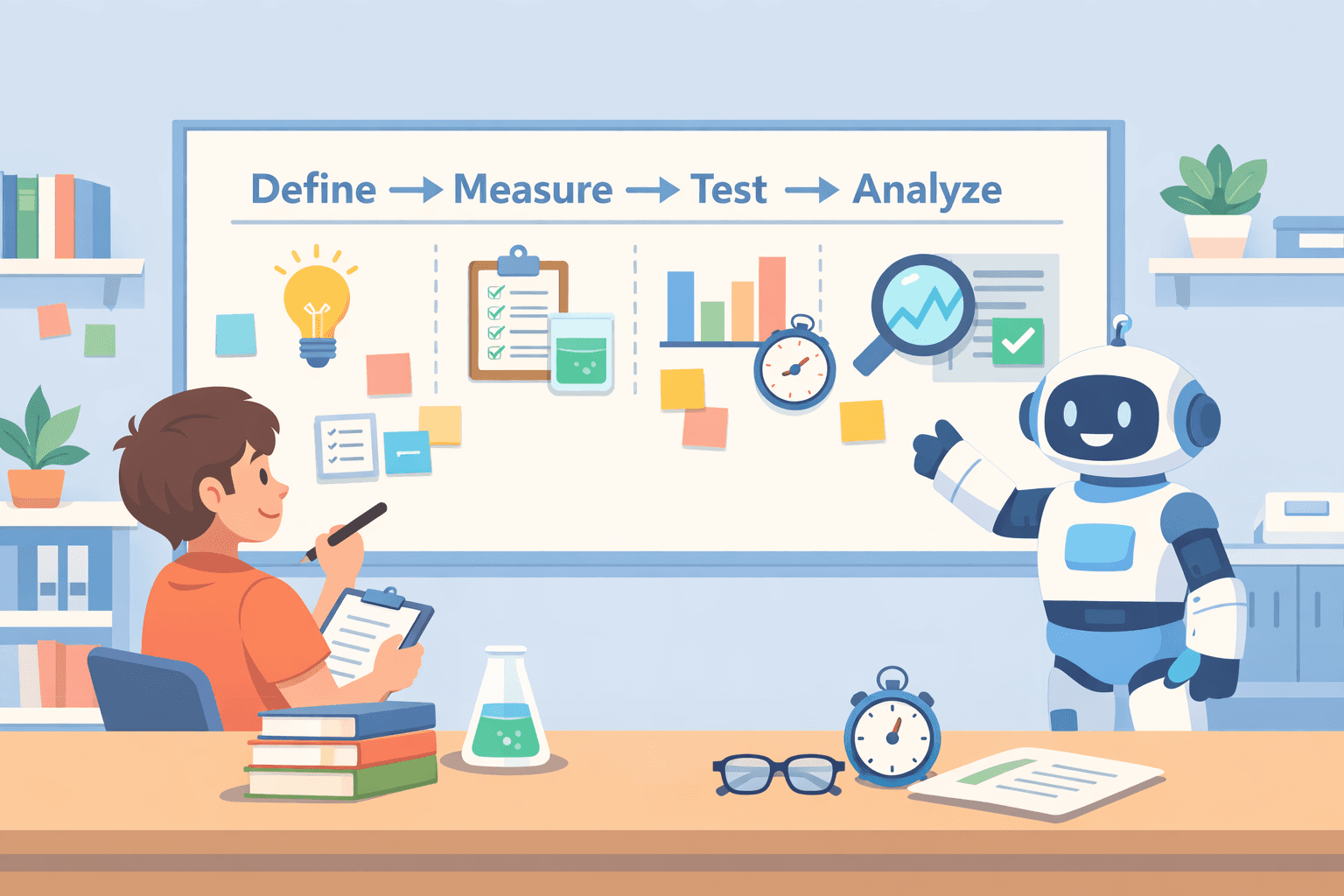
Your study's design is its skeleton. A weak one makes everything fall apart.
First, make sure your design actually fits the question you're asking. If you want to know if A causes B, you need an experiment. A survey won't give you that answer.
Using the right method strengthens your study's internal validity and makes your statistical findings easier to interpret.
You also have to control for confounding variables. In medical trials, standard techniques like random assignment and double-blind procedures are used specifically to reduce bias.
The World Health Organization points out that better quasi-experimental practice and controlled designs significantly boost credibility.
Next, standardize everything. Give every participant the exact same instructions. Run the tests in the same environment. Keep the timing consistent.
This reduces random, noisy errors in your data and is a straightforward way to support measurement reliability. Small inconsistencies, like a slightly different wording of a question, can quietly degrade the reliability of your entire dataset.
Finally, don't skip the pilot test. Run your full procedure with a small group, maybe 10-20 people, before you commit to the main study. This dry run helps you spot unclear questions, fix awkward timing, and catch early signs of low reliability.
It's one of the fastest, most practical ways to improve both validity and reliability before you invest time and resources in the full-scale project.
<ProTip title="⚠️ Reminder:" description="Small inconsistencies in procedure can quietly reduce reliability across your dataset." />
Step 3: Improve Sampling and Generalizability
Who you study matters as much as how you study them. Your sampling method determines whether your findings can apply to anyone outside your specific group.
To improve generalizability, use probability sampling whenever possible. This means every person in your target population has a known chance of being selected, which makes your sample more representative and reduces bias. Common methods here are:
Random sampling
Stratified sampling
Cluster sampling
A larger sample can help, but it's not a magic fix. If your measurement tool is flawed, a bigger sample just makes that flaw more stable and pronounced. Always be upfront about your sampling limitations.
Understanding the core differences between reliability and validity helps you realize that bias scales right along with sample size if the foundation is weak.
This is why fixing your measurement accuracy is more important than simply chasing a bigger N. Always be upfront about your sampling limitations.
Honestly reporting who was included (and who was left out), how you recruited people, and what biases might exist actually strengthens your credibility. It builds trust, even when your design has practical constraints.
Step 4: Improve Reliability Through Consistency
Reliability is about consistency. Can you get the same result if you measure again, or if a different person does the measuring?
If people are collecting or coding your data, they need proper training. An inconsistent observer adds unwanted noise.
Training sessions and calibration exercises are used to improve both interrater reliability (agreement between different people) and intrarater reliability (one person's consistency over time).
You can measure this formally with statistics like Cohen's kappa or intraclass correlation. Your questionnaire design is critical. Bad questions wreck both validity and reliability.
Avoid leading questions that push for a specific answer.
Avoid double-barreled items that ask two things at once ("Do you find the software useful and easy to use?").
Avoid vague language that can be interpreted differently.
Focus instead on clear, neutral wording.
Finally, don't rely on a single measurement. Use multiple checks. In quantitative work, utilize test-retest methods. In qualitative work, use triangulation, combining interviews, observations, and document analysis to see if your conclusions hold up.
Reviewing the various types of reliability in research can help you choose the right check for your data.
In quantitative work, use multi-item scales and test-retest reliability (measuring the same people twice).
In qualitative work, use triangulation. Combine interviews, observations, and document analysis to see if your conclusions hold up across different sources.
<ProTip title="💡 Pro Tip:" description="Triangulation strengthens findings by confirming results across methods or sources." />
Step 5: Strengthen Qualitative Validity and Reliability
For qualitative research, the goals are trustworthiness and depth, not just numerical consistency. The tactics are different.
One powerful method is member checking. After you've analyzed the data, you go back to your participants and let them review your interpretations.
Does your summary match their experience? This step acts as a real-world check, boosting the credibility of your findings.
You also need to keep a detailed audit trail, a log of every decision you made during the research process.
This supports dependability. Furthermore, distinguish your approach by understanding qualitative vs quantitative research nuances; for example, qualitative work relies heavily on reflexivity, where you actively acknowledge your own biases.
It should include your notes on how you coded the data, your observations during collection, and your own reflections as a researcher.
This documentation supports the dependability of your work, it shows how you arrived at your conclusions.
A key practice is combining triangulation with reflexivity. Reflexivity means actively acknowledging your own biases and perspective as the researcher.
You then combine this self-awareness with triangulation, using multiple methods (like interviews and observations) or gathering data from different sources.
Together, these practices strengthen the confirmability of your study, making your conclusions more robust.
<ProTip title="🧠 Insight:" description="Reflexivity helps you separate interpretation from bias in qualitative analysis." />
Step 6: Use Statistical and Analytical Safeguards

Statistical analysis isn't just for finding results; it's for checking the integrity of your data.
First, assess reliability with specific tests. Common methods are:
Cronbach's alpha (for internal consistency of a scale)
Split-half reliability
Parallel forms reliability
A Cronbach's alpha score above 0.7 is a typical, though not absolute, benchmark for acceptable reliability.
Then, run robustness and sensitivity checks. See if your core findings hold up when you change the conditions.
Try removing outliers, tweaking your model assumptions, or using an entirely different analytical method. If the results stay stable, that's a good sign of strong reliability.
Finally, align your analysis with established research paradigms to ensure your analytical safeguards match your theoretical framework.
If your statistical checks show low reliability, treat those findings as preliminary. Avoid making strong, definitive conclusions from weak data.
Avoid making strong, definitive conclusions from weak data. This protects your credibility and supports the overall reproducibility of your research.
Quick Comparison: Validity vs Reliability
Understanding the difference helps you improve both strategically.
Aspect | Validity | Reliability |
Definition | Measures accuracy. Are you measuring the right thing? | Measures consistency. Can you get the same result again? |
Focus | The correctness of your results. | The stability of your results. |
Example | Does your test actually measure intelligence, or just test-taking skill? | If you measure the same person twice, do you get roughly the same score? |
Key Methods | Construct validation, triangulation. | Test-retest, Cronbach's alpha. |
Risk | Measuring the wrong concept. | Getting inconsistent results. |
You need both. Reliable but invalid data is consistently wrong. Valid but unreliable data can't be trusted.
Common Mistakes That Damage Validity and Reliability
Researchers often run into the same pitfalls, which weaken their work and show up regularly in peer-review comments.
Here are some common mistakes:
Over-relying on sample size instead of measurement quality. Thinking a bigger N fixes everything, when a flawed measure just makes the flaw more statistically stable.
Removing items just to increase Cronbach's alpha. Tweaking a survey to hit a magic number like 0.7, without checking if you're actually damaging the scale's content validity.
Using convenience samples without acknowledging the bias. Studying only the people who are easy to reach, then not clearly stating how that limits who your findings apply to.
Skipping the pilot test. If you skip a trial run, you risk collecting bad or confusing data because you didn’t test things first.
Ignoring confounding variables. Not designing your study to control for other factors that could explain your results, leaving a major hole in your argument.
<ProTip title="⚠️ Warning:" description="Fixing reliability by removing items can weaken construct validity if done blindly." />
Make Your Research Hold Up Under Scrutiny
You know the frustration when your results don’t quite line up or feel shaky under review. It slows everything down and makes you second guess your work. Small gaps in definition or process can throw off the whole outcome. That’s the problem.
<CTA title="Design Research That Stands Up to Review" description="Turn your research ideas into structured, reliable, and valid frameworks quickly." buttonLabel="Try Jenni Free" link="https://app.jenni.ai/register" />
Using Jenni helps you keep everything tight and easy to track from start to finish. It supports how you define, structure, and document your work so your results stay consistent and clear. It’s a simple way to avoid messy revisions and feel confident in what you present.