By
Nathan Auyeung
—
Discursive Essay: How to Write Clear, Balanced Arguments

Nathan Auyeung
Senior Accountant at EY
Graduated with a Bachelor's in Accounting, completed a Postgraduate Diploma of Accounting
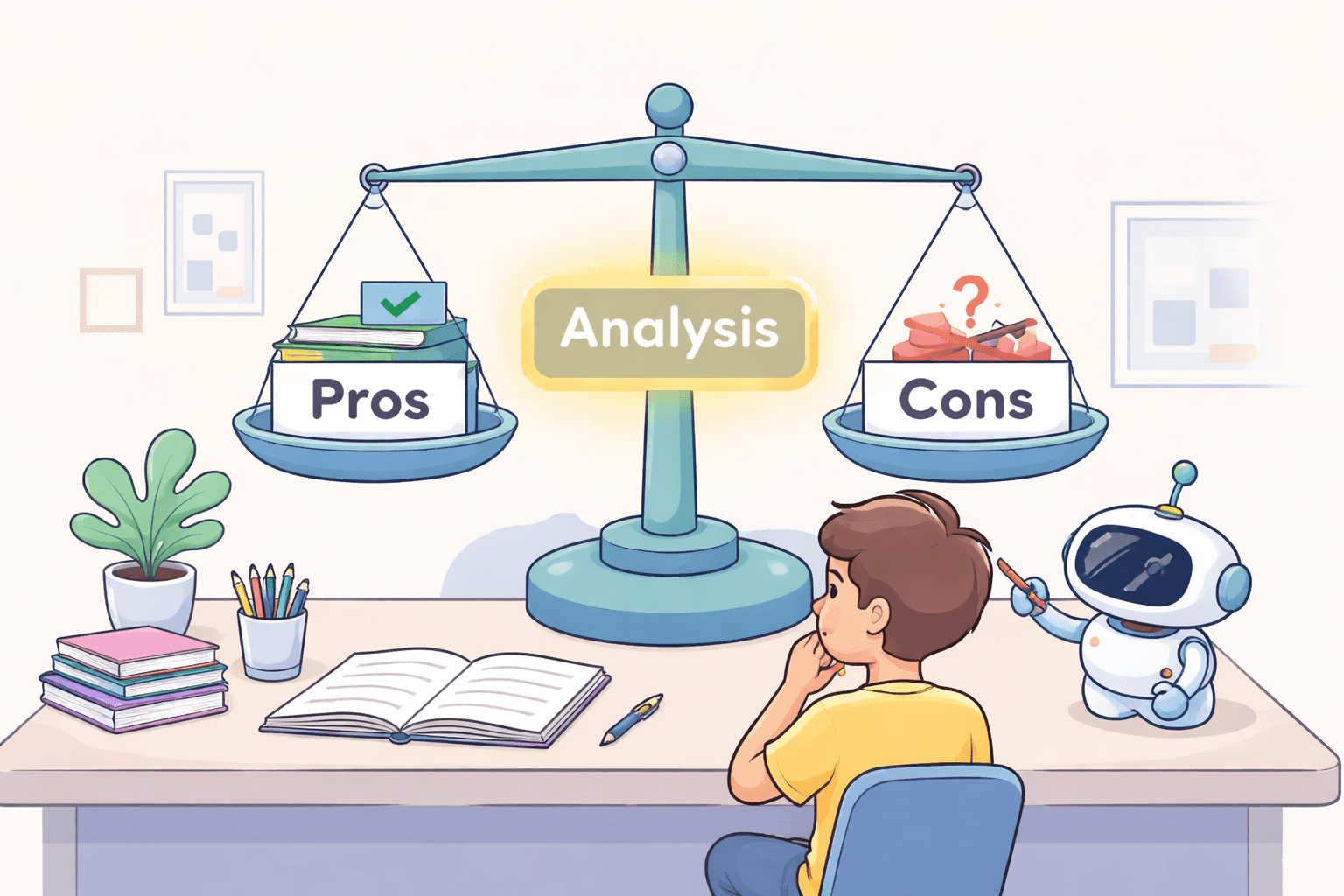
Writing a discursive essay often feels confusing. You are told to “be balanced,” but also “show critical thinking.” Many students end up listing pros and cons without real analysis, which leads to average grades.
This guide will show you how to actually write a strong discursive essay. You will learn structure, techniques, real examples, and how to avoid the common traps that make essays feel robotic or shallow.
<CTA title="Plan Your Discursive Essay Faster" description="Generate structured outlines and balanced arguments in minutes with clear academic flow" buttonLabel="Try Jenni Free" link="https://app.jenni.ai/register" />
What Is a Discursive Essay (And Why It Confuses So Many Students)
A discursive essay examines different sides of an issue. It's formal writing that looks at several viewpoints before the writer comes to a final, reasoned position.
The key difference? An argumentative essay picks a side and defends it. A discursive essay acts more like an investigator, gathering all the evidence first.
If you want a broader understanding of where this fits within academic writing, exploring different types of academic essays can help clarify how discursive essays compare to others.
The Basic Idea: A Simple Comparison
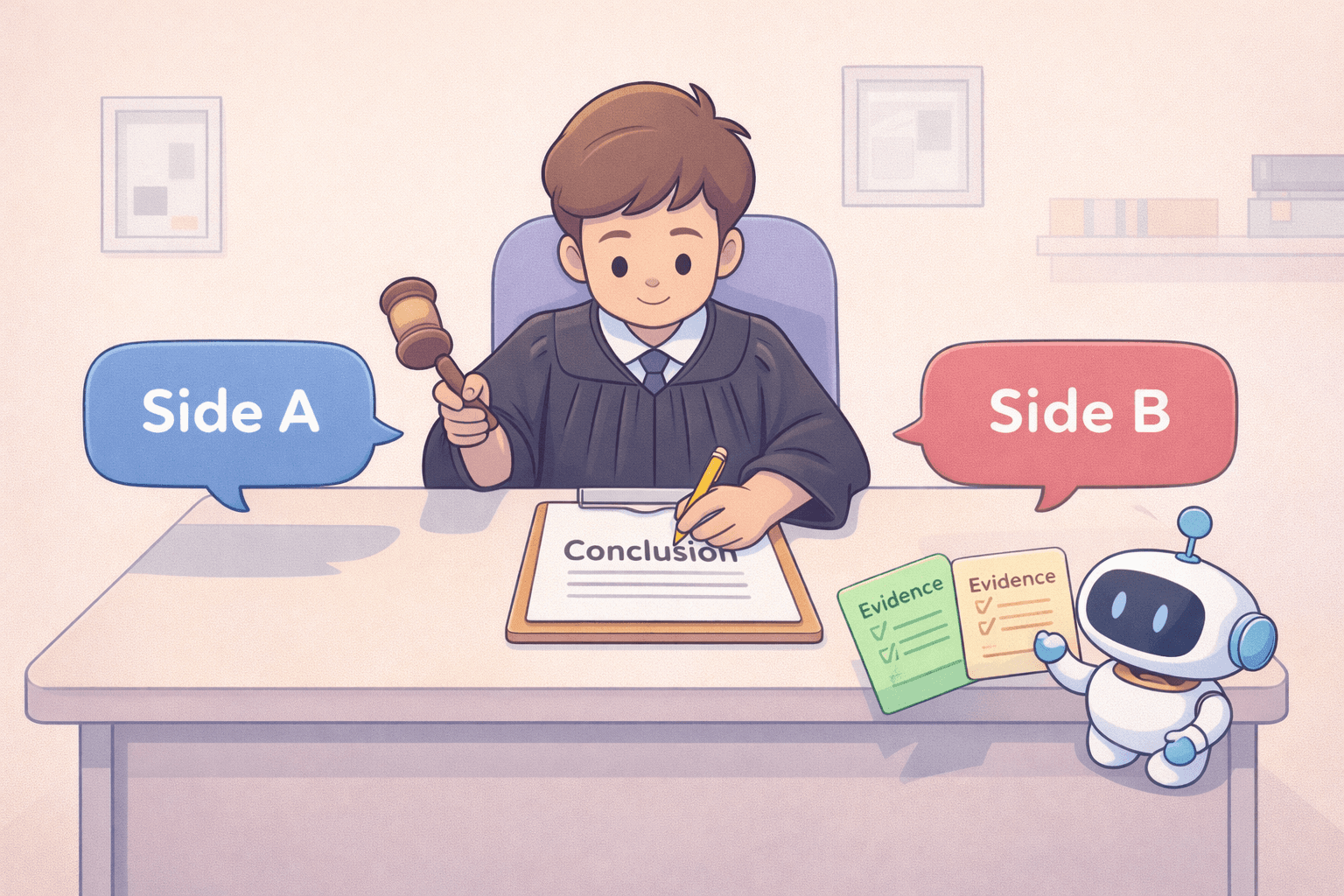
Imagine you're the judge in a trial.
You hear the case for the prosecution.
You hear the case for the defense.
You weigh all the testimony and evidence.
Finally, you deliver a verdict.
That's what a discursive essay does. It presents the case, then makes a ruling.
The most common mistake students make is treating it like a simple list. They just state "side A says this" and "side B says that" without actually weighing the merits of each argument. They forget to be the judge.
<ProTip title="💡 Pro Tip:" description="Always include a sentence that compares both sides not just lists them" />
Discursive Essay vs Argumentative Essay
They both deal with arguments, sure, but their goals aren't the same. This is the root of most confusion. For a more detailed comparison, see our discursive vs argumentative essay: key differences explained.
A Side-by-Side Look
Feature | Discursive Essay | Argumentative Essay |
Goal | To explore and examine multiple sides. | To convince the reader of one specific side. |
Tone | Balanced, measured, and analytical. | Persuasive, assertive, and often one-sided. |
Structure | Presents several viewpoints in detail. | Builds a single, dominant position. |
Conclusion | A reasoned judgment based on the evidence weighed. | A strong, definitive position argued for throughout. |
What This Actually Looks Like
Listen to how it sounds.
If your essay reads like you're trying to win a debate, it's argumentative.
If it reads like you're trying to figure out the truth, it's discursive.
Take this topic: social media.
An argumentative thesis declares: "Social media is harmful and should be restricted for teenagers."
A discursive thesis considers: "While social media connects people, its impact on adolescent mental health is a growing concern that demands scrutiny."
Types of Discursive Essays You Will Encounter
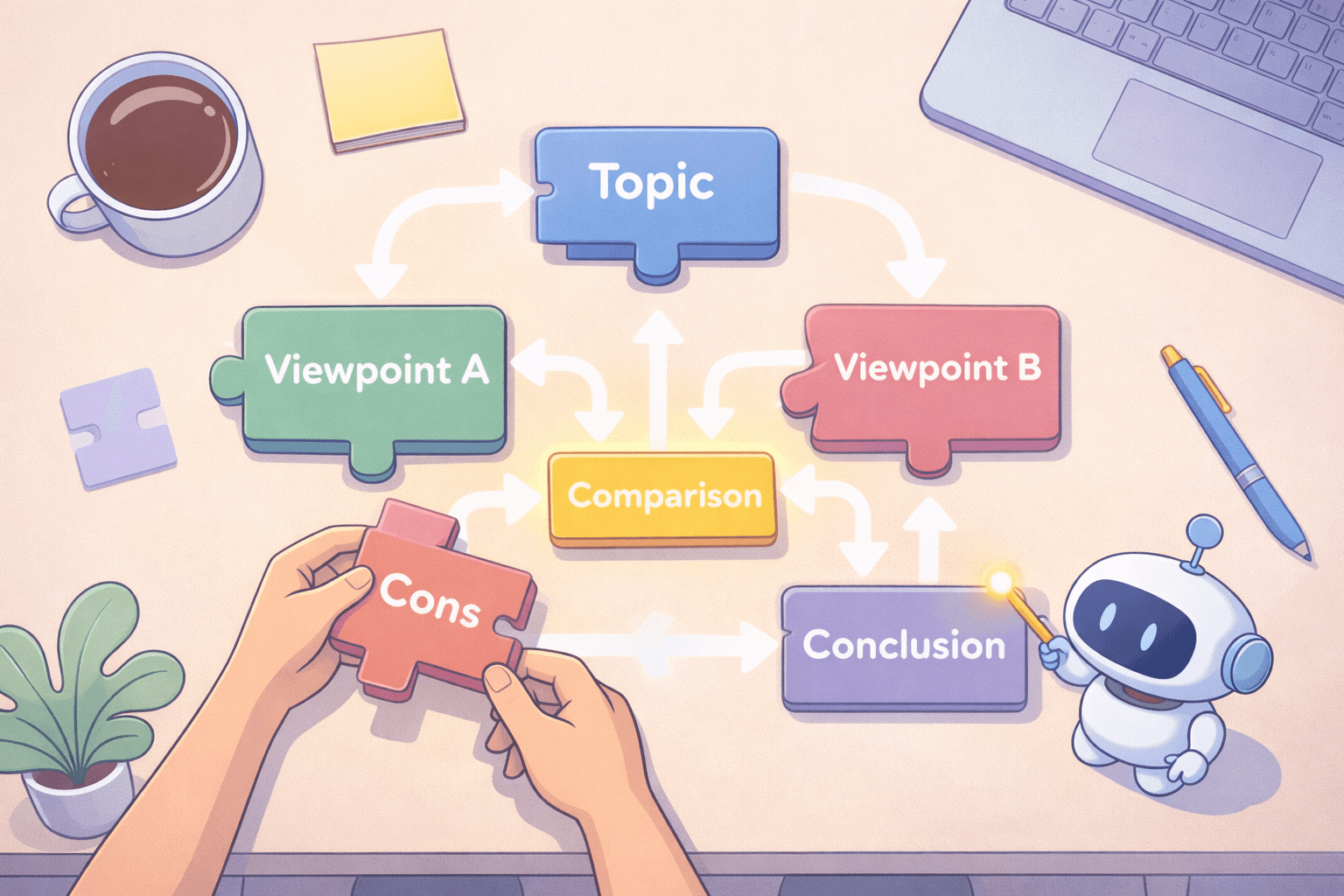
They don't all follow the same blueprint. Knowing which type you're writing is half the battle for getting the structure right.
1. The For-and-Against Essay
This is the classic, most common type. Your job is straightforward: lay out the pros, then lay out the cons. The real work happens when you step back to assess which side holds more weight.
A typical topic would be, "Should online learning replace traditional classrooms?"
2. The Problem-Solution Essay
Here, you start with a specific issue. You analyze it, then move on to examine potential fixes. The trap is just listing solutions. You need to discuss their feasibility and argue for which one might be most effective.
Take urban traffic congestion.
The problem is clear: gridlocked cities.
Possible solutions include expanding public transport, promoting remote work, or implementing congestion charges.
Your essay should debate which of these is actually viable.
3. The Cause-Effect Essay
This type explores connections. You investigate the root causes of a phenomenon and then trace its outcomes. It's about linking events, not just describing them.
For instance: "What leads to academic stress in students, and what are the real-world results of that pressure?"
<ProTip title="📌 Note:" description="Choose essay type early because it determines your structure and argument flow" />
Discursive Essay Structure That Actually Works
A clear framework stops your essay from becoming a confusing jumble of ideas. Understanding strong essay structure in academic writing can help you organize your introduction, body, and conclusion more effectively.
1. The Introduction: Laying the Groundwork
Don't overcomplicate it. Start by naming your topic. Explain why it's worth discussing. Briefly signal the main viewpoints you'll be examining.
If you struggle with openings, learning how to craft a strong hook can make a big difference, this resource on how to write essay introduction hook breaks it down clearly.
For example: Social media has reshaped how we talk to each other. It makes staying in touch easy, but doctors and researchers are increasingly worried about its effects on anxiety and personal data.
2. The Body: The Investigation
This is where you do the work. Each paragraph should tackle one clear point.
You have two main options for organizing this:
The Side-by-Side Method: One section for all the points supporting the issue, another for all the points against it. It's clear, but it can feel like two separate lists.
The Integrated Method: Each paragraph explores one specific argument and its immediate counter-argument, followed by your analysis of that clash.
The integrated method is usually stronger. It forces you to think critically in the moment, not just report information.
For instance: A paragraph might admit that social media allows for global friendships, but then note that these distant connections can sometimes make local loneliness feel sharper.
3. The Conclusion: Delivering the Verdict
This isn't a neutral summary. After weighing everything, you must give your considered opinion.
Briefly recap the strongest evidence from both sides. Then, based on that evidence, state your final, reasoned position.
Taking everything into account, social media's tools for connection are undeniable. However, the potential harms to well-being mean that using it intentionally, not constantly, is the more sensible approach.
How to Write a Discursive Essay Step-by-Step
If the concept still feels fuzzy, follow this process. It works every time.
Step 1: Plan First. Always.
Don't start typing immediately. Sketch a simple outline. If you're unsure how to organize your ideas effectively, this guide on how to structure essay guide can help you build a clear framework before you begin.
Side A: Points in favor.
Side B: Points against.
Your Take: Your preliminary judgment after listing the points.
This five-minute task stops you from rambling and keeps your essay on track.
Step 2: Craft Your Thesis Statement
This sentence is your essay's anchor. It needs to do two things: name the topic and promise a balanced discussion.
A functional thesis looks like this:
"This essay will analyze the benefits and drawbacks of remote work, evaluating its impact on productivity and employee well-being."
If you're unsure how to structure this effectively, reviewing clear guidance on thesis statements can help you refine both clarity and balance in your argument.
Step 3: Back Up Every Point
General claims are useless. You need specific proof.
Weak: "Remote work is efficient."
Strong: "A 2015 Stanford study found a 13% performance increase among remote workers, attributed to fewer office distractions."
Step 4: Link Your Thoughts
Jumping between ideas confuses the reader. Use simple transition words to guide them.
To add a similar point: Furthermore, Also.
To introduce a different view: However, Conversely, On the other hand.
To show a result: Therefore, As a result.
Step 5: Edit for Fairness
Before you finish, read your draft with one question in mind: Is this balanced?
Did you spend roughly the same amount of time on each perspective?
Does your conclusion come from weighing the evidence, or did you favor one side from the start?
<ProTip title="💡 Pro Tip:" description="If one side feels stronger add a counterargument to maintain balance" />
Common Mistakes (And How to Avoid Them)
A lot of essays get marked down not for bad ideas, but for simple, avoidable errors in how they're written.
1. The List, Not the Analysis
This is the biggest issue. An essay that just states "here's a pro, here's a con, here's another pro" reads like a grocery list. It's mechanical.
The Fix: After you present a point, you have to do something with it. Ask "So what?" or "How does this compare to the opposing point?" That question forces you to analyze, which is the whole point.
To go beyond listing ideas and develop deeper evaluation, this resource on being critical in academic writing explains how to strengthen analysis and comparison.
2. Hiding Behind False Neutrality
A discursive essay isn't a news report that just states facts. Your job isn't to stay perfectly in the middle.
It's to examine all sides and then, based on the evidence you've presented, form a judgment. If you don't take a stand at the end, you haven't completed the assignment.
3. The Robotic Voice
Using the same sentence structure over and over ("One advantage is... Another advantage is... A disadvantage is...") makes your writing sound like it was generated by a machine.
The Fix: Mix it up. Use a short, direct sentence. Follow it with a longer, more detailed one. Start a sentence with the evidence, not the topic. Weave in a concrete example right after you make a claim.
4. The Empty Conclusion
Ending with "There are good points on both sides" is a failure. It tells the reader you did all that work for no reason.
The Fix: Your final paragraph must synthesize. Briefly remind us of the strongest evidence from each side, and then clearly state which set of evidence you find more compelling and why. That's your reasoned opinion.
<ProTip title="⚠️ Reminder:" description="A discursive essay without evaluation will never reach top grades" />
What Examiners Actually Look For
Knowing how you're graded lets you focus your effort where it counts.
Markers assess a few core things. They check if your essay is clearly organized and easy to follow. They look to see if you've given fair and thorough attention to different viewpoints.
They judge the strength of your logic, how well you connect your ideas and evidence. They note whether you're using solid examples and data, not just opinions.
Finally, they read for overall flow; each paragraph should lead smoothly to the next. Research into academic writing, like frameworks used by the British Council, shows that top marks don't just go to a perfectly formatted essay.
The highest scores are reserved for work that combines that clear structure with genuine critical thinking. It's the difference between neatly presenting information and actually wrestling with it on the page.
A Quick Discursive Essay Example (Simplified)
Topic: Should students be allowed to use AI tools for schoolwork?
Introduction Artificial intelligence is now a fixture in classrooms and libraries. These tools can help students finish assignments faster, but they also prompt serious questions about how we learn.
The Body There's a strong case for using AI. It handles routine tasks quickly, like checking grammar or summarizing long articles.
This frees up time for students to focus on more complex ideas. For a student struggling with a basic draft, an AI suggestion can provide a helpful starting point.
However, the risks are real. If a student uses an AI to generate an entire essay, they skip the actual work of research, structuring arguments, and finding their own voice.
The convenience can become a crutch, weakening the ability to think through problems without assistance. The goal of education isn't just to produce a correct answer, but to build the skill of finding it.
Conclusion AI tools are powerful assistants. Their value for efficiency and support is clear. But their use must be guided. The responsible approach isn't to ban them, but to teach students how to use them as a supplement, not a replacement, for their own critical thought.
Discursive Essay Checklist
Before submitting, ask yourself:
Did I present both sides clearly?
Did I compare ideas, not just list them?
Is my conclusion reasoned?
Are my paragraphs logically connected?
Is my tone formal and balanced?
If you answer “no” to any, revise.
Turning Confusion Into Clear Argument
You’re staring at your draft, rereading the same lines, and nothing feels sharper. It all sounds repeated, slightly off, and you can’t tell what actually makes your point land. It’s frustrating. You just want it to make sense.
<CTA title="Write Clear and Balanced Essays" description="Turn your ideas into structured academic writing with guided support and smart outlines" buttonLabel="Try Jenni Free" link="https://app.jenni.ai/register" />
That’s where Jenni helps you cut through the noise and move forward faster — starting with an AI essay outline generator can help you map both sides before you draft. It keeps your ideas in line and helps you shape a clear argument without losing your voice. It’s a simple step that makes your writing feel solid instead of scattered.