By
Nathan Auyeung
—
How to Write a Compare and Contrast Research Paper Step-by-Step

Nathan Auyeung
Senior Accountant at EY
Graduated with a Bachelor's in Accounting, completed a Postgraduate Diploma of Accounting
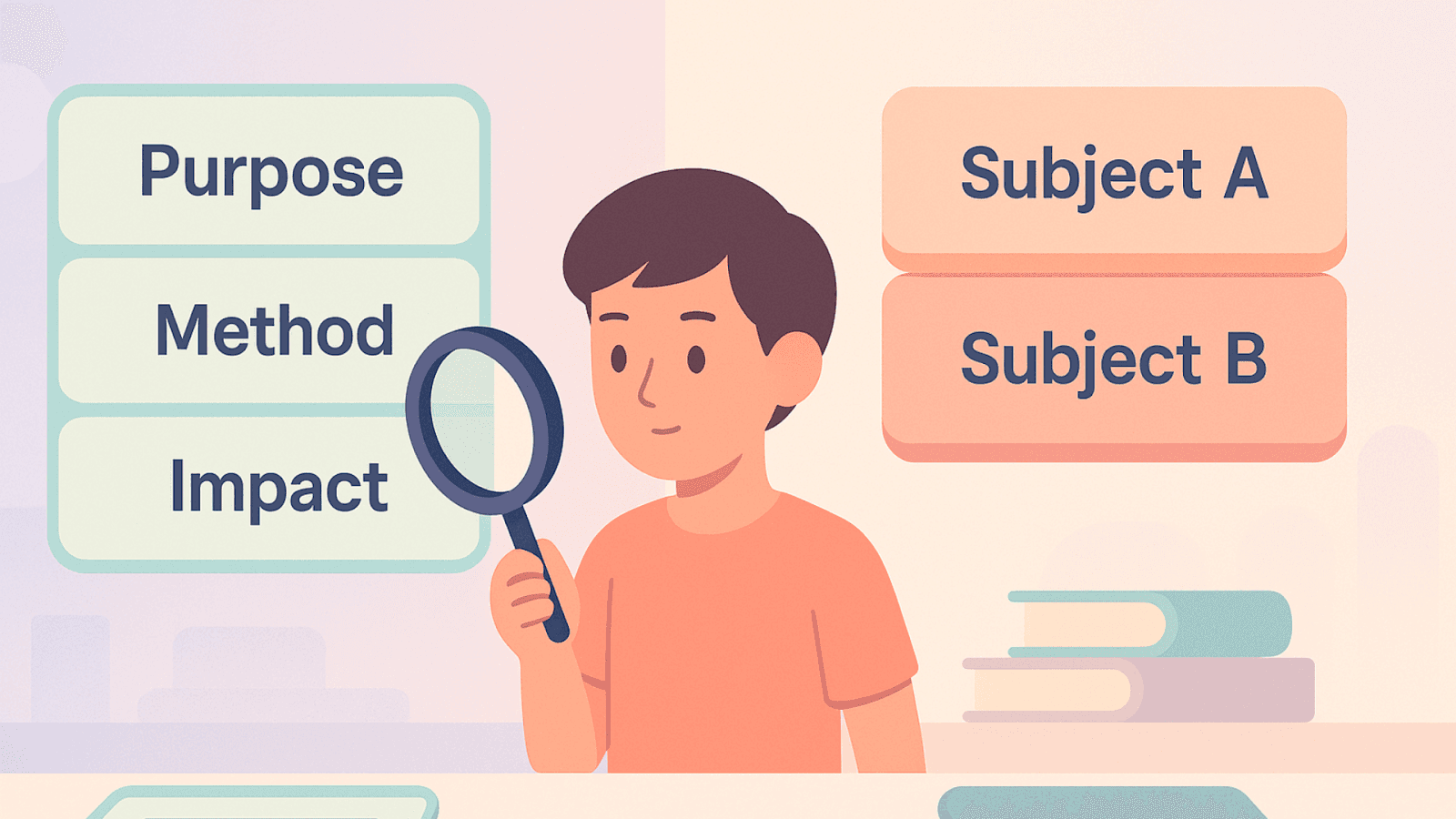
Many students assume a compare and contrast research paper will be easy. You pick two subjects, list what is similar, point out what is different, and you are done. But once you start writing, you may notice the real challenge. It is not gathering ideas; it is turning them into clear, organized insights that support a strong thesis.
This guide walks you through that process step by step. You will learn what a compare and contrast research paper is, how it differs from other academic tasks, and how to choose a structure that makes your ideas flow. If you want a broader refresher on academic expectations, see this overview of academic paper purpose and structure. By the end, you will feel ready to write with confidence.
<CTA title="Build a Strong Problem Statement" description="Create a clear research ready problem statement in minutes with Jenni AI." buttonLabel="Try Jenni Free" link="https://app.jenni.ai/register" />
What a Compare and Contrast Research Paper Is
A compare and contrast research paper studies two subjects and explains how they are alike and how they differ. But it does more than point out simple similarities. It asks you to make sense of those links and show what the comparison reveals.
Before we move into examples, let’s look at the core idea behind this paper type.
A compare and contrast research paper helps you think about relationships. Instead of studying one topic alone, you place two topics side by side.
This mirrors how comparative research examines patterns across cases to uncover deeper insight. This broader view helps you notice connections you may miss when looking at each subject alone.
<ProTip title="💡 Pro Tip:" description="Choose subjects that share a category so your comparison feels natural and easy to follow." />
How This Paper Differs From Other Research Papers
To understand this paper better, it helps to compare it with other academic writing forms — for a broader overview, see a simple guide to the different types of research papers. But before we look at a table, remember this: each research paper type has its own purpose.
A compare and contrast paper explains connections. Other papers may focus on analysis, argument, or original data. Now that you have the big picture, here is a transition into a simple table that shows key differences.
Key Differences at a Glance
Aspect | Compare & Contrast Research Paper | Other Research Papers |
Main purpose | Show relationships across two subjects | Study one topic in depth |
Thesis style | Highlights what the comparison reveals | States a claim or research goal |
Structure | Point-by-point or block | Varies by paper type |
Evidence | Focuses on differences and similarities | Focuses on one central idea |
Critical task | Linking ideas across subjects | Deep study of one subject |
These differences shape how you write, what evidence you choose, and how you build arguments.
Why Compare and Contrast Papers Matter
Compare and contrast papers develop skills that you will use across your academic life. They strengthen your ability to sort ideas, make judgments, and explain patterns. These skills support higher-order thinking that helps you move beyond basic description into clear, reasoned analysis.
The main reason is simple: comparison builds strong critical thinking. When you compare subjects, you sort information, make judgments, and explain patterns. These skills are useful in essays, research reports, presentations, and even real-world decision-making.
Here are the two biggest benefits:
You learn to see connections - Many subjects seem unrelated until you compare them
You practice building structured arguments - A clear comparison shows logic and careful reasoning
<ProTip title="💡 Pro Tip:" description="Draft your thesis early but refine it again after reviewing your evidence. This keeps your argument focused." />
Choosing the Right Subjects
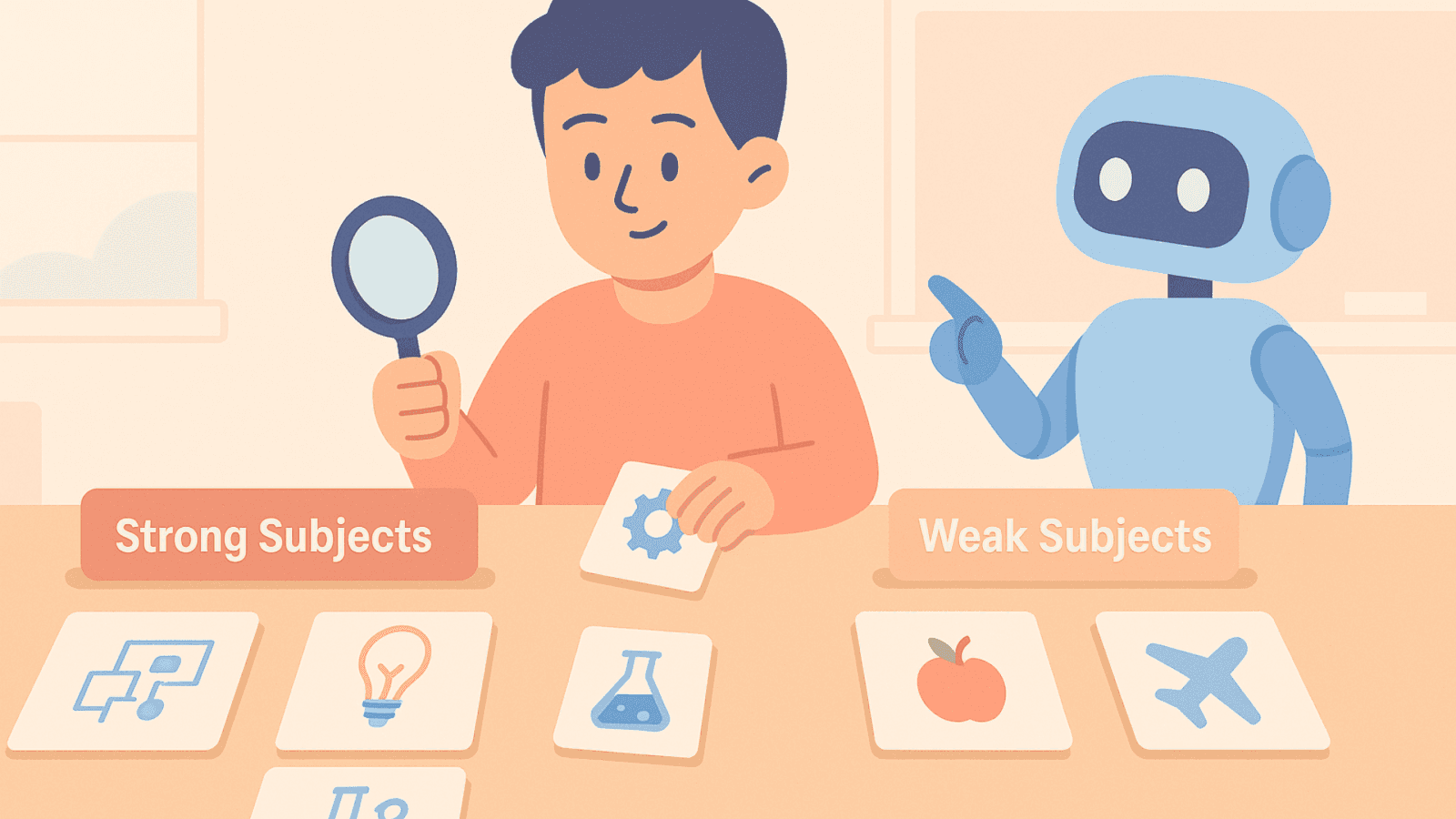
A compare and contrast paper works only when the subjects make sense together. Good subjects lead to strong insights, while weak subjects feel forced.
Choosing topics grounded in a clear category also supports a more structured comparison, much like how scientific research depends on selecting a sound research design before examining data.
Now we can explore what “good” and “weak” look like in practice.
Strong Subject Pair Examples
These subjects work because they share the same category.
Two research designs: qualitative vs quantitative
Two theories: behaviorism vs cognitivism
Two social movements: civil rights vs women’s rights
Two technologies: solar energy vs fossil fuel systems
Weak Subject Pair Examples
These do not work well because they lack a meaningful connection.
A poem vs a phone
Apples vs airplanes
Two identical laptop models
Crafting a Strong Thesis
The thesis is the heart of your paper. Before we break down examples, remember this: a thesis should not list every similarity or difference. It should explain what your comparison shows. If you need help turning your comparison into a focused claim, try an AI thesis statement generator.
With that in mind, here is a transition into a simple template you can use.
Basic Thesis Template
*While Subject A and Subject B share ____, they differ in ____, which reveals ____. *
Example Thesis
While quantitative and qualitative research both collect data, they differ in method and purpose, revealing how each supports different research goals.
<ProTip title="💡 Pro Tip:" description="A good thesis does more than compare. It explains the insight that the comparison reveals." />
Two Main Structures for a Compare and Contrast Paper

This paper can follow two clear structures. Before you choose one, consider how your subjects relate. A structure must support your ideas, not limit them. If you want to sketch the layout quickly, an AI essay outline generator can help you draft a point-by-point or block plan.
Now let’s explore both structures.
Point-by-Point Structure
The point-by-point method compares subjects one category at a time. Before reviewing the outline, remember this: this structure helps readers follow your ideas step by step.
Now, here is how the outline works.
Introduction
Thesis
Category 1: Purpose
How each subject handles purpose
What this revealsCategory 2: Method
How each subject uses the method
Why this difference mattersCategory 3: Impact
Results and outcomes
Why the contrast is importantConclusion
This structure is clean, balanced, and reader-friendly.
Block Structure
The block method explains all details of Subject A first, then all details of Subject B. Before we explore a short example, let’s understand why this structure matters. It is useful when each subject needs context before comparison.
Now look at a simple breakdown.
Block Pattern
Block A:
Describe Subject A in full detail.
Block B:
Describe Subject B in full detail.
Analysis Block:
Show how they compare and differ.
<ProTip title="💡 Pro Tip:" description="Use the block structure for subjects that require rich background information before you compare them." />
Planning Your Research
Good research makes your paper strong and credible. Before we list recommended sources, consider what evidence you will need. Each comparison point must be backed by facts, examples, or scholarly ideas.
Useful Source Types
Now that you know the goal, here are the best source types.
Academic journals
Research books
University press publications
Government or science agency reports
Peer-reviewed articles in databases like JSTOR or PubMed
These sources help you explain how and why subjects differ.
Organizing Your Notes
Once you gather research, you need a clear way to organize ideas. Instead of writing random notes, a comparison table gives you structure. Before we view the table, remember this: you will turn each row into a paragraph later.
Here is a simple layout:
Example of Comparison Planning Table
Category | Subject A | Subject B | Notes |
Purpose | |||
Method | |||
Outcome | |||
Strengths | |||
Limits |
<ProTip title="💡 Pro Tip:" description="Fill the table while you research. It makes drafting easier and prevents writer block." />
Writing the Introduction
A good introduction sets the tone. Before we share a sample, note this: the introduction should not list every similarity or difference. It should build interest and lead to your thesis.
Below is a short example.
Sample Introduction
Qualitative and quantitative research shape how scholars study complex questions. Each method collects data, but they differ in process and purpose. Understanding these differences helps researchers select the right method for their goals.
While qualitative studies offer rich narratives, quantitative studies provide measurable patterns. These contrasts show how each method supports different forms of inquiry.
Writing Body Paragraphs
Clear paragraphs make your comparison easy to follow. Before seeing a template, remember one key idea: each paragraph should focus on one comparison point.
Paragraph Template
Here is a simple structure.
Start with a topic sentence
Add evidence or examples
Explain what the evidence shows
Connect the idea to your thesis
Short Example Paragraph
Both renewable and fossil fuel energy systems supply global power needs. Renewable energy uses natural cycles like sunlight or wind. Fossil fuels use carbon stores formed long ago. This contrast shows why renewable energy offers long term stability, while fossil fuels raise sustainability concerns.
Using Evidence Effectively
Evidence is central to your paper. Before we list types of evidence, remember this: evidence should support your comparison, not distract from it.
Now let’s explore forms of evidence.
Short quotes from scholars
Study results
Data points
Clear examples
Historical events
Use evidence that helps readers understand the comparison.
Analysis: The Core of Your Paper
Analysis explains why the comparison matters. Before jumping into key questions, note this: listing similarities and differences is not enough. You must explain their importance.
Now ask yourself the following:
What patterns do you see?
Why do they matter?
What do these patterns reveal?
How do they support your thesis?
Your analysis is where your voice comes through.
Common Mistakes to Avoid
Students often repeat similar errors in compare and contrast papers. Before we go through the list, here is a key reminder: most mistakes come from unclear planning. Now let’s explore them.
Frequent Errors:
Listing facts without analysis
Choosing unrelated subjects
Writing a vague thesis
Overloading paragraphs with too much data
Skipping transitions between ideas
Transitions help guide your reader and keep your writing smooth.
<ProTip title="💡 Pro Tip:" description="Use words like however meanwhile and in contrast to guide your reader through differences." />
Mini Example: A Short Comparison
Before we move on, here is a small sample that brings everything together. This example shows how to blend description, comparison, and insight.
Topic
Renewable vs fossil fuel energy
Thesis
Both meet global energy demand, yet renewable energy offers long term sustainability, while fossil fuels raise environmental risks.
Sample Insight
Renewable energy comes from natural sources like wind and sunlight. Fossil fuels come from fixed underground stores. This difference shapes each system’s long term viability and shows why renewable energy is a stronger choice for future planning.
How to Write a Strong Conclusion
A conclusion should reinforce your message. Before we look at what to include, remember this: do not add new information. Focus on summarizing your insight.
Now let’s outline what to cover:
Restate the thesis in fresh words
Summarize the key comparison points
Explain why the comparison matters
Keep it short and purposeful.
Checklist Before Submission
A final checklist helps you catch mistakes. Before reviewing each item, note that this list keeps your paper aligned with academic expectations.
Final Review List:
Do the subjects belong to the same category?
Does the thesis reveal insight?
Did you choose a clear structure?
Does every paragraph use evidence?
Are transitions smooth?
Is the conclusion clear?
If you can say yes to each item, your paper is in strong shape.
Writing a Strong Compare and Contrast Research Paper
Writing a strong compare and contrast research paper becomes easier when you choose the right subjects, build a clear thesis, and organize your ideas with purpose. These steps help you present insights that feel focused and meaningful.
<CTA title="Build a Strong Problem Statement" description="Use Jenni to shape a focused research question and start your paper with clarity." buttonLabel="Try Jenni Free" link="https://app.jenni.ai/register" />
With Jenni as your writing partner, you can plan your structure, develop your comparison points, and draft with confidence.