Citing Digital Videos in APA 7th Edition: How to Get It Right

Senior Accountant at EY
8 min read
Digital videos are part of everyday learning and research. Whether you quote a YouTube lecture, a short documentary on Vimeo, or a TED Talk on a university website, you need to give credit the right way. If you’re citing clips posted on social platforms too, our guide to citing social media in APA (7th edition) covers the closely related rules.
In this guide, you’ll learn how to cite digital videos in APA 7th edition step by step. We’ll go over who counts as the author, how to format the date, title, and source, and how to include in-text citations with timestamps. You’ll also see clear examples, learn about tricky edge cases, and finish with a practical checklist you can use for any project.
Create Your First Citation with Confidence
Use Jenni to draft your reference list entry and in-text citation with ease.
Try Jenni FreeWhy Correct Video Citation Matters
Before learning the format, let’s talk about why it’s important. Many students think videos are casual media, just something to watch, but they are real sources of knowledge. Academic rules apply to them too.
Here’s why video citation matters:
Credibility: Your reader should be able to find the same video you used.
Integrity: Giving proper credit avoids plagiarism.
Professionalism: Good citation shows attention to detail.
Clarity: A reader knows which part of the video you’re talking about when you include timestamps.
Longevity: Videos may change or get deleted. A clear citation helps future readers locate them through archived links.
According to the Purdue OWL APA Guide, APA 7 gives a specific structure for audiovisual materials to make sure readers can find what you cite even years later.
Understanding the APA Video Citation Framework
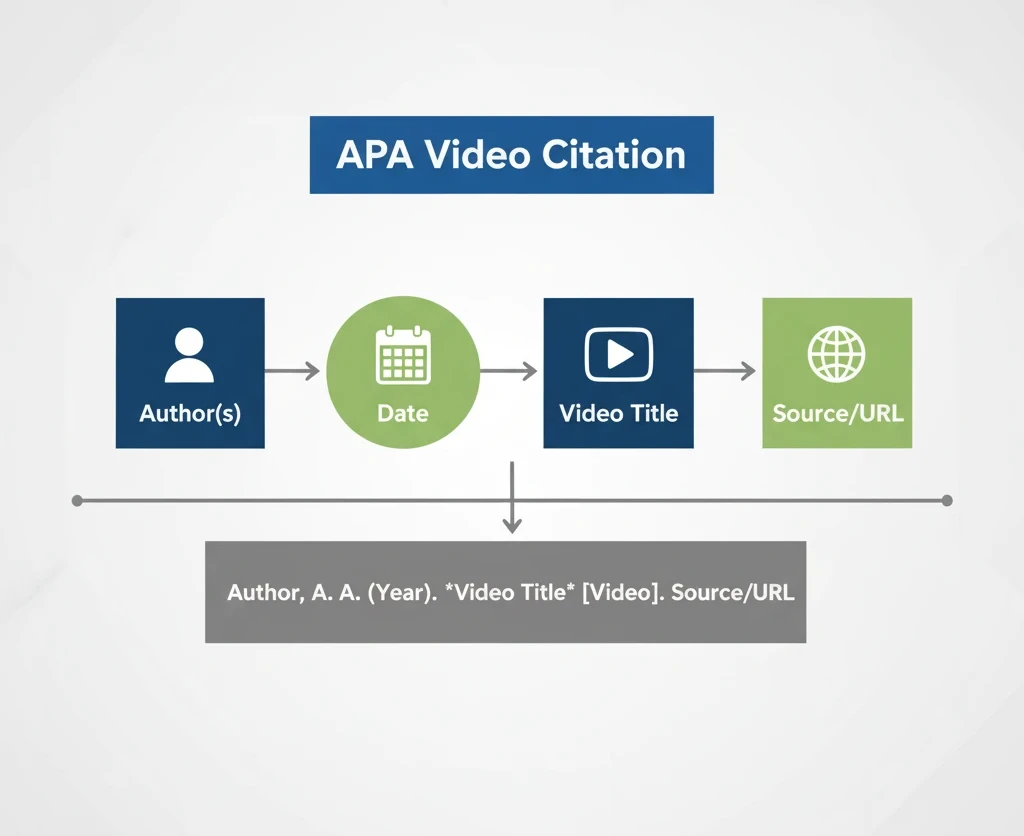
APA 7th edition treats videos as audiovisual works. This means they have unique rules compared to books or journal articles.
Every APA video citation has four main parts in the reference list:
Author (who made or uploaded the video)
Date (when it was posted)
Title (what the video is called, plus [Video])
Source (where the video lives, website and URL)
Let’s explore each part in detail.
1. Author ( Who Created or Uploaded the Video)
The author is the person or organization responsible for the video. That could be:
An individual creator (e.g., Bill Nye)
A company or organization (e.g., National Geographic)
Or, if no real name is given, just the username (e.g., @ScienceTube123)
If both a real name and a username are visible, APA wants you to use both.
Format:
Last name, Initials. [Username]. (Year, Month Day). Title [Video]. Website. URL
Example 1:
Nye, B. [TheRealBillNye]. (2009, April 8). Bill Nye the science guy on energy [Video]. YouTube. http://youtu.be/0ASLLiuejAo
Example 2:
All Aces Media. (2012, January 19). Often awesome the series [Video]. Vimeo. http://vimeo.com/35311255
If a film has a known director or producer, you can list that person as the author and describe their role:
Example 3:
Williams, M. (Producer & Director). (2007). Inside the living body [DVD]. National Geographic.
2. Date (When the Video Was Published)
APA requires the exact publication date, not just the year. You’ll use the date the video was uploaded online.
Format:
(Year, Month Day).
Example:
(2021, July 23).
If you can’t find the upload date, use (n.d.) to show “no date.”
Example:
Khan Academy. (n.d.). Basic chemistry introduction [Video]. YouTube. https://youtube.com/12345
3. Title (What the Video Is Called)
The title identifies what the viewer sees. APA rules for titles:
Italicize the title.
Capitalize only the first word, the first after a colon, and proper nouns.
Add [Video] right after the title inside square brackets.
Example:
The art of science communication [Video].
If you’re citing a series or an episode, include both:
Example:
National Geographic. (2020, June 2). Oceans: Episode 3, Deep Currents [Video]. YouTube. https://youtube.com/...
4. Source (Where the Video Lives)
This tells readers where to find the video. APA 7 requires the platform name and URL. For videos embedded on a standalone page (rather than a platform like YouTube), the formatting overlaps with citing websites in APA (7th edition).
Format:
Website Name. URL
Example:
YouTube. https://www.youtube.com/watch?v=WQdLDMLrYIA
If you accessed the video through a special streaming service (Netflix, Disney+, etc.), include that instead.
Example:
Netflix. https://www.netflix.com/watch/80117470
In-Text Citations for Digital Videos
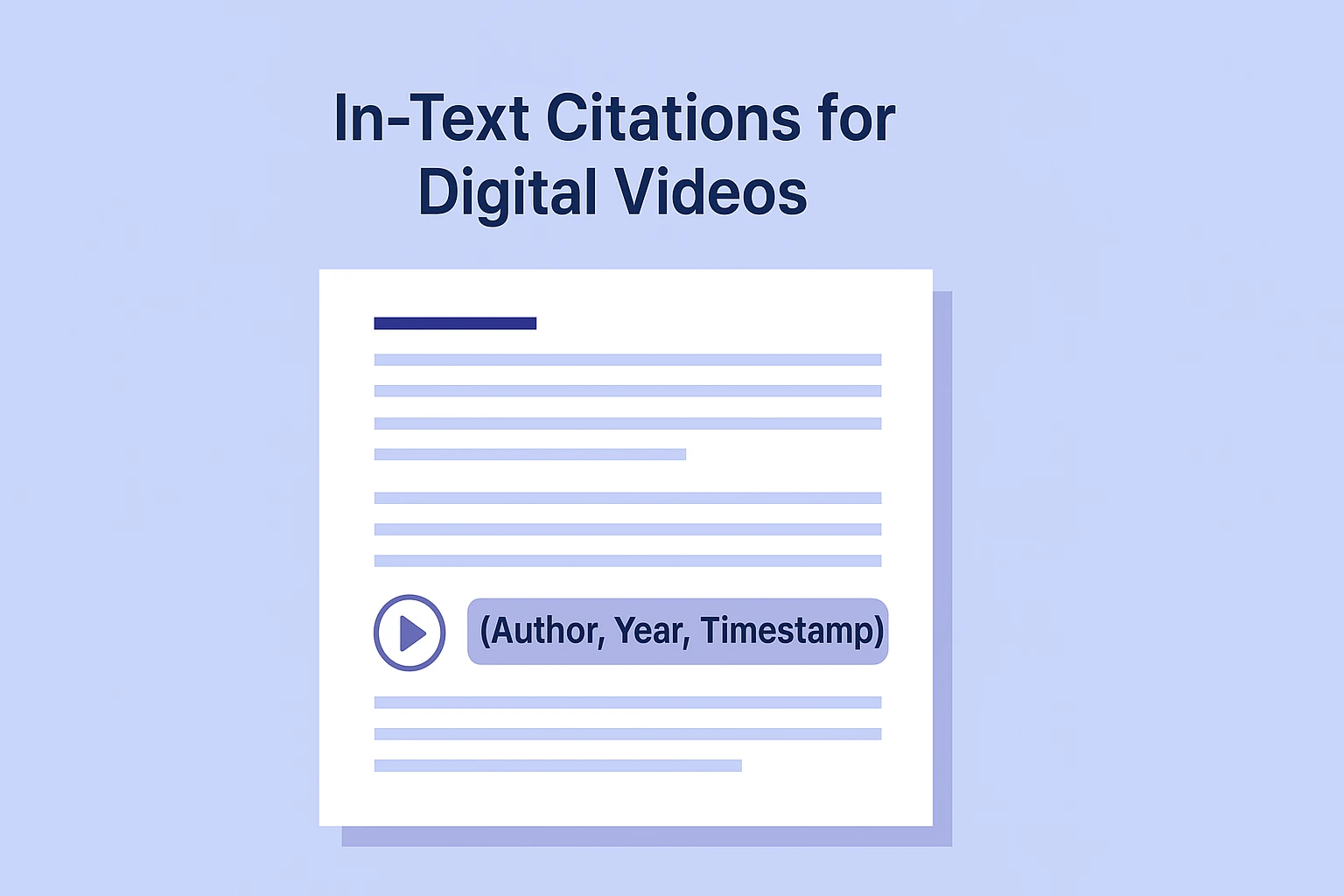
You use in-text citations to show where each idea or quote comes from. For videos, APA 7 rules are simple:
Paraphrasing: (Author, Year)
Quoting directly: (Author, Year, Timestamp)
Timestamps use minutes:seconds, like 2:45.
Examples:
Paraphrase:
Energy transfer follows predictable patterns (Nye, 2009).
Direct quote:
“Every form of energy can be changed into another” (Nye, 2009, 0:55).
When the author is an organization:
(National Geographic, 2020, 3:10)
If the video has no author name, use the title in place of the author.
Example:
(“World’s Leading Vaccine Expert,” 2020)
That’s rare but allowed.
Special Cases and Edge Situations
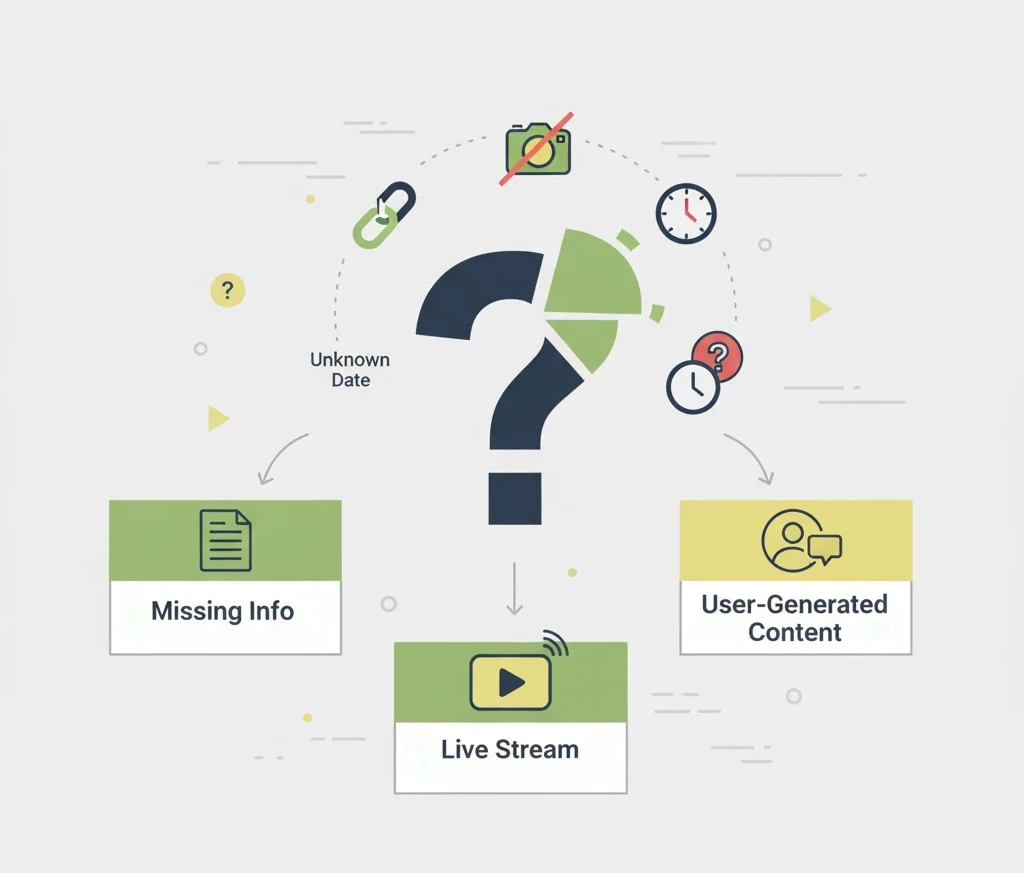
Not every video fits neatly into one pattern. Here’s how to handle tricky cases clearly.
1. Only Username Known
If you can’t find a real name, just use the username.
Example:
ASAPScience. (2017, September 28). How to learn faster [Video]. YouTube. https://www.youtube.com/watch?v=B9SptdjpJBQ
2. Organization as Author
If the channel belongs to an institution or brand, cite it as the author.
Example:
Harvard University. (2019, December 15). Soft robotic gripper for jellyfish [Video]. YouTube. https://www.youtube.com/watch?v=guRoWTYfxMs
3. Livestreams Not Saved
If the livestream isn’t archived and can’t be retrieved, treat it as personal communication and cite it only in-text.
Example (in-text):
(J. Smith, personal communication, March 2, 2023)
Don’t include it in your reference list.
4. Films and Documentaries
When you cite a movie or professional documentary, list the director or producer as the author.
Example:
Williams, M. (Producer & Director). (2007). Inside the Living Body [DVD]. National Geographic.
5. Video Lectures or Educational Recordings
If you cite a lecture hosted on a course platform, give the speaker as author and the site as source.
Example:
Feldman, R. (2021, March 5). Introduction to psychology: Memory module [Video]. Coursera. https://coursera.org/...
6. TED Talks
For TED Talks, APA prefers to list the speaker as author.
Example:
Robinson, K. (2006, February). Do schools kill creativity? [Video]. TED Conferences. https://www.ted.com/talks/...
7 . Multiple Authors
If two creators worked on the video, list both joined by an ampersand (&).
Example:
Smith, A., & Jones, P. (2022, April 9). Exploring black holes [Video]. YouTube. https://youtube.com/...
Building a Reference-List Entry
Now that you know the parts, here’s the master template:
Author, A. A. [Username]. (Year, Month Day). Title of video [Video]. Website. URL
Example:
Stevens, M. [Vsauce]. (2017, August 14). The napkin ring problem [Video]. YouTube. https://www.youtube.com/watch?v=J51ncHP_BrY
Table of Common Scenarios
Scenario | Example Citation |
Known author & username | Nye, B. [TheRealBillNye]. (2009, April 8). Bill Nye the science guy on energy [Video]. YouTube. http://youtu.be/0ASLLiuejAo |
Username only | ASAPScience. (2017, September 28). How to learn faster [Video]. YouTube. https://www.youtube.com/watch?v=B9SptdjpJBQ |
Organization uploader | Harvard University. (2019, December 15). Soft robotic gripper for jellyfish [Video]. YouTube. https://www.youtube.com/watch?v=guRoWTYfxMs |
Film with director | Williams, M. (Producer & Director). (2007). Inside the living body [DVD]. National Geographic. |
Lecture or class video | Feldman, R. (2021, March 5). Introduction to psychology: Memory module [Video]. Coursera. https://coursera.org/... |
Putting It All Together
Here’s a paragraph that uses an in-text citation and reference together.
In a YouTube video explaining geometric reasoning, Stevens (2017) compares mathematical logic to real-world puzzles. He says that “every equation has a physical story behind it” (2:30). This shows how abstract concepts can be made tangible through relatable storytelling.
Reference:
Stevens, M. [Vsauce]. (2017, August 14). The napkin ring problem [Video]. YouTube. https://www.youtube.com/watch?v=J51ncHP_BrY
Another example:
A vaccine expert interviewed by Asian Boss (2020) stressed that “misinformation spreads faster than the virus itself” (3:22).
Reference:
Asian Boss. (2020, June 5). World’s leading vaccine expert fact-checks COVID-19 vaccine conspiracy: Stay curious #22 [Video]. YouTube. https://www.youtube.com/watch?v=WQdLDMLrYIA
Common Mistakes to Avoid
Many writers lose points because of simple formatting errors. Avoid these:
Missing [Video] label: always include it after the title.
Wrong capitalization: only capitalize the first word and proper nouns.
Forgetting URLs: without a URL, readers can’t find your source.
Using channel name in parentheses: APA already handles that with brackets.
Skipping timestamps: include them for direct quotes.
Copying YouTube’s “shortened” link: use the full URL for clarity.
Citing unarchived livestreams: these should be personal communications.
Not checking availability: dead links weaken your reference list.
Checklist: Your Quick Review Before Submitting
Here’s a step-by-step list to double-check your work:
✅ Correct author (real name + username if available)
✅ Date formatted as (Year, Month Day)
✅ Title italicized and includes [Video]
✅ Platform name included (YouTube, Vimeo, etc)
✅ Full URL pasted
✅ In-text citations show (Author, Year)
✅ Timestamps used for direct quotes
✅ References alphabetized
✅ Hanging indent used in reference list
✅ Unavailable videos marked as personal communication
If you manage citations across multiple projects, Zotero and Mendeley integration can help you import and organize your libraries.
If you can answer “yes” to all, your APA video citation is perfect.
Mastering How to Cite Digital Videos in APA 7th Edition
Citing digital videos in APA style is straightforward once you learn the pattern. Every reference has four parts (author, date, title, and source) and your in-text citation adds clarity with timestamps when quoting.
Improve Your Writing Flow
Use Jenni to develop clearer paragraphs, stronger explanations, and smoother transitions in your APA papers
Try Jenni FreeThe goal is to make your work easy to verify and academically honest. Whether it’s a YouTube channel, a university lecture, or a professional film, the rules stay the same (clear authorship, full date, correct title style, and a working link). By practicing these steps and using the checklist above, you’ll never lose marks for incorrect video references again.