
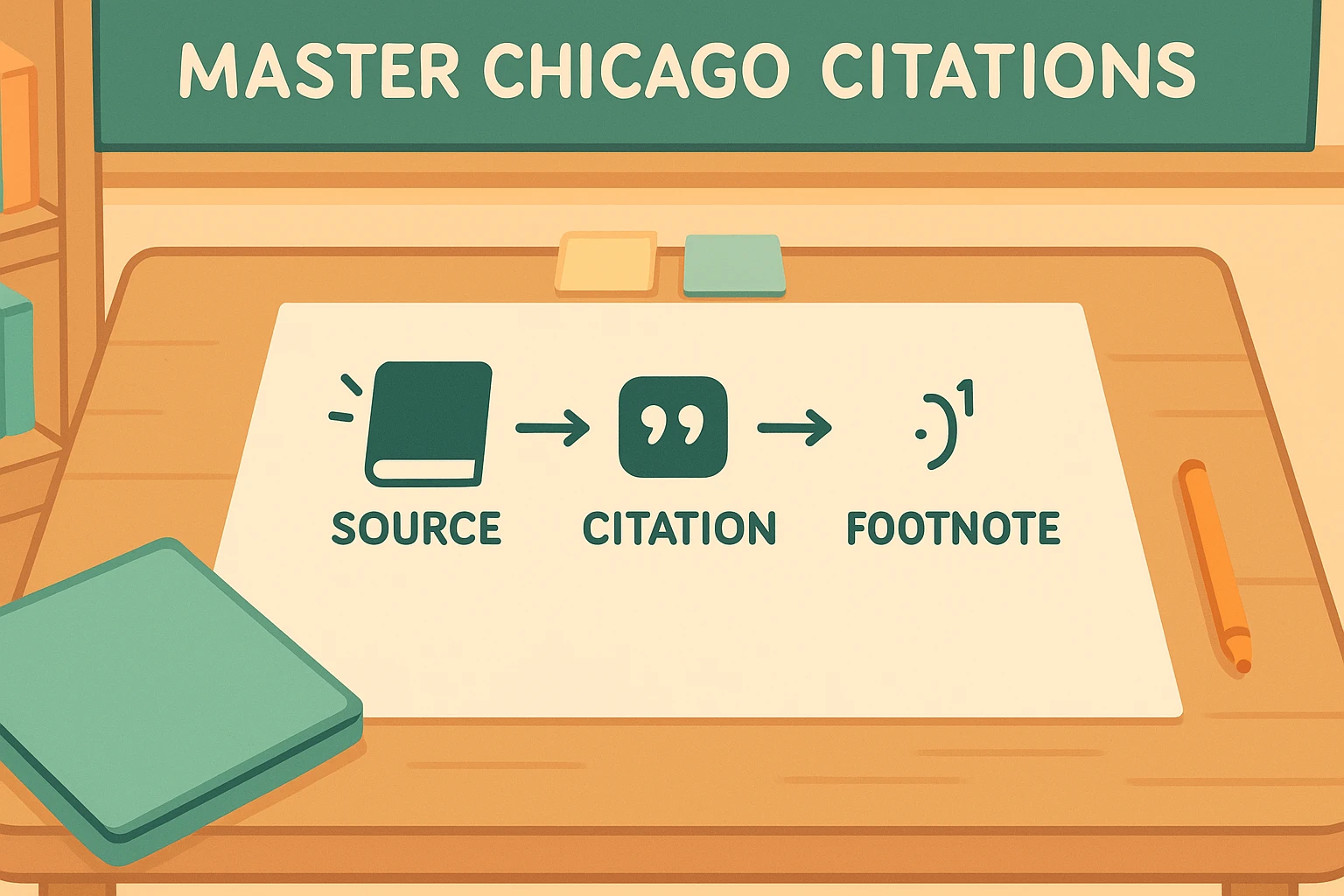
Chicago style citations might seem complex at first glance, but they're actually like having a detailed roadmap for your sources. Once you understand the system, you'll navigate academic writing with confidence. Used extensively in humanities and social sciences, the Chicago style offers two distinct approaches to help you properly credit your sources and maintain academic integrity. If you're comparing formats, our MLA vs Chicago citation style breakdown highlights key differences and examples.
This guide will walk you through both citation systems with practical examples you can apply immediately, plus actionable tips to streamline your citation process, including options for Zotero and Mendeley integration for researchers if you use reference managers.
Master Chicago Citations Faster
Format Notes and Bibliography or Author Date in minutes with clean, consistent references.
Try Jenni FreeWhat Is Chicago Style?
The Chicago Manual of Style provides two main citation formats, each designed for different academic disciplines. The Notes & Bibliography system (NB) works best for humanities fields like history and literature, while the Author-Date system (AD) suits sciences and social sciences.
Choosing the right system isn't just about following rules—it's about ensuring your readers can easily locate and verify your sources. Both formats will be covered with real examples you can adapt for your own work.
Notes and Bibliography System (NB)
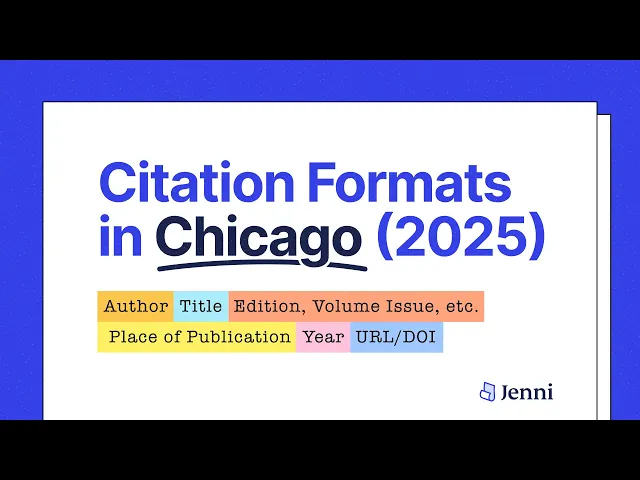
The NB system uses numbered footnotes or endnotes paired with a comprehensive bibliography. This format gives you flexibility to provide detailed source information and additional commentary without cluttering your main text.
Footnotes and Endnotes
Footnotes appear at the bottom of each page, while endnotes collect at your document's end. Your first citation includes full details, but subsequent references to the same source use shortened versions.
Bibliography Formatting
Your bibliography lists all sources alphabetically with hanging indents. Unlike footnotes, bibliography entries use periods instead of commas and reverse the author's name order.
Book Citation Example
First footnote: ¹ Malcolm Gladwell, Outliers: The Story of Success (New York: Little, Brown and Company, 2008), 45.
Shortened footnote: ² Gladwell, Outliers, 67.
Bibliography entry: Gladwell, Malcolm. Outliers: The Story of Success. New York: Little, Brown and Company, 2008.
Journal Article Citation Example
First footnote: ³ Sarah Chen, "Digital Literacy in Higher Education," Journal of Academic Research 15, no. 3 (2023): 234, https://doi.org/10.1234/jar.2023.15.3.234.
Bibliography entry: Chen, Sarah. "Digital Literacy in Higher Education." Journal of Academic Research 15, no. 3 (2023): 230-245. https://doi.org/10.1234/jar.2023.15.3.234.
Website Citation Example
First footnote: ⁴ American Historical Association, "Guidelines for Ethical Conduct," accessed March 15, 2024, https://www.historians.org/jobs-and-professional-development/statements-and-policies-of-the-discipline/statement-on-standards-of-professional-conduct.
Bibliography entry: American Historical Association. "Guidelines for Ethical Conduct." Accessed March 15, 2024. https://www.historians.org/jobs-and-professional-development/statements-and-policies-of-the-discipline/statement-on-standards-of-professional-conduct.
Author-Date System (AD)
The AD system uses brief in-text citations with a detailed reference list. It's more concise than NB and works well when you're citing multiple sources frequently.
In-Text Citation Format
Place citations in parentheses: (Author Year, Page). When there's no page number, simply use (Author Year).
Reference List Formatting
References appear alphabetically at your document's end, similar to a bibliography but with different formatting rules and punctuation.
Book Citation Example
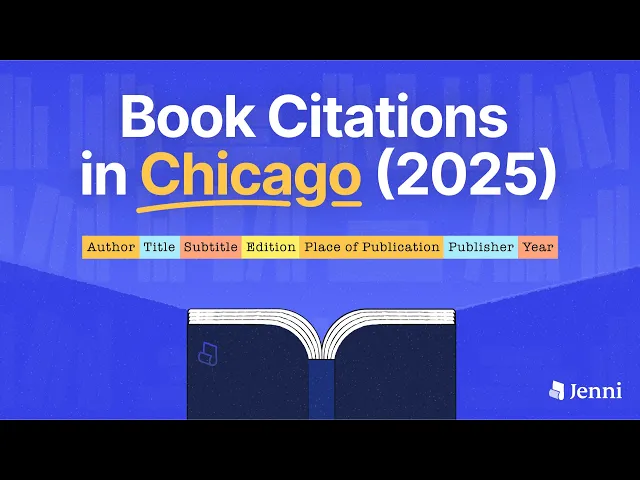
In-text citation: Recent research suggests that practice alone doesn't guarantee expertise (Gladwell 2008, 45).
Reference entry: Gladwell, Malcolm. 2008. Outliers: The Story of Success. New York: Little, Brown and Company.
Journal Article Citation Example
In-text citation: Digital literacy significantly impacts student success (Chen 2023, 234).
Reference entry: Chen, Sarah. 2023. "Digital Literacy in Higher Education." Journal of Academic Research 15 (3): 230-245. https://doi.org/10.1234/jar.2023.15.3.234.
Website Citation Example
In-text citation: Professional conduct guidelines continue evolving (American Historical Association 2024).
Reference entry: American Historical Association. 2024. "Guidelines for Ethical Conduct." Accessed March 15, 2024. https://www.historians.org/jobs-and-professional-development/statements-and-policies-of-the-discipline/statement-on-standards-of-professional-conduct.
Step-by-Step Guide to Creating Chicago Citations
1. Gather Required Information
Before you start writing, collect all source details: author names, titles, publication dates, publishers, page numbers, and URLs or DOIs. Think of this like assembling ingredients before cooking—having everything ready makes the process smoother. For web content like articles and posts, our guide to citing a blog post in APA, MLA, and Chicago style covers the fields you’ll need.
2. Choose the Correct Citation System
Check your assignment guidelines or ask your instructor which system to use. When in doubt, consider your field: humanities typically prefer NB, while sciences favor AD.
3. Format In-Text Citations
For NB, insert numbered superscripts where sources appear in your text. For AD, place parenthetical citations immediately after quoted or paraphrased material.
Understanding how to cite sources properly becomes second nature with practice, and recognizing the importance of citations in academic writing helps you avoid plagiarism while building credibility.
4. Create Bibliography or Reference List
Alphabetize all sources by author's last name, use hanging indents, and double-check formatting consistency. Pay attention to italics, capitalization, and punctuation, small details matter.
5. Ensure Consistency and Proofread
Review all citations for accuracy and consistent formatting. Even minor errors can undermine your credibility, so take time to verify each entry against your sources.
Write Smarter with Proper Citations
You now have the essentials to use Notes-and-Bibliography or Author-Date and keep your sources clear and credible.
Keep Writing, Let Jenni Handle Chicago
Generate in text citations and a reference list as you draft, so you stay focused on ideas.
Try Jenni FreeWhen you want to move faster, Jenni AI can help streamline Chicago formatting so you stay focused on your ideas. If you're assembling a literature review, the AI Literature Review & RRL Generator — Jenni AI can help you organize sources before you format Chicago citations.