By
Justin Wong
—
AI Spell Checker Tools Explained: Features, Benefits, Limits, and How They Support Better Writing

Justin Wong
Head of Growth
Graduated with a Bachelor's in Global Business & Digital Arts, Minor in Entrepreneurship
Writing mistakes still matter. A small spelling or grammar error can change the meaning entirely. It can also make your work feel careless. This is true in school, at work, and online. Clear writing helps readers trust your ideas. Even strong ideas lose power when writing feels confusing.
This guide explains AI spell checkers in 2024. You will learn how spell checking evolved, why AI tools are different, what features they offer, where they help most, where they fail, and how to use them well. The goal is clear writing without losing your voice.
<CTA title="Write Clearly From the First Draft" description="Use Jenni to draft refine and check your writing in one focused space" buttonLabel="Try Jenni Free" link="https://app.jenni.ai/register" />
Evolution of Spell-Checking Technology
Spell checking did not start with AI. It grew slowly as writing tools improved. Each stage solved one problem but left others behind.
From Manual to Mechanical
Before computers, writers checked spelling by hand. They used dictionaries and printed guides. This took time. It broke focus. Long papers made errors easy to miss.
Many writers skipped checks to save time. Others reread work many times. Even then, mistakes slipped through. Writing felt slow and tiring.
Typewriters added correction tools. These included tape and correction fluid. They helped fix errors but created new problems. Pages looked messy. Fixing one word could ruin a sentence. Writers often retyped full pages.
The Digital Revolution
The first digital spell checkers appeared in the 1970s. These tools compared words to stored lists. If a word did not match, it was marked wrong.
This helped catch simple mistakes. It saved time. But it caused new issues. Correct words were flagged. Wrong word choices were missed. The tool did not know meaning. For example, it could not tell the difference between “their” and “there.” It only checked spelling, not sense.
Integration and Expansion
In the 1980s and 1990s, spell checkers became part of word processors. Microsoft Word made them common. Writers could fix errors as they typed.
These tools added features. Users could add names and technical terms. They could switch languages. This improved accuracy. Still, spell checkers stayed shallow. They ignored grammar flow. They did not care about tone. Writing could be correct but still unclear.
The Rise of AI-Driven Tools
AI changed spell checking completely. Modern tools read full sentences. They look at context and meaning. Machine learning and language models power these tools. They learn from large text samples. They understand how words work together.
Tools like Grammarly and Microsoft Editor now fix grammar. They suggest clearer phrasing. They flag tone issues. They adapt to writing type.
This shift turned spell checkers into writing helpers, similar to how AI-powered writing assistant supports drafting, revision, and clarity across different writing tasks.
<ProTip title="💡 Pro Tip:" description="Pause before accepting changes to make sure they match your meaning" />
The Importance of Spell Checkers in Digital Communication
Spell checkers now support writing quality, not just accuracy. Their role has grown as digital communication increased.
Clarity and Comprehension
Errors slow readers down. They break focus. They can change meaning. AI spell checkers reduce this risk. They help writers choose the right words. They flag confusing phrases. This makes ideas easier to follow.
Clear writing helps readers remember points. It also reduces questions and misunderstandings.
Professionalism
In work settings, writing quality matters. Emails, reports, and proposals are judged fast. Errors can harm trust. AI spell checkers help maintain a clean image. They catch mistakes before messages are sent. This protects credibility.
Accessibility
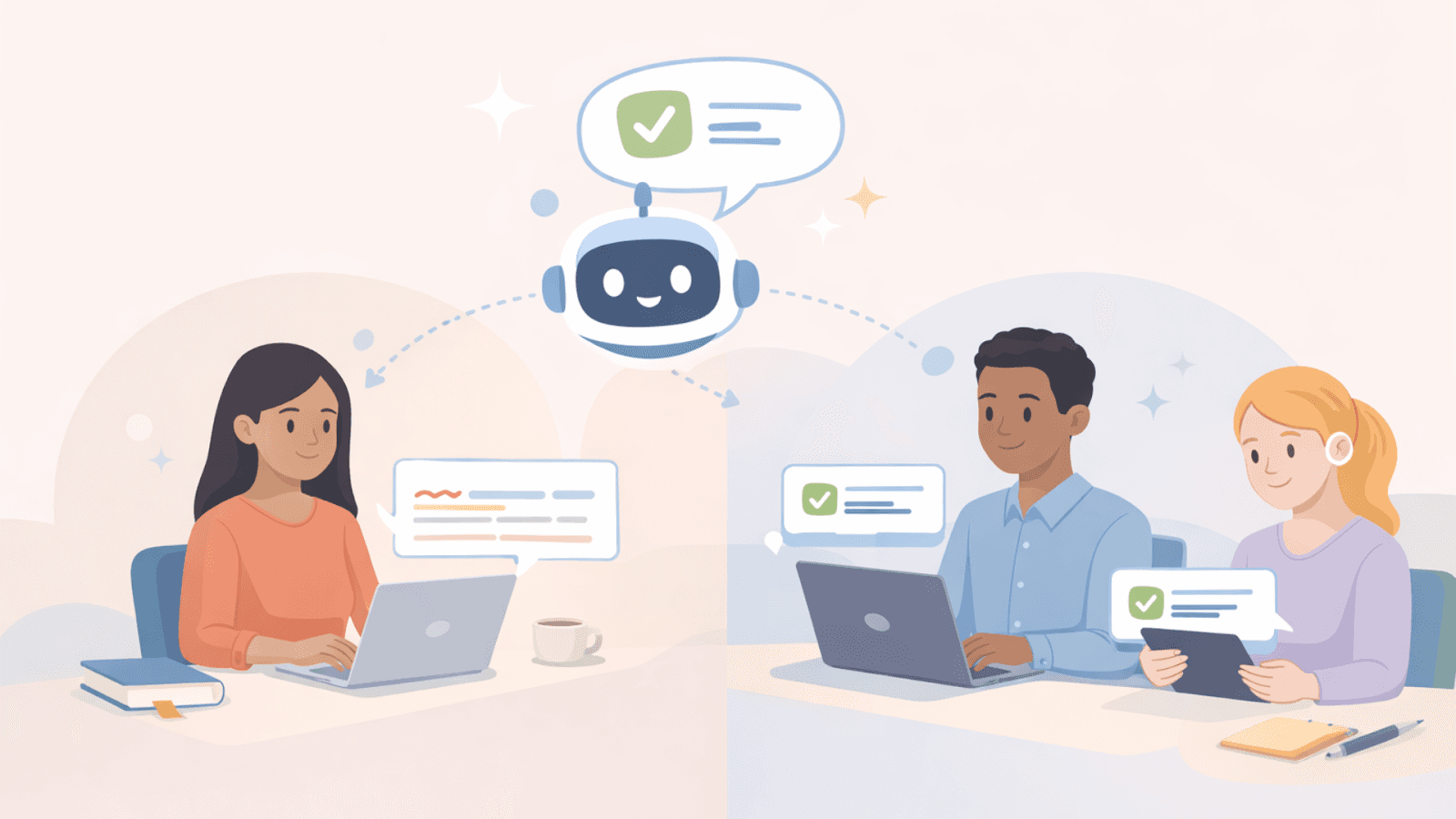
Not all writers start at the same level. Some have dyslexia. Others write in a second language. AI spell checkers support these writers by offering structured help instead of punishment.
Research into spell-checker features shows that guided corrections can improve spelling confidence while reducing anxiety during writing tasks. This makes the writing process feel more supportive and less stressful.
Efficiency
Editing takes time and energy. Without help, writers often switch between drafting and correcting. This breaks focus and slows progress.
AI tools reduce this load. They give feedback while you write. Errors are caught early, before they pile up. Writers stay in flow and finish drafts faster. Because the basics are handled, writers spend less time fixing small issues later.
Adaptability
Modern writing covers many fields and styles. A technical report, a casual email, and a research paper all sound different. AI spell checkers adapt to these needs.
They support dialects, field-specific terms, and personal writing styles. Writers can add custom words or ignore certain suggestions. This flexibility makes the tools useful across industries and regions.
Adaptability ensures the tool works with the writer, not against them.
Core Features of AI Spell Checker Tools
AI spell checkers do more than fix typos. They support the full writing process, from first draft to final review. Their features help improve clarity, confidence, and control.
Many modern tools follow the same logic as AI-based correction systems, where spelling accuracy improves through context awareness rather than simple word matching. By analyzing sentence structure and intent, these systems provide corrections that feel more natural to the writer.
Contextual Analysis
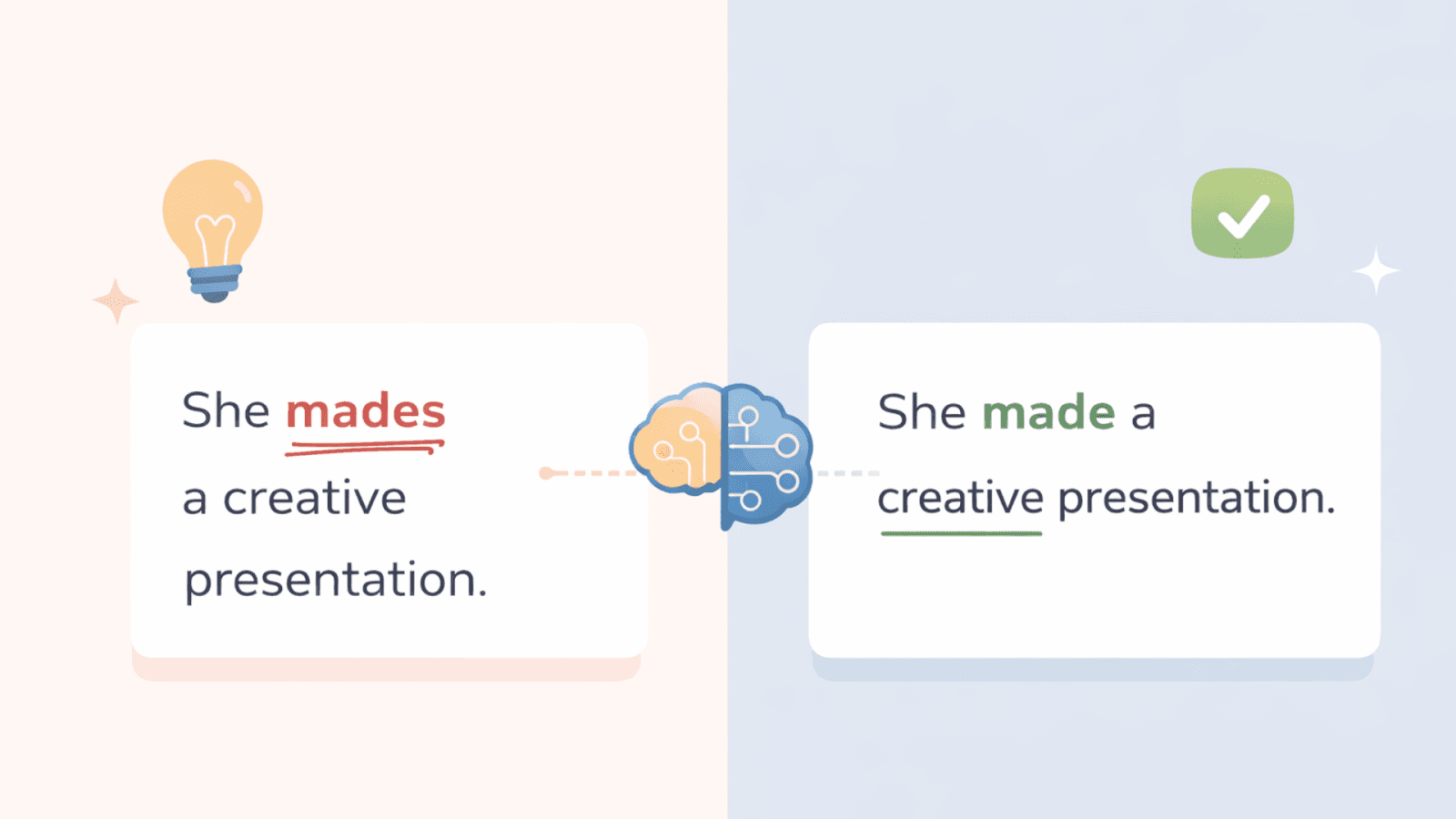
AI tools read sentences as a whole. They understand meaning, not just spelling. This helps them fix homophones and wrong word choices. The system knows what fits the sentence instead of guessing based on isolated words.
This level of understanding is driven by advanced language processing algorithms that analyze sentence structure, word relationships, and context to deliver more accurate suggestions.
Grammar and Syntax Correction
AI spell checkers detect grammar issues such as verb tense errors, agreement problems, and sentence structure issues. Suggestions aim to improve clarity, not just correctness.
Studies examining grammar mastery show that steady, contextual feedback helps writers absorb patterns naturally rather than memorizing rules.
Style Suggestions
Style affects how writing feels. Long sentences can confuse readers. Passive voice can hide who is doing what. These issues do not break grammar rules, but they weaken clarity.
AI spell checkers flag these patterns. They suggest shorter sentences and active phrasing. This helps writing feel direct and clear. These suggestions are optional. Writers choose what fits their voice. Over time, many writers notice their style becoming simpler and more readable.
<ProTip title="💡 Pro Tip:" description="Aim for one idea per sentence to keep writing clear" />
Tone Detection
Tone shapes how messages are received. A sentence can sound helpful, rude, or cold depending on word choice. This matters in emails, feedback, and public writing.
AI tools analyze tone by looking at sentence patterns and word use. They flag messages that may sound too harsh, too casual, or unclear. Writers can then adjust language to match the situation.
This reduces misunderstandings. It also helps writers feel more confident when sending important messages.
Personalized Learning
AI spell checkers learn from user choices. When you accept a suggestion, the tool notes it. When you ignore one, it learns that too.
Over time, feedback becomes more personal. The tool adapts to your vocabulary, sentence length, and tone preferences. This improvement cycle is powered by adaptive machine learning models, allowing suggestions to evolve with each draft.
Plagiarism Detection
Many AI spell checkers include plagiarism checks. These scans compare writing to large databases of published content. This helps students avoid accidental copying. It also helps professionals protect their work. Writers can fix issues early, before sharing or publishing.
Plagiarism tools support honest writing. They encourage proper citation and original thought.
Multilingual Support
Advanced AI spell checkers support many languages and dialects. This helps writers who work across regions. The tools understand language-specific rules. They also handle common mistakes made by non-native speakers. This makes writing clearer and more accurate.
For global teams, this support improves collaboration. Everyone can write with confidence, even in a second language.
Integration Capabilities
AI spell checkers work inside tools people already use. These include documents, browsers, and email apps. Writers do not need to copy text into a separate tool. This saves time and mental effort. Feedback appears while writing, not after. Writers stay focused and in flow.
Integration With Writing Platforms
AI spell checkers appear where writing happens. This makes them easy to adopt and use every day.
Word Processors
Tools integrate with Google Docs and Microsoft Word. Suggestions appear as you type. Errors are fixed early, reducing later edits. This helps long documents stay clean from the start.
Email Clients
Emails are sent quickly and often. Small errors can slip through. AI spell checkers in Gmail and Outlook help prevent this. Messages stay clear, polite, and professional. This matters in daily work communication.
Web Browsers
Browser extensions bring AI support to blogs, forms, and social media platforms. Writers get help anywhere they type. This is useful for content creators and marketers.
Content Management Systems
Writers using platforms like WordPress can polish posts before publishing. AI tools help catch errors and improve flow. Clean content improves reader trust and engagement.
Collaboration Tools
Integrations with Slack and Microsoft Teams support clear team communication. Messages are easier to understand and less likely to confuse.
Mobile Devices
Writing on phones is common. AI keyboards and apps bring support to texts, notes, and emails. This helps writers stay clear even on small screens.
Academic and Research Platforms
Students and researchers use AI spell checkers to refine essays, reports, and theses. These tools help meet academic standards and reduce errors. For a closer look at how AI writing assistants support academic writing, including where they go beyond basic spell checking, see our guide.
<ProTip title="💡 Pro Tip:" description="Use the same tool across devices to keep style consistent" />
The Impact on Writing Quality and Efficiency
AI spell checkers reduce friction in writing. They catch errors early and suggest improvements quickly.
Writers spend less time fixing mechanics and more time shaping ideas. This improves speed and clarity without lowering quality.
AI CRM Tools: Maintaining Professionalism in Customer Communications
Customer messages shape how a brand is seen. Small errors can weaken trust, even when the message itself is helpful. When AI spell checkers are paired with AI CRM tools, this risk drops.
Spell checkers review emails, chat replies, and support messages before they go out. This keeps communication clear and professional across teams. Key benefits include:
Fewer spelling and grammar errors in customer messages
A more consistent brand tone across different agents
Clear and polite responses, even at large scale
This matters most for teams that send many messages each day. AI support helps maintain quality without slowing response time.
Data-Driven Writing Enhancement
AI spell checkers improve through use. They learn from writing patterns and edits over time. When writers accept or reject suggestions, the system adapts. This leads to:
Context-aware corrections that fit the sentence meaning
Style changes based on audience, platform, or goal
Better and more relevant suggestions as time goes on
Instead of giving the same advice to everyone, AI tools adjust to how you write. This makes feedback feel more helpful and less repetitive.
Enhancing Marketing Content With AI Spell Checkers
Marketing content needs to be clear and easy to read. Errors distract readers and reduce trust. AI spell checkers support marketing teams by keeping content clean and consistent. They help with:
Clearer messages that are easier to understand
Cleaner A/B test versions, with fewer distractions
Stronger SEO support through error-free writing
When writing is clean, readers stay focused on the message. This improves engagement and makes marketing efforts more effective.
<ProTip title="💡 Pro Tip:" description="Clean writing helps readers trust your message before they act on it" />
AI and Creativity: Enhancing Creative Writing
AI spell checkers also support creative writing. They remove small barriers without replacing imagination. Writers stay in control, while tools handle the mechanics.
Inspiring Creativity With AI Suggestions
AI tools suggest synonyms and alternative phrasing. This helps writers explore new word choices. Over time, vocabulary grows and writing gains depth. These suggestions do not replace ideas. They simply offer options. Writers still choose what fits their voice and story.
Overcoming Writer’s Block
Writer’s block often starts with a single stuck sentence. AI spell checkers help by offering rewrites or completions. Even a small nudge can restart momentum. Once writing begins again, ideas often flow more easily. The tool acts as a push, not a solution.
Exploring New Writing Styles
Tone and style feedback allow writers to experiment. A sentence can sound formal, casual, or neutral. Writers can test different moods without rewriting from scratch. This is useful for fiction, essays, and personal writing. It helps writers learn how tone changes meaning.
Enhancing Narrative Flow
Longer texts need steady pacing. AI tools flag awkward transitions or repeated sentence patterns. These signals help writers smooth the flow. Better flow keeps readers engaged and reduces confusion.
Feedback and Development
Instant feedback shows patterns over time. Writers notice repeated habits, both good and bad. This helps skill growth without formal lessons. Writing improves through practice, and AI feedback supports that process.
The Role of AI in Creative Writing
AI handles technical details so writers can focus on ideas and emotion. It does not replace creativity. It supports it. Human judgment still leads every choice, from word selection to story direction.
Future Developments in AI Spell Checking
AI spell checking will keep improving as language models advance. New features will likely make tools more helpful and flexible.
Enhanced Context Understanding
Future tools may better adapt to genre, tone, and intent. A formal report and a personal story may receive very different suggestions.
Real-Time Collaboration Support
Teams may receive shared suggestions while writing together. This could help groups keep tone and style aligned.
Voice-Activated Editing
Voice commands may allow hands-free corrections. This could help with accessibility and speed.
Predictive Writing Support
AI may suggest structure, transitions, or next steps. This would support planning as well as editing.
Multilingual and Cultural Awareness
Support for regional language use and tone will improve. This will help global teams avoid misunderstandings.
Personalized Learning Feedback
Tools may highlight recurring issues and offer targeted practice. This turns editing into long-term learning.
Can Spell Checkers Make Mistakes?
AI spell checkers are helpful, but not perfect. They still make errors.
Common limits include:
Creative language that confuses systems
Context errors in complex sentences
Homonyms that look correct but feel wrong
Cultural nuance that tools may miss
As a result, human review remains crucial, particularly for final drafts.
Best Practices for Using AI Spell Checkers
Using AI tools well requires balance. They work best as helpers, not decision-makers. If you're evaluating different options, our guide to choosing the right AI writing tool outlines practical criteria to match a tool to your workflow.
Good habits include:
Review suggestions before applying them
Keep your voice and intent in mind
Use tools while drafting, not only at the end
Combine AI feedback with human judgment
When used this way, AI spell checkers support clear writing without taking control away from the writer.
The Role of AI Spell Checkers in Writing
AI spell checkers now support clarity, speed, and confidence. They help writers manage technical details while staying focused on ideas and structure. Used carefully, they improve writing without taking control away from the author.
<CTA title="Improve Writing Without Losing Your Voice" description="Jenni helps you refine clarity tone and structure while staying in control" buttonLabel="Try Jenni Free" link="https://app.jenni.ai/register" />
As writing demands grow, tools like Jenni fit naturally into modern workflows. They support drafting, checking, and refining in one place. This helps writers stay clear, consistent, and confident across every project.