通过

贾斯汀·王

2025年10月31日

通过

贾斯汀·王

2025年10月31日

通过

贾斯汀·王

2025年10月31日

Should You Cite Wikipedia in Research? What Students Must Know

贾斯汀·王

增长负责人

获得全球商业与数字艺术学士学位,辅修创业

贾斯汀·王

增长负责人

获得全球商业与数字艺术学士学位,辅修创业

贾斯汀·王

增长负责人

获得全球商业与数字艺术学士学位,辅修创业

Wikipedia is the largest online encyclopedia, constantly edited and appearing at the top of almost every search. It is quick, accessible, and often well-sourced, which makes students lean on it heavily. The problem starts when you step into academic writing, where the familiar warning appears: don’t cite Wikipedia.

The rule exists for a reason, but it is not as absolute as people assume. Academic work depends on sources that are stable, verifiable, and authoritative. Wikipedia can help you research, but only in certain roles. This explainer breaks down what it actually is and when citing it makes sense.

<CTA title="Build Accurate Citations With Confidence" description="Create clean APA, MLA, and Chicago references using powerful citation tools built for fast, credible academic writing." buttonLabel="Try Jenni Free" link="https://app.jenni.ai/register" />

What Wikipedia Actually Is (and Why That Matters for Citation)

Wikipedia is a collaboratively edited online encyclopedia, built through voluntary contributions. Anyone can create or modify an article, as long as edits follow community guidelines on verifiability, neutrality, and sourcing. While this model produces an immense amount of accessible knowledge, it also means that Wikipedia fits into the category of a tertiary source.

Examples of tertiary sources:

  • Encyclopedias

  • Textbooks

  • Dictionaries

  • Almanacs

These sources are helpful entry points, but they are not considered original scholarship. Because they summarize other people's work, they cannot replace direct engagement with the primary or secondary sources they reference.

Why this matters in research

Academic writing expects students and scholars to engage directly with primary and secondary materials. These sources provide:

  • Traceable authorship

  • Peer review or expert oversight

  • Stable publication

  • Academic accountability

Wikipedia cannot guarantee those elements. Even when articles are accurate, their editable nature makes them unsuitable as formal evidence. A citation should represent a stable, verifiable snapshot of information. A page that can be altered at any moment contradicts that standard.

This is why instructors discourage citing it: not because Wikipedia is “bad,” but because it is not designed to function as a scholarly source.

Why universities care about this distinction

Most academic institutions discourage citing tertiary sources because:

  • They simplify or interpret complex material.

  • They rely on other sources you can (and should) cite instead.

  • They may introduce errors through summarization.

  • They do not provide original research or peer-reviewed analysis.

Wikipedia follows strict community policies on verifiability, citation, and neutrality, but it is still subject to constant edits. Pages can change anytime, even within minutes.

This fluidity makes it unreliable as a final, citable reference in scholarly work.

Why Wikipedia Shows Up Everywhere, Even If You Shouldn’t Cite It

Despite academic warnings, millions of people rely on Wikipedia every day because:

  • It loads quickly.

  • It offers broad explanations across virtually every topic.

  • It links to primary and secondary sources.

  • It provides historical revisions that help track how information has changed over time.

  • It is written in a clear, accessible way compared to dense academic papers.

In other words, researchers treat Wikipedia as a knowledge map, not as evidence itself.

<ProTip title="💡 Pro Tip:" description="Use Wikipedia to discover primary and secondary sources, not to replace them." />

Is Wikipedia Reliable? The Real Debate

Wikipedia’s reliability has been studied extensively. Research from Nature and other academic outlets has shown that the error rate in Wikipedia’s scientific articles can be similar to that of traditional encyclopedias. However, reliability is not the only criterion universities look at.

The main academic concerns

  1. Anyone can edit it - Even with moderation systems, vandalism or incorrect edits can stay live for hours, as highlighted in this study on Wikipedia’s editing risks and content stability.

  2. Articles change constantly - A source that changes is difficult to verify at the time of citation.

  3. Variability between articles - Some pages are thoroughly cited and peer-reviewed by communities; others lack references.

  4. Not all references are equal - Some citations on Wikipedia link to broken pages, outdated reports, or non-academic sources.

What academics do instead

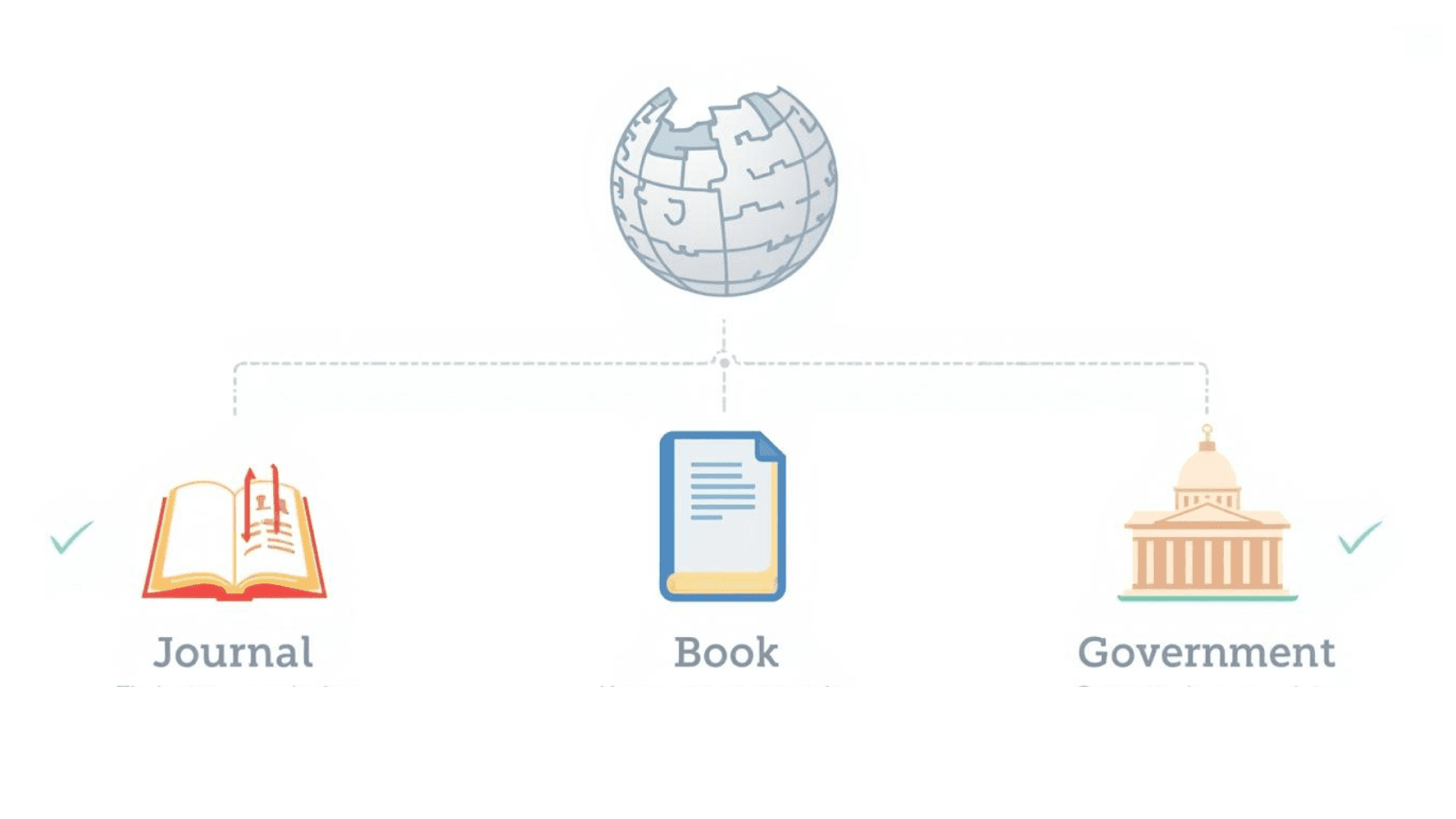
Researchers use Wikipedia for what it does well: surfacing relevant literature. The citations at the bottom of a Wikipedia page often include:

  • Peer-reviewed studies

  • Government data

  • Academic books

  • Established news outlets

  • Historical archives

These are the sources your research paper needs

Understanding Wikipedia’s Reliability: Strengths, Limits, and Misconceptions

Discussions about Wikipedia often polarize into two extremes: it is either “completely unreliable” or “just as good as any encyclopedia.” The reality sits in the middle.

Why Reliability Matters in Academic Research

Academic research demands sources that are stable, verifiable, and rooted in accountable authorship because these qualities directly shape the strength of any argument you make. 

A paper is only as credible as the evidence it relies on, and even a well-written analysis can collapse if its references are weak or unstable. Accuracy is important, but it is only one dimension of academic acceptance. 

A reliable source must also offer transparency, traceability, and consistency over time, which is why scholarly standards place so much emphasis on where information comes from and how securely it is documented.

Misconception #1: “Wikipedia Is Completely Unreliable”

Many people dismiss Wikipedia outright because the platform allows open editing and carries an old internet stigma that equates “anyone can edit” with “nothing can be trusted.” The reality is more nuanced. 

Wikipedia enforces strict policies on neutrality, verifiability, and sourcing, and high-traffic pages undergo constant review by experienced editors. 

Studies published in Nature and supported by research such as this peer-reviewed analysis of Wikipedia’s accuracy, have even shown that some scientific articles on Wikipedia match the accuracy of traditional encyclopedias. 

But this accuracy does not make it citable. The problem is stability: an article can change at any moment, and academic research requires sources that remain fixed and accountable long after publication.

Misconception #2: “Wikipedia Is Just as Good as a Scholarly Source”

On the other end of the spectrum, some students assume Wikipedia is equivalent to an academic source because it is clear, accessible, and shows up first in search results. But readability does not make something scholarly. 

Wikipedia is a tertiary source, summarizing information from primary and secondary materials. In academic writing, you need the evidence behind the summary, not the summary itself. 

Scholarly work requires sources that are peer-reviewed, authored by identifiable experts, and published in stable formats that do not change unpredictably. Wikipedia can guide you toward those sources, but it cannot replace them.

Strengths of Wikipedia

  1. Transparent sourcing - Every fact is (or should be) supported by a reference. Pages with poor citations are flagged.

  2. Community review - Popular pages receive careful oversight from experienced editors.

  3. Public revision history - Anyone can trace how an article has changed over time.

  4. High accuracy in many fields - Studies published in Nature found comparable error rates between Wikipedia and traditional encyclopedias for some scientific topics.

Weaknesses of Wikipedia

  1. Open editing - Anyone can temporarily insert incorrect information.

  2. Uneven article quality - Some pages are meticulously maintained; others are incomplete or outdated.

  3. Lack of academic accountability - Editors may not have subject expertise.

  4. No stability - Content may change after you cite it.

Academic research requires stable, independently verifiable evidence, not a summary that may shift tomorrow.

This is why reliability studies do not automatically translate into citation acceptability. Even a highly accurate page is still a tertiary, collaborative document.

When You Can Cite Wikipedia (According to Academic Standards)

The truth is simple: you generally should not cite Wikipedia, but there are a few legitimate exceptions.

You can cite Wikipedia when:

  1. The topic is Wikipedia itself

If your research analyzes:

  • Online communities

  • Collaborative knowledge systems

  • Digital literacy

  • Information ethics

  • Misinformation

  • Platform governance

Then, Wikipedia becomes a primary source. Examples:

  • “How Wikipedia moderates controversial topics”

  • “The evolution of online peer production”

In such cases, you are not citing it for facts about the world; you are citing it for facts about Wikipedia itself.

  1. Your instructor allows it

Some educators allow Wikipedia citations in introductory courses or early undergraduate assignments where the goal is familiarity with citation formats rather than deep academic rigor.

  1. The article is part of a specific research method

For instance, when tracking how public knowledge of a topic has changed over time, Wikipedia versions may be part of your dataset. Sometimes, your research analyzes:

  • Editing trends

  • Version histories

  • How definitions shift

  • How controversies are reflected online

In those cases, a specific Wikipedia revision is essential.

  1. You cite a fixed, archived version

If you must cite Wikipedia, always cite the permanent link for a specific revision, not the constantly updated live version:

  • It prevents changes to the content you are citing.

  • It allows readers to verify the exact text you used.

  • It avoids ambiguity caused by anonymous edits.

Most style guides (APA, MLA, Chicago) include formats for citing online encyclopedias, including Wikipedia, but they expect careful use.

<ProTip title="📘 Reminder:" description="If your topic involves Wikipedia, cite the article archived version with a retrieval date." />

When You Should Not Cite Wikipedia Under Any Circumstances

There are clear boundaries in academic writing where Wikipedia is unacceptable.

  1. University-level research papers

Assignments requiring scholarly depth must rely on primary and secondary sources. Wikipedia cannot fulfill those roles.

  1. Topics requiring expert authority

Medical, legal, technical, historical, and scientific writing all demand precise sourcing. Cite the original research, not a simplified summary.

  1. Controversial or politically sensitive topics

These articles are especially vulnerable to biased edits, disputes, or temporary vandalism.

  1. Literature reviews

A literature review synthesizes academic works across a field. Wikipedia does not count as one of those works.

  1. When more authoritative sources already exist

If Wikipedia references peer-reviewed articles, you should track down and cite those instead of the summary.

What to Use Instead of Citing Wikipedia

When writing research papers, stronger alternatives are available. 

  1. Scholarly databases

These databases provide peer-reviewed articles with full citation details:

  • Google Scholar

  • JSTOR

  • PubMed

  • Scopus

  • DOAJ

  • Project MUSE

  1. Government and institutional sites

These are high-authority, stable references. Example:

  • WHO

  • UNESCO

  • CDC

  • National statistical bureaus

  • Government reports

  1. Books and academic publishers

Books offer a deeper historical and theoretical context. Look for:

  • Oxford University Press

  • Cambridge University Press

  • SAGE

  • Taylor & Francis

  • Springer

  1. Sources linked at the bottom of Wikipedia pages

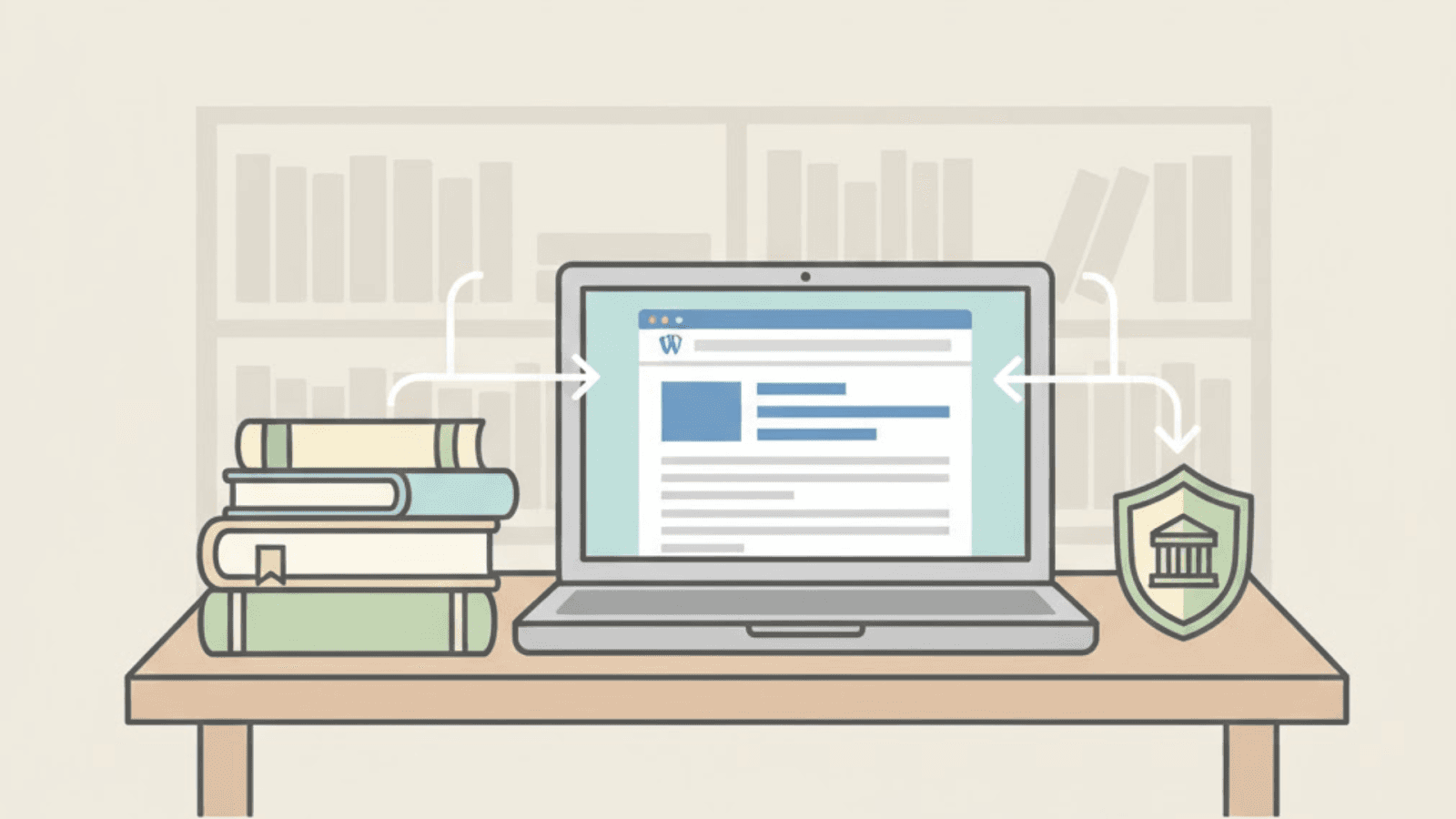
This is often the most efficient route. Many articles include citations that lead to high-quality sources. Use Wikipedia as a gateway, not as the final stop.

<ProTip title="🧭 Pro Tip:" description="Use Wikipedia as a research starting point, then switch to academic databases to build credible references." />

How Style Guides Treat Wikipedia Citations

Different citation styles have different conventions, and while they generally agree that Wikipedia isn’t a preferred academic source, there are exceptions. Some universities even allow it under certain conditions and provide formal guidance on how to cite Wikipedia correctly.

Here is how the major styles handle it:

APA (7th edition)

APA allows Wikipedia citations when appropriate, following the format for online encyclopedias. It emphasizes using a permanent URL.

MLA (9th edition)

MLA also provides a format but expects researchers to prioritize more authoritative sources.

Chicago (17th edition)

Chicago allows Wikipedia citations mainly in informal writing. Academic papers should rely on verifiable scholarly material.

Harvard Style

Harvard references Wikipedia like any website, but many universities implementing Harvard prohibit it outright. Always check your institution’s rules.

Even when these styles allow a citation, they view Wikipedia as a last resort.

Why So Many Students Still Cite Wikipedia

Even though academia restricts it, Wikipedia remains a daily tool for millions of learners. Its strengths are hard to ignore:

  • It explains complex topics in accessible language.

  • It provides helpful summaries when you do not yet understand the subject.

  • Many articles contain extensive references and bibliographies.

  • It allows quick scanning without paywalls or logins.

  • It standardizes information across thousands of fields.

In short, Wikipedia is useful because it reduces the friction of starting research. You can get an overview of a topic within minutes, learn relevant terminology, and identify key scholars or debates.

<ProTip title="💡 Pro Tip:" description="Use Wikipedia to discover primary and secondary sources, not to replace them." />

How to Use Wikipedia Effectively Without Citing It

You can use Wikipedia effectively if you follow a structured research workflow.

Step 1: Read for orientation

Gain a general overview of the topic. Note down:

  • Definitions

  • Keywords

  • Related concepts

Avoid quoting anything from Wikipedia at this stage.

Step 2: Check article quality

Look for flags such as:

  • “This article needs more citations.”

  • “This article may be biased.”

  • “This article contains disputed information.”

These warnings help you assess reliability.

Step 3: Scroll directly to references

Evaluate sources cited in the article:

  • Are they academic?

  • Are they recent?

  • Are they from credible institutions?

Step 4: Follow primary and secondary sources

Trace key references back to:

  • Academic journals

  • Government publications

  • Conferences

  • Books

  • Reputable news sources

This is where your real citations should come from.

Step 5: Build your annotated bibliography

Summarize:

  • Why each source is relevant

  • How does it support your paper

  • How credible is it

Step 6: Only cite Wikipedia for platform-specific research

If your research is about Wikipedia itself, go to the page’s:

  • revision history

  • talk section

  • archived versions

These features provide empirical data.

<ProTip title="📘 Pro Tip:" description="Treat Wikipedia as a guidepost that points you toward authoritative evidence." />

A Decision Framework: When to Cite Wikipedia vs When to Avoid It

Use this quick checklist:

Do cite Wikipedia if:

  • The subject of study is Wikipedia itself.

  • Your instructor tells you it is acceptable.

  • You are citing an archived version for historical purposes.

Do not cite Wikipedia if:

  • You are writing academic research.

  • The fact has a primary or secondary source.

  • The page is unstable or poorly referenced.

  • Credibility and authority matter (they always do in research).

What This Means for Students and Researchers

Wikipedia is useful in research, but not as a source you cite. Its real value is helping you understand a topic quickly, learn the right keywords, and spot which authors or studies matter before you dive into academic databases. 

Think of it as a starting map, not the evidence itself. Strong research depends on sources that are stable, peer-reviewed, and traceable, and Wikipedia cannot offer that level of authority.

<ProTip title="💡 Pro Tip:" description="Use Wikipedia to explore a topic, then build arguments from peer-reviewed sources." />

Used wisely, it becomes a strategic tool. The references at the bottom of each article often lead you to journals, books, and institutional reports that are far more credible for academic writing. The key is knowing when to shift from general knowledge to scholarly material.

How to Handle Citing Wikipedia in Research

Citing Wikipedia in research sounds convenient, but convenience does not equal credibility. Because Wikipedia is a tertiary source that constantly changes, it cannot replace the stability and authority required in academic work. 

<CTA title="Write Stronger, Better-Sourced Papers" description="Use advanced academic tools to build citations, analyze sources, and create credible research papers faster." buttonLabel="Try Jenni Free" link="https://app.jenni.ai/register" />

Use it for quick understanding, keyword discovery, and finding primary and secondary sources, but keep it out of your reference list unless your project specifically analyzes Wikipedia itself. Responsible Wikipedia use is about research strategy, not shortcuts.

目录

今天在你最伟大的作品上取得进展

今天和 Jenni 一起写你的第一篇论文,绝不回头

免费开始

无需信用卡

随时取消

超过500万

全球学术界

节省了5.2小时

每篇论文平均

超过1500万

关于Jenni的论文

今天在你最伟大的作品上取得进展

今天和 Jenni 一起写你的第一篇论文,绝不回头

免费开始

无需信用卡

随时取消

超过500万

全球学术界

节省了5.2小时

每篇论文平均

超过1500万

关于Jenni的论文

今天在你最伟大的作品上取得进展

今天和 Jenni 一起写你的第一篇论文,绝不回头

免费开始

无需信用卡

随时取消

超过500万

全球学术界

节省了5.2小时

每篇论文平均

超过1500万

关于Jenni的论文