によって
ジャスティン・ウォン
—
デジタルニュース記事の引用方法(APA、MLA、シカゴスタイルの説明)

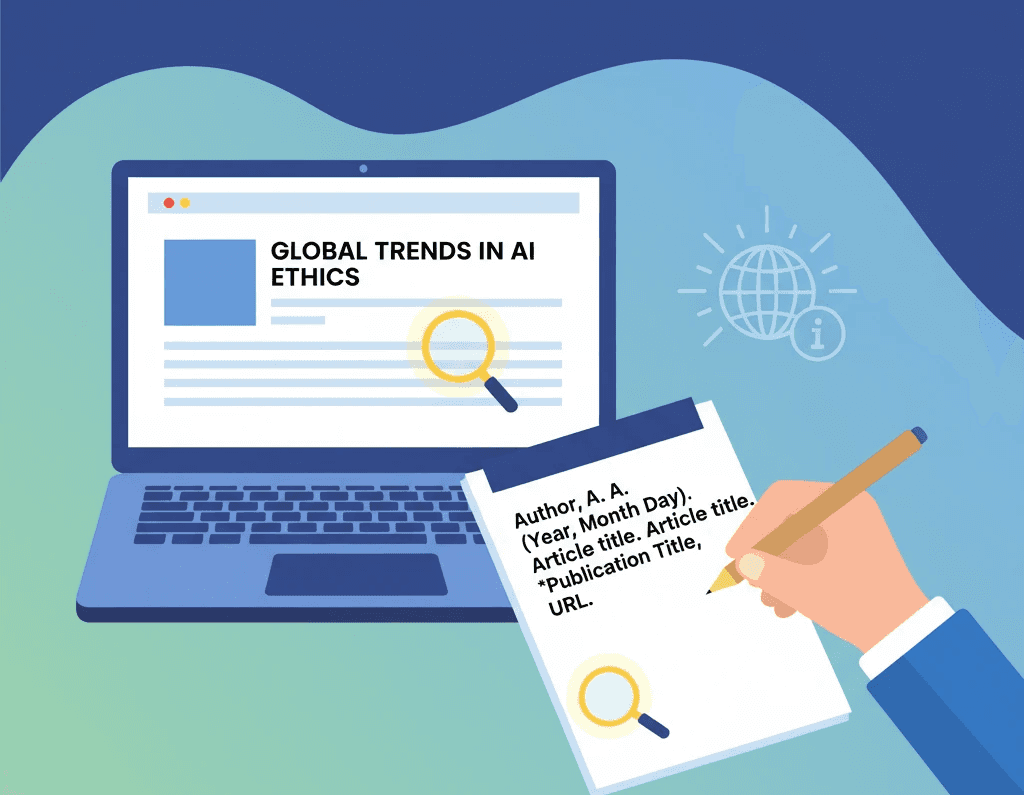
毎日、何百万人もの人々がウェブサイトやアプリからオンラインニュースを読んでいます。それらの記事の多くは、学校のエッセイ、研究論文、あるいはブログ投稿の一部になります。しかし、それらを引用または参照する際には、正しい方法で引用する必要があります。適切な引用を行うことは、著者に敬意を示すことになり、読者があなたの情報源を見つけるのに役立ち、あなたの作品の誠実さと信頼性を維持することに繋がります。
このガイドでは、3大引用スタイル(APA、MLA、シカゴスタイル)を使用してデジタルニュース記事を引用する方法を学びます。また、具体的な例を表示し、理解しやすいヒントを提供し、作品を提出する前にすべての引用が正しいことを確認するためのチェックリストも紹介します。
<CTA title="強固な参考文献リストの作成" description="デジタルニュースソースの明確で正確な参考文献を数分で作成できます。" buttonLabel="Jenniを無料で試す" link="https://app.jenni.ai/register" />
デジタルニュースの引用が重要な理由
オンラインニュースを引用することは、単に学校の規則に従うことだけではありません。それはあなたの信頼性を守り、学問的な誠実さを示すものです。
クレジットを認めるため。 ジャーナリスト、編集者、写真家は正当な評価を受ける価値があります。
読者が事実を確認するのを助けるため。 明確な引用があれば、情報源をすぐに確認することができます。
信頼を構築するため。 教師や編集者は、あなたの情報が信頼できるものであると判断できます。
盗用の防止。 引用を怠ると、他人の作品を盗んだように見えてしまうことがあります。
今日、デジタルニュースは目まぐるしく変化します。記事が更新されたり削除されたりすることもあります。著者、日付、タイトル、掲載メディア、そしてURLを引用しておくことで、他の人が後を追える足跡を残すことができます。
<ProTip title="💡 プロのヒント:" description="記事を見つけたらすぐに、著者、日付、URLをコピーしてください。リンクは後で変更される可能性があります。" />
3つの主要な引用スタイル
それぞれの引用スタイルがデジタルニュースをどのように処理するかを見てみましょう。これらの例では、架空ですが現実的な記事を使用しています。
1. APAスタイル(第7版)
目的: 主に社会科学(心理学、教育学、社会学)で使用されます。
フォーカス: 情報は時間とともに変化するため、出版日は重要です。
基本フォーマット
著者, A. A. (年, 月 日). 記事のタイトル. 新聞のタイトル. URL
例
Lopez, R. (2025, March 4). Ocean cleanup robots start new wave of innovation. Green City Times. https://www.greencitytimes.com/articles/ocean-cleanup-robots
主なルール
タイトルの最初の単語と固有名詞のみが大文字になります(英語の場合)。
新聞名は斜体(イタリック体)にします。
URLを含めますが、ページが頻繁に変更されない限り、アクセス日は不要です。
<ProTip title="💡 注意:" description="APAでは、記事タイトルにはセンテンスケース(最初の単語の頭文字のみ大文字)を使用しますが、新聞名にはタイトルケース(主要な単語の頭文字を大文字)を使用します。" />
本文中の引用(インテキスト・サイテーション)
(Lopez, 2025)
APAを使用するタイミング
社会科学や教育のレポートなど、データの公表時期が重視される分野で執筆する場合は、APAを使用してください。
2. MLAスタイル(第9版)
目的: 人文学(文学、芸術、哲学)で一般的です。
フォーカス: 著者と情報源の詳細が信頼性を示します。
基本フォーマット
著者姓, 名. "記事のタイトル." 新聞のタイトル, 出版日, URL.
例
Nguyen, Tara. "Young farmers embrace smart irrigation apps." Daily Global, 12 April 2025, dailyglobal.com/news/farmers-smart-irrigation.
主なルール
記事タイトルをダブルクォーテーション(" ")で囲みます。
新聞名を斜体にします。
URLをすっきりさせるために、「http://」または「https://」は省略します。
完全な出版日(日、月、年)を含めます。
<ProTip title="📝 リマインダー:" description="MLAで著者が記載されていない場合は、代わりに記事タイトルから入力を開始してください。" />
3. シカゴスタイル(著者-日付形式、または文献注と文献目録形式)
目的: 歴史やその他の研究重視の分野で一般的です。
フォーカス: 柔軟性があり、注記または著者-日付形式のいずれかで引用できます。
基本フォーマット(著者-日付形式)
著者姓, 名. 年. "記事のタイトル." 新聞のタイトル, 月 日. URL.
例
Hernandez, Leo. 2025. "Electric buses cut city pollution levels." World Chronicle, May 8. https://www.worldchronicle.org/environment/electric-buses.
文献注と文献目録形式バージョン
Leo Hernandez, "Electric buses cut city pollution levels," World Chronicle, May 8, 2025, https://www.worldchronicle.org/environment/electric-buses.
主なルール
記事タイトルにはダブルクォーテーションを使用します。
新聞名を斜体にします。
URLを含めます。
文献目録の項目では、著者名を「姓、名」の順で並べます。
<ProTip title="💡 プロのヒント:" description="記事が短い場合や中心的な内容でない場合は、脚注のみに引用し、文献目録は省略することができます。" />
シカゴスタイルを使用するタイミング
歴史、ジャーナリズム、または脚注や長い参考文献リストを必要とする
学術研究のために執筆する場合は、シカゴスタイルを使用してください。
比較表
スタイル | 本文中のシグナル | 完全な引用例(短縮版) | 主なフォーカス |
APA | (Lopez, 2025) | Lopez, R. (2025, Mar 4). Green City Times. URL | 出版年月日 |
MLA | (Nguyen) | Nguyen, T. "Young farmers embrace smart irrigation apps." Daily Global, 12 Apr 2025, URL | 著者と情報源の信頼性 |
シカゴ | (Hernandez 2025) または 脚注 | Hernandez, L. 2025. "Electric buses cut city pollution levels." World Chronicle, May 8. URL | 注記と引用における柔軟性 |
これが意味すること
何かがいつ出版されたかを示したい場合 → APAを使用します。
誰が言ったかに焦点を当てたい場合 → MLAを使用します。
脚注や学術的な深さが必要な場合 → シカゴスタイルを使用します。
避けるべき一般的な引用の間違い
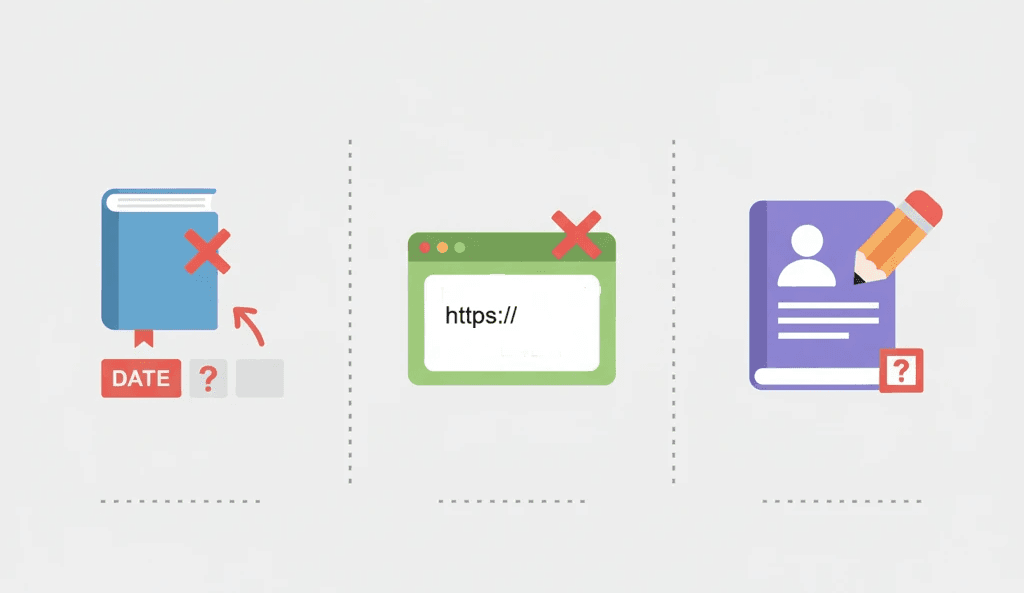
多くの学生が、小さな引用ミスで減点されています。それを避ける方法は以下の通りです。
1. 著者を忘れる
著者が記載されていない場合は、タイトルから始めてください。記事にそう指定されていない限り、決して「匿名(Anonymous)」と書かないでください。
2. 完全な日付の欠落
完全な日付(年、月、日)を使用してください。ニュースは移り変わりが早いため、日付は情報の関連性を示すものになります。
3. 大文字表記の誤り(英語表記のみ)
APAではセンテンスケースを使用し、MLAとシカゴではタイトルケースを使用します。これらを混同することはよくある間違いです。
4. 斜体(イタリック)の省略
新聞名(The Times や Daily Global など)は常に斜体・イタリックにしてください。これにより、それが刊行物のタイトルであることが明確に示されます。
5. リンク切れや転送URL
提出前にリンクを確認してください。有料壁(ペイウォール)の奥にある場合でも、メインのURLは維持してください。
6. アクセス日の不適切な使用
アクセス日は、ページが定期的に更新される場合(ライブのニュースフィードやコロナのダッシュボードなど)にのみ追加してください。詳細は
APAスタイルの例を参照してください。
<ProTip title="🔍 クイックチェック:" description="完了する前に、すべてのURLをクリックして正常に機能し、元の記事にアクセスできることを確認してください。" />
プロジェクトに適したスタイルの選択
決めるためには、このシンプルな意思決定フレームワークを使用してください。
あなたの専門分野
社会科学 → APA
芸術&人文学 → MLA
歴史または分野横断的な研究 → シカゴスタイル
あなたの読者Target
教師や教授 → 彼らの指示に従います。
ブログの読者 → 通常、MLAはすっきりと読みやすく見えます。
あなたのフォーカス
適時性(最新情報であること)を強調する → APA。
著者の信頼性を目立たせる → MLA。
詳細な脚注が必要 → シカゴスタイル。
<ProTip title="💬 ヒント:" description="迷ったときは、課題の評価基準や編集者ガイドで指定されている引用スタイルを確認してください。" />
デジタルニュースの引用と印刷版(紙媒体)との違い
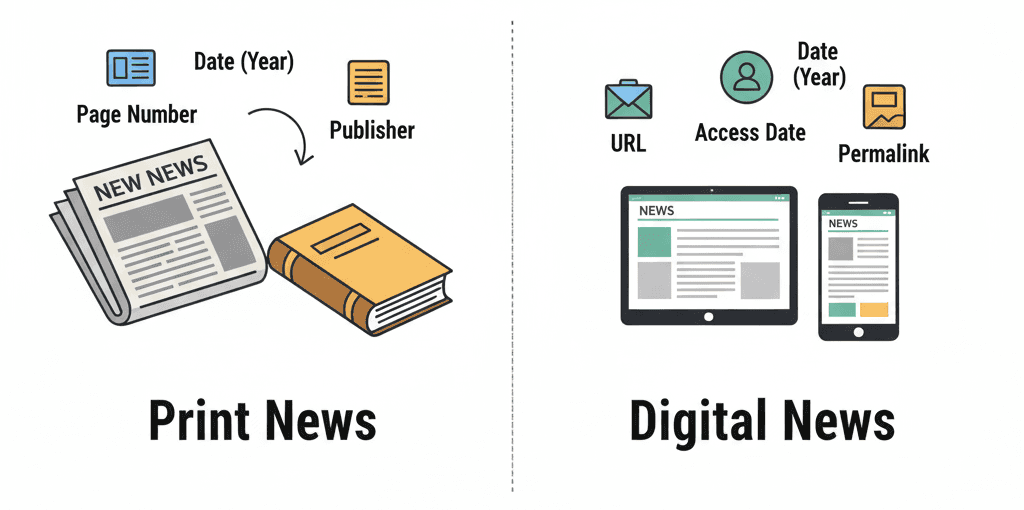
かつて印刷版の新聞は、ページ番号や地方版を使用していました。デジタル記事にはこれがありません。フォーマット間のルール変更の詳細については、当社の印刷版とデジタル版の引用の違いに関するガイドをご覧ください。現代のソースに合わせる方法は以下の通りです。
要素 | 印刷版の新聞 | デジタルニュース記事 |
ページ番号 | 必須 | 利用できない場合は省略可 |
URL | 該当なし | 常に含める |
出版年月日 | 通常は 日 + 月 | 完全な日付(年、月、日)を含める必要あり |
アクセス日 | まれ | コンテンツが変動する場合にのみ追加 |
著者 | 通常は上部に記載 | 下部またはメタ情報を確認 |
デジタル情報源では、URLや更新についても注意を払う必要があります。パブリッシュ後に記事を編集する編集機関もあります。そのため、正確な出版日を記録しておくことが重要になります。
<ProTip title="📅 プロのヒント:" description="記事に「公開日」と「更新日」の両方が表示されている場合は、教師からの個別の指示がない限り、公開日を使用してください。" />
ステップ・バイ・ステップの例:引用文献の作成
具体的な例を最初から最後まで見てみましょう。
記事情報:
タイトル:“Solar rooftops transform suburban energy”
著者:Mina Desai
メディア名:Urban Light News
出版日:February 15, 2025
URL:https://www.urbanlightnews.com/energy/solar-rooftops-transform
APA
Desai, M. (2025, February 15). Solar rooftops transform suburban energy. Urban Light News. https://www.urbanlightnews.com/energy/solar-rooftops-transform
MLA
Desai, Mina. "Solar rooftops transform suburban energy." Urban Light News, 15 Feb 2025, urbanlightnews.com/energy/solar-rooftops-transform.
シカゴ(著者-日付形式)
Desai, Mina. 2025. "Solar rooftops transform suburban energy." Urban Light News, February 15. https://www.urbanlightnews.com/energy/solar-rooftops-transform.
スタイルによって順序や句読点がわずかに変化するのがお分かりいただけるでしょうか。だからこそ、選んだガイドにしっかりと従うことがとても重要です。
提出する前に:最終チェックリスト
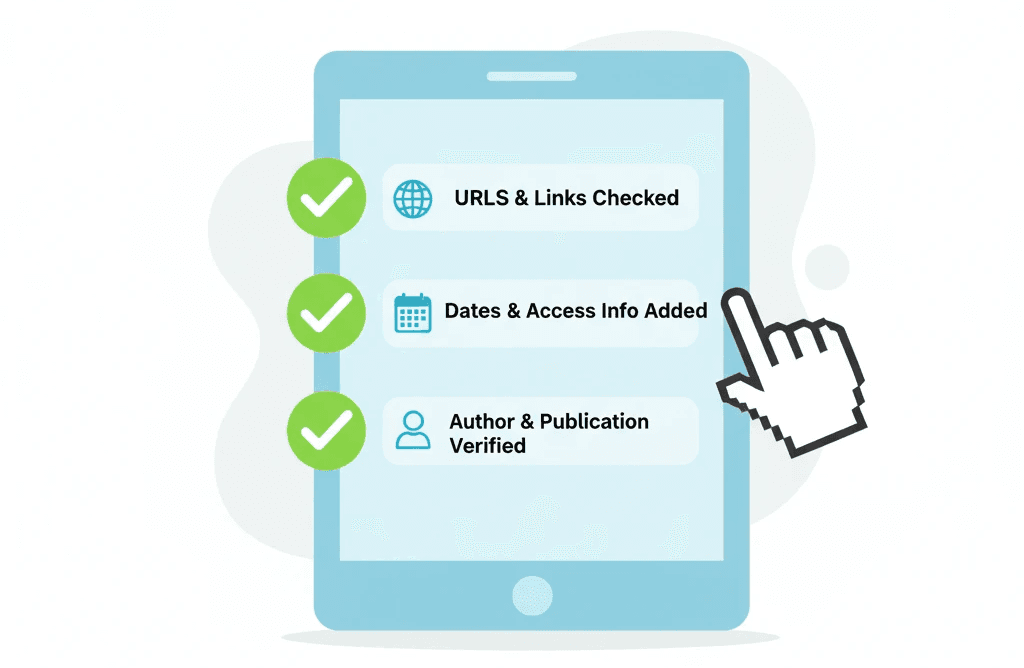
この簡単なリストを使用して、引用が完璧であることを確認してください。
著者の綴りとイニシャルが正しい。
完全な日付が含まれている(年、月、日)。
記事タイトルが元の記事と一致している。
新聞名が斜体になっており、大文字表記が正しい。
URLが機能し、正しいページに繋がっている。
引用スタイルが全体を通して一貫している。
本文中の引用が文献目録のエントリーと一致している。
句読点や引用符が正しく使われている。
記事が頻繁に更新される場合、アクセス日が記載されている。
<ProTip title="✅ リマインダー:" description="このチェックリストを印刷して、次の課題を書くときにPCの横に置いておきましょう。" />
自信を持ってデジタルニュース記事の引用をマスターしよう
デジタルニュース記事の引用は、あなたの信頼性を守り、研究の誠実さを保つためのシンプルなスキルです。これでAPA、MLA、シカゴスタイルの扱い方、それぞれの記載フォーマット、そして最も一般的な間違いを避ける方法がわかりました。常に早い段階で詳細な情報をキャプチャし、選択したスタイルのルールに従い、URLを再確認するようにしてください。
<CTA title="引用箇所を簡単に生成する" description="あらゆるデジタルニュース記事に対し、そのまま出版に使える引用フォーマットを数秒で作成できます。" buttonLabel="Jenniを無料で試す" link="https://app.jenni.ai/register" />
注意深く引用を行うことで、あなたの文章はプロフェッショナルに見え、読者はあなたをより信頼し、指導者もあながた正確さに真剣に取り組んでいるのだと評価してくれるようになるでしょう。
正しく引用することは単なるルールではなく、真実と優れたジャーナリズムへの敬意の表れです。
"}