Di
Nathan Auyeung
—
Come citare senza autore (Esempi APA, MLA, Chicago e Harvard)

Nathan Auyeung
Senior contabile presso EY
Laureato con una laurea in Contabilità, ha completato un Diploma Post-Laurea in Contabilità
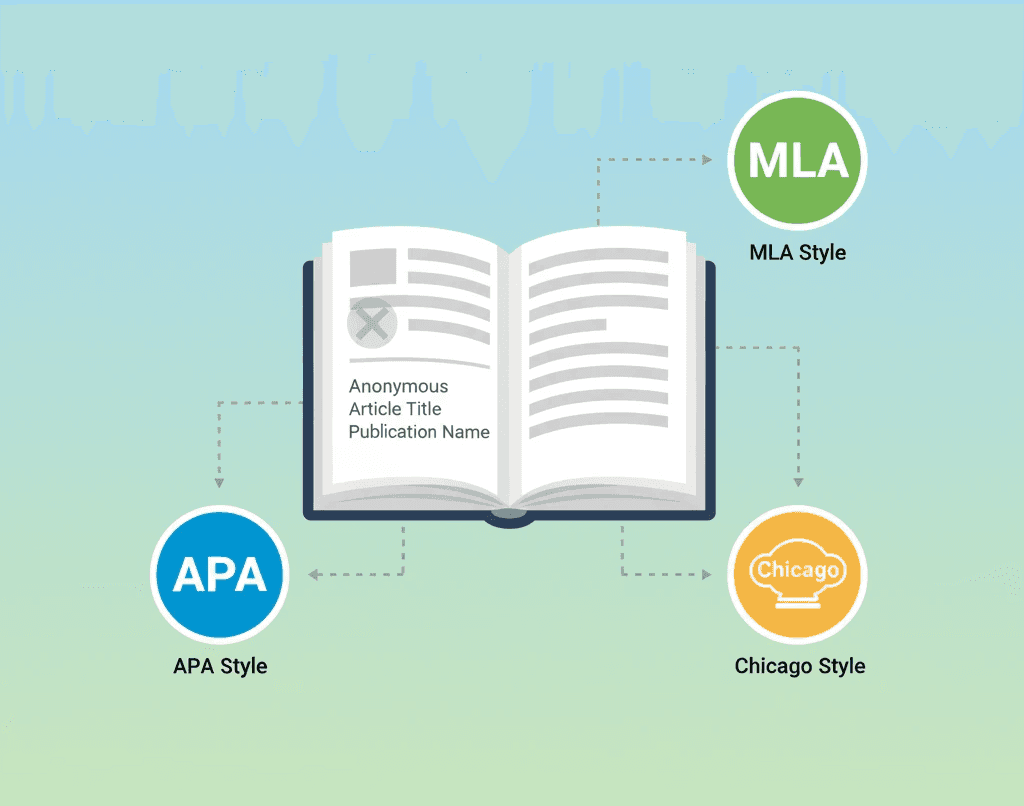
Quando scrivi articoli accademici, spesso fai affidamento sulle fonti per sostenere le tue idee. Ma cosa succede quando la tua fonte non riporta alcun autore? Questo può accadere con pagine web, report o pubblicazioni di organizzazioni.
Sapere come citare senza autore è importante per mantenere il tuo lavoro accurato, credibile ed etico. Ogni stile di citazione (APA, MLA, Chicago e Harvard) gestisce gli autori mancanti in modi leggermente diversi. Questa guida spiega tutto nel dettaglio, con esempi chiari e passaggi pratici che puoi seguire.
<CTA title="Crea citazioni accurate in pochi secondi" description="Crea citazioni perfettamente formattate, anche per fonti senza autore, in pochi clic." buttonLabel="Prova Jenni gratis" link="https://app.jenni.ai/register" />
Perché le citazioni senza autore sono importanti
A volte, una fonte può non avere un autore identificabile. Ad esempio:
Un report governativo pubblicato da un ministero
Una scheda informativa di una ONG
Una pagina web di una grande organizzazione
Un riepilogo di notizie senza firma
Anche senza un nome individuale, devi comunque attribuire il giusto credito alla fonte. Farlo:
Dimostra la tua integrità accademica
Aiuta i lettori a trovare la fonte
Mantiene la tua bibliografia ordinata e completa
Secondo l’American Psychological Association (APA), la corretta citazione delle fonti senza autore garantisce che il merito venga attribuito all’ente o al titolo responsabile del contenuto, mantenendo la trasparenza nella ricerca.
Come gli stili di citazione gestiscono gli autori mancanti
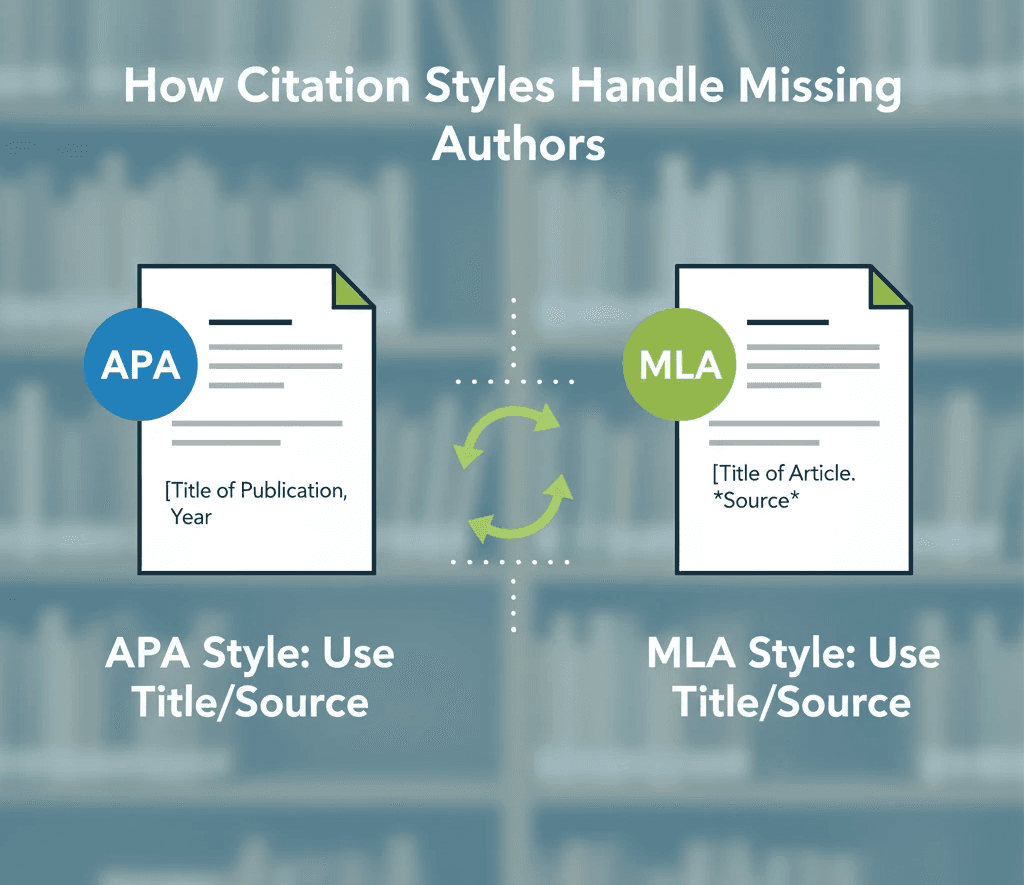
Prima di entrare negli esempi specifici, ecco un rapido riepilogo di ciò su cui tutti gli stili di citazione concordano:
Situazione | Cosa fare | Esempio (generale) |
Organizzazione come autore | Tratta l’organizzazione come autore | (World Health Organization, 2023) |
Nessun individuo o organizzazione | Inizia invece dal titolo | ("Climate Data Report," 2023) |
Titolo lungo | Usa una versione abbreviata nel testo | ("Climate Data," 2023) |
Nessuna data | Usa “n.d.” per indicare l’assenza di data | ("Climate Change Guide," n.d.) |
Ogni stile formatta poi questi elementi in modo diverso. Vediamoli uno per uno.
APA (7ª edizione): gestione delle citazioni senza autore
Lo stile APA è spesso utilizzato in psicologia, educazione e scienze sociali. L’American Psychological Association afferma che quando non è disponibile alcun autore, dovresti spostare il titolo dell’opera nella posizione dell’autore. Per saperne di più sulla formattazione delle fonti web in APA, consulta la nostra guida alla citazione dei siti web in formato APA (7ª edizione).
1. Quando c’è un’organizzazione come autore
Formato:
Nome dell’organizzazione. (Anno). Titolo dell’opera. Fonte o URL
Esempio:
World Health Organization. (2021). Global health risks. https://www.who.int/globalhealthrisks
Citazione nel testo:
(World Health Organization, 2021)
Questo metodo garantisce che il lettore possa risalire all’ente responsabile anche se non c’è un autore individuale.
2. Quando non c’è alcun autore
Se non è possibile identificare né un individuo né un’organizzazione:
Formato:
Titolo dell’opera. (Anno). Fonte o URL
Esempio:
Climate change overview. (2019). https://climate.nasa.gov/resources
Citazione nel testo:
("Climate change overview," 2019)
Se il titolo è lungo, abbrevialo per l’uso nel testo.
Esempio:
(“Climate overview,” 2019)
<ProTip title="💡 Suggerimento:" description="Quando non è indicato alcun autore, sposta sempre il titolo nella posizione dell’autore nei riferimenti APA." />
Puoi confermare queste regole nelle linee guida ufficiali APA Style.
MLA (9ª edizione): gestione delle citazioni senza autore
Il formato MLA è comune nelle discipline umanistiche, come letteratura e storia. La Modern Language Association raccomanda di concentrarsi sul titolo quando non esiste un autore.
1. Quando c’è un’organizzazione come autore
Formato:
Nome dell’organizzazione. Titolo dell’opera. Editore, Anno, URL.
Esempio:
World Health Organization. Global Health Risks. WHO, 2021, https://www.who.int/globalhealthrisks
Citazione nel testo:
(World Health Organization 2021)
2. Quando non c’è autore
Formato:
“Titolo.” Nome del sito web, Anno, URL.
Esempio:
“Climate Data.” Environment News, 2020, https://environmentnews.org/climatedata
Citazione nel testo:
(“Climate Data” 2020)
Quando metti in ordine alfabetico la tua lista Works Cited, il titolo diventa il primo elemento. Usa le virgolette per i titoli degli articoli e il corsivo per i nomi di libri o siti web.
<ProTip title="💡 Promemoria:" description="In MLA, metti sempre i titoli degli articoli tra virgolette e usa il corsivo per i nomi dei contenitori come libri o siti web." />
Chicago (17ª edizione): sistemi Notes e Author-Date
Il Chicago Manual of Style prevede due sistemi:
Notes and Bibliography (usato in storia e arti)
Author-Date (usato nelle scienze sociali)
Vediamoli entrambi.
1. Sistema Notes and Bibliography
Se non è indicato alcun autore, inizia dal titolo.
Esempio di nota a piè di pagina:
“Climate Change Overview,” 2019, https://example.org/climate
Voce bibliografica:
Climate Change Overview. 2019. https://example.org/climate
Se il titolo è lungo, abbrevialo nelle note dopo la prima citazione.
2. Sistema Author-Date
Formato:
Titolo dell’opera. Anno. URL.
Esempio:
Climate Change Overview. 2019. https://example.org/climate
Citazione nel testo:
(Climate Change Overview 2019)
<ProTip title="📚 Suggerimento:" description="Nello stile Chicago, usa sempre il corsivo per opere autonome come libri o report e le virgolette per testi più brevi." />
Stile Harvard: riferimenti senza autore
La citazione Harvard è ampiamente usata in università e istituti di ricerca. Assomiglia molto all’APA ma usa le parentesi per le date.
Formato:
Titolo dell’opera. Anno. Sito web o editore. URL.
Esempio:
Climate change overview. 2019. Environment News. https://environmentnews.org/climate
Citazione nel testo:
(Climate change overview 2019)
Se non è disponibile alcuna data, usa “n.d.” per “senza data”.
Esempio:
Sustainability insights. n.d. Eco Research Institute. https://ecoresearch.org/sustainability
Nel testo:
(Sustainability insights n.d.)
<ProTip title="💡 Nota:" description="Nello stile Harvard, usa “n.d.” per le date mancanti e inizia le voci con il titolo quando non è presente un autore." />
La guida Harvard dell’Università di Leeds offre esempi chiari per citare fonti senza autore.
Scenari comuni per citazioni senza autore
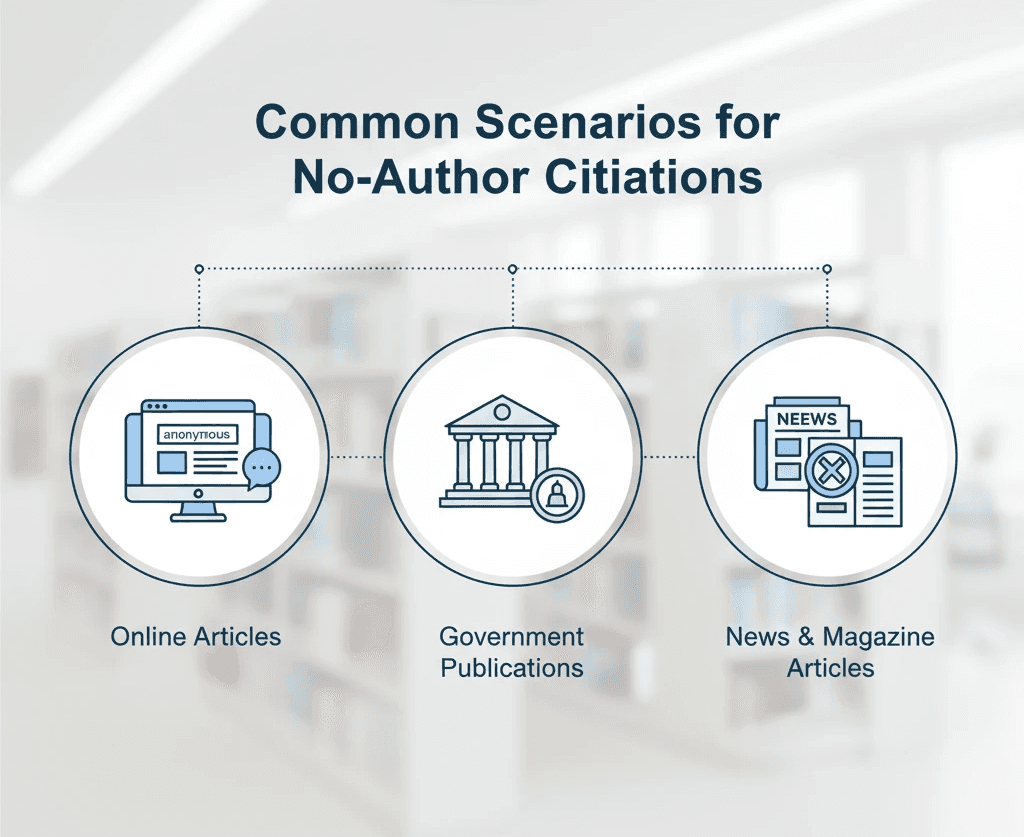
Ecco come gestire i casi più frequenti che incontrerai.
1. Report governativi o di ONG
Quando un’istituzione pubblica il lavoro:
Usa l’istituzione come autore.
Se non è indicato alcun autore o organizzazione, inizia dal titolo.
Esempi:
APA: Population health report. (2021). Department of Health. https://health.gov/report
MLA: “Population Health Report.” Department of Health, 2021, https://health.gov/report
Chicago: Population Health Report. 2021. https://health.gov/report
Harvard: Population health report. 2021. Department of Health. https://health.gov/report
<ProTip title="✅ Promemoria:" description="Quando editore e autore coincidono nella stessa organizzazione, elencala una sola volta per evitare ridondanze." />
2. Pagine web o articoli online senza autore
Questi casi sono molto comuni nella ricerca online.
Esempi:
APA: Energy conservation tips. (2020). https://energysave.gov/tips
MLA: “Energy Conservation Tips.” Energy Save, 2020, https://energysave.gov/tips
Chicago: Energy Conservation Tips. 2020. https://energysave.gov/tips
Harvard: Energy conservation tips. 2020. Energy Save. https://energysave.gov/tips
Se non viene fornita una data di pubblicazione:
APA: usa “n.d.”
MLA: ometti completamente la data.
Chicago e Harvard: usa “n.d.”
3. Libri o report indicati come “Anonymous”
A volte le opere sono intenzionalmente etichettate come Anonymous.
In quel caso, usa “Anonymous” come nome dell’autore.
Esempio (APA):
Anonymous. (2018). Confidential memoirs. Random House.
Nel testo:
(Anonymous, 2018)
Esempio (MLA):
Anonymous. Confidential Memoirs. Random House, 2018.
4. Autori aziendali o istituzionali
Quando l’autore è un’azienda, un’università o un’agenzia, scrivi sempre il nome completo dell’organizzazione.
Esempi:
(American Red Cross, 2022)
(NASA, 2023)
(World Bank, 2021)
Checklist: come gestire gli autori mancanti
Usa questa rapida checklist prima di finalizzare i tuoi riferimenti: se usi un reference manager, la nostra panoramica sull’integrazione con Zotero e Mendeley può aiutarti a importare le fonti e mantenere le citazioni coerenti.
Passaggio | Cosa controllare | Perché è importante |
1 | Controlla la presenza di autori istituzionali o governativi | Molti report sono redatti da istituzioni |
2 | Sposta il titolo nella posizione dell’autore se non esiste alcun nome | Mantiene la citazione coerente |
3 | Abbrevia i titoli lunghi nelle citazioni nel testo | Migliora la leggibilità |
4 | Usa “n.d.” quando non è indicata alcuna data | Mantiene valido il formato dello stile |
5 | Ordina alfabeticamente in base al primo elemento | Garantisce il corretto ordine dei riferimenti |
6 | Verifica la coerenza con la guida di stile scelta | Evita penalizzazioni per errori di formattazione |
<ProTip title="📝 Suggerimento rapido:" description="Fai sempre corrispondere esattamente le citazioni nel testo con la voce in bibliografia: stesso primo elemento, stesso anno." />
Applicazione pratica: esempio reale
Supponiamo che tu stia scrivendo un articolo di ricerca sui dati climatici e trovi una pagina web intitolata Climate Facts 2022 senza autore indicato, pubblicata dallo United Nations Environment Programme (UNEP).
Ecco come la citeresti nei vari stili:
Stile | Voce di riferimento | Nel testo |
APA | United Nations Environment Programme. (2022). Climate facts 2022. https://unep.org/climatefacts | (United Nations Environment Programme, 2022) |
MLA | United Nations Environment Programme. Climate Facts 2022. UNEP, 2022, https://unep.org/climatefacts | (United Nations Environment Programme 2022) |
Chicago | Climate Facts 2022. 2022. United Nations Environment Programme. https://unep.org/climatefacts | (Climate Facts 2022 2022) |
Harvard | Climate facts 2022. 2022. UNEP. https://unep.org/climatefacts | (Climate facts 2022 2022) |
Ogni stile dà priorità al nome dell’organizzazione o al titolo in base all’elemento mancante.
Risoluzione dei dubbi nelle citazioni senza autore
Se non sei sicuro di come classificare una fonte, usa questi controlli:
Controlla intestazione o piè di pagina: a volte il nome dell’organizzazione compare lì.
Guarda l’URL: il dominio (.gov, .org) spesso rivela l’ente.
Cerca una nota di copyright: può includere l’editore responsabile.
Usa solo il titolo come ultima risorsa: se davvero non c’è alcun autore o ente.
Buone pratiche per citare fonti anonime o senza autore
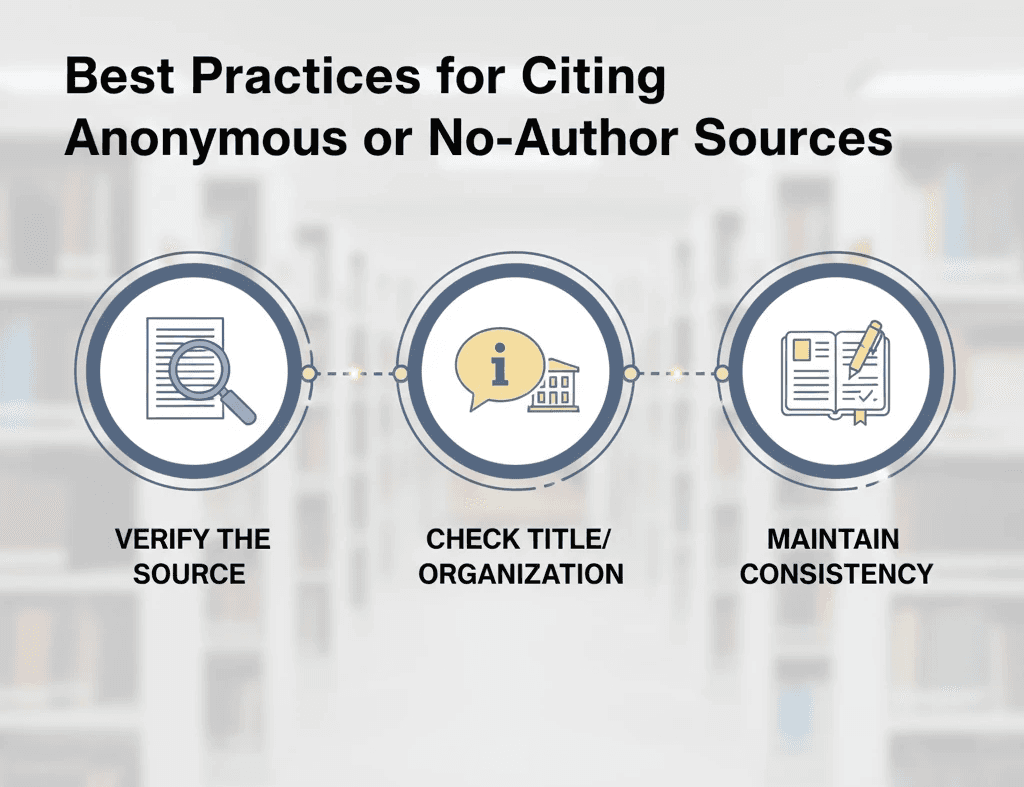
Segui queste abitudini per rendere il tuo lavoro coerente e professionale:
Sii coerente: usa lo stesso approccio in tutto il documento.
Usa la stessa versione del titolo: non alternare versioni abbreviate e complete tra le citazioni.
Mantieni la formattazione identica: corsivo, virgolette e punteggiatura devono seguire lo stile scelto.
Ricontrolla le maiuscole: APA e Harvard usano il sentence case, MLA e Chicago il title case.
<ProTip title="🔍 Suggerimento:" description="Se la tua fonte non ha data, autore e titolo, di solito è inaffidabile. Valuta di trovare un riferimento più solido." />
Cosa significa nella pratica
Quando impari a citare senza autore, proteggi la tua credibilità come ricercatore. Inoltre aiuti gli altri a verificare facilmente le tue informazioni.
Ecco un rapido riepilogo:
Se c’è un autore aziendale, usalo.
In caso contrario, usa il titolo.
Se manca la data, scrivi n.d.
Controlla sempre la formattazione con la guida di stile scelta.
Con questi passaggi, le tue citazioni rimarranno pulite, coerenti e professionali, indipendentemente dalla complessità della fonte.
Gestire con successo le fonti senza autore
Citare fonti senza autore è semplice una volta compresa la logica: sostituisci il nome dell’autore con l’elemento identificativo successivo, di solito il titolo o l’organizzazione.
<CTA title="Crea subito citazioni affidabili" description="Gestisci automaticamente autori, date o titoli mancanti con gli strumenti di citazione di Jenni AI, formattati per qualsiasi stile." buttonLabel="Prova Jenni gratis" link="https://app.jenni.ai/register" />
Che tu usi APA, MLA, Chicago o Harvard, il principio resta lo stesso: assicurati che i lettori possano rintracciare la fonte in modo chiaro e semplice. Citazioni corrette rendono la tua scrittura più solida, più credibile e accademicamente onesta.