Di
Justin Wong
—
Differenza tra Tesi e Dissertazione: Differenze Chiave ed Esempi Chiari

Justin Wong
Capo della Crescita
Laureato con una Laurea in Business Globale e Arti Digitali, Minore in Imprenditorialità
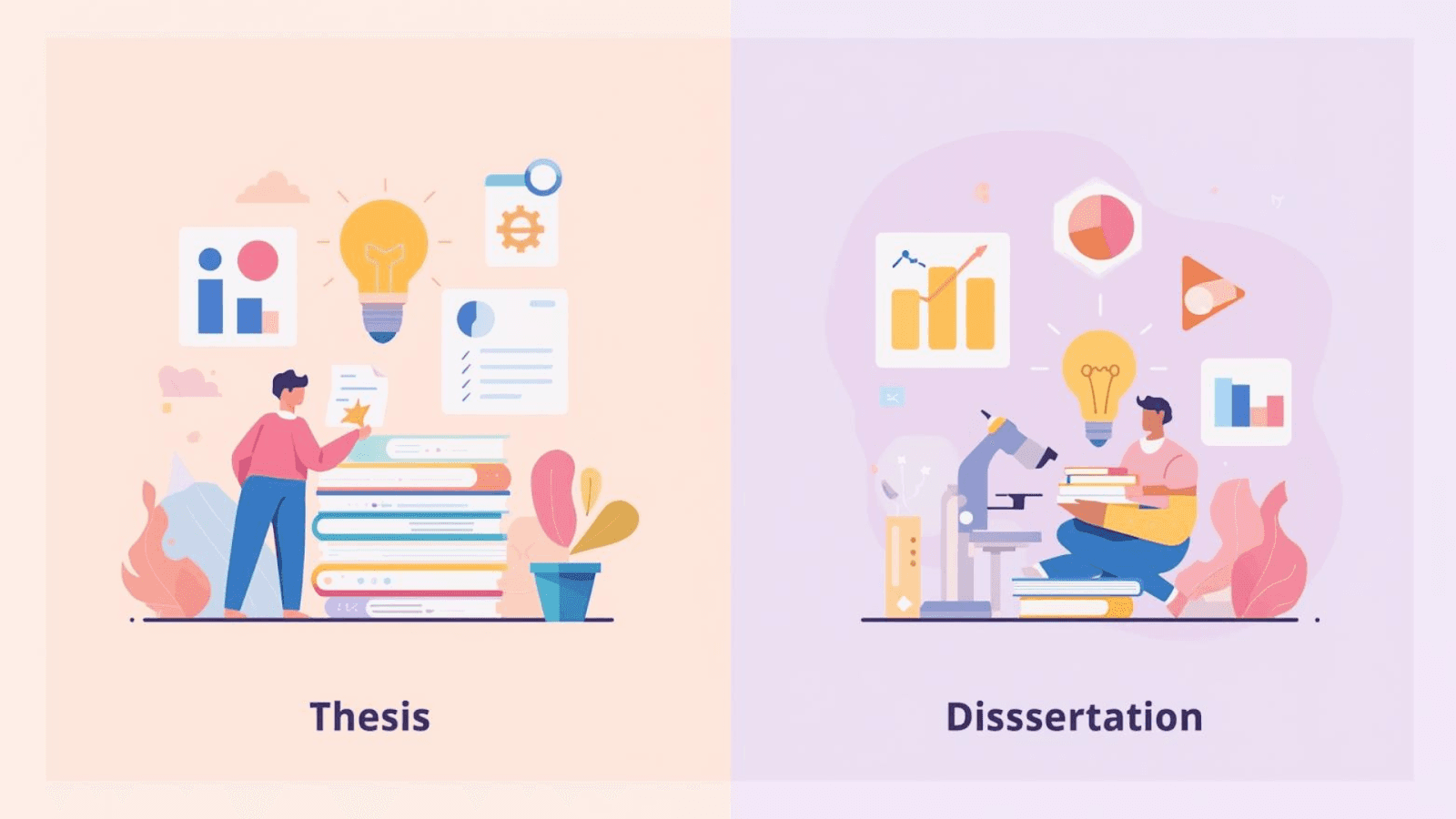
Molti studenti presumono che una tesi e una dissertazione siano sostanzialmente la stessa cosa. Entrambe sono elaborati lunghi, entrambe richiedono ricerca ed entrambe si concludono con una discussione formale. Ma quando entri nella scuola di specializzazione, capisci rapidamente che hanno finalità molto diverse. Ogni progetto richiede un diverso livello di profondità e un diverso tipo di pensiero.
Questa guida illustra la differenza tra tesi e dissertazione in modo semplice e adatto agli studenti. Scoprirai in cosa differiscono per finalità, livello, struttura, ricerca e aspettative. Con esempi chiari e spiegazioni accessibili, arriverai a una comprensione solida di ciò che richiede ciascun progetto. Se stai confrontando anche altre opzioni conclusive, consulta la nostra guida passo passo ai progetti capstone.
<CTA title="Costruisci un solido problema di ricerca" description="Genera in pochi minuti un enunciato preciso e pronto per la pubblicazione, senza stress" buttonLabel="Prova Jenni Gratis" link="https://app.jenni.ai/register" />
Cosa significano tesi e dissertazione nella formazione post-laurea
Una tesi è un importante elaborato di ricerca richiesto in molti programmi di laurea magistrale. Dimostra che conosci il tuo campo e sai costruire un’argomentazione chiara usando la ricerca esistente. Una dissertazione è il principale progetto di ricerca in un programma di dottorato, come un PhD. È più ampia e più profonda di una tesi perché deve offrire un contributo originale alla conoscenza.
A prima vista, sembrano simili. Entrambe includono capitoli, citazioni e scrittura accademica. Entrambe richiedono riflessione approfondita. Entrambe seguono gli standard formali del tuo settore. Ma è la finalità di ciascun progetto a distinguerle.
<ProTip title="💡 Suggerimento:" description="Controlla presto i documenti del tuo corso. Alcuni ambiti offrono sia un percorso con tesi sia uno senza tesi. Questo influisce sul tuo piano di laurea." />
Perché gli studenti scrivono una tesi o una dissertazione
La finalità è il modo più chiaro per capire la differenza tra una tesi e una dissertazione. Una dimostra apprendimento. L’altra crea nuovo apprendimento.
La tesi mostra la padronanza di ciò che hai appreso
Una tesi riguarda la comprensione, non l’invenzione. Quando scrivi una tesi, lavori con idee già esistenti. Il tuo compito è studiarle, confrontarle e spiegare cosa significano, contribuendo ad approfondire la tua tesi di comprensione mentre esplori come gli studiosi discutono temi simili in studi diversi.
Puoi usare dati, ma di solito provengono da studi esistenti o da fonti semplici. Costruisci anche un’argomentazione, ma questa è radicata in ciò che gli studiosi hanno già scoperto.
Esempio di progetto di tesi
Uno studente magistrale in sociologia studia come il lavoro da remoto influisce sulla soddisfazione lavorativa. Invece di raccogliere nuovi dati da sondaggi, legge 30 studi pubblicati e ne confronta i risultati. Il progetto mostra chiarezza di pensiero, non una scoperta originale.
Una tesi risponde alla domanda:
“Conosci il settore abbastanza bene da entrare nella conversazione accademica?”
La dissertazione crea qualcosa di nuovo
Una dissertazione richiede di più. Devi individuare un’idea non ancora studiata a sufficienza. Devi sviluppare una domanda che colmi una lacuna. Devi raccogliere nuovi dati o creare una nuova teoria. Devi presentare i risultati in modo chiaro e strutturato. L’obiettivo è restituire valore alla comunità accademica.
Esempio di progetto di dissertazione
Un dottorando in sociologia crea una nuova scala per misurare la soddisfazione nel lavoro da remoto. La testa in cinque aziende, raccoglie dati originali e presenta risultati nuovi che nessuno aveva pubblicato prima.
Una dissertazione risponde alla domanda:
“Sai aggiungere nuova conoscenza al tuo settore?”
<ProTip title="💡 Suggerimento:" description="Chiedi al tuo relatore se la tua idea ha sufficiente originalità per una dissertazione. Ti fa risparmiare tempo e previene revisioni importanti in seguito." />
Livello accademico: carico di lavoro magistrale vs dottorale
Il livello accademico modifica le aspettative di ciascun progetto. Una tesi si adatta al livello magistrale perché l’obiettivo è una ricerca guidata. Una dissertazione si adatta al livello dottorale perché l’obiettivo è la ricerca indipendente.
Livello magistrale: la tesi sviluppa competenze di ricerca
Una tesi è il contesto in cui gli studenti imparano per la prima volta a:
delimitare un argomento
rivedere la letteratura
formulare domande di ricerca
applicare un metodo
scrivere in stile accademico
sostenere affermazioni con evidenze
Ti aiuta a esercitare competenze chiave prima di passare a ricerche avanzate o a ruoli professionali.
Esempio
Uno studente magistrale può imparare a codificare interviste qualitative o a eseguire semplici test statistici. Queste competenze sono utili, ma non richiedono analisi pluriennali.
Livello dottorale: la dissertazione dimostra autonomia nella ricerca
Una dissertazione dimostra che sai:
progettare uno studio completo
usare metodi complessi
giustificare le tue scelte
contribuire con idee originali
scrivere a un elevato livello scientifico
I dottorandi devono comprendere dibattiti più profondi e confrontarsi con la teoria, non solo descriverla.
Esempio
Un dottorando può condurre un progetto a metodi misti con sondaggi, interviste e costruzione teorica. Questo richiede tempo, pianificazione e pensiero di livello esperto.
<ProTip title="💡 Suggerimento:" description="Conserva tutti i feedback della commissione in un unico luogo. I progetti dottorali crescono rapidamente e l’organizzazione è fondamentale." />
Tipo di ricerca: basata sulla letteratura vs contributo originale
Il disegno di ricerca è una delle maggiori differenze tra una tesi e una dissertazione.
Ricerca in una tesi: lavora con ciò che esiste
Una tesi si basa solitamente su:
confronti teorici
dataset esistenti
semplici studi di caso
lavoro empirico contenuto
Questo tipo di lavoro accademico spesso si collega a come gli articoli scientifici esaminano temi simili, poiché stai lavorando con materiale già elaborato da ricercatori precedenti.
Esempio
Una tesi magistrale in scienze politiche potrebbe confrontare come i giornali di due Paesi rappresentano l’immigrazione. I dati possono già essere disponibili negli archivi.
Ricerca in una dissertazione: costruire nuova conoscenza
Una dissertazione richiede una ricerca più approfondita, come:
esperimenti
sondaggi
interviste
studi di laboratorio
lavoro sul campo a lungo termine
nuove teorie o modelli
Questo rende il progetto più ampio e complesso.
Esempio
Uno studente di dottorato in scienze politiche può progettare una nuova teoria del framing dell’immigrazione e testarla con dati originali raccolti in più anni.
Ampiezza e lunghezza: quanto è grande ciascun progetto
Un’altra differenza chiara tra tesi e dissertazione è la dimensione. Le dissertazioni sono più lunghe e più ampie.
Ampiezza e lunghezza della tesi
Una tesi spesso include:
40–80 pagine
un focus ristretto
un piccolo dataset o un ambito limitato
meno capitoli
In molti programmi, una tesi può essere completata entro un anno.
Esempio
Una tesi che analizza tre romanzi in un corso di letteratura può richiedere solo due capitoli di analisi.
Ampiezza e lunghezza della dissertazione
Una dissertazione di solito include:
150–300+ pagine
più capitoli di dati
revisione della letteratura estesa
metodologia dettagliata
solidi capitoli su risultati e discussione
Le dissertazioni richiedono spesso da tre a sette anni per essere completate, a seconda del settore.
Esempio
Una dissertazione nelle scienze della salute può includere creazione dello strumento, test pilota, raccolta dati su larga scala e risultati clinici. Ogni parte può diventare un capitolo.
<ProTip title="💡 Suggerimento:" description="Più breve non significa sempre più facile. Alcune dissertazioni STEM sono sotto le 150 pagine ma includono esperimenti complessi." />
Struttura: stesse etichette, profondità diversa
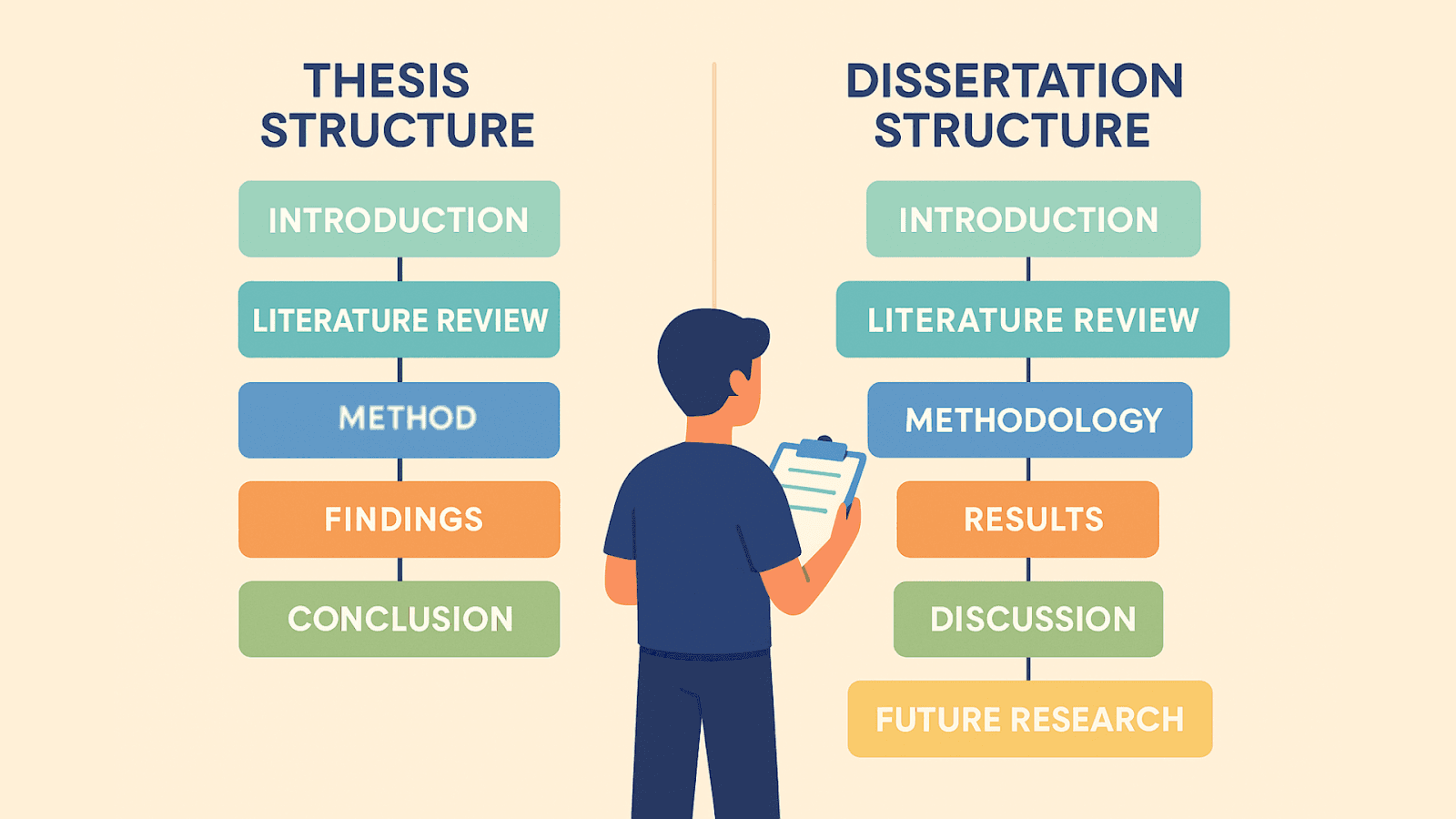
Tesi e dissertazioni possono condividere titoli di capitolo simili, ma non condividono lo stesso livello di complessità. Queste differenze tra formati diventano più chiare quando confronti come progetto, tesi e dissertazione gestiscono profondità, dati e tipo di contributo atteso.
Struttura della tesi
Una tesi può includere:
Introduzione
Revisione della letteratura
Metodo
Risultati
Discussione
Conclusione
Come funziona
Questa struttura supporta la sintesi. Aiuta gli studenti a dimostrare di comprendere ciò che è già noto. Se desideri una guida concreta alla sezione iniziale, consulta la nostra guida all’introduzione della tesi.
Struttura della dissertazione
Una dissertazione può includere:
Introduzione con enunciato del problema
Revisione della letteratura estesa
Metodologia dettagliata
Risultati (spesso più di un capitolo)
Discussione collegata alla teoria
Implicazioni
Conclusione e ricerche future
Come funziona
Questo modello supporta un contributo originale. Aiuta gli studenti a costruire un progetto degno di pubblicazione.
Aspettative della discussione finale: come cambia l’ultimo passaggio
Entrambi i progetti terminano con una discussione, ma tono e pressione sono diversi.
Discussione della tesi
La discussione della tesi:
è più breve
si concentra sulla tua interpretazione
verifica la tua comprensione
può essere più rilassata
La commissione vuole vedere chiarezza di pensiero, non risultati rivoluzionari.
Discussione della dissertazione
La discussione della dissertazione:
è più lunga
è più formale
mette alla prova la tua competenza specialistica
analizza le tue decisioni di ricerca
valuta il tuo contributo
I membri della commissione possono porre domande dettagliate su teoria, metodo e dati. Il tono assomiglia di più a un seminario professionale.
Esempi di domande che potresti sentire
Domanda nella discussione di tesi:
“Quali temi hai trovato più ricorrenti negli studi che hai esaminato?”
Domanda nella discussione di dissertazione:
“Quali limiti nel tuo metodo di campionamento possono influire sulla validità dei risultati?”
Differenze regionali: quando i termini sono invertiti
Il significato di ciascun termine cambia nel mondo, e questo confonde molti studenti.
Nord America
Di solito:
Tesi = Magistrale
Dissertazione = Dottorato
Regno Unito e parti d’Europa
Spesso è invertito:
Dissertazione = Magistrale
Tesi = Dottorato
Regioni Asia-Pacifico
L’uso varia:
Alcune seguono il modello statunitense
Alcune usano “tesi” per qualsiasi progetto importante
Alcune richiedono sia una relazione di progetto sia una tesi
Per questo le linee guida del programma sono sempre fondamentali.
Esempi chiari che mostrano la differenza
Esempi brevi rendono la differenza più facile da vedere.
Scienze dell’educazione
Esempio:
Tesi: Esaminare come gli insegnanti usano strumenti VR nelle lezioni.
Dissertazione: Progettare e testare un nuovo metodo didattico in VR.
Biologia
Esempio:
Tesi: Riassumere le ricerche pregresse sulla risposta delle piante alla siccità.
Dissertazione: Condurre esperimenti sui geni delle piante resistenti alla siccità.
Letteratura
Esempio:
Tesi: Confrontare il simbolismo nelle opere di due autori.
Dissertazione: Proporre un nuovo quadro di analisi del simbolismo tra culture diverse.
Business
Esempio:
Tesi: Studiare come le aziende utilizzano i team da remoto.
Dissertazione: Sviluppare un nuovo modello di leadership per i team da remoto.
Tabella di confronto: tesi vs dissertazione
Caratteristica | Tesi (Magistrale) | Dissertazione (Dottorato) |
Finalità | Dimostrare padronanza | Creare nuova conoscenza |
Tipo di ricerca | Basata sulla letteratura | Ricerca originale |
Ampiezza | Ristretta | Ampia |
Lunghezza | 40–80 pagine | 150–300+ pagine |
Discussione | Meno formale | Più rigorosa |
Tempo necessario | Mesi | Anni |
Contributo | Approfondimento | Innovazione |
Come scegliere il percorso giusto per te
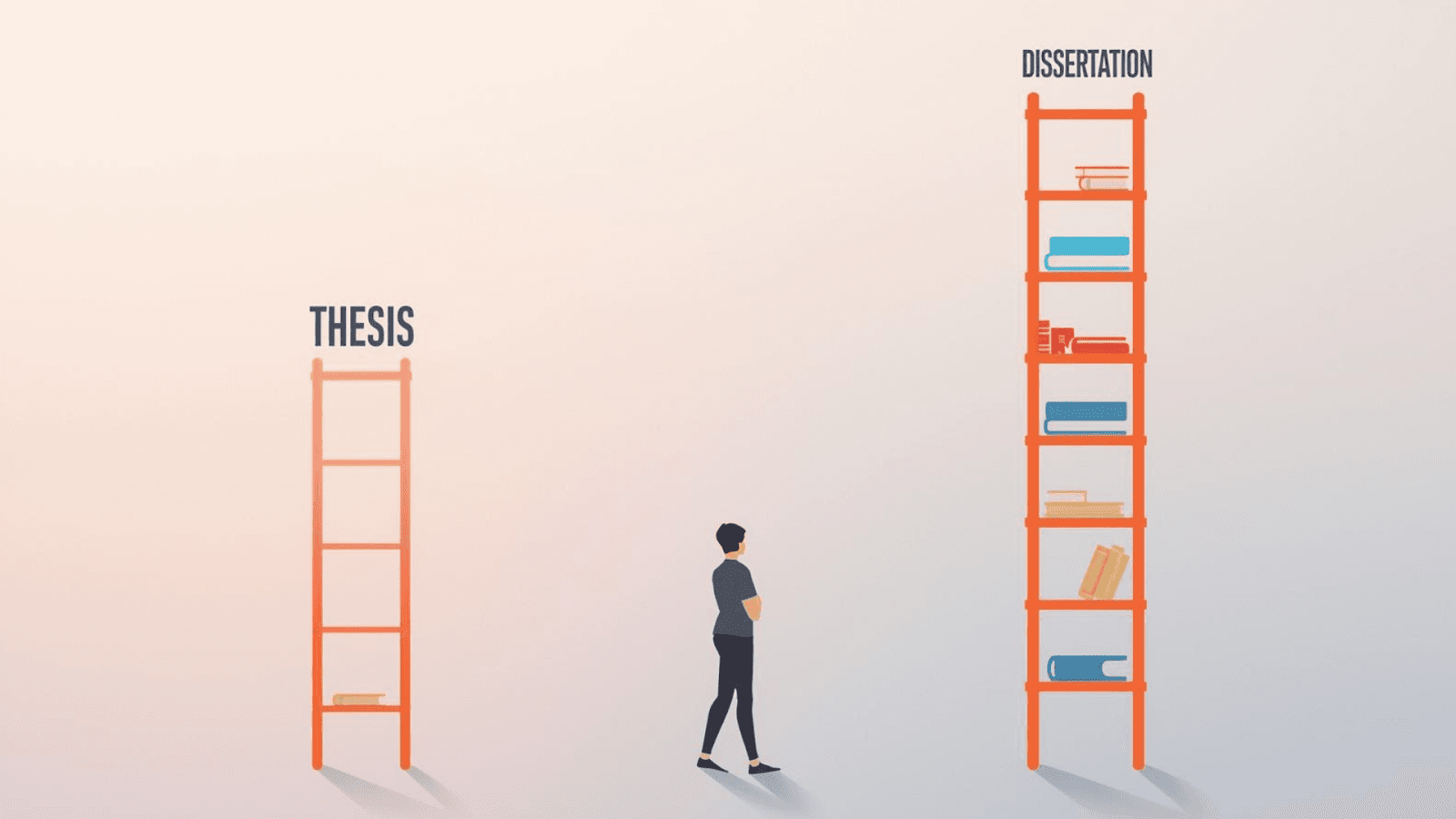
Scegliere tra tesi e dissertazione dipende spesso dal titolo di studio, ma anche i tuoi obiettivi contano.
Perché scegliere un percorso con tesi
Una tesi funziona bene se:
vuoi un progetto più breve
ti piace scrivere ma preferisci un ambito più contenuto
prevedi di lavorare nell’industria
vuoi prepararti a un eventuale dottorato in futuro
preferisci una ricerca strutturata
Esempio
Uno studente che desidera una carriera nelle politiche pubbliche può usare la tesi per affinare la scrittura senza impegnarsi in un percorso dottorale.
Perché scegliere un percorso di dissertazione
Una dissertazione è adatta se:
vuoi diventare ricercatore o professore
ti piace il lavoro approfondito e indipendente
vuoi esplorare un’unica idea per diversi anni
sei pronto per teoria e metodi avanzati
Esempio
Uno studente che intende lavorare in università o in un think tank trarrà beneficio dalla profondità di una dissertazione.
Orientarsi nel proprio percorso di ricerca post-laurea
Comprendere la differenza tra tesi e dissertazione ti aiuta a orientarti nel percorso post-laurea con maggiore sicurezza. Quando sai cosa richiede ciascun progetto, diventa più semplice scegliere la direzione, pianificare il carico di lavoro e definire un tema in linea con i tuoi obiettivi. Questa chiarezza ti offre una partenza più solida e un approccio più mirato.
<CTA title="Costruisci un solido problema di ricerca" description="Formula un enunciato chiaro e pronto per la ricerca che metta tesi o dissertazione sulla strada giusta" buttonLabel="Prova Jenni Gratis" link="https://app.jenni.ai/register" />
Mentre inizi a delineare i capitoli o a formulare un problema di ricerca, Jenni può supportarti in ogni fase. Con strumenti di IA usati in modo etico, che ti aiutano a scrivere con chiarezza e a restare organizzato, puoi portare avanti tesi o dissertazione con meno stress e più slancio.