Dwara
Nathan Auyeung
—
Ek Clear aur Effective Literature Review Outline Kaise Banayein

Nathan Auyeung
Senior Accountant EY mein
Bachelor ka Accounting mein Graduation kiya, aur ek Postgraduate Diploma of Accounting bhi poora kiya

Literature review banana mushkil kaam hai. Mushkil hissa likhna nahi hai; balki woh kaam hai jo usse pehle aata hai. Aap kitabon aur articles ke dher ko dekh rahe hote hain, yeh samajhne ki koshish kar rahe hote hain ki yeh sab aapas mein kaise jude hain, arguments mein kahan kami hai, aur ise saaf-saaf kaise samjhaya jaye. Yeh bohot zyada lagta hai.
Wahan par ek outline kaam aati hai. Yeh sirf topics ki list nahi hai. Ek acchi outline aapka plan of attack hai. Yeh aapko apne sources ko ek logical order mein arrange karne par majboor karti hai, jo aapko har study ko ek ke baad ek describe karne se rokti hai. Iske bajaye, yeh aapko ek real argument banane mein madad karti hai. Yeh guide aapko is tarah ki outline banane mein madad karegi, taaki aap confidence ke sath likhna shuru kar sakein.
<CTA title="Start Your Literature Review with a Clear Outline"description="Create a structured outline that helps you organize sources and identify research gaps before you start writing." buttonLabel="Try Jenni Free" link="https://app.jenni.ai/register"/>
Samjhein ki Literature Review Outline Kya Hai
Sabse pehle, aapko clear hona chahiye ki literature review kis liye hai. Yeh koi aam summary nahi hai.
Literature review koi bibliography nahi hai. Yeh sirf studies ko order mein list nahi karta, ya aapko disconnected summaries ki series nahi deta. Isko bina judge kiye sirf sources ko describe bhi nahi karna chahiye.
Ise jo karna chahiye woh hai research ke alag-alag pieces ko ek sath lana. Yeh results ko compare karta hai, wahan point out karta hai jahan experts disagree karte hain, yeh dikhata hai ki is field mein thinking kaise badli hai, aur un gaps ko dhundta hai jinhe abhi bharne ki zaroorat hai.
Aakhir mein, yeh explain karta hai ki aapka apna kaam us badi picture mein kahan fit hota hai, ek aisa approach jispar aam taur par classic research writing guides mein zor diya jata hai.
Aapki outline us poore process ka plan hai. Yeh woh document hai jise aap likhna shuru karne se pehle banate hain taaki structure ko samajh sakein. Yeh aapko key questions ke answer dene mein madad karta hai:
Introduction mein kya hona chahiye versus conclusion mein kya hona chahiye? Aap apne sources ko kaise group karenge - theme ke hisab se, use kiye gaye methods ke hisab se, ya chronological order mein? Aap apna critical analysis exactly kahan rakhenge?
Outline ko apne review ka skeleton samjhein. Agar woh structure sahi ho gaya, toh likhna bohot aasan ho jayega.
<ProTip title="🧠 Remember:"description="A literature review outline should organize ideas and debates rather than list studies one by one."/>
Apne Topic, Scope, aur Research Question ko Saaf Karein
Ek clear focus ke sath shuru karein. Agar aapka topic vague hai ya aapka scope bohot bada hai, toh aapki outline tik nahi payegi. Kuch bhi aur plan karne se pehle, in teen cheezon ko pakka kar lein:
Aapka main topic. Specific rahein. "Automation in urban hydroponics" ek acchi shuruat hai.
Aapka research question. Aap kya pata lagane ki ya argue karne ki koshish kar rahe hain?
Aapka scope. Clear boundaries set karein.
Aap kaunsa time period cover kar rahe hain? (e.g., 2010 ke baad ki studies)
Aap kis tarah ke sources include karenge? (e.g., empirical studies, theoretical papers)
Kya koi specific variables ya populations hain jin par aap focus kar rahe hain?
Dekhiye ki practice mein yeh clarity kaisi dikhti hai:
"Yeh review urban hydroponic farming mein automated nutrient delivery systems par research ko dekhegai. Yeh unki efficiency, sustainability, aur unhe use karne ke practical challenges par focus karta hai, jismein 2010 se lekar ab tak publish hui studies ka use kiya gaya hai."
Yeh sentence sirf aapke kaam ko define nahi karta, balki yeh aapke introduction ka core ban jata hai. Ek baar jab aapke paas yeh ho, toh aapko exactly pata hota hai ki aapki outline ko kis cheez ko support karna hai.
<ProTip title="📌 Tip:" description="If you can explain your topic scope in one clear sentence your outline is already on the right track."/>
Apne Sources ko Pehle Select aur Evaluate Karein
Apne sources ko padhne se pehle ek detailed outline banane ki koshish na karein. Yeh kaam nahi karega. Aapko pata hona chahiye ki literature kya kehta hai isse pehle ki aap ise organize kar sakein.
Ek accha rule of thumb yeh hai ki pehle material ka ek solid base ikattha karein. Ek standard research paper ke liye, yeh 20 se 30 key sources ho sakte hain. Thesis ya dissertation ke liye, aap lagbhag 40 se 60 sources ko dekh rahe honge.
Padhte waqt, structured tarike se notes banayein, un best practices ko follow karte hue jo academic research ke liye writing a literature review guide mein batayi gayi hain. Sirf highlight na karein; har source ke liye essentials ko capture karein:
Study kya pata lagane ki koshish kar rahi thi?
Isne kaunsi methodology use ki?
Main results kya the?
Iske strengths aur major weaknesses kya the?
Yeh aapke padhe gaye dusre studies se kaise connect ya contradict karta hai?
Bohot se log iske liye tools ka use karte hain, annotated bibliographies, ek simple spreadsheet, ya Zotero ya Mendeley jaise reference manager mein note-taking features. Abhi ke liye, aap paragraphs nahi likh rahe hain.
Aap patterns dundh rahe hain. Aise ideas ko dekhein jo baar-baar samne aa rahe hain, points jahan researchers clearly disagree karte hain, aur questions jinka abhi tak kisi ne answer nahi diya hai. Yeh patterns aapki outline ke main sections banenge.
<ProTip title="🗂️ Pro Tip:" description="Write notes that compare studies as you read to make outlining faster and more analytical later."/>
Sahi Organizational Structure Chunein
Aapki outline ke liye jo structure aap chunte hain woh sabse critical part hai, khaskar tab jab aap established evidence synthesis guidelines mein describe ki gayi expectations ke sath align kar rahe hon. Iska koi ek single answer nahi hai.
Sahi structure poori tarah is baat par depend karta hai ki aap kis cheez ke baare mein likh rahe hain aur aap kya achieve karna chahte hain, khaskar tab jab aap narrative, scoping, ya systematic reviews jaise approaches ke beech decide kar rahe hon, jaisa ki scoping review vs systematic review comparisons mein discuss kiya gaya hai.
Zyadatar reviews ek main approach ka use karte hain, kabhi-kabhi ek secondary approach ko mix karte hue.
Structure ka Type | Yeh Literature ko Kaise Organize Karta Hai | Sabse Accha Kab Use Hota Hai | Typical Disciplines | Main Strength |
Thematic | Studies ko key concepts ya recurring ideas ke hisab se group karta hai | Topic broad ho aur ongoing debates shamil hon | Social sciences, education, health, technology | Patterns aur contradictions ko highlight karta hai |
Chronological | Studies ko publication date ke hisab se order karta hai | Ideas ya policies ke evolution ko track karne ke liye | History, policy studies, emerging fields | Waqt ke sath development ko dikhata hai |
Methodological | Studies ko use kiye gaye research methods ke hisab se group karta hai | Methods findings ko strong tarike se influence karte hon | Psychology, health sciences, education | Method comparison aur critique ko enable karta hai |
Theoretical | Literature ko theories ya models ke hisab se organize karta hai | Field competing frameworks dwara driven ho | Philosophy, sociology, theoretical research | Conceptual differences ko clear karta hai |
1. Thematic (Sabse Common)
Yeh aapke sources ko ideas ke hisab se group karne ke baare mein hai, author ke hisab se nahi. Aap studies ko key concepts, recurring debates, ya specific variables ke aas-paas organize karte hain.
Ise kab use karein: Jab aapka topic broad ho, ya aapke field mein clear, ongoing arguments hon.
Common in: Social sciences, education, health, technology.
Example themes: Cost efficiency par studies, technical barriers ko discuss karne wale papers, environmental benefits par research.
2. Chronological
Yahan, aap research ko us order mein arrange karte hain jismein woh publish hui thi. Yeh structure dikhata hai ki kisi topic par thinking waqt ke sath kaise badli hai.
Ise kab use karein: Jab aap kisi naye ya tezi se badalte field ko dekh rahe hon, kisi policy ke development ko track kar rahe hon, ya historical view provide kar rahe hon.
Yeh kya dikhata hai: Yeh progress, opinion mein bade shifts, ya research ke turning points ko highlight karta hai.
3. Methodological
Yeh structure studies ko is basis par group karta hai ki research kaise ki gayi thi, yani use kiye gaye methods.
Ise kab use karein: Jab research methods khud discussion ka ek central part hon, ya jab chuni gayi methodology findings ko bohot influence karti ho.
Yeh kya karta hai: Yeh aapko alag-alag approaches ke strengths aur weaknesses ko compare karne deta hai.
Example groups: Ek section mein saari quantitative experiments, dusre mein qualitative interview studies, aur teesre mein mixed-methods papers.
4. Theoretical
Aap literature ko alag-alag schools of thought, models, ya theoretical frameworks ke aas-paas organize karte hain.
Ise kab use karein: Jab aapka field competing theories par built ho, ya aapka research highly conceptual ho.
Yeh kis liye hai: Yeh ek hi problem par lagaye gaye alag-alag theoretical lenses ko compare aur contrast karne ke liye useful hai.
<ProTip title="🔍 Note:" description="Most literature reviews use one main structure such as thematic and avoid mixing too many approaches."/>
Core Literature Review Outline Structure Taiyar Karein
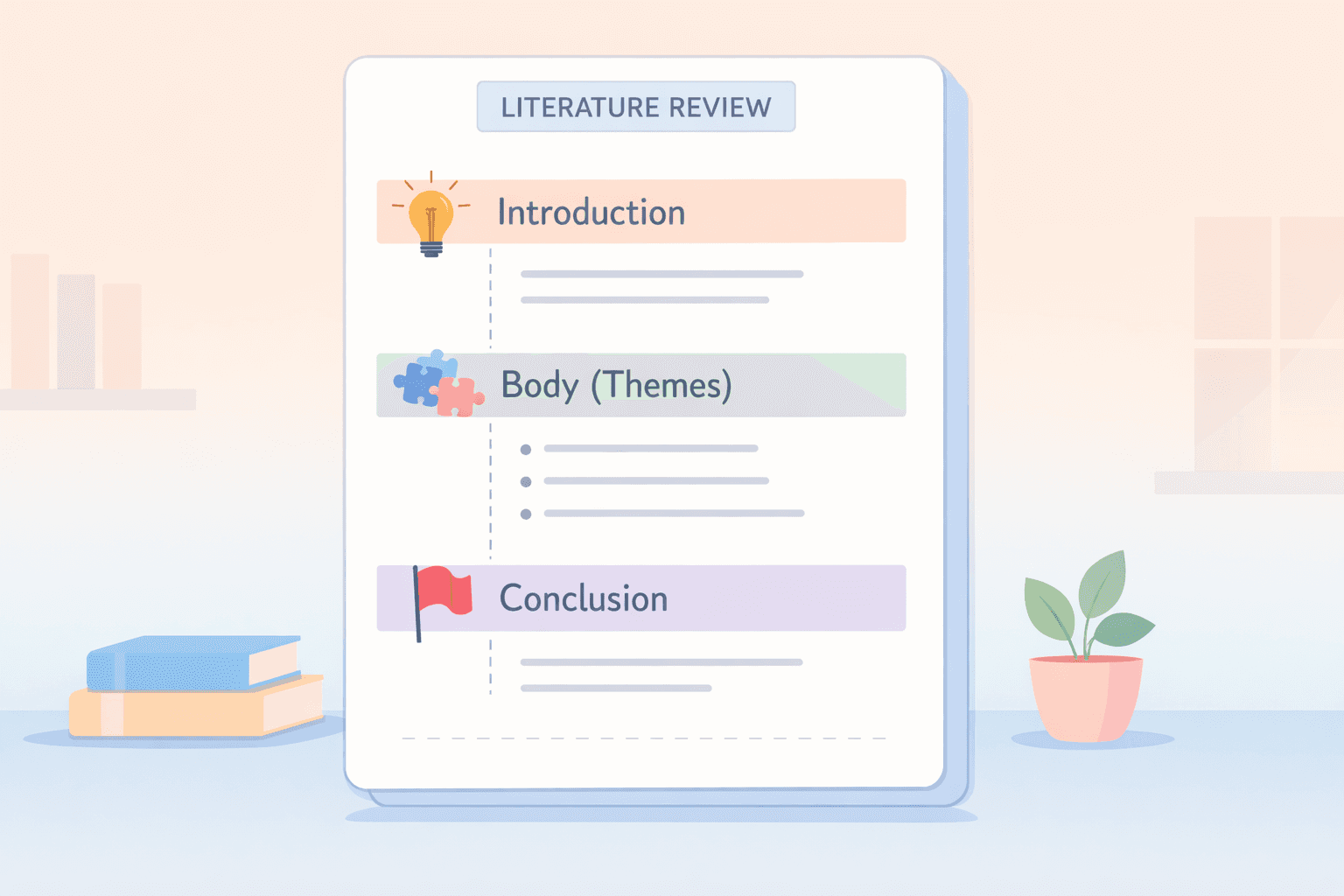
Ab aapko actual outline banani hai. Zyadatar academic reviews ek three-part structure follow karte hain.
I. Introduction (Review ka lagbhag 10-15%)
Is section ki aapki outline ko kuch key points cover karne ki zaroorat hai. Sabse pehle, explain karein ki aapka topic kyun matter karta hai aur kuch background dein. Phir, apna specific research question ya objective state karein.
Apne scope ke baare mein clear rahein, aap kya include kar rahe hain aur, utna hi importantly, aap kya chhod rahe hain. Aakhir mein, reader ko ek quick roadmap dein ki baki ka review kaise organize kiya gaya hai.
Introduction ke liye example outline:
I. Introduction
A. Urban food security ko address karne mein automation ka role.
B. Main research question: Urban hydroponics mein current automated nutrient systems kitne effective hain?
C. Scope: Peer-reviewed empirical studies 2010-2024 se.
D. Review ke thematic structure ka brief overview.
II. Body (Review ka lagbhag 70-80%)
Yeh core hai. Yahan har ek main section aapke chune gaye structure se ek major category ko represent karna chahiye - ek theme, ek time period, ek method, ya ek theory. Har section mein goal ek ke baad ek study ko summarize karna nahi hai. Balki synthesize karna hai.
Aap studies ko ek dusre ke sath conversation mein rakh rahe hain, point out kar rahe hain jahan woh agree karte hain, jahan woh clash karte hain, aur collectively kya miss karte hain. Critique aur direct comparison ko isme build karein.
Outline mein ek thematic body section ka example:
II. Body
A. Theme: Efficiency aur Yield Outcomes
1. Increased production rates par findings ka synthesis.
2. Long-term efficiency par contradictory data ka analysis.
3. Identified gap: Studies mein standardized efficiency metrics ki kami.
B. Theme: Implementation aur Cost Barriers
1. Common technical failure points ka synthesis.
2. Alag-alag regional contexts se economic analyses ka comparison.
3. Zyadatar cost-benefit studies mein short-term focus ka critique.
III. Conclusion (Review ka lagbhag 10-15%)
Yahan naye sources introduce na karein. Conclusion ke liye aapki outline ko body se nikal kar aaye sabse important points ko recap karna chahiye.
Un major gaps ya ongoing debates ko state karein jo aapke review ne uncover kiye hain. Explain karein ki is sabka aapke apne research project ke liye kya matlab hai. Aakhir mein, suggest karein ki future research ko kahan focus karna chahiye.
Conclusion ke liye example outline:
III. Conclusion
A. Benefits aur persistent technical challenges par consensus ki summary.
B. Primary research gap: Real-world, multi-year performance data.
C. Yeh findings kaise current study ki methodology ko inform karti hain.
D. System durability aur cost reduction par future research ke liye proposed directions.
Aise Notes Likhein Jo Synthesis Par Zor Dein
Ek common mistake yeh hai ki aise notes banana jo har source ko isolated tarike se describe karein, bajaye un synthesis techniques ko use karne ke jo aam taur par ek narrative literature review mein apply ki jati hain. Aapki outline ek disconnected list ban kar reh jayegi.
Iske bajaye, shuruat se hi sources ke beech relationships dikhane ke liye apne outline notes likhein. Aisi language ka use karein jo ideas ko connect kare.
Aise notes ke bajaye jo kehte hain:
"Zhang (2020) ne system efficiency ko examine kiya."
"Lee (2022) ne 15% yield increase paya."
Is tarah ke notes likhne ki koshish karein:
"2020-2023 ki multiple studies ek baseline efficiency improvement confirm karti hain (Zhang, Lee, Patel)."
"Halanki, yeh findings pre-2015 research ki early skepticism ke sath contrast karti hain (e.g., Miller, 2014)."
"Jabki zyadatar research commercial setups par focus karti hai, sirf do studies small-scale urban applications ko consider karti hain (Garcia, Ito)."
Is tarah likhna aapko plan karte waqt hi synthesize karne par majboor karta hai. Aap sirf sources ko catalog nahi kar rahe hain; aap pehle se hi apne review ke har section ke liye argument build kar rahe hain.
Jab aap full draft likhne jayenge, toh aapki outline mein pehle se hi woh critical connections honge jo aapko banane ki zaroorat hai.
<ProTip title="✍️ Writing Tip:" description="Using connecting language in your outline makes the final draft easier to write and revise."/>
Logical Flow aur Coherence Pakka Karein
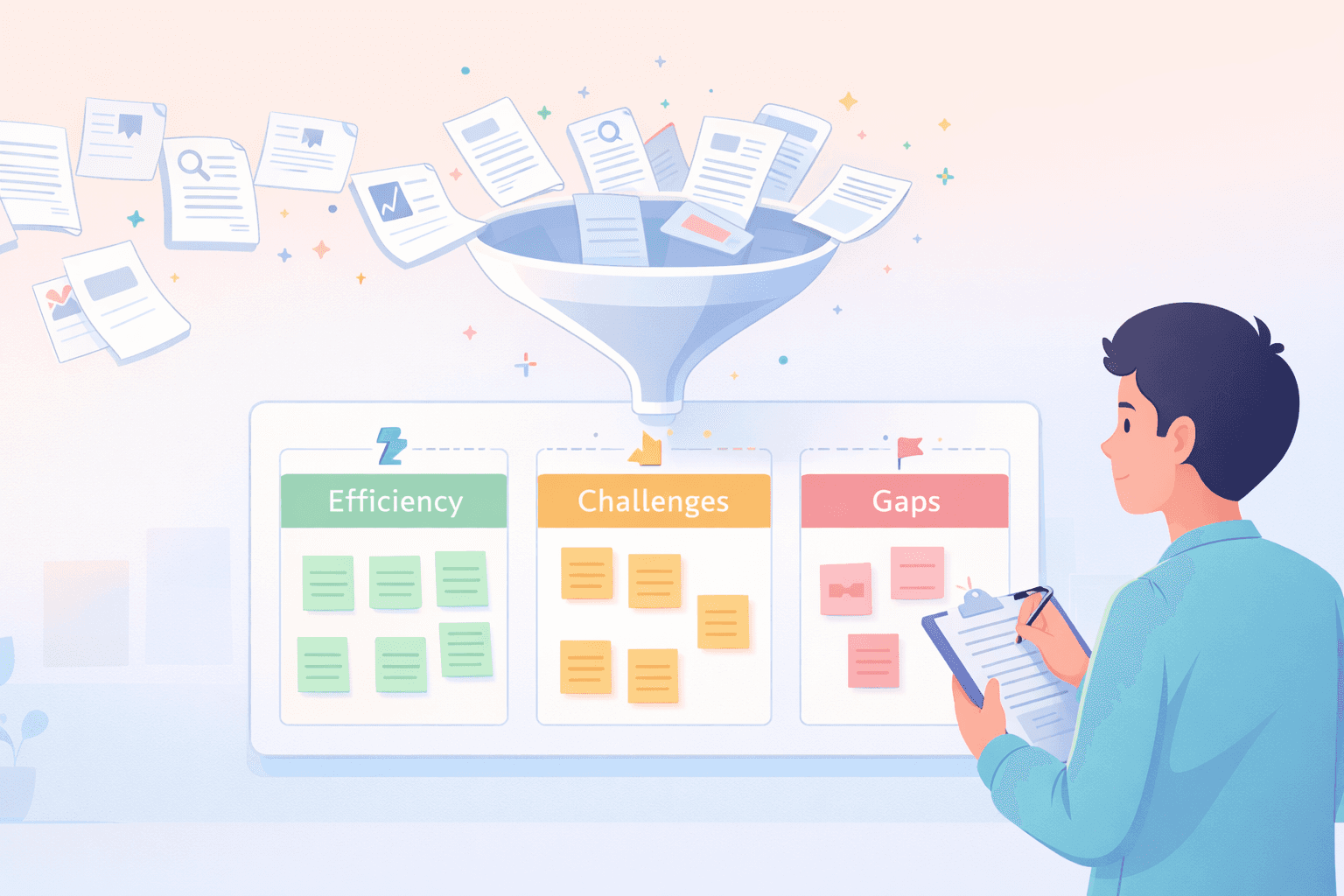
Apni outline ko ek argument ke blueprint ke roop mein samjhein, na ki sirf ek list. Iska shuru se aakhir tak ek logical flow hona chahiye.
Apni outline ko review karte waqt khud se kuch sawal puchein:
Kya har main section naturally agle section ki taraf le jata hai? Ek idea ka conclusion agle idea ke introduction ko set up karna chahiye.
Kya aap general, established concepts se specific, debated, ya novel points ki taraf badh rahe hain?
Kya aap sections ke beech implied transition dekh sakte hain? Connection outline stage par bhi clear hona chahiye.
Clarity ke liye formatting mein consistency bhi key hai. Ek standard hierarchy ka use karein:
Apne main sections (Introduction, Body, Conclusion) ke liye Roman numerals (I, II, III) ka use karein.
Apne sub-points ke liye letters (A, B, C) aur phir numbers (1, 2, 3) ka use karein.
Apni heading phrasing ko parallel rakhein. Agar ek sub-section noun phrase ("Nutrient delivery efficiency") ke sath shuru hota hai, toh us section ke dusre points bhi waise hi hone chahiye ("System reliability challenges," na ki "Discussing cost barriers").
Apni outline mein is flow aur structure ko sahi karne ka matlab hai ki actual writing process bohot kam tangled hoga. Aap agla kya likhna hai yeh sochne mein kam waqt bitayenge aur clear sentences likhne mein zyada.
Ek Outline Template ka Use Karein aur Ise Adapt Karein
Yahan ek seedha-saadha template hai jise aap ek starting point ke roop mein use kar sakte hain, thik waise hi jaise researchers sources ko organize aur compare karne ke liye literature review matrix template jaise tools ka use karte hain. Ise adapt karne ke liye design kiya gaya hai, exactly copy karne ke liye nahi.
I. Introduction
A. Topic ka context aur significance.
B. Specific research question ya central argument.
C. Scope ki definition (timeframe, source types, key boundaries).
D. Review ke organization ka brief description.
II. Body
A. Pehla Major Theme ya Category
1. Multiple sources se relevant findings ka synthesis.
2. In studies ko compare aur contrast karne wali critical discussion.
3. Is theme ke andar limitations ya unresolved questions ki identification.
B. Dusra Major Theme ya Category
1. Relevant findings ka synthesis.
2. Use kiye gaye alag-alag methodological ya theoretical approaches ka analysis.
3. Yahan main points of contention ya debate ki summary.
III. Conclusion
A. Body se nikal kar aaye sabse important conclusions ka concise restatement.
B. Aapke review dwara identify kiye gaye primary research gap ka clear statement.
C. Aapke apne project ke liye implications ka explanation aur future research ke liye suggested directions.
Yeh template ek skeleton hai. Aapko Section II mein themes ko apne specific topics ke hisab se rename karna chahiye, aur zaroorat ke hisab se sub-points add ya remove karne chahiye.
Ek chote paper mein sirf do main themes ho sakte hain; ek dissertation chapter mein paanch ya cheh ho sakte hain. Goal aapke synthesis ke liye ek clear, logical container provide karna hai.
Common Mistakes Jinse Bachna Hai
Yahan kuch common pitfalls hain jo aapki outline aur aapke final review ko kamzor kar sakte hain.
Padhne se pehle outline banana. Yeh sabse badi galti hai. Aap un ideas ko organize nahi kar sakte jinhe aapne abhi tak padha hi nahi hai.
Sources ko author ke hisab se list karna. Aapki outline concepts aur arguments ke aas-paas honi chahiye, na ki names ki list par. Studies ko unke content ke hisab se group karein, is basis par nahi ki unhe kisne likha hai.
Disagreement ko smooth over karna. Agar studies ek dusre ko contradict karti hain, toh yeh important hai. Aapki outline mein us debate ke liye ek jagah honi chahiye; jhootha consensus banane ke liye ise ignore na karein.
Introduction ko bohot bada hone dena. Intro stage set karta hai, lekin body main event hai. Apni outline ke introduction section ko focused aur proportional rakhein.
Outline ko ek boring kaam samajhna. Agar aap ise sirf ek bureaucratic step ke roop mein dekhte hain, toh yeh aapki madad nahi karega. Ek acchi outline ek thinking tool hai. Yeh woh jagah hai jahan aap apne argument ki logic par kaam karte hain.
Aakhir mein, ek useful outline aapke critical analysis ko shape lete hue dikhati hai. Yeh aapki thinking ka ek map hai, na ki sirf ek table of contents.
Ek Strong Literature Review Likhna Outline Se Shuru Hota Hai
Pehle apni literature review outline banana aapko process ke sabse mushkil hisse ko shuru mein hi tackle karne mein madad karta hai: yeh pata lagana ki sources ek dusre se kaise relate karte hain. Paragraphs draft karte waqt ideas ko organize karne ki koshish karne ke bajaye, aap ek clear structure ke sath shuruat karte hain jo aapke main themes, comparisons, aur research gaps ko define karta hai.
<CTA title="Turn Your Outline into a Strong Literature Review" description="Use Jenni to expand your outline into clear analytical sections while keeping structure and flow intact." buttonLabel="Try Jenni Free" link="https://app.jenni.ai/register"/>
Is outline ke saath, writing zyada focused aur intentional ho jati hai. Har section ka ek clear purpose hota hai, jisse simple summaries ya baar-baar restructuring ka risk kam ho jata hai. Ek well-designed literature review outline aapko analysis aur coherence par concentrate karne deta hai, jisse shuru se aakhir tak ek critical, well-organized, aur academically sound review banana bohot aasan ho jata hai.