Dwara
Nathan Auyeung
—
Ek achha research question kaise likhein jo aapke study design ko behtar banaye behtar

Nathan Auyeung
Senior Accountant EY mein
Bachelor ka Accounting mein Graduation kiya, aur ek Postgraduate Diploma of Accounting bhi poora kiya
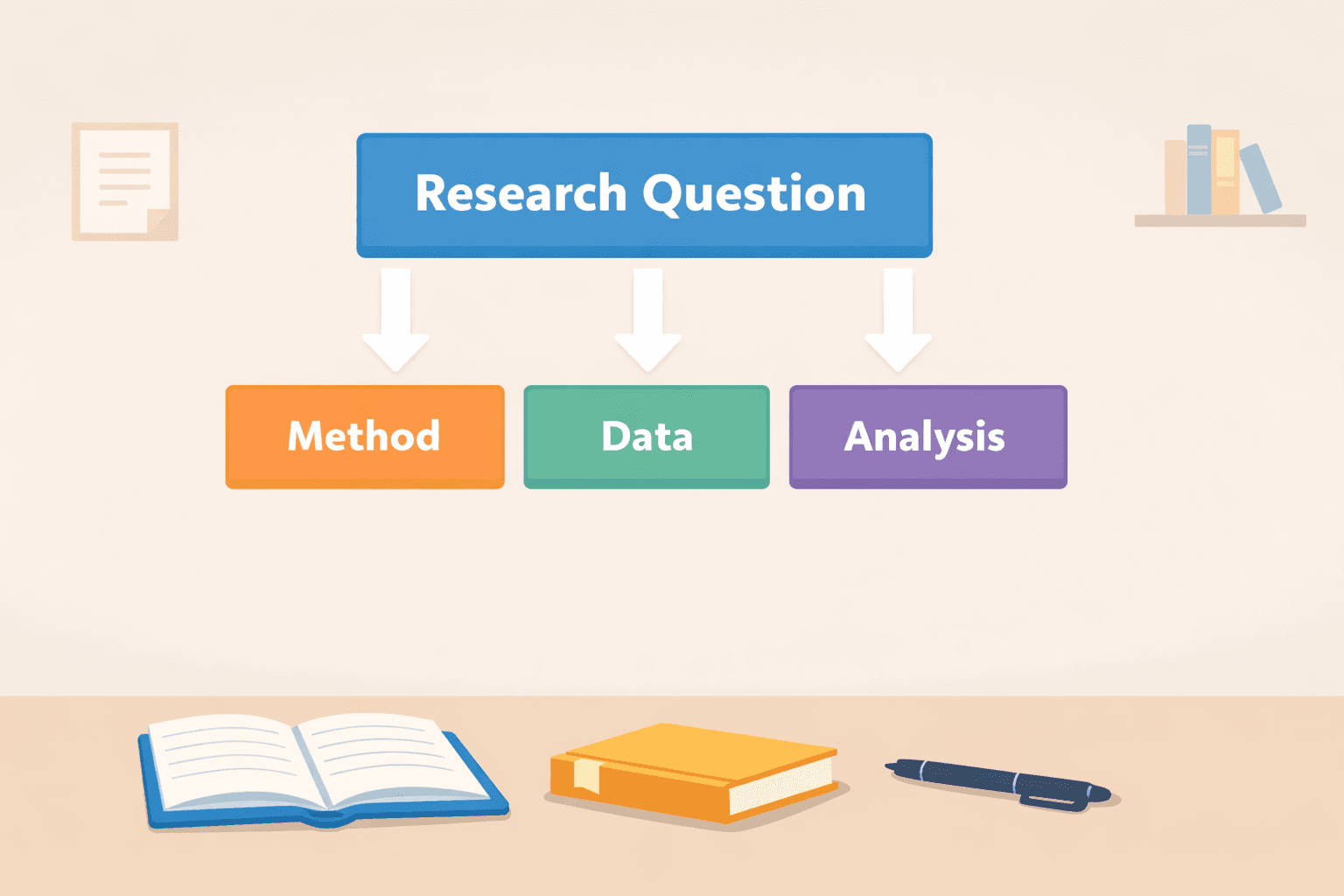
Ek strong research question aapke pure project ki buniyaad hota hai. Yeh tay karta hai ki aap kya study karenge aur kaise study karenge. Agar question clear nahi hai, toh aapke results kamzor honge. Ek accha question baaki ke kaam ko aasan bana deta hai.
Kai projects isliye fail ho jaate hain kyunki starting question acche se defined nahi hota. Ek focused, answerable question likhna seekhna kisi bhi student ya researcher ke liye ek critical skill hai. Isse sahi tareeqe se karne ka tareeqa yahan hai.
<CTA title="Build a Strong Research Question Faster" description="Turn broad ideas into focused and researchable questions in minutes. Jenni helps you clarify scope and variables with confidence." buttonLabel="Try Jenni Free" link="https://app.jenni.ai/register" />
Research Question Kya Hota Hai?
Ek research question woh specific cheez hai jise aapki study pata lagane ki koshish kar rahi hai. Iska clear aur answerable hona zaroori hai.
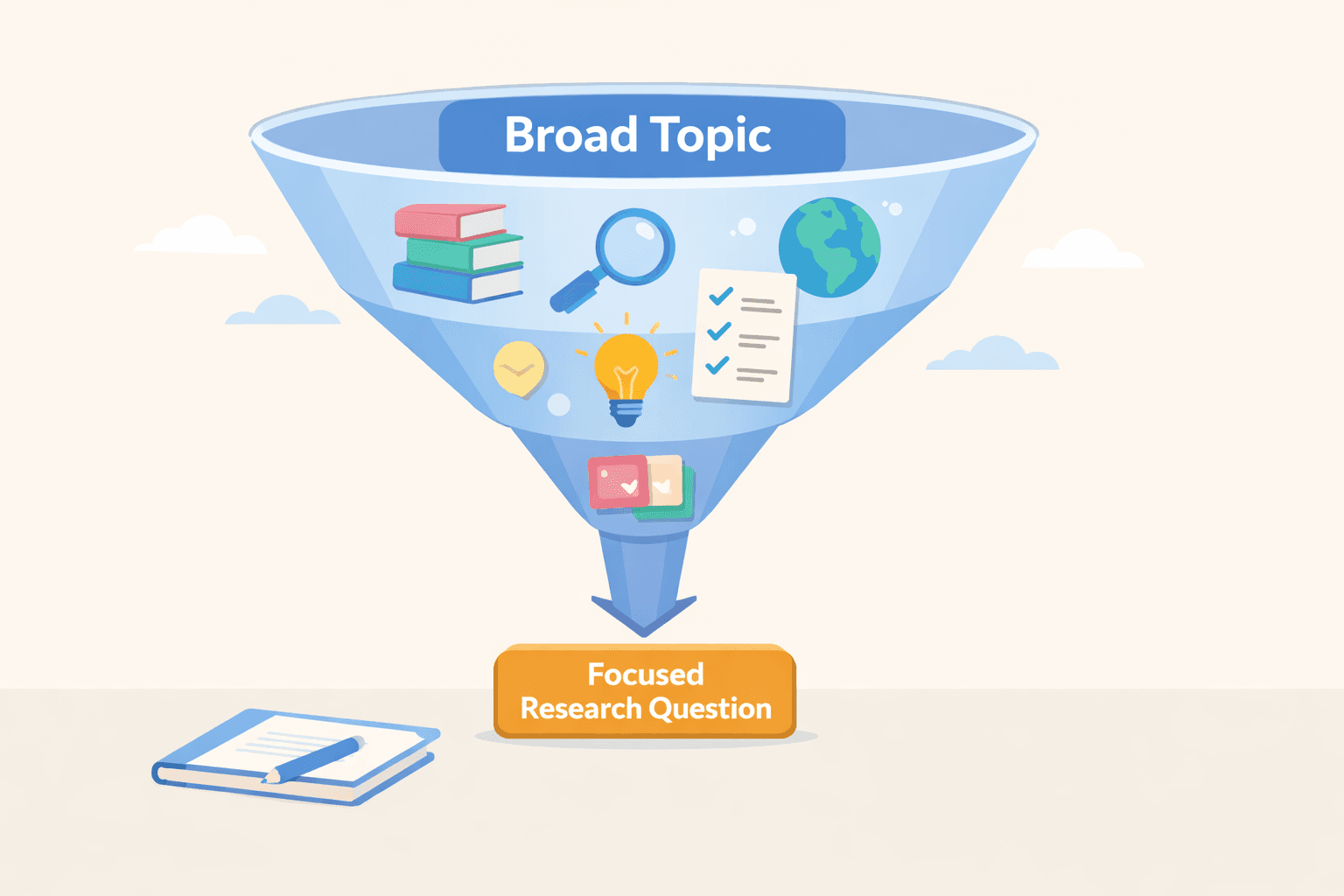
Yeh ek general topic ko ek precise query mein badal deta hai jise aap investigate kar sakte hain, jo academic inquiry ko guide karne waale research questions ka core banta hai.
Misaal ke taur par, "hydroponics" sirf ek topic hai. Yeh bahut broad hai. Ek asli research question kuch aisa hoga: "Nutrient solution ke pH ko badalna hydroponic setup mein tomato yield ko kaise affect karta hai?"
Yeh version aapko exactly batata hai ki kya measure kiya ja raha hai aur kis context mein.
Yeh ek hypothesis se bhi alag hai. Hypothesis jawab ke baare mein aapka ek educated guess hota hai. Research question woh hai jo aap sabse pehle pooch rahe hain.
Kuch types ki research mein, question open exploration ko guide karta hai. Dusron mein, yeh test karne ke liye ek specific prediction set karta hai.
<ProTip title="💡 Pro Tip:" description="If you can underline the variables and context in your question, it is usually specific enough for academic research." />
Ek Accha Research Question Likhna Kyun Itna Zaroori Hai
Aapka research question aapke pure project ki reedh ki haddi (spine) hai. Har choice jo aap karte hain, kya data collect karna hai, usse kaise analyze karna hai, sab isi ek question se nikalta hai.
Pehle, yeh focus create karta hai. Ek sharp question aapke kaam ko unrelated areas mein bhatakne se rokta hai. Iske bina, aap faaltu ki information collect karne lagenge aur aapka argument kamzor ho jayega.
Dusre, yeh aapka method tay karta hai. Question decide karta hai ki aapko surveys, lab experiments, ya in-depth interviews ki zaroorat hai, khaaskar jab aapka aim cause-and-effect relationships ko explain karna ho jo ki explanatory research ki khasiyat hai. Apne question ke liye galat method use karne se aapki findings unreliable ho jaati hain.
Tisre, yeh point ko define karta hai. Acchi research ko conversation mein kuch naya add karna chahiye. Ek strong question exactly dikhata hai ki aap kaunsa gap fill kar rahe hain ya kaunsi problem solve kar rahe hain.
Aakhir mein, yeh aapke intent ko communicate karta hai. Reviewers aur supervisors aapke kaam ko isi question se judge karte hain. Ek clear, well-justified question aapke project ko turant serious aur structured roop mein establish karta hai, jo shuruat se hi research paper ke introduction ko shape deta hai.
<ProTip title="📝 Note:" description="A strong research question should make your methodology feel obvious to the reader." />
Ek Strong Research Question ki Key Characteristics
Ek strong research question vague ya random nahi hota. Ek real study ke liye useful hone aur aapke field mein research paper ke working definition ke saath align hone ke liye iska specific standards ko poora karna zaroori hai.
Characteristic | Description |
Clear | Question samajhne mein easy ho aur vague ya confusing language se free ho. |
Focused | Yeh ek hi issue ya relationship par focus kare, bajay ek saath kai topics ke. |
Concise | Yeh bina kisi bina zaroorat ke words ke, direct aur precise tareeqe se bataya gaya ho. |
Complex | Isme simple yes ya no answer ke bajay analysis aur explanation ki zaroorat ho. |
Arguable | Iske answer par har koi universally agreed na ho aur isme interpretation ya debate ki gunjaish ho. |
Researchable | Isko answer karne ke liye realistically sufficient data ya evidence obtain kiya ja sake. |
Feasible | Question ko available time, resources, aur access ke andar investigate kiya ja sake. |
Specific | Key variables, population, aur context clearly defined hon. |
Relevant | Question existing research mein contribute kare ya kisi real-world problem ko address kare. |
<ProTip title="🔍 Reminder:" description="If your question feels impressive but impossible to test, it needs more narrowing." />
Research Question Develop Karne Ka Step-by-Step Process
Aap bas baith kar ek perfect question nahi likh dete. Yeh cheezon ko narrow down karne ka ek process hai, aur aapko ise kai baar rewrite karna pad sakta hai.
Step 1: Ek broad topic chune
Ek general area se shuru karein jo aapko interest kare aur aapke field ke mutabik ho. Yeh kisi class, aapke job, ya kisi aisi cheez se aa sakta hai jiske baare mein aapne padha ho.
Misaal ke taur par, shayad aap "urban farming" ya "online learning" ke baare mein curious hain. Abhi specific hone ki chinta mat karein.
Step 2: Kuch initial reading karein
Dekhein ki baaki researchers ne pehle se kya publish kiya hai. Aap yeh pata lagane ki koshish kar rahe hain ki kya kaam ho chuka hai aur, isse bhi zaroorat, kya nahi hua hai. Field ke arguments par aur kahan authors kehte hain ki aur kaam ki zaroorat hai, us par dhyan dein.
Aap pa sakte hain ki jabki kai studies online courses mein student grades ko dekhti hain, bahut kam studies yeh examine karti hain ki specific teaching tools participation ko kaise affect karte hain.
Step 3: Gap ya problem ko dhoondhein
Yeh aapke question ka core hai. Current knowledge mein se kaunsi specific cheez missing hai? Kya koi aisi population hai jise kisi ne study nahi kiya?
Koi aisa method jo kisi ne try nahi kiya? Koi aisa result jo samajh mein na aaye? Is problem ko clearly state karna aapki research ko exist karne ka ek reason deta hai.
Us gap ko ek formal research problem mein badalne ke liye, hamari guide to writing a research problem statement dekhein.
<ProTip title="🧠 Tip:" description="Pay close attention to limitation sections in journal articles to spot research gaps." />
Step 4: Apne focus ko drastically narrow karein
Apne broad topic ko lein aur use chota banayein. Exactly define karein ki aap kiske upar study kar rahe hain, kya measure kar rahe hain, aur yeh kahan ho raha hai taaki question ek clear research framework ke saath align ho sake jo study ko structure deta hai.
"Online learning" ke bajay, aap "community colleges mein first-year biology students ke liye assignment completion rates par weekly video feedback ke use" par focus kar sakte hain. Yeh aapke project ko possible banata hai.
Step 5: Kuch rough drafts likhein
Apne narrowed focus ko actual questions mein phrase karna shuru karein. "How," "Why," "What," ya "To what extent" jaise words ka use karein. Kuch alag-alag versions likhein.
Misaal ke taur par: "Weekly instructor video feedback assignment completion ko kaise affect karta hai?" ya "Written comments ke mukable students video feedback ke saath kyun engage hote hain?"
Step 6: Apne drafts ko test karein
Apne draft questions ko test karein. Kya aap sach mein is study ko apne time aur resources ke saath kar sakte hain? Kya answers pehle se hi sabko pata hain? Kya yeh ethical hai?
Kya yeh un sources par rely karta hai jinhe aap confidence ke saath academic research mein cite kar sakein, jaise ki kya Wikipedia ka use sahi hai? Kya yeh kisi ke liye matter karta hai? Agar koi question in checks mein fail ho jata hai, toh use revise karein ya drop karein.
Step 7: Final version ko polish karein
Wording ko tab tak refine karein jab tak ki yeh crystal clear na ho jaye aur us tarike ke saath align na ho jaye jise aap actually research karne waale hain. Final question ko directly aapke method ki taraf point karna chahiye.
Ek accha final version ho sakta hai: "Written comments ke mukable weekly instructor video feedback, first-year community college biology course mein on-time assignment submission ko kis hadd tak badhata hai?"
Research Questions ke Types aur Examples
Aap kis tarah ka question puchte hain, yeh is baat par depend karta hai ki aap kya pata lagana chahte hain aur underlying research paradigm kaisa hai jo knowledge approach ko shape de raha hai. Yahan teen common types diye gaye hain.
Type of Research Question | Purpose | Example |
Descriptive | Bina causes ko explain kiye characteristics, patterns, ya conditions ko describe karna | Naye digital grading platform ka use karte samay teachers kya challenges report karte hain? |
Explanatory | Causes ya mechanisms ko identify karke yeh explain karna ki kuch kyun ya kaise hota hai, jo explanatory research ke liye central hai jo underlying relationships ko samajhne par focus karta hai | Flipped classroom mein students problem-solving tasks mein behtar perform kyun karte hain? |
Evaluative | Kisi program ya intervention ki effectiveness, impact, ya value ko assess karna | Naye tutoring program ne kis hadd tak first-year retention rates ko improve kiya? |
<ProTip title="📌 Tip:" description="Match your question type to your research goal before choosing methods." />
Aapka Research Question Aapke Method ko Kaise Shape Deta Hai
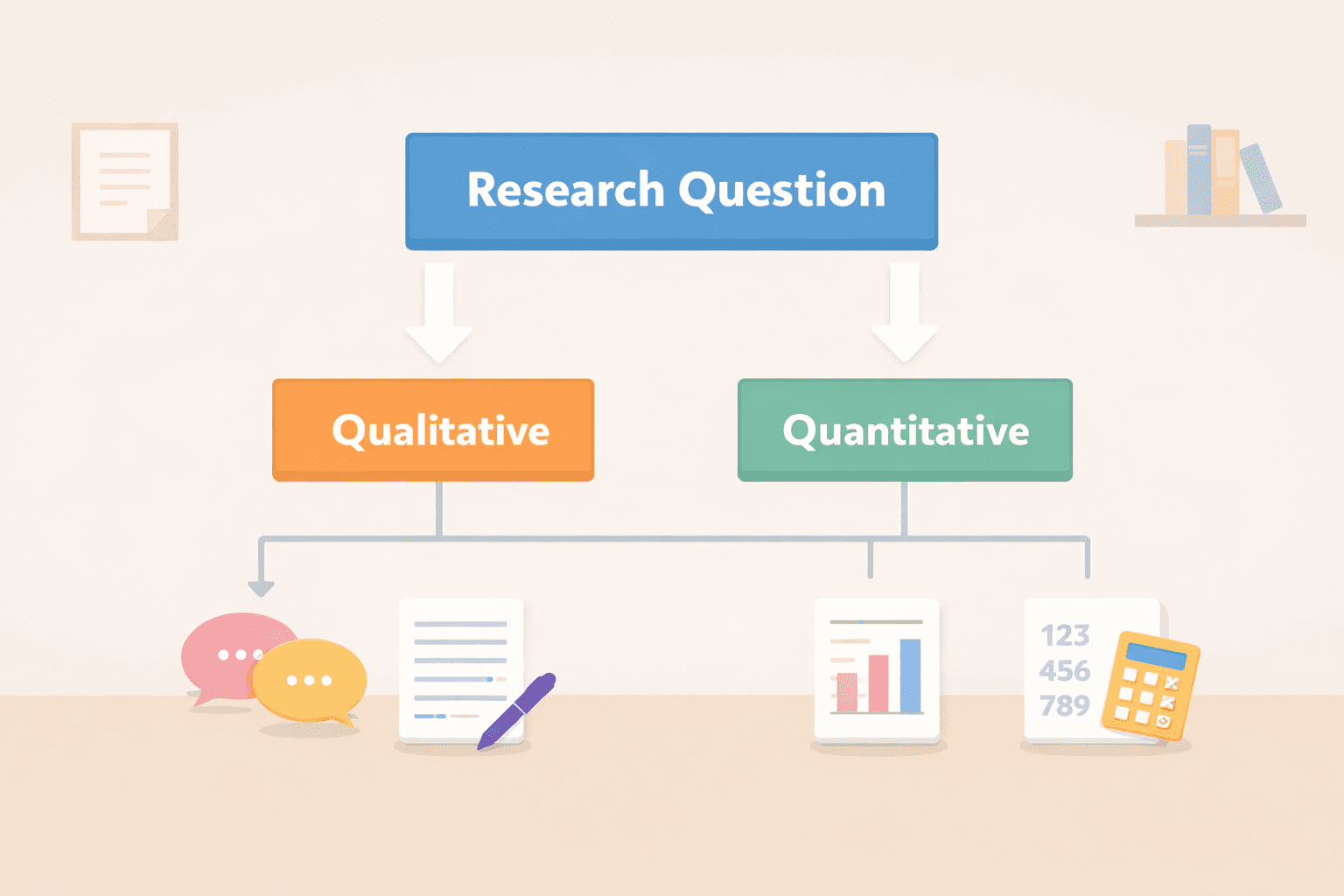
Aapke question aur aapke research design ka aapas mein fit hona zaroori hai. Agar nahi, toh aapka pura project bigad jayega.
Qualitative questions aamtaur par explore karte hain 'how' (kaise) ya 'why' (kyun). Yeh experiences, meanings, aur processes mein dive karte hain, jo ki quantitative research se alag hai jo measurement aur defined variables par focus karti hai. Inhe answer karne ke methods interviews, observations, ya texts analyze karne jaise hote hain.
Example question: "Freelance graphic designers creative burnout ko kaise experience aur manage karte hain?"
Quantitative questions cheezon ke beech measurable relationships dhoondhte hain. Yeh amounts, frequencies, ya cause-and-effect ke baare mein puchte hain, variables ko define karke jaise dependent outcomes aur independent factors. Inke methods surveys, experiments, ya numerical data analyze karna hote hain.
Example question: "Teenagers mein daily screen time aur self-reported sleep quality ke beech kya relationship hai?"
Mixed-methods questions dono approaches ko combine karte hain. Aapke paas ek core quantitative question ho sakta hai aur numbers ko explain karne ke liye ek follow-up qualitative question. Isme careful planning ki zaroorat hoti hai taaki dono parts logically connect ho sakein.
Example question set: "Ek mindfulness app kis hadd tak university students mein stress levels ko kam karta hai? Participants app ki exercises ke saath apne experience ko kaise describe karte hain?"
Is alignment ko sahi tarike se karna hi aapki study ko valid banata hai. Sahi question aapko batata hai ki kaunse tools use karne hain, aur sahi tools ka use karne se aapko credible answers milte hain.
Common Research Question Pitfalls
Ek kharab question likhna aasan hai. Yahan kuch sabse common traps diye gaye hain jo study ko kamzor karte hain.
Question bahut broad hona - "What causes climate change?" ya "How do we improve education?" jaise questions ko ek project mein answer karna impossible hai. Yeh topics hain, research questions nahi. Ek acche question ka narrow, specific scope hota hai jise aap actually manage kar sakein.
Isko 'yes' ya 'no' mein answer kiya ja sakta hai - "Does exercise improve mental health?" jaisa question analysis ko band kar deta hai. Yeh explanation ke bajay ek simple answer par le jata hai. Behtar questions deeper investigation ke liye how, why, ya to what extent ke saath shuru hote hain.
Isko answer karna impossible hai - Kabhi-kabhi koi question theory mein accha lagta hai par practice mein unanswerable hota hai. Shayad data exist nahi karta, aap population ko access nahi kar sakte, ya use study karna unethical hoga. Aapka question aapke actual resources aur constraints ke saath feasible hona chahiye.
Pehle draft par hi ruk jana - Aapka pehla attempt shayad hi kabhi best hota hai. Strong questions waqt ke saath refine hote hain. Aapko feedback ke basis par, existing research mein deeper dive karke, aur aap realistically kya achieve kar sakte hain us par honest look daal kar revise karne ki zaroorat hai. Apne initial idea par settle hone ka matlab aksar ek kamzor study par settle hona hota hai.
Apne Question ko Ek Clear Research Direction Mein Refine Karna
Aapke research project mein sab kuch us question par depend karta hai jisse aap shuruat karte hain. Ek clear, focused aur answerable question hi ek solid study ko ek messy study se alag karta hai.
<CTA title="Build a Strong Problem Statement" description="Create a precise and publication-ready statement in minutes with clarity and structure." buttonLabel="Try Jenni Free" link="https://app.jenni.ai/register" />
Yeh process koi jadu nahi hai. Aap ek broad interest chunte hain, padhte hain ki pehle se kya available hai, ek specific gap dhoondhte hain, aur phir apne focus ko narrow karte hain jab tak ki aapke paas aisa question na ho jise aap actually tackle kar sakein. Ek accha research question page par likhi ek line se badhkar hai. Yeh blueprint hai. Yeh dikhata hai ki aapne apne topic ke baare mein deeply socha hai aur yeh us kaam ke liye buniyaad banata hai jise log seriously lenge.