Dwara
Nathan Auyeung
—
Research Framework Kaise Banayein: Theory Se Methodology Tak

Nathan Auyeung
Senior Accountant EY mein
Bachelor ka Accounting mein Graduation kiya, aur ek Postgraduate Diploma of Accounting bhi poora kiya
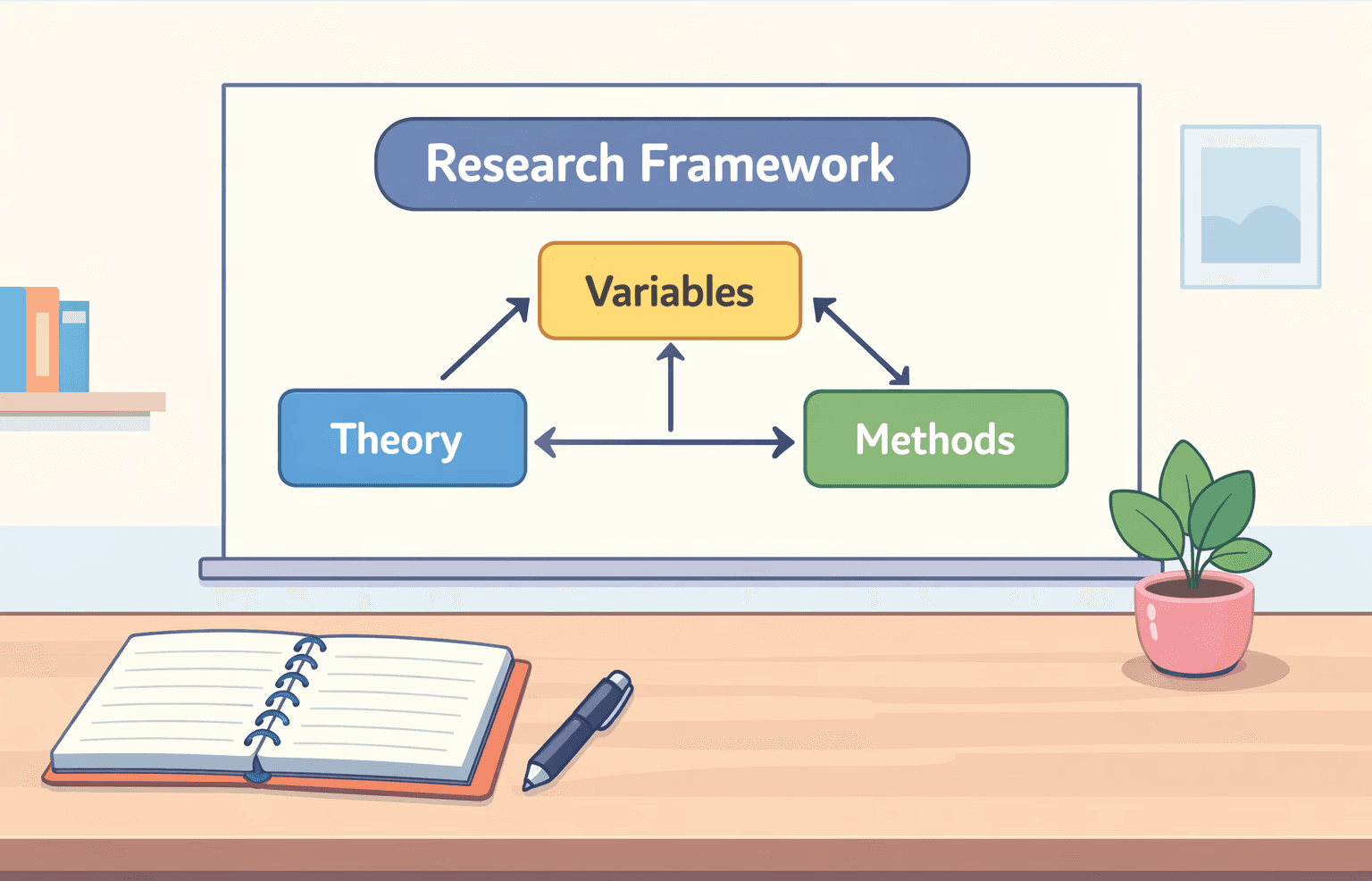
Agar aapke research ka koi solid framework nahi hai, toh yeh ret par khada hai. Yeh sirf koi academic jargon nahi hai; yeh woh practical structure hai jo aapki soch ko is baat se jodta hai ki aap use kaise prove karenge. Is step ko skip karein, aur aap aise interesting data ke sath reh jayenge jo bilkul galat sawal ka jawab deta hai.
Framework banana kisi box ko check karne jaisa nahi hai. Yeh aapki theory ko aapke methods ke sath align karne ka ek deliberate kaam hai. Neeche bataya gaya process aapko is essential scaffolding ko, pieces mein logically construct karne mein madad karne ke liye hai.
<CTA title="Build a Strong Problem Statement" description="Create a precise publication-ready research problem in minutes with no stress or fluff." buttonLabel="Try Jenni Free" link="https://app.jenni.ai/register" />
Research Framework Kya Hai?
Apne core par, ek research framework aapki study ka logical structure hota hai. Yeh dikhata hai ki aapke bade ideas, specific cheezein jinhe aap measure karenge (aapke variables), aap jo theory use kar rahe hain, aur aapke chune hue methods ke beech kya relationship hai.
Ise ek graphic ke roop mein kam aur us underlying wiring ke roop mein zyada sochein jo aapke research design aur aapke har ek decision ko power deti hai.
Practice mein, yeh structure chaar key kaam karta hai. Yeh aapki study ke precise focus ko define karta hai. Yeh justify karta hai ki aap kuch khaas variables ko kyun include kar rahe hain aur doosron ko kyun nahi.
Yeh layout karta hai ki aap un variables ke beech connections ko kaise test karne ka plan bana rahe hain. Finally, yeh ek saaf line draw karta hai is baare mein ki aapka research kya cover karega aur kya nahi. Ise sahi se karna hi ek vague research problem ko testable model mein badalta hai.
Iska poora point yeh ensure karna hai ki aapke objectives, aapke sawal, aur aapke hypotheses bas alag-alag na ghumte rahein, balki your methodology dwara directly aur logically serve kiye jayein.
<ProTip title="💡 Pro Tip:" description="Draft your research framework in plain language first. Clarity matters more than diagrams at the early stage." />
Research Framework Kyun Matter Karta Hai
Bahut saare research sirf isliye fail ho jate hain kyunki woh structurally kamzor hote hain. Topic badhiya ho sakta hai, lekin study khud ek mess hoti hai. Ek research framework aapke kaam ke har component ko align karke ise theek karta hai.
Iska importance kuch concrete functions par aakar rukta hai. Pehle, yeh conceptual clarity guarantee karta hai. Aapko apne constructs ko define karna hoga, yeh decide karna hoga ki aap unhe kaise measure karenge, aur apne terms ko pin down karna hoga. Yeh clarity tab zaroori hoti hai jab aap write research questions jo itne precise hon ki meaningful analysis aur interpretation ko guide kar sakein.
Dusra, yeh directly aapke research design ko mazboot banata hai. Variables kaise relate karte hain aur aapka kya assumption hai ki kis wajah se kya ho raha hai, iska map banakar aap data collection aur analysis ke liye sahi methods chun sakte hain. Yeh koi tukka nahi hai; yeh ek reasoned choice hai.
Tisra, yeh validity aur reliability ko behtar banata hai. Jab aapki theory, aapke variables, aur aapke methods logically connected hote hain, toh aapki findings par zyada bharosa kiya ja sakta hai. Aap sach mein wahi measure kar rahe hote hain jo aap claim karte hain.
Chautha, yeh poore process ko guide karta hai. Aapke pehle proposal se lekar final data run tak, framework aapka roadmap hai. Yeh wahi hai jisse check karke aap track par rehte hain aur tangents se bachte hain.
Finally, yeh credibility establish karta hai. Ek solid framework reviewers ko dikhata hai ki aapne is par achhe se socha hai. Yeh rigor, logical reasoning, aur theory par pakad ko darshata hai, jo serious academic work ke liye bare minimum hai.
<ProTip title="🧠 Remember:" description="If you cannot explain your framework verbally in one minute your study design is not clear enough yet." />
Research Frameworks Ke Types
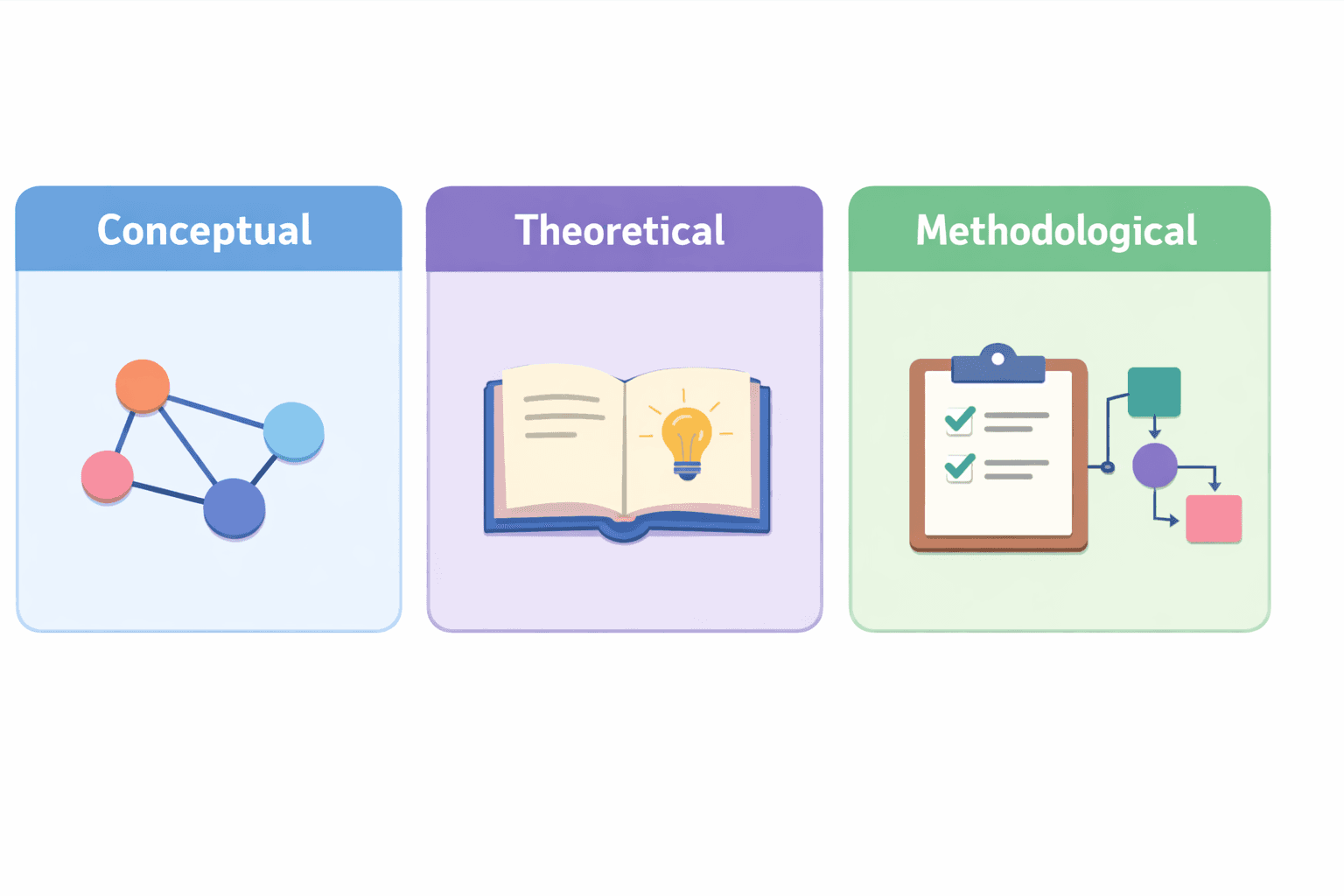
Research frameworks sabke liye ek jaise nahi hote. Aap kaunsa use karte hain yeh aapke field, aapke goals, aur aapke overall approach par depend karta hai.
Zyadatar studies in teen categories mein se ek mein fit hongi, ya inka mix use karengi, jo alag-alag research paradigms ko reflect karti hain jo yeh shape karti hain ki knowledge ko kaise define aur test kiya jata hai.
Conceptual Framework
Is type ka framework aapke main ideas ka map draw karne aur yeh dikhane ke baare mein hai ki woh kaise link ho sakte hain. Yeh business, education, ya health studies jaise fields mein common hai. Iska main purpose aapki study ke important pieces ko name dena hai.
Aap pata lagate hain ki potential causes kya hain (independent variables), outcomes kya hain (dependent variables), aur kya koi aur factors hain jo us cause-and-effect link ko explain ya change karte hain (yeh mediators ya moderators hain).
Aap fir in connections ko dikhate hain, aksar ek simple diagram ya chart ke sath. Iska poora point yeh hai ki aapne dusri studies mein jo kuch bhi pada hai use ek clear, logical picture mein organize karein.
Bhale hi aap koi badi, famous theory use na kar rahe hon, aapka map fir bhi past research ke real evidence par based hona chahiye.
For instance, agar aap research kar rahe hain ki kuch teams zyada productive kyun hoti hain, toh aapka map "manager's leadership style" se "team motivation" tak ek line dikha sakta hai, aur fir dusri line "team motivation" se "work completed" tak.
Theoretical Framework
Is type ke sath, aap apni poori study ko ek aisi theory par base karte hain jo pehle se exist karti hai aur jiska ek naam hai. Aap connections khud nahi banate; aap cheezein kyun hoti hain iska ek ready-made explanation borrow karte hain.
Aap is explanation ko psychology ya economics jaise fields ke kisi known theory se directly lete hain. Theory aapko cause aur effect ke peeche ka "why" deti hai jise aap dekh rahe hain, aur wahi "why" aapke predictions (aapke hypotheses) ko back karta hai.
Aap is approach ko tab chunenge jab aapka main aim kisi specific theory ko test karna ho—yeh dekhne ke liye ki kya yeh sahi baithti hai, isme badlav ki zaroorat hai, ya shayad yeh galat bhi ho sakti hai.
For example, agar aap is par research kar rahe hain ki kuch log recycle kyun karte hain aur kuch nahi, toh aap "theory of planned behavior." use kar sakte hain.
Yeh theory aapka starting point hogi, jo yeh suggest karegi ki recycling ke baare mein ek person ke apne beliefs *aur* woh kya sochte hain ki unke neighbors unse kya expect karte hain, wahi ultimately unke actions ko shape karte hain. Aapki study fir check karegi ki kya yeh sach mein sach hai.
Methodological Framework
Yeh framework poori tarah se "how" ke baare mein hai. Yeh bade ideas ya theories ke baare mein kam aur study karne ke step-by-step plan ke baare mein zyada care karta hai.
Yeh aapke research design ko plain detail mein lay out karta hai. Kya aap interviews (qualitative) use kar rahe hain, numbers ke sath surveys (quantitative), ya dono ka mix? Aap jin logon par study karenge ya jin documents ko dekhenge unhe kaise chunenge?
Aap apni information paane ke liye kaunse exact surveys, interview guides, ya sensors use karenge? Aur sabse important, ek baar data milne ke baad us poore data ka sense banane ke liye aapka specific plan kya hai?
Yeh type hands-on research ke liye vital hai, jaise kisi community program ko evaluate karna ya alag-alag fields mein kaam karna, jahan main concern answers paane ka practical "how-to" hota hai.
<ProTip title="📌 Note:" description="Many strong studies combine conceptual and methodological frameworks instead of choosing only one." />
One Research Framework Ke Key Components
Halanki ek framework ka look badal sakta hai, iske core parts hamesha same rehte hain. Unhe logically ek doosre se link hona chahiye.
Component | Framework Mein Purpose | Yeh Kis Key Question Ka Answer Deta Hai |
Research Problem | Ush specific issue ya gap ko define karta hai jise study address karti hai | Exactly kya missing ya unresolved hai? |
Research Objectives | Problem ko clear research aims mein translate karta hai | Study kya achieve karna chahti hai? |
Research Questions | Investigation ko answerable queries mein focus karta hai | Research kin sawalon ke jawab dega? |
Literature Review | Framework ko existing theory aur findings mein ground karta hai | Pehle se kya pata hai, aur gaps kahan hain? |
Study Variables | Identify karta hai ki kya measure aur analyze kiya jata hai | Study mein kin factors ko examine kiya jata hai? |
Variable Relationships | Explain karta hai ki variables ke kaise interact karne ki umeed hai | Variables aapas mein kaise connected hain? |
Scope and Boundaries | Study ke focus ko limit karta hai | Kya included hai aur kya excluded hai? |
Assumptions and Limitations | Conditions aur constraints ko state karta hai | Kin conditions ke under findings hold karti hain? |
<ProTip title="⚙️ Practical Tip:" description="Write your variable relationships as simple if then statements before turning them into hypotheses." />
Research Framework Banane Ka Step-by-Step Guide
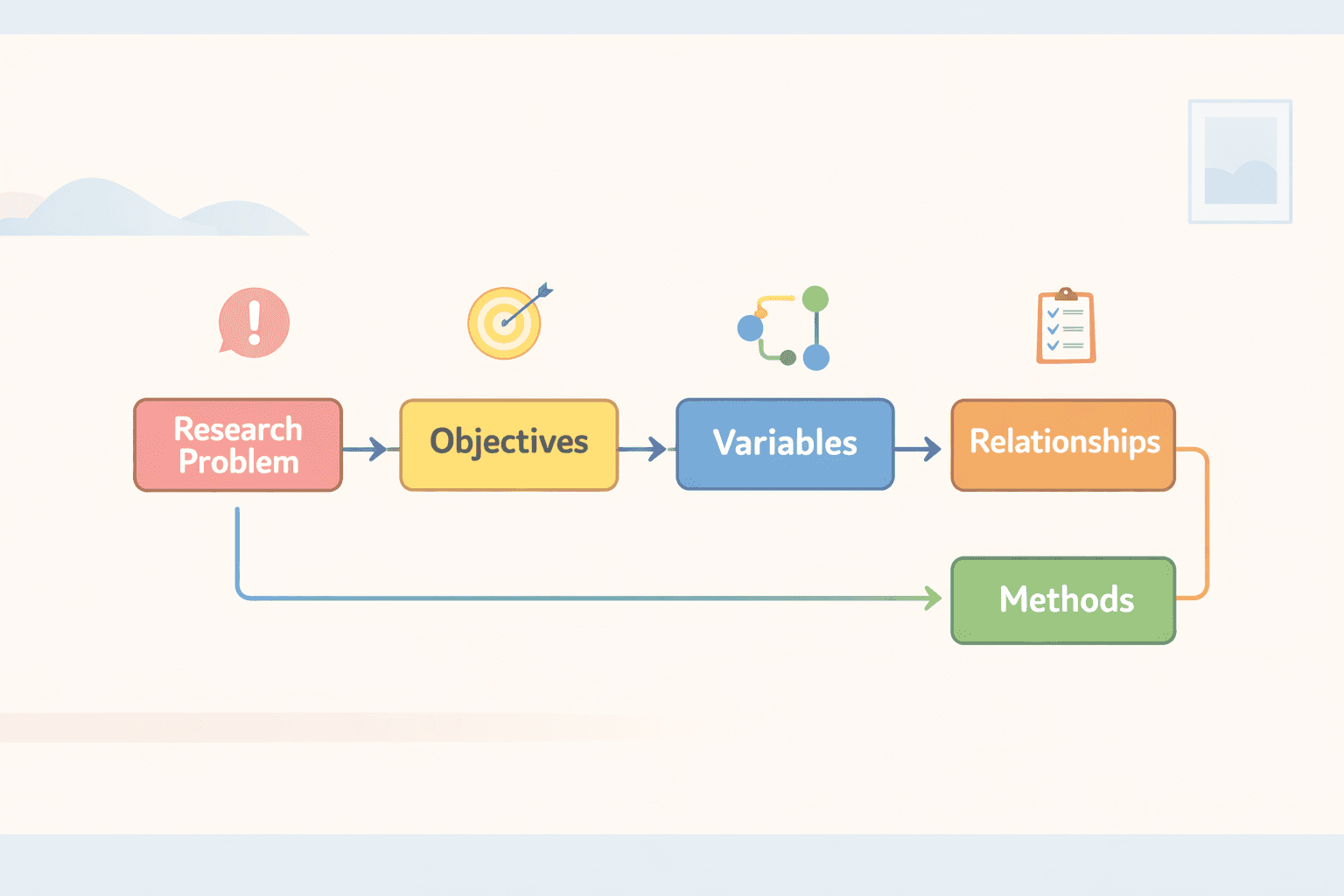
Step 1: Exact problem ko pinpoint karein
Apne research se bhare jaane wale specific gap ko articulate karke start karein. Ek achha problem statement pehle se jo maloom hai aur aapki study se jo pata chalega, uske beech ka saaf difference dikhata hai.
Broad, vague issues se bachein. Kisi aisi concrete cheez par focus karein jise aap sach mein investigate kar sakein.
Step 2: Apne objectives aur questions set karein
Problem define hone ke baad, outline karein ki aap kya achieve karna chahte hain, yani aapke research objectives. Inhe directly problem ko tackle karna chahiye. Fir, un objectives ko focused research questions mein badlein.
Har question specific hona chahiye, kuch aisa jiska answer aap research se de sakein, aur jo us data aur methods se match kare jise aap realistically use kar sakte hain. Aapka poora framework dikhayega ki aap unka answer kaise denge.
Step 3: Purpose ke sath literature ko review karein
Sirf past studies ki list na banayein. Apna framework banane ke liye aapko jis cheez ki zaroorat hai use dhoodhne ke liye ek targeted review conduct karein.
Dusre researchers jo common concepts use karte hain, unhone jo relationships establish kiye hain, koi theoretical models jo fit baithte hain, aur jo methods aapke field mein standard hain, unhe dekhein.
Is information ko synthesize karein taaki patterns ko spot kiya ja sake aur, isse bhi important, un gaps ko jo aapka apna kaam address karega.
Step 4: Apne variables ko name aur define karein
Har us factor ko identify karein jise aap study karenge. Har ek ko clearly define karein yeh state karke ki aap use kaise measure ya identify karenge (yeh operational definition hai).
Unhe categorize karein: Aapke independent variables (presumed causes) kya hain? Aapke dependent variables (outcomes) kya hain?
Kya koi mediators hain jo process ko explain karte hain, ya moderators jo kisi relationship ki strength ya direction ko change karte hain? Clear definitions baad mein confusion ko rokti hain.
Step 5: Map out karein ki variables kaise connect hote hain
Yeh core hai. Apne variables ke beech ke relationships ko specify karein. Kya ek dusre ka karan ban raha hai (causal)? Kya woh simply associated hain (correlational)?
Kya relationship sirf kuch conditions ke under hi hota hai (conditional)? Quantitative studies ke liye, yeh relationships aapke testable hypotheses banayenge.
Step 7: Apna research design chunein
Aapke framework ko aapke chune hue approach ke sath kaam karna chahiye. Decide karein ki kya aap qualitative research vs quantitative research use karenge, ya mixed methods.
Yeh decision lagbhag us har cheez ko dictate karta hai jo iske baad aati hai: aap data kaise collect karenge, kis par ya kya study karenge, aur results ko kaise analyze karenge. Yahan ek mismatch aapke poore project ko invalidate kar sakta hai.
Step 8: Apne methods, data, aur analysis ko line up karein
Check karein ki har practical choice aapke framework ko support karti hai. Kya participants ka aapka selected group (aapka sample) aapke objectives se fit baithta hai?
Kya aapke data collection tools sach mein un variables ko capture karenge jinhe aapne define kiya hai? Kya aapka planned analysis sach mein un relationships ko test kar sakta hai jo aapne propose kiye hain? Yeh step aapke conceptual plan ko ek executable plan mein badalta hai.
Step 9: Boundaries aur constraints ko state karein
Finally, apne kaam ke limits ke baare mein explicit rahein. Scope ko define karein, ki aap kya study kar rahe hain aur kya nahi. Apne assumptions ko state karein, un conditions ko jinhe aap given maan rahe hain.
Apne limitations ko acknowledge karein, woh real-world constraints jo aapki findings ko affect karenge. Yeh transparency aapke kaam ko kamzor nahi karti; ise credible banati hai.
Research Framework Ka Practical Example
Maan lijiye aap study kar rahe hain ki hydroponic crop yields itne inconsistent kyun hain. Aap main parts ko list karke start karenge. Woh cheezein jo aapko lagta hai ki difference bana rahi hain, chaliye unhe "cause" variables kehte hain, jaise pani kitna acidic hai aur lights kitni bright hain. Jo result aap track kar rahe hain, yaani "effect" variable, woh hai ki plants kitni tezi se grows karte hain.
Aap yeh bhi guess kar sakte hain ki aap jo system use kar rahe hain woh rules ko change karta hai; shayad ek deep water tank nutrient ki ek thin film se alag behave karta hai. Woh ek special kind ka variable hai jise moderator kehte hain.
Test run karne ka aapka plan—controlled room mein plants grow karna, exact measurements lena, aur numbers ko analyze karna—aapka method hai. Framework woh hai jo theory aur method ko ek sath badhta hai. Fir aap ek simple model draw karenge. Yeh pH aur light intensity se growth rate ki taraf point karne wale arrows dikhayega, jisme system type se ek line un arrows ko affect karegi.
Common Mistakes Jinse Bachna Hai
Bahut saare frameworks simple, avoidable mistakes ki wajah se collapse ho jate hain:
Unrelated variables ko add karna. Bahut saare factors ko include karna jo logically connected nahi hain, ek cluttered aur unfocused study banata hai.
Vague constructs use karna. Agar aap "engagement" ya "efficiency" jaise concept ko clearly define nahi kar sakte, toh aapka measurement plan kaam nahi karega.
Theory ko ignore karna. Existing literature ya theory mein basis ke bina, aapke proposed relationships sirf ek guess hain.
Framework aur method ko mismatch karna. Ek complex conceptual model design karna lekin ek simple survey chunna jo ise thik se test na kar sake.
Feasibility ko overlook karna. Aise variables propose karna jinhe aap measure nahi kar sakte ya aise relationships jinhe test karne ke liye aapke paas data ya access nahi hai.
Revise na karna. Pehle draft ko final treat karna. Ek achha framework refine hota hai jaise-jaise aap aur seekhte hain.
Yaad rakhein, aapka pehla draft kabhi bhi final version nahi hota. Ek framework ko revise aur tighten kiya jana chahiye jaise-jaise aap literature se aur apne assumptions ko test karne se aur seekhte hain.
<ProTip title="🚫 Avoid This:" description="Do not add variables just because data is available. Every variable must earn its place in the framework." />
Framework Ko Refine Aur Validate Karna
Apne framework ko ek final, polished product mat sochein. Yeh ek working blueprint ki tarah hai. Ek baar jab aap apna data gather karna aur results ko dekhna shuru karte hain, toh aapko ise badalne ki zaroorat ho sakti hai.
Shayad aapko realize hoga ki aapka ek term poorly defined tha, ya koi connection jiske baare mein aap sure the woh numbers mein hai hi nahi.
Apne advisors ya peers se regularly baat karein. Unhe apna framework dikhein. Woh aapke logic mein holes dekh sakte hain jo aapne miss kar diye. Woh puchenge ki kya aapka plan sach mein doable hai. Woh demand karenge ki aap ise aur thorough banayein.
Feedback lene aur changes karne ka yeh back-and-forth iska matlab yeh nahi hai ki aapne koi mistake ki hai. Yeh iska opposite hai, yeh is baare mein hai ki aap step by step apni poori study ko kaise strong banate hain, aur yahi aapki final findings ko believable banata hai.
Ek Coherent Framework Ke Aas-Paas Apni Study Ko Structure Karna
Ek research framework sirf ek aur box nahi hai jise tick karna hai. Yeh aapke kaam ka sentral piece hai jo decide karta hai ki kya aapki study ka koi sense hai, kya yeh scrutiny ke samne khadi reh sakti hai, aur kya yeh sach mein un sawalon ke jawab de sakti hai jo aap pooch rahe hain.
<CTA title="Turn Your Framework Into a Clear Research Plan" description="Apply what you learned by building a structured framework faster with guided academic writing support." buttonLabel="Try Jenni Free" link="https://app.jenni.ai/register" />
Framework aapko zaroori kaam karne par majboor karta hai. Aapko apni problem ko clearly define karna hota hai. Yeh strict process hi hai jo thode se interesting ideas ko ek solid, believable study mein badalta hai. Framework banana seekhna, apne dil mein, ek trustworthy bridge banana seekhna hai.