Dwara
Justin Wong
—
Literature Review ke liye Sources ko Kaise Organize Karein: Clear Methods Jo Kaam Karte Hain

Justin Wong
Vikas Prabhari
Graduated kiya Bachelor's me Global Business & Digital Arts, Minor me Entrepreneurship
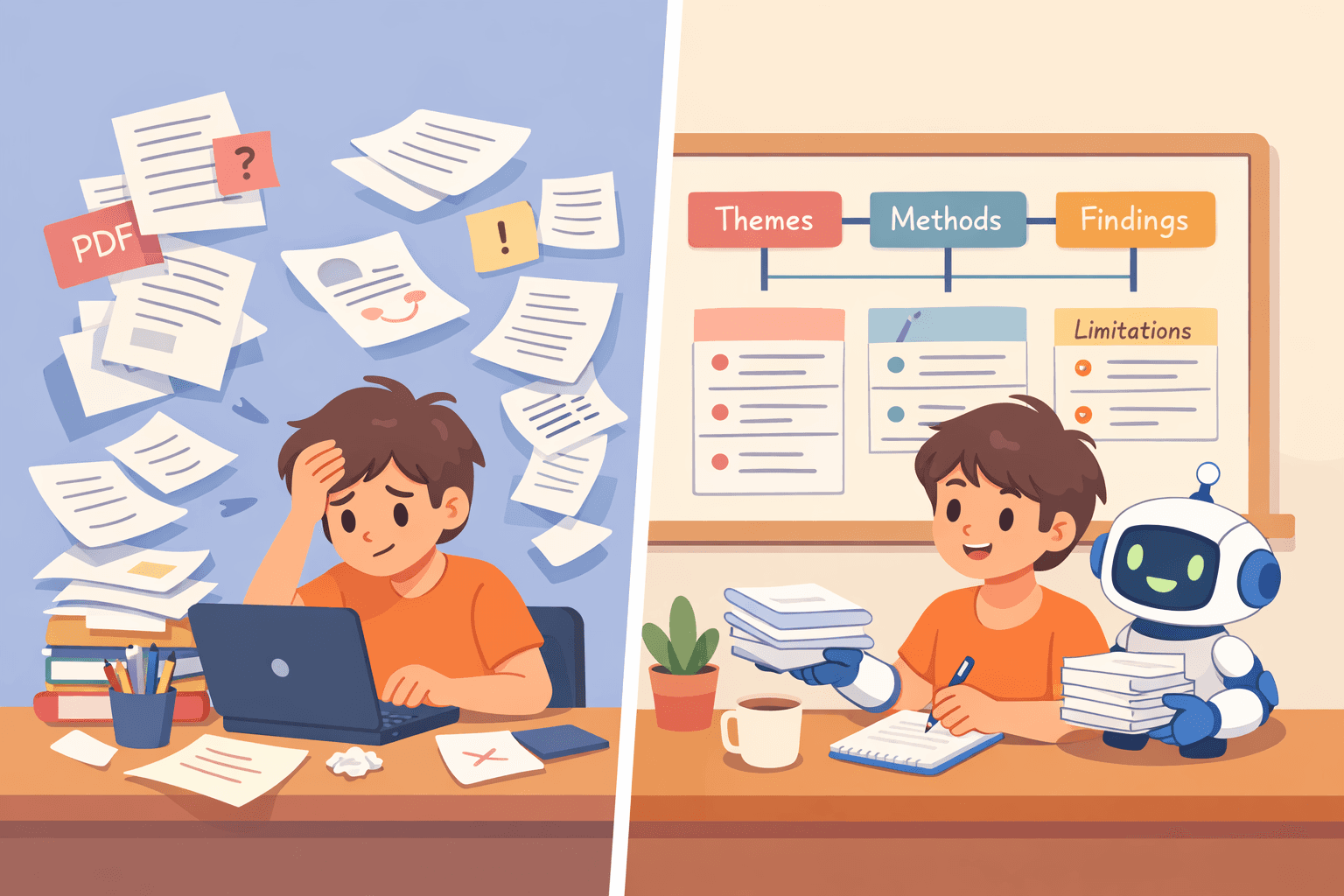
Ek disorganized lit review frustrating hoti hai. Aapke paas saare pieces hote hain, par woh aapas mein fit nahi hote. Asli problem yeh nahi hai ki aap kitna hard work kar rahe hain, balki problem method mein hai.
Yeh guide aapko ek practical system deta hai apne sources ko sort karne, apna focus define karne, aur studies ke beech connections build karne ka. Kya aap un PDFs ke dher ko ek coherent story mein badalna chahte hain? Kaise karna hai, yeh dekhne ke liye aage padhein.
<CTA title="Organize Your Literature Without Overwhelm" description="Turn scattered research into structured insights with guided workflows and smart prompts." buttonLabel="Try Jenni Free" link="https://app.jenni.ai/register" />
Organized Sources Asal Mein Kaise Dikhte Hain
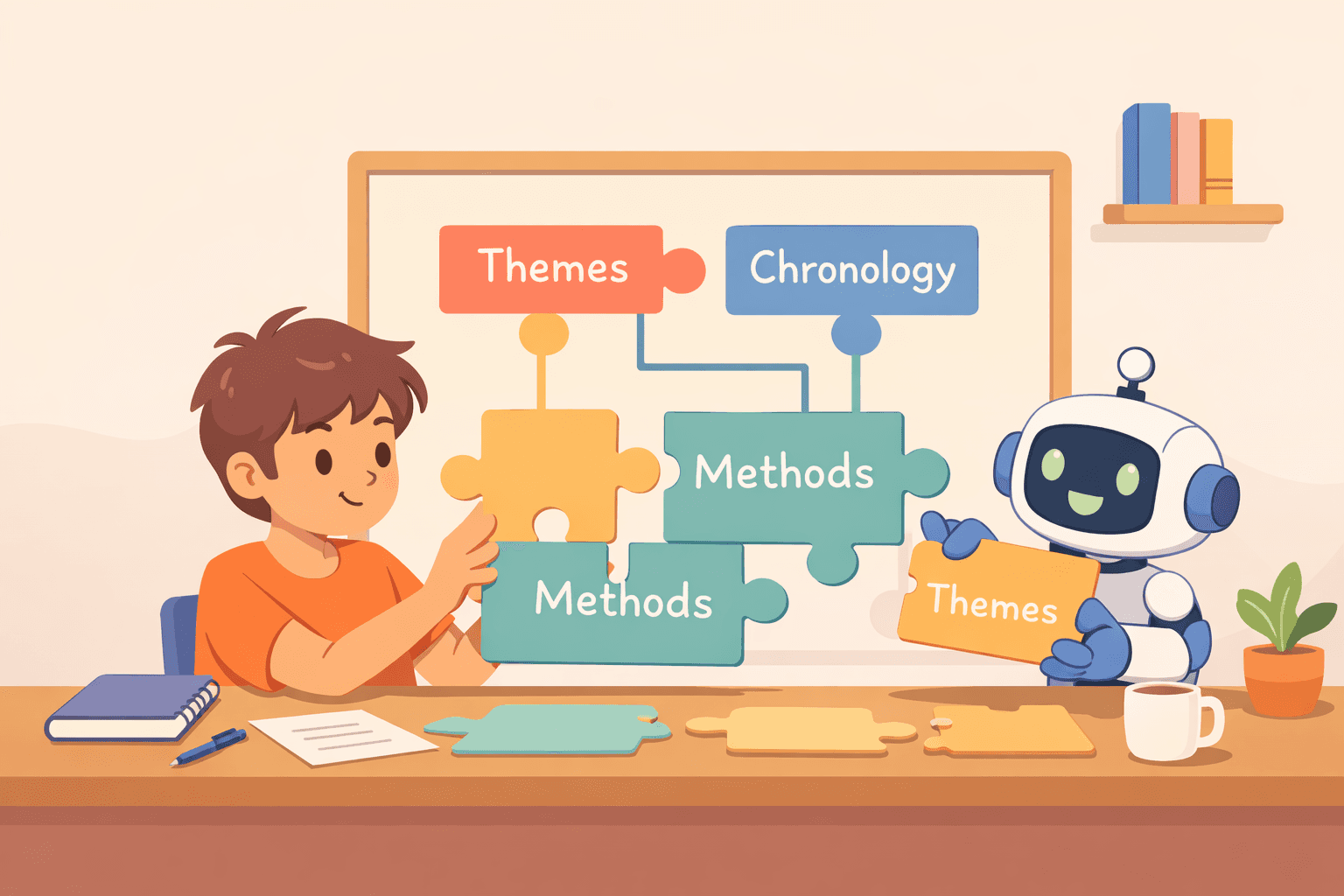
Organized sources ko tidy folders ki tarah nahi, balki ek working system ki tarah sochein. Yeh ek puzzle ke bikhre hue pieces ke box aur picture ke edges ko bante hue dekhne ke beech ka farq hai.
Ek accha system aapko asal kaam karne deta hai: alag-alag studies ke beech trends spot karna, yeh notice karna ki findings kahan ek dusre ko contradict karti hain, research kaise ki gayi thi isko compare karna, aur bina baar-baar peeche hate apna argument build karna.
Asli maqsad sirf information collect karne se aage badhkar usko sahi mein samajhna hai.
Step 1: Sources Collect Karne Se Pehle Apna Scope Define Karein
Sabse common mistake bina clear boundary ke research mein diving karna hai. Aapke paas thode-bohot related papers ka ek pahad khada ho jata hai aur koi direction nahi hoti.
In teen cheezon ko pehle lock karke shuru karein:
Aapka central research question.
Main themes ya variables jinhe aap track kar rahe hain.
Concrete inclusion criteria, jaise publication date range ya study methodology.
For instance, bikhre hue topic "social media and mental health" ke bajaye, ek defined scope yeh hoga: "university students mein anxiety levels par short-form video content ka impact, 2020-2025."
Yeh turant dusre platforms, age groups, ya time periods ki studies ko filter out kar deta hai.
Ek quick filtering habit: Kisi bhi PDF ko save karne se pehle, apne aap se poochein: Kya yeh directly mere question ko address karta hai? Kya yeh kisi credible source se hai aur kaafi recent hai? Kya yeh ek naya perspective add karta hai?
Agar inme se kisi ka bhi answer 'no' hai, toh aage badhein. Yeh ek step aapko overload se bachata hai. Agar aap unsure hain ki is stage ko properly frame kaise kiya jaye, toh how to write a literature review ko review karne se aapko apna scope sharpen karne aur early stage par unnecessary sources se bachne mein madad mil sakti hai.
<ProTip title="💡 Pro Tip:" description="Focus on quality over quantity. A strong review often uses 40 to 80 well chosen sources." />
Step 2: Ek Aisa Organization Method Chunein Jo Aapke Topic Par Fit Ho
Aap ek saath 50 papers ko analyze nahi kar sakte. Aapko unhe group karne ke liye ek method ki zaroorat hai, aur yeh choice directly shape karegi ki aap baad mein apna review kaise likhte hain.
Yahan sabse common approaches diye gaye hain:
Method | Best For | Example |
Thematic | Patterns aur topics find karne ke liye | Social media studies ko anxiety, addiction, ya body image ke hisab se group karna. |
Chronological | Yeh dikhane ke liye ki ideas waqt ke saath kaise badle | Kisi bade event ya policy change se pehle aur baad ki research ko dekhna. |
Methodological | Studies kaise ki gayin isko compare karne ke liye | Survey-based research ko experimental lab studies se alag karna. |
Conceptual | Theories ke aas-paas ek argument build karne ke liye | Papers ko foundational ideas ke hisab se organize karna, jaise cognitive load theory. |
Thematic grouping sabse common hai. Agar aapka topic online learning hai, toh aap papers ko "student engagement," "academic performance," aur "technology access" jaise buckets mein sort karenge. Har bucket aapki writing ka ek section ban jata hai.
Chronological order tab design mein aata hai jab timeline khud important ho, jaise yeh dikhana ki kisi virus ki understanding kaise evolve hui, ya new technology ke saath teaching methods kaise badle.
Methodological sorting research quality ko critique karne ke liye useful hai. Saare qualitative case studies ko ek group mein aur large-scale data analyses ko dusre group mein rakhne se aap unke alag-alag strengths aur blind spots ko compare kar sakte hain.
Conceptual organization theory-driven work ke liye hai. Aap studies ko unke core model ya framework ke basis par cluster karenge, jo yeh trace karne mein madad karta hai ki literature mein ek theoretical debate kaise chala hai.
Agar aapka review zyada interpretive ya discussion-based hai, toh narrative literature review ke structure ko samajhna bhi aapko sources ko group karne ka ek behtar tareeqa chunne mein madad kar sakta hai.
Key yeh hai ki aap ek primary method chunein jo aapke question par fit ho, aur consistency ke liye us par tike rahein.
<ProTip title="📌 Reminder:" description="Start with one main method. You can layer additional methods later." />
Step 3: Ek Synthesis Matrix Build Karein (Aapka Central System)
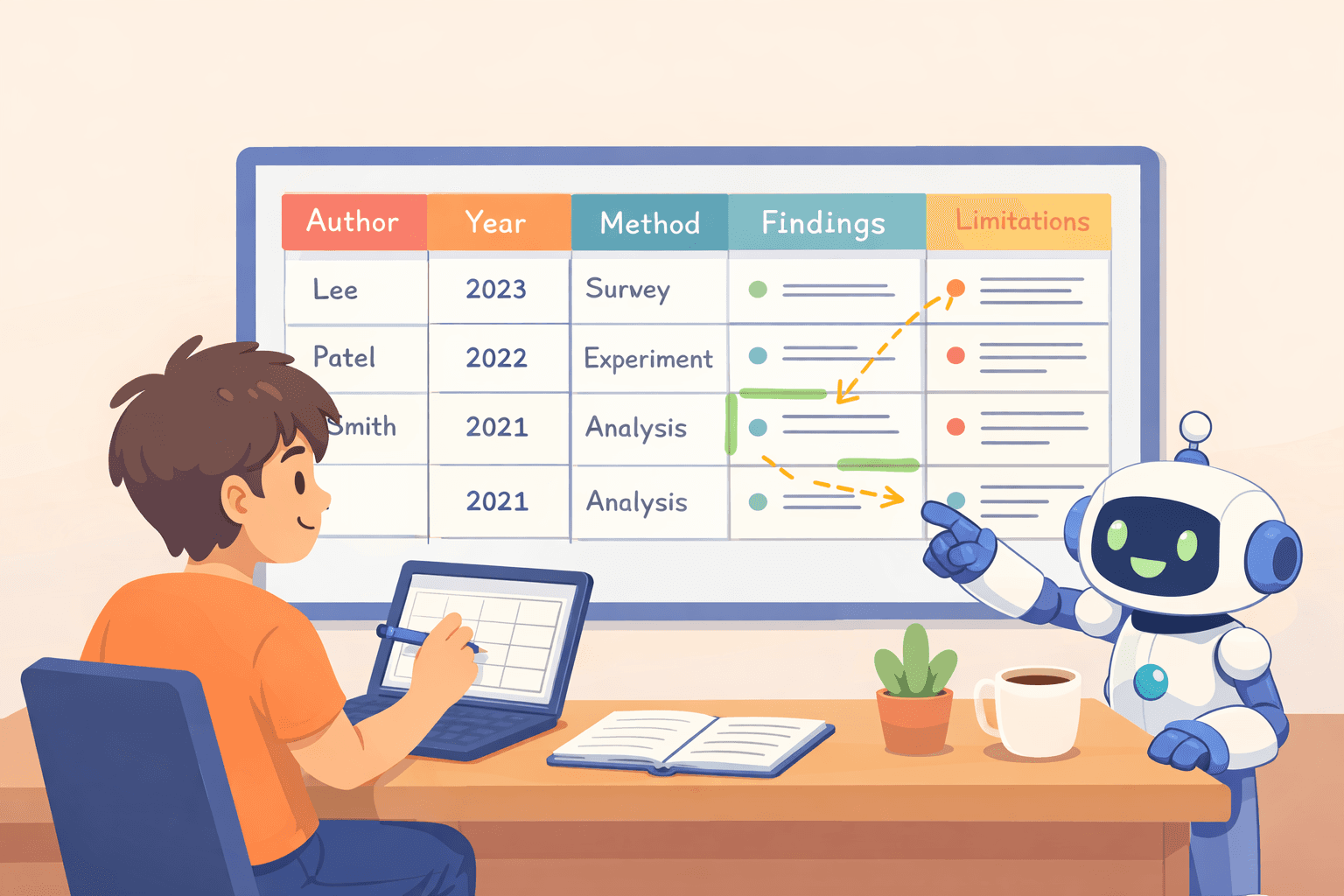
Yeh aapka central command system hai. Ek synthesis matrix ek simple table hota hai jo aapko har paper ko uske key parts mein condense karne par majboor karta hai, jisse PDFs ki ek puri library ek single, comparable overview mein badal jaati hai.
Ek basic table format se shuru karein (ya ek literature review matrix template ka use karein):
Author | Year | Theme | Method | Key Findings | Limitations |
Lee | 2023 | Online learning | Survey | Students ne higher flexibility report ki. | Study ne sirf ek semester cover kiya. |
... | ... | ... | ... | ... | ... |
Har row ek source hai. Maqsad abstract ko copy karna nahi hai, balki woh extract karna hai jiski aapko zaroorat hai. Ek acchi entry mein aapke apne words mein ek brief summary, core results, woh aapke question ke liye kyun relevant hai, aur uski weaknesses par ek note hona chahiye.
Yeh table aapko ek baar mein pura landscape dekhne deta hai. Aap use kiye gaye saare methods ya kisi specific theme par saari findings ko compare karne ke liye ek column ko scan kar sakte hain, aur turant spot kar sakte hain ki studies kahan agree karti hain, contradict karti hain, ya research gaps chodti hain.
Yeh aapko constantly full papers ko re-read karne se rokta hai aur aapko apne samne maujood evidence se apna argument build karne deta hai. Ek structured literature reviews guide ko follow karne se aapko yeh reinforcement bhi milegi ki in comparisons ko ek clear, well-supported argument mein kaise badla jaye.
<ProTip title="🧠 Pro Tip:" description="Keep summaries short and focused. Two to three sentences are enough." />
Step 4: Purpose Ke Saath Sources Ko Annotate Karein
Sirf highlight mat karein. Ek purpose ke saath padhein: un specific ideas ko capture karne ke liye jinki aapko apne review ke liye zaroorat hogi.
Jaise hi aap har paper ko padhein, in char cheezon ko nikalne par focus karein:
Author ka central argument.
Woh key evidence jo woh isko support karne ke liye use karte hain.
Unhone research kaise conduct ki (the method).
Unke approach ki main limitations.
Aapke notes brief aur aapke apne words mein hone chahiye. Ek bada paragraph copy karne ke bajaye, aisa kuch likhein:
"Argues that gamification boosts student motivation, lekin study sirf do hafte chali aur ek school se small sample use kiya gaya."
Ek useful formula hai: Main idea + Method + Limitation. Yeh aapko kisi study ke core contribution aur uski weaknesses ko jaldi assess karne par majboor karta hai, jisse aapke synthesis ke liye critically important perspective build hota hai.
Step 5: Organized Rehne Ke Liye Digital Tools Ka Use Karein
Dozens of sources ko hath se manage karna inefficient hai. Kuch digital tools busywork ko automate kar sakte hain aur sab kuch ek jagah rakh sakte hain.
PDFs aur citations ko store karne ke liye, ek reference manager ka use karein. Zotero and Mendeley aur EndNote aapke articles ko save karenge, bibliography format karenge, aur aapke document mein directly citations insert karenge.
Agar aap abhi bhi seedh rahe hain ki sources ko correctly kaise manage kiya jaye, toh ek solid citation management and academic integrity guide aapko bina kisi common mistake ke references ko organize karne mein madad karegi.
Apne notes aur synthesis ke liye, ek spreadsheet aksar sabse behtar tool hoti hai. Google Sheets ya Excel aapka synthesis matrix build karne ke liye perfect hain, jo aapko ek click se studies ko sort aur filter karne dete hain.
Zyada interconnected notes ke liye, Notion ya Obsidian jaise apps ideas ke beech relationships map karne mein madad kar sakte hain.
Ek straightforward workflow kuch aisa dikhta hai:
PDF ko apne reference manager mein save karein.
Key sections ko read aur annotate karein.
Apne synthesis matrix mein ek condensed summary add karein.
Entry ko uske relevant themes ya methods ke saath tag karein.
Yeh process ek paper collect karne se lekar uski essential information ko aapki writing ke liye ready rakhne tak ek clean pipeline banata hai.
<ProTip title="⚡ Pro Tip:" description="Use consistent tags across all tools so you can find sources quickly." />
Step 6: Sources Ko Clear Sections Mein Group Karein
Ek baar jab aapke sources matrix mein sort ho jaate hain, toh aap apne literature review ke actual sections build karna shuru kar sakte hain, jisse ek clear literature review outline draft karna bhot aasan ho jata hai. Yeh woh jagah hai jahan aapka organization pay off karta hai.
Aapke groups—chahe woh thematic hon, chronological hon, ya methodological—main headings ban jaate hain. Online learning par ek review ke liye, aapka structure kuch aisa dikh sakta hai:
Academic Performance: Un studies ko discuss karein jo grades, test scores, aur learning outcomes ko measure karti hain.
Student Engagement & Motivation: Participation, persistence, aur psychological investment par research ko cover karein.
Methodological Gaps: Alag-alag studies mein use kiye gaye research designs ke strengths aur weaknesses ko compare karein.
Yeh grouping aapko sirf ek ke baad ek summaries list karne se rokti hai. Iske bajaye, aap ek logical argument build karte hain.
Aap discuss kar sakte hain ki kaise kai studies milkar ek point ko support karti hain, fir studies ka ek dusra set introduce kar sakte hain jo ek contrasting finding deta hai ya kisi limitation ko highlight karta hai.
Is tarah ka comparison hi woh jagah hai jahan researchers aksar literature mein how to identify research gaps ko zyada clearly dekhne lagte hain.
Example ke liye, aap likh sakte hain:
Kayi survey-based studies report karti hain ki online learning student flexibility aur satisfaction ko badhati hai. Halanki, yeh consensus self-reported data par heavily rely karta hai, jo ki biased ho sakta hai.
Longitudinal ya experimental research ki ek notable shortage hai jo actual long-term performance ko track kare, jo current evidence mein ek key gap ko indicate karta hai.
Sources ko pehle se distinct aur comparable categories mein sort karke, yeh paragraph successfully alag-alag references ko ek unified argument mein merge karta hai, jo ek specific finding se critical evaluation aur finally research gap ko identify karne tak transition karta hai.
Step 7: Apne System Ko Maintain Aur Update Karein
Aapka literature review ek living document hai. Nayi research samne aati hai, aur likhte waqt aapka focus thoda shift ho sakta hai. Aapke organization system ko iske saath adapt hona hoga.
Maintenance ke liye ek chota, regular time nikalen—jaise, har week 30 minutes. Is time ka use in cheezon ke liye karein:
Jo bhi naye, relevant papers aapko mile hain unhe apne reference manager aur synthesis matrix mein add karein.
Apne annotation formula ka use karke unhe padhein aur summarize karein.
Dekhein ki kya nayi findings aapki existing categories mein fit hoti hain ya aapko koi naya theme create karne ki zaroorat hai.
Un sources ko archive ya remove karein jo ab kam relevant reh gaye hain.
Ek simple habit yeh hai ki har week do ya teen naye sources ko process karein. Yeh dher lagne se bachata hai aur ensure karta hai ki jis evidence par aap likh rahe hain woh hamesha up-to-date ho. Yeh ek potentially overwhelming task ko ek routine task mein badal deta hai.
Common Mistakes Jo Organization Ko Disrupt Karti Hain
Ek accha system bhi fail ho sakta hai agar aap yeh common errors karte hain.
Hoarding sources. Har thodi-bohot related paper ko download karna noise create karta hai. Shuru se hi relevance ko lekar sakht rahein.
Sorting ko postpone karna. Agar aap organize karna shuru karne ke liye tab tak wait karenge jab tak aapke paas 80 PDFs na ho jayein, toh aap doob jayenge. Apne matrix ko pehle paanch papers ke saath hi shunru karein.
Topic ko structure samajhne ki bhool. "Social media" ek topic hai. "Effects on self-esteem," "addiction behaviors," aur "privacy concerns" ek structure hain. Aapko baad wale ki zaroorat hai.
Summary ko skip karna. Agar aap apne matrix mein ek concise note nahi likhte hain, toh aap next week poore articles ko fir se padh rahe honge sirf point yaad karne ke liye.
Inconsistent tags use karna. Ek paper ko "method-survey" aur dusre ko same concept ke liye "research design-questionnaire" tag karne se aapka system comparison ke liye useless ho jayega. Standard set of terms chunein aur un par tike rahein.
<ProTip title="🚫 Pro Tip:" description="Keep your system simple. Complexity often leads to inconsistency." />
Sabhi Cheezon Ko Ek Saath Lana: Ek Simple Workflow Example
Yahan dekhye ki ek real topic ke liye yeh pura process kaisa dikhta hai.
Step 1: Scope define karein. Aap ek broad interest ke saath shuru karte hain: "remote work." Aap ise ek specific question mein refine karte hain: "2020 ke baad ki studies ke basis par, tech companies mein employee productivity par remote work ka kya impact hai?"
Step 2 & 3: Collect aur categorize karein. Aapko 40-50 relevant studies milti hain. Jaise hi aap unhe collect karte hain, aap unhe teen primary themes mein sort karte hain: measured productivity outcomes, work-life balance effects, aur the role of technology & tools.
Step 4: Matrix build karein. Har paper ko aapki spreadsheet mein ek row milti hai. Har ek ke liye, aap author, year, woh kis theme mein fit hota hai, method (e.g., survey, company data analysis), core finding, aur ek major limitation note karte hain.
Step 5: Patterns spot karein. Matrix complete hone par, aap ise scan kar sakte hain. Aap jaldi se dekh sakte hain ki zyadatar evidence employee self-reports se aata hai, longitudinal studies bhot kam hain, aur creative roles aur routine task work ke beech findings bhot differ karti hain.
Step 6: Structure se likhein. Aapke review ke sections ab clear hain. Aap ek-ek karke papers ko list nahi karte. Iske bajaye, aap productivity findings par ek section likhte hain, survey data ko synthesize karte hue uski limitations ko note karte hain.
Fir aap industries ke beech conflicting evidence ko discuss karte hain, aur longitudinal research ke liye identified gap ke saath conclude karte hain. Us point par, section flow ke liye ek clear plan hona aur bhi useful ho jata hai, aur how to write literature review outline par yeh guide aapke organized notes ko ek coherent draft mein convert karne mein madad kar sakti hai.
Organization ne sirf aapke PDFs ko tidy nahi kiya, isne aapke argument ka outline bhi taiyar kar diya.
Messy Notes Se Clear Thinking Tak
Aap bikhre hue papers aur half-formed ideas ke sath baithte hain, bina track khoye sab kuch samajhne ki koshish karte hain. Yeh slow aur frustrating lagta hai. Aur yeh dikhta hai.
<CTA title="Turn Sources Into Structured Insights" description="Organize research, uncover patterns, and write faster with guided academic workflows." buttonLabel="Try Jenni Free" link="https://app.jenni.ai/register" />
Aapko ek perfect system ki zaroorat nahi hai, aapko ek aise system ki zaroorat hai jo tez kaam kare aur aapki thinking ko clear rakhe. Jenni ke saath, jo hamara AI literature review & RRL generator hai, aap sources ko simple structures mein organize kar sakte hain aur confidence ke saath seedhe writing par move kar sakte hain. Yeh process ko overcomplicate kiye bina ideas ko connect karne mein madad karta hai. Wahan se shuru karein, ise simple rakhein, aur aapka literature review ek aise tareeqe se samne aayega jo sahi mein samajh aaye.