Durch
Justin Wong
—
Die Kluft zwischen Ihrem Schreibwerkzeug und Ihrer Forschungsbibliothek

Justin Wong
Leiter des Wachstums
Abgeschlossen mit einem Bachelor in Global Business & Digital Arts, Nebenfach in Unternehmertum
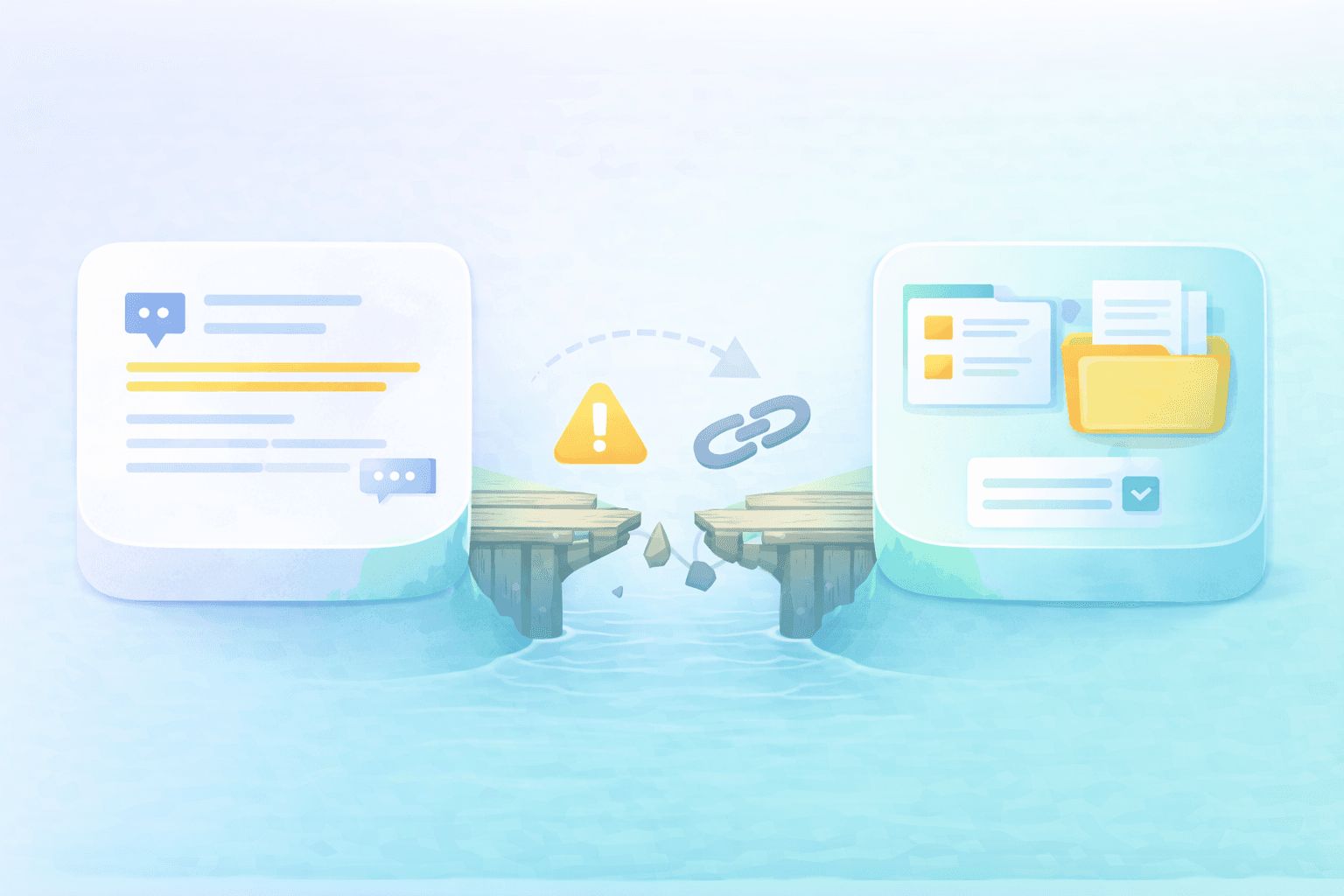
Teams können im selben Projekt schreiben und trotzdem viel Zeit bei der Überprüfung verlieren. Der Entwurf befindet sich vielleicht an einem Ort, die Quellenbibliothek an einem anderen (besonders wenn Ihre Referenzen in Zotero oder Mendeley liegen; Jennis Zotero- und Mendeley-Integration ist eine Möglichkeit, Quellen näher am Entwurf zu halten), und der Kontext hinter einer Behauptung geht genau dann verloren, wenn jemand sie verifizieren muss.
Dieser Beitrag zeigt auf, wo diese Lücke entsteht, warum sie zusätzlichen Nacharbeitsaufwand verursacht und wie man sie mit einem saubereren Review-Workflow reduziert. Außerdem sehen wir uns eine einfache Möglichkeit an, in Jenni mit einem geteilten Dokument zu beginnen, damit Mitautor:innen an einem Ort überprüfen können, statt zwischen Versionen und Tools hin- und herzuwechseln.
<CTA title="Kontextwechsel während der Überprüfung reduzieren" description="Entwurf und Überprüfungsentscheidungen in einem gemeinsamen Workflow voranbringen" buttonLabel="Quellen abgestimmt halten" link="https://app.jenni.ai/register" />
Warum die Lücke mehr Arbeit verursacht, als die meisten Teams erwarten
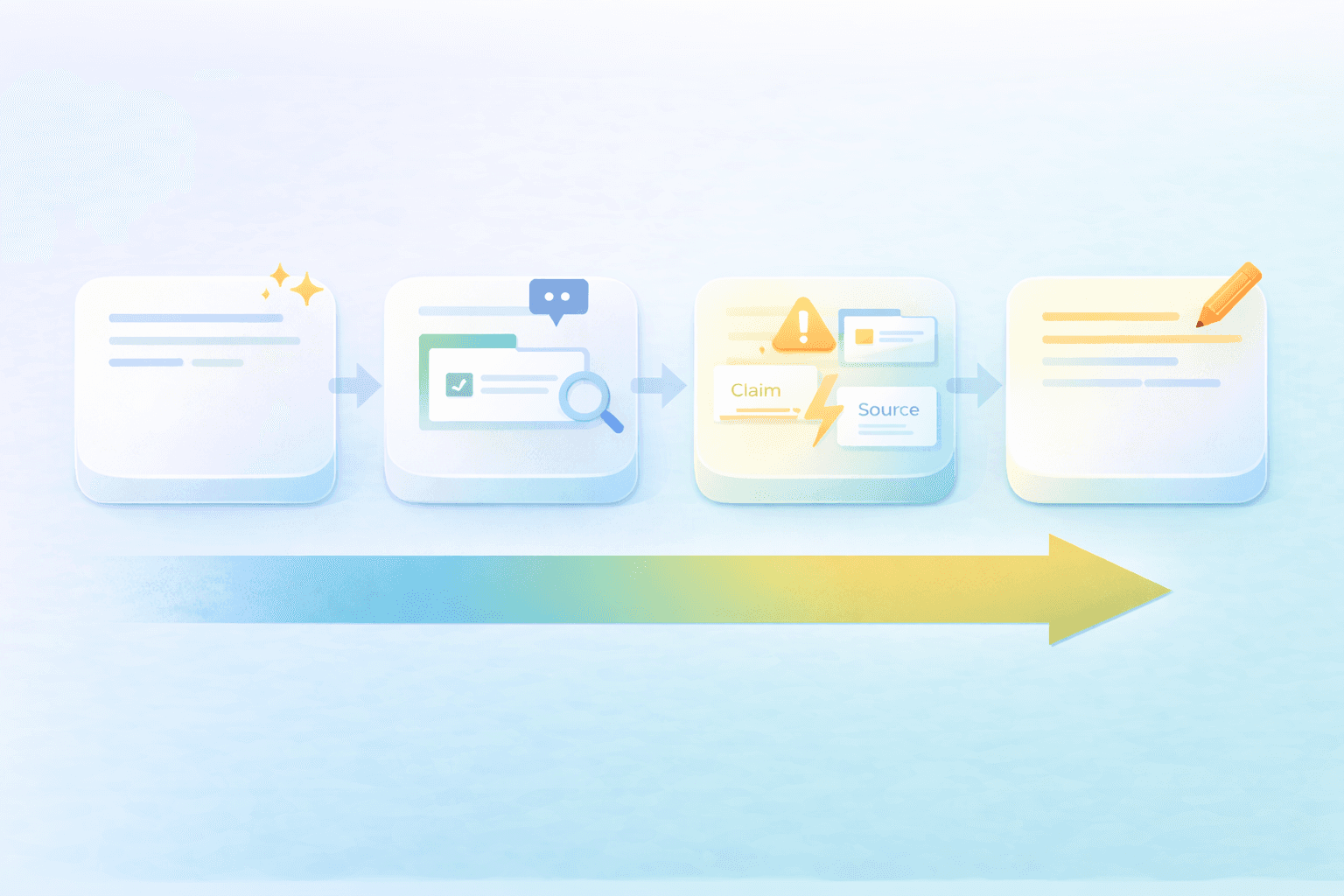
Der zusätzliche Aufwand entsteht meist nicht beim Schreiben.
Er zeigt sich bei der Überprüfung.
Teams können einen Entwurf schnell besser klingen lassen und später Zeit verlieren, wenn sie prüfen, ob Behauptungen und Zitate tatsächlich zusammenpassen. Wenn Sie nicht sicher sind, was Prüfer:innen in dieser Phase typischerweise kontrollieren, erklärt unser Leitfaden dazu, worauf Prüfer:innen bei Behauptungen und Zitaten achten das im Detail.
Diese Verzögerung ist nicht nur ein Workflow-Problem. Es ist auch ein Problem des Aufgabenwechsels, und wiederholte Kontextwechsel können während der Überprüfung Kosten des Aufgabenwechsels verursachen.
Schreiben geht schnell, Evidenzprüfungen gehen langsamer
Die Formulierung ist meist der schnellste Teil.
Ein Absatz wird geglättet. Der Satz klingt stärker. Der Entwurf fühlt sich „fertig“ an.
Dann folgt später die Evidenzprüfung, und genau dort beginnt die Nacharbeit.
Typisches Muster:
Ein Satz liest sich selbstbewusst
Das Zitat wird später überprüft
Die Quelle stützt die Behauptung nur teilweise
Die Stelle muss erneut überarbeitet werden
Kurz gesagt:
Formulierung verfeinern → Zitat prüfen → schwache Stützung gefunden → erneut umschreiben
Der Kontext geht verloren, wenn die Quelle nicht im Moment der Überprüfung verfügbar ist
Prüfer:innen erkennen riskante Behauptungen schnell. Was Zeit kostet, ist die Verifikation.
Wenn der Quellenkontext woanders liegt, pausiert die Überprüfung, während jemand:
das Papier sucht
prüft, welche Quellenversion gemeint war
erklärt, was die Quelle tatsächlich stützt
Das ist, als würde man über ein Rezept sprechen, während die Zutaten in einem anderen Raum stehen.
Man kann zwar weitersprechen, aber der Fortschritt verlangsamt sich, wenn niemand bestätigen kann, was tatsächlich vorhanden ist.
<ProTip title="🧭 Tipp für den Überprüfungsfokus:" description="Definieren Sie vor dem Bearbeiten zuerst ein Ziel für einen Durchgang, etwa Behauptungen, Zitate, Klarheit oder Struktur" />
Wo sich die Lücke bei der Überprüfung durch Mitautor:innen zeigt
Hier fühlt sich der Workflow meist schwerer an, als er sein sollte.
Nicht weil das Team schlechte Arbeit macht, sondern weil Überprüfungsentscheidungen sofort Quellenkontext brauchen und dieser Kontext nicht immer am selben Ort wie der Entwurf vorhanden ist.
Eine Behauptung wird markiert, aber niemand kann sie schnell verifizieren
Eine Mitautorin oder ein Mitautor markiert einen Satz, weil die Behauptung zu stark klingt.
Jemand fragt, welche Quelle das stützt. Eine andere Person sagt, die Quelle sei in ihrer Bibliothek, aber noch nicht im Entwurf. Die Überprüfung verlangsamt sich, während sie das Paper suchen, Tabs erneut öffnen und erklären, was die Quelle tatsächlich stützt.
Diese kleine Pause kommt oft vor. Wenn Ihr Team immer wieder darüber stolpert, hilft es, einen Schritt-für-Schritt-Workflow zum Überprüfen von Entwürfen mit Mitautor:innen zu verwenden, damit alle wissen, was zuerst zu prüfen ist und wann etwas zu korrigieren ist.
Feedback wird vage, wenn die Evidenz im Moment fehlt
Wenn Prüfer:innen den Evidenzkontext nicht sehen können, werden Kommentare oft vage.
Sie können zwar korrekt sein, sind aber schwerer umzusetzen.
Vages Feedback | Besseres Feedback |
Das fühlt sich falsch an | Die Behauptung ist für die Quelle zu weit gefasst; Formulierung abschwächen oder stärkere Unterstützung hinzufügen |
Zitation nötig | Für diesen Satz Unterstützung hinzufügen oder die Stärke der Behauptung reduzieren |
Quelle wirkt schwach | Diese Quelle ersetzen oder die Formulierung so anpassen, dass sie dem entspricht, was sie tatsächlich stützt |
Das umschreiben | Den Punkt beibehalten, aber die nicht gestützte Formulierung entfernen |
Je spezifischer der Kommentar, desto schneller die Überarbeitung. Es hilft auch, wenn Prüfer:innen den Grund hinter jedem Vorschlag erklären, damit Überarbeitungen leichter umzusetzen sind.
<ProTip title="🗣️ Tipp zum Aufwerten von Kommentaren:" description="Jeden Kommentar mit einer Aktion verbinden, etwa klären, stützen, abschwächen, ersetzen oder streichen" />
Teams beheben am Ende denselben Satz zweimal
Das ist die Nacharbeits-Schleife, die die meisten Teams anfangs nicht bemerken.
Ein Satz wird geglättet, weil er besser klingt. Später prüft jemand das Zitat und findet eine Unstimmigkeit in der Quelle. Dann wird der Satz erneut überarbeitet, damit er zur Evidenz passt.
Das sieht oft so aus:
Formulierung verfeinern → Evidenzprüfung → Quellenabweichung → erneut umschreiben
Deshalb verursacht die Lücke mehr als nur Verzögerung. Sie führt zu doppelter Bearbeitung.
Wie ein besseres System für die Zusammenarbeit an Forschungsarbeiten tatsächlich aussieht
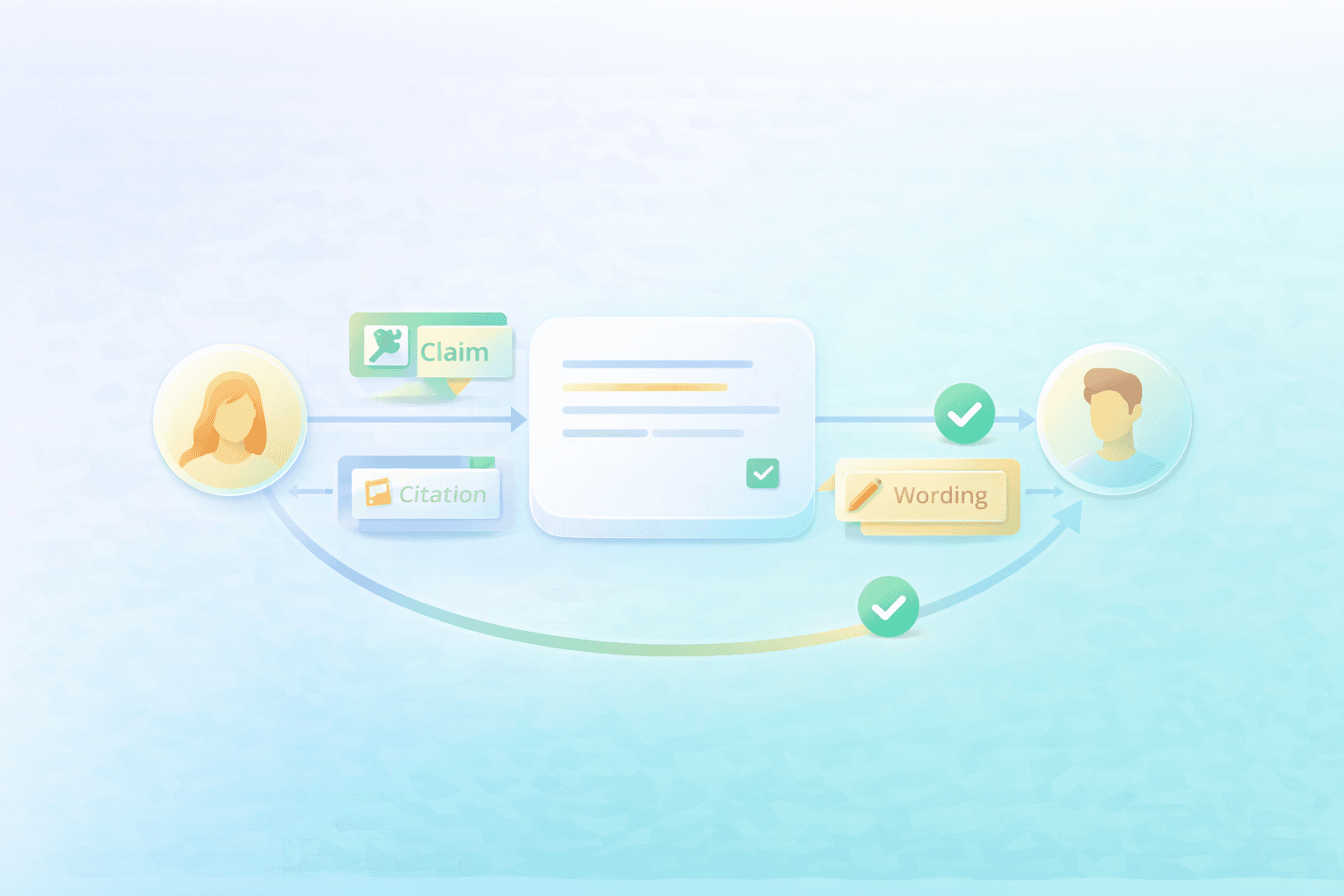
Ein besseres System zur Zusammenarbeit an Forschungsarbeiten bedeutet nicht immer, weniger Tools zu verwenden.
Wichtiger ist ein saubererer Überprüfungskontext, damit Mitautor:innen Entscheidungen zu Behauptungen, Zitaten und Formulierungen treffen können, ohne ständig neu zusammenzutragen, was im Entwurf passiert ist.
In der Praxis sieht ein besseres Setup meist so aus:
✅ Weniger Zeit für das Wiederaufbauen von Kontext, wenn eine Behauptung markiert wird
✅ Klarere Entscheidungen zu Behauptungen und Zitaten während der Überprüfung
✅ Sauberere Übergaben zwischen Mitautor:innen, wer was korrigiert
✅ Weniger doppelte Bearbeitung durch das zweimalige Korrigieren desselben Satzes
✅ Schnellere Überprüfung vor dem Senden, Exportieren oder Einreichen
Das ist das eigentliche Ziel. Nicht „ein Tool für alles“, sondern ein Workflow, in dem Entwurf und Überprüfungsentscheidungen leichter nachzuvollziehen sind. Wenn Sie den funktionsbezogenen Kontext hinter diesem Wandel möchten, beginnen Sie mit was Dokumentenkollaboration in Jenni ist und warum sie wichtig ist.
So halten Sie Mitautor:innen in Jenni mit einem geteilten Dokument auf Kurs
Sobald Ihr Entwurf zur Überprüfung bereit ist, können Sie in Jenni mit einem einfachen Freigabe-Workflow starten.
Öffnen Sie Ihren Entwurf in Jenni
Klicken Sie oben rechts auf Teilen
Kopieren Sie den Dokumentlink
Senden Sie den Link an Ihre:n Mitautor:in
Sagen Sie, was zuerst geprüft werden soll (Behauptungen, Zitate, Klarheit oder Struktur)
Überprüfen Sie gemeinsam in Echtzeit im selben Dokument
<ProTip title="🧪 Tipp für den ersten Durchgang:" description="Beginnen Sie vor der Formulierungsglättung mit Zitaten oder der Unterstützung von Behauptungen, um Evidenzprobleme früher zu erkennen" />
Eine einfache Überprüfungsreihenfolge, die Kontextverlust reduziert
Sie brauchen hier kein kompliziertes System.
Sie brauchen nur eine wiederholbare Reihenfolge, damit das Team aufhört, zwischen Formulierungsänderungen und Evidenzprüfungen hin- und herzuspringen. Für eine ausführlichere Checkliste verwenden Sie unseren Schritt-für-Schritt-Workflow zur Entwurfsprüfung durch Mitautor:innen für wissenschaftliche Arbeiten.
Vor dem Bearbeiten die Reihenfolge der Überprüfung abstimmen
Bevor jemand mit dem Überarbeiten beginnt, sollte zuerst die Reihenfolge der Überprüfung festgelegt werden.
Das hält Kommentare sauberer und vermeidet ein zufälliges Hin und Her.
Eine einfache Reihenfolge funktioniert gut:
Behauptungen und Fluss → Evidenz und Zitate → Formulierung verfeinern → abschließender sauberer Durchgang
Evidenz zuerst korrigieren, dann Sätze glätten
Zu frühes Glätten fühlt sich produktiv an, verursacht aber oft Nacharbeit.
Es ist, als würde man ein Regal dekorieren, bevor man prüft, ob es sicher steht. Wenn die Stütze schwach ist, muss man möglicherweise ohnehin alles noch einmal machen.
Bei der Entwurfsprüfung passiert dasselbe, wenn ein Satz zuerst geglättet wird und sich später herausstellt, dass die Quelle schwach, fehlend oder nur lose verwandt ist.
Das ist in gemeinsam verfassten Arbeiten noch wichtiger, wo Autorenverantwortlichkeiten und Rechenschaftspflicht Teil des Überprüfungsprozesses sind.
<ProTip title="🧠 Tipp zur Quellenpassung:" description="Wenn eine Quelle nur lose verwandt ist, schwächen Sie die Behauptung ab oder ersetzen Sie die Quelle, bevor Sie die Formulierung verfeinern" />
Mit einem sauberen letzten Durchgang enden, bevor Sie senden
Sobald die wichtigsten Probleme behoben sind, machen Sie vor dem Senden oder Exportieren noch einen kurzen sauberen Durchgang.
Das ist nicht für große Überarbeitungen gedacht. Es soll nur sicherstellen, dass der Entwurf wirklich überprüfungsbereit ist.
Verwenden Sie dafür eine kurze Abschlussprüfung wie diese:
Wichtige Behauptungen gestützt → schwache Quellen behoben → Formulierung entspricht der Evidenz → bereit zum Senden
Dieser kleine letzte Durchgang hilft, Last-Minute-Verwirrung zu reduzieren und macht Übergaben für die nächste lesende Person sauberer.
Bauen Sie für Ihren nächsten gemeinsam verfassten Entwurf einen saubereren Schreib- und Zitier-Workflow auf
Die Lücke zwischen Ihrem Entwurf und Ihrer Forschungsbibliothek verursacht vermeidbare Nacharbeit. Ein gemeinsamer Überprüfungskontext erleichtert es, Behauptungen zu verifizieren, sauberere Zitationsentscheidungen zu treffen und den Entwurf voranzubringen, ohne alle paar Minuten den Kontext neu aufzubauen. Jenni hilft Teams dabei, indem Mitautor:innen während der Überprüfung in einem gemeinsamen Entwurf bleiben.
<CTA title="Nacharbeit in der Mitautoren-Prüfung reduzieren" description="Verwenden Sie einen gemeinsamen Entwurf und einen klaren ersten Prüfdurchgang, um Schreib- und Zitationsentscheidungen aufeinander abzustimmen" buttonLabel="Quellen abgestimmt halten" link="https://app.jenni.ai/register" />
Einfach anfangen: einen gemeinsamen Entwurf öffnen, den ersten Prüffokus festlegen und den Entwurf in einer klaren Reihenfolge durchgehen. Dieser kleine Workflow-Wechsel kann die Überprüfung durch Mitautor:innen schneller, sauberer und leichter wiederholbar machen.