Por
Justin Wong
—
Sua fonte é real, mas sua afirmação está errada: por que isso acontece e como corrigir.

Justin Wong
Chefe de Crescimento
Formado com um Bacharelado em Negócios Globais e Artes Digitais, com Menor em Empreendedorismo
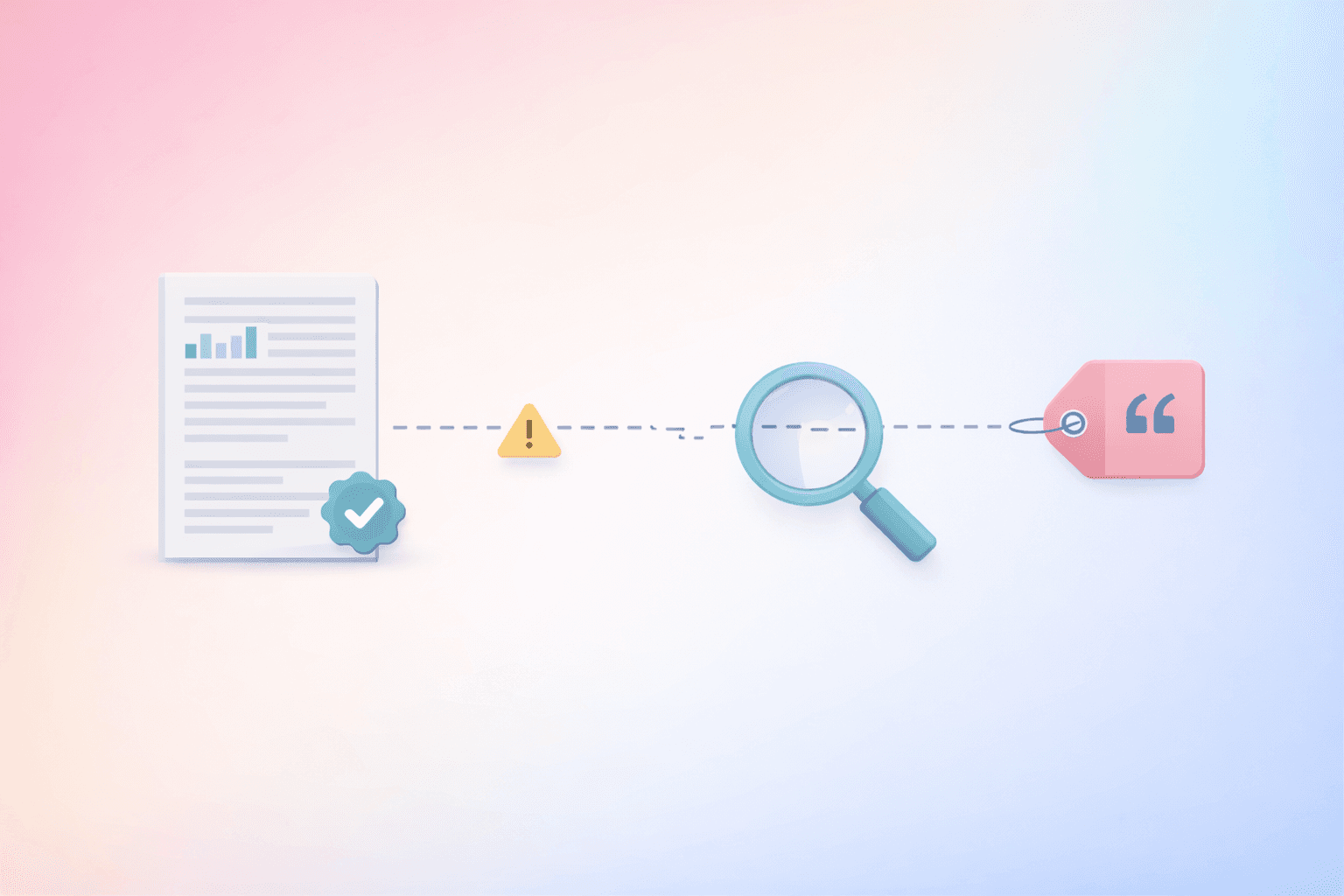
É um dos comentários mais frustrantes que pode receber num rascunho que, de resto, está limpo.
A citação é real. O artigo é respeitável. A lista de referências está correta. Mas um revisor ainda diz que a citação não sustenta a afirmação.
Normalmente, isso não é um problema de fonte. É um problema de incompatibilidade entre a afirmação e a fonte.
A incompatibilidade entre afirmação e fonte acontece quando a sua frase é um pouco mais forte, mais abrangente ou simplesmente diferente do que a fonte realmente mostra. Acontece sempre, especialmente quando está imerso no modo de escrita e o seu cérebro preenche automaticamente as lacunas.
<CTA title="Verifique se as suas citações correspondem às suas afirmações" description="A Confiança da afirmação destaca frases que podem não estar sustentadas ou estar exageradas, para que possa corrigir primeiro as linhas de maior risco." buttonLabel="Executar a Confiança da afirmação" link="https://app.jenni.ai/register" />
O que “Claim Mismatch” realmente significa

Uma incompatibilidade entre afirmação e fonte acontece quando a fonte que citou não sustenta exatamente aquilo que a sua frase está a afirmar. Na maioria das vezes, cai numa destas três categorias:
Desajuste de significado → a afirmação diz algo diferente
Isto acontece quando a sua frase e a fonte tratam do mesmo tema geral, mas não estão a defender o mesmo ponto. A citação parece relevante, mas na realidade não prova aquilo que a sua linha está a afirmar.
Desajuste de força → a afirmação é mais certa
Isto acontece quando a fonte é cautelosa, mas a sua formulação é confiante. Muitas vezes aparece em pequenas melhorias de verbo, como sugere → prova ou pode → faz.
Desajuste de âmbito → a afirmação é mais ampla do que o estudo
Isto acontece quando o estudo está limitado a uma amostra, contexto ou período específico, mas a sua frase parece aplicar-se em todo o lado. Ser explícito sobre a sua amostra ajuda-o a evitar generalizar em excesso os resultados.
<ProTip title="🧠 Sinal rápido:" description="Se a sua frase soa mais confiante do que o artigo que citou, normalmente trata-se de uma incompatibilidade entre afirmação e fonte." />
Quando sabe em que categoria uma frase se enquadra, a correção torna-se simples. Basta ajustar o significado, reduzir a força ou apertar o âmbito para que a afirmação corresponda ao que o artigo realmente sustenta.
Porque é que a incompatibilidade entre afirmação e fonte acontece mesmo quando a sua intenção é boa?
A maior parte da “incompatibilidade entre afirmação e fonte” não é preguiça nem desonestidade. É apenas assim que a redação funciona.
Quando está em modo de escrita, o seu cérebro preenche automaticamente as lacunas.
Lembra-se da vibração de uma fonte, não dos limites, como a amostra, o contexto, o período e as limitações.
Durante a paráfrase, é fácil aumentar involuntariamente o significado ou a certeza.
Se misturar várias fontes numa só frase, uma citação pode sustentar apenas parte da afirmação.
É assim que uma fonte real acaba ao lado de uma frase que não sustenta totalmente.
<ProTip title="🔎 Verificação rápida:" description="Procure uma palavra-limite. Se o estudo disser nesta amostra ou a curto prazo, a sua frase também o deve dizer." />
Os 4 padrões que criam uma incompatibilidade entre afirmação e fonte
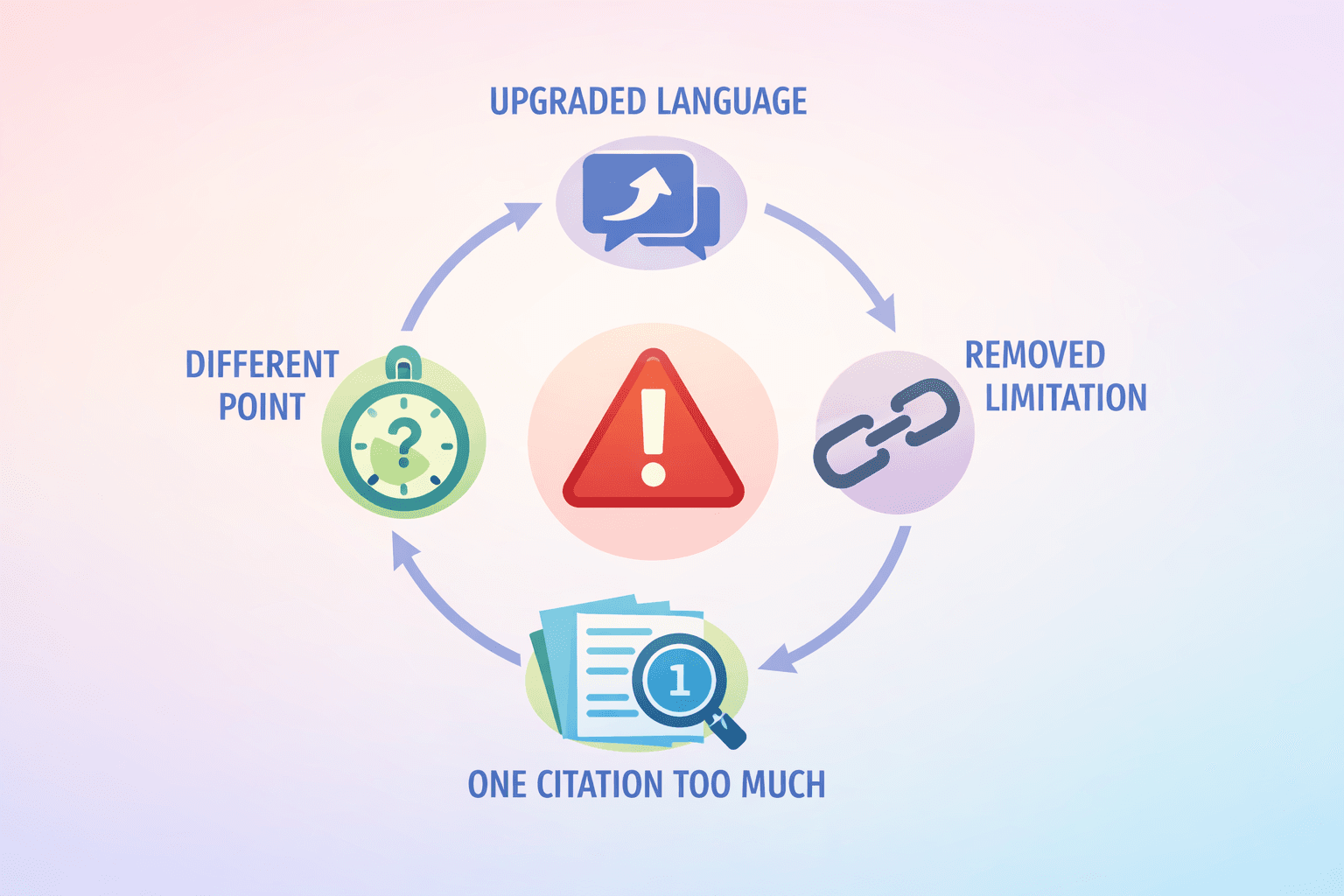
A incompatibilidade entre afirmação e fonte normalmente não é um grande erro. São apenas alguns pequenos movimentos de formulação que mudam silenciosamente aquilo que a sua frase está a dizer.
Abaixo estão os quatro padrões que surgem com mais frequência. Quando aprender a reconhecê-los, vai começar a apanhá-los ainda durante a redação.
Padrão 1: aumentou a força da linguagem sem se aperceber
Este é o problema clássico do “pequena palavra, enorme mudança de significado”. A fonte é cautelosa, mas a sua frase fica mais confiante do que as evidências.
Aumentos de força comuns:
pode → faz
sugere → prova
poderia → vai
Exemplo breve
Fonte: “A intervenção pode reduzir os sintomas em alguns participantes.”
A sua frase: “A intervenção reduz os sintomas.”
Se quiser uma correção fácil, mantenha a força original dos verbos, a menos que o artigo seja genuinamente definitivo.
Padrão 2: removeu a limitação que importava
Uma fonte pode ser precisa, mas ainda assim estreita. O desajuste acontece quando elimina as palavras exatas que tornavam o resultado seguro.
Isto costuma parecer-se com:
“nesta amostra” desaparece
“a curto prazo” desaparece
“sob estas condições” desaparece
Quando essas palavras-limite desaparecem, um resultado limitado começa a soar universal.
<ProTip title="🧩 Palavras-limite:" description="Se o estudo incluir nesta amostra, a curto prazo ou neste contexto, a sua frase também deve incluir uma dessas palavras-limite." />
Padrão 3: uma citação está a carregar demasiadas afirmações
Isto acontece quando uma única frase inclui várias ideias, mas só há uma citação associada.
Uma frase pode conter:
um facto
uma comparação
uma interpretação
uma conclusão
Se a sua citação sustentar apenas o facto, a interpretação ou a conclusão pode ficar sem suporte sem que se aperceba.
Correção rápida: divida a frase. Dê a cada afirmação a sua própria citação ou reescreva a frase para que esteja a ser feita apenas uma afirmação.
Padrão 4: a citação é real, mas sustenta um ponto diferente
Por vezes, o artigo é legítimo e relevante para o tema, mas não sustenta exatamente a sua afirmação. É daqui que vem o feedback de “é real, mas está errado”. Sempre que vir associação vs. causalidade, abrande e faça corresponder a sua formulação ao que o estudo realmente testou.
Uma versão comum disto é trocar associação por causalidade:
associado a não significa automaticamente causado por
Se a sua frase implicar causalidade, mas o artigo só relatar correlação, um revisor irá assinalá-la rapidamente.
É exatamente isto que os revisores detetam quando fazem teste de pressão a uma afirmação ousada — para ver as verificações específicas que fazem, consulte o que os revisores procuram nas afirmações e citações antes de aprovarem um artigo.
Verificação rápida: esta citação sustenta esta afirmação?
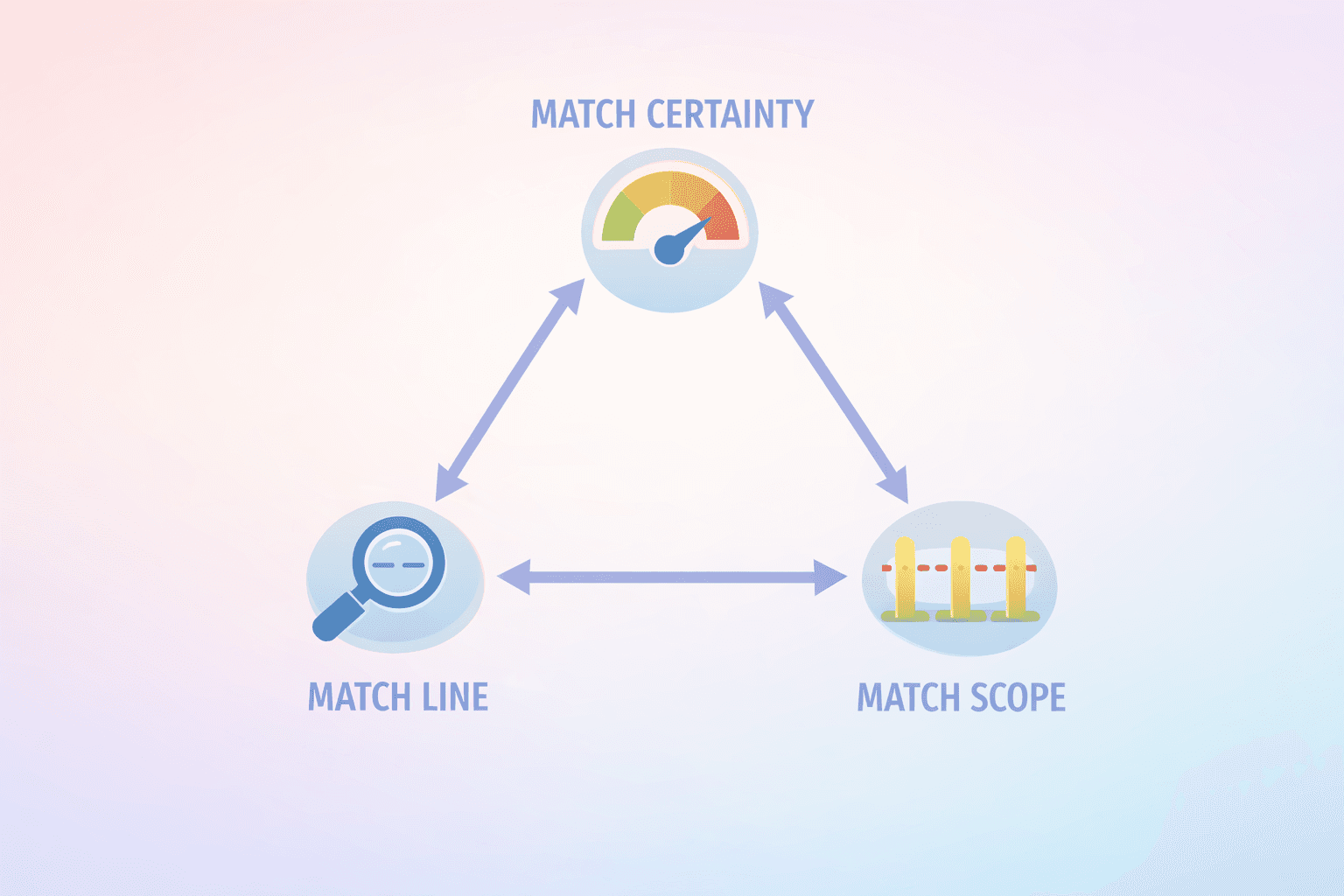
Se só tiver tempo para verificar algumas frases, analise as que sustentam o seu argumento. Normalmente são a tese, as frases-tópico e as linhas da conclusão.
O objetivo aqui é simples: certifique-se de que o leitor consegue traçar uma linha direta entre o que escreveu e aquilo que a fonte realmente diz.
A fonte sustenta a minha formulação exata?
Uma citação só sustenta a sua afirmação se corresponder a três coisas:
✅Encontre a linha correspondente: Não se contente com “o artigo é sobre o mesmo tema”. Procure a ideia exata que está a afirmar, idealmente nos resultados ou na conclusão, e não apenas na introdução.
✅Compare a certeza: Faça corresponder o nível de confiança. Se o artigo diz pode, sugere ou está associado a, a sua frase não deve dizer prova, causa ou vai.
✅Compare o âmbito: Verifique se o artigo está limitado a uma amostra, contexto ou período específico. Se estiver, a sua frase também precisa de palavras-limite, como nesta amostra, neste contexto ou durante um curto período.
<ProTip title="🧭 Palavras-limite:" description="Se a fonte incluir nesta amostra, a curto prazo ou neste contexto, mantenha uma dessas palavras-limite na sua frase. Isso evita generalizações em excesso acidentais." />
O teste da “troca de citação”
Esta é a forma mais rápida de detetar desajustes sem pensar demais.
Copie a frase que escreveu.
Encontre a frase mais próxima na fonte que a sustenta.
Troque temporariamente a sua frase pela formulação da fonte.
Se a frase da fonte parecer visivelmente mais fraca do que a sua original, esse é o sinal. Provavelmente aumentou a força ou o âmbito da sua formulação. Se fizer isto na tese e nas linhas da conclusão, funciona como uma lista de verificação rápida sem parecer uma.
Exemplo breve
A sua frase: “As ferramentas digitais melhoram os resultados de saúde mental dos estudantes.”
Formulação da fonte: “As ferramentas digitais podem melhorar os resultados autorrelatados em alguns estudantes a curto prazo.”
Se a troca de citação introduzir pode, alguns ou a curto prazo, essas não são palavras de enchimento. São as condições-limite que tornam a afirmação defensável.
Porque é que os revisores assinalam isto mesmo quando a escrita é boa?
A incompatibilidade entre afirmação e fonte desencadeia dúvidas rapidamente porque não é um problema superficial. Faz o revisor perguntar-se se o artigo está a ser representado com precisão, e isso muda a forma como lê tudo o resto.
Quando uma afirmação não corresponde à sua fonte, os revisores começam a analisar com mais agressividade. Podem voltar a verificar outras citações, questionar a força das conclusões e procurar passagens em que a formulação pareça mais fluida do que as evidências.
<ProTip title="🕵️ Realidade do revisor:" description="Uma citação desalinhada leva os revisores a voltar a verificar outras afirmações ousadas. Corrigir cedo uma incompatibilidade entre afirmação e fonte pode evitar uma cascata de objeções." />
É por isso que isto é assinalado mesmo em rascunhos bem escritos. Não tem a ver com estilo. Tem a ver com confiança. A boa investigação depende de práticas responsáveis de citação.
É uma das razões pelas quais os artigos são rejeitados mesmo quando a escrita parece polida.
Uma análise final usando a Confiança da afirmação no Jenni
Quando o seu rascunho parece bom, a última coisa que quer é um problema de credibilidade escondido que só aparece quando outra pessoa o lê. A Confiança da afirmação foi criada para essa revisão final. Assinala frases que parecem sem suporte, exageradas, contraditórias ou deturpadas para que possa corrigir primeiro as linhas de risco.
Como executá-lo no Jenni:
Clique em Rever (canto superior direito)
Clique em Executar revisão em Confiança da afirmação
Analise os Resultados e depois clique numa linha assinalada
Escolha Aceitar ou Rejeitar
<ProTip title="✅ Melhor ordem:" description="Comece por Exageradas e Sem suporte. Essas alterações normalmente apertam rapidamente o rascunho inteiro." />
Torne as suas afirmações difíceis de questionar
Uma fonte real não é o mesmo que uma afirmação sustentada. O que importa é se a sua frase corresponde ao que a fonte realmente diz, com que força o diz e onde se aplica.
A boa notícia é que a incompatibilidade entre afirmação e fonte costuma ser uma pequena correção, não uma reescrita completa. Algumas palavras-limite. Um verbo mais preciso. Uma citação movida para a frase exata que sustenta. Essas pequenas edições são muitas vezes a diferença entre um rascunho que soa bem e um rascunho que se aguenta quando alguém o questiona.
<CTA title="Faça uma análise final de incompatibilidades entre afirmação e fonte" description="Use a Confiança da afirmação para detetar afirmações sem suporte, exageradas ou desalinhadas em minutos, para que as suas citações e a sua formulação fiquem alinhadas antes de submeter." buttonLabel="Analisar o meu rascunho" link="https://app.jenni.ai/register" />
Se quiser uma forma mais rápida de detetar incompatibilidades antes da revisão, faça uma análise final com a Confiança da afirmação e corrija primeiro as linhas de risco.