Por
Justin Wong
—
Redação sobre Alimentos Geneticamente Modificados Facilitada (Com Exemplos)

Justin Wong
Chefe de Crescimento
Formado com um Bacharelado em Negócios Globais e Artes Digitais, com Menor em Empreendedorismo
Alimentos geneticamente modificados (GM) são um dos temas mais falados na ciência hoje. Algumas pessoas veem-nos como um grande passo em frente na resolução da fome e na melhoria das culturas. Outras preocupam-se com a sua segurança, com os efeitos a longo prazo na saúde e com o impacto na natureza. Com tantas opiniões e estudos por aí, escrever um ensaio sobre alimentos GM pode parecer confuso. Deveria concentrar-se nos benefícios, nos riscos ou nas questões morais? Cada direção tem muito para explorar, e pode ser difícil saber por onde começar. Se ainda estiver a afinar o seu ângulo, a nossa lista de bons temas para ensaios argumentativos pode ajudá-lo a formular uma posição clara.
É aí que ver exemplos reais ajuda. Os ensaios de exemplo mostram-lhe como organizar as suas ideias, explicar os dois lados e tornar os seus argumentos claros. Para mais modelos de escrita orientada para a argumentação, veja os nossos exemplos poderosos de ensaios persuasivos. Quer esteja a escrever para a escola ou por interesse pessoal, compreender a estrutura de um ensaio vai ajudá-lo a escrever com confiança.
<CTA title="Construir uma declaração de problema forte" description="Gere uma declaração precisa, pronta para publicação, em minutos — sem stress, sem floreados." buttonLabel="Experimente a Jenni grátis" link="https://app.jenni.ai/register" />
5 Ensaios sobre Alimentos Geneticamente Modificados (Com Exemplos)
Estes cinco exemplos exploram os principais ângulos do debate sobre alimentos GM, desde a saúde e o ambiente até à ética e à economia. Cada um mostra como construir um argumento de forma clara e simples, ao mesmo tempo que dá aos leitores algo em que pensar.
Exemplo #1: Os Benefícios e os Riscos dos Alimentos Geneticamente Modificados (≈352 Palavras)
Introdução
Os alimentos geneticamente modificados (alimentos GM) são produzidos ao alterar o ADN de plantas ou animais para lhes dar certas características, como melhor sabor, crescimento mais rápido ou resistência a pragas. Os defensores dizem que os alimentos GM ajudam a combater a fome e a aumentar as colheitas. Os críticos, porém, receiam que os alimentos GM possam prejudicar a saúde humana ou danificar o ambiente. Para fazer escolhas inteligentes, é importante compreender ambos os lados da questão.
Benefícios dos Alimentos GM
Uma grande vantagem dos alimentos GM é a maior produtividade. Os cientistas podem criar culturas resistentes a insetos, ervas daninhas ou seca. Por exemplo, o milho Bt produz uma proteína que afasta os insetos, o que significa menos pulverizações de pesticidas. Isto ajuda os agricultores a poupar dinheiro e protege o solo e a água da poluição química.
Os alimentos GM também podem ser tornados mais nutritivos. Um exemplo famoso é o Arroz Dourado, que foi concebido para conter vitamina A. Este nutriente ajuda a prevenir a cegueira nas crianças, especialmente em países onde a deficiência de vitamina A é comum. Com mais projetos como este, a tecnologia GM poderá reduzir a fome e a má nutrição em todo o mundo.
Riscos dos Alimentos GM
Mesmo assim, nem todos concordam que os alimentos GM sejam seguros. Algumas pessoas temem que possam causar alergias ou outros problemas de saúde. Embora a maioria dos estudos não mostre grandes riscos para a saúde, os efeitos a longo prazo ainda estão a ser investigados.
Também existem preocupações ambientais. Quando as culturas GM fazem polinização cruzada com plantas selvagens, podem surgir novas espécies, por vezes chamadas “superervas daninhas”, que resistem aos herbicidas. Isto torna a agricultura mais difícil e ameaça a diversidade natural das plantas.
Conclusão
Em resumo, os alimentos GM oferecem promessas e problemas. Podem ajudar a produzir mais alimentos e a melhorar a nutrição, mas também levantam questões sobre a saúde e o ambiente. A melhor abordagem é avançar com cuidado, apoiando a inovação com responsabilidade.
<ProTip title="💡 Dica Pro:" description="Use a Jenni para transformar um tema amplo como alimentos GM num esboço curto e focado primeiro." />
Exemplo #2: O Impacto dos Alimentos Geneticamente Modificados no Ambiente (≈315 Palavras)
Introdução
As culturas geneticamente modificadas mudaram a forma como a agricultura funciona em todo o mundo. Trazem grandes benefícios para a agricultura, mas também levantam questões sérias sobre o seu impacto ambiental. Ajudam a natureza ou prejudicam-na?
Impactos Ambientais Positivos
As culturas GM podem reduzir o uso de pesticidas e fertilizantes químicos. Plantas resistentes a pragas significam menos pulverizações, protegendo o solo, os rios e insetos como as abelhas. As culturas tolerantes a herbicidas também tornam o controlo de ervas daninhas mais fácil e mais barato para os agricultores.
Algumas culturas GM são concebidas para sobreviver a secas, cheias ou solos pobres, permitindo que os agricultores produzam alimentos em locais difíceis. Isto ajuda a evitar que as terras agrícolas se expandam para as florestas e preserva os habitats da vida selvagem.
Impactos Ambientais Negativos
Mas as culturas GM também podem causar problemas. Uma preocupação é a polinização cruzada, quando o pólen de uma planta GM se mistura com plantas selvagens. Isto pode criar híbridos difíceis de controlar e pode ameaçar espécies locais.
Outra questão é a perda de diversidade das culturas. Se demasiados agricultores cultivarem a mesma variedade GM, o sistema alimentar torna-se mais frágil. Uma única nova praga ou doença poderia destruir grandes colheitas. Algumas culturas tolerantes a herbicidas também levaram ao aparecimento de “superervas daninhas” que exigem químicos mais fortes para serem eliminadas, aumentando os riscos de poluição.
Conclusão
Os efeitos ambientais dos alimentos GM são uma faca de dois gumes. Podem proteger o solo e reduzir o desperdício, mas também podem prejudicar a biodiversidade. Para manter a agricultura sustentável, cientistas e agricultores devem usar a tecnologia GM de forma sábia e responsável.
Exemplo #3: O Debate Ético em Torno dos Alimentos Geneticamente Modificados (≈334 Palavras)
Introdução
O debate sobre os alimentos GM não é apenas sobre ciência, é também sobre ética. As pessoas perguntam: devem os seres humanos alterar a natureza em benefício próprio? É justo que as empresas controlem formas de vida? E têm os consumidores o direito de saber o que existe nos seus alimentos?
Preocupações Éticas
Os críticos argumentam que a modificação genética interfere com a natureza. Acreditam que os alimentos devem vir de processos naturais, e não de laboratórios. Alguns grupos religiosos e culturais veem a modificação de genes como “brincar a Deus”, ultrapassando limites morais.
A transparência é outra questão. Muitas pessoas querem rótulos claros que indiquem se os seus alimentos são geneticamente modificados. Sem rotulagem, não podem fazer escolhas informadas que correspondam aos seus valores ou necessidades de saúde.
Controlo Empresarial e Justiça
Outra grande preocupação é o poder das empresas. As grandes companhias de biotecnologia muitas vezes patenteiam sementes GM, o que significa que os agricultores têm de comprar sementes novas todos os anos, em vez de as guardarem. Isto cria dependência e pode prejudicar os pequenos agricultores, especialmente nos países mais pobres.
Por outro lado, os defensores dizem que as culturas GM podem salvar vidas e reduzir a fome. Se a ciência pode ajudar milhões de pessoas, argumentam, é nosso dever moral utilizá-la, mas com cuidado e justiça.
Benefícios e Responsabilidade Moral
Os defensores acreditam que a tecnologia GM pode ajudar a reduzir o sofrimento, melhorando o abastecimento alimentar e a nutrição. Enfatizam que a ética não deve travar o progresso, mas sim orientá-lo. O uso responsável, a discussão aberta e a justiça podem fazer da tecnologia genética uma ferramenta para o bem.
Conclusão
A ética dos alimentos GM centra-se no equilíbrio entre inovação e respeito pela natureza, entre lucro e justiça, e entre tecnologia e confiança. Um futuro responsável depende de honestidade, igualdade e valores partilhados.
<ProTip title="📊 Dica Pro:" description="Cite um número médio de uma meta-análise e depois acrescente uma frase sobre como os resultados reais variam consoante o local." />
Exemplo #4: Os Alimentos Geneticamente Modificados e a Segurança Alimentar Global (≈358 Palavras)
Introdução
A fome continua a ser um dos maiores desafios do mundo. Com a população prevista para atingir 9 mil milhões até 2050, temos de encontrar formas de alimentar toda a gente. Muitos cientistas acreditam que os alimentos geneticamente modificados podem ajudar, enquanto outros argumentam que a tecnologia por si só não é suficiente.
Como os Alimentos GM Podem Ajudar
As culturas GM podem resistir à seca, às pragas e às doenças, permitindo aos agricultores produzir mais alimentos com menos perdas. Em países onde as alterações climáticas e os solos pobres dificultam a agricultura, isto pode fazer uma enorme diferença.
Por exemplo, o Arroz Dourado foi desenvolvido para combater a deficiência de vitamina A, que causa cegueira e morte em crianças. Ao melhorar a nutrição, as culturas GM podem aumentar a saúde e reduzir a fome em regiões pobres.
Desafios e Preocupações
No entanto, os críticos dizem que a fome não é apenas um problema de produção. Mesmo que produzamos mais alimentos, questões como a pobreza, a guerra e o comércio injusto mantêm muitas pessoas com fome. Se as sementes GM forem caras ou pertençam a grandes empresas, os pequenos agricultores podem ficar para trás.
Alguns países também receiam ficar demasiado dependentes das empresas de sementes ou da tecnologia estrangeira. Sem regras justas e educação, os alimentos GM podem aumentar o fosso entre agricultores ricos e pobres.
Conclusão
Os alimentos GM podem fazer parte da solução para a fome global, mas não são a resposta completa. Para melhorar verdadeiramente a segurança alimentar, precisamos de comércio justo, educação para os agricultores e controlo local. A tecnologia funciona melhor quando combinada com justiça e cooperação.
<ProTip title="📌 Dica Pro:" description="Quando comparar políticas, use uma frase por ponto. Linhas curtas tornam os argumentos legais mais fáceis de ler." />
Exemplo #5: A Influência Económica dos Alimentos Geneticamente Modificados nos Agricultores e nos Mercados (≈325 Palavras)
Introdução
Os alimentos geneticamente modificados afetam não só a saúde e o ambiente, mas também a economia global. Desde os preços das sementes aos mercados de exportação, a tecnologia GM mudou a forma como a agricultura e o comércio funcionam em todo o mundo.
Impactos Económicos Positivos
Para muitos agricultores, as culturas GM significam mais rendimento e menos despesas. As plantas resistentes a pragas reduzem os custos com pesticidas, e as tolerantes à seca poupam água. Estas poupanças aumentam os lucros e tornam a agricultura mais fiável.
Os países que cultivam culturas GM também beneficiam de exportações mais fortes. Nos Estados Unidos, por exemplo, o milho GM e a soja aumentaram as colheitas e impulsionaram o rendimento nacional. Com maiores produtividades, os agricultores podem alimentar mais pessoas e vender mais para o estrangeiro.
Impactos Económicos Negativos
Mas nem todos os agricultores beneficiam da mesma forma. As sementes GM são muitas vezes patenteadas, o que significa que não podem ser replantadas livremente. Os agricultores têm de comprar sementes novas todos os anos, aumentando os custos e a dependência das grandes empresas.
O comércio global também enfrenta limitações. Alguns países, especialmente na Europa, restringem ou proíbem as importações GM. Isto significa que os agricultores de países favoráveis aos GM podem perder oportunidades de exportação, prejudicando os seus lucros.
Conclusão
Economicamente, os alimentos GM trazem crescimento e risco. Podem melhorar a eficiência, mas também aumentar a desigualdade. Políticas justas, preços transparentes e apoio aos pequenos agricultores são essenciais para fazer a tecnologia GM funcionar para todos. Quando bem geridas, as culturas GM podem ajudar a construir um sistema alimentar global mais forte e mais justo.
Como Escrever Facilmente um Ensaio sobre Alimentos Geneticamente Modificados com a Jenni
Pronto para escrever o seu próprio ensaio sobre alimentos GM? A Jenni torna-o simples e estruturado. Basta seguir estes quatro passos:
Passo 1: Clique em “Começar a Escrever” na Jenni.ai

Vá até à Jenni.ai e clique no botão Começar a Escrever na página inicial. Depois de iniciar sessão, chegará ao painel de escrita, onde pode começar a redigir de imediato.
Passo 2: Clique em “Começar com um prompt”
Dentro do seu documento, clique em “Começar com um prompt” para gerar ideias com a Jenni.

Use um prompt detalhado como:
“Discuta os benefícios e as desvantagens dos alimentos geneticamente modificados, incluindo o seu impacto na saúde, no ambiente e na segurança alimentar global.”
Se já souber a sua posição, pode torná-la mais forte com o gerador de tese com IA antes de construir o resto do seu ensaio.
Passo 3: Deixe a Jenni Construir o Seu Esquema
Clique em Começar a Escrever e a Jenni criará um esquema estruturado com base no seu prompt — ou elabore primeiro um com o gerador de esquemas de ensaio com IA.
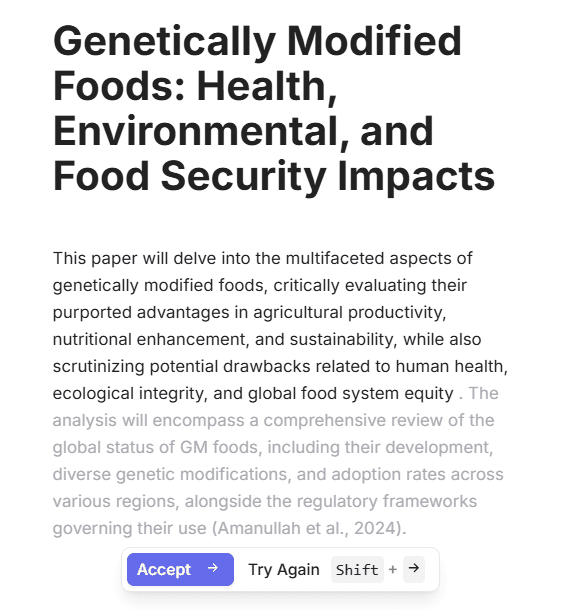
Use o esquema para:
Adicionar os seus próprios factos, exemplos ou investigação
Reorganizar secções para reforçar o seu fluxo
Decidir quais os pontos que precisam de mais profundidade
Passo 4: Adicione a Sua Voz e Continue a Refinar
Revise as sugestões da Jenni diretamente no documento.
Clique em Aceitar para manter uma sugestão ou em Tentar Novamente para uma versão diferente. Também pode continuar a escrever com a sua própria voz em qualquer momento.
Dê Forma à Sua Visão sobre os Alimentos Geneticamente Modificados
Escrever sobre alimentos geneticamente modificados não é apenas listar prós e contras, é explorar como a ciência, a ética e a sociedade se encontram no nosso prato.
<CTA title="Construir uma declaração de problema forte" description="Gere uma declaração precisa, pronta para publicação, em minutos - sem stress, sem floreados." buttonLabel="Experimente a Jenni grátis" link="https://app.jenni.ai/register" />
Os alimentos GM são uma solução para a fome ou um risco que ainda não compreendemos? Essa é a questão no centro deste tema. Os melhores ensaios não se limitam a explicar factos; ligam-nos ao impacto no mundo real.