によって
ジャスティン・ウォン
—
オックスフォード引用スタイルの概要:脚注、参考文献、引用ガイド


学術的な執筆には、誠実さ、構造、そして信頼が求められます。これを達成する一つの方法が、オックスフォード式(Oxford)参照スタイルの活用です。この手法は、執筆者自身のテキストをすっきりと読みやすく保ちながら、他者の功績を適切に称えるのに役立ちます。
このガイドでは、オックスフォード式とは何か、その機能や正しい使い方を説明します。脚注、参考文献一覧(ビブリオグラフィー)、そしてよくある間違いについても取り上げます。さらに、オックスフォード式を使用した書籍、論文、ウェブサイトのシンプルな引用例も紹介します。
<CTA title="学術的な引用構成を瞬時にマスター" description="Jenni AIを使用すれば、フォーマットの煩わしさや脚注の漏れを心配することなく、正確なオックスフォード式の引用を数秒で生成できます。" buttonLabel="Jenniを無料で試す" link="https://app.jenni.ai/register" />
オックスフォード式(Oxford)参照スタイルとは?
オックスフォード式参照スタイル(文献脚注方式とも呼ばれる)は、情報源を示すために脚注と参考文献一覧を使用します。人文学、法学、社会科学の分野で広く使われています。
このスタイルを使用する場合、引用またはパラフレーズ(言い換え)した文の直後に、テキスト内に小さな上付き数字を配置します。それぞれの数字はページ下部の脚注に対応しています。最初の脚注では、出典の詳細をすべて記載します。同じ出典を後ほど再度参照する場合は、短縮形を使用できます。論文の最後には、著者の家名のアルファベット順にすべての出典を並べた参考文献一覧を含めます。
オックスフォード式は、明確さと正確さが重視されるオックスフォード大学で始まりました。ハーバード式(Harvard)やAPA式とは異なり、オックスフォード式では本文内に長い括弧書きが入らないため、テキストが非常に読みやすくなります。
<ProTip title="💡 プロのヒント:" description="論文をすっきりと、読みやすく仕上げたい場合はオックスフォード式を使用しましょう。" />
なぜオックスフォード式が重要なのか
適切な引用は、単にルールに従う以上の意味を持ちます。それは他者のアイデアに対する誠実さと敬意を示すものです。オックスフォード式は、一貫性を持たせながら明確に説明するのに役立ちます。
重要とされる具体的な理由は以下の通りです:
文章をすっきりと保つ: 読者は長い引用表記に邪魔されることなく、あなたのアイデアに集中できます。
深みを示す: 脚注には、役立つ補足説明や短いコメントを含めることができます。
信頼を維持する: すべてのアイデアの出典を遡ることができます。
学びをサポートする: 読者はより多くの情報を得るために、記載された出典を確認できます。
例えば、歴史学の学生なら、ストーリーの流れを妨げることなく、ページの下部に出典を追加しながら理論を説明するためにオックスフォード式を使用するでしょう。
オックスフォード式参照システムの主な構成要素
1. 上付き数字
何かを引用するたびに、文や引用符のすぐ後ろに上付き数字を追加します。これらの数字は、ドキュメント全体を通して順番に増えていきます。
例:
多くの学者は、教育が社会的流動性を変化させると信じている。¹
2. 脚注
脚注はページの下部に表示されます。出典を初めてメンションするときは、詳細な情報をすべて記載します。後で同じ出典を再度使用する場合は、短縮した表記にします。
例(最初の引用):
¹ Peter Burke, History and Social Theory, 3rd edn (Cambridge: Polity Press, 2019), p. 45.
例(その後の引用):
² Burke, History and Social Theory, p. 112.
<ProTip title="📘 リマインダー:" description="一度出典を詳細に引用した後は、2回目以降は短縮版を使用して脚注を整理しましょう。" />
3. 参考文献一覧
エッセイやレポートの最後に、すべての出典をアルファベット順にリストアップします。
例:
Burke, Peter. History and Social Theory, 3rd edn. Cambridge: Polity Press, 2019.
脚注にはページ表記が含まれますが、参考文献一覧には、編書(edited volume)をリストアップする場合を除き、ページ表記は含めません。
フォーマット規則とバリエーション
機関によってルールに若干の違いがある場合がありますが、多くは以下の基本に従います。
一般的なフォーマット
項目 | ルール |
フォントとサイズ | Times New Roman 12 pt または同様のフォントを使用します。 |
行間隔 | 本文はダブルスペース(2行空き)、脚注はシングルスペース(1行空き)にします。 |
脚注番号 | 番号は通し番号(連番)にします。 |
引用符 | 短い引用には一重引用符(‘ ’)を使用し、二重引用符(“ ”)は引用部分の中の引用にのみ使用します。 |
ブロック引用 | 長い引用(40語以上)はインデント(左寄せ)し、引用符は使用しません。 |
ページ番号 | 特定のページを引用またはパラフレーズする場合は、常に含めます。 |
<ProTip title="✍️ 注意:" description="オックスフォード式では、句読点は引用符の後ではなく、引用符(閉じ)の内側に入ります。" />
「Ibid.」と短縮タイトル
一つ前の脚注と全く同じ出典を続けて引用する場合は、同じ記述を繰り返す代わりに Ibid. を使用できます。
例:
¹ John Tosh, The Pursuit of History, 6th edn (London: Routledge, 2015), p. 78.
² Ibid., p. 79.
電子版を読む際の一貫性と分かりやすさを考慮し、一部の教員は「Ibid.」よりも短縮タイトルの方を好む場合があります。
さまざまなソースタイプの引用方法
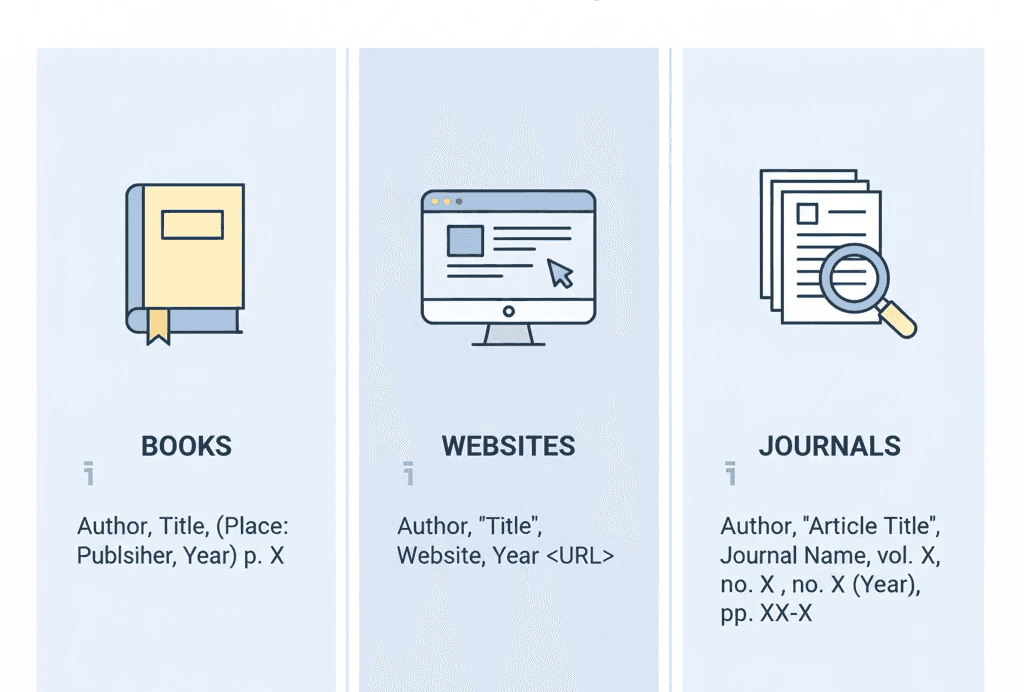
ソースの種類によって、それぞれ固有の構造があります。以下に最も一般的な例を示します。
1. 書籍
脚注:
¹ Eric Hobsbawm, The Age of Revolution: Europe 1789–1848 (London: Weidenfeld & Nicolson, 1962), p. 33.
参考文献一覧:
Hobsbawm, Eric. The Age of Revolution: Europe 1789–1848. London: Weidenfeld & Nicolson, 1962.
2. 編著書
脚注:
² Roger Scruton (ed.), The Oxford Companion to Philosophy (Oxford: Oxford University Press, 2005), p. 215.
参考文献一覧:
Scruton, Roger, ed. The Oxford Companion to Philosophy. Oxford: Oxford University Press, 2005.
3. 書籍の一章
脚注:
³ Mary Beard, ‘Roman Laughter and Power’, in Laughter and the Ancient World, ed. by J. Hall (Cambridge: Cambridge University Press, 2014), pp. 45–58 (p. 47).
参考文献一覧:
Beard, Mary. ‘Roman Laughter and Power’. In Laughter and the Ancient World, edited by J. Hall, 45–58. Cambridge: Cambridge University Press, 2014.
4. 学術誌の論文
脚注:
⁴ Linda Woodbridge, ‘The Shadow of Hamlet’s Father’, Studies in English Literature, 48.2 (2008), pp. 265–290 (p. 270).
参考文献一覧:
Woodbridge, Linda. ‘The Shadow of Hamlet’s Father’. Studies in English Literature, 48 no. 2 (2008): 265–290.
<ProTip title="🗞️ プロのヒント:" description="学術誌の論文を引用する際は、常に巻(volume)と号(issue)の番号を記載してください。" />
5. ウェブサイト
脚注:
⁵ National Archives, ‘World War II Documents’, UK Government Archives, https://www.nationalarchives.gov.uk/ww2/ [accessed 25 October 2025].
参考文献一覧:
National Archives. ‘World War II Documents’. UK Government Archives. https://www.nationalarchives.gov.uk/ww2/ [accessed 25 October 2025].
6. オンラインジャーナル
脚注:
⁶ Maria Lopez, ‘Digital Humanities and Archival Research’, Journal of Modern Studies [Online], 7 (2022), https://jms.edu/lopez2022.
参考文献一覧:
Lopez, Maria. ‘Digital Humanities and Archival Research’. Journal of Modern Studies [Online], 7 (2022). https://jms.edu/lopez2022.
7. 新聞記事
脚注:
⁷ Jane Bennett, ‘Ethics in Contemporary Politics’, The Guardian, 15 July 2024, p. 12.
参考文献一覧:
Bennett, Jane. ‘Ethics in Contemporary Politics’. The Guardian, 15 July 2024.
直接引用と間接引用
直接引用
短い引用には一重引用符を使用します。長い引用の場合は、インデントされたブロックを使用し、引用符を外します。
例:
フーコーが書いたように、‘権力は至る所に存在する。それは権力があらゆるものを包含しているからではなく、権力があらゆる所から生じるからである’。⁸
間接引用
自分の言葉でアイデアを言い換えて説明する場合でも、出典を引用しなければなりません。
例:
日常生活において、社会的規範が権力の形成に影響を及ぼしているということで多くの学者の意見が一致している。⁹
<ProTip title="🧠 プロのヒント:" description="盗用(プラジオリズム)を避けるために、パラフレーズしたアイデアであっても必ず出典を記載してください。" />
避けるべきよくあるミス
注意深く執筆している人であっても、引用エラーを起こしてしまうことがあります。以下が最もよく見られる間違いです。
1. 異なるスタイルの混在
同じ論文の中でオックスフォード式、ハーバード式、APA式などを混在させてはいけません。1つのスタイルを選び、全体で統一します。
2. ページ番号の欠落
出典から特定のポイントを用いたり議論したりする場合は、常にページ番号を追記してください。
3. 間違った句読句
オックスフォード式引用では、引用の各要素の間にカンマを使用し、最後にピリオド(.)を置きます。
4. 閲覧日の省略
ウェブページは変更されることがあるため、ウェブサイトやオンライン記事を引用する際は必ず閲覧・アクセス日を含めます。
5. 完全な引用の不必要な繰り返し
一度登場した出典には、それ以降は短縮版(著者名 + 短縮タイトル + ページ番号)を使用します。
<ProTip title="⚠️ リマインダー:" description="提出する前に、ドキュメント全体をスキャンして引用形式にエラーがないか確認しましょう。" />
オックスフォード式 vs その他の参照システム
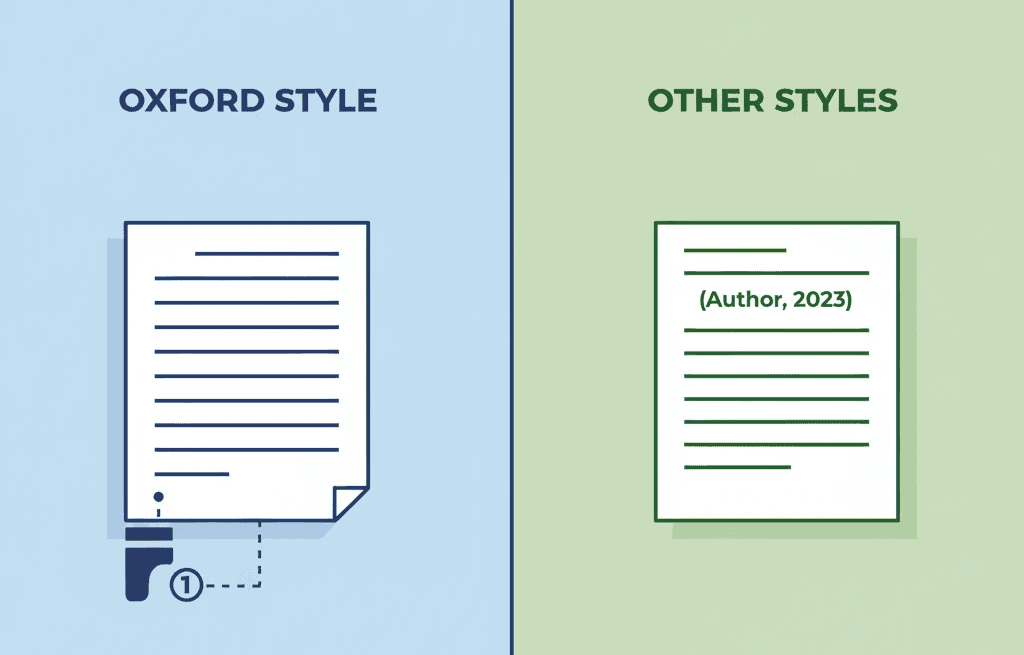
参照システムが異なれば、対応する学術分野も異なります。以下はオックスフォード式と、ハーバード式やAPA式との比較です。これらと類似した「脚注・参考文献」のアプローチについては、弊社のシカゴ(Chicago)スタイル引用ガイドもご参照ください。
特徴 | オックスフォード式(脚注方式) | ハーバード式 / APA式(著者―発行年) |
本文中での引用 | 脚注にリンクされた上付き数字 | 括弧(丸かっこ)の中に著者名 + 発行年 |
読みやすさ | 高い ─ 本文がすっきり保たれます | 低い ─ 途中で引用表記が入るため流れが遮られます |
対応分野 | 人文学、法学、神学 | 科学、社会科学 |
引用箇所の表示 | 脚注 + 参考文献一覧 | 本文中 + 参考文献リスト |
繰り返し引用 | 短縮タイトル または 「Ibid.」 | 著者名 + 発行年を再度記述 |
テーマに「深さと文章の流れ」を重視したい場合はオックスフォード式を使用します。より短く、データ・調査主体の執筆の場合は、ハーバード式やAPA式を使用します。
<ProTip title="📚 注意:" description="常に所属コースのガイドを確認してください。一部の学部では、脚注(footnotes)の代わりに後注(endnotes)を指示されることがあります。" />
チェックリスト:オックスフォード式引用の適用方法
✅ フォーマット確認
上付き数字は、句読点の後に配置されていますか?
脚注はシングルスペースかつ小さめのフォントになっていますか?
参考文献一覧は姓(Last name)の順に並べ替えられていますか?
✅ 引用形式
最初の記載:詳細情報を含めていますか?
2回目以降の記載:短縮形になっていますか?
「Ibid.」:同じ出典が連続して繰り返される場合にのみ使用していますか?
✅ 引用箇所
短い引用は一重引用符で囲み、長い引用はインデントを適用していますか?
ページ番号は常に記載されていますか?
✅ デジタルリソース
完全なURLと閲覧(アクセス)日を含めていますか?
オンラインジャーナルには「[Online]」というラベルを付けていますか?
✅ 一貫性
ドキュメント全体で、同じ句読点スタイルとレイアウトを維持していますか?
<ProTip title="🧾 プロのヒント:" description="Jenni AIは、引用形式の一貫性を自動的にチェックし、細かな書式エラーを修正できます。" />
オックスフォード式を使用すべきタイミング
オックスフォード式は、以下のような場合に最適です:
人文学、法学、神学の分野で執筆しているとき。
担当の教授や出版社からこのスタイルを指定されたとき。
脚注に短い補足メモや翻訳を含めたいとき。
本文の中に情報が密集するのを防ぎ、物語のようにすっきりした文章を好むとき。
科学、医学、心理学などの分野で執筆する場合は、一般的にAPAやバンクーバー式(Vancouver)など、別のスタイルが求められます。
デジタル時代におけるオックスフォード式引用

オンラインでの学習やデジタル出版の普及に伴い、引用の管理にはこれまで以上の配慮が求められています。引用文献管理ソフトやJenni AIのようなツールを使うことで時間を大幅に節約できますが、引用ソフトウェア vs 手動による引用の比較を確認することも判断の助けになります。ZoteroやMendeleyを使ってリサーチ情報を蓄積している場合、Jenni AIのZotero・Mendeley連携機能を使えば、執筆中もライブラリを整理された状態に保てます。しかし、句読点や斜体の位置といった最終的なディテールは、常に自身の目で確かめる必要があります。
自動記述ツールでは、アルファベットの「大文字・小文字」のような細かな誤り(例: The Guardian vs the Guardian)を見落とすことがあります。Jenniの「構成から作成(outline-first)」機能を利用すれば、構造を崩さずに適切な計画を立てて正確に引用を追加できます。
具体例:実際のオックスフォード式引用の流れ
以下に、本文中でオックスフォード式がどのように表示されるかを示す短いサンプル段落を紹介します。
歴史学者の間では、フランス革命の原因について長きにわたり議論が交わされてきた。¹ ホブズボームのように、経済的変化が古い制度を弱体化させたと唱える者もいれば、² 啓蒙思想から生まれた新たなアイデアを要因として挙げる者もいる。³
脚注表示:
¹ Peter Jones, Revolutions and the Modern World (Cambridge: CUP, 2020), p. 14.
² Eric Hobsbawm, The Age of Revolution: Europe 1789–1848 (London: Weidenfeld & Nicolson, 1962), p. 33.
³ Sarah Maza, Thinking About the French Revolution (Oxford: OUP, 2019), p. 51.
ドキュメントの最後には、参考文献一覧としてこれら3つの作品がアルファベット順にリストアップされます。
メリットとデメリット
✅ メリット
文章が洗練され、非常に読みやすくなる。
脚注を通じて詳細な参照情報をすぐに提供できる。
補足的な解説をノート(脚注)内に挟むことができる。
長文の引用や綿密な分析が必要なエッセイに最適である。
📉 デメリット
手動でこれらすべてをフォーマットする場合、非常に時間がかかる。
オンライン限定記事などのウェブ型ライティングには不向きな傾向がある。
データを多用する実証研究分野には複雑になりすぎる場合がある。
それでもなお、正しく活用されたオックスフォード式は、明確で、エレガント、そして非常にプロフェッショナルな印象を与えることができます。
信頼性と明確性を高めるためのオックスフォード式マスター
オックスフォード式参照スタイルは、誠実で整理された明確な執筆を支援します。脚注、上付き数字、参考文献一覧を用いて、情報がどこから来ているかを正確に明確化します。
<CTA title="完璧なオックスフォード式引用を作成" description="Jenni AIを使用すれば、脚注のフォーマットや確認、再登場する引用の短縮化、参考文献一覧の整理を瞬時にすべて処理できます。" buttonLabel="Jenniを無料で使い始める" link="https://app.jenni.ai/register" />
あなたが学生、研究者、あるいはプロのライターであっても、オックスフォード式参照をしっかりと使いこなすことは、出典に対する敬意を表し、読者からの信頼を確かなものにします。Jenni AIのようなツールを使うことで、論文を美しく正確に保ちながら、ストレスなく引用を作成することができます。