によって
ジャスティン・ウォン
—
MLA法的引用ガイドライン:法律、ケース、および規制を簡単に引用する方法


法律文献の引用は、特に人文科学や社会科学の論文を執筆している場合、混乱しがちです。使用したい法律、判例、または政府の規則を見つけても、それらをMLAスタイルでどのように引用すればよいでしょうか。作業効率を上げるには、フォーマットのエラーを減らすことができるMLA引用ジェネレーターを参照してください。
MLA(Modern Language Association:現代言語協会)スタイルには、独自の法律文献の引用方法があります。これは弁護士が使用するスタイルとは異なりますが、学生や研究者が明確かつ一貫した方法で出典を明記するのに役立ちます。
<CTA title="MLA形式の法律文献引用を簡単に作成" description="Jenniを使えば、MLA形式に準拠した法律文献の引用を数秒で作成できます。フォーマットの調整に時間を取られず、執筆活動に集中しましょう。" buttonLabel="Jenniを無料で試す" link="https://app.jenni.ai/register" />
MLA形式の法律文献引用が重要な理由
法律文献を正しく引用することは、読者があなたの参考文献を素早く探すのに役立ちます。法律や判決は、一般の書籍や記事とは異なります。これらにはタイトル、番号、条項、管轄区域が使用されており、読者を混乱させがちです。
法律文献にMLAフォーマットを使用することで、作品が明確で信頼性が高く、分かりやすいものになります。これにより、以下のことが示されます:
十分な調査を行っていること
著作権と学術的な誠実さを尊重していること
法律情報をシンプルかつ一貫した方法で伝えられること
MLAスタイルセンターでは、法科大学院以外に所属する執筆者は、法律文献を引用する際にMLAの標準的な構造を使用すべきであると説明しています。
<ProTip title="💡 プロのヒント:" description="引用は住所のようなものと考えてください。読者に対して、あなたが使用した法律、判例、または規則がどこにあるのかを正確に示す必要があります。" />
MLA形式の法律文献引用のユニークな点
法科大学院では、多くの場合ブルーブック(Bluebook)システムが使用されます。しかし、MLAスタイルでは、一般の読者にとっての分かりやすさに重点を置いています。つまり、以下のような特徴があります:
MLAでは、複雑な裁判所の略語ではなく、法律や判例のタイトルを重視します。
MLAでは、制定年(判定年)と管轄区域をプレーンな言葉で表現します。
MLAの引用は、書籍、ウェブサイト、記事と並んで、引用文献リスト(Works Cited)にすっきりと収まります。
あなたの論文が一般読者向け、または人文学科のコース向けである場合は、MLA形式の法律文献引用が最適です。また、増え続ける参照文献の管理には、ZoteroやMendeleyとの連携を利用すると、引用した文献の追跡がよりスムーズになります。
MLA形式の法律文献引用を構成する要素を理解する
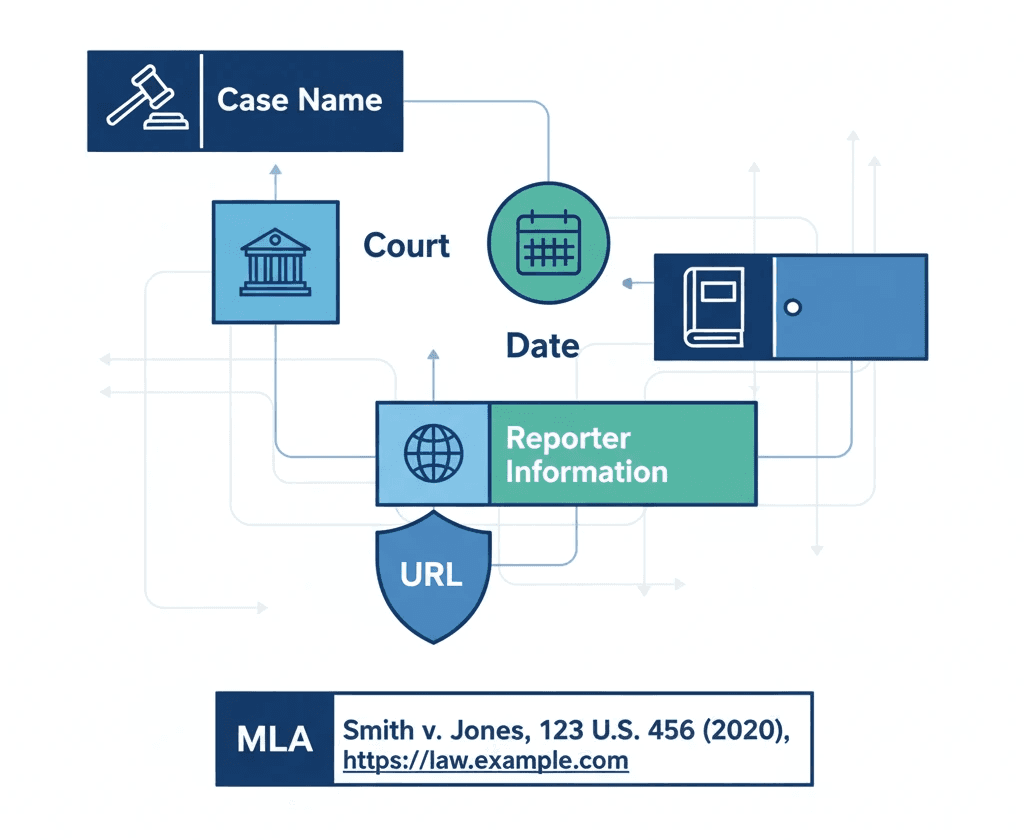
すべてのMLA形式の法律文献引用には、いくつかの核となる構成要素があります。これらの要素は、すべての例で繰り返し使用されます:
要素 | 意味 |
タイトル (Title) | 法律、判例、または規則の名称 |
管轄区域 (Jurisdiction) | 制定または決定した主体(米国、州、行政府機関など) |
番号または法典 (Number or Code) | 法律または判例の参照番号 |
日付 (Date) | 可決または判決が下された年 |
情報源 (Source) | 発行または発見された場所 |
URL / 閲覧日 | オンライン資料の場合 |
それでは、MLAスタイルで引用する4つの主要な法律文献のタイプをステップごとに見ていきましょう。
1. 制定法および法典(法律)
制定法とは、政府によって可決された成文法のことです。これらは「法典」と呼ばれるコレクションにまとめられている場合があります。
基本フォーマット
政府名. 法律のタイトル. 法典または制定法番号. 制定年.
例(連邦法):
United States. Public Law 115-16: Promoting Women in Entrepreneurship Act. 2017.
法律にオンラインでアクセスした場合は、URLと閲覧日を追加します:
United States. Public Law 115-16: Promoting Women in Entrepreneurship Act. 2017. Congress.gov, congress.gov/bill/115th-congress/house-bill/255. Accessed 30 Oct. 2025.
本文中での引用(In-Text Citation)例
(“Promoting Women” sec. 5)
これは、二重引用符で囲んだタイトルの短縮形の後に、条項(section)番号を続けることを意味します。
<ProTip title="💡 プロのヒント:" description="常に条項記号(§)または条項番号を含めてください。読者があなたが言及している法律の正確な箇所を特定するのに役立ちます。" />
2. 判例(裁判例)
判例とは、裁判官によって下された決定のことです。それぞれの判例には名称(例:Brown v. Board of Education)と、それが掲載されている判例集を示す引用が付いています。
基本フォーマット
判例名(斜体). 巻 判例集 ページ(判決年).
例:
Brown v. Board of Education. 347 U.S. 483 (1954).
オンラインで閲覧した場合:
Brown v. Board of Education. 347 U.S. 483 (1954). Legal Information Institute, Cornell Law School, law.cornell.edu/supremecourt/text/347/483.
本文中での引用(In-Text Citation)例
(Brown 485)
これは、情報がBrown判決の485ページからのものであることを読者に示しています。
<ProTip title="📘 プロのヒント:" description="判例名は斜体(イタリック体)にしますが、法律のタイトルは斜体にしません。分かりやすくするために、常にページ番号または段落番号を含めてください。" />
これが重要な理由
判例は、法律を解釈する重要な情報源です。正しくフォーマットされた判例名とページ番号は、あなたの参考文献をプロフェッショナルで検証可能なものにします。
3. 規則および行政文書
規則は、法律の委任を受けて政府機関によって作成されるルールです。例として、大気浄化法(Clean Air Act)やEPA(環境保護庁)規則などが挙げられます。
基本フォーマット
規則のタイトル. 連邦規則集(CFR)のタイトル. 条項番号. 発行者, 年. URL(オンラインの場合).
例:
Clean Air Act. 40 CFR §§ 50–99. U.S. Environmental Protection Agency, 1970. epa.gov/clean-air-act. Accessed 30 Oct. 2025.
本文中での引用(In-Text Citation)例
(Clean Air Act 40 CFR § 50)
<ProTip title="💡 プロのヒント:" description="規則や規制が更新されている場合は、使用した年またはバージョンを明記してください。法律は変更される可能性があるため、実際に読んだものを引用しましょう。" />
これが重要な理由
規則は、法律がどのように適用されるかを説明するものです。正確な法典と条項番号を使用することで、読者があなたの主張を確実に検証できるようになります。
4. 立法資料(法案、公聴会、討議など)
立法資料には、国会(米国では議会)や州議会からの法案、討論録、公聴会の書き起こし記録などが含まれます。
基本フォーマット
タイトル. 立法機関, 会期番号, 年. 発行者(利用可能な場合). URL(オンラインの場合).
例(法案):
American Innovation and Manufacturing Act. U.S. Congress, 116th Cong., 2019. Congress.gov, congress.gov/bill/116th-congress/senate-bill/2754. Accessed 30 Oct. 2025.
本文中での引用(In-Text Citation)例
(American Innovation sec. 3)
公聴会および討議の場合
公聴会のタイトルを引用し、委員会名をコンテナのタイトルとして記載します。
例:
Climate Change and National Security. Hearing before the Committee on Foreign Relations, U.S. Senate, 116th Cong., 1st sess., 2019. govinfo.gov, www.govinfo.gov/content/pkg/CHRG-116shrg40745/pdf/CHRG-116shrg40745.pdf.
<ProTip title="📄 注意:" description="公聴会を引用する場合は、書籍の章のように扱い、公聴会のタイトルと委員会の両方をその収録コンテナとして含めてください。" />
フォーマットと句読点のヒント
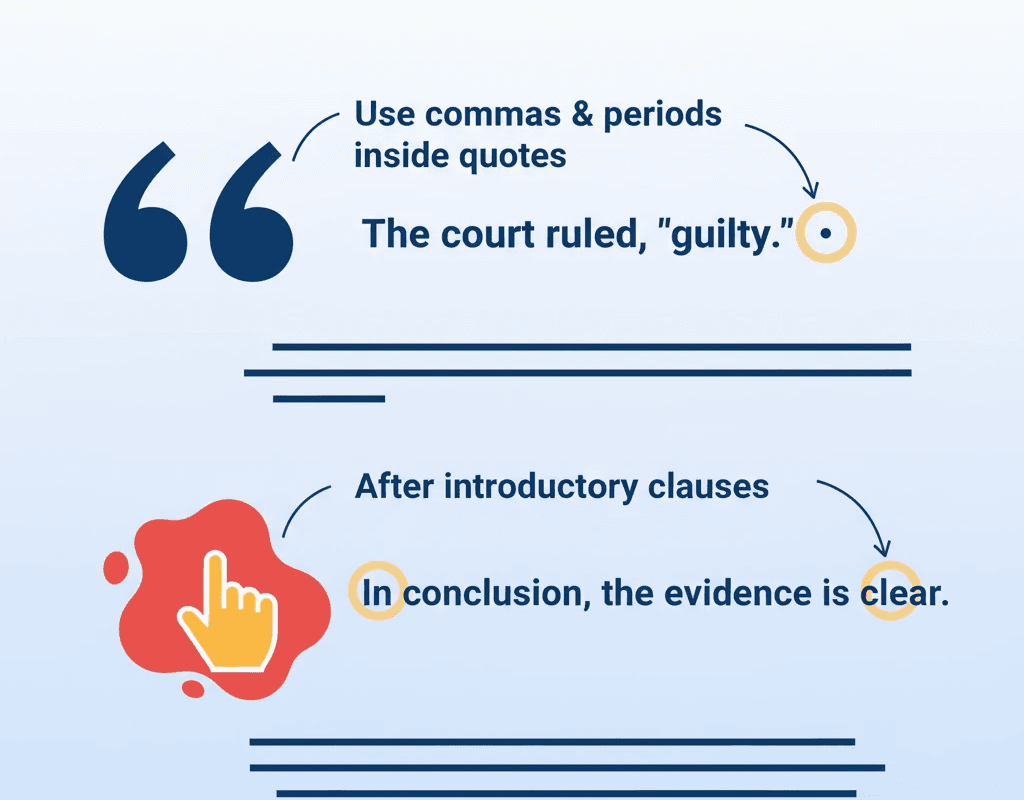
ここでは、シンプルですが重要なスタイルルールをいくつか紹介します:
斜体(イタリック): 判例名のみに斜体を使用します。法律、規則、または法典は通常のフォントを使用します。
句読点(ピリオド・カンマ): 引用の各パーツは、カンマではなくピリオドで区切ります。
日付: 法律が可決された年、または判決が下された年を含めます。
URL: オンライン資料の場合、必ず「https://」を取り除き、最後に閲覧日を含めてください。
管轄区域: 連邦法、州法、地方自治体法であるかを常に明記します。
条項: 条項番号の前には条項記号(§)を使用します。
違いの例:
正しい例: Brown v. Board of Education. 347 U.S. 483 (1954).
誤った例: Brown v. Board of Education, 347 U.S. 483 (1954).
<ProTip title="📝 リマインダー:" description="MLA形式の法律文献引用の一貫性を保ち、引用文献リスト全体で同じ句読点と斜体のルールを適用してください。" />
引用例一覧表(クイックリファレンス)
タイプ | 引用文献リスト(Works Cited)の例 | 本文中の引用(In-Text Citation) |
連邦法 | United States. Public Law 115-16: Promoting Women in Entrepreneurship Act. 2017. | (“Promoting Women” sec. 5) |
判例 | Brown v. Board of Education. 347 U.S. 483 (1954). | (Brown 485) |
規則 | Clean Air Act. 40 CFR §§ 50–99. U.S. EPA, 1970. epa.gov/clean-air-act. Accessed 30 Oct. 2025. | (Clean Air Act § 50) |
法案 | American Innovation and Manufacturing Act. U.S. Congress, 116th Cong., 2019. Congress.gov, congress.gov/bill/116th-congress/senate-bill/2754. Accessed 30 Oct. 2025. | (American Innovation sec. 3) |
<ProTip title="💡 プロのヒント:" description="この表を保存しておけば、引用文献リストを作成する際に、これらのフォーマットをテンプレートとして再利用できます。" />
MLA形式 vs. 法律(Bluebook)形式 of 比較
主な引用システムとして、MLAスタイルとブルーブック(Bluebook)スタイルの2つを目にすることがあるでしょう。主な違いは以下の通りです:
特徴 | MLAスタイル | Bluebookスタイル |
重視する点 | 読者にとっての分かりやすさ | 法律上の正確さ |
主な用途 | 学術論文や人文学系の論文 | 法律専門誌(ロージャーナル)や裁判所提出書類 |
フォーマットスタイル | シンプルでタイトル基準 | 詳細で、判例集の情報や略語が含まれる |
使いやすさ | 学生にとって扱いやすい | 法律の専門家以外には複雑 |
どちらのスタイルを使うべきか
学校のエッセイ、研究論文、あるいは人文科学や社会科学のレポートには MLA を使用してください。
指導教員や出版社から明示的な指定がある場合のみ Bluebook を使用してください。
<ProTip title="⚖️ リマインダー:" description="法科大学院に所属していない場合は、通常MLAスタイルが適切な選択です。引用をシンプルで読みやすく保つことができます。" />
よくある間違いとその修正方法
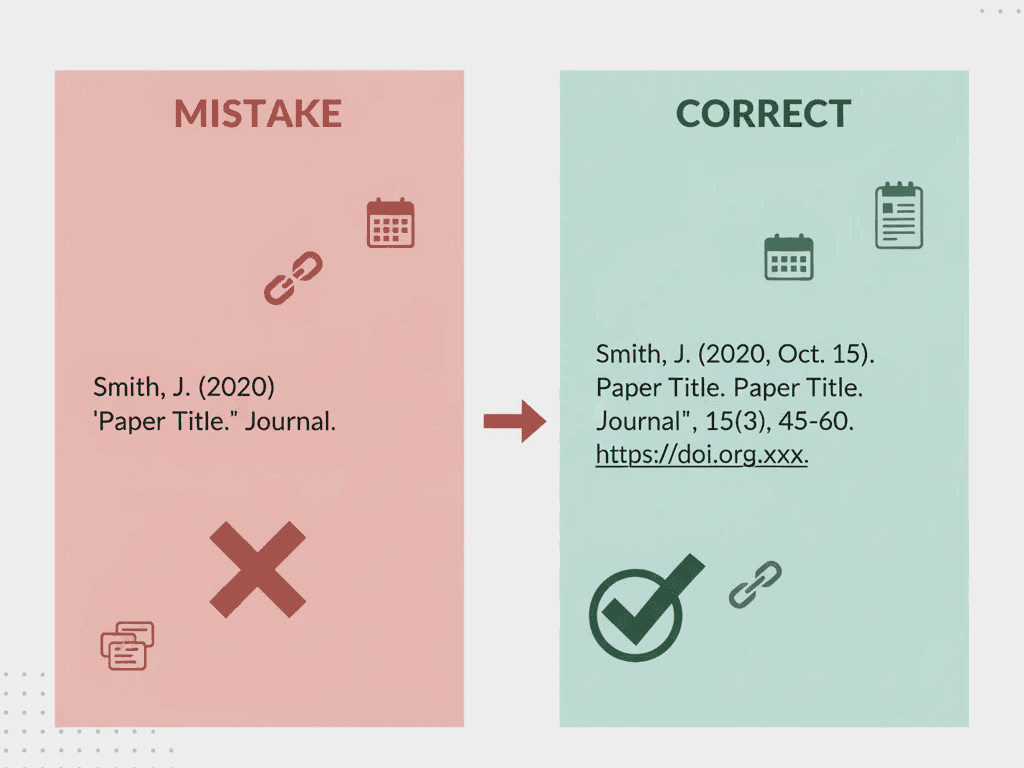
よくある間違い | 修正方法 |
条項番号やページ番号を忘れる | 常にこれらを含め、条項には § を、ページには p. を使用します |
斜体(イタリック)を混同する | 斜体にするのは「判例」のみで、法律は斜体にしません |
管轄区域を省略する | 「United States」または各「州名」を追加します |
ピリオドの代わりにカンマを使う | MLAでは各要素をピリオドで区切ります |
オンラインの法律文献で閲覧日を忘れる | 最後に「Accessed [日付]」を追加します |
Bluebookフォーマットをそのままコピーする | MLAスタイル(タイトル → 出典 → 発行年 → URL)の順序に簡素化します |
提出前のチェックリスト
この簡易チェックリストを使って、MLA形式の法律文献の引用が正しいか確認してください:
法律文献の種類が特定されている(法律、判例、規則など)
タイトルと管轄区域が含まれている
斜体が正しく適用されている(判例のみ)
条項(§)またはページ番号が追加されている
年代が明記されている
URLと閲覧日の記載がある(オンライン資料の場合)
一貫した句読点が使用されている(カンマではなくピリオド)
引用文献リスト(Works Cited)のすべての入力項目でスタイルが統一されている
本文中の引用が引用文献リストのエントリと一致している
すべてのボックスにチェックが入っていれば、引用の準備はバッチリです!
自信を持ってMLA形式の法律文献引用ガイドラインを活用しよう
MLA形式 of 法律文献引用の書き方を覚えるのは、それほど難しいことではありません。MLAの法律文献引用ガイドラインを一通り理解すれば、正確な参考文献リストの作成はごく自然に行えるようになります。もし、引用元の整理を行いながら執筆のサポートを受けたい場合は、AIエッセイライターが情報源を見失うことなく論文を作成・改訂するお手伝いをします。
<CTA title="今すぐMLA法律文献引用ガイドラインを適用" description="Jenniを使うことで、法律、判例、規則に対するMLA形式の引用を、完璧なフォーマットで数秒で生成できます。" buttonLabel="Jenniを無料で試す" link="https://app.jenni.ai/register" />
読者があなたの引用した法律文献を簡単に探せるようになると、論文執筆における信頼性とプロフェッショナリズムがより高まります。これらのMLA法律文献引用ガイドラインを活用して、複雑な法律情報を誰もが理解できる形式で伝えていきましょう。