Elicit vs Consensus: Thesis ke liye research question ka behtar jawab kaun deta hai?

Vikas Prabhari
9 मिनट में पढ़ें
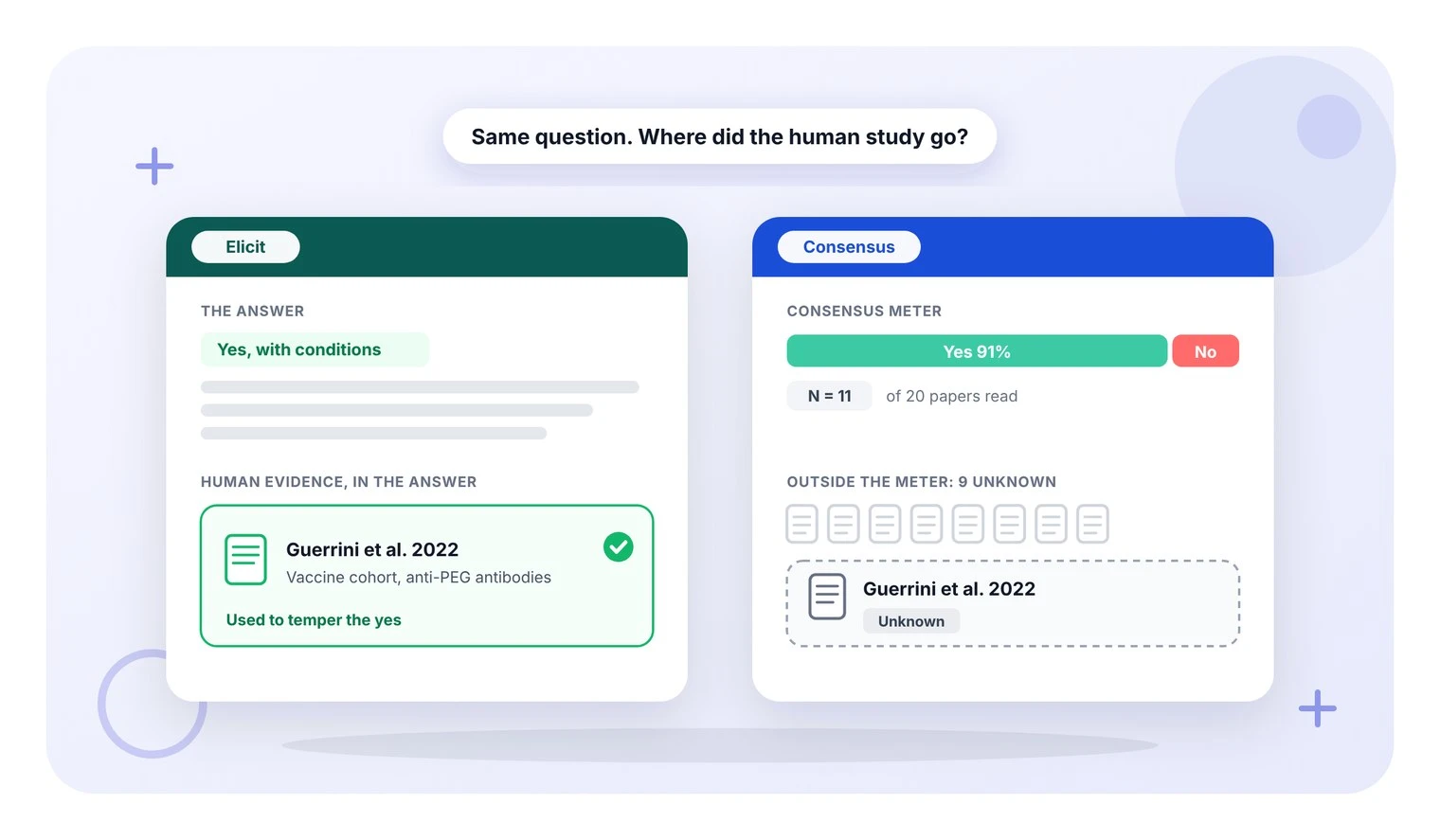
"Yes, repeat dosing triggers immune responses against PEG and lipid components, altering particle clearance." Consensus ne lagbhag 10 seconds ke andar yeh line print ki, ek meter ke upar jo Yes 91% dikha raha tha. Dheema Elicit yes apne pehle sentence mein hi qualified aaya, aur iske aakhiri paragraph ne sabse strong evidence ko preclinical models mein rakha, isliye thesis chapter ko wahin se shuru hona chahiye.
Har claim ko uske evidence ki strength se match karein
Hedge claim confidence edit ek overstated sentence ko rewrite karta hai, aur Claim Confidence un paanch reviews mein se ek hai jinse ek chapter guzar sakta hai
Jenni Free Try KareinElicit ya Consensus: shuruat ka faisla
Elicit se shuru karein - jab ek chapter ko yeh batana ho ki evidence kahan tak reach karta hai. Iske answer ne apne pehle sentence mein conditions ke naam bataye aur animal aur human findings ko alag rakha.
Consensus ka use karein - ek yes-or-no question par tez pehli nazar daalne ke liye. Isne lagbhag 10 seconds ke andar answer diya, aur iska meter dikhata hai ki classified papers kaise split hote hain.
Dono ke saath - papers ko cite karne se pehle unhe open karein. Ek Elicit row mein journal article par preprint label laga tha, aur meter ne Consensus dwara read kiye gaye 20 papers mein se 9 ko chhod diya tha.
Side by side
Elicit | Consensus | |
Screen par answer | 10.4 seconds par bhi working tha, 74.8-second check tak complete hua | 10.5-second check tak |
Iske peeche ke papers | 99 reviewed, 7 cited | 20 read, answer mein 15 cited |
Pehla sentence | Yes, formulation, route, dose aur species ke naam ke saath | Yes, PEG aur lipid components ke naam ke saath |
Human evidence | Iska apna paragraph, animal studies ke against set kiya gaya | Ek sentence, Pharmacokinetic Impacts ke under |
Mechanism detail | Antibodies, complement aur faster clearance | TLR4 aur CD1d add karta hai, aur ek B-1 fir B-2 antibody response |
Vaccine cohort study | Human findings ke liye cite kiya gaya | Cited, badged Unknown, meter ke baahar |
Yes-or-no tally | Koi nahi | Yes 91%, No 9%, N = 11 |
Rat study ke liye dikhaya gaya venue | bioRxiv, 2023 | NPJ Vaccines, 2023 |
Formatted reference | Source panel mein koi nahi | APA, MLA, Chicago, Harvard, BibTeX aur AMA/Numeric |
Consensus zyada fast tha aur usne page par zyada cheezein di: ek evidence table, figures aur chheh formats mein ek citation. Elicit ne aisa answer diya jis par ek chapter rely kar sakta hai, kyunki isne bataya ki evidence kahan strong tha aur kahan weak pad gaya.

Dono mein same question
Yeh question CRISPR ke lipid nanoparticle delivery wale paragraph se aaya tha jo in tool reviews mein use hua hai, jismein repeat dosing ko un cheezon mein list kiya gaya hai jinhe abhi bhi samajhna baaki hai: "Does repeat dosing of lipid nanoparticles trigger an immune response?"
Yeh bina settings change kiye, ek minute se bhi kam ke antar mein Elicit Research agent aur default Consensus search mein daala gaya. Consensus mein Deep review option switch on nahi tha.
Har tool ne jo answer diya
Consensus - answer 10.5-second check par screen par tha. Iske steps panel ne jo search run ki thi woh dikhai, "repeat dosing of lipid nanoparticles and immune response", 5.7M results aur 20 papers read ke saath, fir upar quote ki gayi headline aayi.
Iske neeche Consensus Meter Yes 91%, No 9%, N = 11 par tha, ek evidence table jo do claims ko Strong aur ek ko Moderate rate karti hai, aur iske do figures the. Evidence kya cover karta hai ispar line sabse aakhir mein aayi: "These findings reflect experimental animal models and clinical trial cohorts".
Body mechanism mein Elicit se zyada detail mein gayi. Isne ionizable lipid response ke peeche receptors ke roop mein TLR4 aur CD1d ka naam liya, aur re-dosing par ek early B-1 fir baad mein B-2 antibody response bataya.
Inke beech, isne padhe gaye papers se chaar PEG alternatives list kiye, har ek ke liye ek citation, aur follow-ups offer kiye jaise "How does accelerated blood clearance after LNP repeat administration affect mRNA efficacy?"
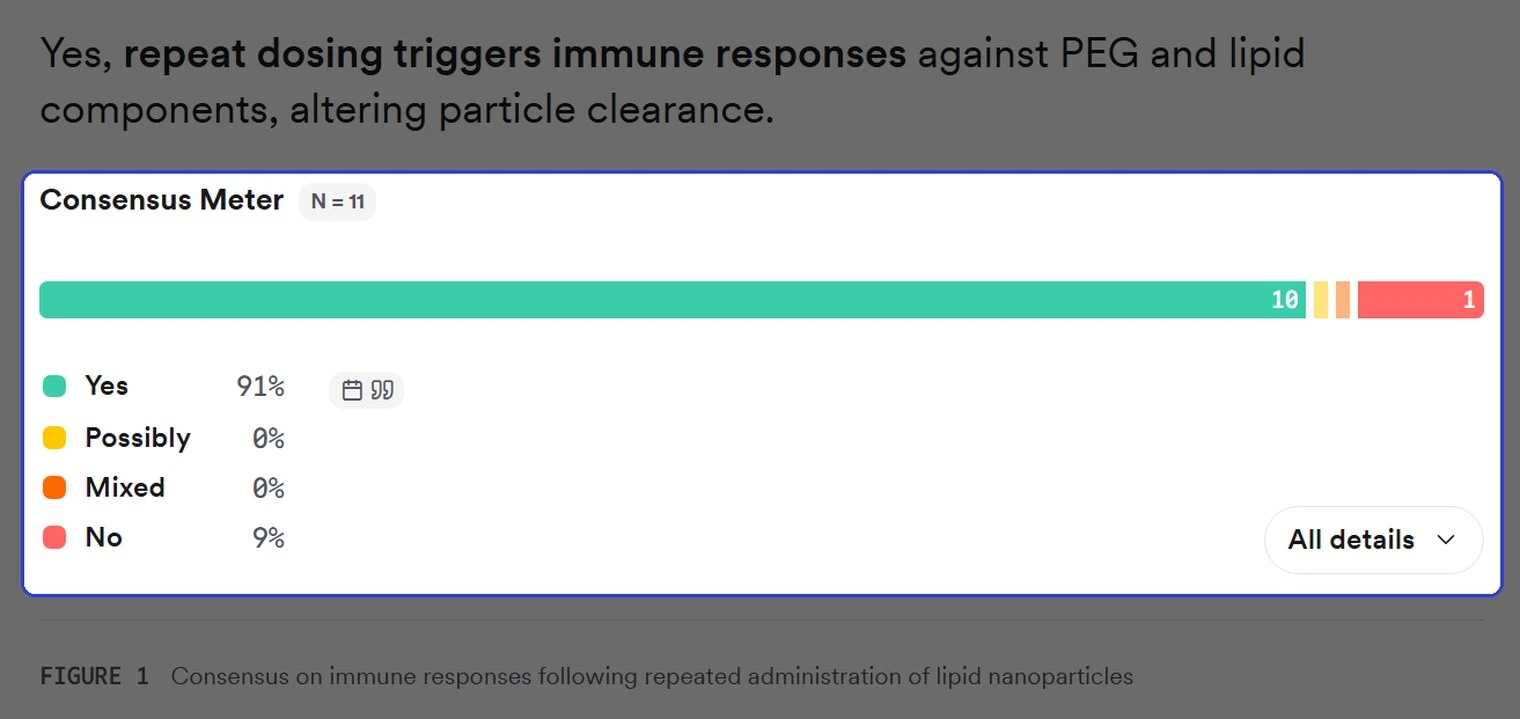
Repeat-dosing question ke liye Consensus headline aur meter
Elicit - 10.4-second check par abhi bhi kaam kar raha tha, iske paas 74.8-second check tak ek finished answer tha, jiska heading tha "Reviewed 99 sources on immune responses to repeat LNP dosing". Session ka title Lipid nanoparticle redosing immunity rakha gaya tha.
Iske pehle sentence ne yes answer diya aur kaha ki response aur iske consequences "depend on the LNP formulation, route, dose, and species." Doosra paragraph shuru hua "That effect is not inevitable or uniform."
Teesra paragraph humans ki taraf gaya: "Human vaccine findings are more reassuring about practical consequences than the animal redosing studies". Aakhiri paragraph ne faster clearance ke sabse strong evidence ko preclinical models mein rakha. Iske follow-ups mein shamil tha "What human evidence links anti-PEG antibodies to clinical outcomes?"
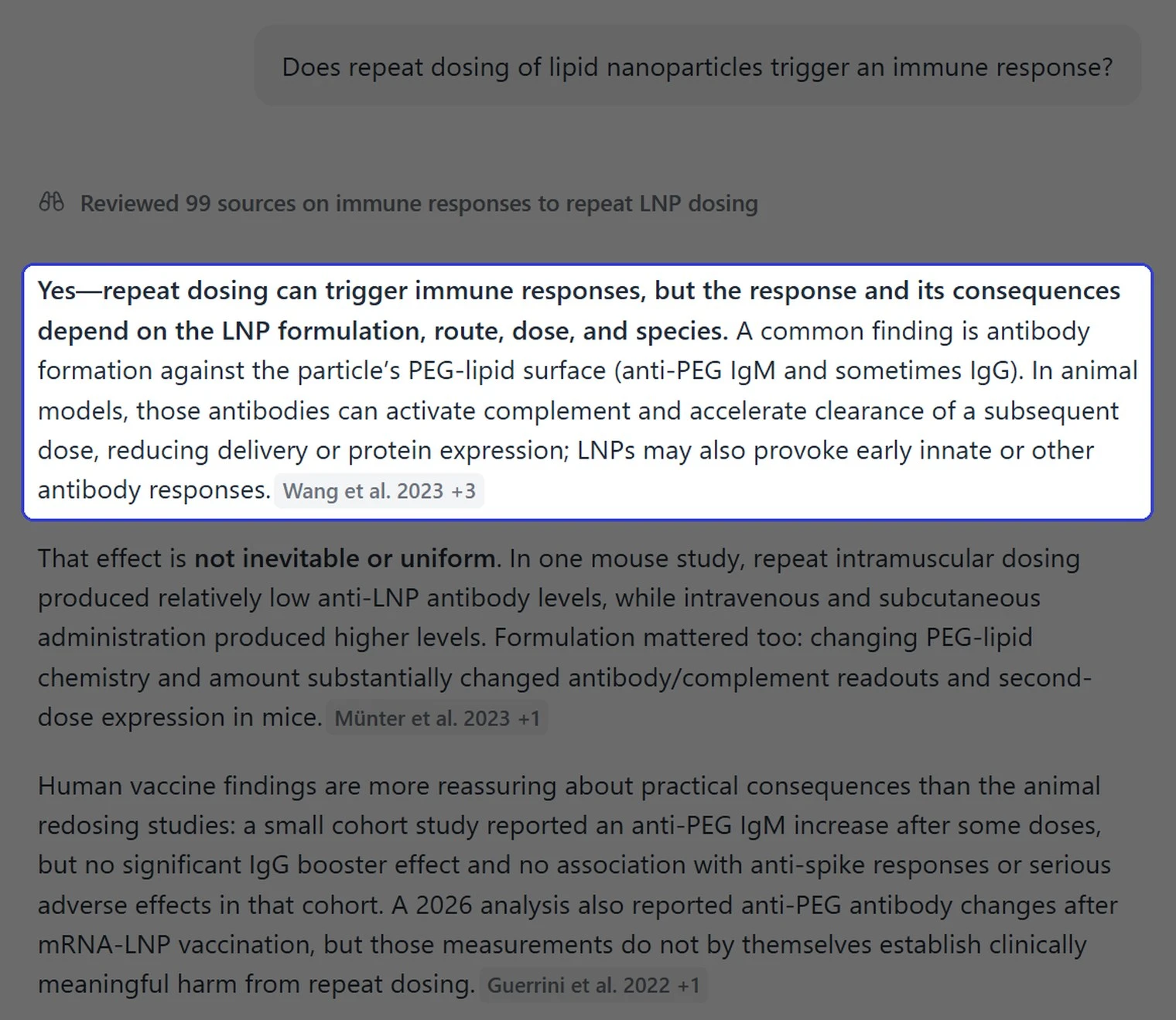
Elicit ka answer, jiske pehle sentence mein formulation, route, dose aur species hain
91% kya count karta hai
Consensus References panel mein 20 papers mein se har ek par ek badge laga hai. Badges milakar 10 Yes, 1 No aur 9 Unknown the, isliye meter ke peeche ka N = 11 sirf Yes aur No papers hain.
Ek No - Kim et al. (2023), ek naya ionizable lipid jo, uske abstract ke mutabiq, mice mein activity khoe bina fibrotic lungs mein repeated mRNA doses allow karta tha. Consensus ne ise tag kiya "The lone dissent here."
10 Yes mein se do - Arral et al. dwara ek Research Square preprint jismein 0 citations the, jiska journal version Drug Delivery and Translational Research mein hai, aur Cancer Research mein print hua ek 2026 conference abstract.
9 Unknown ke beech - Guerrini et al. (2022), vaccine cohort study jiska dono tools ne human evidence ke liye use kiya. Consensus mein iska key takeaway kehta hai "The presence of PEG in lipid-nanoparticle-based COVID-19 vaccines does not affect safety or efficacy, and anti-PEG antibodies do not show significant booster effects after repeated doses."
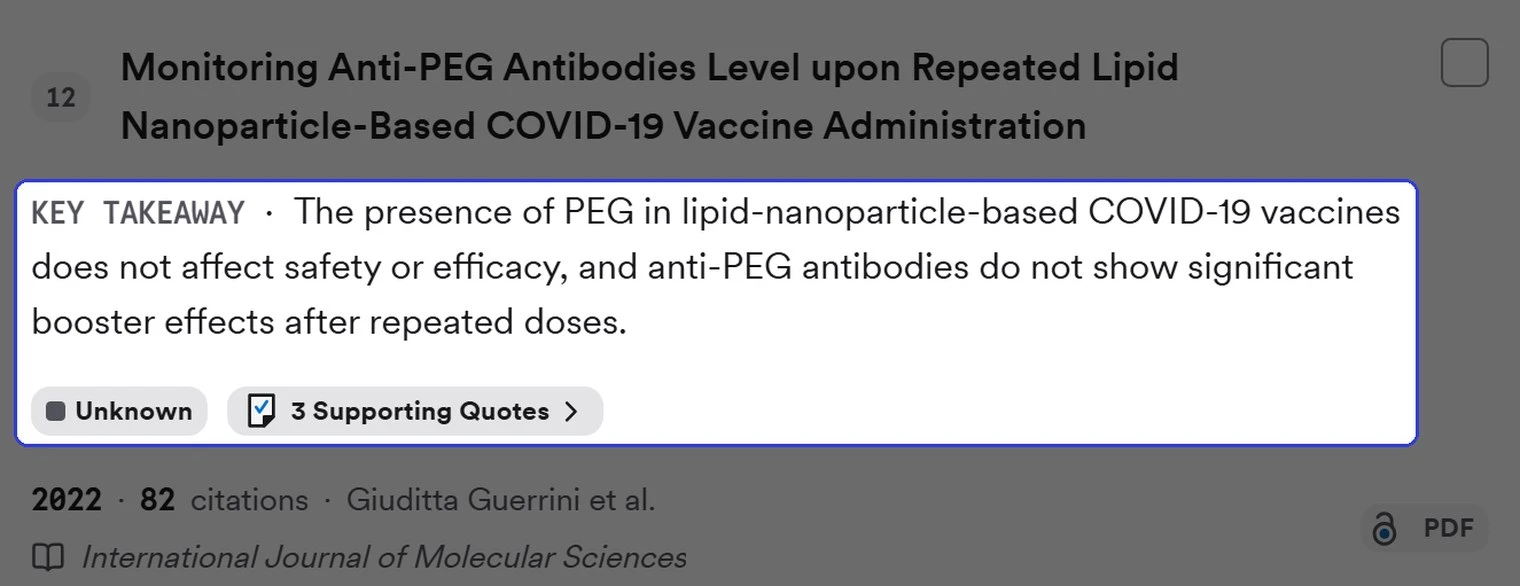
Consensus references mein vaccine cohort study, badged Unknown
Abstract us summary ke safety wale part aur IgG part ko support karta hai, lekin sabko nahi. Anti-PEG IgG ne koi significant booster effect nahi dikhaya, jabki IgM pehli aur teesri dose ke baad significantly badha, aur PEG cohort mein report kiye gaye kisi bhi serious adverse effects se linked nahi tha.
Consensus ne jin do sabse zyada cited papers ko padha woh bhi Unknown the: Immunity mein 616 citations ke saath ek 2022 paper aur 421 ke saath ek 2023 literature review.
Toh jis human cohort study par dono tools rely karte the, woh percentage ke baahar tha. Ek wrong claim ke peeche real source wali guide dikhati hai ki kaise ek sentence paper ke kahe mutabiq drift ho jaata hai.
Elicit answer ke peeche ke papers
View 7 cited sources ne answer ke peeche ke papers ki ek table open ki:
Wang et al., bioRxiv ke roop mein dikhaya gaya, 2023, 116 citations
Omata et al., Molecular Pharmaceutics, 2024
Lee et al., Biomaterials Research, 2024
Besin et al., ImmunoHorizons, 2019, abstract only
Münter et al., Molecular Therapy: Methods & Clinical Development, 2023
Guerrini et al., International Journal of Molecular Sciences, 2022
Facskó et al., Pharmaceutics, 2026, abstract only
Row 1 rat study hai jisne Consensus evidence table ko bhi lead kiya tha. Elicit ne ise "bioRxiv · 2023" label kiya, lekin iska link usi DOI ke under npj Vaccines article open karta hai jo Consensus ne use kiya tha.
Dono do stages par ek hi study hain. Ek hi title ke saath ek bioRxiv preprint 2022 mein post kiya gaya tha aur journal version 2023 mein aaya, isliye Elicit row preprint server ko journal year ke saath pair karti hai.
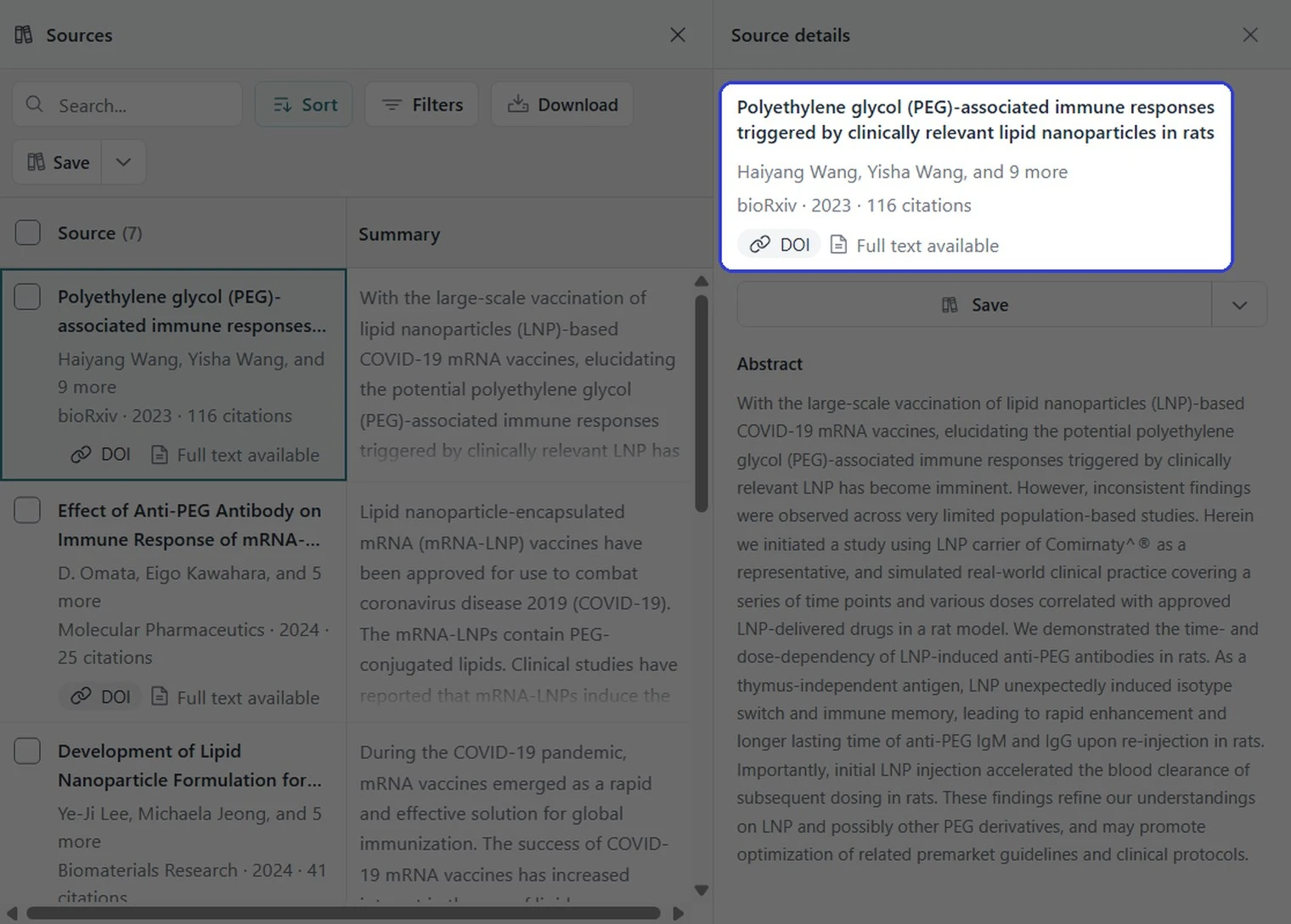
Elicit source panel, journal article par preprint label ke saath
Yeh jaan ne ki guide ki article peer reviewed hai ya nahi isi check ko manual tareeqe se cover karti hai.
Kahan dono source lists overlap karti hain
Elicit ke 7 sources mein se 4 un 15 sources mein bhi the jinhe Consensus ne cite kiya tha: rat study, two-phase antibody response par 2019 ImmunoHorizons paper, Lee et al. dwara 2024 formulation study aur vaccine cohort study.
Akele Elicit ne baaki 3 ko cite kiya:
Route - Münter et al. (2023) ne mice mein intravenous, intramuscular aur subcutaneous injection ko compare kiya, aur intramuscular injection ke baad low antibody levels paaye.
Antibodies aur payload - Omata et al. (2024) ne study kiya ki anti-PEG antibodies mRNA-loaded particles ke immune response ko kaise affect karti hain.
People - Facskó et al. (2026) ne human blood donors mein anti-PEG antibodies ko analyse kiya, un logon ko compare karte hue jinhone mRNA-LNP vaccines li thi aur jinhone nahi li thi.
Usi rat study ke do citation counts bhi the, Elicit mein 116 aur Consensus mein 117, jabki iske publisher page par 142 dikh rahe the. Ek count kisi ek database se liya gaya number hai, paper ki property nahi.
Reference baahar nikalna
Consensus - reference card par quote icon Cite this finding open karta hai, jismein APA, MLA, Chicago, Harvard, BibTeX aur AMA/Numeric ke liye tabs hain. Rat study ke APA entry mein order mein sabhi 11 authors list the, DOI ke saath.
Iska source part bina kisi issue ya article number ke "NPJ Vaccines, 8." read karta tha, jabki publisher page issue 1 aur article number 169 list karta hai aur journal ko npj Vaccines style karta hai.
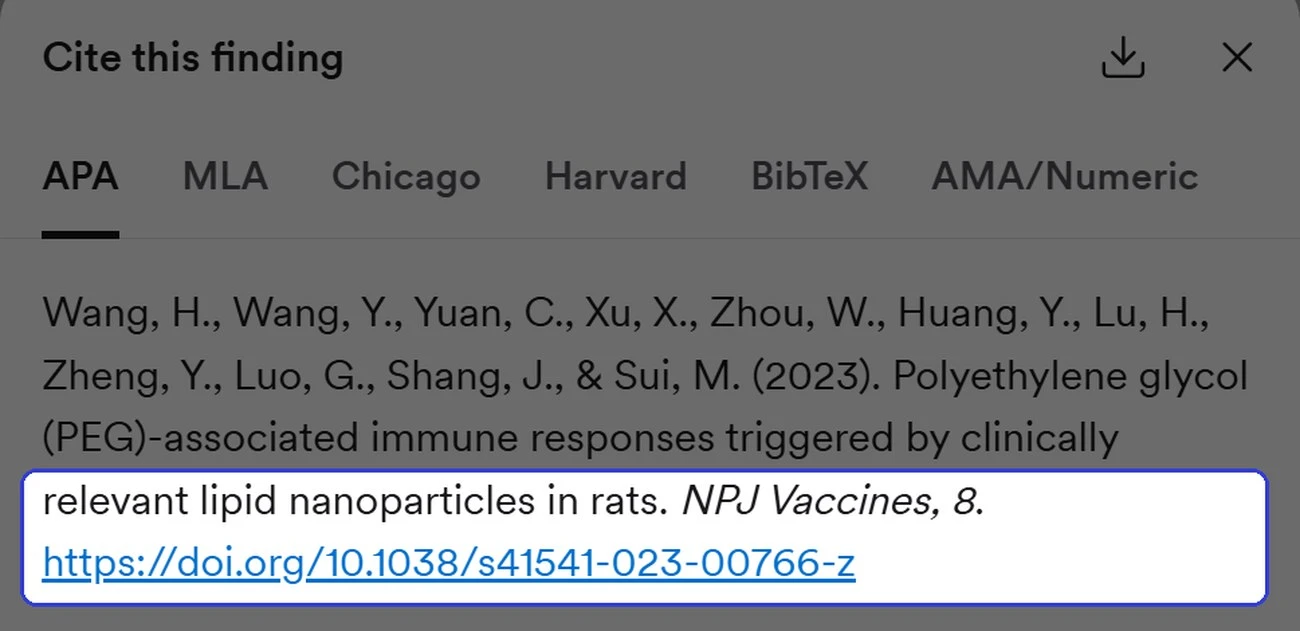
Consensus APA entry, bina kisi issue ya article number ke
Elicit - Source details panel ne title, authors, venue line, ek DOI link, abstract aur ek Save button diya. Iske paas copy karne ke liye koi formatted reference nahi tha.
DOI dhoondhne ki guide dikhati hai ki woh details publisher page par kahan milti hain.
Har tool ki cost kya hai
Plan | Elicit (Academic prices) | Consensus |
Free | Basic, $0. Research Agent aur Research Reports ke liye limited usage, 138 million se zyada papers mein unlimited search | Free, $0. Basic Paper search, per month 10 Pro messages, per month 3 Deep reviews tak |
Pehla paid tier | Plus: $19 per month, ya $132 per year | Pro: $20 per month, ya $144 per year |
Doosra paid tier | Pro: $69 per month, ya $468 per year | Deep: $65 per month, ya $540 per year |
Teesra tier aur enterprise | Scale: $149 per month, ya $1,068 per year. Enterprise: custom | Teams: $30 per seat per month. Enterprise: custom |
elicit.com/pricing aur consensus.app/pricing se prices.
Elicit Plus RIS, CSV, BIB, PDF aur DOCX mein export aur ek baar mein 5 table columns list karta hai. Consensus Pro unlimited Pro messages aur har mahine 15 Deep reviews list karta hai, aur Deep reviews ko 200 tak badha deta hai.
Pehle do paid tiers ke beech mahine ka $1 aur saal ka $12 ka difference hai.
Dono ka use karna
Pehle Consensus se poochein - yes-or-no question par quick look ke liye, aur meter ke bagal mein N ko note karein.
Unknown papers ko open karein - human cohort study jis par dono tools rely karte the wahin thi, percentage ke baahar.
Elicit se wahi question poochein - aise answer ke liye jo animal aur human findings ko alag rakhta hai, cited papers ki list ke saath.
Publisher par har paper check karein - reference likhne se pehle version, year aur issue confirm karein.
Research question likhne ki guide aise questions phrase karna cover karti hai jinka answer yeh tools de sakte hain, aur thesis literature review guide yeh cover karti hai ki checked papers kahan jaate hain.
Verdict: Elicit ya Consensus?
Is tarah ke question par thesis chapter ke liye Elicit. Iske answer ne apne pehle sentence mein formulation, route, dose aur species ke naam bataye, animal aur human evidence ko alag rakha, aur ek hi table mein apne 7 sources ko list kiya.
Consensus, yes-or-no question par tez pehli nazar ke liye, ek meter, ek evidence table aur chheh formats mein ek citation ke saath. Iske N ke bagal wale meter ko padhein, kyunki isne jo 20 papers padhe the unmein se 9 iske baahar the.
Checked paper ko uske DOI se import karein
Jenni mein DOI ya PMID paste karein aur paper aapki Library mein add ho jaata hai, APA, MLA, Chicago, IEEE ya Harvard mein cite karne ke liye ready
Free Mein Likhna Shuru KareinElicit review aur Consensus review har tool ko akele test karte hain, aur Elicit vs SciSpace isi paragraph ko doosre pairing ke through rakhta hai.
Papers check hone ke baad, chapter khud Jenni mein likha jaata hai, jahan har hedged claim usi source ke paas hota hai jis par yeh based hai.