Dwara
Nathan Auyeung
—
Ek Saadarann Margadarshak Vibhin Prakar ke Research Papers ke liye

Nathan Auyeung
Senior Accountant EY mein
Bachelor ka Accounting mein Graduation kiya, aur ek Postgraduate Diploma of Accounting bhi poora kiya

Research papers kai forms mein aate hain, aur har ek ka maqsad alag hota hai. Kuch papers ideas ko chhote parts mein todte hain taaki unhe behtar tarike se samjha ja sake. Dusre kisi claim par argue karte hain, hypothesis ko test karte hain, ya scholars pehle se jo jaante hain uski samiksha (review) karte hain. Itne saare formats hone ke karan, students ke liye aksar yeh confusion ho jaata hai ki kaun sa type unke assignment ke liye sahi hai.
Yeh guide us confusion ko dur karti hai. Aap seekhenge ki har ek research paper type kya karta hai, yeh kaise kaam karta hai, aur iska aam taur par kahan use hota hai. Simple examples se dikhaya jayega ki yeh papers real coursework mein kaise dikhte hain taaki aap confidence ke saath sahi structure chun sakein. Agar aap broad context chahte hain ki koi bhi academic paper aam taur par kaise organize hota hai, toh hamara academic paper explainer dekhein.
<CTA title="Build a Strong Problem Statement" description="Generate a precise publication ready statement in minutes with no stress" buttonLabel="Try Jenni Free" link="https://app.jenni.ai/register" />
Research Paper Types Kya Hain Aur Yeh Kyun Matter Karte Hain
Research paper types aapke writing ke purpose aur topic ko explore karne ke tarike ko batate hain. Yeh types tab aapko guide karte hain jab aap seekhte hain ki write a scientific paper kaise karein ya jab aap advanced projects par kaam karte hain. Clear categories se aap arguments, summaries, ya data ko galat jagah mix karne se bach jaate hain.
Alag-alag fields mein alag-alag paper types use hote hain. Humanities mein aksar analytical ya argumentative papers use hote hain. STEM fields empirical papers par depend karte hain. Social sciences mein case studies ya comparative designs use hote hain. Jab aap har ek type ka purpose samajh lete hain, tab aap apni research plan kar sakte hain, apne ideas ko organize kar sakte hain, aur clarity ke saath likh sakte hain.
1. Analytical Research Papers
Analytical papers kisi topic ko chhote parts mein todkar uska aaklan (examine) karte hain. Kisi personal stance ko support karne ke bajay, yeh papers patterns, relationships, ya themes ko dhyan se dekhte hain.
Yeh Type Kaise Kaam Karta Hai
Iske features ki list banane se pehle, analytical writing ke core idea ko samajhna zaroori hai. Goal persuade karne ke bajay explore karna hota hai. Aap multiple viewpoints ko examine karte hain, sources ko interpret karte hain, aur dikhate hain ki jab information ko dhyan se study kiya jata hai toh kya insights nikalte hain.
Key Characteristics
Instructors is type ke paper se yeh expect karte hain:
Objective tone jo personal opinions se bachti hai
Ek topic ko alag-alag angles se study karne ke liye multiple sources ka use
Summary ke bajay interpretation par focus
Patterns ya connections ka clear explanation
Example Scenario
Maan lijiye ek student study kar raha hai ki narrative framing news media mein audience perception ko kaise influence karti hai. Yeh argue karne ke bajay ki kaun sa method behtar hai, student techniques ko analyze karta hai, examples ko compare karta hai, aur articles ke patterns ko interpret karta hai.
<ProTip title="💡 Pro Tip:" description="Use a two column outline to separate evidence on one side and your interpretation on the other. This keeps the analysis focused and clear." />
Aap Is Type Ko Kab Use Karenge
Analytical papers aksar literature, psychology, history, cultural studies, aur communication courses mein aate hain. Yeh students ko kisi specific claim ko defend karne ke bajay ideas ke baare mein critically sochne mein madad karte hain.
2. Argumentative Research Papers
Argumentative papers ek claim karte hain aur evidence ka use karke usko support karte hain. Main goal logic, research, aur clear reasoning ke sath persuade karna hota hai.
Argumentative Writing Kyun Matter Karti Hai
Iske structure ko dekhne se pehle, yeh yaad rakhna helpful hai ki instructors is type ko kyun assign karte hain. Argumentative papers students ko issues ko examine karna, positions lena, aur assumptions ke bajay evidence ke sath ideas ko communicate karna sikhate hain.
Is Paper Mein Kya Include Hota Hai
Argumentative paper ke common parts yahan diye gaye hain:
Logical claims jo credible sources se supported hain
Counterarguments jo opposing view ko acknowledge karte hain
Rebuttals jo explain karte hain ki aapki position kyun zyada strong hai
Example Scenario
Ek student jo is topic par likh raha hai ki kya governments ko schools mein artificial intelligence tools ko regulate karna chahiye, woh evidence gather karta hai, benefits aur risks ko compare karta hai, counterarguments present karta hai, aur ek balanced stance ko defend karta hai.
Yeh Kahan Dikhta Hai
Political science, economics, philosophy, education, aur communication courses mein aksar argumentative papers assign kiye jaate hain kyunki yeh persuasive writing skills build karte hain.
<ProTip title="Reminder:" description="Introduce counterarguments early. This shows readers that your position is informed, not one sided." />
3. Empirical aur Experimental Research Papers
Empirical papers original data ko report karte hain jo experiments, surveys, observations, ya case-based measurements ke through collect kiya gaya ho. Yeh sciences mein common hain kyunki yeh measurable evidence ka use karke hypotheses ko test karte hain.
Kya Cheez Is Type Ko Alag Banati Hai
Empirical papers scientific structure ko follow karte hain. Yeh controlled methods ke zariye specific questions ka answer dete hain. Yeh clarity dusre researchers ko study repeat karne aur results verify karne mein madad karti hai.
Main Components
Common elements ki list se pehle, dhyan rakhein ki har empirical paper ko yeh dikhana chahiye ki data kaise gather kiya gaya tha. Phir ise dikhana chahiye ki data ka kya matlab hai. Us baat ko dhyan mein rakhte hain, yahan usual sections hain (cross-type overview ke liye, dekhein hamara breakdown of the essential parts of a research paper):
Abstract
Introduction aur hypothesis
Methodology
Results
Discussion
Limitations
Conclusion
Example
Ek psychology student jo test kar raha hai ki neend ki alag-alag maatra memory recall ko kaise affect karti hai, woh participants se data collect karta hai, performance scores ko analyze karta hai, aur findings ko tables aur graphs ke through report karta.
Kahan Use Hota Hai
Biology, psychology, physics, engineering, environmental science, aur medicine empirical research par bohot heavy depend karte hain.
<ProTip title="💡 Pro Tip:" description="Use simple, repeatable methods. Clear processes help readers trust your results and understand their limits." />
4. Review Papers
Review papers past studies ko summarize aur compare karte hain. Yeh naya data gather nahi karte. Inme se bohot saare ek critical review ka use karte hain yeh study karne ke liye ki ideas research ke dauran kaise connect hote hain. Kuch reviews argumentation theory ka use karte hain check karne ke liye ki claims kaise supported hain. Dusre assessment validity ko dekhte hain yeh dekhne ke liye ki evidence kitna strong hai.
Review Papers Kyun Matter Karte Hain
Students aksar review papers ko summaries ke sath confuse kar dete hain. Ek review paper sirf studies ko describe karne se kahin zyada karta hai. Yeh unhe organize karta hai, ideas ko compare karta hai, trends ko highlight karta hai, aur explain karta hai ki research kahan disagree karti hai.
Review Papers Ke Types
Types ko describe karne se pehle, note karein ki har ek ka alag purpose hota hai. Kuch broad hote hain, toh kuch strict rules follow karte hain. Yahan main categories hain:
Literature Reviews
Existing studies ka ek broad overview. Yeh essays, dissertations, aur thesis chapters mein aate hain. Jab aap ek RRL compile kar rahe hain aur sources ko organize kar rahe hain, tab AI Literature Review & RRL Generator aapko review draft aur structure karne mein madad kar sakta hai.
Systematic Reviews
Ek structured investigation jo studies ko select aur evaluate karne ke liye strict criteria follow karti hai. Medicine aur public health mein common hai.
Meta-Analyses
Ek statistical technique jo kai saari studies ke data ko combine karti hai taaki overall trends detect kiye ja sakein.
Example Scenario
Ek student jo social media use aur anxiety ke beech ke relationship par research ko review kar raha hai, woh study findings ko compare karta hai, consistent patterns ko highlight karta hai, aur explain karta hai ki results kahan differ karte hain.
5. Additional Research Paper Types
Kuch papers in four main categories mein fit nahi hote, lekin phir bhi academic writing mein kaafi dikhte hain. In types ke goals zyada specific hote hain aur yeh kuch khaas fields mein best kaam karte hain.
5.1 Case Study Papers
Case studies kisi single subject, event, ya situation ko depth mein explore karti hain. Yeh broad generalization ke bajay rich detail par focus karti hain.
Case Studies Kyun Useful Hain
Common uses ki list se pehle, yaad rakhein ki case studies researchers ko real-world settings mein complex systems ko samajhne mein madad karti hain. Yeh aisi nuances ko reveal karti hain jo large data sets aksar miss kar dete hain.
Common Uses
Case studies inme dikhti hain:
Business analysis
Medicine aur patient care
Law aur policy studies
Social aur community research
Example
Ek student examine karta hai ki kaise ek school ne naya reading program implement kiya aur outcomes ko analyze karta hai.
5.2 Theoretical Papers
Theoretical papers naye models, concepts, ya frameworks develop karte hain. Yeh naya data collect nahi karte balki iske bajay explanations propose karte hain ki koi cheez kaise kaam karti hai.
Yeh Type Kab Best Kaam Karta Hai
Yeh papers research fields ko shape dene mein madad karte hain. Yeh naye ideas introduce karte hain ya existing theories ko refine karte hain taaki future studies ka foundation strong ho sake.
Example
Ek philosophy student technology risks ko evaluate karne ke liye ek naya ethical framework propose karta hai.
5.3 Cause-and-Effect Papers
Yeh papers investigate karte hain ki koi cheez kyun hoti hai aur uske kya results hote hain. Yeh triggers, outcomes, ya dono ke combination ke aas-paas ideas ko organize karte hain.
Yeh Structure Writers Ki Kaise Madad Karta Hai
Examples review karne se pehle, dhyan rakhein ki cause-and-effect writing students ko details list karne ke bajay events ke beech relationships dikhane mein madad karti hai.
Example
Ek paper jo explore kar raha hai ki kaise rising global temperatures migration patterns ko influence karti hain.
5.4 Definition Papers
Definition papers multiple scholarly sources ka use karke kisi concept ko explain karte hain. Goal clarity hota hai, opinion nahi.
Is Type Ke Liye Kya Required Hai
Examples mention karne se pehle, note karein ki strong definition papers precise language par rely karte hain. Explanation ka har part research se supported hona chahiye, personal interpretation se nahi.
Example
Ek student anthropology, sociology, aur psychology ke definitions ko compare karke cultural identity ko define karta hai.
5.5 Comparative Papers
Comparative papers do ya do se zyada subjects ke beech similarities aur differences ko analyze karte hain.
Yeh Type Readers Ki Kaise Madad Karta Hai
Subjects ko compare karna yeh reveal karta hai ki ideas kaise connect hote hain aur kahan alag hote hain. Yeh structure readers ko cases, theories, ya systems ke patterns samajhne mein madad karta hai.
Example
Ek student online classrooms aur traditional in-person instruction ke learning outcomes ko compare karta hai.
6. Sahi Type Ka Research Paper Kaise Chunein
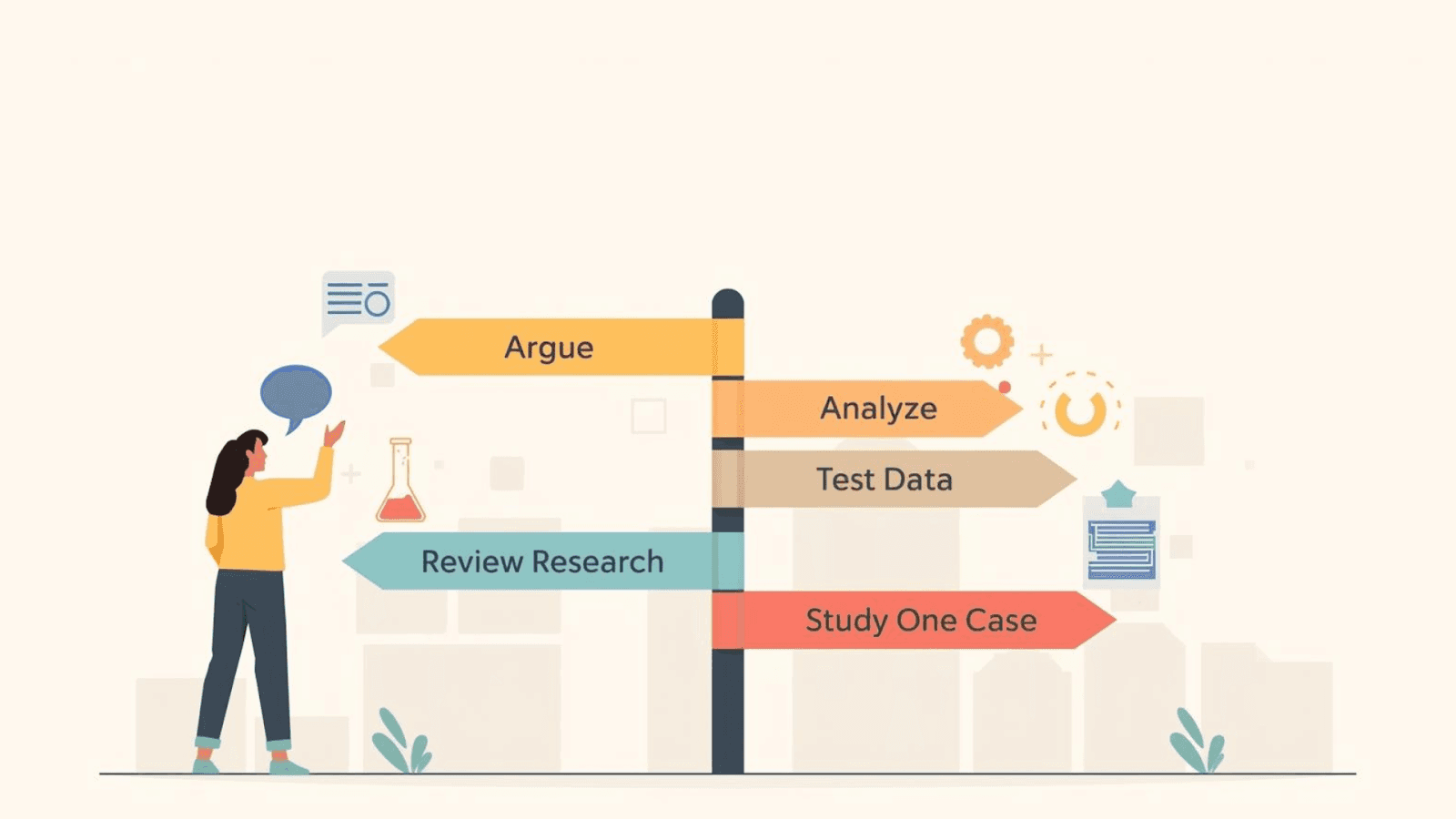
Sahi research paper type chunna aapke research question, discipline, aur assignment instructions par depend karta hai.
Apne Purpose Ko Samjhein
Paper type select karne se pehle, apne main goal ko identify karne se start karein. Writers aksar yeh step skip kar dete hain aur formats ko mix kar dete hain. Clear goals structure ko guide karte hain.
Key Questions
Yahan helpful questions hain jo aapke purpose ko clarify karte hain:
Kya aapko kisi cheez ko explain ya define karne ki zaroorat hai?
Kya aapko readers ko persuade karne ki zaroorat hai?
Kya aapko hypothesis test karne ki zaroorat hai?
Kya aapko existing studies ko summarize karne ki zaroorat hai?
Kya aapko ek case ko depth mein explore karne ki zaroorat hai?
Apne Discipline Se Type Ko Match Karein
Alag-alag academic fields alag-alag research designs par rely karte hain. In preferences ko recognize karna aapko mismatched formats se bachne mein madad karta hai.
Common Discipline Matches
Yahan bataya gaya hai ki disciplines aam taur par paper types ke sath kaise align hoti hain:
STEM fields → empirical, experimental, theoretical
Humanities → analytical, argumentative, definition
Social sciences → comparative, empirical, case studies
Business → case studies, argumentative, review papers
Apna Assignment Dhyan Se Padhein
Assignment ki language paper type ke baare mein strong clues deti hai.
Common Instruction Signals
Yahan common verbs aur unke matlab ke liye ek guide di gayi hai:
“Analyze” → analytical paper
“Argue” → argumentative paper
“Investigate” → empirical paper
“Review research on” → review paper
“Define” → definition paper
<ProTip title="💡 Pro Tip:" description="Rewrite the assignment prompt in your own words. This reveals what the instructor expects you to deliver." />
7. Har Ek Paper Type Same Topic Ko Kaise Approach Karta Hai

Differences ko aur clear tarike se dekhne ke liye, imagine karein ki paanch students same topic study kar rahe hain: remote work aur productivity. Har paper type is topic ko alag tarike se handle karta hai.
Analytical Approach
Ek analytical paper topic ko components mein todta hai. Student communication tools, motivation, team structure, aur work environment ko study karta hai yeh explain karne ke liye ki har factor productivity ko kaise shape karta hai.
Argumentative Approach
Ek argumentative paper ek stance leta hai. Student argue karta hai ki remote work overall productivity ko improve karta hai aur is claim ko support karne ke liye evidence use karta hai jabki counterarguments ko bhi address karta hai.
Empirical Approach
Ek empirical paper original data gather karta hai. Student employees ko survey karta hai, productivity scores ko track karta hai, aur statistics ke through results ko analyze karta hai.
Review Approach
Ek review paper existing studies ko synthesize karta hai. Student psychology, management, aur communication ke academic findings ko dekhta hai trends aur gaps ko highlight karne ke liye.
Case Study Approach
Ek case study ek organization ko examine karti hai. Student describe karta hai ki kaise ek company ne remote work adopt kiya aur employees ke liye outcomes ko evaluate karta hai.
8. Research Methodology Terms Jo Students Ko Pata Honi Chahiye
Strong research writing tab start hoti hai jab aapko har paper type ke piche ke methods pata hote hain. Yeh methods aapke research questions ko shape karte hain aur jab aap kisi bhi tarah ka research paper likhte hain toh approaches chunne mein madad karte hain.
Quantitative Methods
Quantitative methods numbers aur statistics ka use karke research questions ke answers dete hain.
Common Techniques
Quantitative approaches ke examples yahan hain:
Experiments
Large-scale surveys
Statistical modeling
Qualitative Methods
Qualitative methods descriptive data ka use karke ideas ya experiences ko explore karte hain.
Common Techniques
Yeh approaches researchers ko context aur meaning samajhne mein madad karte hain:
Interviews
Observations
Textual analysis
Mixed Methods
Mixed methods numerical aur descriptive data ko combine karte hain. Yeh approach complex topics ke liye behtar kaam karti hai kyunki yeh breadth aur depth dono offer karti hai.
9. Apne Research Paper Type Ko Identify Karne Ki Quick Checklist
Ek checklist aapko focused rehne mein madad karti hai jab aap apni writing plan karte hain.
Har Question Ko Padhein Aur Honestly Answer Karein
Har point ko dekhne se pehle, yaad rakhein ki clarity aapka sabse bada tool hai. Aapke answers jitne specific honge, sahi method chunna utna hi aasan ho jayega.
Mera main purpose kya hai?
Kya mere topic ke liye argument ya explanation ki zaroorat hai?
Kya mujhe original data chahiye?
Kya review karne ke liye kaafi existing research available hai?
Mera discipline kaun sa form prefer karta hai?
<ProTip title="Note:" description="If you are stuck between two types, outline both. The stronger outline usually reveals the right direction." />
Research Paper Types Ki Samajh Ko Wrap Up Karna
Alag-alag research paper types aapko ideas explore karne, position argue karne, data test karne, ya existing studies ko review karne mein madad karte hain. Yeh jaanna ki har ek kaise kaam karta hai, aapke liye approach plan karna aasan banata hai aur formats ko mix karne se bachata hai. Ek clear purpose ke sath, aapki writing zyada focused aur effective ho jaati hai.
<CTA title="Write Stronger Research Papers Faster" description="Use Jenni to outline and refine any research paper with clarity and confidence" buttonLabel="Try Jenni Free" link="https://app.jenni.ai/register" />
Jaise-jaise aap practice karenge, sahi type chunna aur natural lagega. Aur agar aap apne ideas ko shape karne ya apne structure ko organize karne ke liye support chahte hain, toh Jenni aapko start se hi outline karne, refine karne, aur ek strong paper build karne mein madad kar sakti hai.