Dwara
Justin Wong
—
Snowball vs Convenience Sampling: Key Differences Explained

Justin Wong
Vikas Prabhari
Graduated kiya Bachelor's me Global Business & Digital Arts, Minor me Entrepreneurship
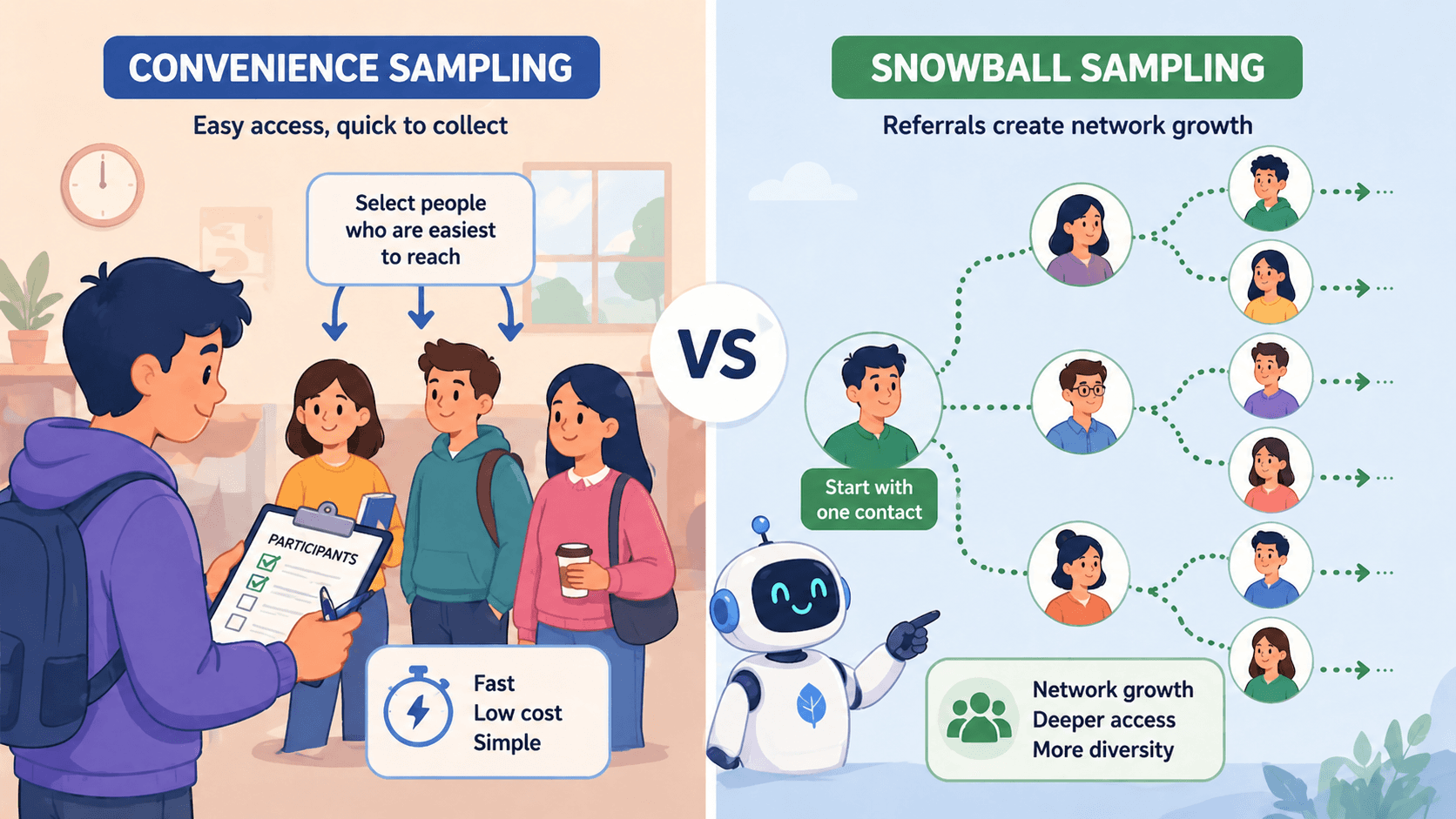
Qualitative research mein participants ko chunna ek badi practical chunauti hai. Snowball sampling mojuda participants se kehti hai ki woh dusron ko recruit karein, jisse ek network banta hai. Convenience sampling sirf un logo ka use karti hai jinki reach sabse aasan ho, jaise ki kisi classroom ke students.
Sabse bada farq yeh hai ki shuruat se hi aapki study mein bias kaise enter karta hai. Snowball se hidden populations tak pahuncha ja sakta hai, jabki convenience fast aur cheap hai. Aapka choice puri tarah se aapke research question par depend karta hai. Dekhna chahte hain ki har ek method practice mein kaise kaam karta hai?
<CTA title="Design Better Sampling Strategies" description="Vague recruitment plans ko structured research methods mein clarity aur precision ke sath badlein." buttonLabel="Try Jenni Free" link="https://app.jenni.ai/register" />
Snowball aur Convenience Sampling Ka Asli Matlab Kya Hai
Na toh snowball aur na hi convenience sampling random selection ka use karti hain. Yeh non-probability sampling methods participants ko is basis par chunte hain ki aap kis tak pahunch sakte hain ya aapke contacts kise jaante hain. Public health jaise fields mein yeh standard hain jahan random sample practical nahi hota.
Practice mein Convenience Sampling
Yeh method un logo ka use karta hai jinhe dhoondhna sabse aasan ho. Aap kisi shopping mall ke logo ya apni class ke students ka survey kar sakte hain. Yeh fast aur cheap hai. Aap ise pilot studies, classroom projects, ya initial market research mein dekhenge.
Selection simple access ke zariye hota hai. Real-world applications ko behtar samajhne ke liye, convenience sampling examples ko explore karne se iski limitations aur strengths ko samajhne mein madad mil sakti hai.
Snowball Sampling Explained
Yahan, aap thode se participants ke sath shuru karte hain aur unse dusron ko refer karne ke liye kehte hain. Aapka sample personal connections ke chain ke zariye badhta hai.
Yeh un groups ko study karne ka go-to method hai jinhe dhoondhna mushkil hota hai, jaise undocumented workers, rare medical conditions wale log, ya niche online communities.
<ProTip title="💡 Pro Tip:" description="Jab trust ki zaroorat ho toh snowball sampling ka use karein kyunki referrals participation rates ko badhate hain." />
Snowball vs Convenience Sampling: Core Differences
Sahi method aapke research goal par depend karta hai. Niche di gayi table practical trade-offs aur pros cons of different sampling methods ko dikhati hai.
Aspect | Convenience Sampling | Snowball Sampling |
Recruitment | Direct access | Referral chains |
Speed | Bahut fast | Dheemi growth |
Cost | Kam | Kam |
Bias Type | Availability bias | Network homophily |
Best Use | Accessible groups | Hard-to-reach populations |
Diversity | Aksar limited | Network dependent |
Practice mein Iska Kya Matlab Hai
Convenience sampling speed ke baare mein hai. Aap iska use tab karte hain jab participants ko dhoondhna aasan ho, jaise mall mein shoppers ka survey karna. Snowball sampling access ke baare mein hai.
Sensitive ya hidden groups, jaise undocumented migrants, ko study karne ke liye aapko iski zaroorat hoti hai. Referral chain trust banati hai.
Ek Simple Analogy
Convenience sampling sabse neeche ki branch se phal todne jaisa hai. Snowball sampling kisi local se poochna hai ki hidden orchard kahan hai. Dono se aapko phal milte hain, lekin woh bahut alag trees se aate hain.
<ProTip title="📌 Reminder:" description="Reviewer rejection se bachne ke liye hamesha apne methodology section mein apne sampling choice ko justify karein." />
Har Method ke Advantages aur Disadvantages
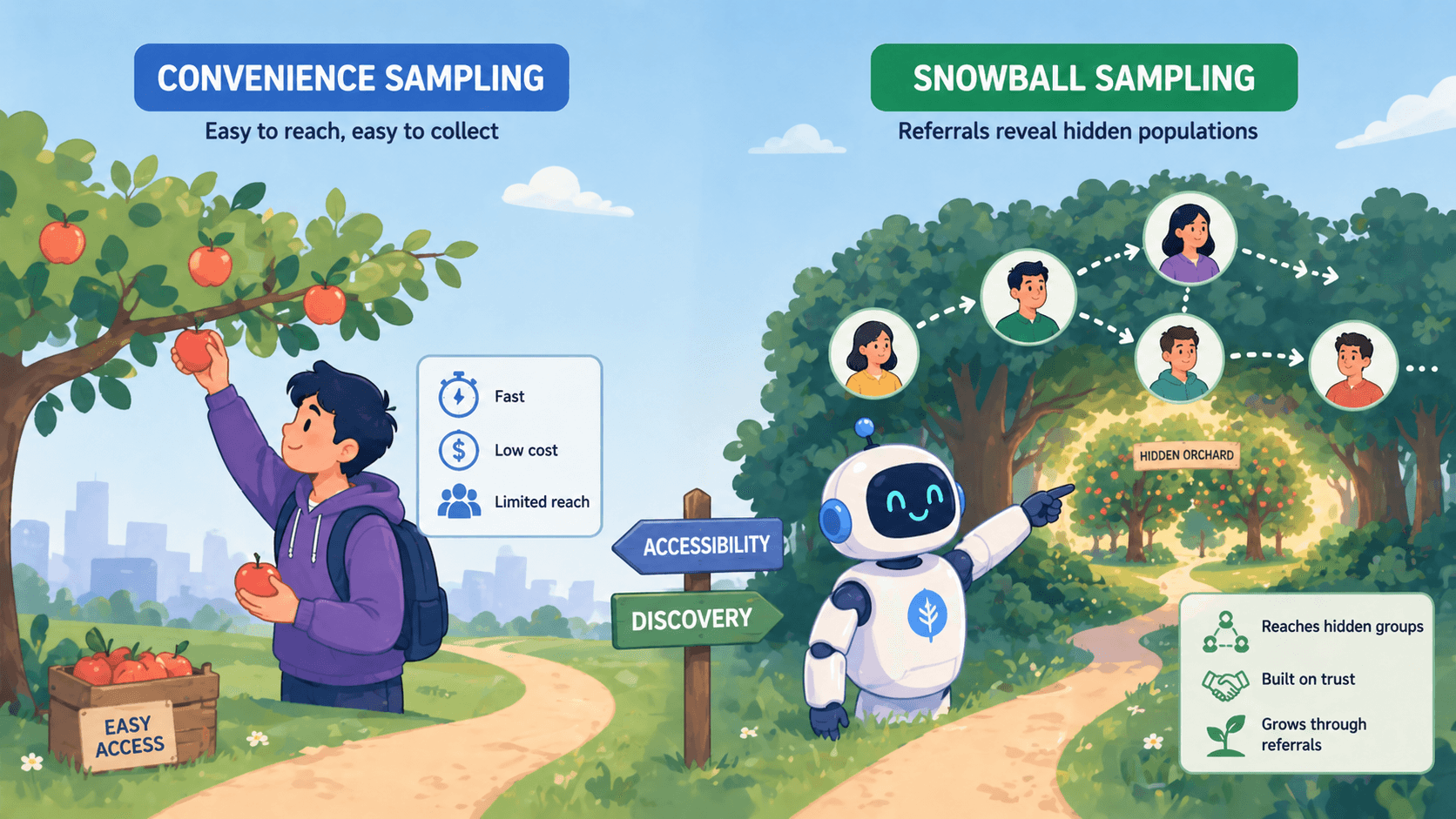
Har research method ke apne trade-offs hote hain. Inhe jaanne se aapko risk manage karne aur apne findings ke liye realistic expectations set karne mein madad milti hai.
Convenience Sampling ke Advantages
Convenience sampling ka bada use hota hai kyunki yeh shuruat karne ke barriers ko kam karti hai. Agar time, access, ya budget kam hai, toh yeh aksar practical lagti hai.
Implement karne mein quick: Aap lagbhag turant data collect karna shuru kar sakte hain
Low cost: Kisi complex recruitment strategies ki zaroorat nahi hai
Pilot studies ke liye useful: Surveys ya research design ko test karne ke liye behtareen hai
Accessible populations: Tab acche se kaam karta hai jab aapka target group dhoondhna aasan ho
Yeh early-stage research mein kaafi helpful hai, jaise classroom projects ya exploratory studies, jahan goal firm conclusions nikalne ke bajaye patterns ka ek rough idea lena hota hai.
Agar aapka target group bada hai aur dhoondhna aasan hai, toh convenience sampling aksar sabse practical choice hoti hai.
Convenience Sampling ke Disadvantages
Speed aur ease ka trade-off bias hai. Jo log sabse aasan pahunch mein hote hain, woh shayad hi kisi badi population ko represent karte hain.
Availability bias: Aap sirf unhe capture karte hain jo accessible hain
Limited diversity: Kuch groups ka overrepresentation ho sakta hai (e.g., students)
Weak external validity: Findings acche se generalize nahi hoti hain
Self-selection issues: Jo participants opt-in karte hain, woh systematically alag ho sakte hain
Yeh method ko useless nahi banata, iska matlab bas yeh hai ki data ke basis par aap jo claims karte hain unke baare mein aapko careful rehna hoga.
Snowball Sampling ke Advantages
Snowball sampling un situations mein behtareen kaam karti hai jahan access sabse badi chunauti hoti hai. Kuch populations ko identify ya directly approach karna mushkil hota hai, aur yeh method us gap ko bharne mein madad karta hai.
Hidden groups tak access: Hard-to-reach ya sensitive populations ke liye useful hai
Built-in trust: Referrals participants ko engage hone ke liye zyada willing banate hain
Qualitative research ke liye effective: In-depth, detailed data collection ko support karta hai
Flexible recruitment: Participant networks ke zariye naturally expand hota hai
Is wajah se, yeh sociology, ethnography, aur public health jaise fields mein aam taur par use hota hai, khaas karke jab aise topics ko study karna ho jahan trust aur openness ki zaroorat ho.
Yeh aksar tab preferred choice hoti hai jab alag-alag research paradigms ko navigate karna ho jo broad generalizability ke bajaye subjective experience ko value dete hain.
Snowball Sampling ke Disadvantages
Wahi network-based approach jo snowball sampling ko effective banati hai, problems bhi khadi kar sakti hai.
Network bias: Participants apne jaise hi logon ko refer karte hain
Homogeneous samples: Perspectives ek hi social circles ke andar cluster ho sakte hain
Limited control: Predict karna mushkil hota hai ki agla kaun recruit hoga
Uncertain sample size: Recruitment participant ki willingness par depend karta hai
Toh jabki yeh un darwazon ko khol sakta hai jinhe dusre methods nahi khol sakte, yeh ek balanced ya representative sample ki guarantee nahi deta.
<ProTip title="⚠️ Note:" description="Snowball sampling mein clustering effects ko kam karne ke liye referral waves ko limit karein." />
Snowball vs Convenience Sampling Kab Use Karein
Aapka choice sirf theory ke baare mein nahi hai. Yeh ek practical decision hai jo is baat par depend karta hai ki aapko kiski study karni hai, aapki timeline kya hai, aur aapke resources kya hain. Yeh aapke qualitative vs quantitative research goals ke beech ke bade choice par bhi depend karta hai.
Convenience Sampling Tab Use Karein Jab
Yeh method seedhi aur accessible situations mein fit baithta hai. Ise apna default option samjhein jab representation sabse pehli priority na ho. Aapko ise tab use karna chahiye jab:
Aapke participants ko dhoondhna aur un tak pahunchna aasan ho.
Aap ek tight deadline ke sath kaam kar rahe hon.
Aapka budget bahut chota ho.
Goal preliminary insight lena ho, na ki generalizable conclusions nikalna.
Ek typical example campus library mein enter karne wale pehle 100 students ko feedback survey dena hai. Yeh fast hai, cheap hai, aur aapko exploratory study ya pilot test ke liye turant data deta hai.
Snowball Sampling Tab Use Karein Jab
Snowball sampling par tab switch karein jab aapka target group hidden ho ya use identify karna mushkil ho. Yeh access ke baare mein hai, speed ke baare mein nahi. Aapko ise tab use karna chahiye jab:
Participants ko dhoondhne ke liye koi public list ya obvious jagah na ho.
Participation ke liye trust banana zaroori ho.
Social ya professional networks group ko define karte hon.
Aapko in-depth, qualitative understanding ki zaroorat ho.
For instance, closed online forums mein operate karne wale cryptocurrency traders ki study karne ke liye, aapko ek initial contact ki zaroorat hogi jo aapke liye vouch kare aur aapko dusron se introduce karaye. Yeh method sociology, ethnography, aur public health mein sensitive topics ki study ke liye standard hai.
Dono Methods Ko Combine Karna
Practice mein, researchers aksar in techniques ko blend karte hain. Aisa karne ka ek tareeqa yeh hai ki aasan-se-milne wale logo ke group ke sath shuru kiya jaye.
Unse baat karne ke baad, aap unse kahte hain ki woh aapko un dusre logo se connect karein jo aapki requirement mein fit baithte hain. Yeh aapko un referrals ke zariye zyada specific ya hard-to-find groups tak pahunchne deta hai.
Aap ek public health clinic mein aane walon ka survey karke shuru kar sakte hain (convenience) aur phir interested participants se pooch sakte hain ki kya woh similar experiences wale dusron ko jaante hain jinhe follow-up interviews ke liye refer kiya ja sake (snowball).
Yeh mixed-method strategy, jiske baare mein kai methodology papers mein discuss kiya gaya hai, complex studies mein access aur feasibility dono ko improve kar sakti hai.
<ProTip title="🔄 Pro Tip:" description="Access, diversity, aur feasibility ko balance karne ke liye sampling methods ko combine karein." />
Bias, Validity, aur Research Limitations
Dono methods ka main criticism simple hai: jin logo ki aap study karte hain woh randomly nahi chune jate. Yeh directly is baat par impact dalta hai ki aapke findings asal mein kya batate hain.
Convenience Sampling mein Sampling Bias
Yahan bias is baat se aata hai ki kaun available hai aur kaun volunteer karta hai. Aapko sirf un logo se data milta hai jin tak pahunchna aasan hai aur jo participate karne ke liye taiyar hain. Yeh availability bias aur volunteer bias create karta hai.
Result ek aisa sample hota hai jo shayad us broader population ko represent nahi karta jisme aap interested hain. Yeh aapki study ki external validity ko kamzor karta hai, jiska matlab hai ki aap apne conclusions ko confidence ke sath dusre groups ya settings par apply nahi kar sakte.
Snowball Sampling mein Sampling Bias
Snowball sampling mein bias referral chain ke andar hi built hota hai. Ise homophily bias kehte hain, yani logo ki apne jaise dusre logo se connect karne ki tendency.
Aapke pehle kuch participants un friends ya colleagues ko refer karenge jo unke jaise hi backgrounds, opinions, aur experiences share karte hain.
Yeh aapko ek specific network par gehri nazar de sakta hai, lekin yeh aksar ek clustered, homogeneous sample ki taraf le jata hai jisme views ki diversity limited hoti hai.
Yeh Kyun Matter Karta Hai
Biased sampling na sirf aapki study ko kam robust banati hai; balki yeh galat conclusions ki taraf bhi le ja sakti hai. World Health Organization jaise health bodies warn karte hain ki non-representative samples se mila skewed data public policy aur clinical guidelines ko misinform kar sakta hai.
Yahi wajah hai ki methodological transparency non-negotiable hai. Kisi bhi report mein, aapko clearly state karna hoga ki aapne kaun sa sampling method use kiya, iski inherent limitations par khulkar discuss karein, aur explain karein ki woh limits aapke results ke interpretation ko kaise affect karti hain.
Bias Ko Kaise Kam Karein
Aap is bias ko puri tarah se khatam nahi kar sakte, lekin aap ise manage kar sakte hain.
Convenience sampling ke liye, apne sample mein thodi diversity lane ke liye demographic quotas set karne par vichar karein.
Snowball sampling ke liye, kai diverse "seeds" ke sath shuru karne ki koshish karein aur referral steps ko limit karein.
Ek behtar approach methods ko combine karna hai, sampling techniques ke mix ka use karna ya apne findings ko dusre data sources ke sath cross-check karna, jise triangulation process kehte hain. Yeh steps core issue ko fix toh nahi karenge, lekin aapke kaam ki reliability aur credibility ko zaroor improve karenge.
<ProTip title="🧠 Reminder:" description="Credibility ko mazboot karne ke liye hamesha apni thesis mein sampling limitations par discuss karein." />
Research mein Small Sample Size Ka Darr
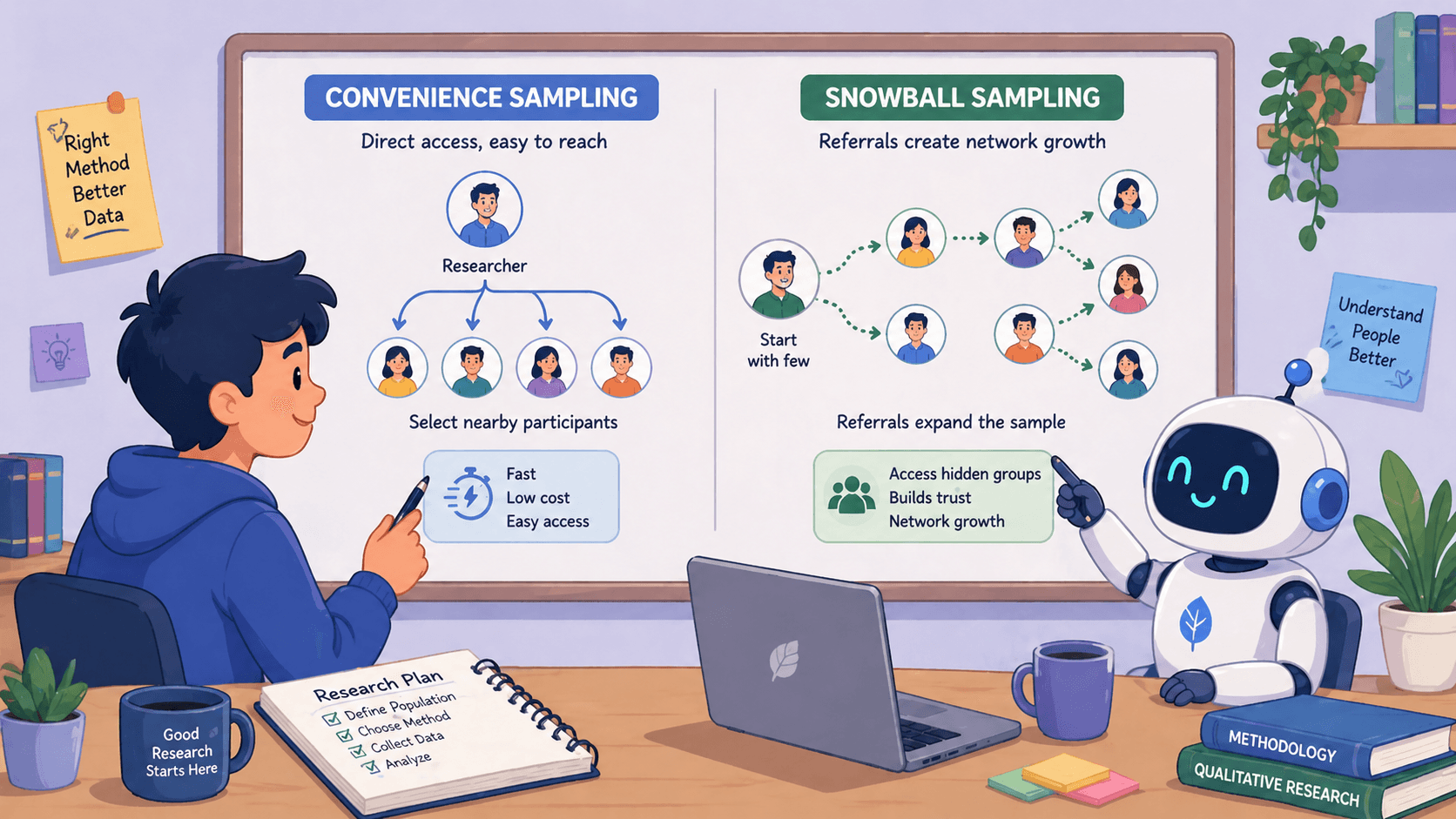
Bahut se students aur early-career researchers small samples ko lekar anxious ho jaate hain, khaas karke thesis ke liye. Forum threads aise logo se bhare pade hain jo sirf kuch dozen participants ke sath snowball ya convenience methods use karne ko lekar stressed hain.
Small Samples Hamesha Ek Problem Kyun Nahi Hote
Qualitative research mein, goal logo ko count karna nahi hota. Yeh kisi phenomenon ko depth mein samajhna hai. Jo cheez sach mein matter karti hai woh hai data saturation, woh point jahan naye interviews meaningful insights add karna band kar dete hain.
Aap aksar ek relatively chote group ke sath us point tak pahunch sakte hain, kabhi-kabhi lagbhag 12 se 20 participants ke sath, agar woh acche se chune gaye hon aur data rich ho.
Depth over quantity: Large numbers se zyada detailed responses matter karte hain
Focus on saturation: Tab rukein jab koi naye themes samne na aayein
Context matters: Ek tightly defined topic ko kam participants ki zaroorat hoti hai
Participant relevance: Sahi log zyada logo se zyada valuable hote hain
Toh ek chota sample automatically koi weakness nahi hai. Kai qualitative designs mein, yeh bilkul appropriate hai.
Small Samples Kab Ek Risk Ban Jate Hain
Problems tab shuru hoti hain jab research goals sampling approach se match nahi karte. Ek chota, non-random sample bade statistical claims ko support nahi kar sakta, chahe data kitna bhi clean kyun na dikhe.
Generalizing too far: Limited data ke sath badi population par findings apply karna
Quantitative mismatch: Un surveys ke liye small samples ka use karna jo percentages produce karne ke liye hain
Lack of diversity: Bahut kam perspectives results ko skew kar sakte hain
Weak justification: Bina explain kiye method chunna ki yeh kyun fit baithta hai
Agar aapki study ka aim population-level claims karna hai, toh sample size aur aap participants ko kaise select karte hain, yeh serious issues ban jate hain.
Practical Advice
Number par atakne ke bajaye, apna focus apne reasoning par shift karein. Reviewers aur supervisors kisi magic sample size tak pahunchne se zyada is baat par dhyaan dete hain ki kya aapke choices samajhdaari bhare hain.
Apne method ko justify karein: Explain karein ki snowball ya convenience sampling kyun appropriate thi
Transparent rahein: Clearly describe karein ki participants ko kaise recruit kiya gaya
Limitations ko acknowledge karein: Bias ko chhupane ki koshish na karein, ise directly address karein
Method aur goal ko align karein: Make sure karein ki aapki sampling aapke research purpose se match karti ho
Ek acche se explain kiya gaya chota sample bade aur kharab tareeqe se collect kiye gaye sample se kahin zyada convincing hota hai. Jab aapki methodology clear aur honest hoti hai, toh readers aapke kaam ko sahi tareeqe se evaluate kar sakte hain, aur accha research asal mein isi ke baare mein hai.
Sahi Sampling Method Kaise Chunein
Method chunna sabse "best" ko dhoondhne ke baare mein nahi hai. Yeh aapki specific situation ke sath ek practical tool ko match karne ke baare mein hai. Apne project ke baare mein kuch key questions ke honest answers dekar shuru karein.
Ek Quick Decision Checklist
Apne aap se poochein:
Access: Kya main public channels ke zariye apne ideal participants ko aasanise dhoondh aur contact kar sakta hoon?
Trust: Kya logo ko mujhse baat karne par vichar karne ke liye bhi ek personal referral ki zaroorat hogi?
Generalizability: Kya mera main goal aise findings produce karna hai jo ek broad, statistical population par apply hon?
Resources: Mere paas asal mein kitna time aur paisa hai?
Ek Simple Guide
Aapke answers ek raasta dikhate hain.
Agar aapki population dhoondhna aasan hai aur aapke paas time ya budget kam hai, toh convenience sampling
seedha choice hai. Ise pilots, class projects, ya initial explorations ke liye use karein.p>
Agar aapka group hidden, stigmatized, ya strong networks se bandha hai, toh aam taur par snowball sampling zaroori hoti hai. Yeh dheemi hai lekin woh access aur trust banati hai jiski aapko deeper qualitative kaam ke liye zaroorat hoti hai.
Kisi ek method mein locked feel na karein. Ek hybrid approach aam hai. Aap ek broad survey ke liye convenience sample ka use kar sakte hain, phir detailed interviews ke liye subset recruit karne ke liye snowball techniques ka use kar sakte hain.
Goal alignment hai. Aapka sampling choice aapke research question ke sath fit baithna chahiye, na ki iska ulta.
Apni Study Ke Liye Jo Asal Mein Kaam Kare Use Chunna
Aap aage badhne ki koshish kar rahe hain, lekin methods ke beech chunna dheema aur frustrating lag sakta hai, khaas karke jab aapka data real access par depend karta hai. Yeh simple nahi hai. Aapko aisi cheez ki zaroorat hai jo bina time waste kiye ya aapke results ko kamzor kiye bina aapki situation mein fit baithe.
<CTA title="Build a Strong Research Methodology" description="Structured academic writing support ke sath apni sampling strategy aur research design ko clarify karein." buttonLabel="Try Jenni Free" link="https://app.jenni.ai/register" />
Wahan Jenni aapko noise ko cut karne aur ek clear approach ko shape dene mein madad kar sakti hai. Yeh aapko plain terms mein apne choices ko explain karne mein madad karti hai taaki aapka kaam review ke under khada rahe. Second-guessing ke bajaye, aap ek aise method ke sath aage badhte hain jo samajh mein aata hai aur ek aisi structure ke sath jo ise support karti hai.