Dwara
Justin Wong
—
Writing mein AI Hallucinations ko kam karna: Practical tareeqe jo kaam karte hain

Justin Wong
Vikas Prabhari
Graduated kiya Bachelor's me Global Business & Digital Arts, Minor me Entrepreneurship
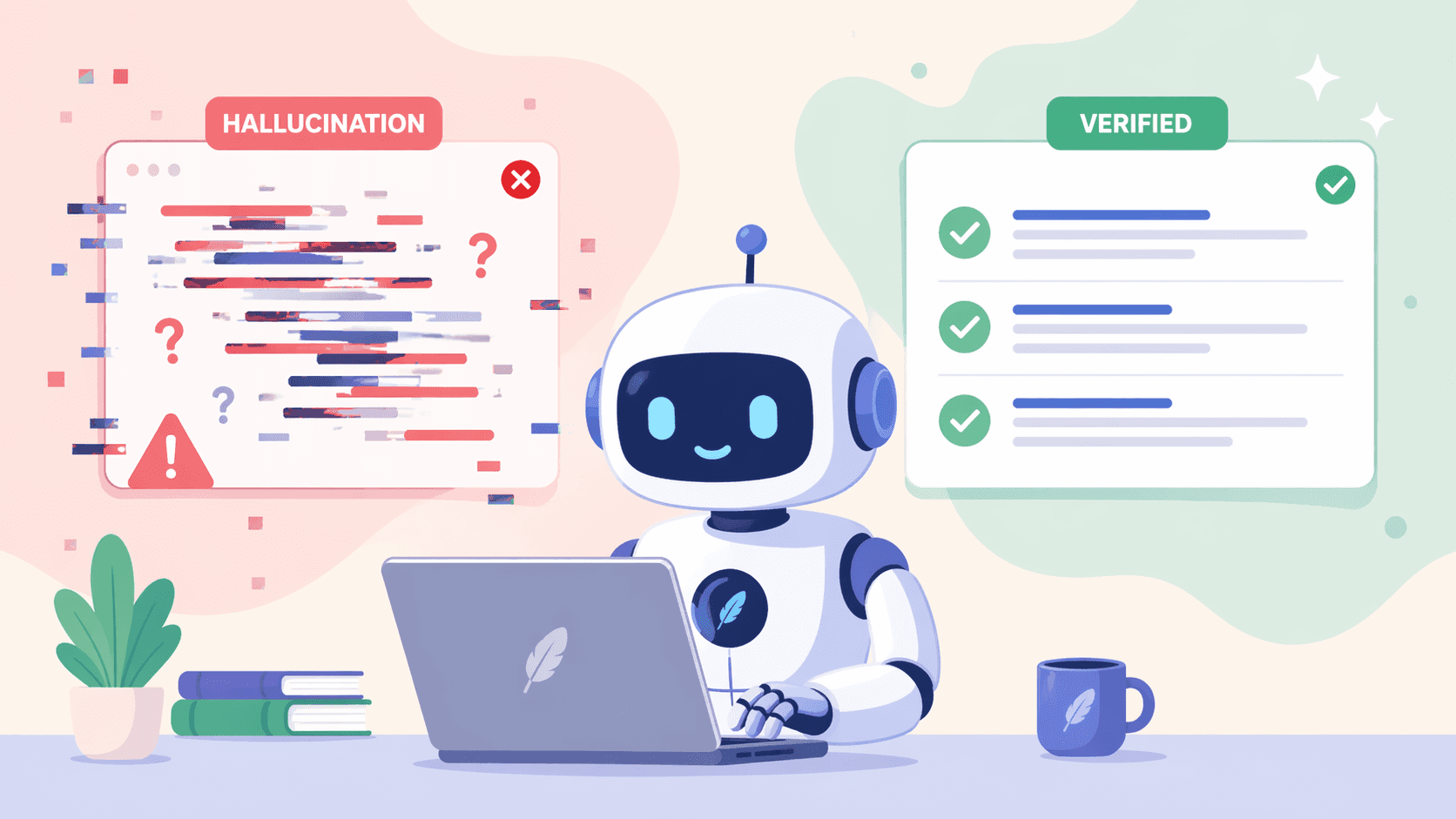
AI models kabhi-kabhi cheezein khud se bana lete hain. Ise hallucination kaha jata hai. Ise rokne ke liye, aapko teen cheezon ki zaroorat hoti hai: saaf instructions, check karne ke liye facts, aur answers ko double-check karne ke liye ek system.
Jaise-jaise in tools ka use badh raha hai, galat answers ek bada problem bante ja rahe hain. Yeh guide aapko specific, working steps dikhayegi in errors ko abhi kam karne ke liye. Kya aap ek zyada reliable workflow banane ke liye taiyar hain? Chaliye shuru karte hain.
<CTA title="Kam AI Errors Ke Saath Likhein" description="Guided prompts aur built-in verification steps ke saath accurate structured outputs generate karein" buttonLabel="Jenni Free Try Karein" link="https://app.jenni.ai/register" />
AI Hallucinations Writing Mein Kyun Hote Hain
Apne core par, ek AI writing tool ek sophisticated pattern-matching engine hai. Ise mountains of text par train kiya jata hai taaki sequence mein agle shabd ko predict kiya ja sake. Is mechanics ke baare mein aur gahraee se janne ke liye (aur yeh kahan fail hote hain), academic writing ke liye humare explanation of how AI writing assistants work for academic writing ko dekhein.
Yeh process behad fluent language create karta hai, lekin yeh sachai ki guarantee nahi deta. In tools ko effectively use karne ke liye, ai hallucinations vs misinformation ke beech ke farq ko samajhna behad zaroori hai.
Jab aap isse koi sawal puchte hain, toh yeh kisi database se verified fact retrieve nahi karta. Iske bajaye, yeh statistical probability ke basis par ek response generate karta hai.
Problems tab shuru hoti hain jab prompt ambiguous hota hai ya topic ko specific, up-to-date knowledge ki zaroorat hoti hai jo model ke paas hoti hi nahi hai.
Teen interconnected issues zyadatar hallucinations ko drive karte hain:
The Ambiguity Problem. Ek broad ya kharab tarike se defined prompt AI ko invent karne ke liye bahut zyada jagah deta hai. Bina clear boundaries ke, yeh gaps ko un word patterns se fill karega jo sabse coherent lagte hain, jisse confident lekin galat statements bante hain.
The Knowledge Gap. Ek AI model ki knowledge uske last training update par freeze ho jati hai. Uske paas current events, recent data ya private information janne ki koi innate ability nahi hoti. Jab koi query in areas ko touch karti hai, toh model aksar ek aisa answer fabricate kar deta hai jo uske purane patterns se fit baithta ho.
The Overconfidence Error. Yeh models helpful aur certain sound karne ke liye design kiye gaye hain. Law, medicine, ya technical specs jaise specialized areas mein, yeh seekhe hue general pattern ko apply kar sakte hain, jisse ek detailed lekin fundamentally flawed explanation banti hai.
Ise samajhna control ki taraf pehla kadam hai. Kyunki AI khud se fact aur fiction mein farq nahi kar sakta, isliye user ki responsibility banti hai ki woh precision ke saath ise guide kare aur iske outputs ko verify kare.
Accuracy aur Control Ke Liye Prompt Engineering
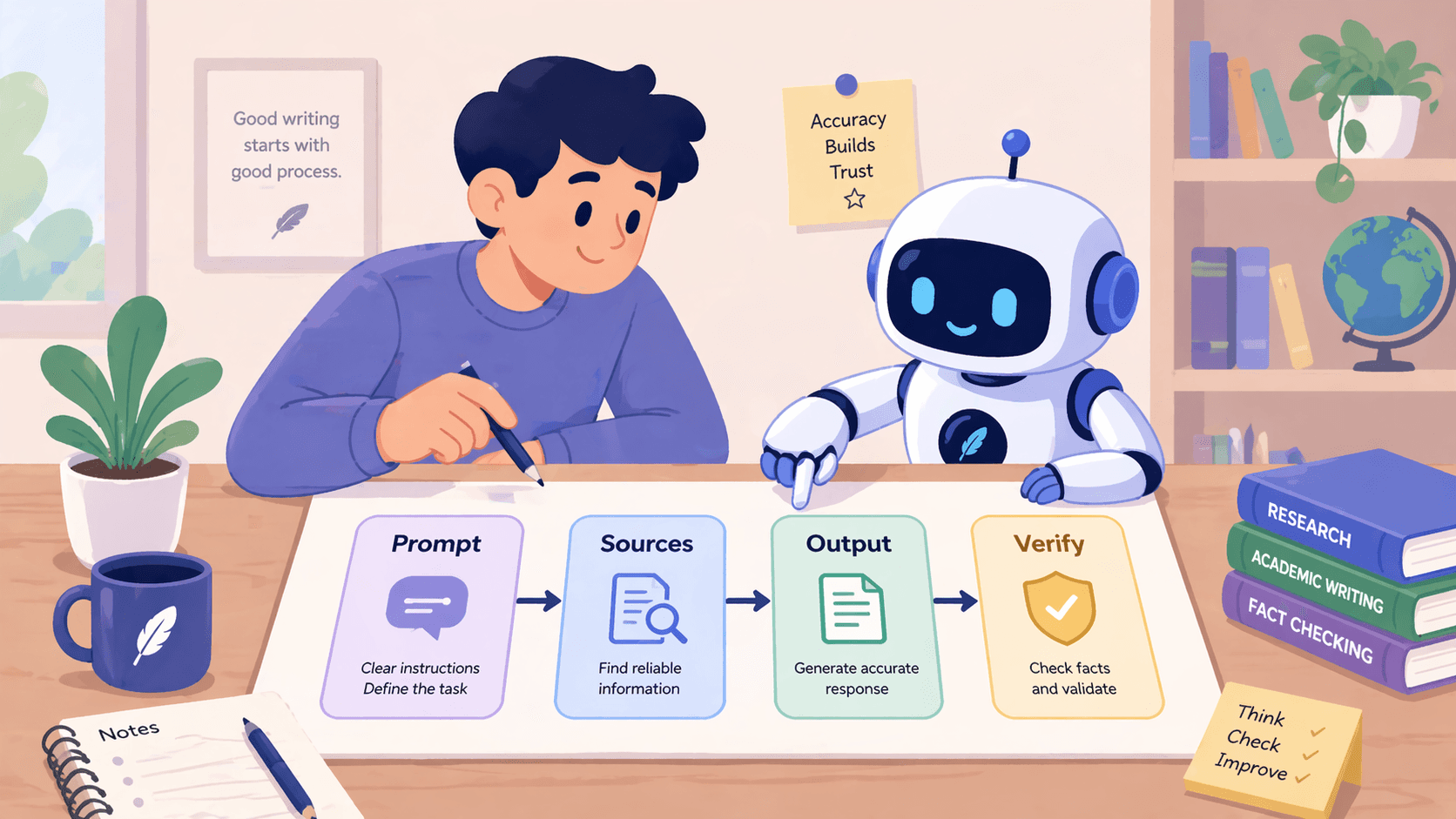
Ek precise prompt made-up information ke khilaf aapka pehla aur sabse powerful defense hai. Ambiguity ko hatakar aur strict rules set karke, aap AI ko ek aise box mein kaam karne ke liye force karte hain jise aap define karte hain, jo uski details invent karne ki ability ko dramatically kam kar deta hai. Agar aapko aur zyada structured frameworks aur examples chahiye, toh academic AI writing ke liye humari prompt engineering guide for academic AI writing in techniques ko expand karti hai.
Ise is tarah sochein: "explain quantum computing" jaisa ek vague prompt model ke liye gaps ko kuch bhi sound-good karne wali cheez se fill karne ka ek खुला invitation hai. Ek strong prompt ise ek job description, ek deadline, aur follow karne ke liye ek specific format deta hai.
For example, in do approaches ko compare karein:
Weak Prompt: Explain climate change.
Strong Prompt: IPCC ke Sixth Assessment Report ke data ka use karte hue, climate change ke teen primary human-driven causes list karein. Answer ko bulleted list ke roop mein one-sentence explanations ke saath format karein. Speculate na karein.
Dusra version isliye kaam karta hai kyunki yeh teen cheezein karta hai: yeh source specify karta hai (IPCC report), output define karta hai (bulleted list), aur ek clear boundary set karta hai ("speculate na karein").
Reliable prompts ke liye key techniques:
Role assign karein: Shuru karein "Act as a financial auditor" ya "You are a historian summarizing events" se.
Sources ko constrain karein: Ise batayein ki kaun se databases, time periods, ya publications ka use karna hai.
Format dictate karein: Ek table, citations ke saath ek list, ya step-by-step explanation maangein.
Explicit limits state karein: Direct commands ka use karein jaise "Opinions include na karein" ya "Sirf upar diye gaye context mein mili information ka use karein."
<ProTip title="💡 Pro Tip:" description="Higher factual accuracy ke liye structured prompts use karein jo sources scope aur output format ko define karein" />
Reliable prompts ke liye key techniques mein ek specific role assign karna aur format dictate karna shamil hai. Ek aur useful method hai chain of thought prompting ka use karna, jo model ko apne reasoning ko step-by-step todne ke liye encourage karta hai.
Yeh process ko slow banata hai, lekin logic clear hota hai aur galat conclusion par jump karne ke chances kam hote hain. Temperature setting ko adjust karna (typically lower value jaise 0.2 par) bhi factual tasks ke liye help karta hai.
Yeh AI ke word choices mein randomness ko kam karta hai, jisse iske responses aur zyada consistent aur predictable ho jate hain. Halanki, ek perfect prompt sirf pehla filter hai. Yeh stage set karta hai, lekin aapko abhi bhi results check karne ki zaroorat hoti hai.
Retrieval-Augmented Generation (RAG): AI Ko Data Mein Ground Karna
Retrieval-Augmented Generation (RAG) core problem ko tackle karta hai: ek AI ki internal knowledge limited hoti hai aur possibly outdated hoti hai.
Solution simple hai, model ko guess mat karne do. Iske bajaye, ise likhne se pehle use karne ke liye verified documents reference ke roop mein do.
RAG ko is tarah sochein jaise AI ko apna homework karwaya ja raha ho. Jab aap koi sawal puchte hain, toh system sabse pehle ek connected database ko search karta hai, jaise aapki company ke internal reports, ek legal database, ya recent academic papers.
Yeh in real sources se relevant passages pull karta hai aur unhe AI ko is instruction ke saath feed karta hai: "Sawal ka jawab sirf is information ka use karke do."
Yeh process ko open-ended invention se constrained reporting mein badal deta hai. Model ka kaam "ek likely answer generate karne" se badalkar "in provided facts se ek answer synthesize karne" mein shift ho jata hai.
Ek basic comparison approach aur result mein farq ko dikhata hai:
Method | Apna Info Kahan Se Milta Hai | Factual Accuracy | Hallucination Risk |
Standard AI | Iske static training data se | Moderate | High |
RAG System | Aapke diye gaye external sources se | High | Lower |
Graph-RAG | Connected facts ka ek mapped network | Very High | Lowest |
Graph-RAG jaise advanced implementations entity relationships ko map karne ke liye knowledge graphs ka use karte hain, jo research ke mutabik standard RAG se behtar logical consistency maintain kar sakte hain.
Practical use ke liye, aapko shuru karne ke liye kisi complex system ki zaroorat nahi hai. RAG ka sabse simple form hai kisi source document ke text ko directly copy aur paste karna apne prompt mein, aur phir AI se kehna ki woh purely us text ke basis par summarize kare ya sawalon ke jawab de.
Zyada advanced tools AI ko live databases ya aapki khud ki document library se automatically connect kar sakte hain. Yeh method goal ko is umeed se badalkar ki 'AI sahi ho', is jankari mein shift karta hai ki 'usko information kahan se mili', jisse verification possible ho jata hai.
AI Safety Ke Liye Human Verification Kyun Maayane Rakhta Hai
AI systems cheezein khud se bana sakte hain. Human verification ek aisa process hai jismein AI jo produce karta hai, use kisi ke dekhne se pehle trusted, real-world sources se check kiya jata hai. Yeh step crucial hai, kyunki behtareen AI bhi cheezein galat kar sakta hai.
Nature Machine Intelligence ke studies is baat par zor dete hain ki human-in-the-loop verification sabse effective safeguard hai, jo AI-generated errors ke failne ko significantly kam karta hai. Fact-checking optional nahi hai; yeh essential hai.
Is stage ke dauran aapko milne wale legitimate sources ka track rakhne ke liye, ek what is citation manager ka use karne ki highly recommendation di jati hai. Yeh ensure karta hai ki har claim ek real, traceable document se backed ho na ki kisi "hallucinated" reference se.
Yeh kisi article ko sirf skim karne ke baare mein nahi hai. Yeh ek structured, methodical process hai.
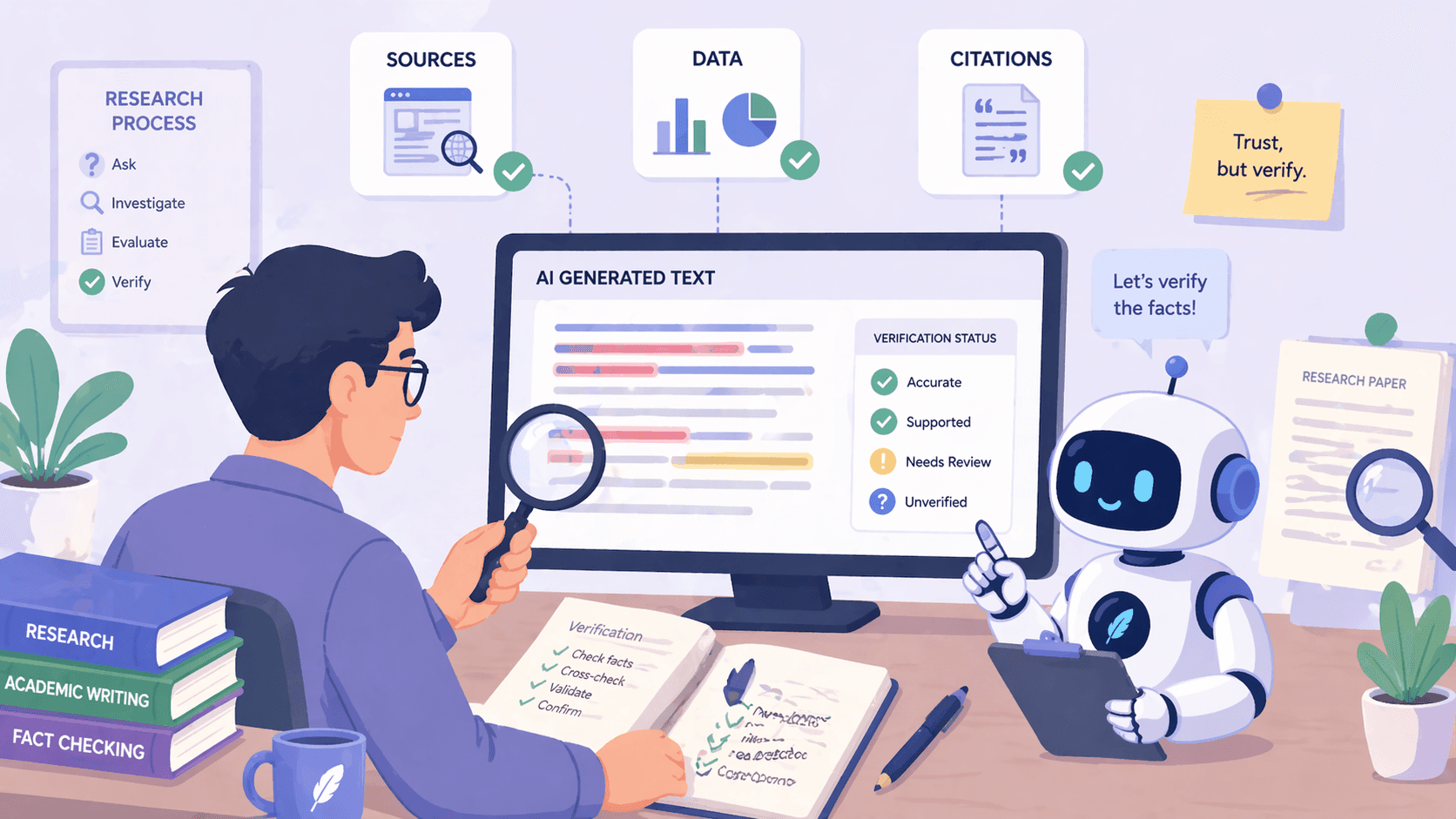
Verification workflow kaise kaam karta hai
Ek solid verification process specific steps ko follow karta hai:
Claims ko cross-reference karein. Har significant statement ko kam se kam do reliable sources ke saath check kiya jana chahiye.
Data ke liye source par jayein. Kisi statistic ke AI summary par trust na karein. Original report ya publication dhoondhein aur padhein.
Citations check karein. Ensure karein ki koi bhi cited sources actually exist karte hon aur AI ne unhe accurately represent kiya hai.
Jise confirm nahi kar sakte use flag karein. Koi bhi claim jo uncertain lagta hai ya jaldi verify nahi kiya ja sakta, use deeper, manual investigation ke liye alag rakh diya jata.
Yeh approach academia aur journalism mein accuracy ensure karne ke liye use hone wale research workflows ko mirror karti hai.
Ek practical method: confidence tagging
Ek effective technique yeh hai ki verify karte samay har piece of information ko ek confidence level ke saath tag karein. For instance:
High confidence: Multiple authoritative sources se verified.
Medium confidence: Ek ache source ke basis par accurate lagta hai, lekin ek second check ki zaroorat ho sakti hai.
Low confidence: Unverified, questionable, ya kisi dubious source se. Full manual validation ki zaroorat hai.
Yeh tagging system transparency build karta hai. Yeh dikhata hai ki document ke kaun se parts rock-solid hain aur kinhe second look ki zaroorat ho sakti hai, jo final product mein trust build karta hai.
Bottom line simple hai: human oversight hi asal safety net hai. Iske bina, AI systems, chahe kitne bhi ache se design kiye gaye hon, aakhirlakar kisi complex ya unusual situation mein ek serious error kar hi denge.
<ProTip title="🔍 Pro Tip:" description="AI summaries par rely karne ke bajaye hamesha statistics ko primary sources se directly verify karein" />
Reality Filters aur Constraint Systems
AI aksar gaps ko fill karne ki koshish karta hai, tab bhi jab use aisa nahi karna chahiye. Reality filters ise rokne ke liye ek technical approach hain. Yeh AI ko uncertainty acknowledge karne aur aise claims karne se bachne ke liye force karte hain jinhe woh back nahi kar sakta.
High-stakes environments mein, yeh filters fake news and misinformation ke spread ko rokte hain, yeh ensure karte hue ki data-driven content objective rahe.
Agar aap information ko verify nahi kar sakte, toh system ko guess karne ke bajaye "insufficient data" ke saath respond karne ka instruction diya jana chahiye.
Yeh idea developer forums aur X jaise platforms par circulate hona shuru hua. Core principle simple hai: AI ko program karein explicitly state karne ke liye jab uske paas information ki kami ho, guess karne ke bajaye.
A basic example: The constraint prompt
Aap simple rule ke saath AI ko instruct kar sakte hain:
Agar aap information ko verify nahi kar sakte, toh guess karne ke bajaye "insufficient data" ke saath respond karein.
Yeh single instruction, jab consistently apply kiya jata hai, fabricated content ko kam karta hai. AI ko answer invent karne ki permission nahi hoti.
Hard constraints apply karna
Zyada advanced systems specific, hard-coded rules use karte hain:
Koi bhi statistics bina cited source ke present nahi kiya ja sakta.
Kisi bhi named entities (people, companies, places) ko bina verification ke mention nahi kiya ja sakta.
Koi bhi speculative conclusions permitted nahi hain.
Yeh rules guardrails ki tarah kaam karte hain. Yeh physically model ki plausible-sounding lekin false ya misleading outputs generate karne ki ability ko limit karte hain.
Practical terms mein, yeh method technical fields ya research mein AI-generated content ko bahut zyada trustworthy banata hai. Yeh completeness ke illusion ke badle verifiable accuracy deta hai.
<ProTip title="⚠️ Reminder:" description="Gaps ko invented information se fill karne ke bajaye AI ko uncertainty admit karne ke liye force karein" />
Memory Systems vs Surface Fixes
AI ko cheezein khud se banane se rokna sirf clever prompts ke baare mein nahi hai. Problem ko sach mein long-term fix karne ke liye, aapko system ki memory ko dekhna hoga.
Jab aap evaluate karte hain ki how to choose ai writing tool, toh aise platforms ko dekhein jo lambe documents mein context maintain karte hain.
Surface-level prompt engineering gahre structural failures ko miss kar deti hai, jaise ki errors jo reasoning ke kai steps ke dauran build up hote hain.
Researchers ne ek 'cascade effect' identify kiya hai, jahan complex tasks mein hallucinations ka ek bada portion model ke previous reasoning steps ko track na rakh pane se aata hai.
Yeh koi theoretical flaw nahi hai; yeh ek real issue hai jise log encounter karte hain jab woh complicated work ke liye AI use karte hain.
Ise is tarah sochein: ek accha prompt kisi cut par bandage lagane jaisa hai. Ek memory system bleeding ke underlying cause ko fix karne jaisa hai.
Ek accha memory system actually mein kya karta hai
Jab ek AI yaad rakh sakta hai, toh yeh core problems ko solve karta hai:
Yeh conversation aur task ko shuru se aakhir tak track karta hai.
Yeh khud ko repeat karne ya paanch minute pehle kahi hui kisi baat ko contradict karne se rokta hai.
Iske responses us se consistent rehte hain jo isne pehle hi produce kiya hai.
Quick fixes kya solve nahi kar sakte
Surface-level prompt engineering gahre, structural failures ko miss kar deti hai:
Errors jo reasoning ke kai steps ke dauran build up hote hain.
Ek lambe, detailed workflow mein context ka complete loss.
Agar aap ek naye session mein wahi sawal puchte hain toh ek different, conflicting answer milna.
Writing ke liye, khaskar research, reports, ya kisi bhi long-form content ke liye, yeh critical hai. AI ko reliable banane ke liye, system ko time ke sath context ko yaad rakhne aur track karne ke liye design kiya jana chahiye. Is foundation ke bina, aap sirf bandages apply kar rahe hain.
AI Content Auditing aur Error Detection
Systematic auditing inconsistencies ke liye outputs ko analyze karke hallucinations ko identify karta hai. Ek AI ki mistakes ko pakadne ke liye, aapko ek system chahiye. Auditing wahi system hai, AI-generated text ko scan karne ka ek method inconsistencies, logical leaps, aur un claims ko spot karne ke liye jinka koi backup nahi hai.
Yeh AI writing ko ek gamble se badalkar ek controlled, repeatable process mein badal deta hai.
Audit mein kya dekhna hai
Ek proper audit kuch key checks chalata hai:
Har number aur statistic ko verify karein. Maan kar chalein ki woh galat hain jab tak sahi prove na ho jayein.
Internal contradictions detect karein. Kya text apne hi khilaf argue karta hai?
Vague ya unsupported claims ko flag karein. Aise sentences jo confident sound karte hain lekin hollow hote hain.
Citation accuracy check karein. Kya sources actually exist karte hain, aur kya woh sach mein wahi kehte hain jo text claim karta hai?
Ek practical validation checklist
Guide ke roop mein ek simple table ka use karna ise systematic banata hai.
Check Type | Kya Dekhna Hai | Action Jo Lena Hai |
Facts | Galat ya outdated information | Primary sources ke saath cross-check karein |
Citations | Missing, broken, ya misrepresented references | Real sources ke saath replace karein ya claim ko remove karein |
Logic | Inconsistent reasoning ya unsupported conclusions | Clarity ke liye poore section ko rewrite karein |
Clarity | Ambiguous ya overly broad claims | Specific details ya qualifying context add karein |
Yeh structured approach hi amateur use ko professional, low-risk AI content creation se alag karta hai. Yeh quality control step hai jo errors ko problems khadi karne se pehle pakad leta hai.
<ProTip title="🧠 Pro Tip:" description="Hidden inaccuracies ko pakadne ke liye publish karne se pehle AI outputs ko audit karne ke liye ek checklist ka use karein" />
Ek Reliable AI Writing Workflow Banana
AI se reliable results pane ke liye, aapko ek process ki zaroorat hoti hai. Ek accha workflow generation, checking, aur editing ko ek single, repeatable system mein combine karta hai. Yeh ek pipeline hai, na ki ek one-time command.
Core three-step cycle
Generate. Structured, constrained prompts ke saath shuru karein jo AI ko batate hain ki kya nahi karna hai.
Audit. Output ko verification checks ke through run karein. Inconsistencies aur unsupported claims ko hunt karein.
Refine. Un sections ko rewrite karein jo unclear hain, shaky hain, ya bas sahi sound nahi kar rahe.
Yeh create-check-fix loop hi professional AI error correction ki foundation hai. Is tarah teams bina mistakes introduce kiye in tools ka use karti hain.
Ground par yeh kaise kaam karta hai
Practice mein, content ka ek single piece in stages se guzar sakta hai:
Boundaries set karne ke liye engineered prompts ke saath Drafting.
External, trusted sources ke khilaf har key claim ko Validate karna.
Tone aur clarity ko sirf tabhi Finalize karna jab facts confirm ho jayein.
Yeh method sirf jhooth pakadne se kahin zyada kaam karta hai. Yeh steady tarike se AI-assisted writing ke actual meaning aur accuracy ko improve karta hai, shuru se hi false statements ko kam karta hai.
Apni Writing Mein Dikhne Se Pehle Guesswork Ko Rokein
Aapne shayad ise hote dekha hoga, output confident sound karta hai lekin kuch ajeeb lagta hai aur aap us par fully trust nahi kar paate. Woh doubt aapko slow kar deta hai. Yeh ek real problem hai.
<CTA title="Accurate AI Content Tezi Se Likhein" description="Apni writing mein hallucinations ko kam karne ke liye structured prompts, verification aur guided workflows ka use karein" buttonLabel="Jenni Free Try Karein" link="https://app.jenni.ai/register" />
Aage badhne ka raasta ek aisa simple system banana hai jahan prompts clear hon aur har claim check ho, jismein Jenni jaise tools aapko bina control khoye consistent rehne mein help karte hain. Yeh aapke judgment ko replace nahi karega, lekin isse mistakes ko jaldi pakadna aur apni writing ko accurate rakhna aasan ho jata hai.