Dwara
Justin Wong
—
Print aur Digital Citations: Mukhy Antar, Niyam, aur Inhe Sahi Kaise Karein

Justin Wong
Vikas Prabhari
Graduated kiya Bachelor's me Global Business & Digital Arts, Minor me Entrepreneurship
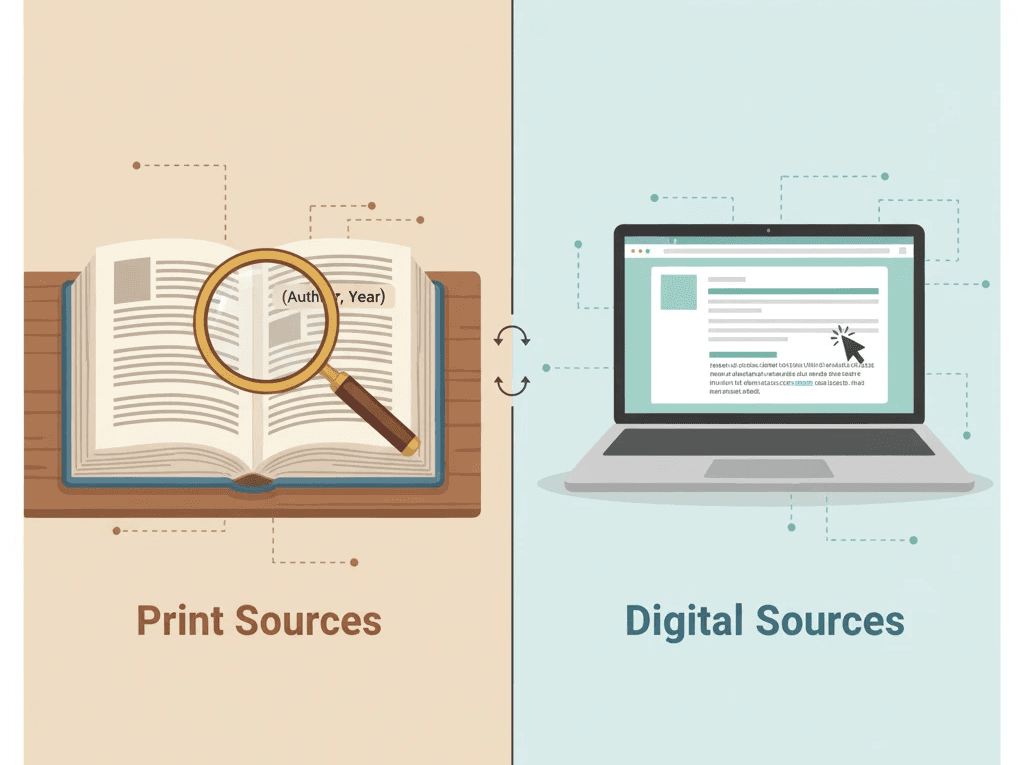
Citations aapke readers ke liye ek roadmap ki tarah hote hain. Ye dikhate hain ki aapki information kahaan se aayi hai aur dusre ise kaise check kar sakte hain. Lekin online sources ke badhne ke saath, citations alag dikh sakte hain is baat par nirbhar karte hue ki source print hai ya digital.
Is guide mein, aap seekhenge: Print aur digital citations kaise kaam karte hain, Alag-alag citation styles (MLA, APA, Chicago) inhein kaise treat karte hain, Aur common mistakes se kaise bachein aur har baar sahi tarike se cite kaise karein.
<CTA title="Seconds Me Accurate Citations Banayein" description="MLA, APA, ya Chicago citations print aur online sources ke liye banane ke liye Jenni AI ka use karein, jo precise, consistent aur submit karne ke liye ready hain." buttonLabel="Jenni Free Try Karein" link="https://app.jenni.ai/register" />
Aaj Citations Kyun Matter Karte Hain
Ek citation ke teen main kaam hote hain:
Original author ko credit dena.
Readers ko source dhundhne mein madad karna.
Ye dikhana ki aapka kaam trustworthy hai.
Ye goals same rehte hain chahe source ek book ho ya ek website. Jo badla hai, woh hai format. Print books sadiyon se hain. Online articles, e-books, aur PDFs naye hain.
Bhale hi aaj hamare paas zyada digital sources hain, print aur digital citations alag rules follow karte hain. Galat type ka use karne se readers ke liye aapke sources dhundhna mushkil ho sakta hai.
<ProTip title="💡 Reminder:" description="Hamesha us version ko cite karein jise aapne actually use kiya hai, print ya digital. Dono ki details mix karne se confusion hota hai." />
Print Citation Kya Hai?
Ek print citation us source ke liye hota hai jo physical form mein exist karta hai, jaise ek printed book, journal, ya report.
Example (APA 7th):
Smith, J. (2015). Climate Change and Coastal Resilience. New York, NY: Greenfield Press.
Print Citations Ke Features
Stable page numbers: Page numbers badalte nahi hain.
Permanent publication details: Publisher, volume, aur issue same rehte hain.
URLs ki zaroorat nahi: Readers library ya print collection mein source locate karte hain.
Page numbers use karein: Quotes ke liye exact pages include karein.
Print citations work ka original, fixed version dikhate hain.
Digital Citation Kya Hai?
Ek digital citation kisi source ke online version ko refer karta hai, jaise ek e-book, PDF, journal article, ya webpage. Step-by-step walkthrough ke liye, hamari digital source citation for academic writing guide dekhein.
Example (APA 7th):
Smith, J. (2015). Climate Change and Coastal Resilience. Greenfield Press. https://doi.org/10.1234/cccr.2015.07
Digital Citations Ke Features
DOI ya URL ka use karein: Readers ko online exact source par direct karta hai.
Page numbers missing ho sakte hain: Iske badle sections ya paragraphs ka use karein.
Zaroorat hone par access date include karein: Khaskar un webpages ke liye jo aksar badalte rehte hain.
Version badal sakta hai: Online sources ko update ya revise kiya ja sakta hai.
<ProTip title="💡 Pro Tip:" description="Agar DOI available hai, toh hamesha URL ki jagah isi ka use karein. DOIs same rehte hain, URLs break ho sakte hain." />
Print aur Digital Citations Ke Beech Core Differences
Feature | Print Citation | Digital Citation |
Medium | Physical copy (book, journal) | Online copy (PDF, webpage, database) |
Access Info | Publisher, city | DOI, URL, ya database name |
Pagination | Stable page numbers | Missing ho sakte hain ya vary kar sakte hain |
Edition Note | Printed edition | Online edition, e-book, open access |
Retrieval Date | Zaroorat nahi hai | Kabhi kabhi zaroorat hoti hai |
Locator Method | Page numbers | Agar pages na hon toh sections ya paragraphs |
Stability | Permanent | Update kiya ja sakta hai |
Citation Focus | Publisher details | Digital access details |
In differences ko jaanna aapke readers ko aapke dwara use kiye gaye exact source ko dhundhne mein madad karta hai.
“Edition Consulted” Kyun Matter Karta Hai
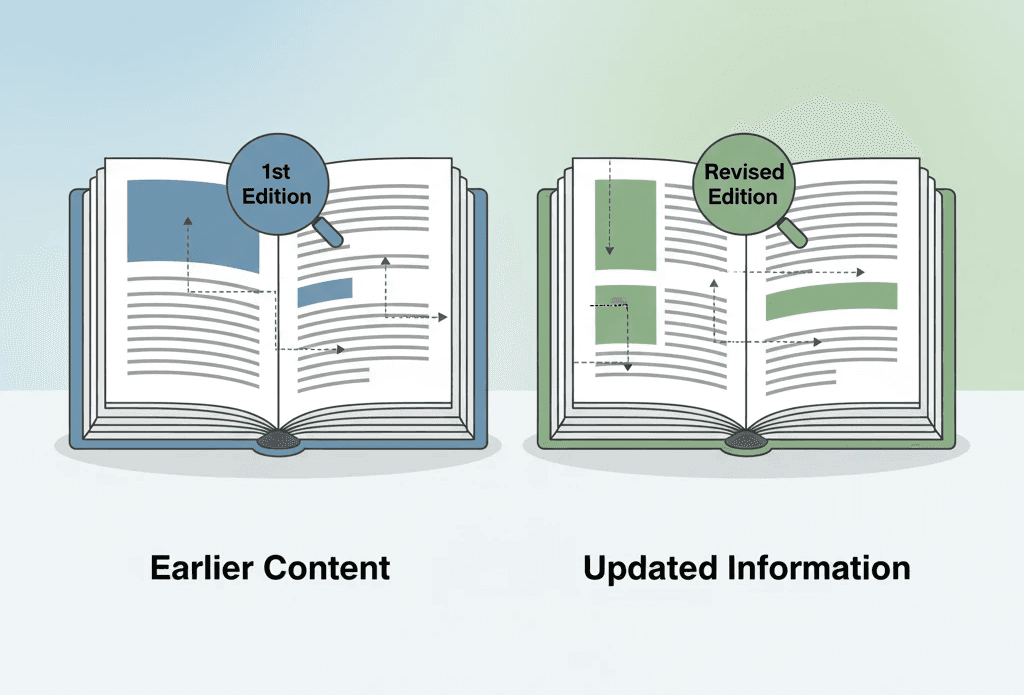
Ek common mistake yeh hai ki jab aapne digital source use kiya ho tab print details cite karna (ya iska ulta). Agar koi aapke citation ko follow karne ki koshish karta hai aur aapne galat edition likha hai, toh ho sakta hai unhe same information na mile.
<ProTip title="📘 Note:" description="Agar aapne kisi database se PDF download kiya hai, toh use digital edition mana jayega, bhale hi woh ek printed page jaisa dikhe." />
Best Practice
Usi edition ko cite karein jise aapne use kiya hai. Print aur digital details ko tab tak mix na karein jab tak aapne dono versions ko poori tarah se consult na kiya ho.
Information Kaise Locate Karein: Pages, Sections, Paragraphs
Agar page numbers exist karte hain
Print sources ya fixed pages wale digital PDFs ke liye, unhein include karein.
Example (MLA):
(Smith 45)
Agar page numbers exist nahi karte hain
E-books, websites, ya HTML articles ke liye:
Section headings ka use karein: (Smith, “Conclusion”)
Paragraph numbers ka use karein: (Smith, para. 12)
Chapter numbers ka use karein: (Smith, ch. 3)
<ProTip title="📄 Quick Tip:" description="Agar koi page numbers exist nahi karte, toh MLA aur APA iske badle sections ya paragraph numbers recommend karte hain." />
Ye methods readers ko aapke source ko accurately trace karne dete hain.
Citation Styles: MLA, APA, Chicago
Ek broader primer ke liye jo Harvard aur Vancouver ko bhi cover karta hai, hamari citation styles explained for students dekhein.
MLA
Usi version ko cite karein jise aapne use kiya hai.
Online sources ke liye URL ya DOI include karein.
Agar digital edition mein na ho toh page numbers omit kar dein.
Works Cited list.
Print Example:
Austen, Jane. Pride and Prejudice. Penguin Classics, 2002.
Digital Example:
Austen, Jane. Pride and Prejudice. Penguin Classics, 2002. Google Books, books.google.com/pp/123.
APA
Online sources ke liye, DOI ya stable URL include karein.
Koi retrieval date nahi jab tak content aksar update na hota ho.
Agar page numbers na hon toh section ya paragraph numbers ka use karein.
Digital Journal Example:
Brown, L. (2021). The psychology of trust in digital spaces. Journal of Social Behavior, 12(3). https://doi.org/10.0000/jsb.2021.13
Chicago (Notes-Bibliography)
Use kiye gaye edition ko cite karein: print ya digital.
DOI ya access URL include karein.
Access dates optional hain lekin helpful hain.
Digital Example:
Linda Brown, “The Psychology of Trust in Digital Spaces,” Journal of Social Behavior 12, no. 3 (2021), https://doi.org/10.0000/jsb.2021.13.
Credibility Evaluate Karna

Citations source reliability ko bhi dikhate hain.
Aamtaur par edited, reviewed, aur stable hote hain.
Authorship aur publisher clear hote hain.
Change hone ke chances kam hote hain.
Digital
Bahut vary kar sakte hain.
Domain (.edu, .gov, .org) aur publication date check karein.
Author ke credentials verify karein.
<ProTip title="🔍 Pro Tip:" description="Digital sources ko cite karne se pehle hamesha authorship, domain aur update date check karein." />
Common Citation Mistakes
Digital sources ke liye print details ka use karna.
Ek hi entry mein print aur digital info mix karna.
Jab digital pages stable na hon tab page numbers ka use karna.
DOI aur URL miss karna.
Badalne wale sources ke liye access dates bhool jana.
Stable links ki jagah search-result URLs ka use karna.
Ise aasan aur consistent banane ke liye Zotero, EndNote, ya Jenni AI jaise Citation tools ka use karein. Agar aap ek reference library manage kar rahe hain, toh hamara Zotero and Mendeley integration citations ko consistent rakhne mein madad kar sakta hai.
Practical Scenarios
Scenario 1: Printed Journal
Print ki tarah cite karein.
APA: Smith, J. (2018). Neural learning and adaptation. Neuroscience Review, 11(2), 45–67.
Scenario 2: PDF Version
Digital ki tarah cite karein.
Smith, J. (2018). Neural learning and adaptation. Neuroscience Review, 11(2). https://doi.org/10.5678/nr.2018.11.2
Scenario 3: E-book bina page numbers ke
Section ya chapter locator ka use karein.
(Smith, ch. 5)
Traceability aur Academic Integrity
Citations dusron ko aapke research trail ko follow karne dete hain.
Print sources → libraries aur archives.
Digital sources → DOI, URL, ya database.
Traceability aapke kaam ko reliable aur reproducible rakhne mein madad karti hai.
<ProTip title="🧭 Reminder:" description="Har ek reader aapke citations ka use karke wahi dhundhne mein saksham hona chahiye jo aapne dhundha tha." />
Versioning aur Updates
Print editions stable hote hain. Digital editions samay ke saath badal sakte hain.
Best Practice
Update hone wale sources ke liye access dates record karein.
DOIs ya archived versions (JSTOR, arXiv) ka use karein.
Print ke liye, edition ya reprint number note karein.
Citation Consistency
Consistency key hai:
Sabh sources ke liye same style ka use karein.
Punctuation, italics, aur capitalization ko uniform rakhein.
Reference list indentation aur spacing ko align karein.
Hybrid Citations
Kuch works print aur digital dono mein exist karte hain.
Usi version ko cite karein jise aapne use kiya hai.
Dono ko tabhi include karein jab aapne dono ko poori tarah se consult kiya ho.
Hybrid citation aapke references ko clear aur reliable rakhta hai.
Quick Reference Checklist
Print sources:
✅ Publisher aur city.
✅ Page numbers.
❌ Koi URL ya DOI nahi.
Digital sources:
✅ DOI ya stable URL.
✅ Agar zaroorat ho toh access date.
❌ Agar use nahi kiya toh print location list na karein.
Cite Karein Jo Aap Actually Use Karte Hain
Print aur digital citations ka goal same hota hai: credit dena aur readers ko aapke sources check karne dena. Difference isme hai ki aap source ki taraf kaise point karte hain. Hamesha us edition ko cite karein jise aapne consult kiya hai, sahi locators ka use karein, aur consistent rahein.
<CTA title="Jenni Ke Saath Apne Citations Ko Master Karein" description="Citation confusion ko khatam karein. Jenni AI ke saath bina kisi mehnat ke accurate, format-correct print ya online citations banayein." buttonLabel="Jenni Free Try Karein" link="https://app.jenni.ai/register" />
Jenni AI ke saath, accurate citations simple aur fast hain. Chahe print ho ya digital, aap minutes mein reliable references bana sakte hain.