Dwara
Justin Wong
—
Prabhavit Lab Report Likhne Ki Kala: Tips aur Tricks

Justin Wong
Vikas Prabhari
Graduated kiya Bachelor's me Global Business & Digital Arts, Minor me Entrepreneurship
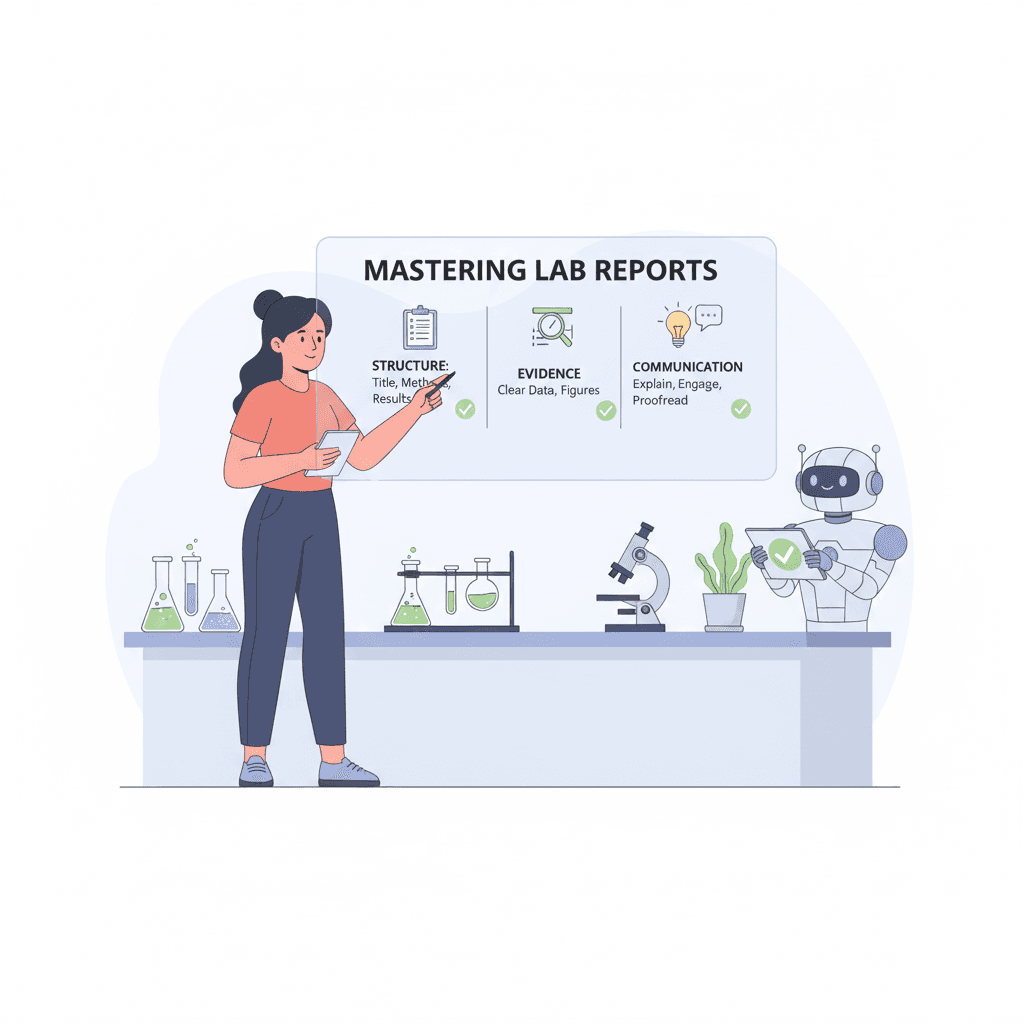
Lab reports scientific communication ki backbone hain, jo classroom experiments aur professional research ke beech ka gap door karte hain. Halanki, kai students inhe boring busywork samajhte hain, par ye reports asal mein researcher ke usi exact process ko mirror karti hain jiske dwara wo leading journals mein discoveries share karte hain. Asli challenge raw data ko ek compelling scientific narrative mein badalna hai, jo precision ko readability ke saath combine kare.
Chahe aap ek simple reaction ko document kar rahe hon ya kisi complex biological process ko, success zaroori components ko master karne par depend karti hai: clear methodology, accurate results, aur thoughtful analysis. Sabse achhi reports aisi lagti hain jaise kisi curious colleague ke saath conversation ho rahi ho, jo scientific rigor banaye rakhti hain aur dry, lifeless prose ke trap se bachti hain.
<CTA title="Build Strong Lab Reports" description="Jenni ke saath minutes mein structured, clear, aur professional lab reports generate karein." buttonLabel="Try Jenni Free" link="https://app.jenni.ai/register" />
Why Lab Reports Matter
Writing lab reports ek chore lag sakta hai, bilkul. Par ye scientific communication practice karne ka ek chance bhi hai, ek aisi skill jise aap baar-baar use karenge. Science vacuum mein nahi jeeta; ye detailed, clear findings share karne par depend karta hai taaki dusre aapke kaam ko check, repeat, aur build kar sakein.
Imagine karein ki aapne test kiya ki temperature enzyme ko kaise affect karta hai. Ek weak report keh sakti hai “It worked better when warmer.” Yeh kaafi nahi hai. Aapko explain karna hoga ki aapne ise kaise measure kiya, kya numbers mile, aur molecular level par temperature kyun matter karta hai. Ye ek guess aur real science ke beech ka difference hai.
<ProTip title="💡 Pro Tip:" description="Jab koi lab report shuru karein, toh khud ko remind karayein ki clarity utni hi important hai jitni accuracy. Transparency ka aim rakhein, mystery ka nahi." />
The Standard Lab Report Structure
Lab reports aam taur par ek common format follow karti hain. Yeh sirf tradition nahi hai, yeh layout khud scientific method ko follow karta hai. Yeh janna ki kya cheez kahan rakhni hai, aapke reader ko info jaldi find karne mein help karta hai.
Title: Ise short par descriptive banayein. “Experiment 5” ke bajaye, “Effect of Temperature on Catalase Activity” try karein.
Abstract: Aapke goals, methods, main results, aur conclusions ka ek 100–200 words ka snapshot.
Introduction: Yeh set up karta hai ki aapne experiment kyun kiya, dusron ko kya mila, aur aapka hypothesis kya tha.
Methods: Step-by-step details taaki koi aur aapke experiment ko exactly copy kar sake.
Results: Raw data, tables, graphs, sirf facts, koi opinions nahi.
Discussion: Aapke results ka kya matlab hai, wo aise kyun aaye, limits, aur wo dusron ke kaam se kaise compare hote hain.
Conclusion: Main points ko wrap up karein, yahan koi naye info nahi honi chahiye.
References: Jahan se aapne background info aur ideas liye.
Appendices: Extra data ya calculations jo main text mein fit nahi hote.
Yeh structure arbitrary nahi hai. Yeh scientific method ko reflect karta hai: observe → hypothesize → test → analyze → conclude.
<ProTip title="📌 Reminder:" description="Shuru karne se pehle hamesha apne instructor ya journal formatting requirements ko confirm karein. Standards alag-alag disciplines mein vary karte hain." />
Writing Each Section Effectively
Title and Abstract
Aapka title pehla impression hai. “Experiment 3” ke bajaye, kuch aisa kahein “Effect of Light Intensity on Photosynthesis Rate.” Yeh readers ko exactly batata hai ki andar kya hai.
Abstract aksar sabse mushkil part hota hai. Ise sabse aakhiri mein likhein, jab aapko apne results pata chal jayein. Yeh lagbhag 150 words ka hona chahiye aur quickly explain karein ki aapne kya kiya, kaise kiya, aur aapko kya mila.
For example:
Bad: “This experiment tested enzymes.”
Good: “This experiment tested catalase activity at different temperatures, finding peak activity at 37°C, with decline at higher temperatures due to enzyme denaturation.”
Introduction
Broad shuru karein, phir focus karein:
Yeh experiment kyun relevant hai?
Iske baare mein pehle se kya pata hai?
Aapka hypothesis kya hai?
Example: “Catalase ek enzyme hai jo hydrogen peroxide ko break down karta hai. Previous studies suggest karti hain ki temperature enzyme activity ko affect karta hai. Yeh experiment test karta hai ki kya catalase activity body temperature (37°C) par peak karti hai.”
Enzyme studies par aur context ke liye, yeh NCBI resource on catalase activity dekhein.
<ProTip title="🔍 Pro Tip:" description="Ek clear hypothesis aapki report ki backbone hoti hai. Ise ek testable statement ke roop mein frame karein, na ki kisi vague idea ke roop mein." />
Methods
Goal replicability hai. Imagine karein ki kisi ko aapka experiment repeat karna hai sirf aapki report ko guide maan kar — ek detailed checklist ke liye humari clear guide to writing the methodology section use karein.
Saare materials aur equipment list karein.
Control aur experimental groups specify karein.
Concentrations, quantities, aur time intervals specify karein.
Step-by-step procedures describe karein.
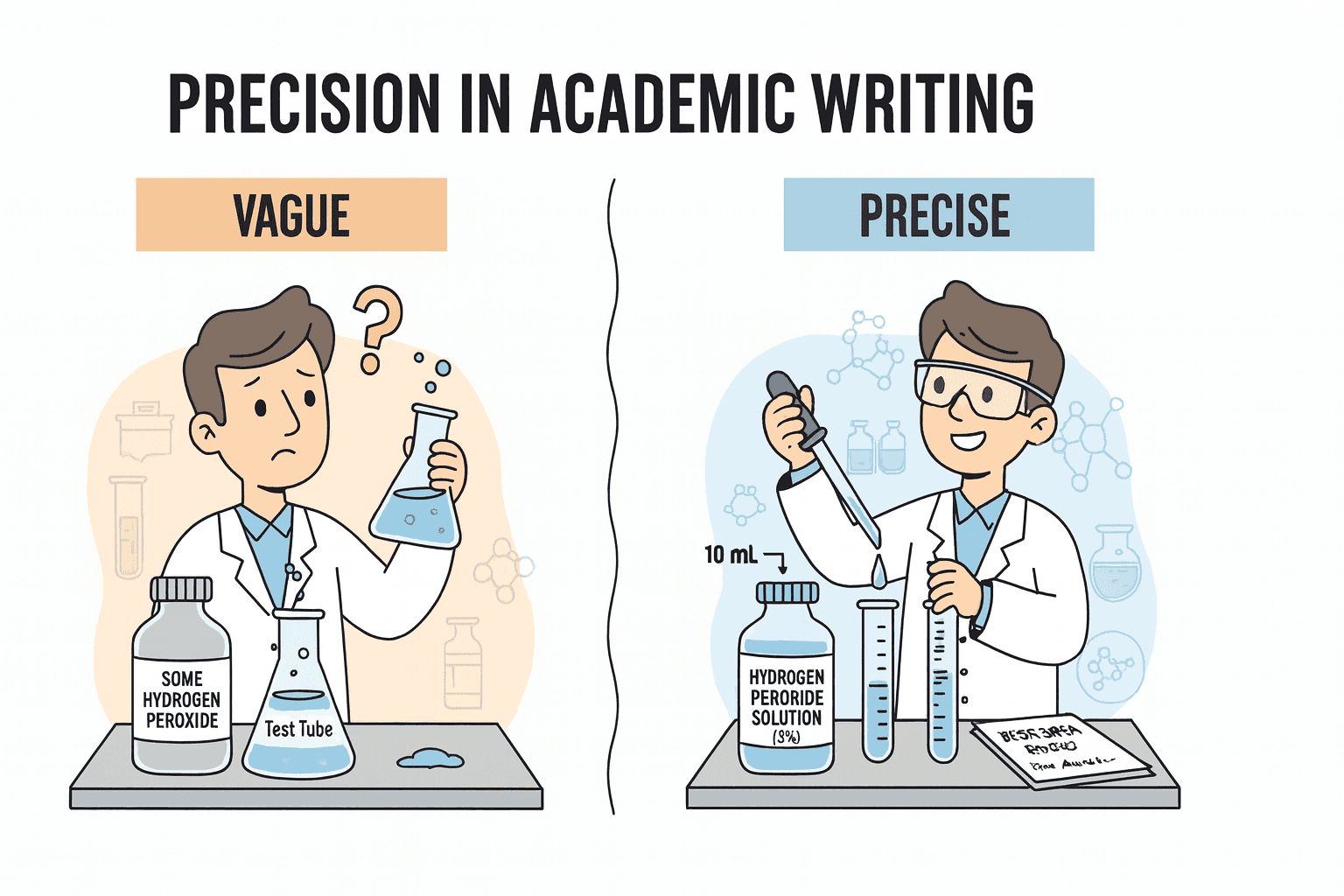
Vague descriptions se bachein jo guesswork ke liye room chhodti hain. For example, yeh likhne ke bajaye ki “Some hydrogen peroxide was poured in,” exact amounts specify karein: “10 mL of hydrogen peroxide solution (3%) was added to the test tube.” Yeh level of detail ensure karta hai ki koi dusra researcher barson baad bhi, aapki exact conditions ko replicate kar sake. Imagine karein ki sirf “some hydrogen peroxide” ko guide maan kar experiment repeat karna kitna mushkil hoga. Precision aapki report ko classroom se baahar bhi useful banati hai.
Results
Yeh section bina kisi interpretation ke data present kare.
Numerical data ke liye tables use karein.
Trends ke liye graphs/figures use karein.
Hamesha axes label karein aur units include karein.
Quantitative aur qualitative dono observations report karein.
Example: Yeh kehne ke bajaye ki “The reaction worked faster,” yeh dikhayein: “At 37°C, oxygen release averaged 12.5 mL/min, compared to 5.2 mL/min at 20°C.”
<ProTip title="📊 Pro Tip:" description="Graphs clean aur uncluttered hone chahiye. Variability aur reliability dikhane ke liye jahan applicable ho error bars use karein." />
Discussion
Yahan results ko meaning milti hai.
Apne hypothesis se shuru karein: kya yeh support hua ya nahi?
Explain karein ki results kyun aise aaye.
Errors ya limitations ko honestly acknowledge karein.
Published studies ya class material se compare karein.
Future research directions suggest karein.
Example: “Catalase activity peaked at 37°C, supporting the hypothesis. At 60°C, activity declined, likely due to enzyme denaturation. Similar results were reported in Smith et al. (2018).”
Strong discussions likhne ki tips ke liye, UNC Chapel Hill’s Writing Center guide review karein.
Conclusion
Aapka conclusion ek stand-alone takeaway ki tarah hona chahiye: us sawaal ka ek clear answer jise aapne test karne ka socha tha. Sirf kuch sentences mein, apne results ko hypothesis se connect karein aur main outcome state karein. Jo koi bhi sirf conclusion ko skim kar raha ho, use poora sense milna chahiye ki aapko kya mila aur ye kyun matter karta hai.
Example: “The experiment confirmed that catalase activity is temperature-dependent, peaking at 37°C and declining beyond this point. These results highlight the role of temperature in enzyme function and suggest further research into enzyme stability under thermal stress.”
<ProTip title="✅ Note:" description="Aapka conclusion ek self-contained takeaway ki tarah lagna chahiye. Imagine karein ki koi sirf is section ko skim kar raha hai essence samajhne ke liye." />
References & Appendices
Consistent citation formatting use karein (APA, MLA, Chicago).
Sirf credible, peer-reviewed, ya textbook sources hi include karein.
Appendices mein raw data, calibration charts, ya extended calculations ho sakte hain.
Reference styles ke liye, APA Style official guide dekhein.
Style & Tone in Scientific Writing
Keep It Clear and Objective
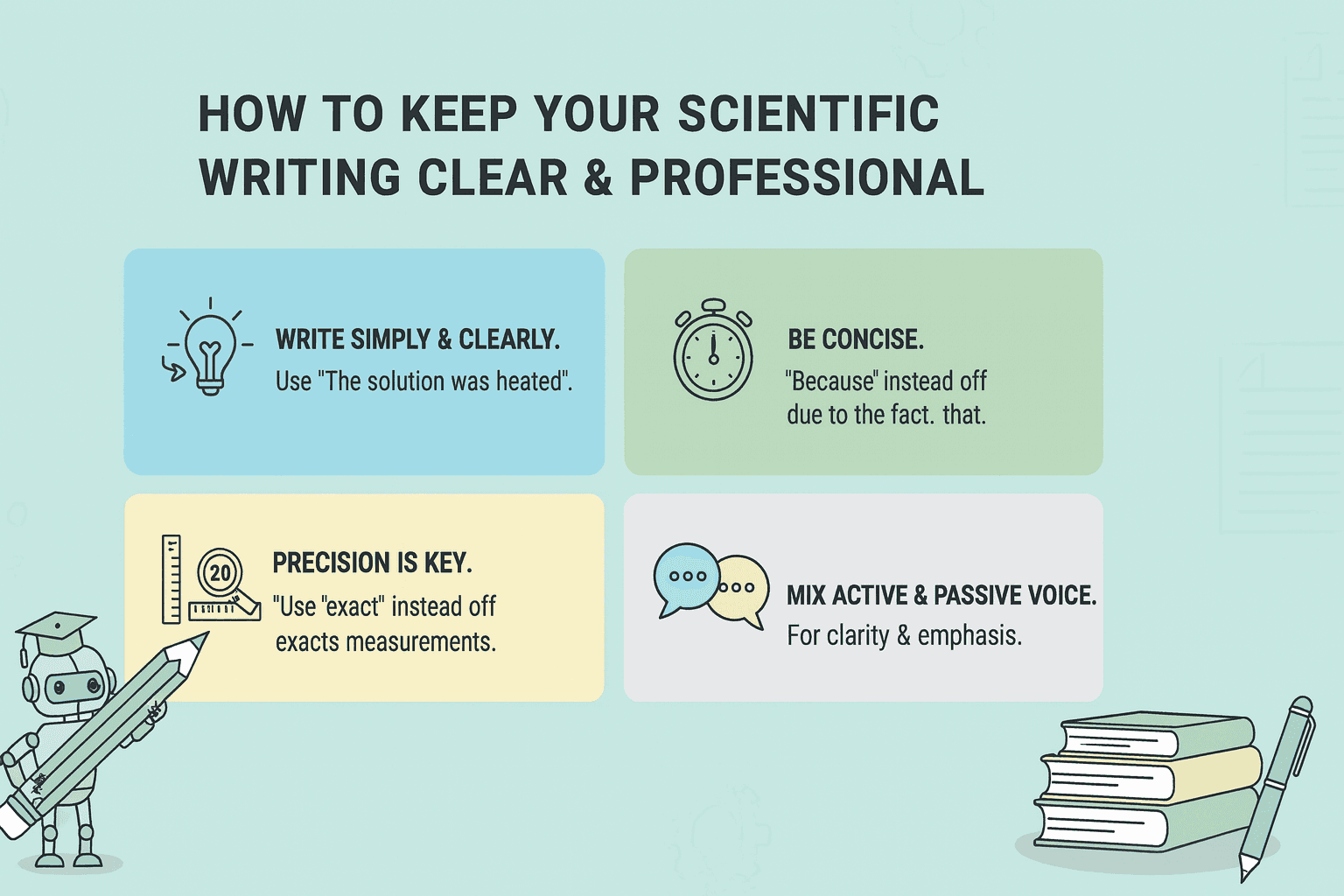
Personal pronouns se bachein. Likhein: “The solution was heated,” na ki “We heated the solution.”
Concise rahein. “due to the fact that” ko “because” se replace karein.
Precise rahein. Exact measurements report karein, vague descriptions nahi.
Active vs. Passive Voice
Halanki passive voice lab reports mein common hai, selective active voice readability ko improve kar sakti hai.
Passive: “The solution was titrated until the endpoint was reached.”
Active: “We titrated the solution until the endpoint was reached.”
Dono acceptable hain, clarity aur context ke basis par choose karein.
<ProTip title="📝 Writing Tip:" description="Passive aur active voice ko balance karein. Process descriptions ke liye passive use karein aur responsibility ya clarity ko emphasize karne ke liye active." />
Drafting and Revising Your Report
Ek solid lab report likhne mein ek se zyada tries lagte hain.
Experiment ke dauran detailed notes lein.
Apne ideas ko utaarne ke liye ek quick first draft likhein.
Phir clarity aur flow ke liye revise karein.
Formatting aur headings check karein.
Grammar aur spelling proofread karein.
Apne kisi classmate ya dost se ise padhne aur feedback dene ke liye kahein.
Apni report ko zor se padhna awkward sentences ko catch karne mein help kar sakta hai.
<ProTip title="🔄 Pro Tip:" description="Revision ke dauran apni report ko zor se padhein. Agar koi sentence bolte waqt clunky lage, toh use rewrite karne ki zaroorat hai." />
Common Pitfalls to Avoid
Agar report kamzor ho toh achhe experiments bhi beasar ho sakte hain. In mistakes se bachein:
Weak Titles
“Experiment 1” reader ko kuch nahi batata. Hamesha aisa title use karein jo purpose dikhaye: “Effect of pH on Enzyme Activity.”Vague Methods
Agar koi aapki report se aapka experiment repeat nahi kar sakta, toh aapne mark miss kar diya hai. Exact quantities, times, aur conditions likhein — “some solution” ya “a few minutes” nahi.Blending Results and Discussion
Facts aur opinions ko alag rakhein. Results = the data. Discussion = iska kya matlab hai. Inhe mix karne se reader confuse hota hai.Messy Figures
Clutter waale graphs, missing labels, ya bina units ke graphs aapki credibility ko weak karte hain. Clean visuals, clear axes, aur error bars (jab zaroorat ho) non-negotiable hain.Ignoring Errors and Limits
Har experiment mein flaws hote hain — uncontrolled variables, measurement error, sample size. Inhe acknowledge karna maturity dikhata hai aur aapki analysis ko strengthen karta hai.
In mistakes se bachkar, aap apni report ko na sirf ek record balki scientific communication mein ek valuable contribution banate hain.
Make Lab Reports Work for You
Lab report writing ko master karna teen essential elements par aata hai: organized structure, precise data presentation, aur clear scientific narrative. Jab ye components align hote hain, toh report ek mere assignment se ek professional document mein transform ho jati hai jo kisi bhi research journal mein comfortably fit ho sake.
<CTA title="Write Better Lab Reports" description="Apni lab reports ko effortlessly draft, polish, aur structure karne ke liye Jenni use karein." buttonLabel="Try Jenni Free" link="https://app.jenni.ai/register" />
Yaad rakhein, har experiment ek kahani batata hai, initial hypothesis se lekar final conclusions tak. In guidelines ko follow karke aur scientific rigor banaye rakh kar, aap ek aisi skill develop karenge jo classroom se kahin aage aur real-world research tak extend hoti hai.