Dwara
Justin Wong
—
Higher-Level Research ke liye Essay ko Structure kaise karein

Justin Wong
Vikas Prabhari
Graduated kiya Bachelor's me Global Business & Digital Arts, Minor me Entrepreneurship
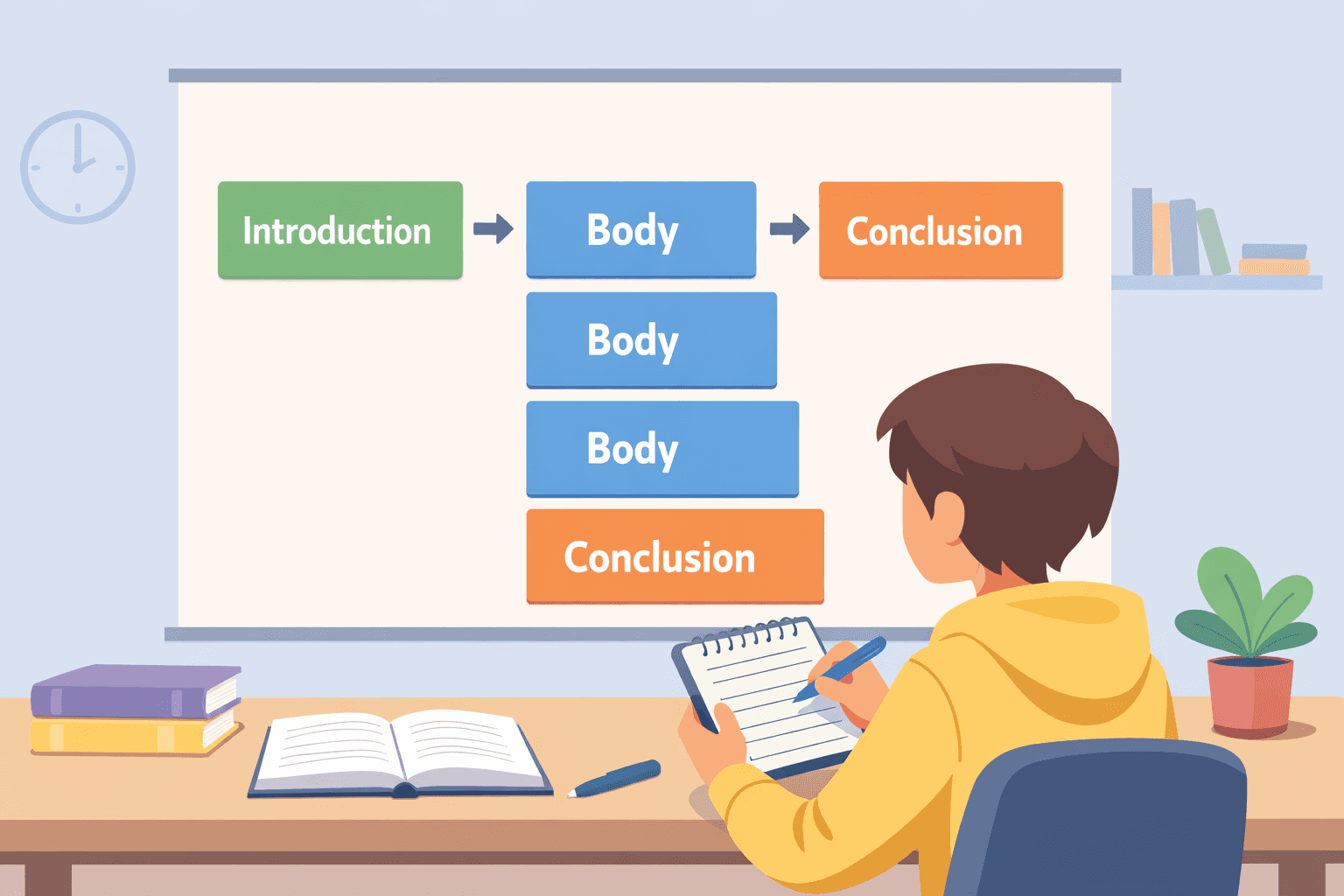
Essay writing academic assessment ke sabse common forms mein se ek hai, fir bhi yeh aksar students ke liye confusion paida karta hai. Bahut se log maante hain ki ek strong essay advanced vocabulary ya complex ideas par depend karta hai, jabki asal mein structure hi writing ko clarity aur strength deta hai. Bina clear organization ke, acche arguments bhi unclear ya unconvincing lag sakte hain.
Yeh guide planning se lekar final revision tak essay ko structure karne ka tareeqa samjhati hai. Isme standard academic essay format, har section ka role, paragraph development, aur essay types ke bich common variations shaamil hain. Essay structure ko samajhne se ideas logically flow karte hain, arguments clearly develop hote hain, aur evidence claims ko zyada effectively support karta hai.
<CTA title="Start Your Essay with a Clear Structure" description="Create a logical outline and organize your ideas before you start writing. Jenni helps you plan essays faster with less effort." buttonLabel="Try Jenni Free" link="https://app.jenni.ai/register" />
Understanding Essay Structure
Essay structure ko apni writing ka blueprint samjhein. Yeh woh plan hai jo decide karta hai ki aapke ideas kahaan jayenge aur woh kaise connect honge, bajaye iske ki unhe bas page par aise hi fenk diya jaye. Essay ke har part ka ek kaam hota hai, aur har paragraph ko main point ko aage badhana chahiye.
School mein, yeh sirf ek suggestion nahi hai, yeh ek requirement hai. Teachers aur graders ek clear structure ki talaash karte hain kyunki yeh dikhata hai ki aap logically soch sakte hain, clearly likh sakte hain, aur actually apne ideas ko manage kar sakte hain.
Ek accha structure aapko, yaani writer ko, gol-gol ghoomne se bachata hai. Yeh aapko baar-baar wahi baat dohrane se rokta hai aur aapke argument ko zyada impact ke saath deliver karta hai. The structure of academic texts ke baare mein clear expectations yeh reflect karti hain ki kyun academic essays consistent organizational patterns ko follow karte hain.
Halaanki ek history paper ek lab report se thoda alag dikh sakta hai, zyadatar academic essays isi same teen-part ke foundation par bane hote hain: ek introduction, ek body, aur ek conclusion.
<ProTip title="💡 Pro Tip:" description="Before writing full paragraphs, outline your main points in bullet form to check logical order and avoid repetition." />
The Basic Essay Structure
Zyadatar essays ek simple, teen-part ke shape ko follow karte hain: ek introduction, ek body, aur ek conclusion.
The Introduction shuruaat karta hai. Yeh aapke topic ko set up karta hai, reader ko zaroori background deta hai, aur sabse important, aapke main argument (thesis) ko state karta hai.
The Body woh jagah hai jahaan asli kaam hota hai. Paragraphs ki yeh series aapke main ideas ko develop karti hai. Har ek paragraph ko ek point present karna chahiye aur use evidence aur aapke apne analysis ke saath back up karna chahiye.
The Conclusion ise wrap up karta hai. Yeh reader ko wapas aapke thesis par lata hai, aapke argument ki journey ko sum up karta hai, aur is sabke maayre par kuch final thoughts offer karta hai.
Essay Section | Purpose | What It Should Include |
Introduction | Topic aur main argument ko introduce karta hai | Background information, ek clear thesis statement, aur essay ki direction ka overview |
Body | Thesis ko develop aur support karta hai | Topic sentences, relevant evidence, analysis, aur ideas ke beech logical transitions |
Conclusion | Argument ko reinforce karta hai aur closure provide karta hai | Restated thesis, key points ka summary, aur final insights ya broader implications |
Yeh setup aapki writing ko ek clear beginning, middle, aur end deta hai. Readers ko pata hota hai ki aap kya argue karne wale hain, woh follow kar sakte hain ki aap apna case kaise build kar rahe hain, aur woh is sense ke saath finish karte hain ki ise padhna worth thha.
<ProTip title="📝 Note:" description="If your essay feels confusing, review whether each section clearly matches its purpose in the structure." />
Writing a Strong Introduction
Introduction aapke essay ka front door hai. Yeh ek first impression banata hai, zaroori context provide karta hai, aur signal deta hai ki aage kya aane wala hai.
Ise ek guide ki tarah samjhein, ise saure details nahi batane chahiye, lekin ise reader ko aage ke discussion ke liye ek clear map zaroor dena chahiye. Ek solid introduction teen key pieces se banta hai.
Ek hook ke saath shuruaat karein. Yeh aapka sabse pehla sentence hota hai. Iska purpose simple hai: reader ko aage padhne ke liye motivate karna, aur yeh jaanna ki how to write essay introduction hook aapko ek aisi opening choose karne mein help karta hai jo academic tone ke sath fit baithe. Aapka aim engagement hai, confusion nahi. Ek school paper ke liye, aap aek provocative question, ek surprising fact, ek quick story, ya ek pertinent quote use kar sakte hain. Bas ise subject ke liye fitting rakkhein, kisi bhi bohot casual ya flashy cheez se bachein. Strong openers ke aur examples aur apne thesis ko kaise build karein, iske liye hamari guide to writing an essay introduction dekhein.
Phir, thoda background offer karein. Hook ke thik baad, ek ya do sentences mein reader ko bas itni information dein ki woh situation ko samajh sakein. Agar topic specialized hai, toh yeh step bahut crucial hai. Concise rahein. Aap ek foundation provide kar rahe hain, koi textbook chapter nahi likh rahe.
Finally, apna thesis statement land karein. Yeh aapke introduction ka dil hai. Aapka thesis ek single, clear sentence hota hai jo aapke main argument ko state karta hai. Iska specific aur focused hona zaroori hai, ek aisa claim jo discussion ko invite kare, na ki koi boring statement of fact.
Guidance jaise ki thesis statement tips yeh highlight karti hai ki kyun ek well-defined thesis poore essay ki direction ko shape karta hai. Apne thesis statement ko is section ke end mein rakkhein. Yeh body paragraphs mein natural transition ki tarah kaam karta hai jahaan aap apna point prove karenge.
<ProTip title="🎯 Reminder:" description="A strong thesis makes a clear claim and gives the reader a roadmap of what the essay will cover." />
Structuring Body Paragraphs Effectively
Aapke essay ki body woh jagah hai jahaan asli kaam hota hai. Yeh woh jagah hai jahaan aap apne ideas ko explain karte hain, apna argument build karte hain, aur apne evidence mein dig karte hain. Har paragraph ko ek clear point par center hona chahiye jo aapke main thesis ko back up kare.
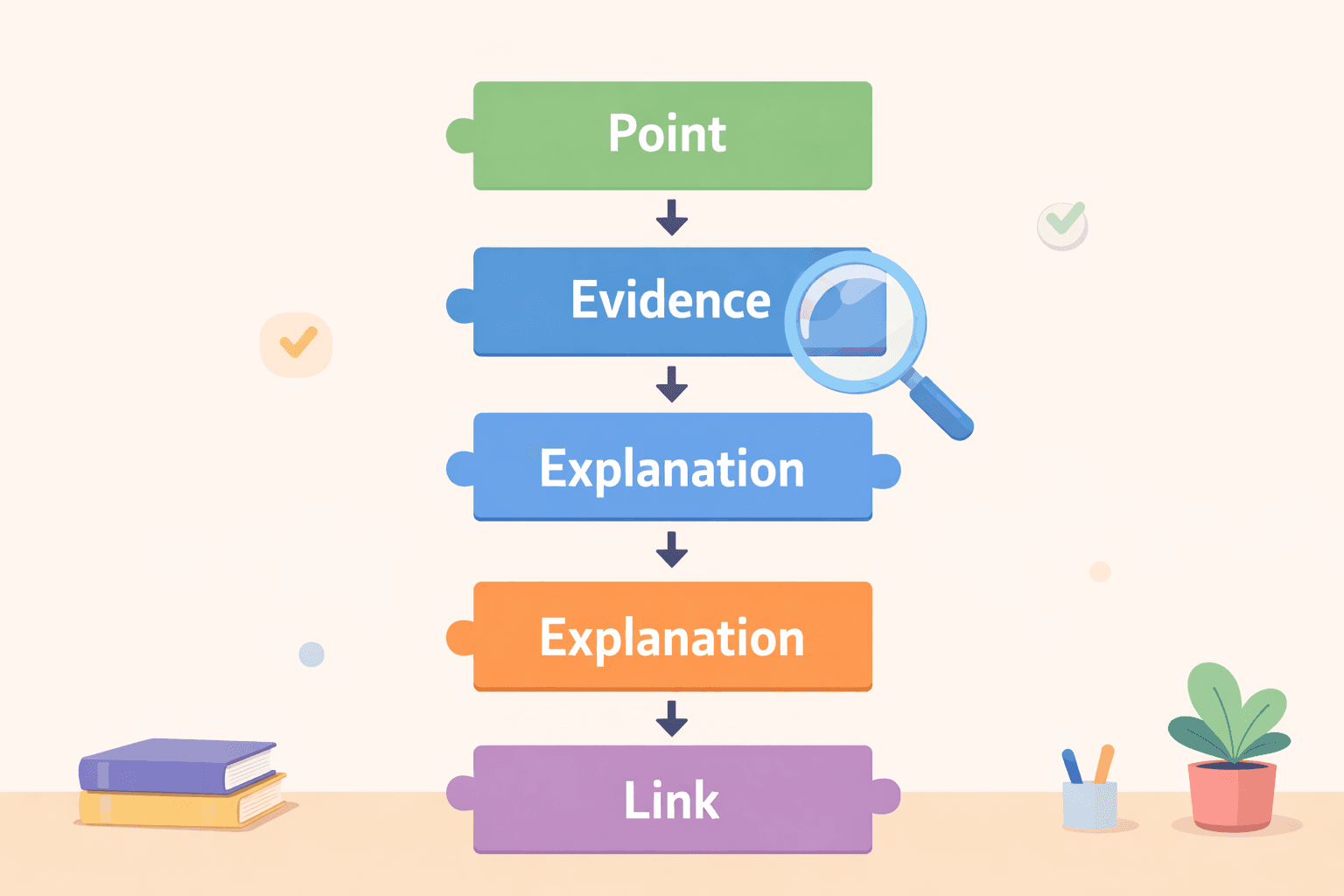
Ek solid paragraph ka ek clear internal shape hota hai. Academic writing ke liye ek common aur effective model PEEL structure hai.
Point. Ek strong topic sentence ke saath shuru karein. Yeh sentence paragraph ke main idea ko state karta hai aur dikhata hai ki yeh aapke overall argument se kaise connect hota hai.
Example: Ek clear essay structure aapki writing ko follow aur understand karne mein bahut aasan bana deta hai.
Evidence. Apna point state karne ke baad, aapko ise back up karna hoga. Proof provide karein. Yeh kisi study ke findings, relevant data, ek concrete example, ya kisi expert ka quote ho sakta hai. Accha evidence aapke argument ko substance deta hai aur dikhata hai ki aapne apna homework kiya hai.
Explanation. Yeh woh part hai jise writers aksar skip kar dete hain, lekin yeh bahut crucial hai. Sirf ek statistic drop karke aage mat badhein. Explain karein ki aapke evidence ka kya matlab hai aur yeh kaise directly us point ko support karta hai jo aapne apne topic sentence mein banaya hai. Apne reader ke liye woh connection banayein.
Link. Paragraph ko finish karne ke liye apne discussion ko wapas main thesis se link karein, ya agle point ke liye ek smooth transition create karein. Yeh aapke essay ko aur unified feel karata hai aur reader ko logically ek idea se dusre idea tak guide karta hai.
PEEL Element | Function | Guiding Question |
Point | Paragraph ke main idea ko state karta hai | Is paragraph ka main claim kya hai? |
Evidence | Point ko proof ke saath support karta hai | Kaunsa data, example, ya source is claim ko support karta hai? |
Explanation | Evidence ko analyze aur interpret karta hai | Yeh evidence argument ko kaise support karta hai? |
Link | Paragraph ko thesis ya agle idea se connect karta hai | Yeh paragraph overall essay se kaise relate karta hai? |
<ProTip title="🔗 Tip:" description="After each paragraph, check whether the link sentence clearly connects the idea back to your thesis." />
Maintaining Logical Flow and Coherence
Logical flow hi woh cheez hai jo ek essay ko readable banati hai. Aapke paas bade acche ideas ho sakte hain, lekin agar unhe jumbled order mein present kiya gaya, toh reader kho jayega.
Is flow ko maintain karne ka ek key tool transition words aur phrases ka use hai. Yeh woh verbal signposts hain jo aapke reader ko ek idea se dusre idea tak guide karte hain. Yeh points ke beech ke relationship ko dikhate hain, chahe aap information add kar rahe hon, contrast sookh rahe hon, result explain kar rahe hon, ya comparison kar rahe hon.
Words jaise ki furthermore, however, in contrast, as a result, aur similarly connective tissue ki tarah kaam karte hain. Yeh aapke paragraphs ko aapas mein stitch karte hain, yeh ensure karte hue ki aapka essay disconnected statements ki series lagne ke bajaye ek coherent argument lage.
<ProTip title="➡️ Writing Tip:" description="Use transitions at the start of paragraphs to signal how ideas relate to each other." />
Writing an Effective Conclusion
Conclusion aapke essay ka final word hai. Iska kaam koi naya discussion shuru karna nahi hai, balki us discussion ko reinforce karna hai jo aapne abhi finish kiya hai aur reader ko iski importance ke clear sense ke saath chhodna hai.
Ek strong conclusion typically teen cheezein karta hai.
Sabse pehle, yeh thesis ko restate karta hai. Aap apne main argument ko revisit karte hain, lekin aap ise introduction se thoda alag tareeqe se phrase karte hain. Yeh reader ko aapke core claim ki yaad dilata hai bina repetitive sound kiye.
Next, yeh key points ko summarize karta hai. Aap apne body paragraphs se main evidence ya ideas ko brief mein recap karte hain. Ise tight rakkhein, bas ek quick reminder un raahon ka jo aapne thesis ko support karne ke liye li hain.
Finally, yeh kuch final thoughts offer karta hai. Yeh woh jagah hai jahaan aap step back karte hain. Kisi broader implication ko suggest karein, ek final reflective question poochhein, ya, agar appropriate ho, toh call to action issue karein. Yeh last part reader ko padhne ke baad kuch sochne ke liye deta hai.
Ek general guide ke roop mein, aapka conclusion essay ki total length ka lagbhag 10% hona chahiye.
How Structure Changes for Different Essays
Basic introduction-body-conclusion model lagbhag har essay par apply hota hai. Jahaan cheezein badalti hain, woh yeh hai ki aap body ke andar information ko kaise organize karte hain. Alag-alag assignments alag plans ki maang karte hain, khaaskar jab aap types of academic essays ke saath kaam kar rahe hon.
Argumentative Essay: Aapka goal persuade karna hai. Aap ek clear thesis state karte hain aur use evidence ke sath defend karte hain. Iska ek key feature counterarguments ko address karna hai, aap apne body paragraphs mein opposing views ko present karte hain aur fir unhe rebut karte hain. Focus logical reasoning aur ek fair, thorough discussion par hota hai.
Compare and Contrast Essay: Aap do ya usse zyada subjects ko analyze kar rahe hain. Body ko do main tareeqon se organize kiya ja sakta hai. Aap comparison ke har point ke liye ek paragraph dedicate kar sakte hain (e.g., cost, fir features, fir usability), uske andar dono subjects discuss karte hue. Ya, aap subjects ki saari similarities ko ek section mein discuss kar sakte hain, aur fir unke saare differences ko dusre mein.
Problem-Solution Essay: Yeh type ek straightforward, do-part logic ko follow karta hai, jo ki ek typical problem solution essay ki khasiyat hai. Pehle, aap apne body paragraphs mein ek problem ko define aur analyze karte hain. Phir, aap potential solutions ko propose aur defend karne ki taraf shift hote hain. Har phase ko aamtaur par apna dedicated section milta hai.
Cause and Effect Essay: Yahaan, aap relationships ko explain kar rahe hain. Aap un reasons (causes) ko detail karte hain ki kyun kuch hua ya exist karta hai, aur fir aap unke outcomes (effects) ko explore karte hain. Structure kaafi hadd tak clear sequencing aur events ke beech logical connections demonstrate karne par rely karta hai.
Foundation hamesha same hoti hai, lekin body ka internal architecture essay ke specific purpose ke mutabik shift hota hai.
Planning an Essay Before Writing

Ek well-structured essay lagbhag hamesha ek plan ke saath shuru hota hai. Seedhe writing mein jump karne se aamtaur par ek messy draft banta hai, aap khud ko repeat karenge, aapka argument fuzzy ho jayega, aur organization suffer karegi.
Kuch simple prewriting techniques baad mein aapko bahut saari mushkilon se bacha sakti hain. Practical advice jo writing essay tips par hai, yeh explain karti hai ki kyun outlining, brainstorming, aur drafting jaise steps yeh ensure karne mein help karte hain ki aapka essay logically flow kare aur aapke thesis ko poori tarah support kare.
Kuch simple prewriting techniques baad mein aapko bahut saari mushkilon se bacha sakti hain.
Brainstorming. Shuruaat bas ideas ko bahar nikalne se karein. Bina judge kiye apne topic se related sab kuch likh lein. Is stage par, perfect options hone se zyada important bohot saare options hona hai.
Outlining. Yeh woh jagah hai jahaan aap apna framework build karte hain. Apne brainstormed ideas ko lein aur unhe ek logical order mein arrange karein. Ek basic outline aapko yeh decide karne par majboor karti hai ki aapke main points kya hain aur woh ek se dusre tak kaise flow karenge. Yeh aapko track par rakhta hai aur aapko tangents par jaane se rokta hai. Agar aap apne khud ke research ke saath refine karne ke liye ek quick starting framework chahte hain, toh ek AI essay outline generator aapko ek outline draft karne mein help kar sakta hai jise aap fir apne assignment ke hisab se adjust kar sakte hain.
Do Your Research First. Full draft likhna shuru karne se pehle apna evidence aur sources gather karein. Jab aapko pata hota hai ki aapke paas kya proof hai, toh ise apne argument mein naturally weave karna aur likhte-likhte correct cite karna bahut aasan ho jata hai. Un paragraphs ke fit baithne ke liye sources dhoondhne ki koshish karna jo aap pehle hi likh chuke hain, ek ulta aur frustrating process hai.
<ProTip title="🧩 Planning Tip:"description="Outlining first helps you see gaps in logic before you start writing full paragraphs." />
The Writing Process: Drafting, Revising, and Editing
Ek accha essay likhna koi ek-step ka kaam nahi hai. Yeh distinct phases mein hota hai, jinme se har ek ka focus alag hota hai.
Drafting. Yeh aapki pehli koshish hai. Yahaan perfection ka aim mat rakkhein. Goal yeh hai ki aapke outline ko follow karte hue ideas ko aapke dimaag se nikal kar page par laya jaye. Apne content ko develop karne aur basic structure ko set karne par focus karein. Spelling aur perfect sentences abhi wait kar sakte hain.
Revising. Ab aap step back karte hain aur big picture ko dekhte hain. Apne draft ko critically padhein. Kya aapka argument clear aur logical hai? Kya aapke paragraphs acche se flow kar rahe hain, ya unhe rearrange karne ki zaroorat hai? Kya aapka thesis statement sahi spot par hai, aur kya evidence actually use support karta hai? Yeh stage aapke ideas ko reshape aur strengthen karne ke baare mein hai.
Editing. Yeh final polish hai. Ek baar jab aap content aur structure se khush ho jaatein hain, toh aap details ko fix karte hain. Grammar mistakes, punctuation errors, awkward phrasing, aur formatting issues ko check karein. Yeh step yeh ensure karta hai ki aapka essay clean, professional, aur submit karne ke liye ready hai.
Maintaining Academic Tone and Style
Academic writing ko ek formal style ki zaroorat hoti hai, lekin iska matlab yeh nahi hai ki ise complicated ya padhne mein mushkil hona chahiye. Ek accha academic tone clear, precise, aur objective hota hai. Kuch key principles aapko track par rakhenge:
Slang aur casual phrases se bachein.
Straightforward sentence structures ka use karein.
Apne har ek claim ko evidence ke saath back up karein.
Apne verb tense aur voice ko poore essay mein consistent rakkhein.
Sabse persuasive academic writing woh nahi hoti jisme sabse fancy words hote hain. Yeh woh hoti hai jo apne ideas ko sabse zyada clarity ke saath communicate karti hai.
Common Essay Structure Mistakes
Bahut se essays unki structure ke simple, fixable problems ki wajah se kamzor ho jate hain. In common issues se bachkar rahein:
Ek aisa thesis statement jo weak, vague, ya poori tarah missing ho.
Aise body paragraphs jo bina kisi clear topic sentence ke shuru hote hain jo unhe guide kare.
Poor ya missing transitions ki wajah se ideas ke beech mein jarring jumps hona.
Conclusion mein koi brand-new argument ya evidence ka piece introduce karna.
Overall unity ki kami, jahaan essay ke parts main point se disconnected mehsus hote hain.
Apne writing process mein in problems ko jaldi spot aur fix karna aapke kaam ki final quality mein ek bada difference lata hai.
Using an Essay Checklist
Submit karne se pehle ek quick checklist se guzarne par aap un structural problems ko catch kar sakte hain jo aapne miss kar di hon.
Apne aap se yeh sawal puchein:
Kya mera thesis statement clear, specific, aur dhundhne mein aasan hai?
Kya har ek paragraph mere main argument ko clearly support karta hai?
Kya maine apne evidence ko explain kiya hai, na ki bas use drop kar diya hai?
Kya mere transitions smoothly ek idea ko dusre se connect karte hain?
Kya mera conclusion naye points introduce kiye bina cheezon ko effectively wrap up karta hai?
Yeh final review step aksar aapki writing ko tight bana deta hai aur aapke overall argument ko bahut zyada clear karta hai.
Why Essay Structure Matters
Aapke essay ka structure aapki thinking ka direct reflection hai. Yeh ek reader ko dikhata hai ki aap kitne acche se ideas ko organize kar sakte hain aur ek logical case build kar sakte hain.
School mein, iska aapke grades par direct impact padta hai, teachers ek clear structure ko evidence ki tarah use karte hain ki aap material ko samajhte hain, apne thoughts ko organize kar sakte hain, aur information ko analyze kar sakte hain.
Lekin yeh classroom ke baahar bhi matter karta hai. Ek aur clear argument ko structure karne ki is ability ka use professional reports, research proposals, aur yahaan tak ki everyday problem-solving mein bhi hota hai.
Ek solid essay build karna seekhna sirf ek class pass karne ke baare mein nahi hai. Yeh clear communication ke liye ek fundamental skill develop karne ke baare mein hai.
Putting It All Together for Clear Writing
Essay ko structure kaise karein, yeh samajhna academic success ke liye essential hai. Jabki ideas aur evidence ek important role play karte hain, structure determine karta hai ki un ideas ko kitne clearly communicate kiya gaya hai. Ek well-organized essay arguments ko logically develop karne deta hai aur evidence ko main claim ko effectively support karne deta hai.
<CTA title="Apply Essay Structure with Confidence" description="Turn your outline into a well structured essay faster. Jenni helps you organize arguments and stay focused from draft to final." buttonLabel="Try Jenni Free" link="https://app.jenni.ai/register" />
Ek clear introduction, focused body paragraphs, aur ek purposeful conclusion ka use karke, aur is framework ko alag-alag essay types ke mutabik dhal kar, writing zyada manageable aur zyada effective ho jati hai. Strong structure ek aisa framework provide karta hai jo ideas ko clarity, confidence, aur purpose ke saath present karne deta hai.