Dwara
Nathan Auyeung
—
5 Nibandh Fake News par Social Media Example aur Likhne ke Tips

Nathan Auyeung
Senior Accountant EY mein
Bachelor ka Accounting mein Graduation kiya, aur ek Postgraduate Diploma of Accounting bhi poora kiya

Social media par fake news hamare samay ke bade muddo me se ek hai. Ye sirf ek tech problem nahi hai, ye health, politics, aur rozmarra ke bharose ko prabhavit karti hai. Kai students, writers, aur citizens ko ise samajhne ki zaroorat hai. Phir bhi fake news par likhna mushkil lag sakta hai. Kya aapko causes, effects, ya ise rokne ke tareeqo par focus karna chahiye? Kya aapko examples ya big data ka use karna chahiye?
Asli essay ke examples dekhna madad karta hai. Examples se pata chalta hai ki ideas ko kaise structure karein, facts ko balance karein, aur ek tricky topic ko aasan shabdo me kaise samjhayein. Niche fake news aur social media ke alag-alag angles par six short essays diye gaye hain. Har ek clear structure, simple language ko model karta hai aur dikhata hai ki ek strong point kaise banayein. Is tarah ke assignment ko plan aur structure karne ke liye aur guidance ke liye, hamare social media essay writing examples dekhein.
<CTA title="Plan Your Fake News Essay" description="Create a clear outline for your fake news topic and organize your key points with confidence" buttonLabel="Try Jenni Free" link="https://app.jenni.ai/register" />
Social Media par Fake News ke 5 Essay Examples
In sample essays ko explore karein jo fake news ko kai angles se dekhte hain: causes, effects, real cases, detection, prevention, aur is par kaise likhein. Har ek example short, clear aur aapki writing ko inspire karne ke liye tayyar hai.
Example #1: Fake News Kya Hai aur Ye Kyun Maayne Rakhti Hai (≈350 words)
Introduction:
Fake news jhoothi ya misleading information hoti hai jo real news jaisi dikhti hai. Ise articles, images, videos, ya posts ke roop me share kiya ja sakta hai. Fake news isliye maayne rakhti hai kyunki ye logo ki soch aur unke kaam ke tareeqe ko badalti hai.
Fake News ke Types:
Misinformation galti se share ki gayi galat information hai.
Disinformation jaanbujhkar logo ko dhokha dene ke liye share ki gayi galat information hai.
Malinformation kisi ko nuksaan pahunchane ke liye sahi facts ka galat tareeqe se use karti hai.
Social Media Par Fake News Tezi Se Kyun Failti Hai:
Social media par sharing fast aur easy ho jati hai. Platforms aise algorithms ka use karte hain jo un posts ko dikhate hain jinpar logo ke interact karne ke chances zyada hote hain. Aise posts jo logo me shock ya gusse jaise strong emotions paida karte hain, unhe zyada likes aur shares milte hain. Ye jhoothi kahaniyo ko bhi utna hi bada deta hai jitna ki sachhi kahaniyo ko.
Ye Kyun Maayne Rakhta Hai:
Jab jhoothe daave bahut se logo tak pahunchte hain, to ye votes badal sakte hain, health ko nuksaan pahuncha sakte hain, ya hinsa shuru kar sakte hain. Example ke liye, COVID-19 pandemic ke dauran, online kai jhoothe health claims faile aur isse logo ke liye ye janna mushkil ho gaya ki kya safe tha. World Health Organization ne galat information ke is flood ko ek "infodemic" kaha aur warn kiya ki ye public health ko nuksaan pahuncha sakta hai.
Conclusion:
Fake news sirf galat facts se badhkar hai. Ye ek social problem hai jo real nuksaan pahuncha sakti hai. Fake news ke types ko janna readers ko ise pehchanne aur isse ladne me madad karta hai.
<ProTip title="🔎 Pro Tip:" description="Start essays with a clear definition and one short real example to ground the reader." />
Example #2: Social Media Fake News Ko Failne Me Kaise Madad Karta Hai (≈325 words)
Introduction:
Social media kisi ke liye bhi news post karna aasan banata hai. Ye power achhi ho sakti hai, lekin ye jhoothi kahaniyo ko tezi se travel karne me bhi madad karti hai.
Algorithms aur Speed:
Platforms aksar un posts ko dikhate hain jinpar jaldi attention milti hai. Ye kisi jhoothi ya sensational post ko check hone se pehle hi kai feeds me bhej sakta hai. Research dikhati hai ki jo content strong emotions ko trigger karta hai, wo online tezi se failta hai. Kuch cases me, jhoothi kahaniyo ko sachhi reports se zyada share kiya gaya.
Echo Chambers aur Groups:
Log aksar un accounts ko follow karte hain jo unke beliefs se match karte hain. Ye echo chambers banata hai jahan log aksar wahi views dekhte hain jinhe wo pehle se accept karte hain. In groups me, fake stories ko kam mukabla milta hai aur ye sirf isliye sach lag sakti hain kyunki bahut se log inhe share karte hain.
Influencers aur Virality:
Jab koi popular account kisi rumor ko share karta hai, to iski reach badh jati hai. Influential accounts dwara thodi sankhya me share kiye jaane par bhi ek jhoothi kahani viral ho sakti hai.
Real World Harm:
5G aur COVID-19 ke baare me kuch jhoothe daavo ke karan phone masts par attacks hue aur darr fail gaya. Europe me authorities ne in jhoothe daavo ke baare me warn kiya aur nuksaan ko rokne ke liye steps uthaye.
Conclusion:
Social media speed aur reach ke sath fake news ki madad karta hai. Ise dheema karne ke liye, platforms aur users ko apne share karne aur information check karne ke tareeqe ko badalna hoga.
<ProTip title="⚠️ Note:" description="When you explain mechanisms, use short examples to show how ideas work in real life." />
Example #3: Society Par Fake News Ke Effects (≈320 words)
Introduction:
Fake news democracy, health, aur community ke bharose ko nuksaan pahuncha sakti hai. Iske effects bade aur aksar lambe samay tak chalne wale hote hain.
Political Effects:
Jhoothi kahaniya elections aur public opinion ko influence kar sakti hain. Bada elections ke dauran, jhoothe articles aur rumors tezi se faile aur unhone online debate ko shape kiya. Studies me paaya gaya ki election cycles ke dauran kai fake stories ne bade audience ko attract kiya.
Health Effects:
Jhoothe health claims logo ko vaccines se door kar sakte hain ya khatarnak “cures” try karne par majboor kar sakte hain. COVID-19 infodemic ne health experts ke liye janta tak pahunchna mushkil bana diya. WHO aur public health groups ne warn kiya ki misinformation se real nuksaan ho sakta hai.
Social Trust:
Jab log lagatar conflicting information dekhte hain, to ho sakta hai ki wo news aur experts par bharosa karna band kar dein. Ye societies ki crises par respond karne ki ability ko kam karta hai aur shared problems ko solve karna mushkil banata hai.
Economic aur Safety Costs:
Jhoothe rumors se economic loss ho sakta hai, jaise stock swings ya boycotts. Kuch cases me, ye real danger ka karan bane, jaise infrastructure par attacks ya jhoothi kahaniyo me named logo ka harassment.
Conclusion:
Fake news sirf annoying nahi hai. Ye elections, health, aur safety ko affect karti hai. Ise rokna public life ko protect karne me madad karta hai.
<ProTip title="📊 Pro Tip:" description="Use a mix of short facts and one clear example to show impact without confusing the reader." />
Example #4: Fake News Ko Kaise Spot Karein (≈330 words)
Introduction:
Fake news ko spot karna seekhna ek aisi skill hai jo sabke paas honi chahiye. Kuch simple checks bahut saari mushkil bacha sakte hain.
Step 1: Source Check Karein
Ush website ya account ko dekhein jisne story post ki hai. Trustworthy news sites bylines, contact info, aur clear reporting dikhati hain. Ajeeb namo wali unknown sites ek red flag hain.
Step 2: Headline Se Aage Padhein
Bahut se log bina poori post padhe headlines share kar dete hain. Headlines clicks paane ke liye design kiye ja sakte hain. Ispar believe karne se pehle poora article padhein.
Step 3: Facts Ko Cross Check Karein
Dekhein kya bade, trusted outlets ya fact-checking sites ne bhi wahi report kiya hai. Reuters, Snopes, ya established public broadcasters jaisi sites aksar viral claims ko check karti hain.
Step 4: Images aur Videos Check Karein
Reverse image search ka use karke dekhein ki kya koi picture purani hai ya galat jagah use ki gayi hai. Videos ko edit kiya ja sakta hai ya out of context dikhaya ja sakta.
Step 5: Emotional ya Clickbaity Language Par Dhyan Dein
Agar koi post aapko bahut gusse me lane ya darane ki koshish karti hai, to ek step piche lein. Emotional hooks aksar kamzor evidence ko chhupate hain.
Conclusion:
Checking ki ek chhoti si aadat fake news ko failne se rok sakti hai. Share karne se pehle, in paanch steps ka use karein. Inme thoda hi samay lagta hai aur ye sabko protect karte hain.
<ProTip title="🕵️♀️ Quick Tip:" description="Make checking a two-step habit: pause, then verify one clear fact before you share." />
Example #5: Platforms aur Institutions Kaise Respond Karte Hain (≈320 words)
Introduction:
Social platforms aur organizations ne fake news se ladne ke liye steps uthaye hain. Unke efforts alag hain aur unhe ab bhi challenges ka samna karna padta hai.
Fact Checking Partnerships:
Kai platforms independent fact-checkers ke sath kaam karte hain takki jhoothe daavo ko label ya remove kiya ja sake. Jab kisi story par dispute hota hai, to platforms ek warning dikha sakte hain ya kisi reliable source ka link de sakte hain.
Labels aur Prompts:
Platforms kabhi-kabhi labels lagate hain jo batate hain ki kisi claim par dispute hai ya users ko share karne se pehle article padhne ke liye encourage karte hain. In prompts ka aim sharing ko dheema karna aur context dena hai.
Content Moderation:
Companies us content ko remove kar sakti hain jo nuksaan ka karan banta hai, jaise jhoothi health advice ya hinsa ko encourage karne wale posts. Ye actions aksar controversial hote hain kyunki ye freedom of speech ke sawaal khade karte hain.
Limits aur Problems:
In tools ke sath bhi, problems bani hui hain. Algorithms ab bhi us content ko prefer karte hain jise clicks milte hain. Fact checking aksar slow aur reactive hoti hai, isliye jhoothi kahaniya correct hone se pehle hi tezi se fail sakti hain. Research aur surveys dikhate hain ki jo log mainly social media se news paate hain unhe kam information hoti hai aur wo jhoothe daavo ke samne zyada expose hote hain.
Conclusion:
Platforms ke paas fake news se ladne ke liye tools hain, lekin ye systems perfect nahi hain. Real difference lane ke liye tech fixes aur user habits dono ko improve hona hoga.
<ProTip title="🔁 Reminder:" description="When you describe platform actions, note both strengths and limits to keep the picture balanced." />
Jenni Ke Sath Fake News Essay Kaise Likhein
Fake news par essay likhna mushkil nahi hai. Jenni aapko minutes me ideas ko outline aur draft me badalne me madad karta hai. Is topic ke liye Jenni ka use karne ka ek simple four step plan yahan hai.
Step 1: Ek Naya Document Shuru Karein
Go to Jenni.ai aur homepage par Start Writing par click karein. Agar aap pehle se logged in hain, to blank workspace kholne ke liye New Document chunein.

Step 2: Ek Prompt Se Shuru Karein
Apne document ke top par Start with a Prompt select karein.
Ek focused outline-only prompt use karein jaise:
“Create an outline that explains how fake news spreads on social media, includes two real examples, and offers steps readers can use to verify information.”
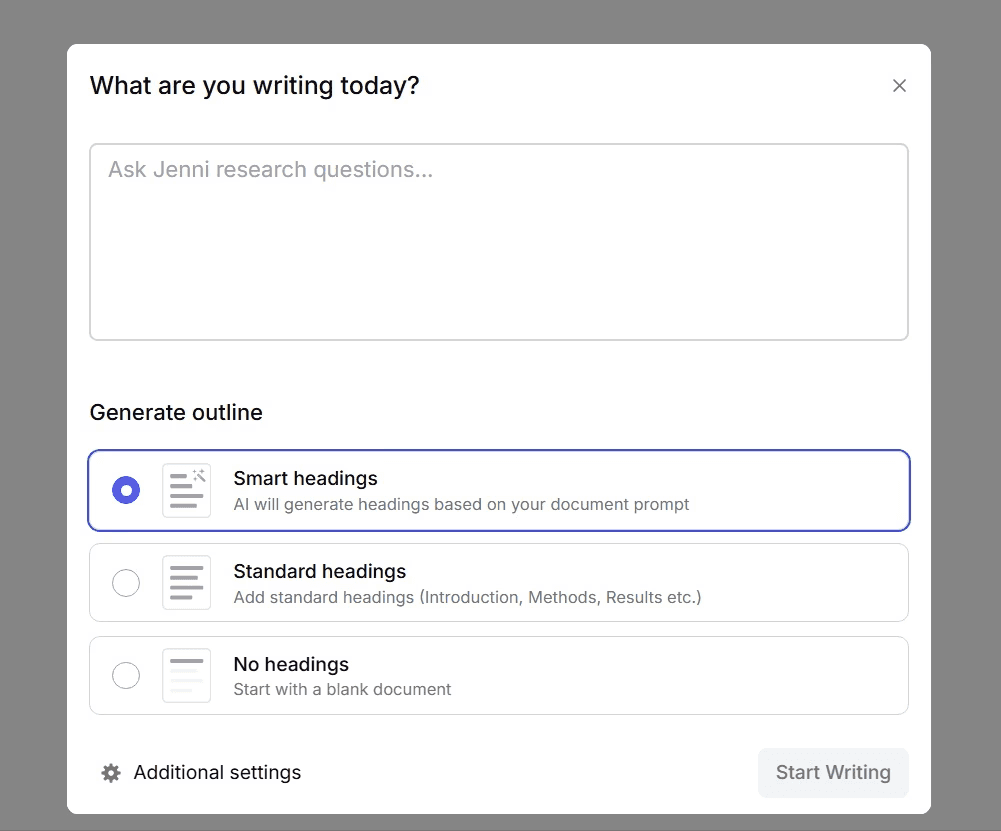
Jenni clear headings ke sath ek structured outline generate karega — ya, agar aapko is step ke liye ek dedicated tool chahiye, to hamare AI essay outline generator ko try karein.
Step 3: Jenni Ko Likhna Shuru Karne Dein
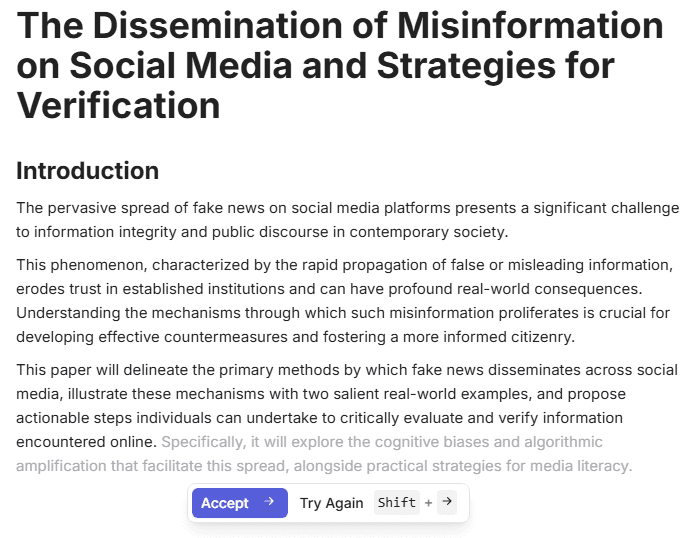
Apne outline ke basis par pehla draft generate karne ke liye Start Writing par click karein. Agar aapko outline ko ek full paper me badalne me aur help chahiye, to sections ko draft aur refine karne ke liye hamare AI essay writer ka use karein. Jenni transitions ke sath aapki headings ko paragraphs me expand karega.
Is stage ka use karein:
Examples ya haal hi ke events add karne ke liye
Apne insights ke sath explanations ko strong banane ke liye
Zaroorat hone par sections ko rearrange karne ke liye
Step 4: Momentum Banaye Rakhein
Editor ke andar suggestions ko review karein. Kisi suggestion ko rakhne ke liye Accept par click karein ya doosra version paane ke liye Try Again par click karein.
Aap kisi bhi samay apni voice me likhna continue rakh sakte hain.
<ProTip title="📝 Writing Tip:" description="Use Jenni to expand tricky sections or clarify ideas when explaining how fake news spreads, then refine the examples with your own research" />
Social Media Par Fake News Ke Khilaaf Action Lein
Social media par fake news ek complex issue hai, lekin ye aisi cheez hai jise hum explain, detect, aur kam kar sakte hain. Jab aap likhein to simple facts, short examples, aur clear steps ka use karein. Readers ko share karne se pehle rukne, sources check karne, aur do baar sochne ke liye kahein. Plain language aur real examples ke sath, fake news par ek essay logo ko online samajhdaari se kaam karne me madad kar sakta hai.
<CTA title="Write About Misinformation with Confidence" description="Use Jenni to create clear, source backed essays about fake news and social media." buttonLabel="Try Jenni Free" link="https://app.jenni.ai/register" />
Social media par fake news ek serious problem hai, lekin ye ek aisi problem hai jisse hum lad sakte hain. Chhote steps, sources ko check karna, fact checks ka use karna, aur news kaise kaam karti hai ye seekhna parinaam dete hain. Jab readers, platforms, aur educators milkar kaam karte hain, to hum jhoothi kahaniyo ka failna mushkil aur sach ki jeet ko aasan banate hain.