Dwara
Nathan Auyeung
—
Annotated Sources aur Bibliography: Antar kya hai?

Nathan Auyeung
Senior Accountant EY mein
Bachelor ka Accounting mein Graduation kiya, aur ek Postgraduate Diploma of Accounting bhi poora kiya

Aapne apne research paper par bahut mehnat ki hai. Aapne acche sources dhoondhe hain, articles padhe hain, aur aakhirkaar likhne ke liye tayyar hain. Lekin ab aap aakhri step dekhte hain: aapke sources ki ek list. Instructions me aapse "bibliography," "works cited," ya "annotated bibliography" manga ja sakta hai.
Yeh aapko ek choice deta hai: annotated sources vs bibliography. Inme kya farq hai? Yeh jaanna ki kaunsa use karna hai, zaroori hai kyunki yeh aapke teacher ko dikhata hai ki aapne apni research ko andar aur baahar se acche se samjha hai.
Yeh guide aapko ek standard bibliography aur annotated sources ki list ke beech ka farq samjhayegi. Hum dekhenge ki yeh kya hain, kaise dikhte hain, aur inhein kab use karna hai. Aakhir tak, aapko sahi se pata chal jayega ki apne sources ko kaise format karna hai aur apni mehnat ko kaise dikhana hai.
<CTA title="Ace Your Next Research Paper" description="Create perfect citations and notes in minutes - no stress, no fluff." buttonLabel="Try Jenni Free" link="https://app.jenni.ai/register" />
Bibliography Kya Hai? Basic Source List
A bibliography un sources ki ek simple list hai jo aapne apne project ke liye use kiye hain. Iska main kaam un authors ko credit dena hai jinke ideas aapne mention kiye hain. Yeh aapke readers ko un sources ko dhoondhne me bhi madad karta hai agar woh aur zyada seekhna chahte hain. Isko ek movie ke end me aane wale credits ki tarah samjhein, yeh un sabhi ko list karta hai jinhone ise banane me madad ki.
Aap is list ko "References," "Works Cited," ya "Bibliography" kehte hue dekh sakte hain, jo is baat par depend karta hai ki aapke teacher ko kaunsa style chahiye (jaise APA, MLA, ya Chicago). Alag-alag naam hone ke bawajood, goal same hai: aapke sources ko list karna.
Ek Standard Bibliography Me Kya Shamil Hota Hai:
Content: Har source ke liye sirfbasic information: author ka naam, title, kab publish hua tha, aur kisne publish kiya tha.
Purpose: Readers ko dikhana ki aapko integration information kahan se mili. Yeh is sawaal ka jawaab deta hai, "Aapne kaunse sources use kiye?"
Format: Yeh list hamesha author ke last name ke hisab se alphabetical order me hoti hai.
Detail: Yeh sirf ek list hai. Isme koi summaries ya sources ke baare me aapke opinions shamil nahi hote.
Ek Simple Bibliography ka Example (APA Style):
Balkrishna, A., Guar, V., & Telley, S. (2009). Effect of a yoga practice session and yoga theory session on state anxiety. Perceptual and Motor Skills, 109(3), 924-930.
Schraw, G., Wadkins, T., & Olafson, L. (2007). Academic procrastination: The role of motivation, self-efficacy, and course experiences. Journal of Educational Psychology, 99(3), 619–631.
<ProTip title="💡 Pro Tip:" description="Always check your assignment rules. The terms Bibliography, Works Cited, and References can mean slightly different things depending on the citation style." />
Annotated Sources Kya Hain? Notes ke Sath List
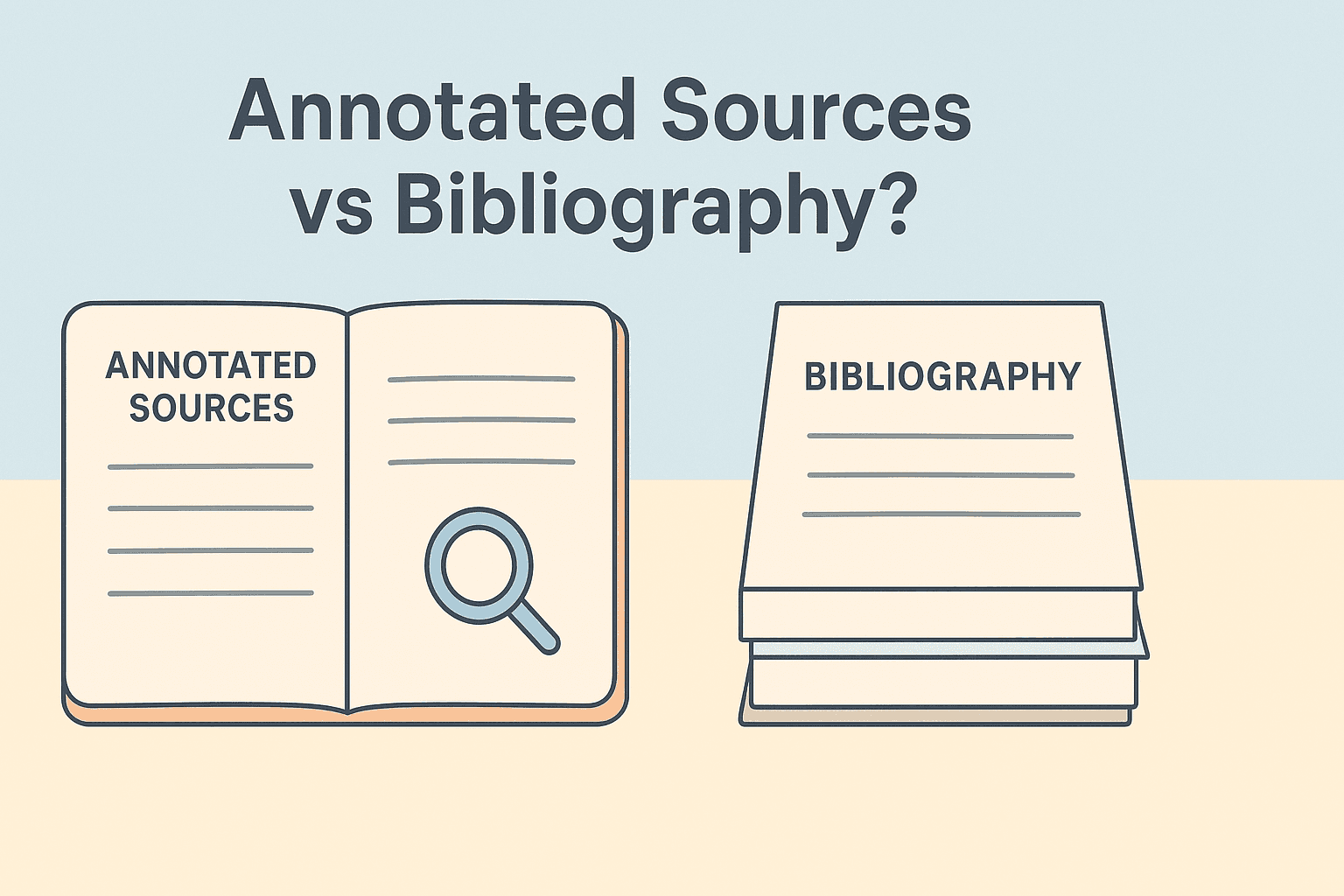
Annotated sources ki list, jise annotated bibliography bhi kaha jata hai, ek source list hai jisme ek extra, powerful part hota hai: annotation. Har source ke liye jo aap list karte hain, aap ek short paragraph (aamtaur par lagbhag 100-150 words ka) add karte hain jo use explain karta hai. Yeh aapke notes ke sath judi ek bibliography hai.
Yeh sirf sources ko list karne ke baare me nahi hai. Yeh dikhane ke baare me hai ki aapne unke baare me sach me socha hai. Annotated sources ki list banana aapko unhein dhyan se padhne aur yeh sochne par majboor karta hai ki har ek source aapke paper me kaise madad karta hai. Yeh prove karta hai ki aapne sirf sources dhoondhe nahi hain, balki unhein samjha hai.
Annotation ke Teen Main Parts:
Ek accha annotation aamtaur par source ke baare me teen sawaalon ke jawaab deta hai:
Yeh kis baare me hai? (Summary): Source ke main point ya findings ko thode me explain karein. Article ya book kya kehne ki koshish kar rahi thi?
Kya yeh ek accha source hai? (Evaluation): Source ki quality ko judge karein. Kya author ek expert hai? Kya information trustworthy hai? Iski strengths ya weaknesses kya hain?
Aap ise kaise use karenge? (Reflection): Explain karein ki yeh source aapki research me kaise fit hota hai. Yeh aapko apna point prove karne me kaise madad karta hai? Kya isne aapko koi naya idea diya?
Ek Annotated Source ka Example (APA Style):
Balkrishna, A., Guar, V., & Telley, S. (2009). Effect of a yoga practice session and yoga theory session on state anxiety. Perceptual and Motor Skills, 109(3), 924-930.
Is study me dekha gaya ki kya yoga anxiety ko kam karne me madad karta hai. Researchers ne 300 logon ko ya toh yoga class, yoga theory ki class, ya kuch nahi try karne ko kaha. Unhone paya ki ek ghante ki yoga class ne anxiety ko sabse zyada kam kiya. Yeh study kaafi acche tarike se ki gayi thi jisme bahot se participants shamil the. Main is source ka use apne paper me yeh strong evidence dene ke liye karunga ki yoga stress manage karne ka ek accha tarika hai.
<ProTip title="📝 Note:" description="An annotation is different from an abstract. An abstract only summarizes the source. An annotation also includes your thoughts and evaluation of it." />
Annotated Sources vs. Bibliography: Aamne-Saamne Comparison
Inhein side-by-side dekhne se farq saaf ho jata hai. Dono hi source lists hain, lekin inke goals bilkul alag hain aur inme alag-alag level ki mehnat lagti hai. Ek sirf list karne ke liye hai, aur doosra sochne-samajhne ke liye.
Yahan ek simple breakdown hai:
Feature | Bibliography | Annotated Sources |
Main Goal | Apne sources ko list karna aur credit dena. | Summarize, judge, aur explain karna ki har source kyun useful hai. |
What's Included | Sirf citation details (author, title, etc.). | Full citation ke sath notes ka ek short paragraph (annotation). |
Level of Detail | Sirf facts. Source par koi opinion nahi deta. | Detailed analysis. Dikhata hai ki aap source aur uski quality ko samajhte hain. |
Skills Needed | Organized hona aur formatting rules par dhyan dena. | Critical reading, summarizing, aur apne thoughts ko saaf-saaf explain karna. |
For the Writer | Ek checklist yeh ensure karne ke liye ki aapne sabko credit diya hai. | Apne ideas ko organize karne aur paper plan karne ke liye ek tool. |
<ProTip title="🧠 Mental Model:" description="A bibliography answers “What did I read?” A list of annotated sources answers “What did I read, what does it mean, and why does it matter for my paper?”" />
Aapko Kab Kaunsa Use Karna Chahiye?
Aap bibliography aur annotated sources ke beech apni pasand ke hisab se choice nahi karte. Yeh choice aapke assignment aur is baat par depend karti hai ki aap apni research me kahan hain.
Bibliography Tab Use Karein Jab…
Assignment me "Works Cited" ya "References" page manga gaya ho. Agar instructions me annotations add karne ke liye nahi kaha gaya hai, toh aapko bas ek simple list ki zaroorat hai.
Main goal credit dena ho. Zyadatar school essays aur reports ke liye, aapko plagiarism se bachne ke liye bas yeh dikhana hota hai ki aapki information kahan se aayi hai.
Aapko yeh explain nahi karna hai ki aapne apne sources kyun chune. Jab focus aapke khud ke argument par ho, toh ek simple bibliography hi kaafi hoti hai.
Annotated Sources Tab Use Karein Jab…
Aapke teacher ya professor ne specifically iski demand ki ho. Yeh ek common assignment hai jo aapko ek behtar researcher banane me madad karta.
Aap koi bada project shuru kar rahe hain, jaise koi thesis ya literature review. Annotated sources ki list banana apne thoughts ko organize karne aur sources ke beech connection dekhne ka ek behtar tarika hai.
Aapko apni research ki quality prove karni ho. Annotations dikhate hain ki aapne apne sources ko dhyan se chuna hai aur unhein acche se samjha hai.
<ProTip title="🔍 Guideline Check:" description="If you are ever unsure, just ask your teacher. They can tell you exactly what they expect for the length, focus, and format of your annotations." />
Annotated Sources Research Ke Liye Ek Secret Weapon Kyun Hain
Annotated sources ki ek list banana sirf ek homework assignment se kahin zyada hai, yeh ek powerful tool hai jo aapki research aur writing ko behtar banata hai.
Yeh Aapke Ideas ko Focus Karne Me Madad Karta Hai: Har source ke liye ek summary aur evaluation likhna aapko uske baare me deeply sochne par majboor karta hai. Yeh aapko topic ko behtar tarike se samajhne aur yeh decide karne me madad karta hai ki aap apne paper me exactly kya argue karna chahte hain.
Yeh Aapko Likhne Ke Liye Tayyar Karta Hai: Sources ki ek annotated list aapke paper ke outline ki tarah hoti hai. Aapke paas pehle se hi saare sources un notes ke sath organized hote hain ki har ek kyun important hai. Jab aap apna draft likhna shuru karenge, toh aapko pata hoga ki aapko zaroori evidence kahan milenge.
Yeh Aapko Ek Behtar Researcher Banata Hai: Yeh process aapko critically padhna sikhata hai. Aap strong arguments ko phechanna, bias ko identify karna, aur yeh dekhna seekhte hain ki alag-alag authors ek discussion me kaise contribute karte hain. Yeh ek aisi skill hai jise aap college aur uske baad bhi use karenge.
Ek Great Annotated Bibliography Banane Ke Steps
Ek annotated bibliography likhna thoda dhyan ka kaam hai, lekin aap ise kuch simple steps me break kar sakte hain. Ek clear process ko follow karne se yeh task kaafi easy lagega aur aapko high-quality annotations banane me madad milegi.
Apna annotated bibliography likhne ke liye yahan step-by-step guide di gayi hai:
Apne Sources Dhoondhein aur Cite Karein: Sabse pehle, un sabhi articles, books, aur dusre resources ko ek sath karein jise aap use karne ka plan kar rahe hain. Jaise hi aap har ek source select karte hain, required format (jaise APA, MLA, ya Chicago) me ek full, accurate citation banayein. Online citation tools ya apni library ke resources ka use karna aapko har baar perfect formatting paane me madad kar sakta hai — aur agar aap Zotero ya Mendeley me citations manage karte hain, toh hamari Zotero aur Mendeley integration guide aapki source list ko organized rakhne me madad kar sakti hai.
Padhein aur Summarize Karein: Iske baad, source ke main points ko samajhne ke liye use poora padhein. Har ek detail ko capture karne ki koshish na karein. Iske bajaye, big picture par focus karein. Apne aap se puchein:
Author ka main argument ya thesis kya hai?
Unhone kaunse key findings ya evidence present kiye hain?
Is work ka overall purpose kya hai? Kuch sentences likhein jo source ke essence ko capture karein.
Evaluate aur Reflect Karein: Yeh woh jagah hai jahan aap apna critical thinking add karte hain. Sirf summarize karne se aage badhein aur source ko analyze karna shuru karein. Aise sawaal puchein jaise:
Kya author is topic par ek credible expert hai?
Kya information acche se research ki gayi hai aur evidence ke sath supported hai?
Kya argument me koi notice karne layan bias ya weaknesses hain?
Sabse zaroori baat, yeh source aapki research me kaise madad karta hai? Aap ise apne paper me kaise use karenge?
Apna Annotation Likhein aur Polish Karein: Apni summary, evaluation, aur reflection ko ek single, concise paragraph (aamtaur par 100-200 words) me combine karein. Ek clear aur academic tone me likhein. Kisi bhi grammar mistakes ko check karne ke liye ise dobara padhein aur ensure karein ki yeh smoothly flow ho raha hai. Apne har source ke liye is process ko repeat karein, aur unhein alphabetical order me rakhein.
Sirf Ek List Se Kahin Zyada
Annotated sources vs. a bibliography ke beech ka choice depth par aata hai. Ek bibliography ek simple list hai. Annotated sources ki list me aapke thoughts shamil hote hain, jo yeh dikhate hain ki aapne apni research ke sath deeply engage kiya hai.
<CTA title="Build a Strong Annotated Bibliography" description="Use Jenni AI to summarize sources clearly, organize your notes, and write insightful annotations with confidence." buttonLabel="Try Jenni Free" link="https://app.jenni.ai/register" />
Dono hi chizon ko karna seekhna aapko kisi bhi assignment ke liye tayyar karega. Lekin isse bhi zaroori baat, apne sources ko annotate karna seekhna aapko ek stronger, zyada organized, aur ek critical thinker banayega, aisi skills jo aapko paper jama karne ke bahut samay baad tak success paane me madad karengi.