Dwara
Justin Wong
—
Sakriya vs Niskriya Voice: Paribhashaayein aur kab pratyek ka upyog karein

Justin Wong
Vikas Prabhari
Graduated kiya Bachelor's me Global Business & Digital Arts, Minor me Entrepreneurship
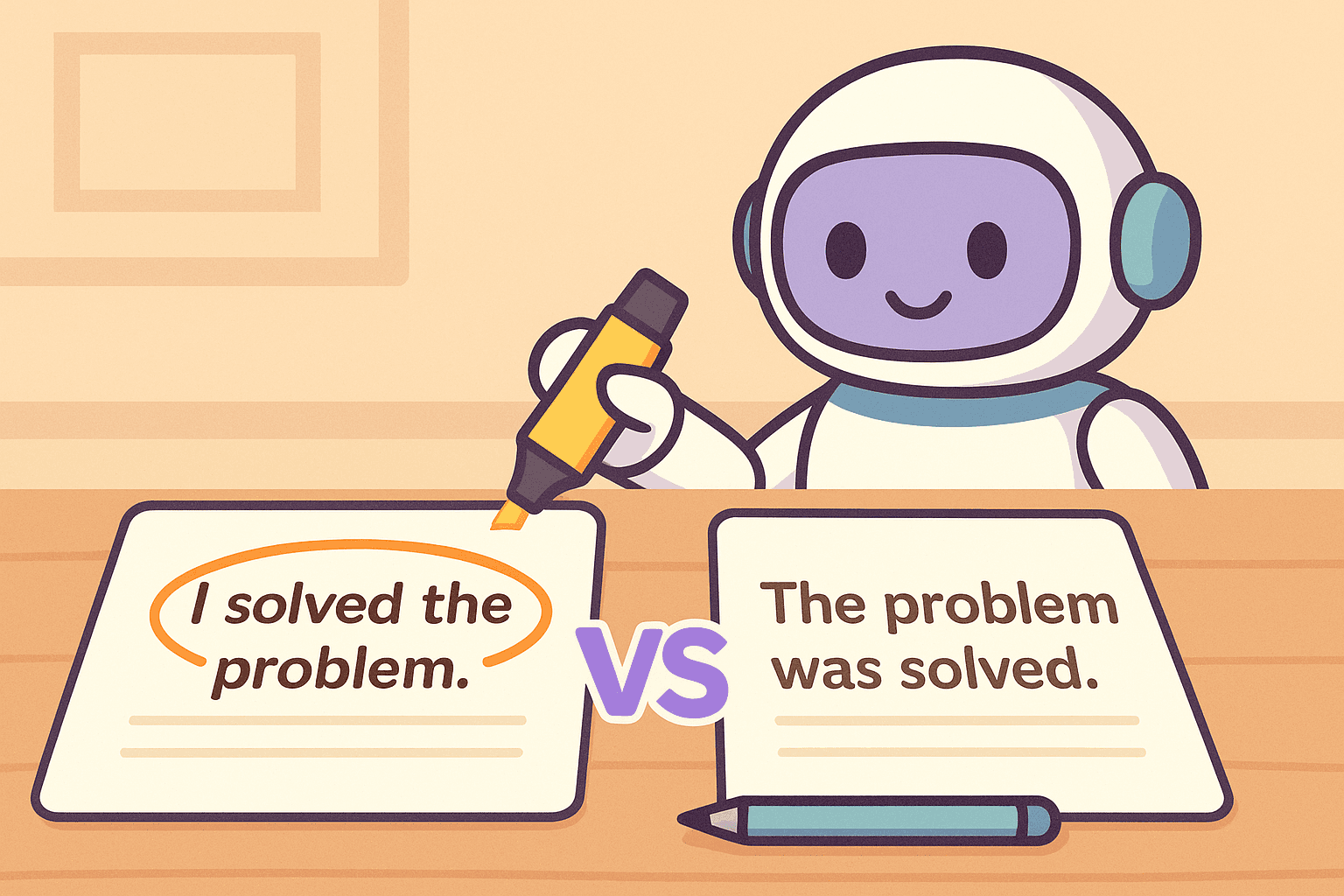
Kya aapko kabhi aesa feedback mila hai jaise “iske thoda saaf likhein” ya “bohot zyada words hain”? Aksar iska zimmedar voice (active ya passive) hota hai, chahe aap likhein “Maine vase tod diya” ya “Vase mere dwara toda gaya.” Baat vahi hai, par asar alag hota hai.
Yeh guide samjhati hai ki active aur passive voice kya hote hain, kab kaun sa madad karta hai, aur unhe aapas mein jaldi se kaise badlein. Aapko papers, emails aur creative kaam ke liye quick tests, real examples aur simple fixes milenge — aur agar aap sentences ko aur tight karna chahte hain, toh hamare academic writing mein redundancy kam karne ke tips dekhein.
<ProTip title="🧠 Quick Insight:" description="Active voice aksar aapke point ko zyada sharp aur samajhne mein aasan banata hai, par passive voice ki bhi apni jagah hai. Yeh janna ki kab kiska use karna hai, aadhi ladai jeetne jaisa hai." />
Active Voice Kya Hai?
Clarity aur engagement ke liye active voice aapke writing ka sabse accha dost hai. Jab aap active voice ka use karte hain, toh aapke sentence ka subject seedhe action perform karta hai. Koi confusion nahi, koi fuzool words nahi, bas seedhi baat. Yeh bilkul aese conversation ki tarah hai jahan har koi jaanta hai ki kaun kya kar raha hai.
Zyadatar writing experts default choice ke roop mein active voice ki salah dete hain kyunki yeh strong aur padhne mein aasan sentences banata hai. Aapke readers bina kisi mehnat ke samajh sakte hain, aur aapke ideas maximum impact chhodte hain.
Active voice tab hota hai jab sentence ka subject verb dwara express kiye gaye action ko perform karta hai. Iska structure ek clear pattern follow karta hai: doer (karne wala) receiver (paane wale) par act karta hai.
Active voice ka formula behad simple hai: Subject → Verb → Object. Aaiye ise action mein dekhte hain:
<BulletList items="The student submitted the assignment. (Student submit karne ka action perform kar raha hai)|Sarah designed the website. (Sarah design karne ka action perform kar rahi hai)|The team won the championship. (Team jeetne ka action perform kar rahi hai)" />
Dhyan dein ki kaise har sentence aapko turant batata hai ki action ke liye kaun zimmedar hai. Doer ke baare mein koi mystery nahi hai; subject center stage leta hai aur sentence ko aage badhata hai.
<ProTip title="🗣️ Pro Tip:" description="Apne sentences ko zor se padhein. Agar yeh natural aur conversational lagte hain, toh aap likely active voice ka effectively use kar rahe hain." />
Passive Voice Kya Hai?
Passive voice script ko flip kar deta hai, jahan action ka receiver aapke sentence ka subject ban jata hai. Halanki ise aksar "weak" ya "bad" writing kaha jata hai, par passive voice actually specific contexts mein important purposes serve karta hai. Key yeh hai ki aap jaanein ki kab aur kyun ise strategically use karna hai.
Passive voice ko ek aese spotlight ki tarah samjhein jo focus performer se hata kar khud performance par daal deta hai.
Passive voice tab hota hai jab sentence ka subject action perform karne ke bajaye use receive karta hai. Emphasis is baat par hota hai ki kya hua, na ki is baat par ki kisne kiya.
Passive voice is pattern ko follow karta hai: Object → "to be" verb + Past Participle → (by Subject). Yeh aese kaam karta hai:
<BulletList items="The assignment was submitted by the student.|The website was designed by Sarah.|The championship was won by the team." />
Dhyan dein ki aap aksar "by" phrase ko poori tarah se hata sakte hain: "The assignment was submitted" ya "The website was designed." Yeh omission actually certain contexts mein passive voice ke strategic advantages mein se ek hai.
Active vs Passive Voice: Main Difference
Inke beech ke main differences ko samajhna aapko aapke specific writing goals ke liye sahi voice chunne mein madad karta hai:
Active Voice | Passive Voice |
Subject action karta hai | Subject action receive karta hai |
Direct aur concise | Zyada formal tone |
Clear responsibility | Action/result par focus |
Aamtaur par padhne mein aasan | Zyada objective lag sakta hai |
Chhote sentences | Aksar lambe sentences |
Active Voice: Yeh Kya Karta Hai
Active voice subject ko sabse aage rakhta hai aur sentences ko tight rakhta hai. Yeh readers ko jaldi batata hai ki kisne kya kiya. “The committee approved the proposal.” Yahi clarity wajah hai ki yeh blogs, reports aur persuasive writing mein itna accha kaam karta hai.
Passive Voice: Yeh Kab Sahi Lagta Hai
Passive voice dhyan ko action ya result par shift karta hai, doer par nahi. Yeh zyada formal ya objective lag sakta hai, jo scientific papers mein ya jab actor unknown ho, tab useful hota hai. “The proposal was approved by the committee.” Kaam kya hua yeh zyada matter karta hai isse ki kisne kiya.
Chunne Ka Quick Tareeqah
Apne aap se poochein:
“Kya readers ko yeh janne ki zaroorat hai ki action kisne kiya?”
Agar haan, toh active use karein. Agar nahi, ya agar aap result ko highlight karna chahte hain, toh passive theek hai.
Voice Kaise Convert Karein
Voice conversion par kabu pana editing ke liye ek Swiss Army knife hone jaisa hai. Chahe aap clarity ke liye revise kar rahe hon ya academic requirements ke mutabiq dhal rahe hon, voices ke beech shift karna aana aapko ek writer ke roop mein kamaal ki flexibility deta hai.
Active se Passive
Active ko passive mein convert karne ke teen clear steps hain:
Object ko subject ki position par le jayein
Correct form of "be" + past participle jodein
Optional roop se "by" + original subject jodein
Chaliye practice karte hain: "The chef cooked the meal" ban jata hai "The meal was cooked by the chef."
Yeh raha iska transformation:
<BulletList items=Original object the meal → New subject|Verb cooked → was cooked (be + past participle)|Original subject the chef → by the chef />
Passive se Active
Process ko reverse karne se aapke sentences mein wapas energy aa jati hai:
Action ke asli performer ko identify karein
Us performer ko apna naya subject banayein
Verb ko wapas active form mein convert karein
Example: "The experiment was conducted by researchers" ban jata hai "Researchers conducted the experiment."
Yeh conversion aksar fuzool words ko katata hai aur responsibility clear karta hai, jo ki readers ko pasand aata hai.
<ProTip title="🧠 Pro Tip:" description="Jab active voice mein switch kar rahe hon, toh apne aap se poochein ki kaun ya kya sach mein action kar raha hai. Vahi aamtaur par aapka sabse accha subject hota hai." />
Kab Kaun Sa Voice Use Karein
Strategic voice selection aapke writing ki effectiveness ko bana ya bigad sakta hai. Ise har writing task ke liye sahi tool chunne ki tarah samjhein.
Active Voice Kab Use Karein
Active voice tab chamakta hai jab aap clarity, engagement aur directness chahte hain. Iska use karein:
<BulletList items="Essays aur blog posts mein jahan aap readers se connect karna chahte hain|Business reports mein jahan accountability matter karti hai|Instructions aur procedures mein jahan clarity zaroori hai|Persuasive writing mein jahan aapko trust build karna ho" />
Example: "Aap in techniques ka daily practice karke apni writing ko improve kar sakte hain."
Passive Voice Kab Use Karein
Passive voice sabse accha tab kaam karta hai jab action performer se zyada matter karta hai:
<BulletList items="Jab karne wala unknown ho: Window storm ke dauran toot gayi thi.|Jab karne wala unimportant ho: Votes aaj raat gine jayenge.|Diplomatic language ke liye: Galtiyan ho gayi thi (blame assign karne ke bajaye)|Scientific writing mein: Solution ko 100°C tak heat kiya gaya." />
Example: "The data was collected over six months" (yeh process par focus karta hai, researchers par nahi).
Academic Writing mein Active aur Passive Voice
Passive Kyun Dominant Tha
Academic writing ne hamesha passive voice ko favor kiya taaki tone objective lage aur focus results par ho, researchers par nahi. Aap aese lines dekhenge jaise “It was determined that…” ke bajaye “We determined that…”
Active Ki Taraf Shift
Kayi style guides ab active voice ko encourage karte hain jab tak clarity par asar na pade, jismein academic writing mein first person pronouns use karna bhi shamil hai. Readers “We analyzed the samples” ko “The samples were analyzed” ke mukable jaldi samajhte hain. Yeh direct hai aur skim karne mein aasan hai.
Unhe Jaanबूझkar Mix Karein
Poochein: “Kya readers ko yeh janne ki zaroorat hai ki kisne kiya, ya bas yeh ki kya hua?”
Clear claims aur arguments ke liye active ka use karein. Passive ka use tab karein jab actor unknown ho, irrelevant ho, ya aap process ya result ko highlight karna chahte hon.
<ProTip title="✍️ Pro Tip:" description="Passive voice hamesha galat nahi hota. Iska use tab karein jab karne wala unknown ho, unimportant ho, ya context se bilkul clear ho." />
Apni Writing mein Voice Choice par Kabu Pana
Strong writing mein active aur passive voice dono ki jagah hoti hai. Key yeh janna hai ki kab kiska use clarity, tone, ya focus ke liye karna hai, khaaskar academic kaam mein, aur ek paragraph expansion tool ka use karna aapko revise karte samay sentences ko refine aur strong banane mein madad kar sakta hai.
<CTA title="Apne Voice ko Sentence by Sentence Control Karein" description="Voice choices ko review karne, wording ko tight karne aur arguments ko direct rakhne ke liye Jenni ka use karein." buttonLabel="Jenni Free Try Karein" link="https://app.jenni.ai/register" />
Jenni ke saath, aap likhte samay voice shifts ko spot kar sakte hain aur on the fly adjust kar sakte hain. Apne message ko clear aur purposeful rakhte hue polished rehne ka yeh ek bada hi helpful tareeqah hai.