Dwara
Justin Wong
—
Kaise likhen ek spasht aur prabhavshali saaraansh apne anusandhan patr ke liye

Justin Wong
Vikas Prabhari
Graduated kiya Bachelor's me Global Business & Digital Arts, Minor me Entrepreneurship

Ek research abstract aapke paper ka chhota sa pravesh dwar (doorway) hota hai. Yeh pehla impression banata hai, dikhata hai ki aapka study kis baare mein hai, aur readers ko yeh tay karne mein madad karta hai ki kya woh aage padhna chahte hain. Kyunki bahut se log papers ki lambi list ko jaldi-jaldi skim karte hain, isliye ek saaf aur clear abstract aapke kaam ko turant alag pehchan dila sakta hai.
Yeh guide aapko aasan aur practical tarike se batayegi ki kisi research paper ke liye abstract kaise likha jaye. Abstract poore manuscript mein kaise fit hota hai, iska ek bada view dekhne ke liye, humara overview of academic paper purpose and structure dekhein. Aap sikhenge ki kya-kya include karna hai, har part ko kaise structure karna hai, aur apni writing ko clear aur accurate kaise rakhna hai. Aap kuch examples aur aam galtiyan (common mistakes) bhi dekhenge taaki aap ek prabhavshali abstract likh sakein.
<CTA title="Write a Clear Abstract Fast" description="Create a strong journal ready abstract in minutes" buttonLabel="Try Jenni Free" link="https://app.jenni.ai/register" />
Abstract Kya Hai?
Ek abstract kisi research paper ka summary ya saaransh hota hai. Zyada-tar journals ko 150–250 shabd (words) ki zaroorat hoti hai. Yeh key parts of the study ko share karta hai: topic, purpose, methods, results, aur final implications. Iska maqsad readers ko poore text ko padhe bina hi paper ki ek quick understanding dena hai.
Ek accha abstract paanch mukhya sawalon ke jawab deta hai:
Topic kya hai?
Yeh topic kyun important hai?
Study ne kaise kaam kiya?
Research se kya pata chala?
In findings ka kya mahatva hai?
Ek acchi tarah se likha gaya abstract independent (aatmanirbhar) hota hai. Readers ko study ka essence samajh mein aana chahiye, bhale hi unhone aapka baki paper kabhi na padha ho.
<ProTip title="💡 Pro Tip:" description="Write your abstract in simple language so any reader can understand your main points fast." />
Abstracts Kyun Important Hain
Academic visibility ke liye abstracts bahaat zaroori hain. Search engines, research databases, librarians, students, aur scholars is baat ka faisla karne ke liye abstracts par nirbhar karte hain ki aage kya padhna hai. Journals aksar abstracts ka use yeh check karne ke liye karte hain ki kya study unke scope ke anuroop hai. Yahan tak ki automated systems bhi research ko sort aur categorize karne ke liye abstracts ka use karte hain.
Ek strong abstract aapke kaam ki kayi tariko se madad karta hai:
Yeh research databases mein discoverability ko badhata hai.
Yeh reviewers ko aapki study jaldi samajhne mein madad karta hai.
Yeh dusre researchers ko cite karne ke liye ek reliable summary deta hai.
Yeh aapki academic writing ka pehla impression achha banata hai.
Ek kamzor abstract study ki value ko chipa deta hai. Yeh readers ko confuse karta hai, engagement kam karta hai, aur aksar peer review ke dauran acceptance ke chance ko kam kar deta hai. Jab aap how to structure an abstract seekh rahe ho, to clear wording bahaat crucial hai, kyunki readers fast aur accurate summaries par depend karte hain yeh tay karne ke liye ki kya pura paper padhne layak hai.
Abstract Ka Standard Structure
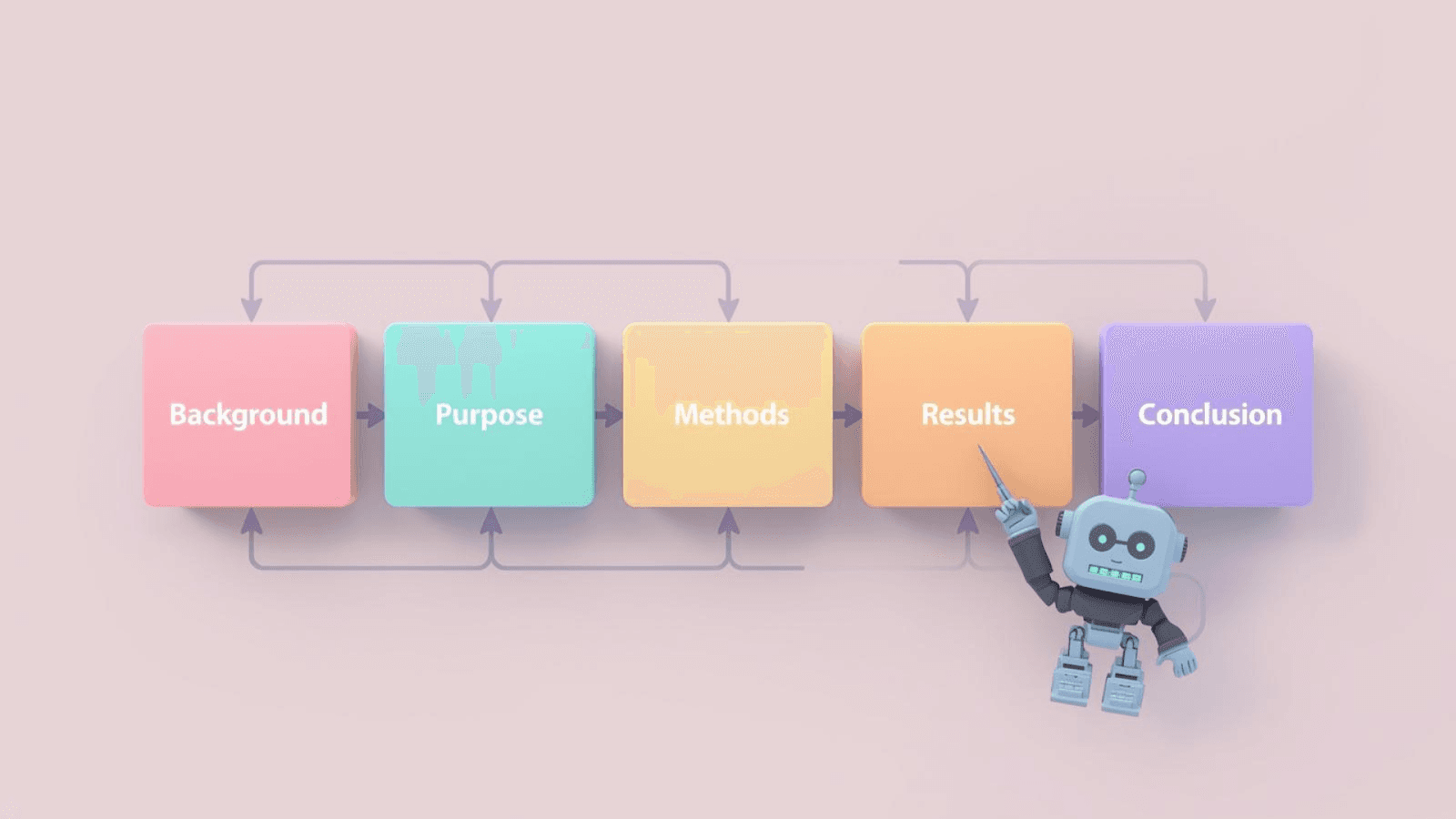
Ek research abstract ek simple pattern ko follow karta hai. Yeh structure clarity ko support karta hai aur aapki writing ko padhne mein aasan banata hai.
Background ya Context
Topic ko ek ya do sentences mein introduce karein. Batayein ki yeh kyun important hai ya is field mein kya gap hai.
Purpose ya Objective
Main goal ko state karein. Aapki study ne kis cheez ki investigation ya test kiya?
Methods
Summarize karein ki study ko kaise anjam diya gaya. Isme design, sample size, tools, ya analysis method include karein. Ise short aur factual rakhein.
Results
Sabse important findings ko share karein. Jab possible ho, to specific numbers ya measurable outcomes ko include karein.
Conclusion ya Implications
Apni findings ka matlab samjhayein. Readers ko batayein ki results kyun matter karte hain, unka kya contribution hai, ya aage ke steps kya ho sakte hain.
<ProTip title="💡 Reminder:" description="Keep each section 1 2 sentences. Abstracts are summaries, not long explanations." />
Ek Simple Abstract Flow Ka Example
Yahan dekhein ki yeh structure kaise kaam karta hai:
Context
“Digital learning tools badh rahe hain, lekin kayi students engaged rehne mein struggle karte hain.”
Purpose
“Is study ne examine kiya ki kya interactive quizzes engagement ko behtar banatein hain.”
Methods
“120 students ke ek group ne cheh (six) weeks tak ek quiz-enabled platform ka use kiya.”
Results
“Control group ke mukable engagement levels 32 percent badh gaye.”
Conclusion
“Interactive quizzes focus badhane mein madad karte hain aur behtar learning outcomes ko support kar sakte hain.”
Yeh short example dikhata hai ki kaise har element ek sath milkar ek clear aur fast summary pesh karta hai.
Research Paper Ke Liye Abstract Kaise Likhein: Step-by-Step

Is process ko aasani se samajhne ke liye ise follow karein.
Step 1: Apna Paper Poora Karne Ke Baad Abstract Likhein
Apna abstract sabse aakhir mein likhein. Yeh ensure karta hai ki har detail accurate ho. Agar aap ise bahaat pehle likh denge, to summary aapki study ke final version se match nahi karegi.
Step 2: Research Problem Ki Pehchan Karein
Problem ya gap ko samjhane ke liye ek chhota sentence likhein. Yeh readers ko context deta hai. Ise specific rakhein aur general statements se bachein.
Step 3: Objective Ko State Karein
Ek sentence add karein jo bataye ki aap kya discover karne chale the. Yeh aam taur par aapka research question ya hypothesis hota hai.
Step 4: Apne Methods Ko Summarize Karein
Apne method ke essential parts ko share karein:
Study design
Participants ya sample
Tools ya instruments
Data collection method
Study ki duration
Yeh section brief par clear hona chahiye.
Step 5: Key Results Ko Present Karein
Yeh abstract ka dil (heart) hota hai. Agar aapki study mein numbers ya measurable outcomes hain, to unhein include karein. Readers facts chahte hain, vague statements nahi.
Step 6: Conclusion Ko Samjhayein
Apne results ke meaning ke sath wrap up karein. Ise tight rakhein. Readers ko batayein ki aapki findings broader field mein kyun matter karti hain.
Step 7: Brevity Ke Liye Edit Karein
Filler words, jargon, lambe phrases aur repeated ideas ko remove karein. Abstracts sharp aur clean hone chahiye. Agar aap ek lambe draft ko chhota karne mein struggle kar rahe hain, to ek AI summarizer aapki madad kar sakta hai ki kya rakhna hai aur kya hatana hai (phir har cheez ko full paper se verify karein).
Step 8: Journal Guidelines Ko Follow Karein
Hamesha submission rules ko check karein. Journals aksar specify karte hain:
Word count
Formatting
Keyword requirements
Tense
Structure
Kya abstract structured hona chahiye ya unstructured
In rules ko poora karne se aapke acceptance ke chances badh jate hain.
Abstracts Ke Types
Academic research mein use hone wale do mukhya types ke abstracts hote hain. Inka difference janne se aapko apne field ke liye best format chunne mein madad milti hai.
Descriptive Abstract
Ek descriptive abstract short hota hai, aam taur par 150 words se kam. Yeh study ke purpose aur scope ko describe karta hai lekin detailed results present nahi karta.
Example:
“Yeh paper vocabulary development par reading habits ke effects ko explore karta hai aur existing theories ka review karta hai.”
Agar aapki study theoretical, conceptual, ya exploratory hai, to is type ka use karein.
Informative Abstract
Yeh sabse common type hai. Yeh poore structure ko follow karta hai:
Background
Purpose
Methods
Results
Conclusion
Original research, experiments, ya data wali studies ke liye is format ka use karein.
<ProTip title="💡 Pro Tip:" description="If your study includes data or measurable outcomes, always choose an informative abstract." />
Apne Abstract Ke Liye Keywords Chunna
Zyadatar journals ko 3–5 keywords ki zaroorat hoti hai. Yeh aapki study ko Google Scholar, ResearchGate, PubMed, aur Scopus jaise databases mein index karne mein madad karte hain. Strong keyword selection effective abstract writing ka hissa hai, khaas karke tab jab readers topic ke hisab se search karte hain aur accurate indexing par depend hote hain.
Strong keywords ko:
Main topic se match hona chahiye
Aapke field ko reflect karna chahiye
Aapke title ke terms ke sath align hona chahiye
Generic language se bachna chahiye
Effective keyword choices ke examples mein shaamil hain:
research paper abstract
academic abstract structure
quantitative findings
study design
research purpose
“results,” “study,” ya “analysis” jaise vague shabdon se bachein.
Ache Aur Bure Abstracts Ke Examples
Weak Abstract Ka Example
“Yeh study social media use ko dekhti hai. Yeh discuss karti hai ki students platforms ka kaise use karte hain. Results behavior mein differences dikhate hain.”
Problems:
Koi clear problem nahi hai
Koi methods nahi hain
Koi sample size nahi hai
Koi specific results nahi hain
Koi conclusion nahi hai
Strong Abstract Ka Example
“Academic performance par social media ka impact abhi bhi unclear hai. Is study ne examine kiya ki daily usage 240 university students ke grades ko kaise affect karta hai. Ek survey aur GPA analysis ka use karke, results dikhate hain ki jo students din mein teen ghante se zyada social media use karte the unki performance 12 percent kam thi. Yeh findings suggest karti hain ki usage time kam karne se behtar academic outcomes mil sakte hain.”
Yeh kyun kaam karta hai:
Clear topic hai
Confident structure hai
Specific data hai
Strong implication hai
Aam Galtiyan Jinse Bachna Hai
Yahan aisi kamiyan hain jo abstracts ko kamzor banati hain:
1. Nayi Information Add Karna
Abstract ko paper ko summarize karna chahiye, naye concepts introduce nahi karne chahiye.
2. Bohat Vague Hona
“Important results were found” jaise unclear statements se bachein. Hamesha specific rahein.
3. Background Details Ka Overload Karna
Ek abstract ek full introduction nahi hota. Context ko short rakhein.
4. Technical Jargon Ka Use Karna
Agar koi reader aapka abstract nahi samajh sakta, to wo poore paper ko skip kar dega.
5. Word Limit Ko Break Karna
Limit se aage badhne par rejection ho sakta hai.
6. Results Ko Chhod Dena
Results core hote hain. Unhein skip na karein.
<ProTip title="💡 Reminder:" description="A complete abstract answers why, how, what, and so what." />
Clear Abstracts Likhne Ke Liye Writing Tips
Active Voice Ka Use Karein
Active verbs readers ko aapke ideas jaldi samajhne mein madad karte hain. Examples:
examine
analyze
measure
compare
reveal
Simple Language Ka Use Karein
Chhote sentences clarity badhate hain aur readability behtar karte hain. Zyadatar abstracts grade 5-7 ke reading level tak hone chahiye. Jab aapko bina meaning change kiye phrasing ko tight karna ho, to ek AI paraphrasing tool madad kar sakta hai—phir accuracy ke liye output ko review karein.
Methods Ke Liye Past Tense Ka Use Karein
Methods completed actions ko describe karte hain.
Results Ke Liye Present Tense Ka Use Karein
Study poori hone ke baad bhi results sach hi rehte hain.
Citations Se Bachein
Abstracts standalone hone chahiye. Dusre authors ko cite na karein.
Structured vs. Unstructured Abstracts
Kuch journals ko headings ke sath structured abstracts ki zaroorat hoti hai. Yeh aam taur par inme hote hain:
medicine
psychology
engineering
technical fields
Structured headings ke examples:
Background
Methods
Results
Conclusion
Keywords
Unstructured abstracts bina headings ke ek single paragraph ka use karte hain. Yeh humanities aur social sciences mein common hain.
Structured Abstracts Ka Use Kab Karein
Aapko iska use tab karna chahiye agar:
Journal ko iski zaroorat ho
Aapki study ke kayi complex parts hon
Aap scientific, clinical, ya technical data report kar rahe hon
<ProTip title="💡 Note:" description="Match the exact heading style of the journal to avoid desk rejection." />
Strong Academic Abstracts Ke Liye Advanced Tips
Ek Core Message Par Focus Karein
Aapke abstract ko ek clear idea dena chahiye jise readers turant samajh sakein. Apne focus ko tight rakhein taaki main point kho na jaye. Ek direct message readers ko yeh samajhne mein madad karta hai ki aapki study kya contribute karti hai, bina extra details mein gaye.
Numbers Include Karein
Quantitative details credibility badhati hain. Yeh tab aur zaroor ho jata hai jab aap chahte hain ki aapki summary clear research outcomes ko reflect kare, kyunki readers un abstracts par trust karte hain jo vague claims ke bajaye measurable findings present karte hain.
Clear Transitions Ka Use Karein
Aapke abstract ko ek clear idea dena chahiye jise readers turant samajh sakein. Apne focus ko tight rakhein taaki main point kho na jaye. Ek direct message readers ko yeh samajhne mein madad karta hai ki aapki study kya contribute karti hai, bina extra details mein gaye.
Overclaims Se Bachein
Is baat ko lekar honest rahein ki aapki study kya prove kar sakti hai aur kya nahi. Aise bade statements se bachein jise aapka data fully support nahi karta. Apne claims ko evidence par grounded rakhne se aapka abstract zyada credible aur professional sound karta.
Apni Primary Finding Ko Prioritize Karein
Aapko har ek result ko include karne ki zaroorat nahi hai. Us finding ko highlight karein jo aapke research question ke liye sabse zyada matter karti hai. Readers ko main takeaway dikhna chahiye, bina chhote ya kam important details mein khoye.
Standalone Readability Ensure Karein
Ek strong abstract ka matlab samajh mein aana chahiye bhale hi koi full paper kabhi na padhe. Summary ko itna complete rakhein ki yeh apne aap mein stand kar sake. Yeh readers ko aapke kaam ko quickly samajhne aur decision lene mein madad karta hai ki kya full study ko explore kiya jaye.
Abstract Checklist
Apna abstract submit karne se pehle is checklist ka use karein.
Content Checklist
In baaton ka dhyan rakhein:
Background clear hai
Purpose stated hai
Methods summarized hain
Main result included hai
Conclusion significance samjhata hai
Keywords accurate hain
Quality Checklist
Inke liye notes lein:
150–250 words
Koi jargon nahi hai
Active voice hai
Consistent tenses hain
Koi citations nahi hain
Padhne mein aasan hai
Research Paper Ka Ek Clear Abstract Likhna
Ek strong abstract is baat ko shape karta hai ki readers aapki study ko kaise samajhte hain. Clear context, apne research purpose, key methods, aur main results par focus karke, aap ek research paper ke liye aisa abstract likh sakte hain jo stand out kare aur aapke kaam ka ek solid summary de. Jab yeh saare pieces sath milkar kaam karte hain, to aapka paper dhundhne, padhne aur cite karne mein aasan ho jata hai.
<CTA title="Write Better Abstracts with Jenni" description="Turn your research notes into a clear strong abstract in minutes" buttonLabel="Try Jenni Free" link="https://app.jenni.ai/register" />
Agar aapko fast aur clear writing support chahiye, to Jenni aapki madad kar sakta hai rough notes ko minutes mein ek polished abstract mein badalne mein.