Por
Justin Wong
—
¿Qué debe incluir una lista de verificación previa a la presentación de una investigación en cuanto a afirmaciones, citas y credibilidad?

Justin Wong
Jefe de Crecimiento
Graduado con una Licenciatura en Negocios Globales y Artes Digitales, con un Minor en Emprendimiento
La mayoría de las personas piensa que el paso final antes de enviar es pulir la redacción. Corriges unas cuantas frases incómodas, haces una revisión gramatical, ordenas la lista de referencias y lo envías.
Pero la verdad es que muchos trabajos no reciben observaciones porque sean difíciles de leer. Reciben observaciones porque las afirmaciones se sienten débiles, las citas no respaldan del todo el punto que se está haciendo o la evidencia se está forzando un poco demasiado.
Y la parte molesta es que estos problemas suelen ser invisibles cuando estás inmerso en el modo de redacción. Ya sabes lo que querías decir, así que tu cerebro llena automáticamente los vacíos.
<CTA title="Haz que tus afirmaciones se sostengan" description="Claim Confidence analiza tu borrador y resalta las afirmaciones que necesitan un respaldo más sólido para que puedas corregirlas rápido antes de enviarlo." buttonLabel="Probar Jenni gratis" link="https://app.jenni.ai/register" />
Por qué importa una lista de verificación previa al envío
Un trabajo sólido no se trata solo de sonar académico. Se trata de asegurarte de que tus ideas puedan sostenerse cuando alguien decida cuestionarlas.
Puedes tener una redacción limpia y una estructura fluida, pero si una oración hace una afirmación contundente y la cita no la respalda correctamente, eso levanta una señal de alerta de inmediato. Suele ser ahí donde los revisores empiezan a prestar más atención.
Esto también explica por qué muchos rechazos o revisiones no se deben a la gramática. Se deben a cosas como:
afirmaciones que parecen exageradas
falta de respaldo para afirmaciones factuales
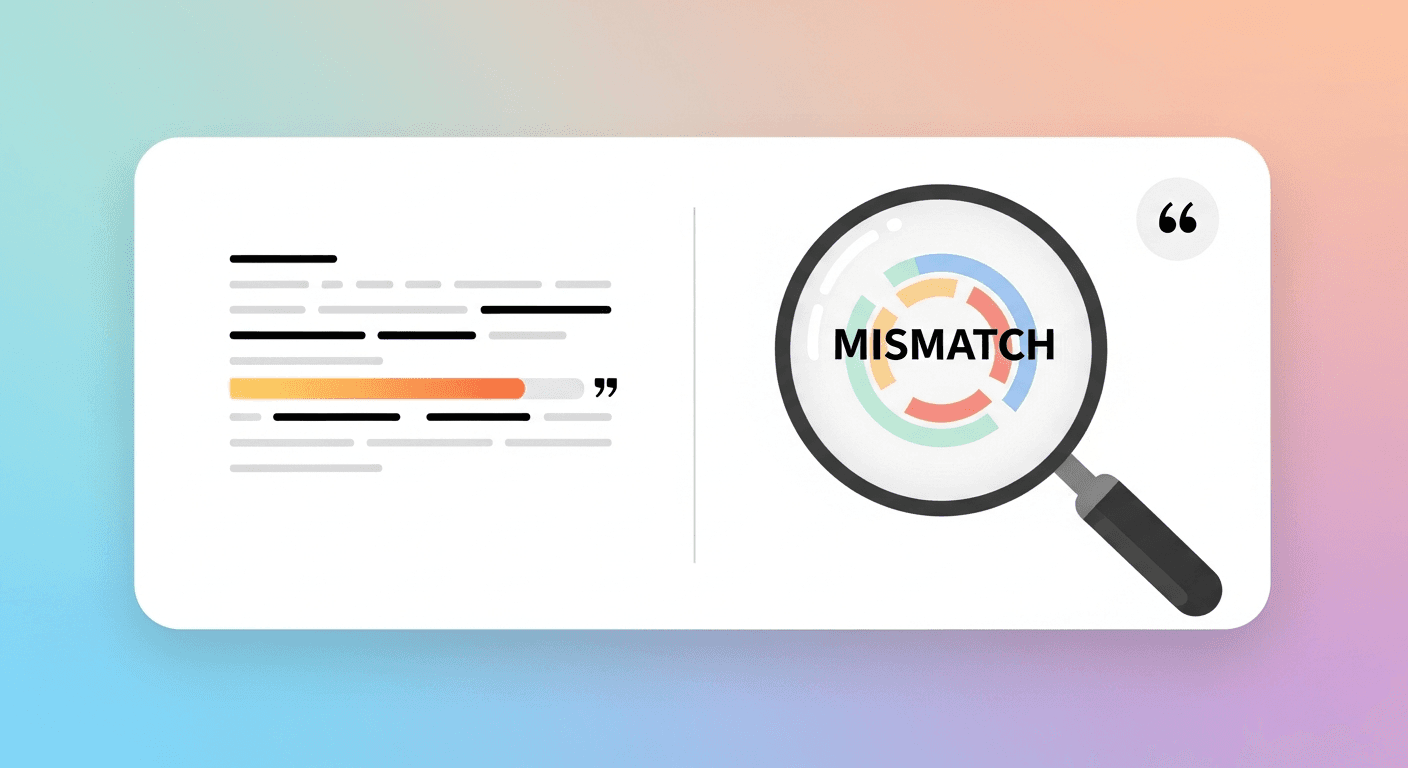
citas que existen, pero no coinciden con el punto que se está haciendo
conclusiones que van más allá de lo que la evidencia puede respaldar razonablemente
Una lista de verificación ayuda porque te da un sistema para seguir en lugar de depender de la intuición. Especialmente cuando tienes poco tiempo, es mucho más fácil ejecutar una lista rápida que releer todo el borrador esperando detectar todo de forma natural.
<ProTip title="🛡️ Comprobación de credibilidad:" description="Un trabajo sólido no solo es legible. También se puede defender. Antes de enviarlo, asegúrate de que tus afirmaciones más importantes coincidan claramente con la evidencia que citaste." />
La lista rápida de 5 minutos (cuando vas con prisa)
Incluso los borradores fuertes pueden recibir observaciones cuando una oración segura no coincide con lo que la evidencia realmente respalda. Por eso, un rápido análisis de desajuste de afirmaciones puede ahorrarte una dolorosa ronda de comentarios justo antes de enviarlo.
Tu lista de verificación previa al envío en 5 minutos
✅ Puedo señalar una fuente para cada afirmación factual
✅ Mis afirmaciones más fuertes coinciden con lo que la fuente realmente dice
✅ Mis citas están exactamente donde se hace la afirmación
✅ Evité un lenguaje absoluto salvo que esté realmente respaldado
✅ Mi lista de referencias está completa y es coherente
✅ Hice un último análisis de problemas de credibilidad
<ProTip title="⚡Victoria rápida:" description="Empieza con las oraciones que suenan más seguras. Esas suelen ser las primeras que la gente vuelve a comprobar." />
Revisión de afirmaciones (¿Cada afirmación es realmente defendible?)
Antes de preocuparte por pulir la redacción, haz una pasada rápida que se enfoque solo en las afirmaciones. Ahí es donde la credibilidad se construye o se pierde silenciosamente.
Una regla simple: si alguien cuestiona una oración, deberías poder señalar la evidencia y decir: «Sí, está respaldada aquí».
Resalta las 10 afirmaciones más importantes de tu trabajo
No necesitas revisar cada oración. Empieza por las afirmaciones de las que depende tu trabajo.
La mayoría de las afirmaciones de alto impacto aparecen en:
Declaración de tesis
Oraciones temáticas
Interpretación de resultados
Discusión y conclusión
Resalta las 10 afirmaciones principales que sostienen el argumento. Esas son las que vale la pena comprobar primero, y también son las que los revisores miran primero.
Haz la prueba de la escala de fuerza de la afirmación
Un lenguaje contundente puede hacer que un borrador suene seguro, pero también puede hacerlo más fácil de cuestionar. La clave es que tu lenguaje coincida con lo que la evidencia puede respaldar razonablemente.
Usa esta tabla rápida como guía:
Nivel de redacción de la afirmación | Cómo suena | Cuándo es más seguro usarlo |
🚨Muy fuerte | demuestra, garantiza, siempre | solo cuando la evidencia es directa, coherente y de alta calidad |
💪Fuerte | muestra, demuestra | cuando el estudio respalda claramente la afirmación en el mismo contexto |
✅Moderada | sugiere, indica | cuando la evidencia apunta en una dirección pero tiene limitaciones |
⚠️Prudente | puede estar asociada con | cuando la evidencia es correlacional o depende del contexto |
🧐Baja certeza | podría estar relacionada con | cuando la evidencia es preliminar, mixta o indirecta |
Si tu fuente es cauta, tu oración también debería serlo. Esto se llama matización. Esa sola mejora puede hacer que tu redacción sea mucho más defendible.
<ProTip title="🧠 Mejora fácil:" description="Si tu afirmación te parece demasiado fuerte, suaviza primero el verbo. De demuestra a sugiere suele ser la forma más rápida de mejorar la credibilidad." />
Vigila estos patrones de afirmación con señales de alerta
Estas frases no están automáticamente mal, pero muchas veces son una señal de que la afirmación es más fuerte que la evidencia que la respalda:
«Esto demuestra que…»
«Esto siempre sucede…»
«Los investigadores están de acuerdo en que…»
«No hay debate…»
«Este es el mejor método…»
Cuando veas una, haz una comprobación rápida: ¿tu cita respalda este nivel de certeza o la fuente usa un lenguaje más cuidadoso? Este es uno de los problemas más fáciles de hacer que salten las alertas.
Si te parece incluso un poco forzado, acota la afirmación o rebaja el lenguaje.
Revisión de evidencia (¿Tienes un respaldo sólido o solo algo citado?)
Tener una cita no es lo mismo que tener respaldo. Puedes citar una fuente real y aun así terminar con evidencia débil si el trabajo no respalda realmente la afirmación que estás haciendo.
Esta sección te ayuda a hacer una rápida comprobación de la realidad de la evidencia para que tu argumento se sienta fundamentado, y no solo decorado con citas.
Evidencia fuerte vs. evidencia débil (desglose simple)
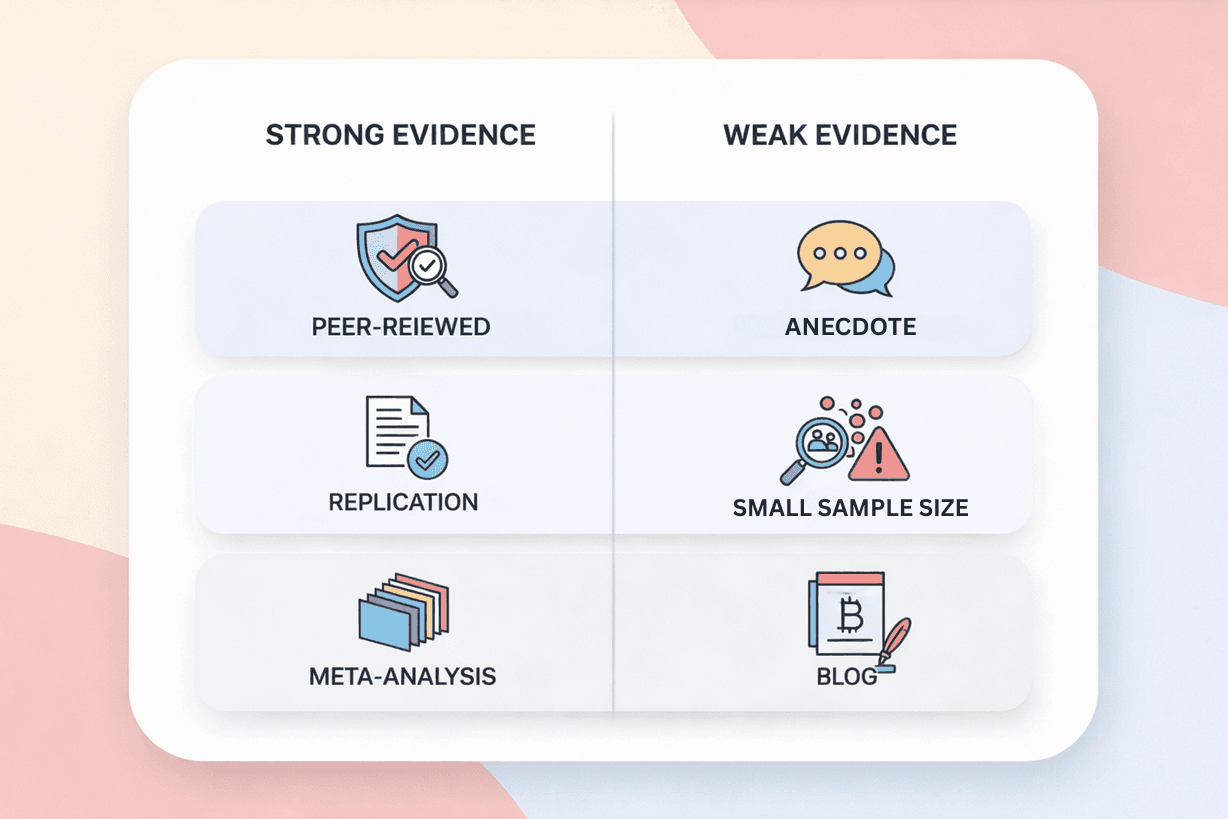
Una forma rápida de pensar en la evidencia es preguntarte qué tan confiable es y qué tan fácil sería cuestionarla.
La evidencia más sólida suele verse como:
estudios revisados por pares
revisiones sistemáticas o metaanálisis
muestras grandes o hallazgos que se han replicado
Por otro lado, la evidencia más débil suele aparecer cuando:
la fuente se basa principalmente en opiniones
se generaliza demasiado a partir de una muestra pequeña
se usan hallazgos antiguos para respaldar afirmaciones actuales sin contexto
Una evidencia sólida no significa perfecta. Solo significa que tu afirmación es más difícil de derribar en la jerarquía de la evidencia.
<ProTip title="🧱 Respaldo sólido:" description="Una cita solo es útil si respalda la afirmación exacta que estás haciendo. La evidencia sólida hace que tu argumento sea más difícil de cuestionar." />
La regla de coincidencia de la evidencia
Cuando no estés seguro de si una fuente realmente respalda tu oración, haz esta prueba rápida de 3 puntos:
✅ ¿La población del estudio coincide con la tuya?
✅ ¿El resultado medido coincide con lo que afirmaste?
✅ ¿La conclusión coincide con la fuerza de tu redacción?
Si la respuesta es «más o menos» en cualquiera de estos puntos, la evidencia puede ser demasiado débil para una afirmación contundente. Ahí es donde un lenguaje como «sugiere» o «puede indicar» suele ayudarte a mantener la precisión.
Ejemplo rápido (cómo se ve esto en la redacción real):
👎Mala afirmación: «Esta intervención mejora los resultados de los estudiantes en todos los países.»
⚡Mejor afirmación: «Esta intervención mostró mejoras en una muestra específica de estudiantes, aunque los resultados pueden variar según el contexto.»
Mismo tema, misma idea. La diferencia es que la segunda versión se mantiene más cerca de lo que la evidencia puede respaldar de forma realista.
Ilusiones comunes de la evidencia que parecen correctas hasta la revisión
Algunas citas parecen convincentes en la superficie, pero se desmoronan cuando alguien comprueba lo que la fuente realmente demuestra.
Aquí tienes algunos errores comunes:
1) Citar información de contexto como si demostrara tu conclusión - Una fuente puede explicar bien el tema, pero aun así no aportar evidencia para tu argumento específico.
2) Citar una definición como si respaldara una afirmación causal - Las definiciones ayudan a los lectores a entender los términos, pero rara vez justifican afirmaciones de causa y efecto.
3) Usar un solo trabajo sólido para hacer una afirmación universal - Incluso un gran estudio suele tener límites. Si tu afirmación aplica a «todo el mundo» o a «cada contexto», normalmente necesitas un respaldo más amplio.
Cuando detectes esto, la solución suele ser simple. Fortalece la evidencia, acota la afirmación o ajusta el lenguaje para que coincida con lo que tu fuente realmente respalda.
Revisión de la ubicación de las citas (¿Estás citando lo correcto en el lugar correcto?)
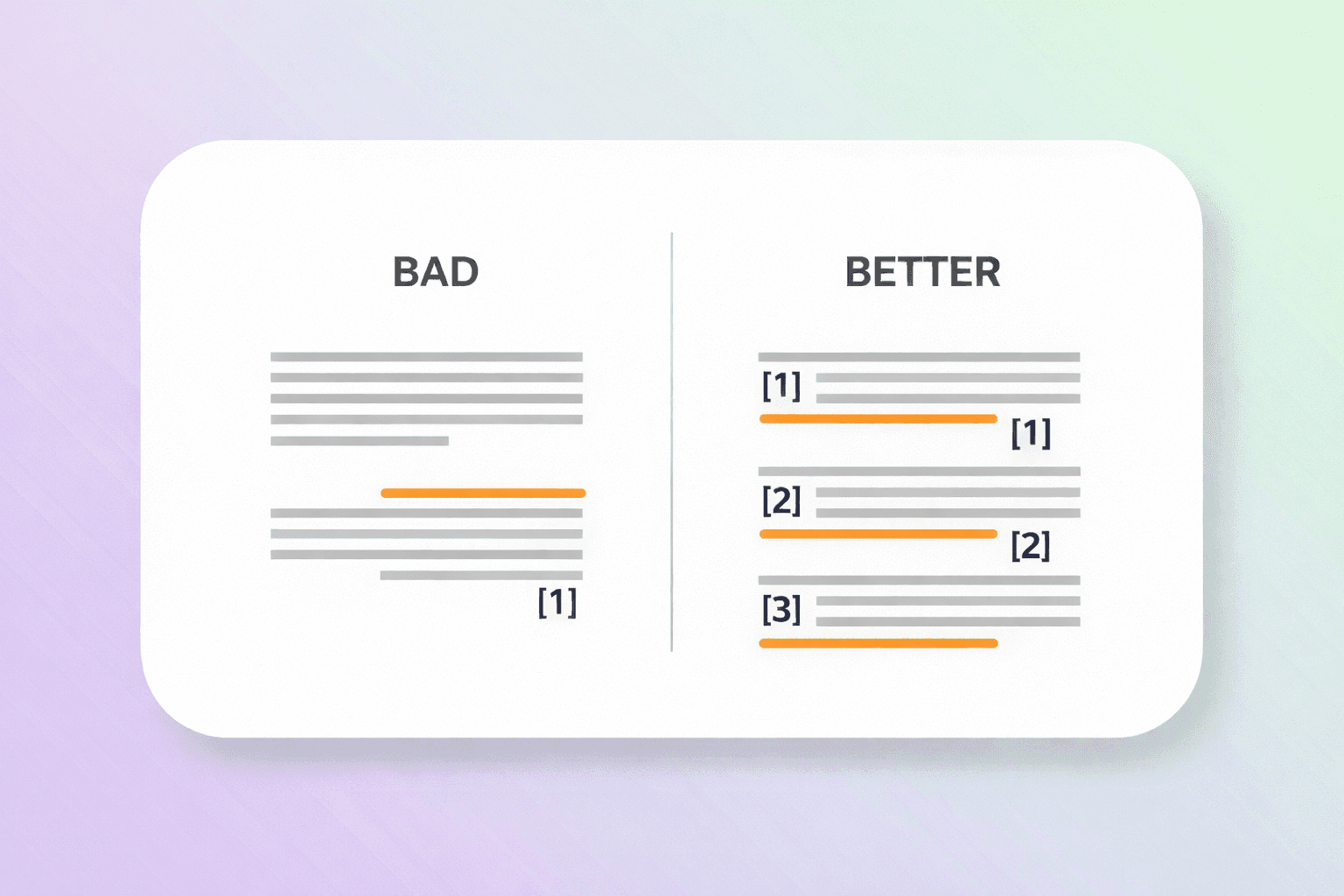
Muchos trabajos reciben observaciones no porque falten citas, sino porque están mal ubicadas. La fuente está técnicamente ahí, pero no está junto a la afirmación exacta que debe respaldar.
Ese pequeño desajuste puede hacer que tu argumento se sienta más débil de lo que realmente es.
Los errores más comunes en la ubicación de las citas
✅ La cita se deja al final del párrafo, aunque solo una oración la necesitaba
✅ La cita se coloca demasiado pronto, dejando afirmaciones posteriores sin respaldo
✅ Se usa una sola cita para respaldar varias afirmaciones separadas
✅ Se añade una cita después de una oración que es en su mayor parte interpretación
Cómo se ve esto (mal vs. mejor)
Mala ubicación de la cita:
«Las intervenciones de salud digital mejoran los resultados de los estudiantes en todos los contextos. También reducen las tasas de abandono y aumentan la motivación a largo plazo. (Guta et al., 2025)»
Mejor ubicación de la cita:
«Las intervenciones de salud digital pueden mejorar los resultados de los estudiantes en contextos específicos. (Guta et al., 2025) También pueden reducir las tasas de abandono en algunos casos, según el diseño de la intervención. (Guta et al., 2025)»
La segunda versión deja claro qué respalda cada cita, en lugar de obligar al lector a adivinar.
Cómo corregir rápido la ubicación de las citas
Resalta las oraciones que hacen una afirmación
Coloca la cita inmediatamente después de cada oración con afirmación
Elimina las citas de las oraciones que realmente no necesitan respaldo
<ProTip title="📌 Corrección rápida:" description="Si un lector tiene que adivinar qué respalda tu cita, probablemente está en el lugar equivocado." />
Revisión de citas textuales, paráfrasis y resúmenes (¿Estás representando correctamente las fuentes?)
Este es uno de los lugares más fáciles para perder credibilidad sin darte cuenta. No porque quieras ser engañoso, sino porque pequeños cambios de redacción pueden alterar silenciosamente lo que realmente quiso decir una fuente.
Una revisión rápida aquí te ayuda a mantener tu redacción precisa sin dejar de sonar seguro.
La prueba rápida de precisión de la paráfrasis
Antes de seguir, pregúntate:
✅ ¿Cambié el significado de la fuente original?
✅ ¿Eliminé las limitaciones y lo hice sonar universal?
✅ ¿Convertí accidentalmente un «puede» en un «es»?
Si alguna respuesta te suena a «quizá», vale la pena revisar la oración.
Cómo se ve una tergiversación
La mayoría de las tergiversaciones ocurre en ediciones pequeñas, como:
eliminar «en esta muestra»
eliminar «a corto plazo»
reemplazar «asociado con» por «causó»
Estos cambios parecen pequeños, pero pueden convertir un hallazgo cauteloso en una afirmación fuerte que la fuente nunca hizo.
Revisión de la lista de referencias (limpia, completa y coherente)
Esta parte no es emocionante, pero es innegociable. Una lista de referencias desordenada hace que un trabajo que de otro modo sería sólido parezca apresurado, y es una de las cosas más fáciles de corregir antes de enviarlo. Si gestionas las referencias en Zotero o Mendeley, nuestra integración de Zotero y Mendeley para investigadores explica cómo mantener alineados tu biblioteca y tus citas.
Revisiones imprescindibles de la lista de referencias
☑️ Cada cita dentro del texto aparece en la lista de referencias
☑️ Cada elemento de la lista de referencias se cita en algún lugar del texto
☑️ Los nombres de los autores y los años son coherentes en todo el trabajo
☑️ El formato del DOI y de la URL es coherente (si se requiere)
☑️ Las citas siguen la guía de estilo correcta
<ProTip title="🧼 Limpieza rápida:" description="Si solo haces una pasada por la lista de referencias, hazla al final. Los pequeños cambios de citación durante la edición pueden generar fácilmente desajustes." />
Un último escaneo de credibilidad con Claim Confidence en Jenni
Si quieres una forma rápida de detectar problemas de credibilidad antes de enviar tu trabajo, Claim Confidence te lo pone fácil. Analiza tu borrador y marca afirmaciones de riesgo, como las que están sin respaldo, exageradas o contradichas, para que puedas corregirlas antes de que lo haga un revisor.
Cómo usarlo (paso a paso)
Haz clic en Revisar (arriba a la derecha)
Haz clic en Ejecutar revisión en Claim confidence
Déjalo correr un momento mientras analiza
Revisa las etiquetas de resultado (No respaldado, Exagerado, Contradicho y más)
Haz clic en un elemento marcado para ver la explicación
Elige Aceptar o Rechazar para aplicar la sugerencia
Una lista de verificación que mantiene defendible tu trabajo
Una buena lista de verificación previa al envío no consiste en obsesionarse con los detalles de tu borrador. Se trata de detectar las pequeñas brechas de credibilidad que pueden debilitar tu argumento, incluso cuando tu redacción ya es sólida.
Si solo haces una última pasada antes de enviar, que sea esta: afina tus afirmaciones más fuertes, asegúrate de que tus citas realmente respalden lo que estás diciendo y reescribe cualquier cosa que suene exagerada. Esas pequeñas ediciones pueden ser la diferencia entre una revisión fluida y una ronda dolorosa de correcciones.
<CTA title="Envía con confianza" description="Analiza tu borrador en minutos y corrige las afirmaciones que es más probable que cuestionen los revisores." buttonLabel="Analizar mi borrador" link="https://app.jenni.ai/register" />