Durch
Justin Wong
—
Wie man ein Positionspapier mit klaren Argumenten und Beweisen schreibt

Justin Wong
Leiter des Wachstums
Abgeschlossen mit einem Bachelor in Global Business & Digital Arts, Nebenfach in Unternehmertum
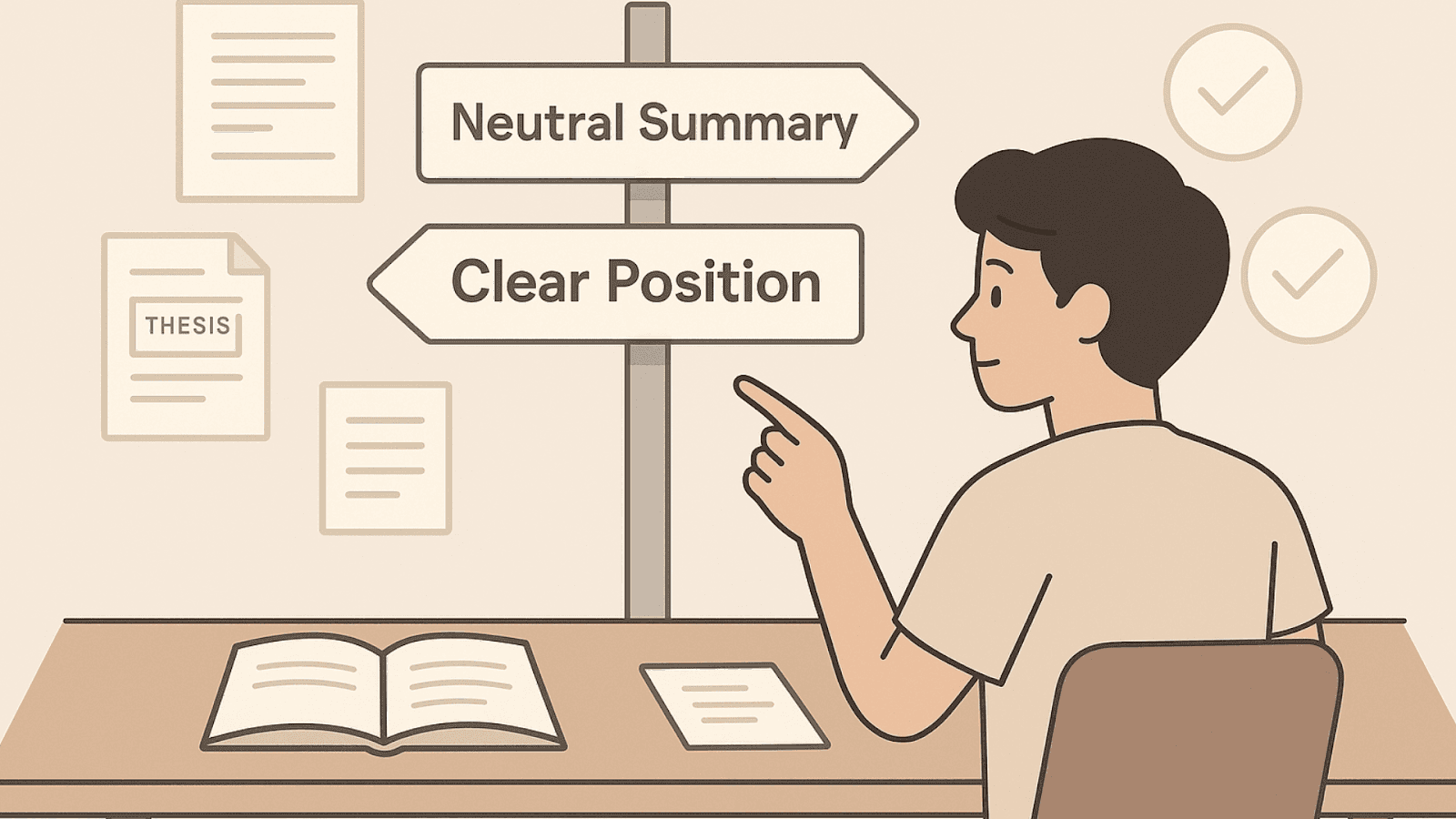
Ein Positionspapier zu verfassen bedeutet, zu einer Frage klar Stellung zu beziehen und diese mit Gründen und Belegen zu verteidigen. Das kann herausfordernd wirken, weil viele Studierende es gewohnt sind, Themen zu erklären, statt für eine Seite zu argumentieren. In einem Positionspapier zählt deine Meinung, aber nur, wenn sie durch Fakten und klare Logik gestützt wird.
Dieser Leitfaden unterteilt den Prozess in einfache, praktische Schritte. Du lernst, wie du deine Struktur planst, starke Argumente formulierst, Gegenargumente behandelst und mit Zuversicht überarbeitest. Alles ist in klarer Sprache geschrieben, damit du ein Positionspapier verfassen kannst, das fokussiert, überzeugend und leicht nachvollziehbar ist.
<CTA title="Eine starke Thesenformulierung erstellen" description="Erstelle in wenigen Minuten eine klare, vertretbare These und starte dein Positionspapier mit Zuversicht" buttonLabel="Jenni kostenlos testen" link="https://app.jenni.ai/register" />
Was ein Positionspapier ist
Ein Positionspapier ist eine Form des argumentativen Schreibens. Es vertritt eine klare Haltung zu einer strittigen Frage und stützt diese Haltung mit Gründen und Belegen. Das Hauptziel besteht darin, die Lesenden davon zu überzeugen, deine Position zu verstehen oder zu unterstützen.
In vielen akademischen Kontexten werden Positionspapiere auch verwendet, um zu bewerten, wie Studierende Ideen auf reale Situationen anwenden, etwa in diskussionsbasierten Kursen oder in Umgebungen des problemorientierten Lernens. In diesen Fällen zählt deine Meinung weiterhin, sie muss jedoch auf Logik und Belegen beruhen und nicht auf persönlichen Gefühlen.
Positionspapiere werden häufig verwendet in:
College- und Oberstufenklassen
politischen Diskussionen
Aufklärungs- und Sensibilisierungskampagnen
Model-UN-Konferenzen
Unabhängig vom Einsatzbereich bleibt der Zweck derselbe. Du musst klar und logisch argumentieren.
<ProTip title="✅ Profi-Tipp:" description="Wenn dein Aufsatz nicht klar zeigt, welche Seite du unterstützt, ist es kein Positionspapier." />
Wie sich ein Positionspapier von einer Forschungsarbeit unterscheidet
Viele Studierende verwechseln Positionspapiere mit Forschungsarbeiten. Beide verwenden Quellen, dienen aber unterschiedlichen Zwecken.
Eine Forschungsarbeit konzentriert sich auf die Erklärung eines Themas. Sie präsentiert Fakten, Studien und Erkenntnisse. Ein Positionspapier konzentriert sich auf Überzeugung. Es nutzt Fakten, um eine klare Behauptung zu stützen. Für eine stärker forschungsorientierte Version dieses Ansatzes sieh dir unseren Leitfaden für argumentative Forschungsarbeiten an.
Hier sind die wichtigsten Unterschiede:
Forschungsarbeiten erkunden; Positionspapiere argumentieren
Forschungsarbeiten können neutral bleiben; Positionspapiere nicht
Positionspapiere enthalten Erwiderungen auf Gegenpositionen
Positionspapiere schlagen oft Handlungen oder Veränderungen vor
Wenn du diesen Unterschied verstehst, vermeidest du einen Aufsatz, der eher wie eine Zusammenfassung als wie ein Argument wirkt.
Das richtige Thema wählen
Ein starkes Positionspapier beginnt mit dem richtigen Thema. Nicht jedes Thema eignet sich gut. Wenn es keinen echten Dissens gibt, gibt es nichts zu diskutieren.
Bevor du ein Thema auswählst, halte kurz inne und bewerte es.
Frage dich:
Gibt es unterschiedliche Meinungen zu diesem Thema?
Kann ich klar eine Seite vertreten?
Gibt es genügend verfügbare Belege?
Wenn die Antwort nein lautet, ändere oder verenge das Thema.
Warum strittige Themen wichtig sind
Strittige Themen laden zur Diskussion ein. Sie ermöglichen es dir, Gründe, Belege und Gegenargumente vorzubringen. Themen, die zu offensichtlich sind, führen zu schwachen Arbeiten.
Zum Beispiel:
Schwaches Thema: Bewegung ist gut für die Gesundheit
Besseres Thema: Schulen sollten täglichen Sportunterricht vorschreiben, um die Konzentration der Schülerinnen und Schüler zu verbessern
Das zweite Thema ermöglicht Diskussion und Belege.
Ein Thema für stärkere Argumente eingrenzen
Zu breite Themen sind schwer zu handhaben. Engere Themen machen deinen Aufsatz klarer und fokussierter.
Beispiele:
Zu breit: Klimawandel
Eingegrenzt: Regierungen sollten stärker in erneuerbare Energien investieren, um zukünftige wirtschaftliche Schäden zu verringern
Ein weiteres Beispiel:
Zu breit: Soziale Medien
Eingegrenzt: Schulen sollten die Handynutzung während des Unterrichts einschränken, um die Aufmerksamkeit zu verbessern
Engere Themen helfen dir, vage Behauptungen zu vermeiden.
<ProTip title="🧠 Profi-Tipp:" description="Wenn dein Thema viele Definitionen benötigt, ist es zu breit." />
Dein Publikum verstehen
Ein Positionspapier wird für eine Leserin oder einen Leser geschrieben. Zu wissen, wer diese Person ist, hilft dir zu entscheiden, wie du argumentierst.
Unterschiedliche Zielgruppen achten auf unterschiedliche Dinge.
Ein akademisches Publikum legt oft Wert auf:
klare Struktur
logisches Denken
glaubwürdige Quellen
faire Gegenargumente
Ein politisches oder aktivistisches Publikum achtet möglicherweise stärker auf:
praktische Ergebnisse
Kosten und Auswirkungen
Umsetzbarkeit von Lösungen
Bevor du schreibst, überlege, was deine Leserschaft überzeugen wird, nicht nur, was dich überzeugt.
Für ein Positionspapier recherchieren
Recherche verleiht deinem Argument Stärke. Ohne Belege klingt deine Position wie eine persönliche Meinung.
Konzentriere dich auf Quellen, die direkt mit deiner Behauptung zusammenhängen. Qualität ist wichtiger als Quantität.
Starke Quellen sind zum Beispiel:
von Fachkollegen begutachtete Artikel
Regierungsberichte
akademische Bücher
Experteninterviews
renommierte Organisationen
Ordne während der Recherche deine Ergebnisse.
Erstelle eine Rechercheliste mit:
wichtigen Fakten oder Statistiken
Expertenmeinungen
Beispielen aus der Praxis
gängigen Gegenpositionen
Diese Liste wird dein Schreiben leiten und Zeit sparen.
<ProTip title="📌 Profi-Tipp:" description="Verwende nur Quellen, die du gut genug verstehst, um sie in deinen eigenen Worten zu erklären." />
Eine starke Thesenformulierung schreiben
Die Thesenformulierung ist der wichtigste Teil deines Aufsatzes. Sie sagt der Leserschaft genau, was du glaubst.
Eine gute These ist:
klar
spezifisch
vertretenbar
fokussiert
Schwache Thesen sind vage oder neutral.
Schlechtes Beispiel:
Technologie beeinflusst Bildung.
Gutes Beispiel:
Hochschulen sollten eine Offenlegung der KI-Nutzung verlangen, weil dies Fairness, Lernen und akademische Integrität schützt.
Eine hilfreiche Formel ist:
[Akteur] sollte oder sollte nicht [Handlung], weil [Grund 1], [Grund 2] und [Grund 3].
Diese Struktur hält deine Position klar und direkt.
Die Struktur deines Positionspapiers planen
Bevor du mit dem Schreiben beginnst, brauchst du einen Plan. Eine klare Struktur hilft deinen Ideen, sich logisch zu entwickeln, und macht dein Argument leicht nachvollziehbar. Ohne Plan wirken Positionspapiere oft ungeordnet oder wiederholend. Wenn du lieber mit einer strukturierten Vorlage startest, kann ein KI-Generator für Aufsatzgliederungen dir helfen, Abschnitte und Stützpunkte zu ordnen.
Ein starkes Positionspapier folgt meist einer einfachen Struktur:
Einleitung
Hauptabsätze mit Argumenten
Gegenargumente und Erwiderung
Fazit
Jeder Teil hat eine klare Aufgabe. Die Einleitung erklärt das Thema und deine Position. Die Hauptabsätze verteidigen diese Position. Der Abschnitt zu Gegenargumenten zeigt, dass du die andere Seite verstehst. Das Fazit bekräftigt deine Position und erklärt, warum sie wichtig ist.
Die Planung hilft dir auch zu entscheiden, wie viel Platz jede Idee braucht. Wenn ein Argument schwach wirkt, kannst du es stärken oder vor dem Schreiben vollständiger Absätze entfernen. Das spart Zeit und verbessert die Klarheit.
<ProTip title="🧩 Profi-Tipp:" description="Eine kurze Gliederung kann spätere umfangreiche Überarbeitungen verhindern." />
Die Einleitung schreiben
Die Einleitung ist deine erste Gelegenheit, die Leserschaft zu führen. Sie sollte erklären, worum es bei dem Thema geht und warum es wichtig ist. Außerdem sollte sie deine Position deutlich machen.
Eine starke Einleitung hat meist drei Teile:
Einen Einstieg, der Aufmerksamkeit weckt
Kurzen Hintergrund oder Kontext
Eine klare Thesenformulierung
Der Einstieg muss nicht dramatisch sein. Er kann ein Fakt, eine kurze Situation oder eine einfache Aussage sein, die das Problem hervorhebt.
Erkläre nach dem Einstieg das Thema in einfachen Worten. Definiere bei Bedarf wichtige Begriffe. Füge noch keine ausführlichen Belege ein. Hebe dir das für den Hauptteil auf.
Beende die Einleitung mit deiner Thesenformulierung. Dieser Satz sagt der Leserschaft genau, was du glaubst, und setzt Erwartungen für den Rest des Aufsatzes.
<ProTip title="✍️ Profi-Tipp:" description="Wenn deine Leserschaft deine Position nach der Einleitung nicht erkennen kann, überarbeite deine These." />
Hauptabsätze mit Argumenten schreiben
Die Hauptabsätze sind das Herzstück deines Positionspapiers. Jeder Absatz sollte sich auf einen Grund konzentrieren, der deine These stützt. Vermeide es, mehrere Ideen im selben Absatz zu mischen.
Bevor du schreibst, entscheide, wie viele Argumente du brauchst. Die meisten starken Positionspapiere verwenden zwei oder drei Hauptargumente. Weniger starke Punkte sind besser als viele schwache.
Jeder Hauptabsatz sollte einem klaren Muster folgen:
Ein Themensatz, der das Argument benennt
Belege, die die Behauptung stützen
Erklärung der Belege
Ein Satz, der zur These zurückführt
Diese Struktur hilft der Leserschaft, deiner Logik Schritt für Schritt zu folgen. Außerdem hält sie dein Schreiben geordnet und fokussiert.
Starke Argumente entwickeln
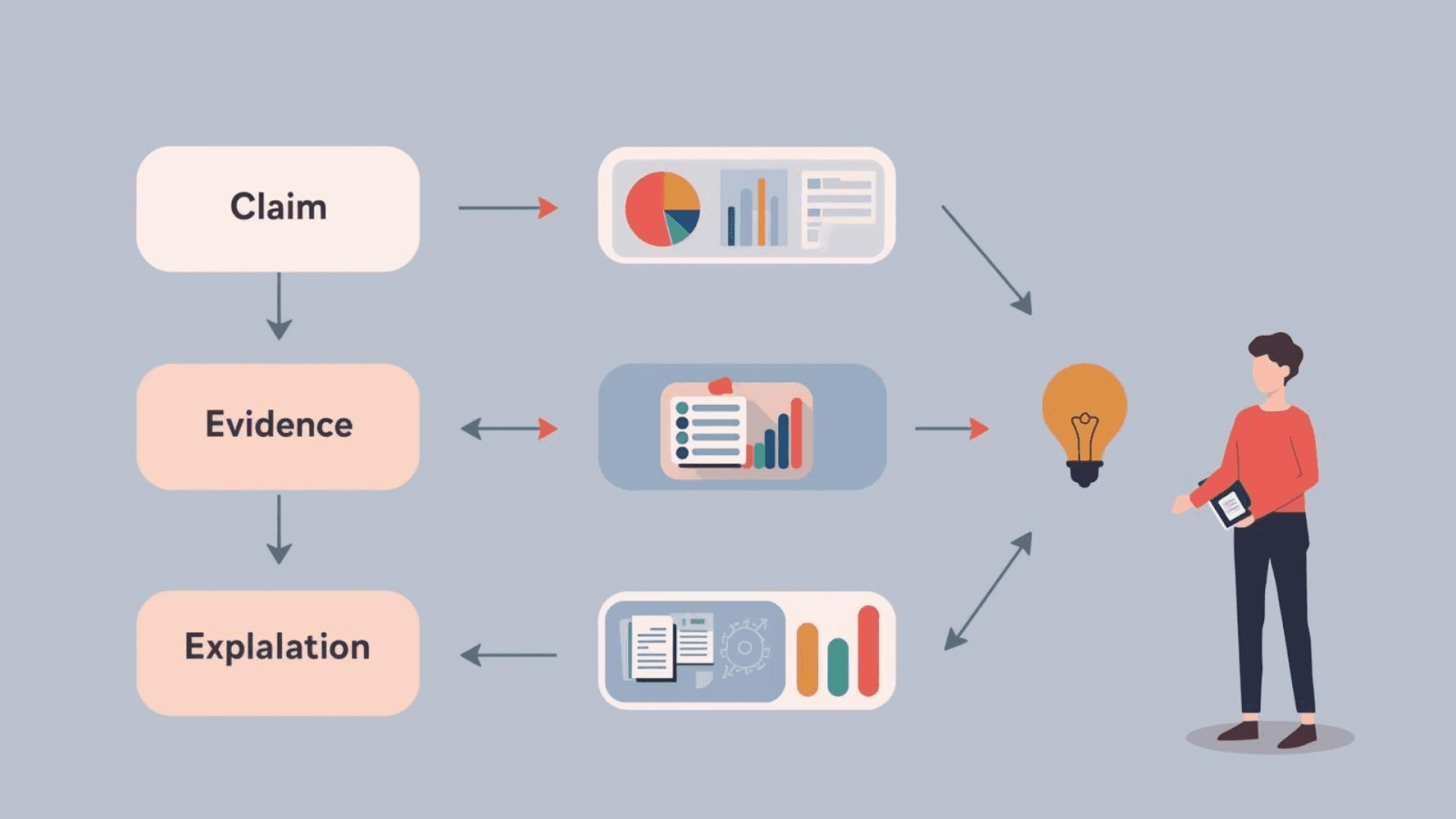
Starke Argumente erklären, warum Belege deine Position stützen. Gehe nicht davon aus, dass die Leserschaft die Verbindung selbst herstellt.
Eine nützliche Struktur ist:
Punkt → Beleg → Erklärung → Verbindung
Zum Beispiel:
Punkt: Die Offenlegung von KI verbessert die Fairness
Beleg: Die Nutzung versteckter Werkzeuge führt zu ungleicher Bewertung
Erklärung: Lehrkräfte können Leistung ohne Kontext nicht beurteilen
Verbindung: Transparenz unterstützt eine faire Bewertung
Wenn du dieses Muster wiederholst, bleibt dein Schreiben klar und logisch.
<ProTip title="🧩 Profi-Tipp:" description="Wenn ein Absatz keine Belege enthält, ist er eine Meinung und kein Argument." />
Verschiedene Arten von Belegen verwenden
Unterschiedliche Belege machen dein Argument überzeugender. Wenn du dich nur auf eine Belegart stützt, kann der Aufsatz flach oder voreingenommen wirken.
Verschiedene Belegarten haben unterschiedliche Funktionen:
Statistiken zeigen Ausmaß oder Wirkung
Expertenmeinungen erhöhen die Glaubwürdigkeit
Fallstudien zeigen Auswirkungen in der Praxis
Beispiele helfen der Leserschaft, abstrakte Ideen zu verstehen
Bevor du eine Belegliste einfügst, leite sie mit einer kurzen Erklärung ein. So versteht die Leserschaft, warum der Beleg wichtig ist.
Du könntest zum Beispiel erklären, dass Forschung deine Behauptung stützt, bevor du Statistiken oder Studien präsentierst. Folge Belegen immer mit einer Erklärung.
<ProTip title="📊 Profi-Tipp:" description="Belege sind nur dann wirkungsvoll, wenn du erklärst, was sie beweisen." />
Gegenargumente ansprechen
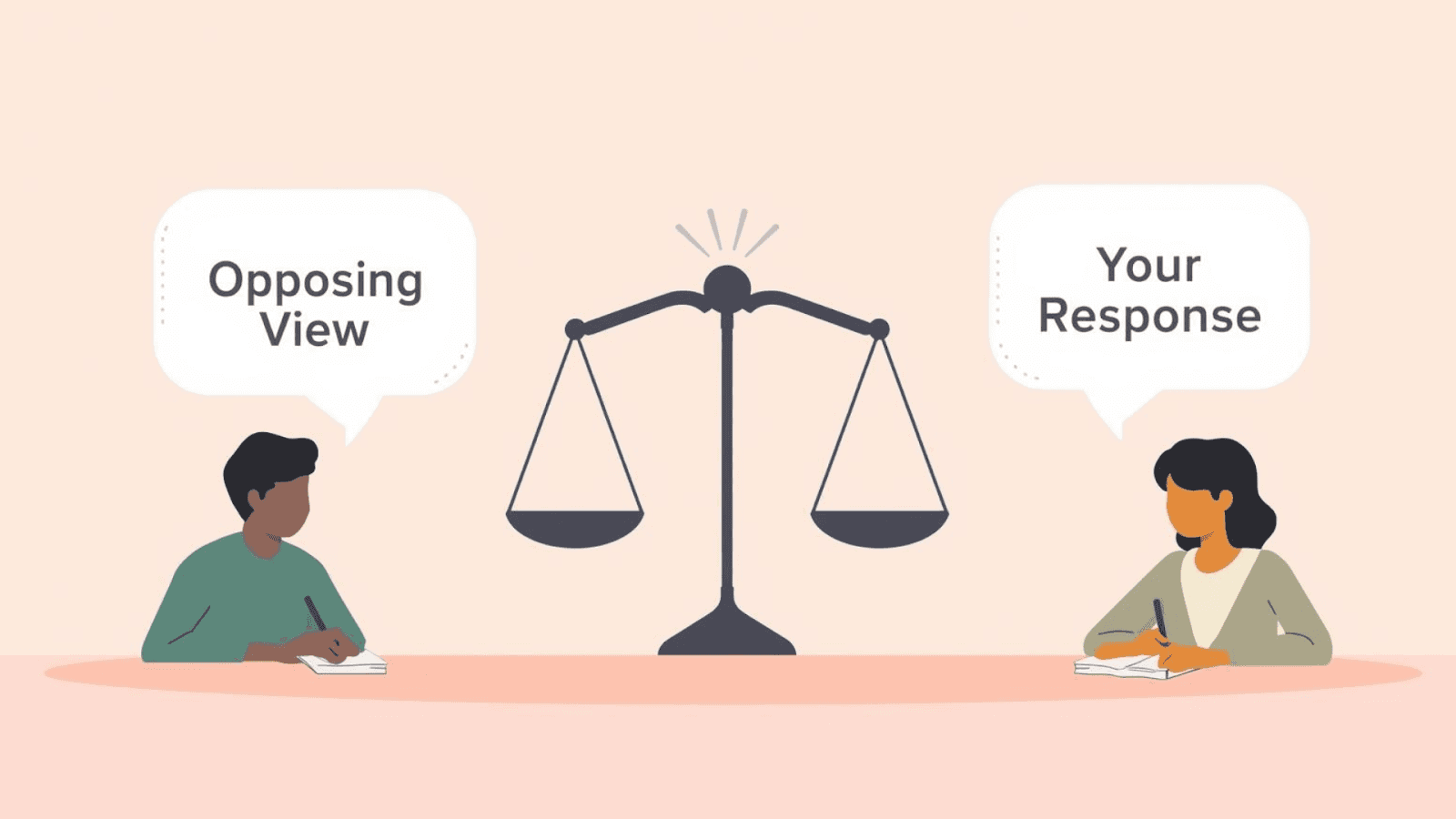
Gegenargumente sind ein wichtiger Teil eines starken Positionspapiers. Sie zeigen, dass du das Thema umfassend verstehst und andere Sichtweisen berücksichtigt hast. Ein Gegenargument gut zu behandeln zeigt außerdem kritisches Denken und stärkt deine Glaubwürdigkeit als Autorin oder Autor.
Bevor du diesen Abschnitt schreibst, denke an die stärksten Argumente gegen deine Position. Wähle keine schwache oder unrealistische Gegenposition. Wenn du echte Gegenansichten ansprichst, wird deine Haltung klarer und überzeugender.
Ein guter Abschnitt zu Gegenargumenten enthält:
eine faire Darstellung der Gegenposition
eine Erklärung, warum sie plausibel erscheint
eine klare Erwiderung mit Logik und Belegen
Beispiel:
Manche argumentieren, dass ein Verbot von KI-Tools Betrug verhindert. Das ergibt Sinn, weil sich Studierende zu stark auf Werkzeuge verlassen könnten. Verbote sind jedoch schwer durchzusetzen und scheitern oft. Klare Richtlinien und Offenlegungspflichten gehen besser gegen Missbrauch vor.
<ProTip title="⚖️ Profi-Tipp:" description="Respektvolle Erwiderungen schaffen Vertrauen bei der Leserschaft." />
Wo Gegenargumente platziert werden sollten
Gegenargumente kommen normalerweise nach deinen Hauptargumenten. So kannst du deine Position zunächst aufbauen, bevor du auf Gegenpositionen eingehst.
In kürzeren Aufsätzen können Gegenargumente in einem Absatz erscheinen. In längeren Aufsätzen können sie einen eigenen Abschnitt mit Überschrift haben.
Wenn du Gegenargumente später platzierst, bleibt der Aufsatz besser organisiert. Außerdem ist so sichergestellt, dass die Leserschaft deine Position versteht, bevor sie Gegenansichten sieht.
Ein starkes Fazit schreiben
Das Fazit rundet dein Argument ab. Es sollte deine Position bekräftigen und einen klaren Eindruck hinterlassen.
Ein starkes Fazit:
formuliert die These mit anderen Worten neu
fasst die wichtigsten Gründe zusammen
erklärt, warum das Thema wichtig ist
schlägt Maßnahmen oder nächste Schritte vor
Vermeide es, im Fazit neue Argumente hinzuzufügen.
Mögliche Maßnahmen sind:
Politikänderungen
weitere Forschung
praktische Lösungen
Aufklärungsmaßnahmen
Ein Positionspapier formatieren
Halte dich immer zuerst an die Vorgaben der Aufgabe. Dennoch haben viele Positionspapiere gemeinsame Formatierungsregeln.
Typische Richtlinien sind:
Schriftgröße 12 Punkt
Times New Roman oder Arial
Ränder von 2,54 cm
einfacher oder doppelter Zeilenabstand
klarer Titel
einheitliche Zitationen
Formatierungsfehler können leichte Punkte kosten, also prüfe alles noch einmal.
Grundlagen der Zitation
Zitationen zeigen, woher deine Informationen stammen, und schützen dich vor Plagiaten. Verwende den Zitierstil, der für deine Aufgabe vorgeschrieben ist..
Achte auf Konsistenz bei:
Textzitaten
Literaturverzeichnissen
Formatierungsstil
Zitiere Quellen, wenn du:
Statistiken verwendest
auf Forschungsergebnisse verweist
Expertinnen oder Experten zitierst
nicht allgemein bekanntes Wissen präsentierst
Sei bei Textzitaten und Literaturverzeichnissen konsequent.
<ProTip title="📝 Profi-Tipp:" description="Wenn du unsicher bist, ob du etwas zitieren sollst, zitiere es." />
Dein Positionspapier überarbeiten
Überarbeitung verbessert Klarheit und Stärke. Reiche deinen ersten Entwurf nicht ein, ohne ihn zu überprüfen.
Achte bei der Überarbeitung auf:
Ist die These klar?
Stützen alle Absätze die These?
Werden Belege erklärt?
Sind Gegenargumente fair dargestellt?
Ist der Ton respektvoll und akademisch?
Wenn du deinen Aufsatz laut vorliest, kannst du verwirrende Sätze leichter erkennen.
<ProTip title="🔍 Profi-Tipp:" description="Kurze Sätze verbessern Lesbarkeit und Klarheit." />
Häufige Fehler, die du vermeiden solltest
Wenn du die häufigsten Fehler kennst, kannst du sie vermeiden.
Achte auf:
vage Thesenformulierungen
emotionale Sprache ohne Belege
das Ignorieren gegenteiliger Ansichten
die Wiederholung derselben Idee
schwache Fazits
Wenn du diese Fehler vermeidest, wird dein Aufsatz stärker.
Akademische vs. Model-UN-Positionspapiere
Akademische Positionspapiere konzentrieren sich auf dein Argument und deine Begründung, während Model-UN-Papiere darauf ausgerichtet sind, die offizielle Haltung eines Landes zu vertreten. Beide Formate erfordern Klarheit, Struktur und gut gestützte Behauptungen, aber ihre Ziele unterscheiden sich.
Akademische Arbeiten betonen:
kritisches Denken
evidenzbasierte Argumente
klare Erwiderungen
Model-UN-Papiere betonen:
den Hintergrund des Landes
die Geschichte der Politik
realistische Lösungen
Befolge immer die konkreten Anweisungen deiner Lehrkraft oder deines Komitees.
Abschließende Checkliste vor der Abgabe
Bevor du abgibst, überprüfe deinen Aufsatz sorgfältig.
Stelle sicher, dass:
die These klar und vertretbar ist
jeder Absatz die These unterstützt
Belege erklärt werden
Gegenargumente behandelt werden
das Format den Vorgaben entspricht
die Zitationen einheitlich sind
Diese letzte Kontrolle kann deine Note verbessern.
Mit Zuversicht ein starkes Positionspapier schreiben
Ein starkes Positionspapier zu schreiben beginnt mit einer klaren Haltung und endet mit einer klaren Begründung. Wenn du ein strittiges Thema wählst, fokussierte Argumente aufbaust und fair auf Gegenargumente reagierst, wird deine Position schwer zu ignorieren sein. Struktur und Belege verwandeln Meinungen in überzeugendes akademisches Schreiben.
<CTA title="Dein Positionspapier schneller planen" description="Verwandle deine Position in wenigen Minuten in eine klare Gliederung mit starken Argumenten und Gegenargumenten" buttonLabel="Jenni kostenlos testen" link="https://app.jenni.ai/register" />
Wenn du Hilfe beim Formulieren deiner These, beim Ordnen von Argumenten oder beim Verfeinern der Klarheit möchtest, kann Jenni dich Schritt für Schritt begleiten. Beginne mit deiner Idee, baue dein Positionspapier mit Struktur auf und schreibe mit Zuversicht.