Durch
Justin Wong
—
Wie man ein klares und effektives Abstract für Ihre Forschungsarbeit schreibt

Justin Wong
Leiter des Wachstums
Abgeschlossen mit einem Bachelor in Global Business & Digital Arts, Nebenfach in Unternehmertum

Ein Forschungsabstract ist das kleine Tor zu Ihrer Arbeit. Es prägt den ersten Eindruck, zeigt, worum es in Ihrer Studie geht, und hilft den Lesern zu entscheiden, ob sie weiterlesen möchten. Da viele Menschen lange Papierlisten nur überfliegen, kann ein klares Abstract Ihre Arbeit schnell hervorheben.
Dieser Leitfaden führt Sie auf einfache und praktische Weise durch das Schreiben eines Abstracts für eine Forschungsarbeit. Für einen umfassenderen Blick darauf, wie das Abstract in das gesamte Manuskript passt, sehen Sie sich unsere Übersicht über Zweck und Struktur wissenschaftlicher Arbeiten an. Sie erfahren, was enthalten sein sollte, wie jeder Teil aufgebaut wird und wie Sie klar und präzise schreiben. Außerdem sehen Sie Beispiele und häufige Fehler, damit Sie ein funktionierendes Abstract verfassen können.
<CTA title="Klaren Abstract schnell schreiben" description="Erstellen Sie in wenigen Minuten ein starkes, publikationsreifes Abstract" buttonLabel="Jenni kostenlos testen" link="https://app.jenni.ai/register" />
Was ist ein Abstract?
Ein Abstract ist eine Zusammenfassung einer Forschungsarbeit. Die meisten Zeitschriften verlangen 150–250 Wörter. Es enthält die wichtigsten Teile der Studie: das Thema, den Zweck, die Methoden, die Ergebnisse und die abschließenden Implikationen. Ziel ist es, den Lesern einen schnellen Überblick über die Arbeit zu geben, ohne den vollständigen Text lesen zu müssen.
Ein gutes Abstract beantwortet fünf Kernfragen:
Was ist das Thema?
Warum ist dieses Thema wichtig?
Wie wurde die Studie durchgeführt?
Was hat die Forschung ergeben?
Warum sind diese Ergebnisse wichtig?
Ein gut geschriebenes Abstract ist eigenständig verständlich. Die Leser sollten das Wesentliche der Studie verstehen, auch wenn sie den Rest Ihrer Arbeit nie lesen.
<ProTip title="💡 Pro-Tipp:" description="Schreiben Sie Ihr Abstract in einfacher Sprache, damit jeder Leser Ihre wichtigsten Punkte schnell verstehen kann." />
Warum Abstracts wichtig sind
Abstracts sind für die wissenschaftliche Sichtbarkeit unverzichtbar. Suchmaschinen, Forschungsdatenbanken, Bibliothekare, Studierende und Wissenschaftler verlassen sich auf Abstracts, um zu entscheiden, was sie als Nächstes lesen. Zeitschriften nutzen Abstracts oft, um zu prüfen, ob die Studie zu ihrem Themenbereich passt. Sogar automatisierte Systeme verwenden Abstracts, um Forschung zu sortieren und zu kategorisieren.
Ein starkes Abstract hilft Ihrer Arbeit auf verschiedene Weise:
Es erhöht die Auffindbarkeit in Forschungsdatenbanken.
Es hilft Gutachtern, Ihre Studie schnell zu verstehen.
Es bietet anderen Forschern eine verlässliche Zusammenfassung zum Zitieren.
Es prägt den ersten Eindruck Ihrer wissenschaftlichen Schreibweise.
Ein schwaches Abstract verbirgt den Wert der Studie. Es verwirrt Leser, verringert das Engagement und senkt oft die Chance auf Annahme im Peer-Review-Verfahren. Klare Formulierungen sind entscheidend, wenn man lernt wie man ein Abstract strukturiert, denn Leser verlassen sich auf schnelle, präzise Zusammenfassungen, um zu entscheiden, ob sich die vollständige Arbeit lohnt.
Standardstruktur eines Abstracts
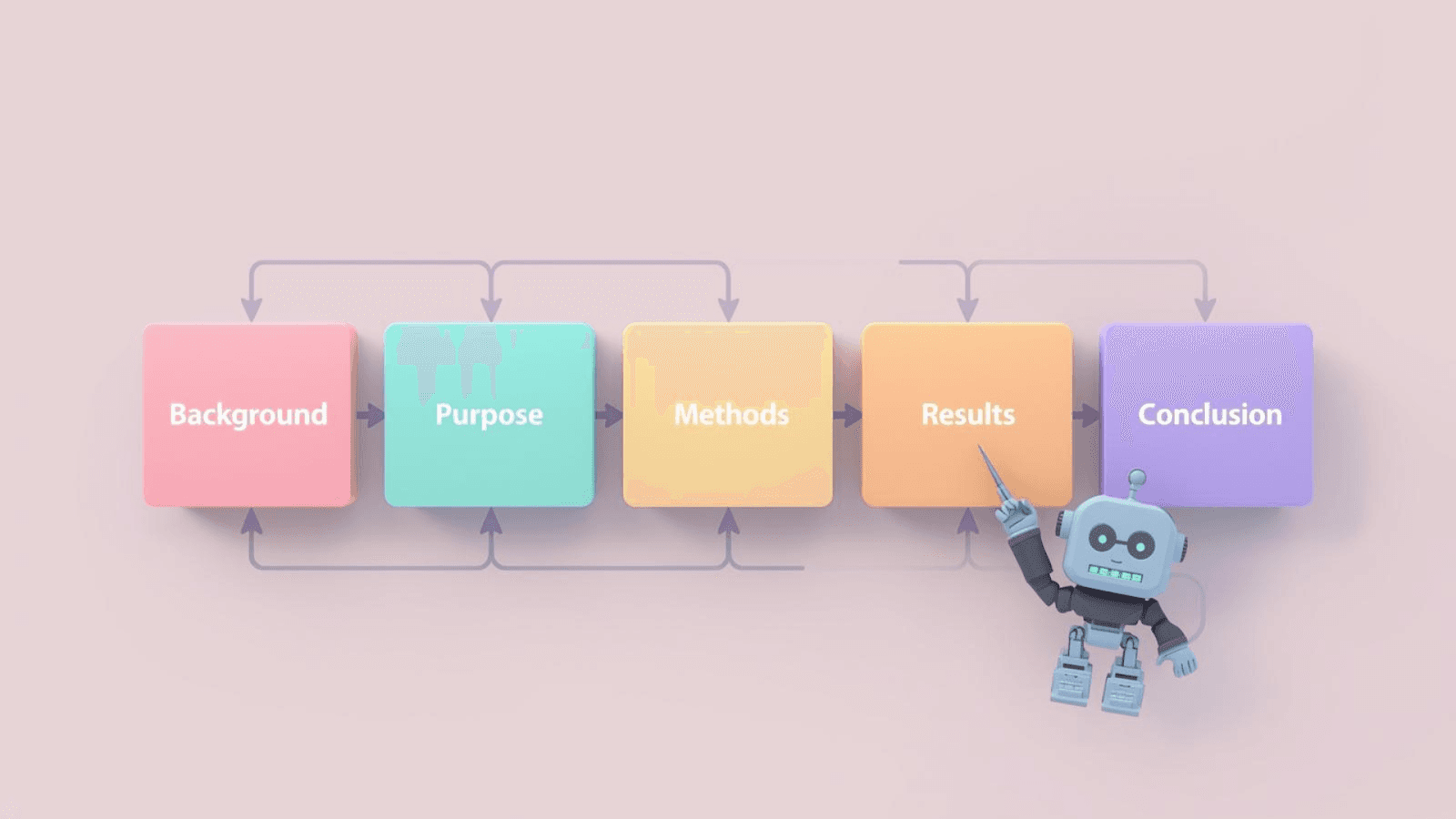
Ein Forschungsabstract folgt einem einfachen Muster. Diese Struktur fördert Klarheit und macht Ihren Text leichter lesbar.
Hintergrund oder Kontext
Führen Sie das Thema in ein oder zwei Sätzen ein. Erklären Sie, warum es wichtig ist oder welche Forschungslücke besteht.
Zweck oder Zielsetzung
Nennen Sie das Hauptziel. Was wollte Ihre Studie untersuchen oder testen?
Methoden
Fassen Sie zusammen, wie die Studie durchgeführt wurde. Nennen Sie das Design, die Stichprobengröße, die Werkzeuge oder die Analysemethode. Halten Sie dies kurz und sachlich.
Ergebnisse
Nennen Sie die wichtigsten Ergebnisse. Fügen Sie nach Möglichkeit konkrete Zahlen oder messbare Resultate hinzu.
Schlussfolgerung oder Implikationen
Erklären Sie die Bedeutung Ihrer Ergebnisse. Sagen Sie den Lesern, warum die Resultate wichtig sind, was sie beitragen oder welche nächsten Schritte möglich wären.
<ProTip title="💡 Erinnerung:" description="Halten Sie jeden Abschnitt auf 1 2 Sätze. Abstracts sind Zusammenfassungen, keine langen Erklärungen." />
Beispiel für einen einfachen Abstract-Ablauf
So sieht die Struktur in der Praxis aus:
Kontext
„Digitale Lernwerkzeuge werden immer häufiger eingesetzt, aber vielen Studierenden fällt es schwer, engagiert zu bleiben.“
Zweck
„Diese Studie untersuchte, ob interaktive Quizfragen das Engagement verbessern.“
Methoden
„Eine Gruppe von 120 Studierenden nutzte sechs Wochen lang eine Plattform mit Quizfunktion.“
Ergebnisse
„Das Engagement stieg im Vergleich zur Kontrollgruppe um 32 Prozent.“
Schlussfolgerung
„Interaktive Quizfragen helfen, die Konzentration zu steigern, und können bessere Lernergebnisse unterstützen.“
Dieses kurze Beispiel zeigt, wie jedes Element zusammenwirkt, um eine klare und schnelle Zusammenfassung zu bieten.
Wie man ein Abstract für eine Forschungsarbeit schreibt: Schritt für Schritt

Befolgen Sie diese Schritte, um den gesamten Prozess mühelos zu durchlaufen.
Schritt 1: Schreiben Sie das Abstract nach dem Fertigstellen der Arbeit
Schreiben Sie Ihr Abstract zuletzt. So stellen Sie sicher, dass jedes Detail korrekt ist. Wenn Sie es zu früh schreiben, stimmt die Zusammenfassung möglicherweise nicht mit der endgültigen Version Ihrer Studie überein.
Schritt 2: Identifizieren Sie das Forschungsproblem
Schreiben Sie einen kurzen Satz, der das Problem oder die Forschungslücke erklärt. Das gibt den Lesern den nötigen Kontext. Bleiben Sie spezifisch und vermeiden Sie allgemeine Aussagen.
Schritt 3: Formulieren Sie das Ziel
Fügen Sie einen Satz hinzu, der erklärt, was Sie herausfinden wollten. Das ist meist Ihre Forschungsfrage oder Hypothese.
Schritt 4: Fassen Sie Ihre Methoden zusammen
Nennen Sie die wichtigsten Teile Ihrer Methode:
Studiendesign
Teilnehmende oder Stichprobe
Werkzeuge oder Instrumente
Methode der Datenerhebung
Dauer der Studie
Dieser Abschnitt sollte kurz, aber klar sein.
Schritt 5: Stellen Sie die wichtigsten Ergebnisse dar
Das ist das Herzstück des Abstracts. Wenn Ihre Studie Zahlen oder messbare Ergebnisse enthält, fügen Sie diese hinzu. Leser wollen Fakten, keine vagen Aussagen.
Schritt 6: Erklären Sie die Schlussfolgerung
Schließen Sie mit der Bedeutung Ihrer Ergebnisse ab. Halten Sie dies knapp. Sagen Sie den Lesern, warum Ihre Ergebnisse für das größere Fachgebiet wichtig sind.
Schritt 7: Kürzen Sie auf das Wesentliche
Entfernen Sie Füllwörter, Fachjargon, lange Formulierungen und wiederholte Gedanken. Abstracts müssen präzise und sauber sein. Wenn Sie Schwierigkeiten haben, einen langen Entwurf zu kürzen, kann ein KI-Zusammenfasser Ihnen helfen zu erkennen, was bleiben sollte und was entfernt werden kann (prüfen Sie anschließend alles anhand der vollständigen Arbeit).
Schritt 8: Befolgen Sie die Richtlinien der Zeitschrift
Überprüfen Sie immer die Einreichungsregeln. Zeitschriften legen oft Folgendes fest:
Wortanzahl
Formatierung
Schlüsselwortanforderungen
Tempus
Struktur
Ob das Abstract strukturiert oder unstrukturiert sein sollte
Wenn Sie diese Regeln einhalten, erhöht sich Ihre Chance auf Annahme.
Arten von Abstracts
Es gibt zwei Hauptarten von Abstracts, die in der akademischen Forschung verwendet werden. Wenn Sie den Unterschied kennen, können Sie das beste Format für Ihr Fach wählen.
Deskriptives Abstract
Ein deskriptives Abstract ist kurz, meist unter 150 Wörtern. Es beschreibt den Zweck und den Umfang der Studie, präsentiert jedoch keine detaillierten Ergebnisse.
Beispiel:
„Diese Arbeit untersucht die Auswirkungen von Lesegewohnheiten auf die Wortschatzentwicklung und überprüft bestehende Theorien.“
Verwenden Sie diesen Typ, wenn Ihre Studie theoretisch, konzeptionell oder explorativ ist.
Informatives Abstract
Dies ist der häufigste Typ. Er folgt der vollständigen Struktur:
Hintergrund
Zweck
Methoden
Ergebnisse
Schlussfolgerung
Verwenden Sie dieses Format für Originalforschung, Experimente oder Studien mit Daten.
<ProTip title="💡 Pro-Tipp:" description="Wenn Ihre Studie Daten oder messbare Ergebnisse enthält, wählen Sie immer ein informatives Abstract." />
Schlüsselwörter für Ihr Abstract auswählen
Die meisten Zeitschriften verlangen 3–5 Schlüsselwörter. Diese helfen dabei, Ihre Studie in Datenbanken wie Google Scholar, ResearchGate, PubMed und Scopus zu indexieren. Die Auswahl starker Schlüsselwörter ist Teil des effektiven Schreibens von Abstracts, insbesondere wenn Leser nach Themen suchen und auf eine präzise Indexierung angewiesen sind.
Starke Schlüsselwörter sollten:
zum Hauptthema passen
Ihr Fachgebiet widerspiegeln
mit Begriffen in Ihrem Titel übereinstimmen
generische Sprache vermeiden
Beispiele für wirksame Schlüsselwortwahl sind:
Abstract einer Forschungsarbeit
Struktur eines akademischen Abstracts
quantitative Ergebnisse
Studiendesign
Forschungsziel
Vermeiden Sie vage Wörter wie „Ergebnisse“, „Studie“ oder „Analyse“.
Beispiele für gute und schlechte Abstracts
Schlechtes Abstract-Beispiel
„Diese Studie betrachtet die Nutzung sozialer Medien. Sie erörtert, wie Studierende Plattformen verwenden. Die Ergebnisse zeigen Unterschiede im Verhalten.“
Probleme:
Kein klares Problem
Keine Methoden
Keine Stichprobengröße
Keine spezifischen Ergebnisse
Keine Schlussfolgerung
Gutes Abstract-Beispiel
„Der Einfluss sozialer Medien auf die akademische Leistung ist weiterhin unklar. Diese Studie untersuchte, wie die tägliche Nutzung die Noten von 240 Universitätsstudierenden beeinflusst. Mithilfe einer Umfrage und einer GPA-Analyse zeigen die Ergebnisse, dass Studierende, die soziale Medien mehr als drei Stunden pro Tag nutzten, eine um 12 Prozent niedrigere Leistung hatten. Diese Ergebnisse deuten darauf hin, dass eine geringere Nutzungszeit bessere akademische Resultate unterstützen könnte.“
Warum es funktioniert:
Klare Thematik
Strukturierte Gliederung
Konkrete Daten
Starke Implikation
Häufige Fehler, die Sie vermeiden sollten
Hier sind Stolperfallen, die Abstracts schwächen:
1. Neue Informationen hinzufügen
Das Abstract sollte die Arbeit zusammenfassen und keine neuen Konzepte einführen.
2. Zu vage sein
Vermeiden Sie unklare Aussagen wie „wichtige Ergebnisse wurden gefunden“. Seien Sie immer spezifisch.
3. Zu viele Hintergrunddetails
Ein Abstract ist keine vollständige Einleitung. Halten Sie den Kontext kurz.
4. Fachjargon verwenden
Wenn ein Leser Ihr Abstract nicht versteht, wird er die gesamte Arbeit überspringen.
5. Die Wortgrenze überschreiten
Wenn Sie das Limit überschreiten, kann dies zur Ablehnung führen.
6. Ergebnisse weglassen
Die Ergebnisse sind zentral. Lassen Sie sie nicht weg.
<ProTip title="💡 Erinnerung:" description="Ein vollständiges Abstract beantwortet warum, wie, was und was das bedeutet." />
Schreibtipps für klare Abstracts
Aktive Sprache verwenden
Aktive Verben helfen Lesern, Ihre Ideen schneller zu verstehen. Beispiele:
untersuchen
analysieren
messen
vergleichen
aufzeigen
Einfache Sprache verwenden
Kurze Sätze fördern Klarheit und verbessern die Lesbarkeit. Die meisten Abstracts sollten ein Leselevel von etwa Klasse 5–7 erreichen. Wenn Sie Formulierungen straffen müssen, ohne die Bedeutung zu verändern, kann ein KI-Paraphrasierungswerkzeug helfen — prüfen Sie anschließend die Ausgabe auf Genauigkeit.
Vergangenheit für Methoden verwenden
Methoden beschreiben abgeschlossene Handlungen.
Gegenwart für Ergebnisse verwenden
Die Ergebnisse bleiben auch nach Abschluss der Studie gültig.
Zitate vermeiden
Abstracts sollten für sich allein stehen. Zitieren Sie keine anderen Autoren.
Strukturierte vs. unstrukturierte Abstracts
Einige Zeitschriften verlangen strukturierte Abstracts mit Überschriften. Diese sind üblich in:
Medizin
Psychologie
Ingenieurwesen
technischen Fachgebieten
Beispiele für strukturierte Überschriften:
Hintergrund
Methoden
Ergebnisse
Schlussfolgerung
Schlüsselwörter
Unstrukturierte Abstracts bestehen aus einem einzigen Absatz ohne Überschriften. Diese sind in den Geistes- und Sozialwissenschaften häufig.
Wann strukturierte Abstracts verwendet werden sollten
Sie sollten eines verwenden, wenn:
die Zeitschrift es verlangt
Ihre Studie mehrere komplexe Teile hat
Sie wissenschaftliche, klinische oder technische Daten berichten
<ProTip title="💡 Hinweis:" description="Passen Sie den exakten Überschriftenstil der Zeitschrift an, um eine Ablehnung am Schreibtisch zu vermeiden." />
Erweiterte Tipps für starke akademische Abstracts
Konzentrieren Sie sich auf eine Kernbotschaft
Ihr Abstract sollte eine klare Idee vermitteln, die Leser sofort erfassen können. Halten Sie den Fokus eng, damit der Hauptpunkt nicht verloren geht. Eine direkte Botschaft hilft Lesern zu verstehen, was Ihre Studie beiträgt, ohne sich durch zusätzliche Details zu arbeiten.
Zahlen einbeziehen
Quantitative Details erhöhen die Glaubwürdigkeit. Das ist besonders wichtig, wenn Ihre Zusammenfassung klare Forschungsergebnisse widerspiegeln soll, denn Leser vertrauen Abstracts, die messbare Ergebnisse statt vager Behauptungen präsentieren.
Klare Übergänge verwenden
Ihr Abstract sollte eine klare Idee vermitteln, die Leser sofort erfassen können. Halten Sie den Fokus eng, damit der Hauptpunkt nicht verloren geht. Eine direkte Botschaft hilft Lesern zu verstehen, was Ihre Studie beiträgt, ohne sich durch zusätzliche Details zu arbeiten.
Übertreibungen vermeiden
Bleiben Sie ehrlich darüber, was Ihre Studie beweisen kann und was nicht. Vermeiden Sie große Behauptungen, die Ihre Daten nicht vollständig stützen. Wenn Sie Ihre Aussagen an Belegen ausrichten, wirkt Ihr Abstract glaubwürdiger und professioneller.
Priorisieren Sie Ihre wichtigste Erkenntnis
Sie müssen nicht jedes Ergebnis aufnehmen. Heben Sie die Erkenntnis hervor, die für Ihre Forschungsfrage am wichtigsten ist. Leser sollten den zentralen Befund erkennen können, ohne sich in kleinen oder weniger wichtigen Details zu verlieren.
Eigenständige Lesbarkeit sicherstellen
Ein starkes Abstract sollte verständlich sein, auch wenn jemand die vollständige Arbeit nie liest. Halten Sie die Zusammenfassung vollständig genug, um für sich allein zu stehen. So können Leser Ihre Arbeit schnell verstehen und entscheiden, ob sie die gesamte Studie genauer ansehen möchten.
Abstract-Checkliste
Nutzen Sie diese Checkliste, bevor Sie Ihr Abstract einreichen.
Inhalts-Checkliste
Achten Sie auf Folgendes:
Hintergrund ist klar
Zweck ist genannt
Methoden sind zusammengefasst
Hauptergebnis ist enthalten
Schlussfolgerung erklärt die Bedeutung
Schlüsselwörter sind korrekt
Qualitäts-Checkliste
Notieren Sie:
150–250 Wörter
Kein Fachjargon
Aktive Sprache
Konsistente Zeiten
Keine Zitate
Leicht zu lesen
Einen klaren Abstract einer Forschungsarbeit schreiben
Ein starkes Abstract prägt, wie Leser Ihre Studie verstehen. Indem Sie sich auf klaren Kontext, das Forschungsziel, die wichtigsten Methoden und die zentralen Ergebnisse konzentrieren, können Sie ein Abstract für eine Forschungsarbeit schreiben, das hervorsticht und eine solide Zusammenfassung Ihrer Arbeit bietet. Wenn diese Bestandteile zusammenwirken, wird Ihre Arbeit leichter gefunden, gelesen und zitiert.
<CTA title="Bessere Abstracts mit Jenni schreiben" description="Verwandeln Sie Ihre Forschungsnotizen in wenigen Minuten in ein klares, starkes Abstract" buttonLabel="Jenni kostenlos testen" link="https://app.jenni.ai/register" />
Wenn Sie schnellere und klarere Schreibhilfe möchten, kann Jenni Ihnen helfen, grobe Notizen in wenigen Minuten in ein ausgefeiltes Abstract zu verwandeln.