Por
Nathan Auyeung
—
O TCC (Trabalho de Conclusão de Curso) é geralmente a última grande atividade da graduação. Ele reúne tudo o que você aprendeu em um único projeto.

Nathan Auyeung
Contabilista Sênior na EY
Formado com um Bacharelado em Contabilidade, completou um Diploma de Pós-Graduação em Contabilidade
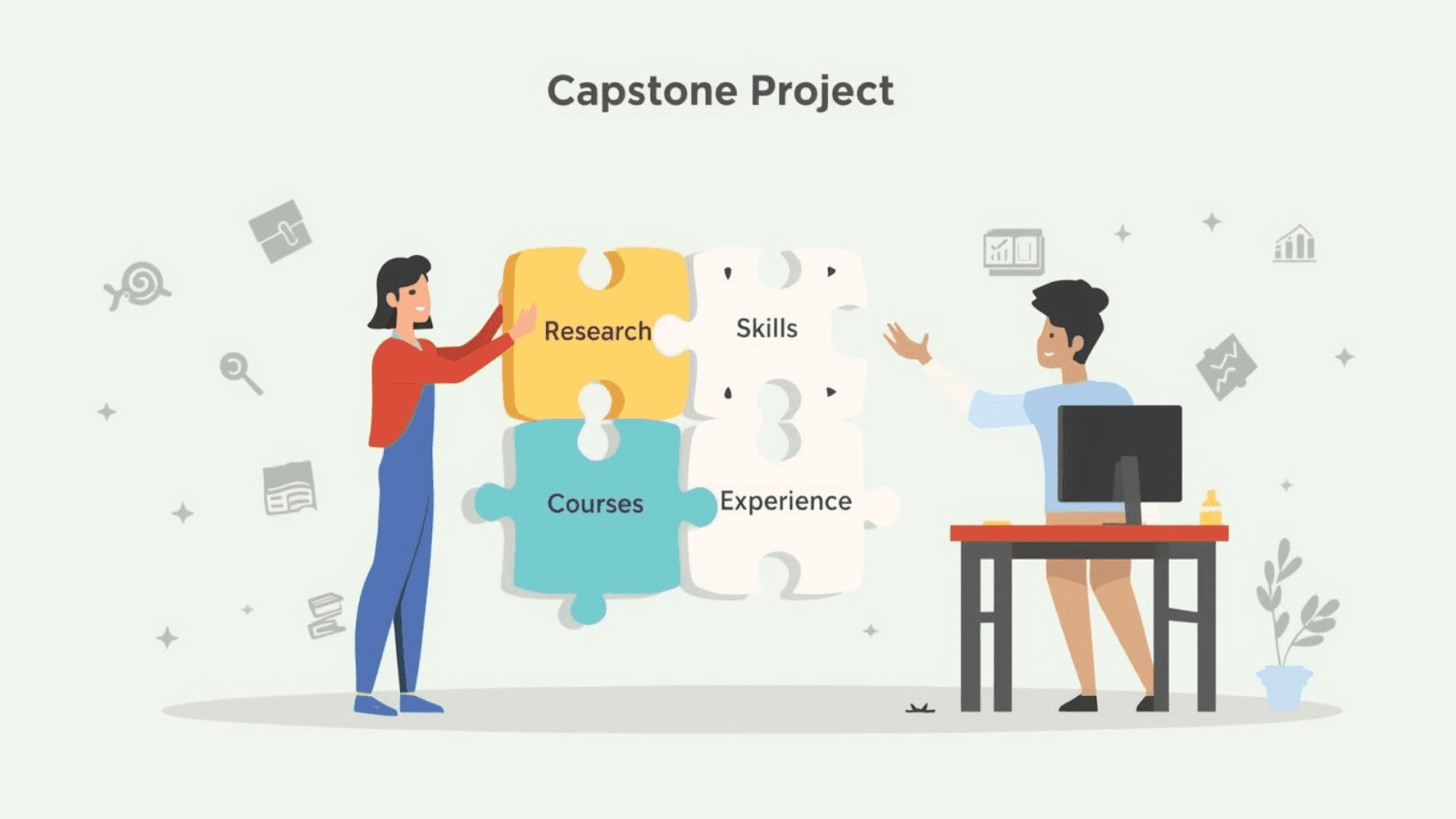
Um projeto de conclusão é geralmente a principal tarefa final em um curso de graduação. Ele aparece perto do fim dos seus estudos e reúne tudo o que você aprendeu em um único projeto focado. Em vez de provas ou trabalhos curtos, você trabalha em uma tarefa maior ao longo do tempo para mostrar o quão bem consegue aplicar ideias e habilidades em situações reais ou realistas.
Este guia explica o que é um projeto de conclusão, por que as escolas o exigem e como o processo funciona. Ele divide o projeto em etapas claras, aborda formatos comuns e compartilha dicas práticas para ajudar você a concluir seu trabalho com confiança e menos estresse.
<CTA title="Construa uma Declaração de Problema Forte" description="Gere uma declaração precisa, pronta para publicação, em minutos, sem estresse e sem enrolação." buttonLabel="Experimente Jenni Grátis" link="https://app.jenni.ai/register" />
O Que é um TCC
Um projeto de conclusão é um projeto final que reúne o conhecimento e as habilidades que você adquiriu durante o curso. Ele foi criado para testar o quão bem você consegue aplicar o aprendizado.
Não se trata apenas de memorizar informações. Muitos programas usam esse projeto para levar os alunos da teoria em sala de aula para teoria à prática, refletindo tarefas profissionais reais.
A maioria dos projetos de conclusão foca em um problema real ou realista relacionado à sua área de estudo. Você pode pesquisá-lo, criar uma solução ou trabalhar diretamente com pessoas ou organizações para aplicar o que aprendeu.
Projetos de conclusão aparecem em muitos programas, como:
Cursos de graduação
Cursos de pós-graduação
Programas profissionais como administração, enfermagem, educação e engenharia
Alguns projetos de conclusão são feitos individualmente. Outros são trabalhos em grupo. Ambos os formatos têm como objetivo testar sua capacidade de pensar, planejar e concluir trabalhos complexos.
Em termos simples, um projeto de conclusão responde a esta pergunta:
Você consegue usar o que aprendeu para resolver um problema significativo?
Por que os projetos de conclusão são importantes
Os projetos de conclusão existem porque mostram o aprendizado de forma mais profunda. Provas e questionários medem apenas a memória de curto prazo. Um projeto de conclusão mostra compreensão de longo prazo.
As escolas usam projetos de conclusão para:
Medir os resultados gerais de aprendizagem
Ver como os alunos conectam ideias entre disciplinas
Preparar os alunos para a carreira ou para estudos posteriores
Para os alunos, os projetos de conclusão constroem confiança. Eles mostram que você consegue lidar com tarefas complexas e concluir projetos longos.
<ProTip title="💡 Dica profissional:" description="Seu projeto de conclusão muitas vezes reflete todo o seu curso. Trate-o como um resumo da sua trajetória acadêmica." />
Como um Projeto de Conclusão é Diferente de Outras Tarefas
Um projeto de conclusão não é o mesmo que um trabalho final de disciplina ou uma prova final. Ele também é diferente de uma tese, embora possam parecer semelhantes.
Aqui estão as principais diferenças:
Um projeto de conclusão abrange várias disciplinas, não apenas uma
Ele dura meses, não semanas
Ele se concentra em fazer e aplicar, não em memorizar
Geralmente termina com uma apresentação ou defesa
Um trabalho final de disciplina normalmente avalia um único tema de uma única matéria.
Uma tese se concentra em pesquisa acadêmica aprofundada.
Um projeto de conclusão foca em aplicar o aprendizado em situações reais.
Por causa disso, os projetos de conclusão às vezes são chamados de:
Projetos do último ano
Projetos de culminância
Projetos de aprendizagem experiencial
O Objetivo Principal de um Projeto de Conclusão
Os projetos de conclusão são construídos em torno de objetivos claros que apoiam a aprendizagem dos alunos.
Mostrar compreensão completa
Um projeto de conclusão mostra que você entende as ideias principais da sua área. Mais importante ainda, mostra que você consegue usar essas ideias da maneira certa.
Conectar a escola à vida real
Em muitas disciplinas, você aprende teorias, modelos e conceitos. Um projeto de conclusão pede que você os use em contextos reais ou realistas. Isso ajuda o aprendizado a parecer útil e prático.
Desenvolver habilidades de longo prazo
Projetos de conclusão ajudam os alunos a desenvolver habilidades que usarão após a formatura, como:
Resolução de problemas
Pensamento crítico
Planejamento e organização
Escrita e fala claras
Preparar para o futuro
Muitos alunos usam seu projeto de conclusão ao se candidatar a empregos ou programas de pós-graduação. Ele se torna prova de sua capacidade e esforço.
Tipos Comuns de Projetos de Conclusão
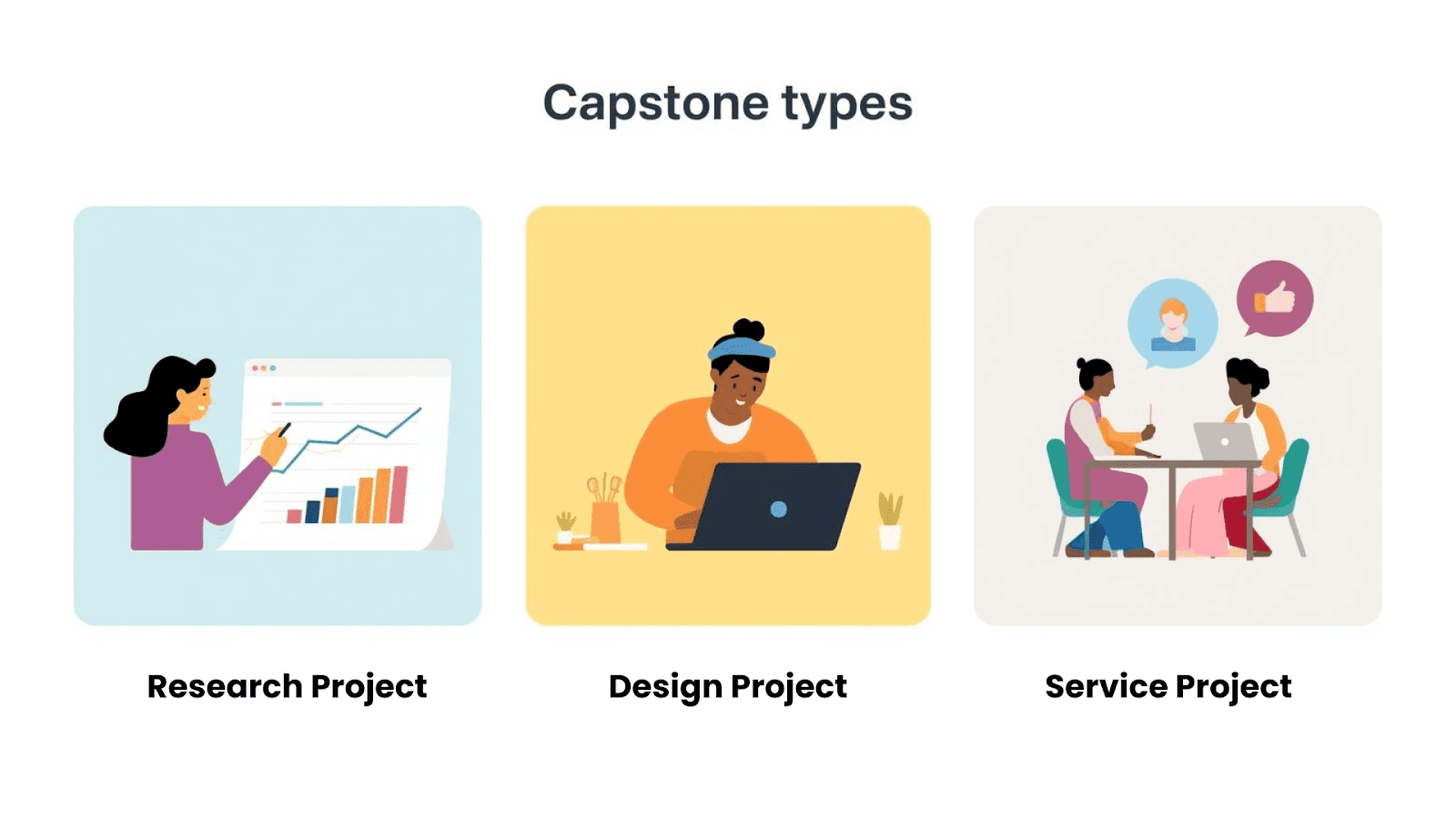
Os projetos de conclusão existem em कई formas. O tipo depende da sua área de estudo e dos objetivos do programa.
Projetos de conclusão baseados em pesquisa
Um projeto de conclusão de pesquisa se concentra em estudar uma questão ou problema usando métodos de pesquisa. Esses projetos são comuns nas ciências sociais e na educação.
Eles geralmente incluem:
Uma revisão da literatura
Coleta ou análise de dados
Uma discussão dos resultados
Exemplo:
Um estudante de psicologia estuda como o tempo de tela afeta o sono de estudantes universitários.
Projetos de conclusão baseados em pesquisa se parecem com trabalhos de pesquisa longos, mas se concentram mais no aprendizado aplicado do que apenas na teoria.
Projetos de conclusão de design ou protótipo
Projetos baseados em design se concentram em criar ou melhorar algo. Esses projetos são comuns em áreas técnicas e de engenharia.
Eles são frequentemente encontrados em:
Projetos de conclusão em engenharia
Projetos de conclusão em ciência da computação
Projetos de conclusão em tecnologia da informação
Os alunos podem criar:
Programas de software
Aplicativos móveis
Dispositivos ou sistemas
Soluções técnicas
Exemplo:
Uma equipe de ciência da computação cria uma ferramenta online para ajudar estudantes a gerenciar horários de estudo.
Projetos de conclusão de serviço ou baseados na prática
Projetos baseados em serviço se concentram na prática do mundo real. Os alunos trabalham com pessoas reais em contextos reais.
Eles são comuns em:
Projetos de conclusão em enfermagem
Projetos de conclusão em educação
Programas de serviço social
Os alunos podem:
Desenvolver novos programas
Melhorar serviços existentes
Avaliar resultados
Exemplo:
Um estudante de enfermagem cria um programa de educação em saúde para pacientes com pressão alta.
<ProTip title="📝 Lembrete:" description="Projetos aplicados muitas vezes têm impacto real. Não subestime seu valor." />
Projetos de Conclusão em Diferentes Cursos
Os projetos de conclusão parecem diferentes dependendo da área de estudo.
Projetos de conclusão em negócios e MBA
Um projeto de conclusão em negócios geralmente se concentra em problemas reais de negócios. Os alunos aplicam conhecimentos de finanças, marketing, gestão e estratégia.
Um projeto de conclusão de MBA pode incluir:
Análise de caso de negócios
Planejamento estratégico
Relatórios no estilo de consultoria
Pesquisa de mercado
Esses projetos se concentram em liderança, tomada de decisão e resolução de problemas.
Projetos de conclusão em engenharia e tecnologia
Os projetos de conclusão em engenharia costumam ser em equipe. Os alunos trabalham juntos ao longo de um ou dois semestres.
As partes principais incluem:
Definir o problema
Projetar uma solução
Testar e melhorar
Apresentar os resultados finais
Muitos projetos de conclusão em engenharia envolvem parceiros reais da indústria.
Projetos de conclusão em saúde, educação e ciências sociais
Esses projetos se concentram em pessoas, serviços e melhorias.
Os exemplos incluem:
Um projeto de conclusão em enfermagem sobre segurança do paciente
Um projeto de conclusão em educação sobre design de aulas
Um projeto de conclusão em psicologia sobre mudança de comportamento
Ética e prática baseada em evidências são muito importantes nessas áreas.
Etapas Principais de um Projeto de Conclusão
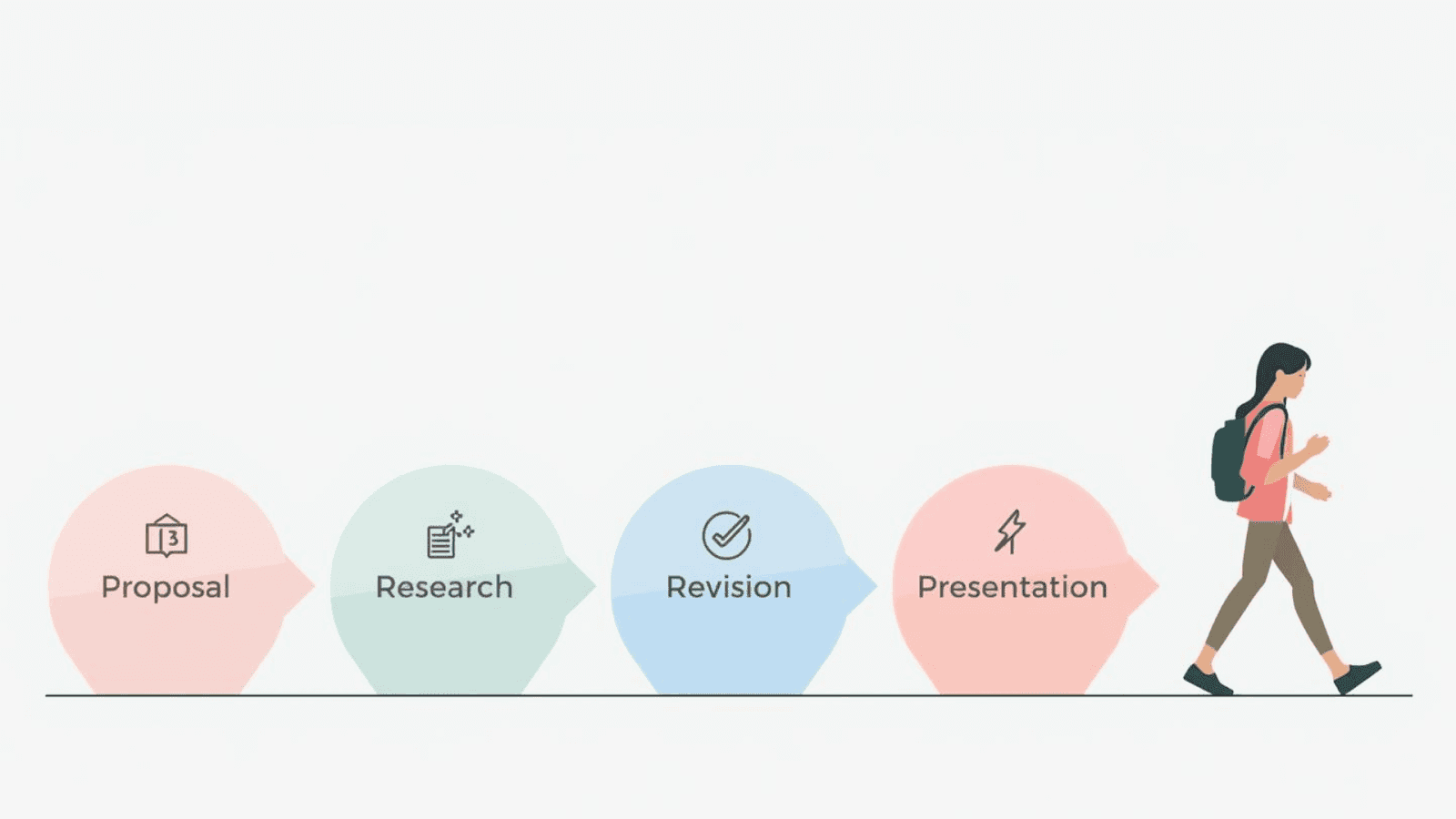
A maioria dos projetos de conclusão segue as mesmas etapas principais. Entender as orientações ajuda você a se manter organizado.
Etapa 1: Escolher um tema
Escolher o tema certo é uma das etapas mais importantes. Um bom tema é claro, focado e realista.
Bons temas:
Resolvem problemas reais
Combinam com seus interesses
Se encaixam nos objetivos do programa
Temas fracos costumam ser amplos demais.
Amplo demais: “Problemas de saúde mental”
Melhor: “Programas de gerenciamento de estresse para estudantes do primeiro ano da faculdade”
Etapa 2: Escrever uma proposta de projeto de conclusão
A maioria dos programas exige uma proposta de projeto de conclusão. Este documento explica o que você planeja fazer. Se você é novo nesse tipo de documento de planejamento, nossa visão geral sobre o que é uma proposta de pesquisa explica o objetivo e os elementos principais.
Uma proposta geralmente inclui:
O problema ou a questão
Os objetivos do projeto
Métodos ou abordagem
Resultados esperados
Seu orientador revisa a proposta antes de você seguir em frente. Para um modelo prático com exemplos e seções principais, veja como escrever uma proposta de pesquisa.
<ProTip title="📌 Dica profissional:" description="Uma proposta clara economiza tempo depois e evita grandes mudanças." />
Etapa 3: Fazer o trabalho principal
Esta é a etapa mais longa. Dependendo do seu projeto, você pode:
Coletar dados
Construir ou testar um produto
Executar um programa
Analisar informações
Reuniões regulares com seu orientador de conclusão são muito úteis.
Etapa 4: Revisar e refletir
O feedback é uma parte normal dos projetos de conclusão. Você pode revisar seu trabalho várias vezes.
Muitos programas também exigem um trabalho de reflexão do projeto de conclusão. Ele explica o que você aprendeu e como melhorou.
Etapa 5: Apresentação ou defesa
A maioria dos projetos de conclusão termina com uma apresentação.
Isso pode incluir:
Uma apresentação oral
Uma apresentação de pôster
Uma defesa formal
Uma avaliação de portfólio
Falar com clareza e usar slides simples faz uma grande diferença.
Estrutura e Formato do Projeto de Conclusão
Embora cada programa seja diferente, muitos relatórios de projetos de conclusão seguem uma estrutura semelhante.
As seções comuns incluem:
Página de título
Resumo
Introdução
Metodologia ou processo
Resultados ou desfechos
Discussão
Conclusão
Os programas geralmente fornecem uma rubrica do projeto de conclusão ou orientações. Siga-as sempre com atenção.
<ProTip title="✅ Dica profissional:" description="Escreva com a rubrica em mente. Ela mostra como seu trabalho será avaliado." />
Como os Projetos de Conclusão São Avaliados
Os projetos de conclusão são avaliados com base em critérios claros.
As áreas comuns de avaliação incluem:
Clareza do problema
Uso de fontes ou evidências
Qualidade da análise ou do design
Organização e escrita
Habilidades de apresentação
Alguns programas também avaliam trabalho em equipe, planejamento e profissionalismo.
Desafios Comuns em Projetos de Conclusão
Até alunos excelentes enfrentam desafios com projetos de conclusão.
Os problemas comuns incluem:
Tópicos grandes demais
Má gestão do tempo
Acesso limitado a dados
Instruções pouco claras
Medo de falar em público
A maioria desses problemas pode ser reduzida com planejamento antecipado e comunicação regular.
Melhores Práticas para o Sucesso no Projeto de Conclusão
Projetos de conclusão bem-sucedidos geralmente seguem os mesmos bons hábitos. Esses hábitos ajudam os alunos a se manterem calmos, focados e no caminho certo do início ao fim. Eles também reduzem o estresse de última hora e melhoram a qualidade do trabalho final.
Comece cedo
Os projetos de conclusão quase sempre levam mais tempo do que os alunos esperam. Até tarefas pequenas podem demorar mais quando há pesquisa, feedback ou revisões envolvidos. Começar cedo lhe dá margem de manobra.
Quando você começa cedo, pode:
Explorar seu tema sem pressão
Mudar de direção se algo não funcionar
Fazer perguntas antes dos prazos
Revisar seu trabalho mais de uma vez
Começar cedo também ajuda você a evitar a pressa. Projetos de conclusão feitos às pressas muitas vezes parecem pouco claros ou inacabados, mesmo quando a ideia é boa.
<ProTip title="⏰ Dica profissional:" description="Começar cedo lhe dá controle sobre sua agenda, em vez de apenas reagir aos prazos." />
Divida o trabalho em pequenas etapas
Um projeto de conclusão pode parecer esmagador se você o encarar como uma única grande tarefa. Dividi-lo em etapas menores torna a gestão mais fácil. Para esboçar suas seções antes de começar a redigir, um gerador de estrutura de redação com IA pode ajudar você a mapear a estrutura rapidamente.
Crie uma linha do tempo do projeto de conclusão que inclua:
Aprovação do tema
Entrega da proposta
Fase de pesquisa ou design
Prazos de rascunho
Períodos de revisão
Preparação da apresentação
Cada etapa deve ter seu próprio prazo. Isso transforma um projeto longo em uma série de tarefas curtas e claras. Pequenos avanços semanais fazem diferença.
Mantenha-se organizado
A organização desempenha um papel importante no sucesso do projeto de conclusão. Perder arquivos ou esquecer feedback pode atrasar você rapidamente.
Bons hábitos de organização incluem:
Manter todos os rascunhos em uma única pasta
Salvar fontes de pesquisa à medida que as encontra
Rotular arquivos de forma clara com datas ou versões
Acompanhar o feedback do orientador em um único documento
Manter-se organizado ajuda você a escrever mais rápido e revisar com menos estresse. Também torna sua entrega final mais limpa e profissional.
Mantenha a escrita simples
A escrita clara é mais importante do que a escrita complexa em um projeto de conclusão. Frases longas e linguagem pesada muitas vezes confundem os leitores.
A escrita simples ajuda você a:
Explicar ideias com clareza
Manter o foco no ponto principal
Tornar seu trabalho mais fácil de avaliar
Melhorar sua apresentação e defesa
Frases curtas, títulos claros e linguagem direta são pontos fortes, não fraquezas. Bons projetos de conclusão são fáceis de acompanhar, mesmo quando o tema é complexo.
<ProTip title="✍️ Dica profissional:" description="Se uma ideia fica clara em palavras simples, ela geralmente é forte o suficiente para um projeto de conclusão." />
Como os Projetos de Conclusão Ajudam Após a Formatura
Os projetos de conclusão ajudam os alunos a passar da escola para o trabalho ao oferecer uma experiência baseada em projetos de conclusão que reflete ambientes profissionais reais.
Eles ajudam você a:
Gerenciar projetos de longo prazo
Resolver problemas reais
Comunicar ideias com clareza
Trabalhar de forma independente
Essa abordagem prática ajuda os alunos a se sentirem mais preparados tanto para a carreira quanto para estudos posteriores. Muitos alunos usam seus projetos de conclusão em:
Entrevistas de emprego
Portfólios
Candidaturas a pós-graduação
Alguns projetos até levam a mudanças reais ou ofertas de emprego.
Criando Seu Projeto de Conclusão com Confiança
Um projeto de conclusão mostra o quão bem você consegue aplicar o que aprendeu a um problema real ou prático. Ele reflete sua capacidade de planejar, pesquisar e concluir uma tarefa complexa do início ao fim. Com um tema claro, progresso constante e revisões cuidadosas, seu projeto de conclusão se torna uma prova forte das suas habilidades e da sua preparação acadêmica.
<CTA title="Transforme Sua Ideia de Projeto de Conclusão em um Plano Claro" description="Use a Jenni para estruturar objetivos, refinar sua proposta e se manter organizado do início ao fim." buttonLabel="Experimente Jenni Grátis" link="https://app.jenni.ai/register" />
Se você quiser ajuda ao longo do caminho, a Jenni pode apoiar cada etapa do seu projeto de conclusão. Desde moldar sua ideia até organizar as seções e melhorar a clareza, a Jenni ajuda você a trabalhar mais rápido, manter o foco e terminar com confiança.