Por
Justin Wong
—
Como Escrever um Artigo de Posição com Argumentos e Evidências Claras

Justin Wong
Chefe de Crescimento
Formado com um Bacharelado em Negócios Globais e Artes Digitais, com Menor em Empreendedorismo
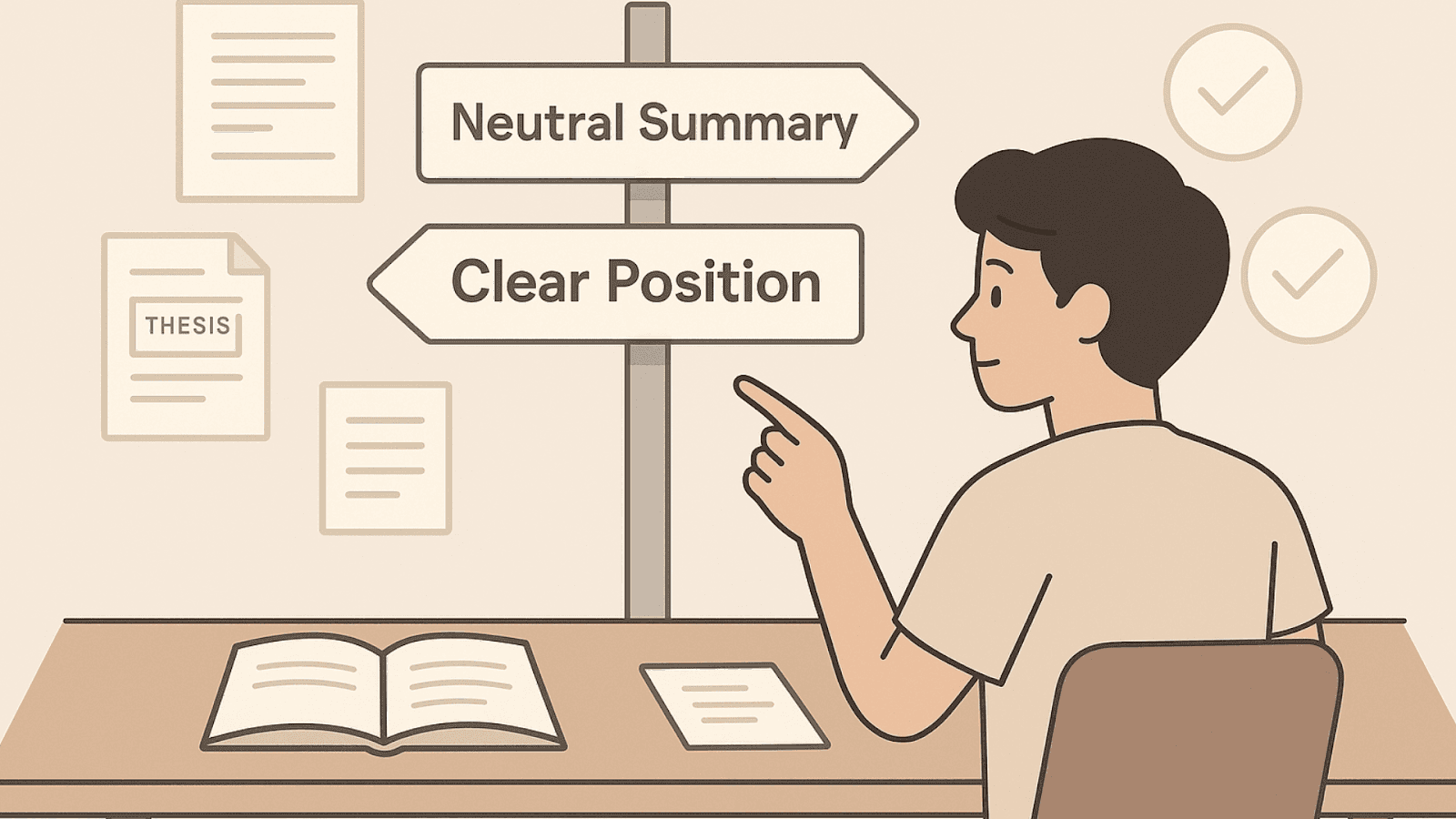
Escrever um position paper significa adotar uma posição clara sobre um tema e defendê-la com razões e evidências. Isso pode parecer desafiador porque muitos estudantes estão acostumados a explicar tópicos em vez de argumentar a favor de um lado. Em um position paper, sua opinião importa, mas apenas quando é sustentada por fatos e lógica clara.
Este guia divide o processo em etapas simples e práticas. Você aprenderá a planejar sua estrutura, escrever argumentos fortes, lidar com contra-argumentos e revisar com confiança. Tudo é escrito em linguagem clara para ajudá-lo a escrever um position paper focado, persuasivo e fácil de acompanhar.
<CTA title="Construa uma Tese Forte" description="Crie uma tese clara e passível de argumentação em minutos e comece seu position paper com confiança" buttonLabel="Experimente o Jenni grátis" link="https://app.jenni.ai/register" />
O que é um Position Paper
Um position paper é um tipo de redação argumentativa. Ele apresenta uma posição clara sobre um tema controverso e sustenta essa posição com razões e evidências. O objetivo principal é persuadir o leitor a entender ou apoiar sua posição.
Em muitos contextos acadêmicos, position papers também são usados para avaliar como os estudantes aplicam ideias em contextos reais, como aulas baseadas em discussão ou ambientes de aprendizagem baseada em problemas. Nesses casos, sua opinião ainda importa, mas ela deve estar fundamentada em lógica e evidências, e não em sentimentos pessoais.
Position papers são comumente usados em:
Aulas de faculdade e ensino médio
Discussões sobre políticas públicas
Campanhas de advocacy e conscientização
Conferências de Model UN
Não importa onde seja usado, o propósito continua o mesmo. Você deve argumentar de forma clara e lógica.
<ProTip title="✅ Dica profissional:" description="Se seu texto não mostrar claramente qual lado você apoia, ele não é um position paper." />
Como um Position Paper é Diferente de um Artigo de Pesquisa
Muitos estudantes confundem position papers com artigos de pesquisa. Ambos usam fontes, mas servem a propósitos diferentes.
Um artigo de pesquisa se concentra em explicar um tópico. Ele apresenta fatos, estudos e descobertas. Um position paper se concentra em persuadir. Ele usa fatos para apoiar uma única afirmação clara. Para uma versão mais voltada à pesquisa dessa abordagem, veja nosso guia de artigo de pesquisa argumentativa.
Aqui estão diferenças importantes para lembrar:
Artigos de pesquisa exploram; position papers argumentam
Artigos de pesquisa podem permanecer neutros; position papers não
Position papers incluem refutações a pontos de vista opostos
Position papers frequentemente sugerem ação ou mudança
Entender essa diferença ajuda você a evitar escrever um texto que pareça um resumo em vez de um argumento.
Escolhendo o Tema Certo
Um position paper forte começa com o tema certo. Nem todo tema funciona bem. Se não houver discordância real, não há nada para argumentar.
Antes de escolher um tema, pare e avalie-o.
Pergunte a si mesmo:
As pessoas discordam sobre esse tema?
Consigo defender claramente um lado?
Há evidências suficientes disponíveis?
Se a resposta for não, mude ou restrinja o tema.
Por que temas debatíveis são importantes
Temas debatíveis incentivam a discussão. Eles permitem que você apresente razões, evidências e contra-argumentos. Temas óbvios demais levam a textos fracos.
Por exemplo:
Tema fraco: Exercício faz bem à saúde
Melhor tema: As escolas deveriam exigir educação física diária para melhorar o foco dos alunos
O segundo tema permite debate e evidências.
Restringindo um tema para argumentos mais fortes
Temas amplos são difíceis de administrar. Temas mais específicos tornam seu texto mais claro e focado.
Exemplos:
Amplo demais: Mudanças climáticas
Mais específico: Os governos deveriam investir mais em energia renovável para reduzir danos econômicos futuros
Outro exemplo:
Amplo demais: Redes sociais
Mais específico: As escolas deveriam limitar o uso de celulares durante a aula para melhorar a atenção
Temas mais específicos ajudam você a evitar afirmações vagas.
<ProTip title="🧠 Dica profissional:" description="Se o seu tema precisar de muitas definições, ele é amplo demais." />
Entendendo seu Público
Um position paper é escrito para um leitor. Saber quem é esse leitor ajuda você a decidir como argumentar.
Públicos diferentes se importam com coisas diferentes.
Um público acadêmico geralmente valoriza:
Estrutura clara
Raciocínio lógico
Fontes confiáveis
Contra-argumentos justos
Um público de políticas públicas ou advocacy pode se concentrar mais em:
Resultados práticos
Custo e impacto
Viabilidade das soluções
Antes de escrever, pense no que vai convencer seu leitor, não apenas no que convence você.
Pesquisando para um Position Paper
A pesquisa dá força ao seu argumento. Sem evidências, sua posição soa como uma opinião pessoal.
Concentre-se em fontes que se relacionem diretamente com sua afirmação. A qualidade importa mais do que a quantidade.
Fontes fortes incluem:
Artigos revisados por pares
Relatórios governamentais
Livros acadêmicos
Entrevistas com especialistas
Organizações confiáveis
Enquanto pesquisa, organize suas descobertas.
Crie uma lista de pesquisa que inclua:
Fatos ou estatísticas importantes
Opiniões de especialistas
Exemplos do mundo real
Visões opostas comuns
Essa lista guiará sua escrita e economizará tempo.
<ProTip title="📌 Dica profissional:" description="Use apenas fontes que você entenda bem o suficiente para explicar com suas próprias palavras." />
Escrevendo uma Tese Forte
A tese é a parte mais importante do seu texto. Ela diz ao leitor exatamente no que você acredita.
Uma boa tese é:
Clara
Específica
Passível de argumentação
Focada
Teses fracas são vagas ou neutras.
Exemplo fraco:
A tecnologia afeta a educação.
Exemplo forte:
As faculdades deveriam exigir a divulgação do uso de IA porque isso protege a equidade, a aprendizagem e a honestidade acadêmica.
Uma fórmula útil é:
[Agente] deve ou não deve [ação] porque [motivo 1], [motivo 2] e [motivo 3].
Essa estrutura mantém sua posição clara e direta.
Planejando a Estrutura do seu Position Paper
Antes de começar a escrever, você precisa de um plano. Uma estrutura clara ajuda suas ideias a fluírem e mantém seu argumento fácil de seguir. Sem um plano, position papers costumam parecer dispersos ou repetitivos. Se você prefere começar com um mapa estruturado, um gerador de outline de redação com IA pode ajudar você a organizar seções e pontos de apoio.
Um position paper forte geralmente segue uma estrutura simples:
Introdução
Parágrafos do corpo com argumentos
Contra-argumentos e refutação
Conclusão
Cada parte tem um papel claro. A introdução explica o tema e sua posição. Os parágrafos do corpo defendem essa posição. A seção de contra-argumento mostra que você entende o outro lado. A conclusão reforça sua posição e explica por que ela importa.
O planejamento também ajuda você a decidir quanto espaço cada ideia precisa. Se um argumento parecer fraco, você pode fortalecê-lo ou removê-lo antes de escrever os parágrafos completos. Isso economiza tempo e melhora a clareza.
<ProTip title="🧩 Dica profissional:" description="Um esboço curto pode evitar longas reescritas depois." />
Escrevendo a Introdução
A introdução é sua primeira chance de orientar o leitor. Ela deve explicar qual é o tema e por que ele importa. Também deve deixar sua posição clara.
Uma introdução forte geralmente tem três partes:
Um gancho para prender a atenção
Breve contexto ou antecedentes
Uma tese clara
O gancho não precisa ser dramático. Pode ser um fato, um breve cenário ou uma afirmação simples que destaque o problema.
Depois do gancho, explique o tema em termos simples. Defina ideias-chave, se necessário. Ainda não inclua evidências detalhadas. Guarde isso para o corpo do texto.
Termine a introdução com sua tese. Essa frase diz ao leitor exatamente no que você acredita e estabelece as expectativas para o restante do texto.
<ProTip title="✍️ Dica profissional:" description="Se o leitor não conseguir identificar sua posição após a introdução, revise sua tese." />
Escrevendo Parágrafos do Corpo com Argumentos
Os parágrafos do corpo são o núcleo do seu position paper. Cada parágrafo deve focar em uma razão que apoie sua tese. Evite misturar várias ideias no mesmo parágrafo.
Antes de escrever, decida quantos argumentos você precisa. A maioria dos position papers fortes usa dois ou três argumentos principais. Poucos pontos fortes são melhores do que muitos pontos fracos.
Cada parágrafo do corpo deve seguir um padrão claro:
Frase-tópico que apresenta o argumento
Evidência que apoia a afirmação
Explicação da evidência
Uma frase que se conecta à tese
Essa estrutura ajuda o leitor a acompanhar sua lógica passo a passo. Também mantém sua escrita organizada e focada.
Desenvolvendo Argumentos Fortes
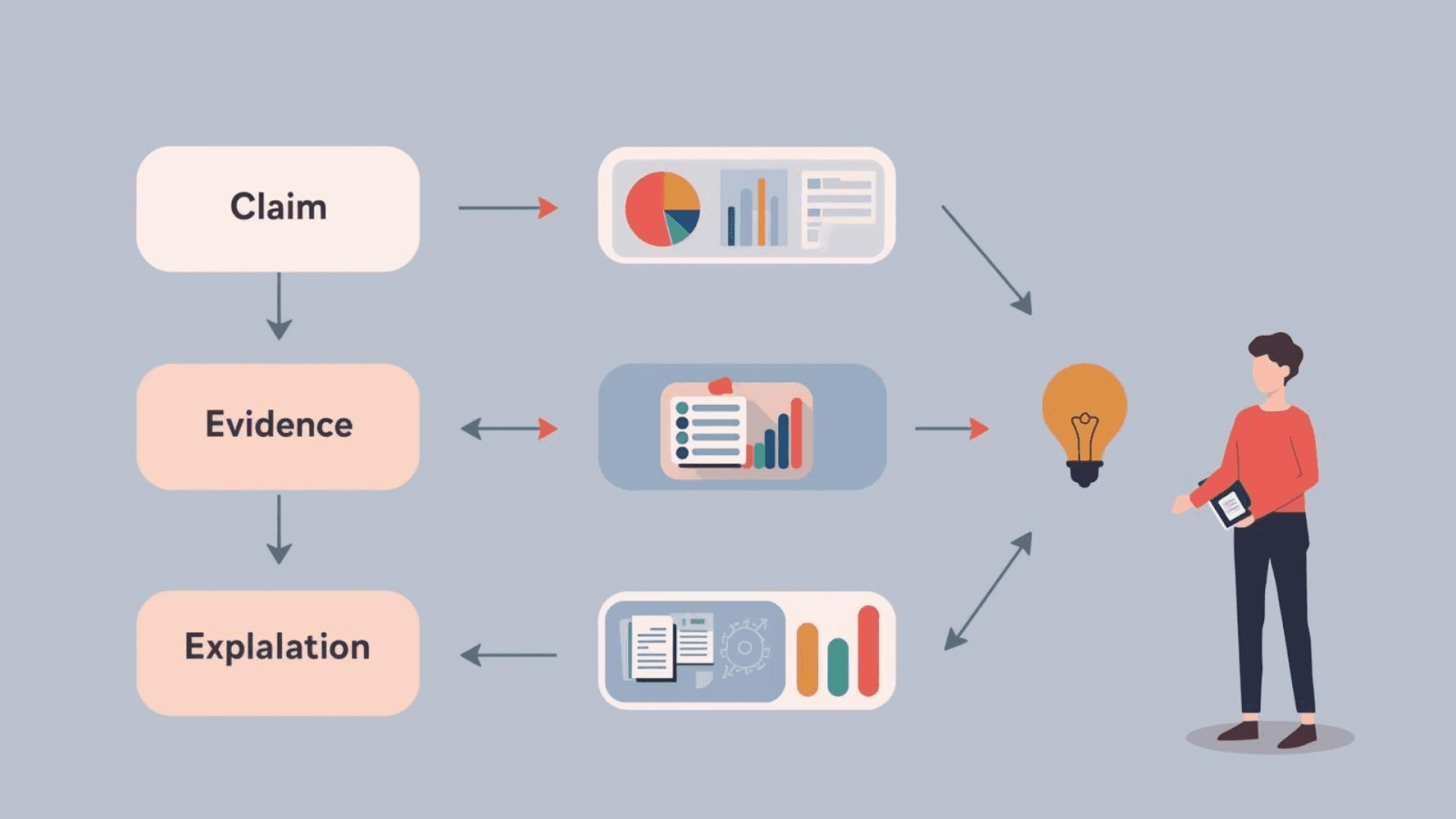
Argumentos fortes explicam por que as evidências sustentam sua posição. Não presuma que o leitor fará essa conexão.
Uma estrutura útil é:
Ponto → Evidência → Explicação → Conexão
Por exemplo:
Ponto: a divulgação do uso de IA melhora a equidade
Evidência: o uso oculto de ferramentas leva a avaliações desiguais
Explicação: os professores não conseguem avaliar o esforço sem contexto
Conexão: a transparência apoia uma avaliação justa
Repetir esse padrão mantém sua escrita clara e lógica.
<ProTip title="🧩 Dica profissional:" description="Se um parágrafo não tiver evidência, ele é uma opinião, não um argumento." />
Usando Diferentes Tipos de Evidência
Usar evidências variadas torna seu argumento mais convincente. Confiar em apenas um tipo de prova pode fazer o texto parecer sem profundidade ou enviesado.
Diferentes tipos de evidência servem a propósitos diferentes:
Estatísticas mostram escala ou impacto
Opiniões de especialistas acrescentam credibilidade
Estudos de caso mostram efeitos no mundo real
Exemplos ajudam os leitores a entender ideias abstratas
Antes de acrescentar uma lista de evidências, apresente-a com uma breve explicação. Isso ajuda o leitor a entender por que a evidência é importante.
Por exemplo, você pode explicar que a pesquisa apoia sua afirmação antes de apresentar estatísticas ou estudos. Sempre siga a evidência com explicação.
<ProTip title="📊 Dica profissional:" description="A evidência só é poderosa quando você explica o que ela prova." />
Abordando Contra-argumentos
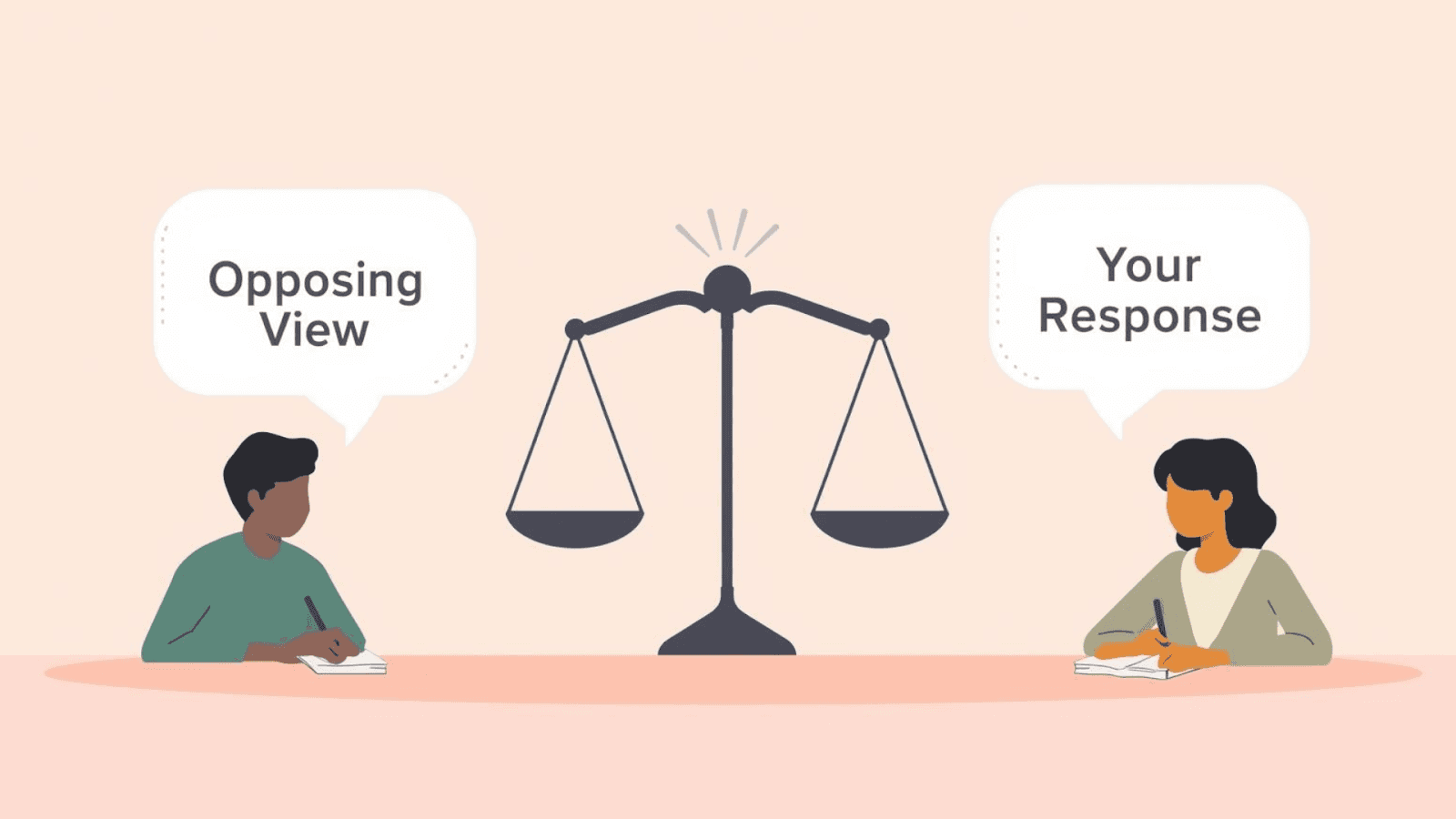
Contra-argumentos são uma parte essencial de um position paper forte. Eles mostram que você entende o tema completamente e considerou outras visões. Lidar bem com um contra-argumento também demonstra pensamento crítico e fortalece sua credibilidade como escritor.
Antes de escrever esta seção, pense nos argumentos mais fortes contra sua posição. Não escolha oposição fraca ou irrealista. Abordar visões opostas reais torna sua posição mais clara e persuasiva.
Uma boa seção de contra-argumento inclui:
Uma apresentação justa da visão oposta
Uma explicação de por que ela parece razoável
Uma refutação clara usando lógica e evidências
Exemplo:
Alguns argumentam que proibir ferramentas de IA evita a cola. Isso faz sentido porque os estudantes podem depender demais de ferramentas. No entanto, as proibições são difíceis de aplicar e muitas vezes fracassam. Diretrizes claras e regras de divulgação tratam o uso indevido de forma mais eficaz.
<ProTip title="⚖️ Dica profissional:" description="Refutações respeitosas constroem confiança com o leitor." />
Onde Colocar os Contra-argumentos
Os contra-argumentos normalmente vêm depois dos seus argumentos principais. Isso permite que você estabeleça sua posição antes de responder à oposição.
Em textos curtos, os contra-argumentos podem aparecer em um único parágrafo. Em textos mais longos, eles podem ter sua própria seção com um título.
Posicionar os contra-argumentos mais tarde ajuda a manter o texto organizado. Também garante que o leitor entenda sua posição antes de ver os pontos de vista opostos.
Escrevendo uma Conclusão Forte
A conclusão encerra seu argumento. Ela deve reforçar sua posição e deixar uma impressão clara.
Uma conclusão forte:
Reformula a tese com outras palavras
Resume os principais motivos
Explica por que o tema importa
Sugere ações ou próximos passos
Evite adicionar novos argumentos na conclusão.
Exemplos de ações incluem:
Mudanças de política
Pesquisas adicionais
Soluções práticas
Esforços de conscientização
Formatando um Position Paper
Siga sempre primeiro as instruções da tarefa. Ainda assim, muitos position papers compartilham regras comuns de formatação.
As diretrizes típicas incluem:
Fonte 12 pontos
Times New Roman ou Arial
Margens de uma polegada
Espaçamento simples ou duplo
Título claro
Citações consistentes
Erros de formatação podem custar pontos fáceis, então revise com atenção.
Noções Básicas de Citação
As citações mostram de onde vem sua informação e o protegem contra plágio. Use o estilo de citação exigido pela sua tarefa..
Seja consistente com:
Citações no texto
Listas de referências
Estilo de formatação
Cite as fontes quando você:
Usa estatísticas
Se refere a resultados de pesquisa
Cita especialistas
Apresenta conhecimento não comum
Seja consistente com as citações no texto e as listas de referências.
<ProTip title="📝 Dica profissional:" description="Se você não tiver certeza se deve citar, cite." />
Revisando seu Position Paper
A revisão melhora a clareza e a força do texto. Não envie seu primeiro rascunho sem revisá-lo.
Durante a revisão, verifique:
A tese está clara?
Todos os parágrafos apoiam a tese?
A evidência é explicada?
Os contra-argumentos são justos?
O tom é respeitoso e acadêmico?
Ler seu texto em voz alta pode ajudar a identificar frases confusas.
<ProTip title="🔍 Dica profissional:" description="Frases curtas melhoram a legibilidade e a clareza." />
Erros Comuns a Evitar
Conhecer os erros comuns ajuda você a evitá-los.
Fique atento a:
Teses vagas
Linguagem emocional sem evidências
Ignorar pontos de vista opostos
Repetir a mesma ideia
Conclusões fracas
Evitar esses erros fortalece seu texto.
Position Papers Acadêmicos vs. Model UN
Position papers acadêmicos focam em seu argumento e raciocínio, enquanto os textos de Model UN focam em representar a posição oficial de um país. Ambos os formatos exigem clareza, estrutura e afirmações bem sustentadas, mas seus objetivos são diferentes.
Textos acadêmicos enfatizam:
Pensamento crítico
Argumentos baseados em evidências
Refutações claras
Textos de Model UN enfatizam:
Contexto do país
Histórico de políticas
Soluções realistas
Siga sempre as instruções específicas fornecidas pelo seu professor ou comitê.
Checklist Final antes da Entrega
Antes de entregar, revise seu texto com atenção.
Certifique-se de que:
A tese está clara e passível de argumentação
Cada parágrafo apoia a tese
A evidência é explicada
Os contra-argumentos são abordados
A formatação segue as diretrizes
As citações são consistentes
Esta revisão final pode melhorar sua nota.
Escrevendo um Position Paper Forte com Confiança
Escrever um position paper forte começa com uma posição clara e termina com um raciocínio claro. Quando você escolhe um tema debatível, desenvolve argumentos focados e responde de forma justa aos contra-argumentos, sua posição se torna difícil de ignorar. Estrutura e evidências transformam opiniões em redação acadêmica persuasiva.
<CTA title="Planeje seu Position Paper Mais Rápido" description="Transforme sua posição em um outline claro com argumentos fortes e contra-argumentos em minutos" buttonLabel="Experimente o Jenni grátis" link="https://app.jenni.ai/register" />
Se você quiser ajuda para moldar sua tese, organizar argumentos ou refinar a clareza, o Jenni pode guiá-lo passo a passo. Comece com sua ideia, construa seu position paper com estrutura e escreva com confiança.