Por
Justin Wong
—
Como Fazer uma Redação: Estrutura, Parágrafos e Conclusão

Justin Wong
Chefe de Crescimento
Formado com um Bacharelado em Negócios Globais e Artes Digitais, com Menor em Empreendedorismo
A redação de ensaios é uma das formas mais comuns de avaliação académica, mas frequentemente causa confusão aos estudantes. Muitos acreditam que um bom ensaio depende de vocabulário avançado ou ideias complexas, quando, na verdade, a estrutura é o que dá clareza e força à escrita. Sem organização clara, até bons argumentos podem parecer pouco claros ou pouco convincentes.
Este guia explica como estruturar um ensaio desde o planeamento até à revisão final. Aborda o formato académico padrão do ensaio, o papel de cada secção, o desenvolvimento de parágrafos e as variações comuns entre tipos de ensaio. Compreender a estrutura do ensaio ajuda as ideias a fluírem logicamente, os argumentos a desenvolverem-se com clareza e a evidência a sustentar as afirmações de forma mais eficaz.
<CTA title="Comece o seu ensaio com uma estrutura clara" description="Crie um esquema lógico e organize as suas ideias antes de começar a escrever. A Jenni ajuda-o a planear ensaios mais rapidamente e com menos esforço." buttonLabel="Experimente a Jenni gratuitamente" link="https://app.jenni.ai/register" />
Compreender a Estrutura do Ensaio
Pense na estrutura do ensaio como a planta da sua escrita. É o plano que decide para onde vão as suas ideias e como se ligam, em vez de simplesmente as atirar para a página. Cada parte do ensaio tem uma função, e cada parágrafo deve fazer avançar a ideia principal.
Na escola, isto não é apenas uma sugestão, é um requisito. Professores e avaliadores procuram uma estrutura clara porque ela mostra que consegue pensar logicamente, escrever com clareza e gerir realmente as suas ideias.
Uma boa estrutura impede que você, o autor, ande em círculos. Evita que se repita e faz com que o seu argumento tenha mais impacto. Expectativas claras quanto à estrutura dos textos académicos refletem por que razão os ensaios académicos seguem padrões organizacionais consistentes.
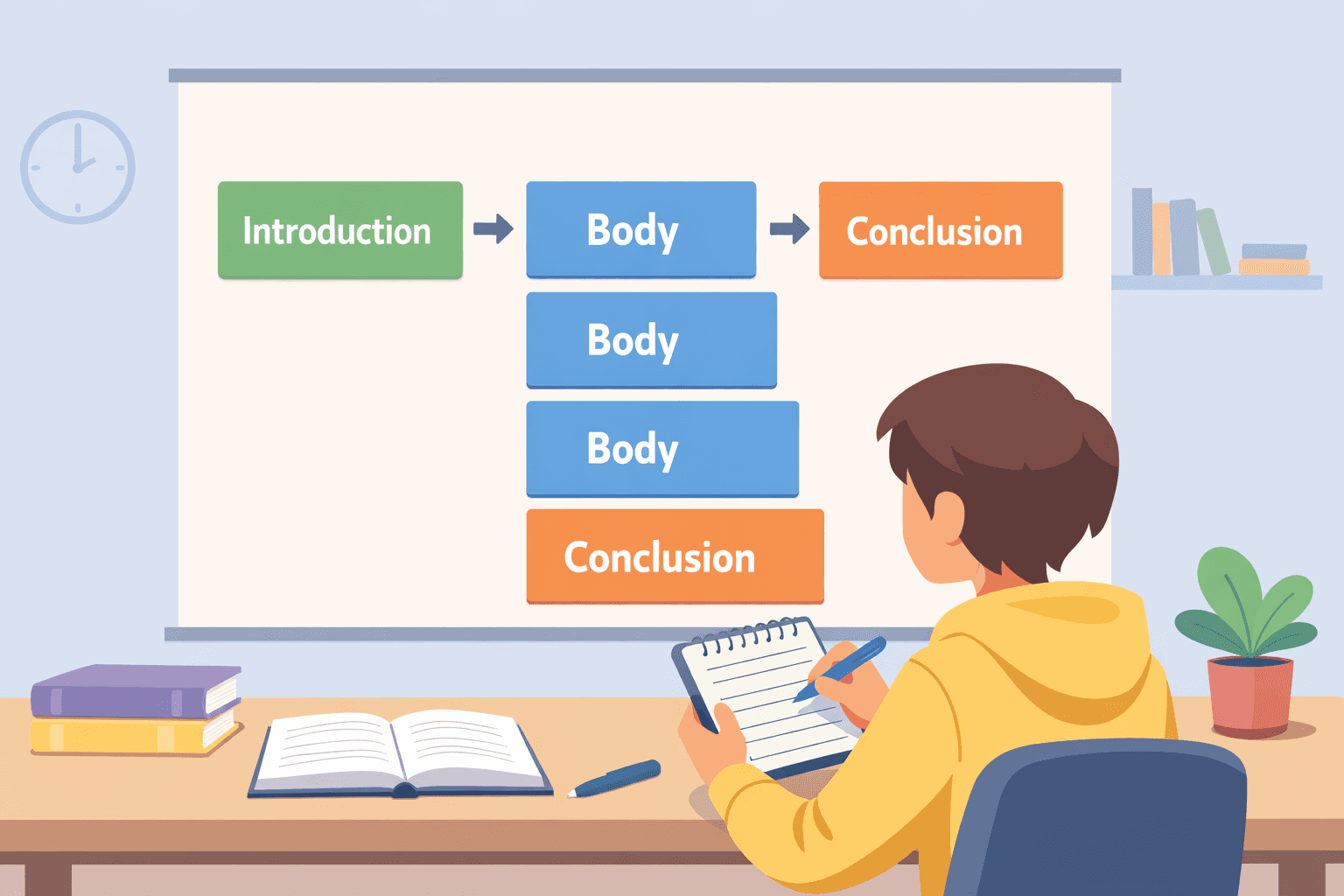
Embora um trabalho de História possa parecer um pouco diferente de um relatório de laboratório, a maioria dos ensaios académicos assenta na mesma base de três partes: introdução, desenvolvimento e conclusão.
<ProTip title="💡 Dica Pro:" description="Antes de escrever parágrafos completos, faça um esquema dos seus pontos principais em tópicos para verificar a ordem lógica e evitar repetições." />
A Estrutura Básica do Ensaio
A maioria dos ensaios segue uma forma simples de três partes: introdução, desenvolvimento e conclusão.
A Introdução inicia tudo. Apresenta o tema, fornece ao leitor o contexto necessário e, o mais importante, apresenta o seu argumento principal, a tese.
O Desenvolvimento é onde o trabalho acontece. Esta série de parágrafos desenvolve as suas ideias principais. Cada um deve apresentar um ponto e fundamentá-lo com evidência e com a sua própria análise.
A Conclusão fecha o texto. Regressa à tese, resume o percurso do seu argumento e oferece algumas reflexões finais sobre o que tudo isto significa.
Secção do Ensaio | Finalidade | O Que Deve Incluir |
Introdução | Apresenta o tema e o argumento principal | Informação de contexto, uma declaração de tese clara e uma visão geral da direção do ensaio |
Desenvolvimento | Desenvolve e sustenta a tese | Frases temáticas, evidência relevante, análise e transições lógicas entre ideias |
Conclusão | Reforça o argumento e oferece um fecho | Tese reformulada, resumo dos pontos principais e reflexões finais ou implicações mais amplas |
Esta estrutura dá à sua escrita um início, meio e fim claros. Os leitores sabem o que vai argumentar, conseguem acompanhar a forma como constrói o seu caso e terminam com a sensação de por que valeu a pena ler.
<ProTip title="📝 Nota:" description="Se o seu ensaio parecer confuso, reveja se cada secção corresponde claramente à sua função na estrutura." />
Escrever uma Introdução Forte
A introdução é a porta de entrada do seu ensaio. Cria a primeira impressão, fornece o contexto necessário e assinala o que vem a seguir.
Pense nela como um guia; não deve revelar todos os detalhes, mas tem de dar ao leitor um mapa claro para a discussão que se segue. Uma introdução sólida é construída a partir de três elementos-chave.
Comece com um gancho. Esta é a sua primeira frase. O seu objetivo é simples: fazer com que o leitor queira continuar, e saber como escrever o gancho da introdução de um ensaio ajuda-o a escolher uma abertura que se adapte ao tom académico. O objetivo é envolver, não confundir. Para um trabalho escolar, pode usar uma pergunta provocadora, um facto surpreendente, uma história curta ou uma citação pertinente. Apenas mantenha-a adequada ao tema, evitando qualquer coisa demasiado informal ou chamativa. Para mais exemplos de boas aberturas e de como conduzir até à sua tese, consulte o nosso guia para escrever a introdução de um ensaio.
Depois, apresente algum contexto. Logo após o gancho, dedique uma ou duas frases a dar ao leitor informação suficiente para se orientar. Se o tema for especializado, esta etapa é crucial. Seja conciso. Está a fornecer uma base, não a escrever um capítulo de manual.
Por fim, apresente a sua declaração de tese. Este é o coração da introdução. A sua tese é uma única frase clara que enuncia o seu argumento principal. Tem de ser específica e focada, uma afirmação que convide à discussão, não uma mera declaração de facto.
Orientações como dicas para a declaração de tese destacam por que razão uma tese bem definida molda a direção de todo o ensaio. Coloque a sua declaração de tese no final desta secção. Ela funciona como a transição natural para os parágrafos de desenvolvimento, onde irá provar o seu ponto.
<ProTip title="🎯 Lembrete:" description="Uma tese forte faz uma afirmação clara e dá ao leitor um roteiro do que o ensaio irá abordar." />
Estruturar Parágrafos de Desenvolvimento de Forma Eficaz
O desenvolvimento do seu ensaio é onde o trabalho verdadeiro acontece. É aqui que explica as suas ideias, constrói o seu argumento e aprofunda a sua evidência. Cada parágrafo deve centrar-se num ponto claro que sustente a sua tese principal.
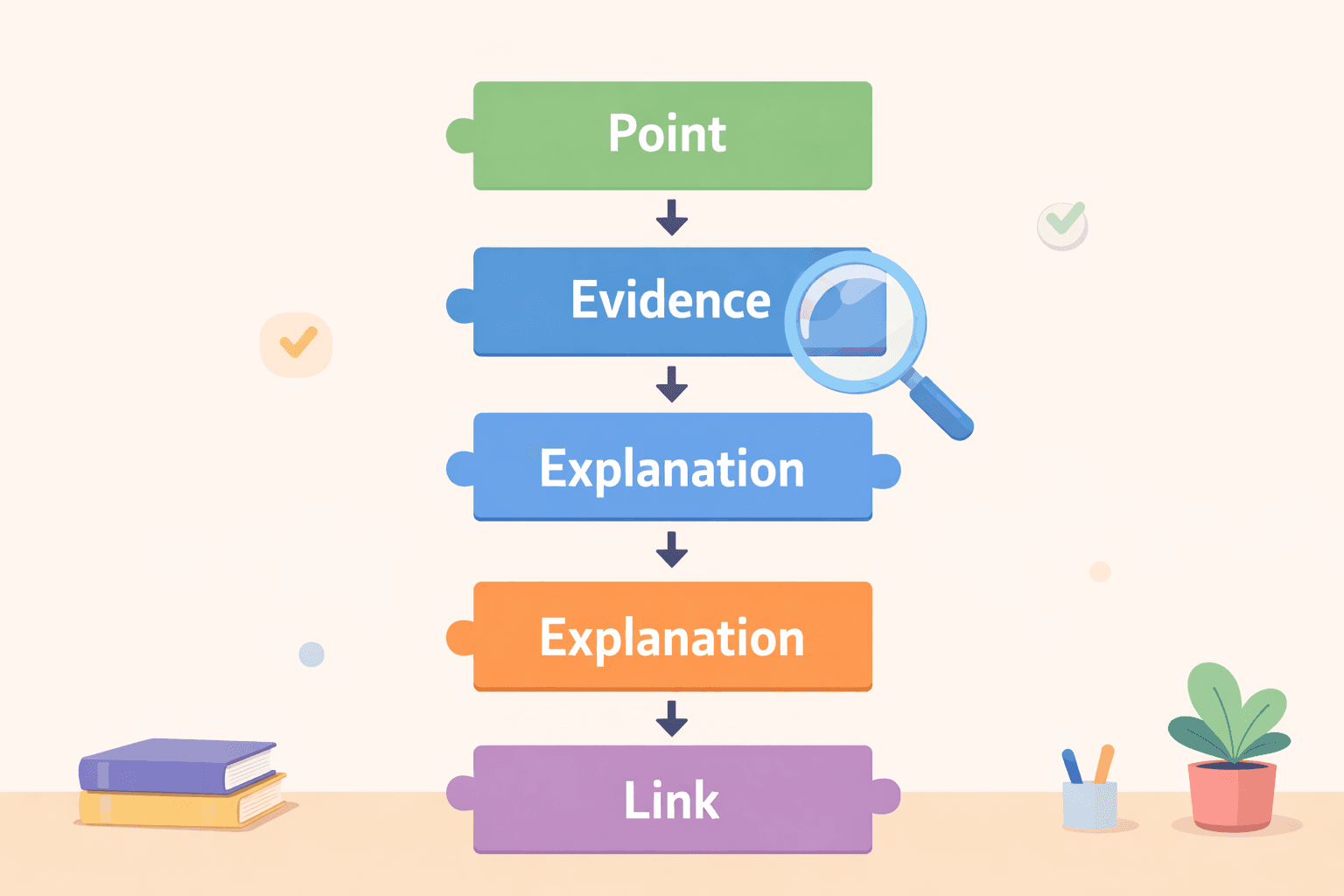
Um parágrafo sólido tem uma forma interna clara. Um modelo comum e eficaz para a escrita académica é a estrutura PEEL.
Ponto. Comece com uma frase temática forte. Esta frase enuncia a ideia principal do parágrafo e mostra como se liga ao seu argumento global.
Exemplo: Uma estrutura clara de ensaio torna a sua escrita muito mais fácil de seguir e compreender.
Evidência. Depois de apresentar o seu ponto, precisa de o fundamentar. Forneça provas. Podem ser conclusões de um estudo, dados relevantes, um exemplo concreto ou uma citação de um especialista. Boa evidência dá substância ao seu argumento e mostra que fez o seu trabalho de casa.
Explicação. Esta é a parte que os escritores muitas vezes omitem, mas é crucial. Não se limite a apresentar uma estatística e seguir em frente. Explique o que a sua evidência significa e como ela apoia diretamente o ponto que fez na sua frase temática. Faça a ligação para o leitor.
Ligação. Termine o parágrafo ligando a sua discussão de volta à sua tese principal, ou criando uma transição suave para o ponto seguinte. Isso mantém o ensaio coeso e orienta o leitor logicamente de uma ideia para a seguinte.
Elemento PEEL | Função | Pergunta Orientadora |
Ponto | Apresenta a ideia principal do parágrafo | Qual é a principal afirmação deste parágrafo? |
Evidência | Sustenta o ponto com provas | Que dados, exemplo ou fonte sustentam esta afirmação? |
Explicação | Analisa e interpreta a evidência | Como é que esta evidência sustenta o argumento? |
Ligação | Liga o parágrafo à tese ou à ideia seguinte | Como é que este parágrafo se relaciona com o ensaio como um todo? |
<ProTip title="🔗 Dica:" description="Depois de cada parágrafo, verifique se a frase de ligação conecta claramente a ideia de volta à sua tese." />
Manter o Fluxo Lógico e a Coerência
O fluxo lógico é o que torna um ensaio legível. Pode ter ótimas ideias, mas se forem apresentadas numa ordem confusa, o leitor perde-se.
Uma ferramenta essencial para manter este fluxo é o uso de palavras e expressões de transição. São os sinais verbais que orientam o leitor de uma ideia para a seguinte. Mostram a relação entre os pontos, seja a adicionar informação, a mostrar contraste, a explicar um resultado ou a fazer uma comparação.
Palavras como além disso, no entanto, em contraste, como resultado e de forma semelhante funcionam como tecido conector. Elas unem os seus parágrafos, garantindo que o ensaio pareça um argumento coerente em vez de uma série de afirmações desconexas.
<ProTip title="➡️ Dica de Escrita:" description="Use transições no início dos parágrafos para indicar como as ideias se relacionam entre si." />
Escrever uma Conclusão Eficaz
A conclusão é a última palavra do seu ensaio. A sua função não é iniciar uma nova discussão, mas reforçar a que acabou de terminar e deixar o leitor com uma noção clara da sua importância.
Uma conclusão forte faz normalmente três coisas.
Primeiro, reformula a tese. Regressa ao seu argumento principal, mas formulado de forma diferente da introdução. Isto lembra o leitor da sua tese central sem soar repetitivo.
Depois, resume os pontos-chave. Faz uma breve recapitulação das principais evidências ou ideias dos seus parágrafos de desenvolvimento. Mantenha isto conciso, apenas um lembrete rápido do percurso que fez para sustentar a sua tese.
Por fim, oferece algumas reflexões finais. É aqui que se afasta um pouco. Sugira uma implicação mais ampla, coloque uma pergunta final de reflexão ou, se apropriado, apresente um apelo à ação. Esta última parte dá ao leitor algo em que pensar depois de terminar a leitura.
Como orientação geral, a sua conclusão deve corresponder aproximadamente a 10% do comprimento total do ensaio.
Como a Estrutura Muda em Diferentes Ensaios
O modelo básico de introdução-desenvolvimento-conclusão aplica-se a quase todos os ensaios. O que muda é a forma como organiza a informação dentro do desenvolvimento. Diferentes trabalhos exigem planos diferentes, especialmente quando trabalha com diferentes tipos de ensaios académicos.
Ensaio Argumentativo: O seu objetivo é persuadir. Apresenta uma tese clara e defende-a com evidência. Uma característica fundamental aqui é abordar contra-argumentos: apresenta pontos de vista opostos nos parágrafos de desenvolvimento e depois refuta-os. O foco está no raciocínio lógico e numa discussão justa e aprofundada.
Ensaio de Comparação e Contraste: Está a analisar dois ou mais temas. O desenvolvimento pode ser organizado de duas formas principais. Pode dedicar um parágrafo a cada ponto de comparação (por exemplo, custo, depois características, depois usabilidade), discutindo ambos os temas no interior dele. Ou pode discutir todas as semelhanças dos temas numa secção e depois todas as diferenças noutra.
Ensaio de Problema-Solução: Este tipo segue uma lógica simples de duas partes, típica de um ensaio problema-solução. Primeiro, define e analisa um problema nos seus parágrafos de desenvolvimento. Depois, passa a propor e defender possíveis soluções. Cada fase recebe geralmente a sua própria secção dedicada.
Ensaio de Causa e Efeito: Aqui, está a explicar relações. Descreve as razões (causas) pelas quais algo aconteceu ou existe e depois explora os resultados (efeitos). A estrutura depende fortemente de uma sequência clara e da demonstração de ligações lógicas entre acontecimentos.
A base é sempre a mesma, mas a arquitetura interna do desenvolvimento adapta-se à finalidade específica do ensaio.
Planear um Ensaio Antes de Escrever

Um ensaio bem estruturado quase sempre começa com um plano. Ir diretamente para a escrita geralmente leva a um rascunho confuso; vai repetir-se, o argumento ficará difuso e a organização sofrerá.
Algumas técnicas simples de pré-escrita podem poupar-lhe muitos problemas mais tarde. Conselhos práticos sobre dicas para escrever ensaios explicam por que passos como esquematizar, fazer brainstorming e redigir ajudam a garantir que o ensaio flui logicamente e sustenta totalmente a sua tese.
Algumas técnicas simples de pré-escrita podem poupar-lhe muitos problemas mais tarde.
Brainstorming. Comece apenas a pôr ideias no papel. Escreva tudo o que estiver relacionado com o seu tema sem o julgar. Nesta fase, ter muitas opções é mais importante do que ter opções perfeitas.
Outlining. É aqui que constrói a sua estrutura. Pegue nas ideias que gerou e organize-as numa ordem lógica. Um esquema básico obriga-o a decidir quais são os seus pontos principais e como vão passar de um para o seguinte. Mantém-no no caminho certo e impede-o de se desviar. Se quiser uma estrutura inicial rápida para aperfeiçoar com a sua própria investigação, um gerador de esquemas de ensaio com IA pode ajudá-lo a redigir um esquema que depois pode ajustar ao seu trabalho.
Faça primeiro a sua pesquisa. Reúna a sua evidência e as suas fontes antes de começar a redigir o texto completo. Quando sabe que provas tem, é muito mais fácil integrá-las naturalmente no seu argumento e citá-las corretamente à medida que avança. Tentar encontrar fontes para encaixar em parágrafos que já escreveu é um processo invertido e frustrante.
<ProTip title="🧩 Dica de Planeamento:"description="Esquematizar primeiro ajuda-o a identificar lacunas na lógica antes de começar a escrever parágrafos completos." />
O Processo de Escrita: Redigir, Rever e Editar
Escrever um bom ensaio não é tarefa de uma só etapa. Acontece em fases distintas, cada uma com um foco diferente.
Redação. Esta é a sua primeira tentativa. Não procure a perfeição aqui. O objetivo é tirar as suas ideias da cabeça e colocá-las no papel, seguindo o seu esquema. Concentre-se em desenvolver o conteúdo e em estabelecer a estrutura básica. A ortografia e as frases perfeitas podem esperar.
Revisão. Agora afaste-se e observe o panorama geral. Leia o seu rascunho de forma crítica. O argumento está claro e lógico? Os parágrafos fluem bem, ou precisam de ser reorganizados? A sua declaração de tese está no lugar certo, e a evidência apoia-a realmente? Esta fase consiste em reformular e fortalecer as suas ideias.
Edição. Este é o polimento final. Quando estiver satisfeito com o conteúdo e a estrutura, corrija os detalhes. Verifique erros de gramática, pontuação, formulações estranhas e problemas de formatação. Este passo garante que o seu ensaio está limpo, profissional e pronto a entregar.
Manter um Tom e Estilo Académicos
A escrita académica precisa de um estilo formal, mas isso não significa que tenha de ser complicada ou difícil de ler. Um bom tom académico é claro, preciso e objetivo. Alguns princípios-chave irão mantê-lo no caminho certo:
Evite gíria e expressões casuais.
Use estruturas frásicas diretas.
Fundamente todas as afirmações com evidência.
Mantenha consistente o tempo verbal e a voz ao longo de todo o texto.
A escrita académica mais persuasiva não é a que usa as palavras mais sofisticadas. É a que comunica as suas ideias com maior clareza.
Erros Comuns na Estrutura de Ensaios
Muitos ensaios são enfraquecidos por problemas simples e facilmente corrigíveis na sua estrutura. Tenha atenção a estes problemas comuns:
Uma tese fraca, vaga ou totalmente ausente.
Parágrafos de desenvolvimento que começam sem uma frase temática clara para os orientar.
Saltos bruscos entre ideias devido a transições pobres ou ausentes.
Introduzir um argumento completamente novo ou uma nova evidência na conclusão.
Uma falta geral de unidade, em que partes do ensaio parecem desligadas do ponto principal.
Identificar e corrigir estes problemas cedo no seu processo de escrita faz uma enorme diferença na qualidade final do seu trabalho.
Usar uma Lista de Verificação para o Ensaio
Passar rapidamente por uma lista de verificação antes de submeter pode detetar problemas estruturais que talvez tenha passado por alto.
Faça a si mesmo estas perguntas:
A minha declaração de tese é clara, específica e fácil de encontrar?
Cada parágrafo apoia claramente o meu argumento principal?
Expliquei a minha evidência, ou limitei-me a colocá-la?
As minhas transições ligam suavemente uma ideia à seguinte?
A minha conclusão fecha o texto de forma eficaz sem introduzir novos pontos?
Esta etapa final de revisão muitas vezes aperta a sua escrita e torna o seu argumento geral muito mais claro.
Porque é que a Estrutura do Ensaio é Importante
A estrutura do seu ensaio é um reflexo direto do seu pensamento. Mostra ao leitor quão bem consegue organizar ideias e construir um caso lógico.
Na escola, isto tem um impacto direto nas suas notas; os professores usam uma estrutura clara como prova de que compreende o conteúdo, consegue organizar as suas ideias e consegue analisar informação.
Mas a importância vai além da sala de aula. A capacidade de estruturar um argumento claro é útil em relatórios profissionais, propostas de investigação e até na resolução de problemas do dia a dia.
Aprender a construir um ensaio sólido não é apenas uma questão de passar numa disciplina. É desenvolver uma competência fundamental para uma comunicação clara.
Juntando Tudo para uma Escrita Clara
Compreender como estruturar um ensaio é essencial para o sucesso académico. Embora as ideias e a evidência desempenhem um papel importante, a estrutura determina quão claramente essas ideias são comunicadas. Um ensaio bem organizado permite que os argumentos se desenvolvam logicamente e que a evidência sustente eficazmente a afirmação principal.
<CTA title="Aplique a Estrutura do Ensaio com Confiança" description="Transforme o seu esquema num ensaio bem estruturado mais rapidamente. A Jenni ajuda-o a organizar argumentos e a manter o foco do rascunho à versão final." buttonLabel="Experimente a Jenni gratuitamente" link="https://app.jenni.ai/register" />
Ao usar uma introdução clara, parágrafos de desenvolvimento focados e uma conclusão com propósito, e ao adaptar esta estrutura aos diferentes tipos de ensaio, a escrita torna-se mais manejável e eficaz. Uma estrutura forte fornece uma base que permite apresentar ideias com clareza, confiança e propósito.