에 의해
저스틴 웡
—
인쇄물 대 디지털 인용: 주요 차이점, 규칙 및 올바르게 사용하는 방법

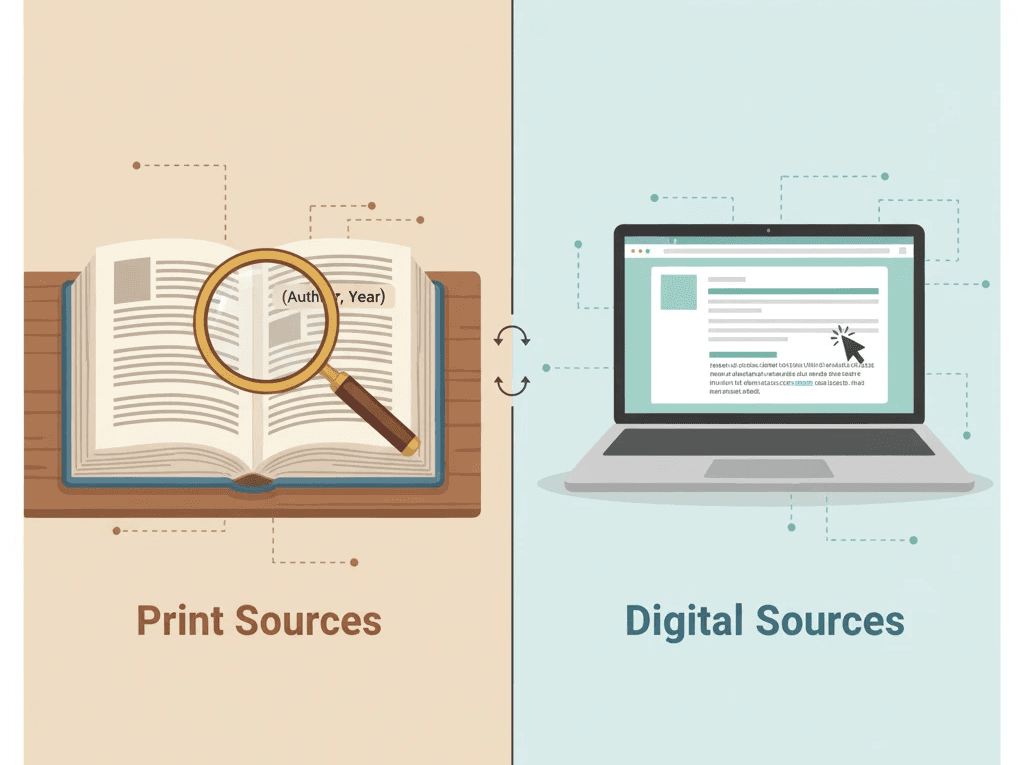
인용은 독자에게 로드맵과 같습니다. 인용은 정보의 출처가 어디인지, 그리고 다른 사람들이 어떻게 그것을 확인할 수 있는지를 보여줍니다. 하지만 온라인 출처가 증가함에 따라, 출처가 인쇄물인지 디지털인지에 따라 인용 방식이 달라질 수 있습니다.
이 가이드에서 배울 내용: 인쇄 및 디지털 인용의 작동 방식, 다양한 인용 양식(MLA, APA, Chicago)이 이를 다루는 방법, 흔한 실수를 피하고 매번 올바르게 인용하는 방법.
<CTA title="몇 초 만에 정확한 인용 생성하기" description="Jenni AI를 사용하여 인쇄 및 온라인 출처에 대한 MLA, APA 또는 Chicago 인용을 정밀하고 일관되게 만들어 제출할 준비를 하세요." buttonLabel="Jenni 무료로 개발하기" link="https://app.jenni.ai/register" />
오늘날 인용이 중요한 이유
인용은 크게 세 가지 중요한 역할을 합니다:
원래 저자에게 공로를 인정합니다.
독자가 출처를 찾을 수 있도록 돕습니다.
당신의 작업이 신뢰할 수 있음을 보여줍니다.
이러한 목표는 출처가 책이든 웹사이트든 동일합니다. 변한 것은 형식입니다. 인쇄된 책은 수세기 동안 존재해 왔습니다. 온라인 기사, 전자책, PDF는 비교적 최신 형태입니다.
오늘날 디지털 출처가 더 많아졌음에도 불구하고, 인쇄 및 디지털 인용은 서로 다른 규칙을 따릅니다. 잘못된 유형을 사용하면 독자가 여러분의 출처를 찾기 어려워질 수 있습니다.
<ProTip title="💡 미리 알림:" description="인쇄물이든 디지털이든 항상 실제로 사용한 버전을 인용하세요. 두 버전의 세부 정보를 혼용하면 혼란을 야기합니다." />
인쇄 인용(Print Citation)이란 무엇인가요?
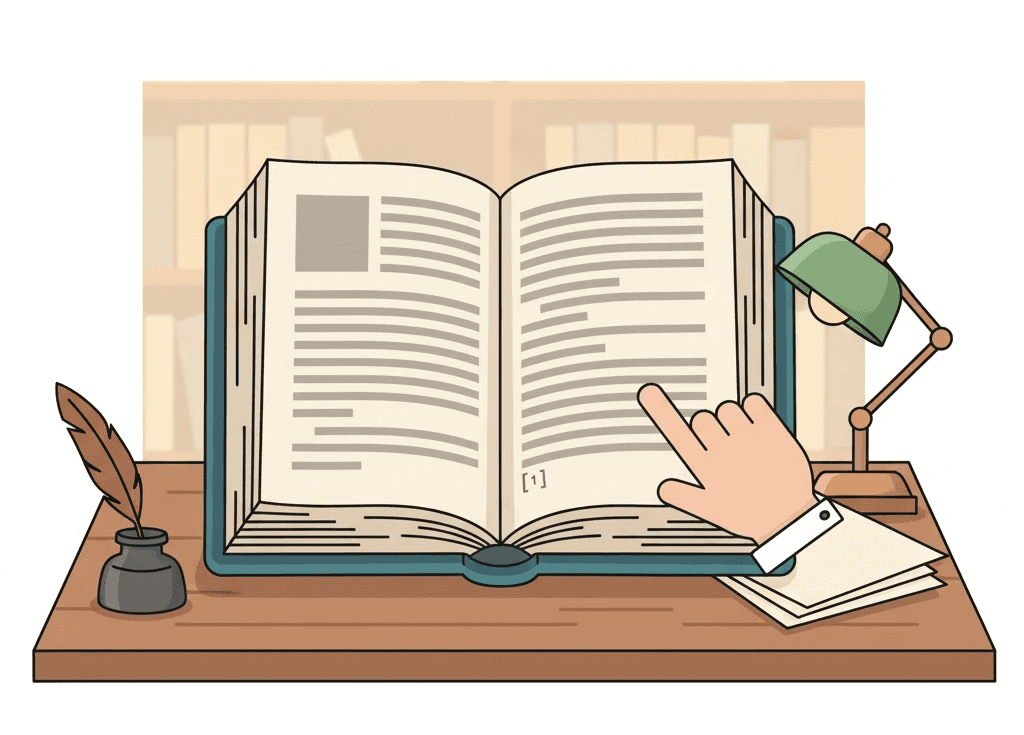
인쇄 인용은 인쇄된 도서, 저널, 보고서와 같이 물리적 형태로 존재하는 출처를 위한 것입니다.
예시 (APA 제7판):
Smith, J. (2015). Climate Change and Coastal Resilience. New York, NY: Greenfield Press.
인쇄 인용의 특징
고정된 페이지 번호: 페이지 번호가 변하지 않습니다.
고정된 출판 세부 정보: 출판사, 권, 호가 동일하게 유지됩니다.
URL 불필요: 독자는 도서관이나 인쇄본 소장처에서 출처를 찾습니다.
페이지 번호 사용: 인용구에 대한 정확한 페이지를 포함합니다.
인쇄 인용은 저작물의 고정된 원본 버전을 보여줍니다.
디지털 인용(Digital Citation)이란 무엇인가요?
마찬가지로 디지털 인용은 전자책, PDF, 저널 기사 또는 웹페이지와 같은 출처의 온라인 버전을 나타냅니다. 단계별 안내는 학술 글쓰기를 위한 디지털 출처 인용 가이드를 참조하십시오.
예시 (APA 제7판):
Smith, J. (2015). Climate Change and Coastal Resilience. Greenfield Press. https://doi.org/10.1234/cccr.2015.07
디지털 인용의 특징
DOI 또는 URL 사용: 독자를 온라인의 정확한 출처로 안내합니다.
페이지 번호가 없을 수 있음: 대신 섹션이나 문단을 사용합니다.
필요한 경우 접속 날짜 포함: 특히 자주 변경되는 웹페이지에 유용합니다.
버전이 변경될 수 있음: 온라인 출처는 업데이트되거나 수정될 수 있습니다.
<ProTip title="💡 팁:" description="DOI를 사용할 수 있다면 항상 URL 대신 DOI를 사용하세요. DOI는 변하지 않지만 URL은 끊어질 수 있습니다." />
인쇄 인용과 디지털 인용의 핵심 차이점
특징 | 인쇄 인용 | 디지털 인용 |
매체 | 물리적 사본 (도서, 저널) | 온라인 사본 (PDF, 웹페이지, 데이터베이스) |
액세스 정보 | 출판사, 도시 | DOI, URL 또는 데이터베이스 이름 |
페이지 매김 | 변하지 않는 페이지 번호 | 누락되거나 다를 수 있음 |
판본 참고사항 | 인쇄판 | 온라인 판, 전자책, 오픈 액세스 |
검색 날짜 | 필요 없음 | 가끔 필요함 |
위치 확인 방법 | 페이지 번호 | 페이지가 없는 경우 섹션 또는 문단 |
안정성 | 영구적 | 업데이트 가능 |
인용 초점 | 출판사 정보 | 디지털 액세스 세부 정보 |
이러한 차이점을 알면 독자가 여러분이 사용한 정확한 출처를 찾는 데 도움이 됩니다.
“참고한 판본(Edition Consulted)”이 중요한 이유
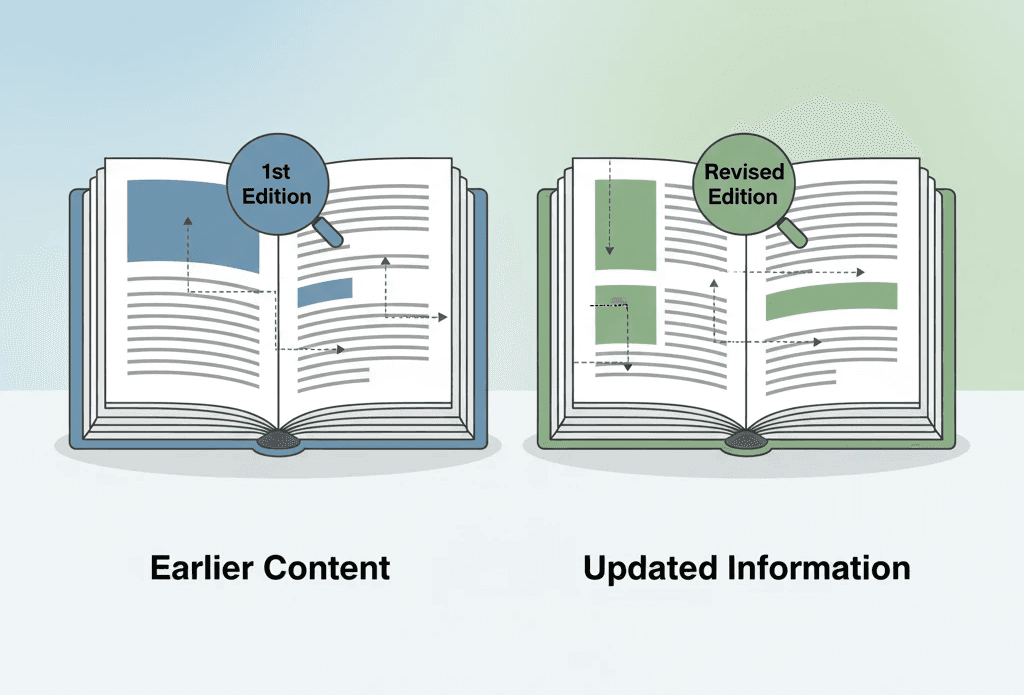
흔히 하는 실수 중 하나는 디지털 출처를 사용했으면서 인쇄 세부 사항을 인용하는 경우(또는 그 반대)입니다. 누군가 여러분의 인용을 확인하려 할 때 엉뚱한 판본을 기재해 두었다면 동일한 정보를 찾지 못할 수 있습니다.
<ProTip title="📘 참고:" description="데이터베이스에서 PDF를 다운로드했다면, 인쇄된 페이지처럼 보이더라도 디지털 판본으로 간주됩니다." />
권장 사항
실제로 사용한 판본을 인용하세요. 두 버전을 모두 완전히 참고하지 않았다면 인쇄 정보와 디지털 정보를 혼용하지 마십시오.
정보 위치 찾기: 페이지, 섹션, 문단
페이지 번호가 있는 경우
인쇄물 출처나 페이지가 고정된 디지털 PDF의 경우 페이지 번호를 포함하여 작성합니다.
예시 (MLA):
(Smith 45)
페이지 번호가 없는 경우
전자책, 웹사이트 또는 HTML 기사의 경우:
섹션 제목 사용: (Smith, “Conclusion”)
문단 번호 사용: (Smith, para. 12)
장(chapter) 번호 사용: (Smith, ch. 3)
<ProTip title="📄 빠른 팁:" description="페이지 번호가 존재하지 않는 경우, MLA와 APA는 대신 섹션 또는 문단 번호를 사용할 것을 권장합니다." />
이러한 방법들을 통해 독자는 여러분의 출처를 정확하게 추적할 수 있습니다.
인용 양식: MLA, APA, Chicago
Harvard 및 Vancouver 방식까지 포함하는 보다 폭넓은 입문서는 학생들을 위한 인용 스타일 양식 설명을 참조하세요.
MLA
실제로 사용한 버전을 인용합니다.
온라인 출처의 경우 URL 또는 DOI를 포함합니다.
디지털 에디션에 페이지 번호가 없으면 생략합니다.
Works Cited(인용 문헌) 목록을 작성합니다.
인쇄본 예시:
Austen, Jane. Pride and Prejudice. Penguin Classics, 2002.
디지털 예시:
Austen, Jane. Pride and Prejudice. Penguin Classics, 2002. Google Books, books.google.com/pp/123.
APA
온라인 출처의 경우 DOI 또는 안정적 URL을 포함합니다.
내용이 자주 업데이트되지 않는 한 검색 날짜는 생략합니다.
페이지 번호가 없으면 섹션 또는 문단 번호를 사용합니다.
디지털 저널 예시:
Brown, L. (2021). The psychology of trust in digital spaces. Journal of Social Behavior, 12(3). https://doi.org/10.0000/jsb.2021.13
Chicago (외주-참고문헌 방식)
인쇄본이든 디지털이든 실제 사용된 판본을 인용합니다.
DOI 또는 액세스 URL을 포함합니다.
액세스 날짜는 선택 사항이지만 명시하는 것이 도움이 됩니다.
디지털 예시:
Linda Brown, “The Psychology of Trust in Digital Spaces,” Journal of Social Behavior 12, no. 3 (2021), https://doi.org/10.0000/jsb.2021.13.
신뢰도 평가하기

인용은 또한 출처의 신뢰성을 보여줍니다.
인쇄물
일반적으로 편집, 검토를 거치며 안정적입니다.
저자와 출판사가 명확하게 공개되어 있습니다.
변경될 가능성이 적습니다.
디지털
품질의 편차가 매우 클 수 있습니다.
도메인(.edu, .gov, .org) 및 발행일을 확인하십시오.
저자의 약력을 확인하십시오.
<ProTip title="🔍 프로 팁:" description="디지털 출처를 인용하기 전에는 항상 저자, 도메인 및 업데이트 날짜를 확인하세요." />
흔히 하는 인용 실수
디지털 출처에 인쇄물 세부 사항 사용하기.
하나의 항목에 인쇄 정보와 디지털 정보를 혼용하기.
디지털 페이지가 고정되어 있지 않은데 페이지 번호 사용하기.
DOI 또는 URL 누락하기.
수시로 변경되는 정보 출처의 액세스 날짜 누락하기.
고유 링크 대신 검색 결과 URL 사용하기.
인용 과정을 더욱 쉽고 일관되게 만들기 위해 Zotero, EndNote 또는 Jenni AI와 같은 인용 도구를 활용해 보세요. 소장 참고문헌 라이브러리를 관리하고 있다면 당사의 Zotero 및 Mendeley 연동 기능이 인용의 일관성을 유지하는 데 도움이 될 수 있습니다.
실제 시나리오
시나리오 1: 인쇄된 저널
인쇄물로 인용합니다.
APA: Smith, J. (2018). Neural learning and adaptation. Neuroscience Review, 11(2), 45–67.
시나리오 2: PDF 버전
디지털로 인용합니다.
Smith, J. (2018). Neural learning and adaptation. Neuroscience Review, 11(2). https://doi.org/10.5678/nr.2018.11.2
시나리오 3: 페이지 번호가 없는 전자책
섹션 또는 장 위치 표시기를 사용합니다.
(Smith, ch. 5)
추적 가능성 및 학술적 정직성
인용을 사용하면 다른 사람들이 여러분의 연구 경로를 따라갈 수 있습니다.
인쇄 출처 → 도서관 및 아카이브.
디지털 출처 → DOI, URL 또는 데이터베이스.
추적 가능성은 여러분의 연구를 신뢰할 수 있고 재현 가능하게 만드는 데 기여합니다.
<ProTip title="🧭 기억하기:" description="모든 독자는 여러분의 인용을 사용해 여러분이 찾은 것과 정확히 일치하는 자료를 찾을 수 있어야 합니다." />
버전 정보 및 업데이트
인쇄본은 영구적입니다. 그러나 디지털 판본은 시간이 지나면서 바뀔 수 있습니다.
권장 사항
자주 업데이트되는 출처의 경우 액세스한 날짜를 기록합니다.
DOI 또는 아카이브된 버전(JSTOR, arXiv)을 우선 사용합니다.
인쇄본의 경우 판본이나 쇄수를 기재합니다.
인용 일관성
일관성이 가장 중요합니다:
모든 출처에 동일한 인용 양식을 사용하십시오.
문장 부호, 이탤릭체 및 대소문자 형식을 통일합니다.
참고문헌 목록의 들여쓰기와 줄 간격을 맞춥니다.
혼합 인용 (Hybrid Citations)
일부 저작물은 인쇄물과 디지털 버전 둘 다로 존재합니다.
실제로 본 버전을 기준으로 인용하십시오.
양쪽 버전을 모두 꼼꼼하게 참고한 경우에만 두 정보를 모두 기재합니다.
혼합 인용 표기는 참고문헌을 명확하고 신뢰성 있게 유지해 줍니다.
빠른 참조 체크리스트
인쇄 출처:
✅ 출판사 및 발행 도시.
✅ 페이지 번호.
❌ URL 및 DOI 불필요.
디지털 출처:
✅ DOI 또는 신뢰할 수 있는 URL.
✅ 필요한 경우 액세스 날짜 기재.
❌ 사용하지 않은 경우에는 인쇄본 출판 위치를 적지 마십시오.
실제로 사용한 내용만 인용하세요
인쇄 인용과 디지털 인용은 공로를 인정하고 독자가 출처를 검증할 수 있도록 돕는 동일한 영구적 목표를 공유합니다. 차이점은 단지 출처를 가리키는 방식에 있습니다. 항상 자신이 실제로 확인한 판본을 인용하고, 올바른 지시 기호를 활용하며 일관성을 유지하십시오.
<CTA title="Jenni와 함께 완벽한 인용 완성하기" description="인용으로 인한 혼란을 없애세요. Jenni AI를 사용하면 형식에 힘들이지 않고 정밀하게 가다듬은 인쇄 및 온라인 인용을 손쉽게 작성할 수 있습니다." buttonLabel="Jenni 무료로 개발하기" link="https://app.jenni.ai/register" />
Jenni AI와 함께라면 정확한 인용 작성이 쉽고 빨라집니다. 인쇄물이든 디지털이든 단 몇 분 만에 신뢰할 수 있는 참고 정보를 생성해 보세요.