によって
ジャスティン・ウォン
—
AI Grant Writing: How to Draft Proposals Faster (and What AI Can't Do)

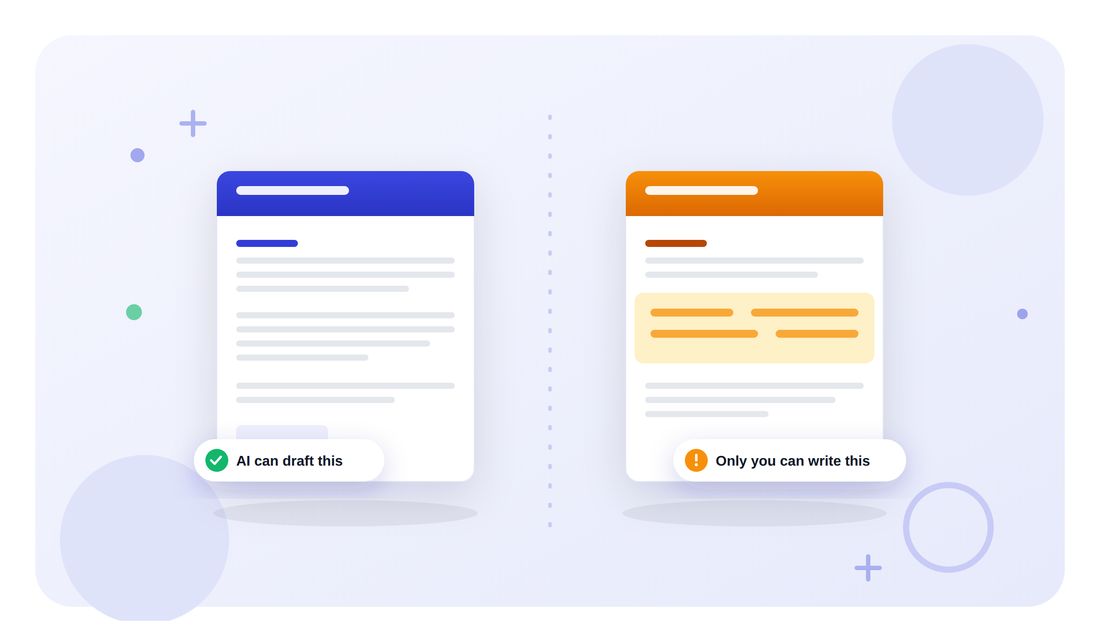
Search for advice on using AI in grant writing and you get two genres: vendor tool roundups, and university pages telling you to be careful. Neither tells you the thing you most need to know, which is that some funders have written down actual rules, and at least one of them has teeth.
So we will start there, with what the NIH, the NSF, and private foundations have formally said. Then the useful part: a clear line between the work AI does well on a proposal and the work that has to stay in human hands, and a drafting workflow that respects both.
<CTA title="Draft Faster Without Losing the Paper Trail" description="Jenni writes with you and shows the source behind every claim, so nothing goes out unverified" buttonLabel="Try Jenni Free" link="https://app.jenni.ai/register" />
What the Funders Actually Say About AI
This is the single biggest gap in the published advice. Nobody quotes the policies, so here they are.
Funder | What the policy says | In effect |
NIH | Will not consider applications substantially developed by AI, or containing sections substantially developed by AI, to be the applicant original ideas. Detection after award may be referred to the Office of Research Integrity, alongside cost disallowance, suspension, or termination | Applications submitted on or after 25 September 2025 |
NSF | Reviewers are prohibited from uploading any proposal content to non approved generative AI tools. Proposers are encouraged to state in the project description whether and how generative AI was used | Notice dated 14 December 2023 |
Private foundations | Of 527 foundations surveyed, 10 percent accept or plan to accept AI generated applications, 23 percent will not, and 67 percent have not decided | Survey published August 2024 |
The NIH language is worth reading in full, because it is stronger than most summaries suggest. Notice NOT-OD-25-132 frames AI generated content as a question of originality rather than style, which means the risk is not that your prose sounds robotic. It is that the agency does not accept the ideas as yours.
The NSF notice pulls in the opposite direction and is arguably more useful as a model. It treats disclosure as normal practice, keeps accountability firmly with the proposer, and reserves its hard prohibition for reviewers, who may not paste your confidential proposal into a chatbot.
For foundations, the honest answer is that most have not decided. Candid's survey of funders found 67 percent undecided and a majority unsure whether they had even received an AI written application. Treat that uncertainty as a reason to be conservative, not as permission.
<ProTip title="📣 Disclose:" description="If a funder asks about AI use, answer plainly and briefly. If they do not ask, keep a short internal note of what you used and where, so you can answer later without guessing" />
Where AI Genuinely Helps
Set the anxiety aside for a moment, because the productive uses are real and they are mostly structural rather than substantive.
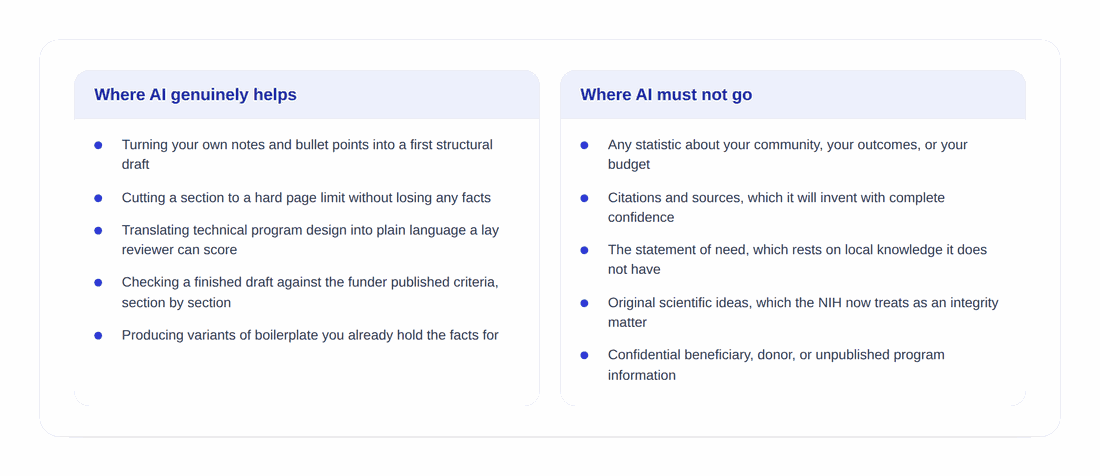
The clearest win is the blank page. If you hand a model your own notes, your service numbers, and the funder headings, you get a scaffolded draft in minutes instead of a morning. Given that NSF estimates 120 hours per proposal, saving even a fifth of that on structure and transitions is a serious gain for a two person development team.
The second win is compression. Cutting a nine page narrative to seven without losing a fact is tedious, mechanical work that AI does well and most humans do badly under deadline pressure. The third is translation: turning a program description written by a clinician into something a generalist board member can score, which is a real skill and a real bottleneck.
Where AI Must Not Go
The failure modes are specific, and they are not the ones people worry about.
Numbers about your own work. A model asked for the reading proficiency rate at your partner schools will produce a plausible figure. It has no way to know the real one. Every number in your proposal must come from your service records, your district, or a public dataset you can link to.
Citations. Fabricated references remain the single most common and most damaging failure. A reviewer who checks one source and finds it does not exist has stopped reading your proposal and started assessing your integrity. This is why knowing what makes a source credible and checking each one yourself is not optional.
The statement of need. This section runs on local knowledge: which programs closed, who is on the waiting list, what the principal said in September. A model can only produce the generic version, and the generic version is exactly what loses.
Confidential material. Beneficiary details, donor records, unpublished program design, and anything under a data sharing agreement should not go into a consumer chatbot. NSF was blunt enough to prohibit its own reviewers from doing this. Apply the same standard to yourself.
<ProTip title="🔐 Privacy:" description="Before pasting anything into a tool, ask whether you would be comfortable if the funder saw that exact text in a data breach notice. If not, keep it out" />
A Workflow That Saves Time and Survives Scrutiny
The order matters more than the tool. This sequence keeps the facts under your control while still getting the speed benefit.
Write the fact sheet first. One page, before any drafting: every number you plan to use, its source, and its date. This is the part only you can do, and doing it first means the draft is built on real material rather than filled in afterwards
Give the tool the structure, not the story. Feed it the funder headings, your fact sheet, and your program notes. Ask for organization and transitions, not content it would have to invent
Verify every citation against the actual source. Open it. Read the sentence you are relying on. This takes minutes and it is the step that separates a professional submission from a risky one
Rewrite the need statement by hand. Whatever the draft gave you, replace it. That section is where your local knowledge lives and where reviewers form their view
Check the funder rules, then read it aloud. Confirm what the guidelines say about AI, disclose if asked, and read the whole thing out loud once. Anything that sounds like nobody wrote it probably needs rewriting
<ProTip title="🧪 Verify:" description="Check citations in a separate session from drafting. Verifying your own draft immediately after writing it makes you far more likely to accept a claim you should question" />
How to Draft a Grant Proposal With Jenni
Here is the same workflow in practice, with the fact checking built into the drafting rather than bolted on afterwards.
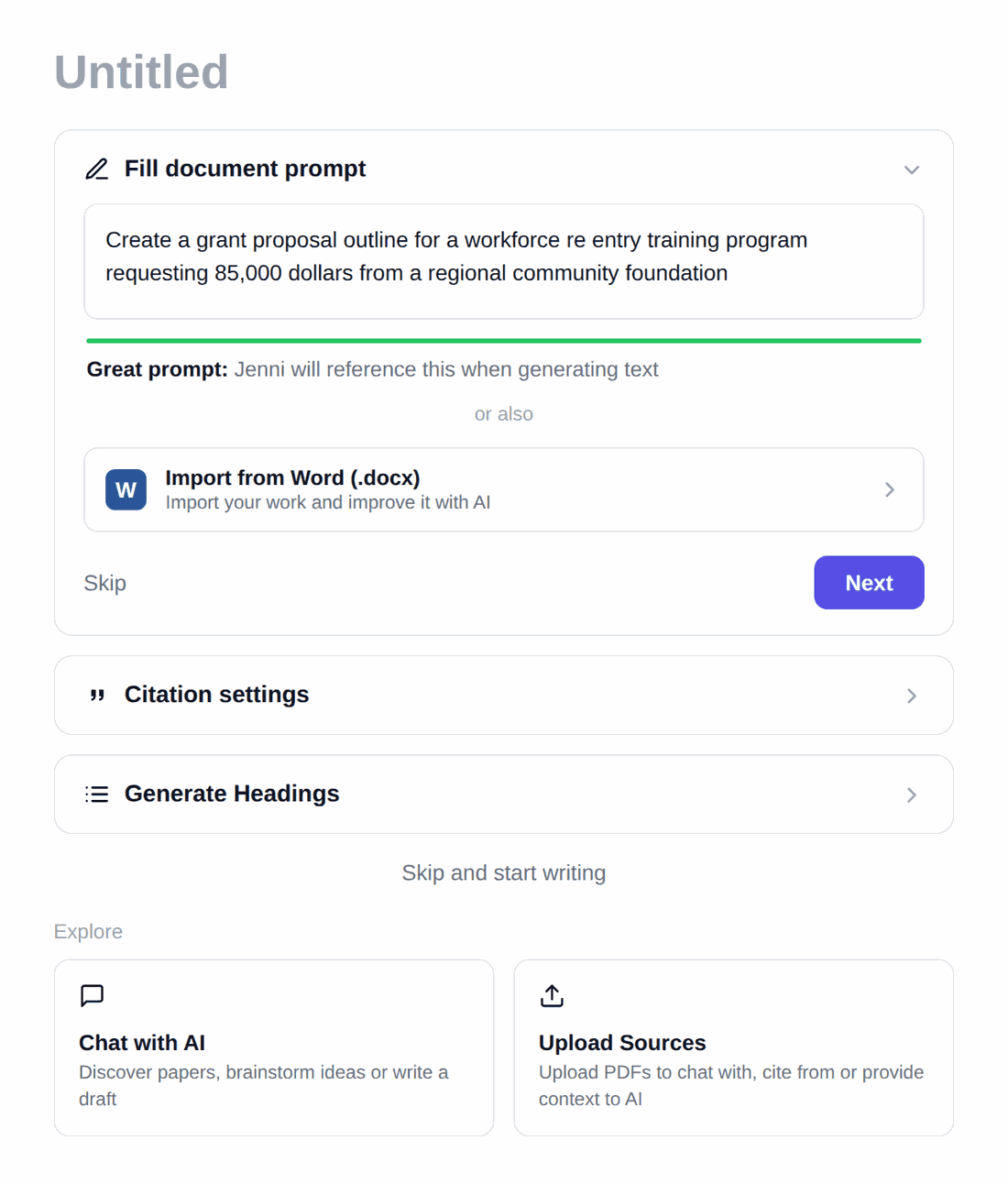
Step 1. Describe the proposal. Start a new document and write a prompt that names the funder, the amount, the population, and the outcome. Vague prompts are the main cause of generic drafts.
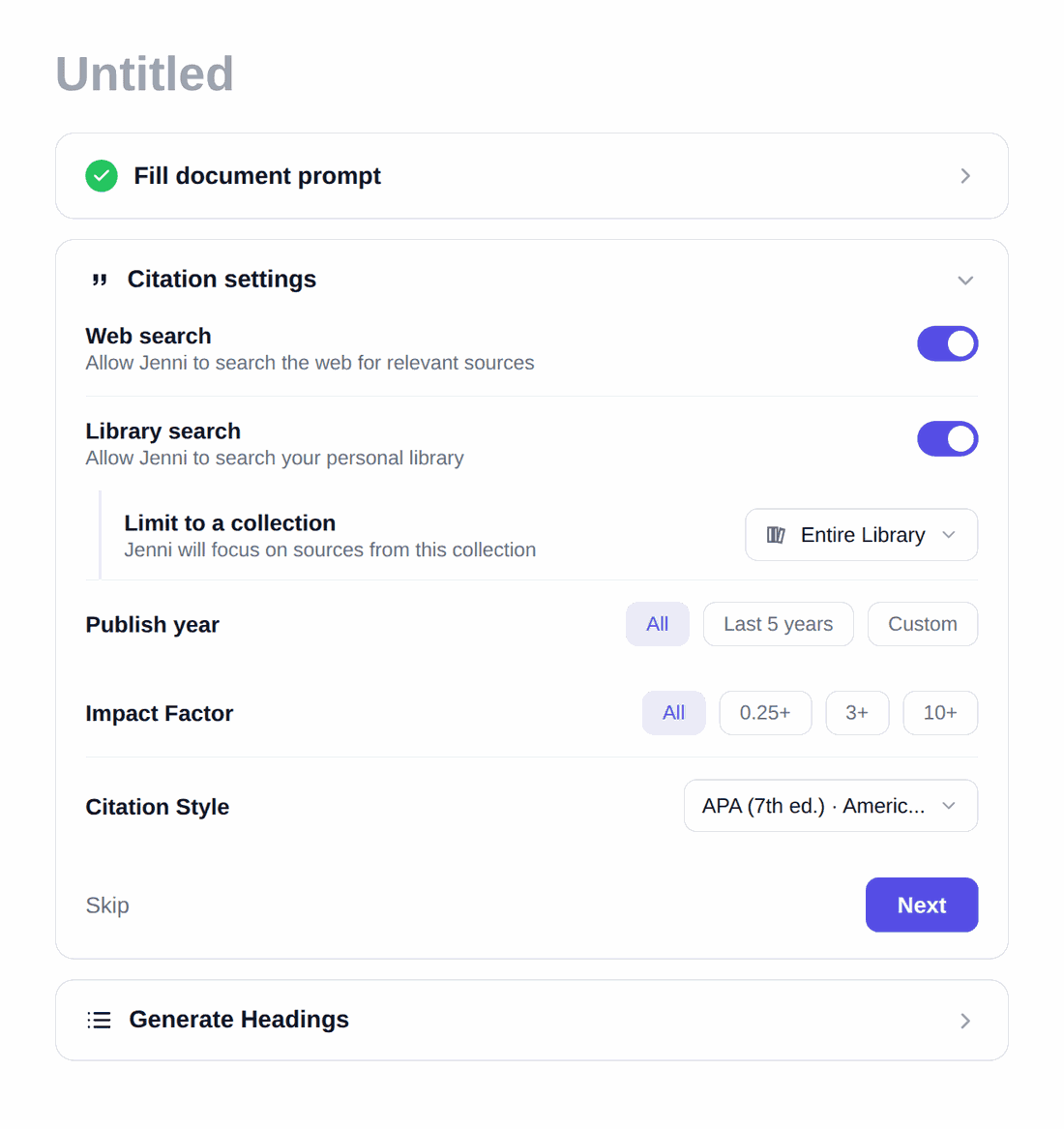
Step 2. Set your citation preferences. Pick the style the funder expects and how many sources to draw on. For grant work this matters more than in most writing, because reviewers do check.
Step 3. Generate the headings. You get an outline you can edit before any prose exists. Replace the defaults with the funder own section names, in the funder own order, so your document mirrors the scoring sheet.
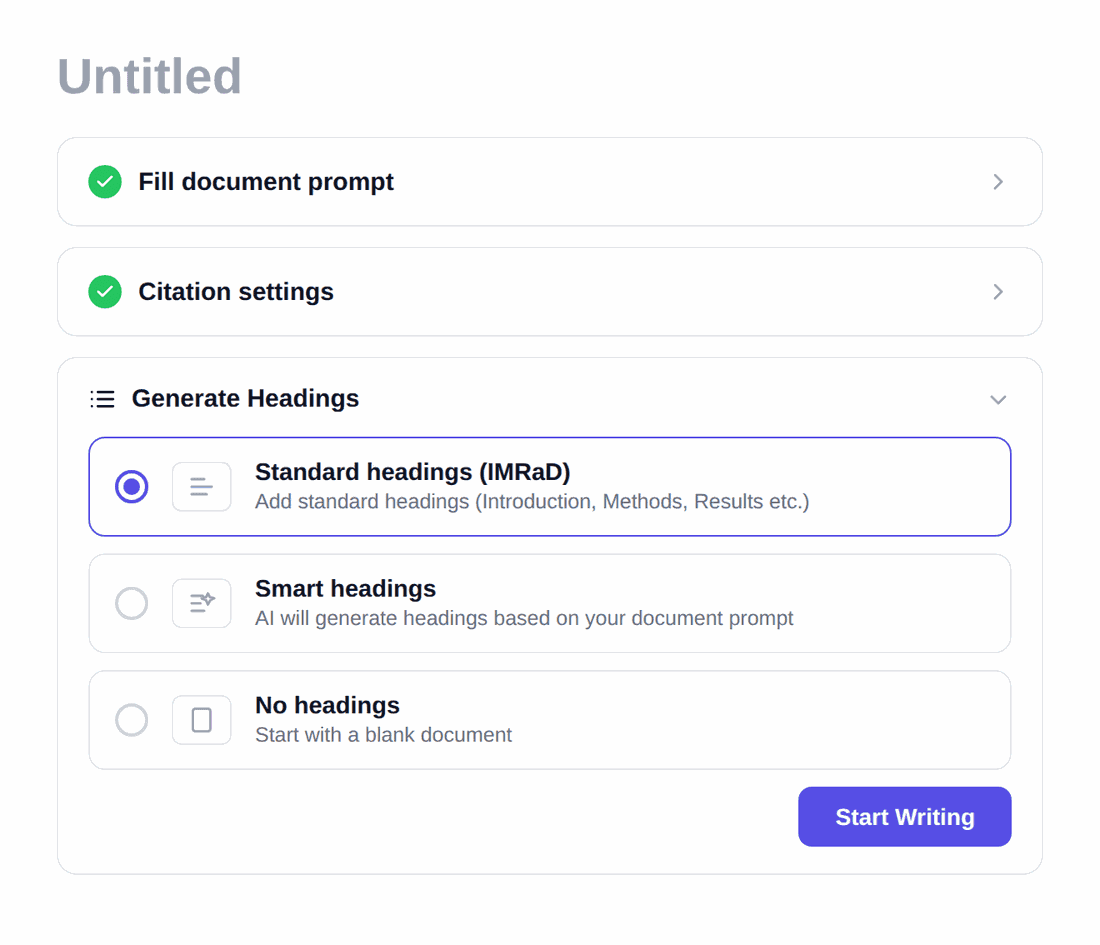
Step 4. Draft section by section, using your fact sheet. Work through the outline, pasting in your own numbers as you go. Leave the need statement until you have the rest, then write it yourself.
Step 5. Run the review pass. Claim Confidence flags statements that are not supported by a source, and Source Quality tells you whether what you cited is strong enough to lean on. Then open each source and confirm it says what you claim. Keeping a consistent formal tone across sections written on different days is the last thing to check before submission.
<ProTip title="✂️ Trim it:" description="Cut the draft by ten percent after it is finished, before you check the page limit. The sentences that go first are almost always the ones a tool added to smooth a transition" />
Use the Speed, Keep the Accountability
The reasonable position sits between the vendor pitch and the blanket ban. AI can take a real bite out of the hours a proposal costs, and for a small team those hours are the whole constraint. What it cannot do is know your community, and it cannot carry the responsibility for a claim you submit under your organization name.
<CTA title="Write Proposals You Can Defend Line by Line" description="Draft quickly, cite properly, and check every claim before it reaches a reviewer" buttonLabel="Try Jenni Free" link="https://app.jenni.ai/register" />
Read the funder rules before you start rather than after you submit, keep the numbers in your own hands, and treat the draft as a first pass rather than a finished document. Used that way, AI is roughly what a very fast, very confident, occasionally wrong assistant would be, which is a useful thing to have as long as you never stop checking its work.